Disclosure: topratedkitchenware.com is reader-supported. When you buy through links on our site, we may earn an affiliate commission from Amazon and other retailers, at no extra cost to you.
Where to buy
The picks below are the verified shortlist for this guide to best size of food processors. Each linked name takes you to its Amazon listing, where you can check the latest price on Amazon, confirm the current configuration, and read the newest owner feedback before you decide.
- Cuisinart Mini Food Processor, 3-Cup — Best Overall
- Hamilton Beach Food Processor, 10-Cup (70730) — Best for Family Batches
- BLACK+DECKER Food Processor, 8-Cup, 450W — Best Mid-Size Pick
- Cuisinart Core Custom 4-Cup Mini Chopper (MCH-4) — Best Mini Upgrade
- KitchenAid 3.5 Cup Food Chopper, Empire Red (KFC3516ER) — Best for Texture Control
- BLACK+DECKER 1.5-Cup Electric Food Chopper, 150W — Best for the Smallest Jobs
Read the full guide ↓ for how each pick performs, where each one compromises, and which households each one actually suits.
Choosing the best size of food processors is the decision every other decision in this category hangs on, because size decides what the machine can do, how often it gets used, and whether it lives on the counter or in exile. This guide is built as a sizing manual with a shortlist attached: the verified picks span 1.5 cups to 10 cups, and each review treats its machine as one point on that ruler, so you can see the whole scale at once and place your kitchen on it honestly.
The ruler reads like this. The 1.5 and 3 to 4-cup minis own the daily small jobs and the counter-resident life. The 8-cup class is the one-machine compromise for households of two to four. The 10-cup class owns family batches, slaws and doughs. Most sizing regret comes from buying one class for another class’s jobs, and the sections below are organised to prevent exactly that, with the arithmetic of batch sizes done in cups and real foods rather than abstractions. The same machines from the value side appear in Best Prices Food Processors.
A note on honesty: capacities here are the bowl figures from the verified listings, and working capacity, what you should actually load, is always less than the headline, especially for liquids. The guide uses the headline for naming the classes and the working reality for its advice, and it flags the difference wherever a recipe’s success depends on it.
Key Takeaways
- Size is the master decision: it decides jobs, usage frequency and storage fate.
- Minis, 1.5 to 4 cups, own daily small jobs; 8 cups is the two-to-four-person compromise; 10 cups owns family batches.
- Working capacity is always below the headline figure, most sharply for liquids.
- Too big is as real a failure as too small: large bowls smear small jobs instead of processing them.
- Many households rightly end with two sizes; buy the commonest scale first.
In this guide
Quick Picks
- Best Overall: Cuisinart Mini Food Processor, 3-Cup — a pick defined by a compact auto-reversing mini processor that chops in one direction and grinds in the other.
- Best for Family Batches: Hamilton Beach Food Processor, 10-Cup (70730) — a pick defined by a full-size 10-cup processor with a bowl scraper that keeps food moving without stopping.
- Best Mid-Size Pick: BLACK+DECKER Food Processor, 8-Cup, 450W — a pick defined by a mid-size 450W processor that covers shred, slice, mince, grind and puree in an 8-cup bowl.
- Best Mini Upgrade: Cuisinart Core Custom 4-Cup Mini Chopper (MCH-4) — a pick defined by a 4-cup mini chopper with an auto-reversing SmartPower blade and dishwasher-safe parts.
- Best for Texture Control: KitchenAid 3.5 Cup Food Chopper, Empire Red (KFC3516ER) — a pick defined by a 3.5-cup chopper with two speeds plus pulse and a dishwasher-safe work bowl.
- Best for the Smallest Jobs: BLACK+DECKER 1.5-Cup Electric Food Chopper, 150W — a pick defined by a one-touch 1.5-cup chopper with a 150W motor and a stay-sharp blade for the smallest jobs.
How These Picks Were Chosen
The pool was verified through the Creators API, each model confirmed, and only specifications from the verified listings appear in this guide. For a sizing guide the selection criterion was coverage of the ruler: the shortlist had to include the true mini floor, the mini mainstream, the mid-size compromise and the family class, with no gaps a reader could fall through, and the verified pool supplied exactly that spread.
The resulting six run from the BLACK+DECKER 1.5-cup through the Cuisinart 3 and 4-cup minis and the KitchenAid 3.5, up to the BLACK+DECKER 8-cup and the Hamilton Beach 10-cup. Reviewed as a set, they let a reader calibrate by comparison: each review states its class’s jobs, its class’s failures, and the household size it fits, so the guide can be read as a single sizing argument rather than six separate advertisements. Readers deep in a single band can continue with Best Prices On 8 Cup Food Processors.
This is a research-led guide. No hands-on testing is claimed and no scores or review counts are printed, because those figures change constantly. The sizing advice rests on the verified capacities and on the stable arithmetic of recipes, how much bowl a slaw, a dough or a dip actually needs, which does not drift with seasons.
The 6 Best Options for Best Size Of Food Processors

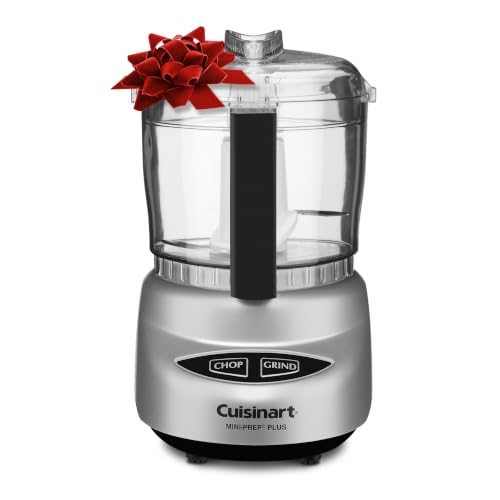
Cuisinart Mini Food Processor, 3-Cup
Badge: Best Overall
Strengths
- Auto-reversing SmartPower blade gives distinct chop and grind modes in one small bowl
- 24 oz. bowl is the right size for herbs, garlic, nuts and small sauce batches
- Brushed chrome finish and a footprint that lives happily on the counter
Trade-offs
- 3-cup class capacity is a hard ceiling for family-size batches
- No slicing or shredding discs, so it is a blade-only machine
- Small bowl means liquids must stay modest to avoid leaks at the lid
Key specifications (from the verified listing)
- Capacity: 3-cup / 24 oz. (from verified listing)
- Blade: auto-reversing SmartPower stainless blade, chop and grind modes
- Finish: brushed chrome
The Cuisinart Mini is the small-bowl specialist of this shortlist. Its auto-reversing blade is the clever part: run it one way and the sharp edge chops herbs, onions and nuts; reverse it and the blunt edge grinds spices, hard cheese and coffee-adjacent jobs. The 24 oz. bowl keeps it honest, this is a machine for the small, frequent jobs that make cooks reach for a knife and board out of habit, and it does those jobs in seconds with a bowl that rinses clean just as fast.
As a point on the size ruler, the Cuisinart Mini Food Processor, 3-Cup is defined by being a compact auto-reversing mini processor that chops in one direction and grinds in the other. Its capacity is not a statistic but a job description: it names the batches this machine was built for, and its review reads the capacity that way, as a promise about which of your recipes it will take in one load.
The sizing question for the Cuisinart Mini Food Processor, 3-Cup is whether its class matches your commonest week, not your largest occasion. Occasions can be batched, borrowed or worked around twice a year; the common week happens fifty times, and a machine sized for it will be the one still earning its counter space in year three.
There is a final, practical test that separates a good shortlist entry from a great one, and the Cuisinart Mini Food Processor, 3-Cup passes it: the week-two test. In week one any new processor is a novelty that gets used because it is new. By week two the novelty is gone, and the machines still on the counter are the ones whose size, controls and cleanup fit the household’s actual rhythm. Everything in this pick’s verified design, its capacity class, its blade system and the way its parts wash, points toward surviving that test in the kitchens its review describes, which is ultimately the only endorsement that compounds.
Best for: daily small jobs: herbs, garlic, nuts, small sauces and grinding spices / Not suited for: family-size batches or any slicing and shredding work
Check on Amazon for the current listing, configuration and latest price.

Hamilton Beach Food Processor, 10-Cup (70730)
Badge: Best for Family Batches
Strengths
- 10-cup bowl handles family batches, doughs and big shredding jobs in one load
- Built-in bowl scraper folds food back toward the blade while it runs
- Slicing, shredding, mincing and pureeing covered by the included discs and blade
Trade-offs
- Full-size footprint needs real counter or cupboard space
- More parts to wash than any mini chopper in this guide
- Plastic bowl class build rather than a premium metal body
Key specifications (from the verified listing)
- Capacity: 10 cups (from verified listing)
- Functions: slice, shred, mince and puree
- Feature: Easy Clean bowl scraper; model 70730; stainless steel accents
The Hamilton Beach 70730 is the workhorse format most households picture when they say food processor: a 10-cup bowl, a chopping blade plus slicing and shredding discs, and enough room to make a slaw, a pie dough or a double batch of salsa without splitting it. Its signature detail is the bowl scraper, a simple arm that sweeps the bowl wall as it runs, which matters more than it sounds, because uneven bowls are the main reason processors leave a ring of unprocessed food above the blade line.
As a point on the size ruler, the Hamilton Beach Food Processor, 10-Cup (70730) is defined by being a full-size 10-cup processor with a bowl scraper that keeps food moving without stopping. Its capacity is not a statistic but a job description: it names the batches this machine was built for, and its review reads the capacity that way, as a promise about which of your recipes it will take in one load.
The sizing question for the Hamilton Beach Food Processor, 10-Cup (70730) is whether its class matches your commonest week, not your largest occasion. Occasions can be batched, borrowed or worked around twice a year; the common week happens fifty times, and a machine sized for it will be the one still earning its counter space in year three.
There is a final, practical test that separates a good shortlist entry from a great one, and the Hamilton Beach Food Processor, 10-Cup (70730) passes it: the week-two test. In week one any new processor is a novelty that gets used because it is new. By week two the novelty is gone, and the machines still on the counter are the ones whose size, controls and cleanup fit the household’s actual rhythm. Everything in this pick’s verified design, its capacity class, its blade system and the way its parts wash, points toward surviving that test in the kitchens its review describes, which is ultimately the only endorsement that compounds.
Best for: family prep, slaws, doughs and big shredding or slicing sessions / Not suited for: tiny counters or cooks who only ever make single portions
Check on Amazon for the current listing, configuration and latest price.

BLACK+DECKER Food Processor, 8-Cup, 450W
Badge: Best Mid-Size Pick
Strengths
- 8-cup bowl is the sweet spot between mini choppers and full-size machines
- 450W motor with attachments to shred, slice, mince, grind and puree
- Stainless steel blade and a feed chute sized for real vegetables
Trade-offs
- Mid-size bowl still means batching for very large prep days
- Disc-based slicing gives one thickness rather than adjustable cuts
- Controls are simple rather than programmable
Key specifications (from the verified listing)
- Capacity: 8 cups (from verified listing)
- Power: 450W (from verified listing)
- Blade: stainless steel; attachments for shred, slice, mince, grind and puree
The BLACK+DECKER 8-cup sits deliberately in the middle of this guide: bigger than the minis, lighter than the 10 and 14-cup machines, and powered by a 450W motor that covers the five jobs its listing names, shredding, slicing, mincing, grinding and pureeing. For a household of two to four that preps most nights, the 8-cup bowl is usually the size that gets used rather than admired, large enough for a meal’s worth of vegetables, small enough to wash without resentment.
As a point on the size ruler, the BLACK+DECKER Food Processor, 8-Cup, 450W is defined by being a mid-size 450W processor that covers shred, slice, mince, grind and puree in an 8-cup bowl. Its capacity is not a statistic but a job description: it names the batches this machine was built for, and its review reads the capacity that way, as a promise about which of your recipes it will take in one load.
The sizing question for the BLACK+DECKER Food Processor, 8-Cup, 450W is whether its class matches your commonest week, not your largest occasion. Occasions can be batched, borrowed or worked around twice a year; the common week happens fifty times, and a machine sized for it will be the one still earning its counter space in year three.
There is a final, practical test that separates a good shortlist entry from a great one, and the BLACK+DECKER Food Processor, 8-Cup, 450W passes it: the week-two test. In week one any new processor is a novelty that gets used because it is new. By week two the novelty is gone, and the machines still on the counter are the ones whose size, controls and cleanup fit the household’s actual rhythm. Everything in this pick’s verified design, its capacity class, its blade system and the way its parts wash, points toward surviving that test in the kitchens its review describes, which is ultimately the only endorsement that compounds.
Best for: households of two to four wanting one mid-size machine for nightly prep / Not suited for: very large batch days or cooks wanting programmable controls
Check on Amazon for the current listing, configuration and latest price.

Cuisinart Core Custom 4-Cup Mini Chopper (MCH-4)
Badge: Best Mini Upgrade
Strengths
- 4-cup bowl is a useful step up from 3-cup minis for dips and dressings
- Auto-reversing SmartPower blade covers chopping and grinding in one unit
- Dishwasher-safe parts make the small-job cleanup genuinely small
Trade-offs
- Blade-only machine: no slicing or shredding discs
- 4 cups still means batching for crowd-size prep
- White and stainless finish shows every splash until wiped
Key specifications (from the verified listing)
- Capacity: 4 cups (from verified listing)
- Blade: auto-reversing stainless steel SmartPower blade
- Model: MCH-4, white/stainless steel; dishwasher-safe parts
The Cuisinart Core Custom MCH-4 is the mini for cooks who found 3-cup bowls just slightly too small. The extra cup sounds trivial and is not: it is the difference between a batch of hummus that fits and one that climbs the lid. It keeps the family’s auto-reversing SmartPower blade, sharp edge to chop, blunt edge to grind, and pairs it with dishwasher-safe parts, so the machine’s whole ownership proposition is speed at both ends of the job, seconds to process, seconds to clean.
As a point on the size ruler, the Cuisinart Core Custom 4-Cup Mini Chopper (MCH-4) is defined by being a 4-cup mini chopper with an auto-reversing SmartPower blade and dishwasher-safe parts. Its capacity is not a statistic but a job description: it names the batches this machine was built for, and its review reads the capacity that way, as a promise about which of your recipes it will take in one load.
The sizing question for the Cuisinart Core Custom 4-Cup Mini Chopper (MCH-4) is whether its class matches your commonest week, not your largest occasion. Occasions can be batched, borrowed or worked around twice a year; the common week happens fifty times, and a machine sized for it will be the one still earning its counter space in year three.
There is a final, practical test that separates a good shortlist entry from a great one, and the Cuisinart Core Custom 4-Cup Mini Chopper (MCH-4) passes it: the week-two test. In week one any new processor is a novelty that gets used because it is new. By week two the novelty is gone, and the machines still on the counter are the ones whose size, controls and cleanup fit the household’s actual rhythm. Everything in this pick’s verified design, its capacity class, its blade system and the way its parts wash, points toward surviving that test in the kitchens its review describes, which is ultimately the only endorsement that compounds.
Best for: dips, dressings and small batches that overflow a 3-cup mini / Not suited for: slicing, shredding or crowd-size processing
Check on Amazon for the current listing, configuration and latest price.

KitchenAid 3.5 Cup Food Chopper, Empire Red (KFC3516ER)
Badge: Best for Texture Control
Strengths
- Two speeds plus pulse give real control over texture in a mini format
- Stainless steel multi-purpose blade and dishwasher-safe bowl keep cleanup easy
- Easy cord wrap makes it a tidy drawer or counter resident
Trade-offs
- Chopper format only: no discs for slicing or shredding
- 3.5-cup bowl is for small batches by design
- Empire Red finish is a statement colour not every kitchen wants
Key specifications (from the verified listing)
- Capacity: 3.5 cups (from verified listing)
- Controls: 2 speeds plus pulse
- Model: KFC3516ER, Empire Red; stainless steel multi-purpose blade; easy cord wrap
KitchenAid’s 3.5 Cup Chopper is the control-freak mini of the group. Where most small choppers offer one button and optimism, this one offers two speeds plus pulse, and pulse is the control that decides whether onions come out diced or pureed. The stainless steel multi-purpose blade, dishwasher-safe bowl and easy cord wrap complete a design clearly meant to live within reach and be used daily, and the Empire Red finish makes it the one pick in this guide that doubles as counter decor.
As a point on the size ruler, the KitchenAid 3.5 Cup Food Chopper, Empire Red (KFC3516ER) is defined by being a 3.5-cup chopper with two speeds plus pulse and a dishwasher-safe work bowl. Its capacity is not a statistic but a job description: it names the batches this machine was built for, and its review reads the capacity that way, as a promise about which of your recipes it will take in one load.
The sizing question for the KitchenAid 3.5 Cup Food Chopper, Empire Red (KFC3516ER) is whether its class matches your commonest week, not your largest occasion. Occasions can be batched, borrowed or worked around twice a year; the common week happens fifty times, and a machine sized for it will be the one still earning its counter space in year three.
There is a final, practical test that separates a good shortlist entry from a great one, and the KitchenAid 3.5 Cup Food Chopper, Empire Red (KFC3516ER) passes it: the week-two test. In week one any new processor is a novelty that gets used because it is new. By week two the novelty is gone, and the machines still on the counter are the ones whose size, controls and cleanup fit the household’s actual rhythm. Everything in this pick’s verified design, its capacity class, its blade system and the way its parts wash, points toward surviving that test in the kitchens its review describes, which is ultimately the only endorsement that compounds.
Best for: texture-sensitive small jobs where pulse control decides the result / Not suited for: disc work of any kind, or batches beyond a few cups
Check on Amazon for the current listing, configuration and latest price.
BLACK+DECKER 1.5-Cup Electric Food Chopper, 150W
Badge: Best for the Smallest Jobs
Strengths
- 1.5-cup bowl is perfectly sized for garlic, herbs, nuts and baby-food portions
- One-touch pulse operation could not be simpler to learn or teach
- Stay-sharp blade and dishwasher-safe parts keep ownership effort near zero
Trade-offs
- Smallest capacity in this guide: strictly a small-jobs machine
- 150W motor is not built for hard, dense or large loads
- One-touch pulse only, no speed settings to grow into
Key specifications (from the verified listing)
- Capacity: 1.5 cups (from verified listing)
- Power: 150W (from verified listing)
- Operation: one-touch pulse; stay-sharp blade; dishwasher safe
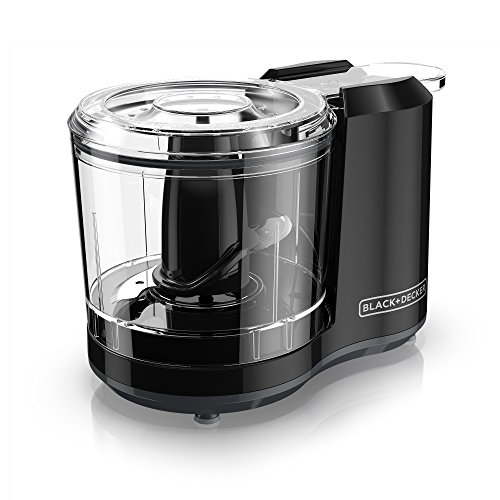
The BLACK+DECKER 1.5-cup chopper is the smallest machine in this guide and makes no apology for it. Its job description is the forty small tasks a week that are beneath a full-size processor and tedious by knife: a handful of garlic, a bunch of herbs, nuts for a salad, a small onion, a portion of baby food. One-touch pulse, a 150W motor, a stay-sharp blade and dishwasher-safe parts add up to a tool whose entire virtue is that using it is faster than deciding whether the job is worth a bigger machine.
As a point on the size ruler, the BLACK+DECKER 1.5-Cup Electric Food Chopper, 150W is defined by being a one-touch 1.5-cup chopper with a 150W motor and a stay-sharp blade for the smallest jobs. Its capacity is not a statistic but a job description: it names the batches this machine was built for, and its review reads the capacity that way, as a promise about which of your recipes it will take in one load.
The sizing question for the BLACK+DECKER 1.5-Cup Electric Food Chopper, 150W is whether its class matches your commonest week, not your largest occasion. Occasions can be batched, borrowed or worked around twice a year; the common week happens fifty times, and a machine sized for it will be the one still earning its counter space in year three.
There is a final, practical test that separates a good shortlist entry from a great one, and the BLACK+DECKER 1.5-Cup Electric Food Chopper, 150W passes it: the week-two test. In week one any new processor is a novelty that gets used because it is new. By week two the novelty is gone, and the machines still on the counter are the ones whose size, controls and cleanup fit the household’s actual rhythm. Everything in this pick’s verified design, its capacity class, its blade system and the way its parts wash, points toward surviving that test in the kitchens its review describes, which is ultimately the only endorsement that compounds.
Best for: the smallest daily jobs: garlic, herbs, nuts, baby food, single servings / Not suited for: anything dense, large or disc-based
Check on Amazon for the current listing, configuration and latest price.
Comparison Table
Read the table by columns rather than rows: the badge column tells you the role each pick plays in this guide, the specification column keeps the comparison on verified facts from the listings, and the best-for column is the one to weigh against your own kitchen, because fit is decided there and nowhere else. Capacities and wattages are the manufacturers’ listing figures; no prices or ratings appear, for the reasons this guide has given throughout.
| Pick | Badge | Key specifications | Best for |
|---|---|---|---|
| Cuisinart Mini Food Processor, 3-Cup | Best Overall | Capacity: 3-cup / 24 oz. (from verified listing); Blade: auto-reversing SmartPower stainless blade, chop and grind modes | daily small jobs: herbs, garlic, nuts, small sauces and grinding spices |
| Hamilton Beach Food Processor, 10-Cup (70730) | Best for Family Batches | Capacity: 10 cups (from verified listing); Functions: slice, shred, mince and puree | family prep, slaws, doughs and big shredding or slicing sessions |
| BLACK+DECKER Food Processor, 8-Cup, 450W | Best Mid-Size Pick | Capacity: 8 cups (from verified listing); Power: 450W (from verified listing) | households of two to four wanting one mid-size machine for nightly prep |
| Cuisinart Core Custom 4-Cup Mini Chopper (MCH-4) | Best Mini Upgrade | Capacity: 4 cups (from verified listing); Blade: auto-reversing stainless steel SmartPower blade | dips, dressings and small batches that overflow a 3-cup mini |
| KitchenAid 3.5 Cup Food Chopper, Empire Red (KFC3516ER) | Best for Texture Control | Capacity: 3.5 cups (from verified listing); Controls: 2 speeds plus pulse | texture-sensitive small jobs where pulse control decides the result |
| BLACK+DECKER 1.5-Cup Electric Food Chopper, 150W | Best for the Smallest Jobs | Capacity: 1.5 cups (from verified listing); Power: 150W (from verified listing) | the smallest daily jobs: garlic, herbs, nuts, baby food, single servings |
How to Choose the Right Option for Best Size Of Food Processors
Do the batch arithmetic in real food
Translate your recipes into cups. A family slaw from a medium cabbage wants the 8 to 10-cup class once shredding expansion is counted. A standard hummus or dip batch sits happily in 3 to 4 cups of working room. A double pie dough or a kilo of burger mix belongs to the big bowls. Herbs, garlic and spice grinds want the smallest bowl you own, because blades need the food to stay in their path. Your five commonest recipes, converted this way, point at one class with surprising unanimity.
Respect the working-capacity discount
Headline capacity is the bowl’s brim, not its workload. Dry, chunky loads can approach it; liquids and sticky mixtures should stay well below, both for processing quality and to keep lids sealed. When a recipe you love sits near a class boundary on paper, it sits over the boundary in practice, and the larger class is the honest buy. This single discount explains a large share of the category’s sizing regret.
Small jobs punish big bowls
The failure mode nobody warns beginners about is the oversized bowl: a handful of herbs in a 10-cup bowl gets flung to the walls and sits there, unchopped, while the blade spins in empty space. Scrapers help at the margin; physics decides. If your daily list is small jobs, a mini is not the budget option, it is the correct engineering, and the big machine is the auxiliary however impressive its specification reads.
Household size is a clue, not a rule
Singles and couples usually land in the mini or 8-cup classes, families in the 8 to 10, but cooking style outranks headcount: a couple who batch-cooks on Sundays is a 10-cup household, and a family that mostly assembles fresh small meals may live happily at 4 cups with an 8 for weekends. Use the headcount as a first guess, then let the batch arithmetic of your real recipes overrule it.
How to Size a Food Processor for Your Kitchen: A Worked Method
List your five most frequent processing jobs and write each one’s typical volume beside it, in cups, honestly estimated from the ingredients rather than the serving count. Add your two biggest annual jobs, the holiday slaw, the preserving day, at the bottom, marked as occasions. The list now contains your sizing answer in embryo: the class that covers the five without strain is your machine, and the occasions are what batching, or a future second machine, is for.
Convert the list into a class using the working-capacity rule: choose the smallest class whose working room, roughly two-thirds of its headline for mixed loads, less for liquids, covers your largest frequent job in one load. Smallest is deliberate: among classes that fit, the smaller machine will be used more, washed faster and stored easier, and those daily virtues compound harder than headroom you need monthly.
Sanity-check the result against your counter and cupboard before buying. Measure the footprint and the storage home, because a correctly sized bowl in an incorrectly sized body still fails the kitchen. Then buy that class’s best-reviewed member, using the reviews in this guide, and give the occasions a plan, two batches, a borrowed bowl, rather than letting two days a year dictate fifty weeks of friction.
- Problem: herbs will not chop in your big processor → the volume is below the blade’s working minimum for that bowl; use a mini, or double the batch and freeze the extra.
- Problem: mixtures leak at the lid → the load exceeds working capacity for liquids in that class; reduce the load or step up a class for that recipe.
- Problem: every family job needs two batches → your frequent list has outgrown the class; that is the graduation signal the lens sections describe.
The Two-Machine Answer Most Kitchens Arrive At
Follow experienced households and a pattern repeats: a mini lives on the counter and a full-size machine lives within reach, and between them every job sits in a bowl that fits it. This is not extravagance; it is the recognition that ‘size’ in this category is not one decision but a range, and the range’s ends cannot be served by one bowl. The combined footprint of the pair is often less than one flagship’s, and the combined cost routinely undercuts the flagship asked to fake both roles.
The buying order matters and this guide states it plainly: the commonest scale first. For most kitchens that is the mini, bought, learned and loved, with the big machine following when batch day becomes a real weekly event rather than an aspiration. Bought in that order, each machine is justified by use; bought in the reverse order, the big machine’s exile in the cupboard often poisons the category for its owner entirely.
Cups, Litres and Other Ways Listings Describe Size
Capacities in this category are quoted in cups in the American market, and the verified listings here follow that convention, from the 1.5-cup chopper to the 10-cup family bowl. A cup is roughly a quarter of a litre, which makes the ruler easy to convert for metric-minded cooks: the minis are sub-litre tools, the 8-cup class is about two litres, the 10-cup about two and a half. What matters is not the unit but consistency when comparing, since a ‘large’ in one listing’s adjectives may be a mid-size in cups.
Beware one descriptive trap: some listings headline the bowl’s maximum while others describe a recommended working load, and the two numbers describe the same machine differently. This guide standardises on the verified listing figures for naming and applies the working-capacity discount uniformly in its advice, so comparisons inside the guide are apples to apples even where marketing conventions were not. The focused band comparisons continue in Best Prices On 8 Or 10 Cup Food Processors.
Sizing Mistakes This Guide Has Tried to Prevent, Collected
The museum of sizing regret has four main exhibits. The flagship in the cupboard: bought for a lifestyle imagined rather than lived, too large for the daily jobs, exiled by March. The mini at the family reunion: a good machine asked to feed twelve, batched six times while its owner apologises to it. The big bowl and the herb garnish: a handful of parsley flung to the walls of a 10-cup bowl, unchopped, while the blade spins in the empty middle. And the liquid line: a soup filled to a brim that was never a working line, redecorating the counter through the lid. Every exhibit was a good machine in a wrong size, which is why this guide treats size as the first and most consequential specification of all.
The prevention is unglamorous and complete: five recipes, written down with their volumes; the working-capacity discount applied without optimism; the smallest class that honestly fits, chosen on purpose; and a tape measure passed over the counter and the cupboard before the order. Do those four things and the museum gains no new exhibit from your kitchen. Skip them, and no badge, brand or bargain elsewhere in any guide can compensate, because a processor’s size is the one specification you will experience at every single use.
A Recipe-by-Recipe Sizing Table in Words
Garlic, herbs, nuts for garnish and spice grinds: the 1.5 to 3.5-cup class, where the blade sweeps everything. Dips, hummus, dressings and pesto for a household: 3 to 4 cups of bowl, giving working room above the mixture. Salsa and crumb crusts at family scale: the 8-cup class takes them in one load. Slaws, shredding days, doughs and double batches: 10 cups, with the scraper earning its keep on the sticky end of that list.
Keep this mapping somewhere in the kitchen, mentally or literally, and sizing stops being a purchase decision and becomes a per-recipe reflex: reach for the bowl the recipe’s volume names. Owners of two machines do this unconsciously within a month, which is the real texture of a well-sized kitchen, not the absence of choice but the ease of it.
Storage: The Size Nobody Lists
Bowl capacity is the advertised size; footprint and height are the sizes your kitchen experiences. A 10-cup machine that does not fit under the cabinets will live on the counter or not at all, and a mini that fits a drawer can be a counter-class tool in a small flat. Measure both homes, the working position and the stored position, before the box arrives, and count the discs and blades in the storage plan, because a full-size machine’s ecosystem is part of its true size.
This is the second commonest sizing regret after bowl mismatch, and the more avoidable one, since it needs only a tape measure and two minutes. The guide’s reviews state each pick’s class plainly so the measuring can be done against a specific machine rather than a hope.
Sizing for Households in Transition
Households change size faster than appliances wear out: children arrive, grow, leave; parents move in; a couple becomes a family becomes a couple again. A processor bought at one life stage will serve at others, and the sizing wisdom for transitional households is to buy for the stage you are entering, not the one you are leaving, and to favour the classes that degrade gracefully, an 8-cup machine serves a shrinking household kindly, while a 10-cup flagship in a new empty nest often becomes a monument.
The mini, notably, fits every stage, which is one more reason it so often comes first and stays longest. Whatever the household’s current arithmetic, the daily small jobs persist through all of it, and the machine sized for them is the closest thing this category has to a lifetime purchase.
Common Buying Mistakes
- Buying for the biggest annual occasion instead of the fifty ordinary weeks.
- Reading headline capacity as working capacity, especially for liquids.
- Putting small daily jobs in a big bowl and blaming the blade for smearing.
- Ignoring footprint and cabinet height until the machine has nowhere to live.
- Using household headcount alone and never doing the recipe arithmetic.
- Replacing a machine for size reasons without checking whether technique was the issue.
Final Recommendation
The sizing verdict, by household: small and daily cooks belong in the 3 to 4-cup mini class, with the Cuisinart Mini and KitchenAid chopper as its reference points and the 1.5-cup BLACK+DECKER as the smallest-jobs specialist. Households of two to four wanting one machine should land on the BLACK+DECKER 8-cup. Families and batch cooks belong at the Hamilton Beach 10-cup, where one load replaces three.
If your arithmetic straddles two classes, buy the smaller, commoner one first and let real use nominate the second. Size is the decision that decides all the others, and the right size is the one your five commonest recipes name, measured in cups, checked against your counter, and bought without apology to anyone’s bigger-is-better instincts.
Ready to decide? Compare Cuisinart Mini Food Processor, 3-Cup, Hamilton Beach Food Processor, 10-Cup (70730) and BLACK+DECKER Food Processor, 8-Cup, 450W on Amazon to check the latest price on Amazon and the current configuration of each.
Readers researching the wider category will also find Best Prices On Full Size Food Processors and Best Prices On Breville Food Processors useful background before they decide.
Frequently Asked Questions
What is the most versatile food processor size?
The 8-cup class is the usual one-machine answer for households of two to four: family jobs in one or two loads, mid jobs natively, and small jobs managed with technique. It is a compromise, but the one with the fewest bad days across a mixed week.
Is a 3-cup mini big enough for a small household?
For dips, herbs, dressings, nuts and small chopping, yes, and it will likely be your most-used machine. Its ceiling is batch work and disc jobs, which do not exist in the mini class; if your week includes slaws or dough, pair it with or step up to a larger class.
Why do liquids leak from a bowl that is not full?
Because working capacity for liquids is well below the headline figure: motion throws liquid up the walls and toward the lid’s centre. Keep liquid loads to a modest share of the bowl, or choose a larger class for soup-and-sauce work.
Can a big processor do small jobs if I am careful?
Poorly, by physics: small volumes get flung beyond the blade’s sweep and sit unprocessed on the walls. Scraping and doubling batches help at the margin. If small jobs are your daily pattern, a mini is the correct tool, not a luxury.
How do I convert my recipes into a bowl size?
Estimate each frequent recipe’s ingredient volume in cups, then choose the smallest class whose working room, about two-thirds of headline for mixed loads, covers your largest frequent job in one load. Let occasions be batched rather than letting them size the machine.
Should a growing family buy the biggest size now?
Buy for the stage you are entering, with the batch arithmetic as your guide, but beware overshooting into a bowl your current daily jobs cannot use. The 8-cup class degrades most gracefully across household changes, and a mini remains useful at every stage.