Disclosure: topratedkitchenware.com is reader-supported. When you buy through links on our site, we may earn an affiliate commission from Amazon and other retailers, at no extra cost to you.
Where to buy
For the best slim line toasters, slimness is a claim a listing either makes or does not. In the current pool, exactly one toaster makes it: the bella Fits-Anywhere, whose listing states a slim toaster with a Fits-Anywhere design. It is the only linked pick in this guide. The five standard-body alternatives are reviewed fully and honestly below, without links, for readers who discover that footprint was not, after all, their deciding factor.
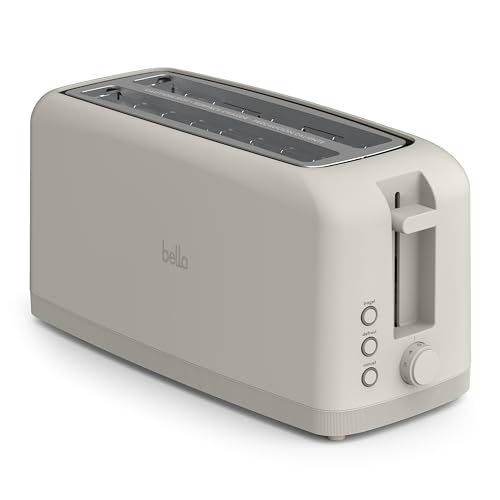
- bella Fits-Anywhere Slim Toaster — Check on Amazon — the stated slim line: a narrow body with one extra-long slot for four slices.
- BLACK+DECKER 2-Slice Toaster with Extra-Wide Slots — a standard-body classic with an extra lift lever, covered as an alternative. (covered below as a prose-only alternative; no Amazon link, for the reason explained in How These Picks Were Chosen)
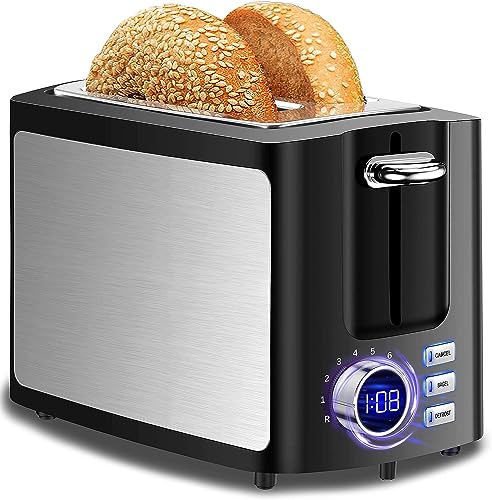
- Hommater 2 Slice Wide Slot Smart Toaster — a standard-body smart toaster with a countdown, covered as an alternative. (covered below as a prose-only alternative; no Amazon link, for the reason explained in How These Picks Were Chosen)
- Amazon Basics 2 Slice Toaster — a standard-body basic whose cord wrap helps storage, covered as an alternative. (covered below as a prose-only alternative; no Amazon link, for the reason explained in How These Picks Were Chosen)
- Elite Gourmet ECT1027B Cool-Touch Toaster — a standard-body cool-touch model for thick bread, covered as an alternative. (covered below as a prose-only alternative; no Amazon link, for the reason explained in How These Picks Were Chosen)
- Hamilton Beach 22634 Extra-Wide Slot Toaster — a standard-body family model with toast boost, covered as an alternative. (covered below as a prose-only alternative; no Amazon link, for the reason explained in How These Picks Were Chosen)
Read the full guide ↓
The best slim line toasters exist for a specific geometry problem: the narrow run of counter between the sink and the hob, the strip under the cabinets, the galley kitchen where a square appliance steals the only workspace. This guide polices the term strictly. Among six current toasters in the verified pool, only the bella Fits-Anywhere actually states a slim profile in its listing — a slim body with one extra long and wide slot — and it is therefore the only linked recommendation you will find here.
That may look like a short guide, but it is a useful one. The five standard-body alternatives are reviewed in full, prose-only, so you can see precisely what the wider market offers and what each machine would cost you in counter depth. Slim line buying is mostly the art of not being talked out of your own constraint by a countdown display or an extra button — and of confirming, with a tape measure, that the one true slim design fits the life you actually live.
Key Takeaways
- Only the bella Fits-Anywhere states a slim profile in its listing; it is this guide’s sole linked pick.
- The other five models are standard-body two-slice toasters, covered prose-only rather than dressed up as slim.
- The bella pairs its narrow body with one extra-long slot, so slim here does not mean small capacity — it holds four slices.
- Its listing states no shade count, wattage or named special modes; check the product page for controls.
- Measure depth, not width: a slim line toaster earns its keep along the wall, and needs clear air above it.
- If footprint is negotiable, the alternatives offer defrost buttons, displays and lift aids the bella listing does not claim.
In this guide
Quick Picks
One linked slim pick and five honestly badged standard-body alternatives. If your counter strip is genuinely narrow, the decision is already made; the table’s job is to show you what you are giving up for it, feature by feature.
| Toaster | Badge | Why it is here | Availability |
|---|---|---|---|
| bella Fits-Anywhere Slim Toaster | Best Overall — The Only Stated Slim Line | Stated slim body; one extra-long slot; four slices; oatmilk finish. | Check on Amazon |
| BLACK+DECKER 2-Slice Toaster with Extra-Wide Slots | Best Standard-Body Classic Alternative | Standard body; extra lift lever; seven shades; bagel mode. | Prose-only — see review |
| Hommater 2 Slice Wide Slot Smart Toaster | Best Standard-Body Display Alternative | Standard body; LCD countdown; nine shades; full function set. | Prose-only — see review |
| Amazon Basics 2 Slice Toaster | Best Standard-Body Storage Alternative | Standard body; cord wrap; stated 900W; plain button set. | Prose-only — see review |
| Elite Gourmet ECT1027B Cool-Touch Toaster | Best Standard-Body Cool-Touch Alternative | Standard body; cool-touch; 1.25-inch extra-wide slots. | Prose-only — see review |
| Hamilton Beach 22634 Extra-Wide Slot Toaster | Best Standard-Body Family Alternative | Standard body; toast boost; bagel and defrost; slide-out tray. | Prose-only — see review |
Notice what the alternatives compete on: everything except the one thing this keyword asks for. That is not their failure — it is the shape of the current market, in which slim line remains a specialist design. The rest of this guide treats that specialism seriously.
How These Picks Were Chosen
Listings were screened on a single stated attribute: does the title claim a slim, narrow or space-saving profile? The bella title does, twice over — it calls the machine a slim toaster and brands the design Fits-Anywhere. No other title in the pool makes any such claim; several describe generous extra-wide slots in standard two-slice bodies, which is the opposite design direction. Under the programme rule that a pick is linked only when its listing states the core attribute, one pick is linked and five are prose-only.
The alternatives were not padded in to make the guide look balanced; they are the actual choice a slim-line shopper faces in a real store, where the slim section is one model deep and the standard section is an aisle. Reviewing them fully, with their real strengths, lets you test your own constraint: if the Hommater’s countdown or the Hamilton Beach’s defrost button talks you out of the narrow counter strip, the constraint was a preference. If it cannot, it was a requirement, and the bella is your machine.
This is research-led work: stated attributes were compared, unstated ones flagged. The bella listing is the sparsest in the pool — no shade count, no wattage, no named bagel or defrost mode — and the guide preserves that spareness rather than borrowing numbers from elsewhere. Behavioural notes reason from design and from how pop-up toasters work generally. The bella link lets you check the latest price on Amazon; no other links appear, deliberately.
The 6 Best Slim Line Toasters — One True Slim Design and Five Standard-Body Alternatives
The bella review leads, because it is the guide. Each alternative review ends by naming what it would take for that machine to beat the bella in your kitchen — which is always a change of priorities, never a smaller footprint.

bella Fits-Anywhere Slim Toaster
Badge: Best Overall — The Only Stated Slim Line
Strengths
- The only pick here whose listing states a slim profile
- One extra-long slot takes long artisan slices that defeat standard slots
- Four-slice capacity in a narrow body is a rare combination
Trade-offs
- The listing title states no shade count, so verify the dial range on the product page
- The title states no wattage and names no bagel or defrost mode
- A single shared slot means four slices share one browning cycle
Key specs from the listing
- Format: slim toaster with one extra long and wide slot
- Capacity: 4 slices in the long slot
- Profile: slim, Fits-Anywhere design
- Colour: Oatmilk
The bella Fits-Anywhere is a slim line toaster in the literal, listing-stated sense: a narrow body organised around a single extra long and wide slot, finished in oatmilk, designed to live along the backsplash in the strip of counter that standard appliances render useless. Its elegance is that narrowness costs no capacity — the long slot holds four standard slices in a row, more than any two-slice alternative here — and it simultaneously solves the long-loaf problem, taking artisan slices lengthwise that square machines reject.
The trade-offs are the listing’s silences. No shade count is stated, no wattage, no named bagel or defrost mode, so the product page must confirm the control set before a frozen-bread household commits. One slot also means one shade per cycle for everything in it. But as a slim line proposition — the only one in this pool that a listing actually makes — it is complete: narrow where your kitchen is narrow, generous where your bread is long.
Best for: narrow counters, galley kitchens and long-loaf households / Not suited for: households needing two shades at once or a stated defrost mode
BLACK+DECKER 2-Slice Toaster with Extra-Wide Slots
Badge: Best Standard-Body Classic Alternative
Strengths
- Extra lift lever raises small items clear of the slots
- Seven shade settings give fine control at the darker end
- Removable crumb tray keeps cleaning straightforward
Trade-offs
- No defrost or reheat function is named in the listing title
- No wattage is stated in the title
- Utilitarian styling will not be the reason anyone chooses it
Key specs from the listing
- Format: 2-slice pop-up toaster
- Slots: extra-wide slots
- Shade settings: 7
- Functions named in the listing: bagel mode
- Lever: extra lift lever
- Crumb tray: removable
The BLACK+DECKER alternative is the standard body at its most familiar: extra-wide slots, bagel mode, seven shades, a removable crumb tray and the extra lift lever that rescues short slices. It is prose-only here because its listing claims no slim attribute, and standing on a counter it claims the usual square territory a two-slice machine occupies, in both directions.
It beats the bella the moment your priorities reorder themselves: if retrieval of muffins and crumpets is your daily irritation, its lift lever is a real answer the bella listing does not offer. What it cannot do is fit the strip of counter that started this search. Buy it as a good toaster, knowingly, not as a slim one.
Best for: standard counters that value easy small-slice retrieval / Not suited for: genuinely narrow counter strips
Hommater 2 Slice Wide Slot Smart Toaster
Badge: Best Standard-Body Display Alternative
Strengths
- LCD countdown removes the guesswork from waiting
- Nine shade settings are the widest range in this group
- Reheat function is named, which several rivals here omit
Trade-offs
- The display and smart positioning make it the least minimal design here
- No crumb tray is mentioned in the title
- No wattage is stated in the title
Key specs from the listing
- Format: 2-slice pop-up toaster
- Slots: wide slot design
- Shade settings: 9
- Display: LCD digital countdown timer
- Functions named in the listing: bagel, defrost, cancel, reheat
The Hommater is the standard-body alternative with the strongest non-footprint argument: an LCD countdown, nine shade settings and bagel, defrost, cancel and reheat functions, all named. In a kitchen with generous counters, that control set could reasonably outrank a slim profile, and this guide will not pretend otherwise. It is prose-only because its listing states no slim attribute, and its body is a conventional two-slice rectangle.
For the true slim-line shopper it changes nothing: information does not shrink a footprint, and its wide slots remain standard length. Its title also mentions no crumb tray. Consider it the measure of your own priorities — if this review tempts you, your kitchen probably has the counter to spare, and you are shopping a different guide than the one you opened.
Best for: ample counters that value timing and shade precision / Not suited for: narrow counter strips — a display does not shrink a body
Amazon Basics 2 Slice Toaster
Badge: Best Standard-Body Storage Alternative
Strengths
- The only pick whose title states its wattage, which helps comparison
- Cord wrap keeps a small counter tidier between uses
- Defrost, cancel and bagel buttons cover the full everyday set
Trade-offs
- Six browning settings are the joint-narrowest range here
- Plain black and silver styling is functional rather than decorative
- No extra-lift or toast-boost feature is named in the title
Key specs from the listing
- Format: 2-slice pop-up toaster
- Slots: extra wide slots, sized for bagels
- Browning settings: 6
- Power: 900W (the only wattage stated in this group)
- Functions named in the listing: defrost, cancel, bagel
- Crumb tray: removable
- Storage: cord wrap
- Finish: black and silver
The Amazon Basics is the storage-minded standard body: extra-wide slots, six browning settings, defrost, cancel and bagel buttons, a removable crumb tray, a stated 900W, and a cord wrap that keeps a put-away routine tidy. The cord wrap deserves its mention in a slim-line guide, because some narrow kitchens solve the problem by storing the toaster in a cupboard — and for that strategy, a standard body with a neat cord can be a workable, if less elegant, answer.
It remains prose-only: the listing states no slim profile, and a cupboard strategy costs a daily lift in and out that the bella’s leave-it-out narrowness avoids. Judge honestly which routine your household will actually sustain. A slim toaster on the counter beats a standard toaster in a cupboard you stop opening by February.
Best for: cupboard-storage kitchens with disciplined put-away habits / Not suited for: leave-it-out narrow counters
Elite Gourmet ECT1027B Cool-Touch Toaster
Badge: Best Standard-Body Cool-Touch Alternative
Strengths
- Cool-touch exterior is reassuring in busy or small kitchens
- Extra-wide slots are sized for bagels and thick-cut bread
- Six shade settings cover the everyday light-to-dark range
Trade-offs
- No defrost or reheat function is named in the listing title
- No crumb tray is mentioned in the title, so check the listing detail before assuming one
- No wattage is stated in the title
Key specs from the listing
- Format: 2-slice pop-up toaster
- Slots: 1.25-inch extra-wide slots
- Shade settings: 6
- Functions named in the listing: cancel, bagel
- Exterior: cool-touch, black finish
- Model: ECT1027B
The Elite Gourmet ECT1027B brings a cool-touch exterior and 1.25-inch extra-wide slots to a standard two-slice body, with six shades and bagel handling. In a slim-line context its interest is incidental: cool-touch sides matter most in tight kitchens where people brush past the toaster, which is precisely where slim machines also live. It is prose-only because its listing claims width for bread, not narrowness of body.
If your narrow kitchen also involves children or a tight pass-by, the cool-touch idea deserves weight — but it does not shrink the machine, and the listing names no defrost function or crumb tray in its title. It is a thoughtful standard toaster that a slim-line shopper may admire without being able to use.
Best for: tight kitchens that value cool-touch sides over footprint / Not suited for: narrow strips — cool-touch is not slim
Hamilton Beach 22634 Extra-Wide Slot Toaster
Badge: Best Standard-Body Family Alternative
Strengths
- Toast Boost lifts small slices higher for safer retrieval
- Bagel and defrost buttons cover the two most common special cases
- Slide-out crumb tray makes routine emptying quick
Trade-offs
- The blue finish will not suit every kitchen scheme
- No reheat or cancel function is named separately in the title
- No wattage is stated in the title
Key specs from the listing
- Format: 2-slice pop-up toaster
- Slots: extra-wide slot design
- Shade settings: 7
- Functions named in the listing: bagel, defrost, auto shutoff, toast boost
- Crumb tray: slide-out
- Colour: Kitchen Makeover Blue
- Model: 22634
The Hamilton Beach 22634 is the family standard body: bagel and defrost buttons, auto shutoff, Toast Boost, seven shades and a slide-out crumb tray in a blue finish. Families in small kitchens are exactly the readers torn by this guide — they need the functions and lack the counter — and the honest answer is that this machine serves the first need and not the second. Its listing states no slim attribute, so it is prose-only here.
Choose it if the family’s breakfast variety outranks the counter strip, and find it a permanent home with clear air above. Choose the bella if the strip is truly all you have. What this guide will not do is call the Hamilton Beach slim to spare you the decision; the decision is the purchase.
Best for: families whose function needs outrank their counter shortage / Not suited for: the narrowest kitchens
Comparison Table
The decisive column is the first one: only one row states a slim profile. Everything else in the table is what you would gain by abandoning the slim brief, set out plainly so the exchange is visible.
| Toaster | Badge | Listing-stated highlights | Link |
|---|---|---|---|
| bella Fits-Anywhere Slim Toaster | Best Overall — The Only Stated Slim Line | SLIM stated; one extra long and wide slot; 4 slices; shade count not stated in title | Check on Amazon |
| BLACK+DECKER 2-Slice Toaster with Extra-Wide Slots | Best Standard-Body Classic Alternative | No slim claim; 2-slice standard body; extra-wide slots; extra lift lever; 7 shades | Prose-only |
| Hommater 2 Slice Wide Slot Smart Toaster | Best Standard-Body Display Alternative | No slim claim; 2-slice standard body; LCD countdown; 9 shades; full functions | Prose-only |
| Amazon Basics 2 Slice Toaster | Best Standard-Body Storage Alternative | No slim claim; 2-slice standard body; 900W stated; cord wrap; removable tray | Prose-only |
| Elite Gourmet ECT1027B Cool-Touch Toaster | Best Standard-Body Cool-Touch Alternative | No slim claim; 2-slice standard body; 1.25-inch extra-wide slots; cool-touch | Prose-only |
| Hamilton Beach 22634 Extra-Wide Slot Toaster | Best Standard-Body Family Alternative | No slim claim; 2-slice standard body; toast boost; bagel and defrost; slide-out tray | Prose-only |
If you are still reading the alternatives column-first, ask whether the feature that tempts you would still tempt you at the cost of your only workspace. Readers whose loaves are long as well as counters narrow should continue to Best Slim Long Slot Toasters, where length and slimness are judged together.
How to Choose the Best Slim Line Toasters: Measure First, Then Decide
Slim line buying begins with a tape measure, not a listing. Measure the depth of the counter strip the toaster must occupy — front edge to backsplash — and the height clearance beneath any cabinets, remembering that a running toaster vents heat and steam straight up and needs air above it. Then measure the run’s length, because the slim bargain trades depth for length: the bella’s body is narrow precisely because its slot runs long. A strip that is narrow but short may fit neither design, and discovering that before ordering is the entire game.
Understand what the slim design gives and withholds. The bella gives four-slice capacity and long-loaf access in a narrow body — a genuinely rare pairing — and withholds, at least in its listing, any statement of shade count, wattage or special modes. A household that toasts fresh bread at one shade will never notice the silences. A household built on frozen slices should verify the controls on the product page, and should weigh the alternatives’ named defrost buttons (Hamilton Beach, Hommater, Amazon Basics) as the real cost of narrowness.
Beware the two false friends of this category. The first is the standard toaster described by a retailer or a friend as “quite compact” — compact is not a stated slim profile, and every alternative in this guide is a standard two-slice body whatever its charms. The second is the cupboard strategy: storing a standard toaster, cord wrap and all, and lifting it out daily. It works for the disciplined and fails the rest, usually within a month. The bella’s proposition is that the toaster earns a permanent, narrow home instead. Our overview of Best Slim Toasters covers the broader slim market beyond the line designs.
Styling plays a larger role in slim buying than elsewhere, because a leave-it-out appliance on a narrow run is always in view. The bella’s oatmilk finish is a deliberate, soft presence; the alternatives range from the Hamilton Beach’s cheerful blue to the Amazon Basics’ functional black and silver. On a small counter there is nowhere for an appliance to hide, so choose a finish you enjoy seeing at arm’s length, every day, in morning light.
The final test is behavioural. Stand at your counter and mime the morning: bread from its home, slices in, lever down, workspace still usable beside the machine, toast out, crumbs dealt with weekly. The slim line design passes that mime in kitchens where every alternative fails at the workspace step. If your mime passes with a standard body too, buy whichever alternative serves your bread best and ignore this category with a clear conscience.
How to Set Up and Use a Slim Line Toaster Well
Position the machine along the wall with its long axis parallel to the backsplash, leaving clear space above for heat and steam and enough room at the front to lift long slices vertically out of the slot. Route the cord behind the machine rather than across the workspace the slim design just saved you. In the first week, calibrate the shade control on your standard loaf — start mid-range, adjust one step at a time — and note the household setting somewhere durable.
Load the long slot in a single, unoverlapped row. Centre a lone long slice within the slot’s span; group standard slices of similar thickness together, since everything in one cycle shares one browning outcome. Bagel halves and thick slices should sit flat and unforced — the slot is stated as wide as well as long, but forcing any bread distorts both the slice and the result.
Problem: toast browns more at the centre of the row than at the ends. → Check for overlap and for slices thinner than their neighbours; group by thickness and accept that the shared cycle favours uniformity of input. Problem: the counter strip feels hotter than expected. → Confirm the machine is not pushed fully against the backsplash or tucked under a low cabinet while running; slim kitchens need the air gap most. Problem: crumbs accumulate along the long slot. → Unplug, cool fully, and shake gently over a bin weekly; a long chamber collects a long line of crumbs.
Wipe the exterior while cool with a soft, barely damp cloth — pale finishes like oatmilk show smudges that a darker body hides, and a slim toaster lives permanently on display, so its cleanliness is part of its design working. Never immerse the body or spray into the slot. Keep the surrounding strip clear of oils and sprays, which drift onto any leave-it-out appliance.
The same care rhythm applies, mutatis mutandis, to the standard-body alternatives — trays emptied weekly, exteriors wiped cool, air kept clear above. Readers who conclude that a simpler standard machine suits their routine better will find the ownership basics for compact machines gathered in Best Small And Compact Toasters.
Designing a Small Kitchen Around a Slim Line
Small-kitchen design is the management of strips and sightlines. A slim line toaster respects both: it occupies the dead zone along the backsplash, leaves the front of the counter as workspace, and presents a low, calm profile rather than a square obstacle. Placed at the end of a run, near the bread storage and the butter dish, it creates a breakfast station that does not expand into the cooking zone — the closest a small kitchen gets to a dedicated area without renovation.
The principle generalises when you shop the rest of a small kitchen: prefer appliances whose shape matches the strip they will occupy, and be suspicious of any “compact” claim that a listing does not actually state. The bella is in this guide because its listing makes the claim in words. Demand the same explicitness from every appliance that asks for permanent residence on a small counter.
Slim Line vs Slim: Is There a Difference?
Retail language uses slim, slim line and slimline almost interchangeably, and listings rarely define their terms. In practice, slim line designs are usually the long, narrow single-slot format — a line rather than a block — while slim alone can describe any reduced-footprint body, including narrow two-slot machines. This guide treats the bella as the reference for both ideas because it is the only pool model stating slimness at all, but the distinction matters when you shop beyond it.
The practical advice is to shop dimensions and stated attributes, never adjectives. A listing that states a slim profile and a long slot, as the bella’s does, can be trusted to the extent of its words; a listing silent on profile should be assumed standard-bodied, as all five alternatives here are. Readers focused on footprint in the broadest sense can compare this guide with Best Slim Long Slot Toasters, where the same machine is judged on its slot length as well as its profile.
The Counter Strip: Anatomy of the Space Slim Line Saves
Most kitchens, whatever their size, contain one underused asset: the strip of counter along the backsplash, too shallow for a chopping board session or a stand mixer, and therefore colonised by whatever drifts there. A slim line toaster is designed for exactly that strip — long, shallow, and permanently resident — converting dead depth into a working breakfast station while leaving the front of the counter, where people actually prepare food, entirely clear. That conversion is the product; the toasting, any machine here can do.
Audit your own strip before shopping. It needs length for the machine’s long body, a socket within cord reach that does not force a crossing over workspace, and freedom from the spray zones of sink and hob. Kitchens that pass that audit get a disproportionate reward from a slim line design: a whole appliance absorbed by space that was previously storing crumbs and good intentions. Kitchens that fail it should not force the format — the alternatives in this guide exist for honest counters too.
Slim Line Living: A Week With a Narrow Toaster
Day one with a slim line machine is about placement and calibration: the run along the wall, the shade dial learned on the house loaf. By day three, the benefit that owners report is not space, exactly, but the absence of negotiation — the toaster no longer competes with the board, the bowl or the cookbook stand, because it does not live where they live. Breakfast stops rearranging the kitchen. In a small home, that calm compounds across every meal the counter hosts.
The frictions, honestly kept, are the format’s own: the shared shade across a batch, the weekly shake-out of a long slot, the need to keep the strip’s boundary defended against migrating objects. None of these is a defect; they are the standing terms of the design, and households that accept them in advance tend to keep the machine for years. Households that discover them by surprise tend to blame the toaster — which is why this guide states the terms in every section, including this one.
Beyond Toasters: The Slim Line Principle in Small Kitchens
The bella’s lesson generalises across the small kitchen: prefer appliances whose shape matches the strip they will occupy, whose listings state their format plainly, and whose capacity is organised along the wall rather than into the room. Kettles, coffee machines and knife storage all have long, shallow answers for those who shop by stated dimensions rather than by adjectives. The discipline is identical in every category — measure the strip, read the listing literally, and distrust any compactness that exists only in a photograph.
It is worth saying plainly that this principle is also a defence against the opposite error: the standard appliance bought in hope. Every alternative in this guide is a good toaster, and each would be a bad slim line toaster, because hope is not a dimension. The kitchens that work are the ones where every resident appliance can answer, in stated words, the question of why its shape suits its place.
Sockets, Cords and Other Unglamorous Deciders
Slim line placements live or die on infrastructure nobody photographs. The strip along the backsplash needs a socket within the cord’s reach that does not route the cable across the sink, the hob or the workspace the machine just liberated; a cord that must cross water or heat will eventually veto the placement no matter how elegant the profile. Check, too, what else shares that socket run — a kettle and a toaster on one spur, run together at a busy breakfast, is the kind of detail that turns a calm design into a tripped breaker and a household argument.
The bella’s listing does not state a wattage, so the product page check this guide keeps recommending carries an electrical purpose as well as a controls purpose: know the machine’s draw before assigning it a permanent home on a shared circuit. This is unglamorous diligence, and it is precisely the diligence that separates installations that feel designed from arrangements that merely look designed on the first morning.
Slim Line in Open-Plan and Multi-Use Spaces
Open-plan living has quietly become a slim line stronghold, because in a room that is simultaneously kitchen, dining space and sitting room, every appliance is furniture. A long, low, oatmilk-finished machine along the wall reads as part of the room’s composition in a way that a square black box never quite manages, and its working face — one slot, one row of toast — is tidy in operation as well as at rest. For studio dwellers especially, the toaster is visible from the sofa, the desk and the bed; its profile is a daily aesthetic fact.
That visibility cuts both ways, and the honest slim line owner keeps the machine wiped, the crumb routine kept and the surrounding strip uncluttered, because the strip is now a sightline. Households unwilling to maintain that standard may prefer the standard-body alternative they can park less prominently — a legitimate choice, and one this guide’s alternatives serve well. Slim line design rewards the tidy; it merely exposes everyone else, kindly but completely.
Slim Line for Breakfast Bars and Islands
Not every slim line placement is a confession of a tiny kitchen. Breakfast bars and island ends present the same geometry in larger homes: a long, shallow ledge where a household eats, works and charges its life, and where a square appliance would colonise the seating. A slim machine along the back edge of such a ledge creates a self-serve toast station that guests and teenagers can use without entering the cooking triangle — a small piece of domestic zoning that hosts quietly appreciate at every crowded brunch.
The placement rules travel with the format: clear air above, a socket that does not drape a cord across knees or workspace, and the strip’s boundary defended against the ledge’s natural drift toward paperwork and devices. Where those rules hold, the slim line design stops being a small-kitchen apology and becomes what it always was — a shape that fits the way people actually use long, shallow surfaces.
How Slim Line Ages: Finishes, Hinges of Habit and Resale
A leave-it-out appliance ages in public, so its finish and its daily wiping regime decide its fifth year more than its elements do. The bella’s oatmilk is a forgiving middle tone for kitchen light, but any pale finish on a permanent counter will record the household’s habits honestly. Owners who build the weekly wipe and shake-out into an existing routine — while the kettle boils, while the counter is cleared — find the machine looks intentional for years; the design rewards rhythm because it was designed for residence.
There is also a modest second-life point: honestly specified machines, whose listings state their format and capacity plainly, are easy to re-home, gift or resell, because the next owner can judge fit from words alone. The standard alternatives share that virtue within their own category. What neither group survives is being bought for the wrong kitchen — which returns, as every section of this guide returns, to the tape measure.
The Strip, Defended: Small Boundaries That Keep Slim Line Working
Every slim line owner eventually fights the same quiet war: the strip attracts. Spices migrate toward it, post accumulates at its end, a utensil pot declares independence on it. The defences are physical and trivial — the bread board stored vertically at the strip’s end as a full stop, the machine itself placed with deliberate finality, a household agreement that the strip is a workstation and not a shelf. Kitchens that hold the boundary keep the format’s benefit indefinitely; kitchens that lose it slowly re-create the cluttered counter the machine was bought to escape.
Treat the boundary as part of the purchase, because it is: the bella buys you a geometry, and geometry only pays while it is respected. The good news is that the defence is self-reinforcing — a clear strip is visibly useful every morning, and households protect what they can see working.
Common Buying Mistakes
The first mistake is buying a standard toaster on a verbal assurance of compactness. If the listing does not state a slim profile, the machine is a standard body, and it will occupy standard space on the morning it arrives. Measure your strip and read listings literally.
Second, slim shoppers forget the vertical dimension. A narrow machine under a low cabinet still vents heat upward, and long slices need lifting room. Depth is the headline measurement, but clearance decides whether the placement is actually livable.
Third, buyers sacrifice a needed function without noticing. If your household toasts from frozen daily, the bella listing’s silence on defrost must be resolved on the product page before purchase — not discovered at the first frozen breakfast, when the slim body will be blamed for a controls question that was always separate.
Final Recommendation
The recommendation writes itself, because the category honestly policed contains one name: the bella Fits-Anywhere. It is the only toaster in this pool whose listing states a slim profile, and it pairs that narrow body with four-slice, long-loaf capacity that no standard alternative matches at any width.
Let an alternative win only by changing the brief in daylight: a countdown (Hommater), a defrost-led family routine (Hamilton Beach), a cupboard strategy (Amazon Basics). If the narrow strip is your kitchen’s law, the bella obeys it, and nothing else here does.
Check the bella Fits-Anywhere Slim Toaster on Amazon.
Frequently Asked Questions
What does slim line mean for a toaster?
A long, narrow body — typically built around a single long slot — designed to sit along the backsplash in the strip of counter a standard square toaster wastes. In this pool only the bella Fits-Anywhere states a slim profile in its listing, which is why it is the sole linked pick.
Why do the other five toasters have no links?
Their listings state no slim, narrow or space-saving attribute; they are standard two-slice bodies. This guide links only picks whose listings state the keyword’s core attribute, and reviews the rest prose-only so you can still weigh their features honestly.
Does a slim toaster hold fewer slices?
Not this one. The bella’s single extra-long slot holds four standard slices in a row — more than any two-slice alternative here — and takes long artisan slices lengthwise. Slim describes the body’s depth, not its capacity.
What are the bella’s shade settings and wattage?
Its listing title states neither, and this guide does not invent them. Check the product page through the link in this guide for the control details, especially if you need a named defrost or bagel mode for a frozen-bread routine.
Will a slim line toaster fit under my cabinets?
The body is low and narrow, but the real questions are clearance above for heat and steam while running, and room to lift long slices out vertically. Measure both before ordering; a slim footprint solves the counter problem, not the cabinet problem.
Is the cupboard-storage alternative worth it?
For disciplined households, a standard toaster with a cord wrap, like the Amazon Basics, can live in a cupboard and come out daily. Most households, honestly assessed, stop lifting within weeks — which is the entire case for a leave-it-out slim design.
Slim line or single slot — which guide should I follow?
They converge on the same machine here, for different reasons: this guide judges the profile, while a single-slot analysis judges the slot architecture. If both constraints are yours, the bella answers both; if only one is, read that guide’s reasoning too.