Disclosure: topratedkitchenware.com is reader-supported. When you buy through links on our site, we may earn an affiliate commission from Amazon and other retailers, at no extra cost to you.
Where to buy
This shortlist of the best small charcoal barbecue grills is deliberately transparent about what is linked and what is not. Linked picks carry through to Amazon; any pick marked prose-only is reviewed in full but has no purchase link, for the reason stated in its review. Read the full guide ↓
- Royal Gourmet Charcoal Grill with Offset Smoker CC1830W, 783 Sq. In. — prose-only in this guide (see its review for why)
- Feasto Heavy-Duty 30-Inch Charcoal Grill with Offset Smoker, 831 Sq. In. — prose-only in this guide (see its review for why)
- Char-Broil Portable Convective 1-Burner Propane Gas Grill (465133010) — prose-only in this guide (see its review for why)
- Royal Gourmet CC1830S Charcoal Grill and Offset Smoker, 783 Sq. In. — prose-only in this guide (see its review for why)
- Weber Original Kettle Premium Charcoal Grill, 22-Inch — Check on Amazon
- Weber Original Kettle Charcoal Grill, 22-Inch — Check on Amazon
The best small charcoal barbecue grills occupy a sweet spot that bigger charcoal machines cannot enter: enough grate for a family’s meal, a footprint a small yard or patio can spare, and the full charcoal experience, fire, smoke and vent craft, without a barrel’s ceremony. This verified pool contains exactly two grills that live in that spot, both of them Weber 22-inch kettles, the Premium with its built-in thermometer and the classic Original, and those two are linked. The other four picks fail one of this keyword’s two tests: three are charcoal but huge, barrel smoker combos from 783 to 831 sq. in., and one is small but burns propane, so all four are reviewed prose-only with the reason stated in each review.
A two-kettle shortlist might look narrow until the design’s history is considered: the kettle is the most proven shape in charcoal, and the real decision between its two configurations here, thermometer and refinements versus classic simplicity, is the decision most small-charcoal buyers actually face. The prose-only barrels document what the alternative philosophy buys, capacity and offset smoking, and the gas portable documents the convenience pivot. Readers can compare the wider charcoal field at Best Small Portable Charcoal Grills and Best Small Barbecue Grills after this page settles the kettle question.
Key Takeaways
- The charcoal screen and the size screen together leave two linked picks: the Weber Original Kettle Premium 22-inch and the classic Weber Original Kettle 22-inch, the compact end of real charcoal grilling.
- Three charcoal picks are prose-only on size alone: barrel smoker combos at 783 to 831 sq. in. are party machines, not small grills.
- One pick is prose-only on fuel: the portable Char-Broil burns propane, and a charcoal guide does not link gas however portable it is.
- Between the kettles, the choice is equipment: the Premium adds a built-in thermometer and upgraded ash handling; the classic keeps the design pure and simple.
- Check the latest price on Amazon for the two kettles, and read the barrel reviews as the capacity case for readers with yards and crowds.
In this guide
Quick Picks
The six picks at a glance. Badges are used consistently in the detailed reviews below, and prose-only picks are badged as what they are.
| Pick | Badge | Why it stands out |
|---|---|---|
| Royal Gourmet CC1830W Charcoal Grill with Offset Smoker | Prose-Only: 783 Sq. In., Not Small | Adjustable fire grates let you raise or lower the coals, the classic charcoal heat control |
| Feasto 30-Inch Charcoal Grill with Offset Smoker | Prose-Only: 831 Sq. In., Not Small | 831 sq. in. is party scale: the biggest verified grate in this pool |
| Char-Broil Portable 1-Burner Propane Grill | Prose-Only: Gas, Not Charcoal | A genuinely portable single-burner format: the smallest gas footprint in this pool |
| Royal Gourmet CC1830S Charcoal Grill and Offset Smoker | Prose-Only: 783 Sq. In., Not Small | An adjustable charcoal pan and side door make fire management easier than most barrel grills |
| Weber Original Kettle Premium 22-Inch | Best Overall Small Charcoal Grill | The 22-inch kettle is the reference design for charcoal grilling: simple, proven, versatile |
| Weber Original Kettle 22-Inch | Best Value Small Charcoal Grill | The classic kettle in its simplest form: fewer parts, nothing unnecessary |
How These Picks Were Chosen
Picks were verified through the Creators API on the date in the sources file: titles, brands, fuels, sizes and features confirmed against API responses. The screen applied both halves of the keyword in order: charcoal fuel first, which eliminated the propane portable, then genuinely small format, which eliminated the three barrel smoker combos whose grates run from 783 to 831 sq. in. before their smoker boxes and tables are counted.
The two surviving kettles are linked; the four failing picks are prose-only, with no links and no images, and the reduction is recorded in the sources file. The screen is deliberately indifferent to brand and price tier: the kettles pass because a 22-inch kettle is the compact end of full charcoal cooking, not because of the badge on the lid. This guide is research-led from the verified listings and claims no hands-on testing; specifications are confined to what the listings state.
The 6 Best small charcoal barbecue grills — Detailed Reviews
Royal Gourmet Charcoal Grill with Offset Smoker CC1830W, 783 Sq. In.
Badge: Prose-Only: 783 Sq. In., Not Small
Prose-only pick: no Amazon link and no image. Charcoal fuel matches, but 783 sq. in. with offset smoker and tables is a large workstation, failing the small core; reviewed prose-only, no link, no image.
Strengths
- Adjustable fire grates let you raise or lower the coals, the classic charcoal heat control
- A front shelf, wooden table and hooks keep tools and trays where the cook stands
- 783 sq. in. plus an offset smoker covers both party grilling and slow smoking
Trade-offs
- At 783 sq. in. with tables and a smoker box, this is a large unit, not a small grill
- Wooden and shelf surfaces need weather care that an all-metal grill does not
- Charcoal plus offset smoking is the most hands-on cooking in this pool
Key specs (from the verified listing)
- Fuel: charcoal
- Cooking area: 783 sq. in. (per listing)
- Model: CC1830W (per listing)
- Features: wooden table / front shelf, hooks, adjustable fire grates (per listing)
- Use cases listed: outdoor barbecue and camping
Royal Gourmet’s CC1830W is a 783 square inch barrel charcoal grill with an offset smoker, a wooden table and front shelf, tool hooks and adjustable fire grates. The adjustable grate is the detail experienced charcoal cooks look for first: raising the coal bed toward the food or dropping it away is direct, mechanical heat control, older than any dial and just as effective. Around that core, the shelves and hooks make it a workstation, and the smoker box extends it into low-and-slow territory. It is also, unambiguously, a large grill: the grate area alone is more than double a compact gas grill’s, before the tables are counted. The listing mentions camping among its uses, but a unit of this size camps only in the sense of a basecamp with a vehicle beside it. Each keyword below therefore weighs it as what it is: a capable, full-size charcoal workstation whose fit depends entirely on the brief.
Prose-only on size: its adjustable fire grates are the best fire control among the barrels, and its workstation layout is thoughtful, but 783 sq. in. with tables is a station. Its review serves the host, not the small-grill buyer.
Best for: charcoal cooks who entertain and want adjustable fire grates and a workstation layout / Not suited for: small-space cooks and anyone needing portability
Feasto Heavy-Duty 30-Inch Charcoal Grill with Offset Smoker, 831 Sq. In.
Badge: Prose-Only: 831 Sq. In., Not Small
Prose-only pick: no Amazon link and no image. Charcoal fuel matches, but a 30-inch, 831 sq. in. heavy-duty grill is the pool’s largest, failing the small core; reviewed prose-only, no link, no image.
Strengths
- 831 sq. in. is party scale: the biggest verified grate in this pool
- Heavy-duty build and a side table suit long, social cooking sessions
- Offset smoker adds genuine smoking capacity to direct charcoal heat
Trade-offs
- A 30-inch, 831 sq. in. heavy-duty unit is the furthest point in this pool from a small grill
- Size and weight make it a permanent fixture; moving it is a two-person decision
- Big charcoal fires mean big ash loads and long cool-downs before cleaning
Key specs (from the verified listing)
- Fuel: charcoal
- Size: 30-inch grill (per listing)
- Cooking space: 831 sq. in. (per listing)
- Format: heavy-duty barrel with offset smoker and side table (per listing)
- Colour: golden (per listing)
The Feasto is a heavy-duty 30-inch charcoal barrel grill with an offset smoker, a side table and 831 square inches of cooking space, finished in a golden colour that sets it apart visually from the black barrels around it. Its design centre is the long, social cookout: a large fire, a full grate, a smoker box working at the side and a table for the cook’s tools and trays. For a household whose weekends look like that, the specification is coherent and generous. For almost any other brief it is simply very large, and this guide does not pretend otherwise: it will not fit a small patio’s spare corner, a balcony, a boat or a car boot, and its fires are sized for crowds. It appears in these guides as the pool’s maximum, the reference point that makes the genuinely compact grills’ virtues concrete, and its reviews below are written in exactly that spirit.
Prose-only on size: at 831 sq. in. it is the pool’s ceiling, a heavy-duty party machine in a striking finish. It defines, by contrast, the most cooking area a reader of this keyword is choosing not to house.
Best for: hosts running long, large charcoal cookouts from a permanent spot / Not suited for: anyone with limited space or a need to move the grill
Char-Broil Portable Convective 1-Burner Propane Gas Grill (465133010)
Badge: Prose-Only: Gas, Not Charcoal
Prose-only pick: no Amazon link and no image. Propane gas grill: wrong fuel for a charcoal keyword, however portable its format; reviewed prose-only, no link, no image.
Strengths
- A genuinely portable single-burner format: the smallest gas footprint in this pool
- Propane convenience with push-button style simplicity: light it and cook, no charcoal to manage
- 11,000 BTU from one burner is honest power for burgers, dogs and a couple of steaks
Trade-offs
- One burner means one heat zone: no indirect side for slow or two-zone cooking
- The cooking area suits one or two people; a family cookout means batches
- Aluminized steel is a practical finish, not a premium one, and rewards being kept dry
Key specs (from the verified listing)
- Burners: 1 burner, propane gas
- Output: 11,000 BTU (per listing)
- Body: aluminized steel, black
- Format: portable grill (per listing)
The Char-Broil Portable Convective grill, model 465133010, is the pool’s true portable gas grill: a single propane burner rated at 11,000 BTU in an aluminized steel body, built to be carried rather than parked. Everything about it follows from that brief. It heats quickly because there is little mass to heat, it cooks honestly for one or two people, and it stores in the kind of space, a balcony corner, a car boot, a camper locker, where a full-size grill simply cannot live. The convective design wraps heat around food under the lid, which helps with thicker items like chicken pieces. Its limits are the mirror image of its virtues: one burner is one temperature zone, the grate fills fast, and there is no side burner, no cabinet and no second act. Judged as a portable, it is complete; judged as a backyard centrepiece, it was never trying to be one, and this guide scores it strictly on the job its name describes.
Prose-only on fuel: the pool’s most portable grill, excluded by a single word in the keyword, charcoal. Gas readers should follow its virtues in the gas guides; here it marks the convenience boundary of the charcoal brief.
Best for: singles, couples, balcony and camping cooks who need gas grilling that travels / Not suited for: families and entertainers who need capacity and heat zones
Royal Gourmet CC1830S Charcoal Grill and Offset Smoker, 783 Sq. In.
Badge: Prose-Only: 783 Sq. In., Not Small
Prose-only pick: no Amazon link and no image. Charcoal fuel matches, but 783 sq. in. with offset smoker and tables is a large station, failing the small core; reviewed prose-only, no link, no image.
Strengths
- An adjustable charcoal pan and side door make fire management easier than most barrel grills
- A lid thermometer supports covered and offset cooking without guesswork
- 783 sq. in. plus tables is a complete outdoor cooking station
Trade-offs
- 783 sq. in. with tables and a smoker box is a large grill, despite the camping mention in its listing
- Charcoal and offset smoking demand the most attention of any format in this pool
- Tables and shelves enlarge the stored footprint well beyond the barrel itself
Key specs (from the verified listing)
- Fuel: charcoal
- Cooking area: 783 sq. in. (per listing)
- Model: CC1830S (per listing)
- Features: adjustable charcoal pan, side door, lid thermometer, front and side tables (per listing)
- Use cases listed: outdoor camping (per listing)
The Royal Gourmet CC1830S pairs a 783 square inch charcoal barrel and offset smoker with the working details charcoal cooks actually use: an adjustable charcoal pan for heat control, a side door for tending the fire without lifting the grate, a lid thermometer, and front and side tables. It is a thoughtfully equipped version of the big barrel format, aimed at outdoor cooking sessions where the grill is the kitchen for the day. The listing includes camping among its settings, and at a drive-in basecamp with a large group that is conceivable, but the machine’s size should be read honestly: it is a backyard-scale station that travels only in a vehicle with room to spare. In small-grill guides it is covered as the equipped end of the barrel class, useful as a contrast and as a genuine recommendation only where the brief is capacity rather than compactness.
Prose-only on size: the best-equipped barrel here, with its adjustable pan, side door and thermometer, and still a 783 sq. in. station. Equipment cannot shrink a format, and this review is the proof by example.
Best for: charcoal hosts who want fire-management features and a full cooking station / Not suited for: small-space and travelling cooks
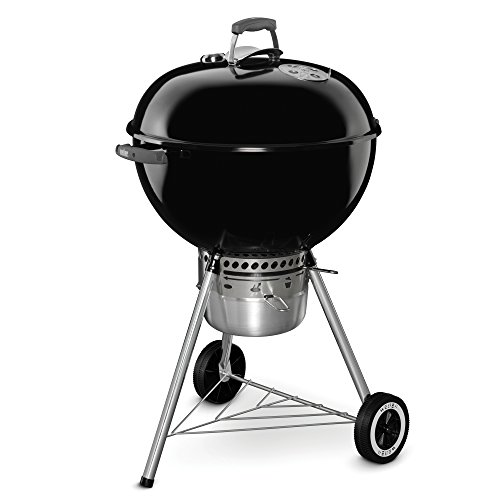
Weber Original Kettle Premium Charcoal Grill, 22-Inch
Badge: Best Overall Small Charcoal Grill
Strengths
- The 22-inch kettle is the reference design for charcoal grilling: simple, proven, versatile
- A built-in thermometer and proper dampers make two-zone and indirect cooking practical
- The One-Touch system sweeps ash into a catcher, the easiest charcoal cleanup here
Trade-offs
- A kettle is a stationary backyard grill, compact for its class but not a portable
- Charcoal process applies in full: lighting time, ash and no instant off
- The grate suits a family, but very large parties will still cook in batches
Key specs (from the verified listing)
- Size: 22-inch charcoal kettle (per listing)
- Features: built-in lid thermometer, heat control dampers (per listing)
- Cleaning: One-Touch cleaning system (per listing)
- Colour: black
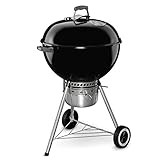
The Weber Original Kettle Premium is the 22-inch charcoal kettle in its upgraded form: a built-in lid thermometer, heat control dampers and the One-Touch cleaning system that sweeps ash into a removable catcher. The kettle shape is the most enduring design in charcoal, because the domed lid and round grate support everything from a fierce direct sear to a banked-coal indirect roast, and the Premium’s additions target the format’s traditional annoyances, temperature guesswork and ash handling. At 22 inches it is the compact end of full charcoal grilling: a family grate on a footprint far smaller than any barrel smoker in this pool, light enough to move around a yard, and supported by the deepest accessory ecosystem in charcoal. It is not a travel grill, and charcoal’s process, lighting, waiting, ashing, is undiminished. Within a small-charcoal brief, though, it is the benchmark the portable picks are measured against, and its reviews below treat it as exactly that.
Linked, and the guide’s first recommendation: the Premium kettle adds the thermometer and ash system that remove charcoal’s two traditional frictions, temperature guessing and ash scooping, from the classic design. For most small-charcoal buyers, that is the complete answer.
Best for: charcoal cooks who want the proven kettle format with thermometer and easy ash handling / Not suited for: travellers who need a grill that packs into a car
Weber Original Kettle Charcoal Grill, 22-Inch
Badge: Best Value Small Charcoal Grill
Strengths
- The classic kettle in its simplest form: fewer parts, nothing unnecessary
- Precise dampers give the heat control that makes kettle cooking versatile
- One-Touch ash sweeping keeps the charcoal routine as clean as the format allows
Trade-offs
- No built-in thermometer in this configuration, so a probe or experience fills the gap
- A stationary backyard kettle, compact for charcoal but not portable
- Charcoal’s full process applies: plan lighting and cool-down into every cook
Key specs (from the verified listing)
- Size: 22-inch charcoal kettle (per listing)
- Features: One-Touch cleaning system, precise temperature control dampers (per listing)
- Colour: black
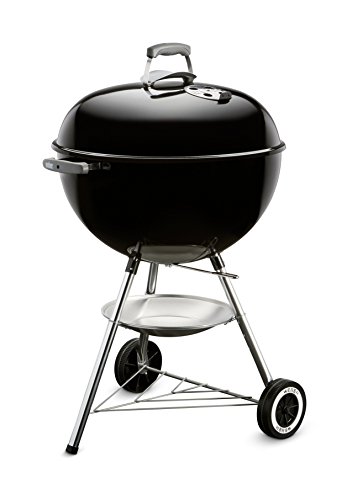
The Weber Original Kettle in its classic 22-inch form is the baseline against which charcoal grills are described: a round kettle, a plated grate, precise temperature control dampers and the One-Touch cleaning system. It omits the Premium’s built-in thermometer and keeps everything else that makes the design work, two-zone fires, covered roasting, direct searing and ash that sweeps out rather than being scooped. For a buyer who cooks by feel or owns a probe thermometer, that omission is a saving rather than a sacrifice. Its classification in these guides is the same as its sibling’s: the compact end of real charcoal grilling, a family-capable grate on a modest footprint, stationary rather than portable, and supported by decades of parts and accessories. Where a keyword asks for small charcoal barbecue grills, the two kettles are the pool’s honest centre, and the reviews below explain what each configuration gives and withholds.
Linked, and the purist’s kettle: the classic design with dampers and One-Touch cleaning, minus the lid thermometer. Cooks who work by feel or own a probe lose nothing that matters, and gain the simplest version of a proven machine.
Best for: charcoal purists who want the classic kettle and cook happily without a lid thermometer / Not suited for: travellers and cooks who want push-button convenience
Comparison Table
All six picks side by side on the attributes the verified listings confirm. No prices and no ratings are printed, because both change; check the latest price on Amazon on any linked pick.
| Pick | Badge | Format (from listing) | Key verified detail |
|---|---|---|---|
| Royal Gourmet CC1830W Charcoal Grill with Offset Smoker | Prose-Only: 783 Sq. In., Not Small | Fuel: charcoal | Cooking area: 783 sq. in. (per listing) |
| Feasto 30-Inch Charcoal Grill with Offset Smoker | Prose-Only: 831 Sq. In., Not Small | Fuel: charcoal | Size: 30-inch grill (per listing) |
| Char-Broil Portable 1-Burner Propane Grill | Prose-Only: Gas, Not Charcoal | Burners: 1 burner, propane gas | Output: 11,000 BTU (per listing) |
| Royal Gourmet CC1830S Charcoal Grill and Offset Smoker | Prose-Only: 783 Sq. In., Not Small | Fuel: charcoal | Cooking area: 783 sq. in. (per listing) |
| Weber Original Kettle Premium 22-Inch | Best Overall Small Charcoal Grill | Size: 22-inch charcoal kettle (per listing) | Features: built-in lid thermometer, heat control dampers (per listing) |
| Weber Original Kettle 22-Inch | Best Value Small Charcoal Grill | Size: 22-inch charcoal kettle (per listing) | Features: One-Touch cleaning system, precise temperature control dampers (per listing) |
How to Choose a Small Charcoal Barbecue Grill
Start by locating the size line honestly, because charcoal marketing blurs it. In this pool the line is unmistakable: a 22-inch kettle, one round grate, no smoker box, no tables, is the compact end of full charcoal grilling, while every barrel here starts at 783 sq. in. and adds furniture. As a rule, small charcoal means kettles and portable bowls; the moment a listing says barrel, offset or combo, you have left the class. Choose the kettle class if your yard, patio or storage is modest, and reserve barrels for the household whose guest list is the point.
Within the kettle class, choose by equipment philosophy. The Premium configuration adds a built-in lid thermometer and the upgraded One-Touch ash system: both target real frictions, knowing the fire’s temperature without lifting the lid, and clearing ash with a sweep rather than a scoop. The classic configuration keeps dampers and One-Touch cleaning in their original, simpler form, trusting the cook’s hand and experience. Neither is a compromise; they are the same proven fire bowl wearing different levels of instrumentation, and Best Small Gas Barbecue Grills exists for readers who discover, reading this, that instrumentation is really a wish for a dial.
Finish with the ownership checks: damper movement should be smooth, the grate should sit level, and the ash system should match your tolerance for cleanup, because charcoal asks this of you after every cook. Confirm the exact configuration on the live listing, since the two kettles here differ in details their similar names blur, and check the latest price on Amazon. A kettle chosen this way is a decade-scale purchase; kettles are the grills people hand down, and the ten minutes of verification is proportionate.
How to Cook on a 22-Inch Kettle: Two-Zone Fire and Vent Craft
The kettle’s whole art is a banked fire and patient vents. Master these steps and a 22-inch bowl cooks like a much larger, much more expensive machine.
- Light a chimney of charcoal and, when it is ashed over, bank it to one half of the bowl: this two-zone fire, fierce on one side and gentle on the other, is the kettle’s founding technique.
- Set the grate, close the lid with the lid vent over the food side, and let the kettle settle for five minutes while its temperature finds its level.
- Sear over the coals, then move food to the indirect side and close the lid to finish: roasts, chicken pieces and thick chops all follow this single pattern.
- Control heat with the bottom dampers in small movements, a little less air for a little less fire, and wait several minutes after each change before judging it.
- Keep the lid closed as much as cooking allows: every look costs heat and time, and the Premium’s thermometer exists precisely to spare you the looking.
- At the end, close all dampers to extinguish the coals, and once everything is cold, sweep the ash with the One-Touch system into its catcher and empty it into a metal container.
Troubleshooting
Problem: the kettle runs too hot for a long cook → too many coals, banked too wide. Use a smaller, tighter bank and close the bottom dampers partway, adding lit coals a few at a time as needed.
Problem: food on the indirect side cooks unevenly → rotate the grate or the food halfway through, and keep the lid vent positioned over the food so heat is drawn across it.
Problem: ash buildup chokes the fire mid-cook → the bowl started dirty or the cook is very long. Begin every cook with a swept bowl, and use the One-Touch lever gently during long cooks to keep air paths open.
Kettle Versus Barrel: Two Charcoal Philosophies
The linked kettles and the prose-only barrels are not better and worse versions of one idea; they are two philosophies of charcoal. The kettle philosophy is concentration: one fire, managed by vents, cooking everything from a sear to a roast by placement, in a bowl that stores in a corner and costs little to feed. The barrel philosophy is capacity: a long grate for crowds and an offset box that turns the grill into a smoker, at the price of a permanent station and fires sized for events. Households entertain their way into barrels and live their way, nightly, on kettles.
That is why this guide’s size screen is not a snub to the barrels, whose reviews above are written to serve the hosting reader honestly. It is a recognition that the keyword’s reader, searching for small, has already declared their philosophy, and a guide’s job is to equip it, not to upsell against it. If your life changes, the barrels will still be there, described fairly, in the reviews you have just read.
The Thermometer Question: Premium Versus Classic
The only material difference between the two linked kettles is instrumentation, so it deserves a section of its own. A built-in lid thermometer tells you the cooking chamber’s temperature at a glance, which matters most during covered, indirect cooking, the kettle’s signature move, and for beginners learning what their vent settings actually do. It measures the air near the lid rather than the food, so experienced cooks treat it as a guide, not gospel, and many eventually add a probe for the meat itself regardless of which kettle they own.
The classic’s case is subtraction: no gauge to fog, fail or be misread, a lower commitment, and the design in its original form, which generations of cooks have used to produce everything the Premium produces. Choose the Premium if you are learning charcoal or cook covered often; choose the classic if you already cook by feel or own a probe. Either way you are buying the same fire bowl, and the fire, not the gauge, is what cooks dinner. Readers comparing the kettle route with the wider small field can finish their research at Best Small 2 Burner Grills.
Common Buying Mistakes
Reading barrel capacity as charcoal quality. A 783 sq. in. smoker combo is not a better small grill; it is a different appliance. Match the format to the life, then compare quality within it.
Spreading coals evenly for every cook. The banked, two-zone fire is the kettle’s core technique. An even spread gives you one temperature and no rescue zone.
Cooking with the lid open out of impatience. Every open minute is heat lost and time added. The kettle is a covered cooker; trust the vents and, on the Premium, the thermometer.
Neglecting ash between cooks. Ash chokes airflow and corrodes bowls. The One-Touch sweep takes seconds; use it cold before every cook and your fire will behave the same way every time.
Buying the Premium for the badge or the classic to save face. The difference is a thermometer and ash refinements. Choose by how you cook, learning or fluent, and ignore the status reading entirely.
Final Recommendation
The first recommendation is the Weber Original Kettle Premium 22-inch: it keeps everything that makes the kettle the reference design in charcoal and removes its two traditional frictions, with a built-in thermometer for covered cooking and an ash system that sweeps instead of scoops. For most small-charcoal buyers, that is the complete purchase, sized for a family, stored in a corner, and supported by the deepest accessory ecosystem in its class.
The classic Original Kettle is the recommendation for purists and the already-fluent: the same fire bowl and vent craft with simpler equipment, for cooks who read a fire by hand and eye. The three barrels and the gas portable close the guide as honest contrasts, capacity and convenience respectively, for readers whose brief changes on reflection. Confirm your kettle’s configuration on its listing and check the latest price on Amazon, then light your first banked fire and cook something patient.
Sizing Maths: Translating Square Inches into Dinners
Cooking area numbers become useful only when translated into food. As a working translation, a standard burger patty with breathing room occupies roughly twenty square inches of grate, a chicken breast rather more, and a rack of ribs, laid flat, can claim two hundred square inches on its own. Apply that arithmetic to any grill in this guide and the marketing fog clears: a 196 sq. in. portable grate is a four-burger, two-chicken-breast machine; a 360 sq. in. compact grate is a family meal with zones; an 800 sq. in. barrel is a crowd that justifies its own paragraph in a party plan. The numbers in the verified listings are the only ones used here, and the translation is deliberately conservative, because food packed edge to edge steams instead of grilling.
The same maths runs in reverse when you shop: write down the largest meal you cook monthly, count its pieces, and multiply by their footprints with space between them. That total is your true minimum grate, and any grill below it will cook your real life in batches, which may be perfectly acceptable if the batches are quick and the occasions rare. What the maths forbids is the vague purchase, the grill bought on a feeling about size. Feelings are how 800 sq. in. barrels end up in small-grill guides, and how small households end up heating a ballroom to cook two sausages.
Fuel, Running Costs and the Honest Ledger
Every fuel in this guide carries a running ledger beyond its flavour. Gas asks for tank exchanges or canisters, bought in advance and stored upright, and its cost per cook falls as the grill gets smaller, since there is less grate and air to heat. Charcoal asks for bags of fuel, storage that stays dry, and the time of lighting and ash disposal priced into every session. Electric asks only for a socket and the household’s ordinary power, with the shortest setup and shutdown of any fuel here, which is why its cost per weeknight cook, in time above all, is the lowest in the pool.
None of these ledgers decides the purchase alone, but together with flavour and rules they form the real comparison. A household that grills twice a week feels running costs and setup time acutely; a household that grills monthly for occasions barely notices them and should weight flavour and capacity instead. Read your own frequency honestly before reading any feature list, because frequency is the multiplier that turns small differences, five minutes here, a bag there, into the lived experience of owning the grill.
Storage, Covers and the Winter Question
Grills spend most of their lives not cooking, and how they spend that time decides how long they live. Small formats win this silent contest by default: a portable that stores indoors or under a bench never weathers at all, a countertop electric lives in a cupboard, and even a compact cart grill under a fitted cover ages more slowly than a full-size machine left open to the seasons. The enemies are moisture sitting in burner tubes, ash holding damp against a bowl, and grease left to go rancid in trays, all of which are defeated by the same cheap routine: clean after cooking, dry before covering, store fuel and ash correctly.
Winter deserves a specific plan. Bring portables and electrics indoors entirely. For resident grills, clean deeply, empty every tray and ash path, close the fuel supply, and cover with something that sheds water rather than trapping it. In spring, the reward for that discipline is a grill that lights on the first attempt of the season, which is the moment neglected grills are discovered dead. Ownership guides rarely celebrate storage, but storage is where grills are actually kept or lost.
Accessories That Earn Their Space, and Those That Do Not
Small grills attract accessories the way small kitchens attract gadgets, and the same discipline applies: an accessory must earn its storage by being used monthly. The earners are consistent across formats: a good pair of long tongs, a stiff brush suited to your grate material, a cover that fits your exact grill, a chimney starter for charcoal cooks, and a simple instant-read thermometer, the single tool that most improves grilled food at any size. A heatproof mat earns its place under portable and tabletop grills on wooden surfaces, and a lidded metal ash container is not optional for charcoal households, it is the safety system.
The non-earners are equally consistent: oversized tool sets that duplicate the tongs, novelty presses and baskets sized for grills twice yours, and any accessory whose job a folded sheet of foil or a cast-iron pan already does. On a small grill, surface is the scarcest resource in your cooking life; accessories that occupy the grate must justify themselves in every single cook. Buy slowly, after the grill’s habits are known, and let a month of real meals write the shopping list.
Safety, Stated Plainly for Every Format
Grilling safety is mostly a short list of unglamorous rules that apply across every pick in this guide. Never grill inside a tent, garage or enclosed space, whatever the fuel, because combustion and even electric cooking demand ventilation and clearance. Keep grills on stable, level, heat-appropriate surfaces, attended while hot, and away from overhangs, railings dressed in fabric, and dry vegetation. Children and pets are managed by distance and by a cook who treats the grill’s perimeter as a boundary, not a suggestion.
Fuel adds its own clauses. Propane connections are checked by smell, sound and, when in doubt, soapy water on the joints; tanks travel and store upright, outdoors or in ventilated spaces, never in a hot car boot for a day. Charcoal ash is treated as live until it has been cold for a full day, and lives only in metal with a lid. Electric grills keep cords dry, untripped-over and away from the plate’s heat. None of this is advanced; all of it is the difference between a hobby and an incident, and it scales down to the smallest grill exactly as it scales up to the largest.
Reading a Grill Listing Like a Reviewer
Listings are arguments, and a few reading habits disarm the weak ones. Separate the verified facts, dimensions, burner counts, cooking area, fuel, named features, from the adjectives, which cost the writer nothing. Notice what the listing does not say: a grill silent about its grate material or its ash system is telling you something by omission, and the correct response is to ask, in the questions section or of the maker, rather than to assume the generous answer. Photographs deserve the same scepticism as text: food photography makes every grate look vast, so trust the stated square inches over the pictured banquet.
Finally, read the maker’s own consistency. A brand whose listing states model numbers, configurations and care requirements plainly is a brand that expects to support the product; a listing that is all lifestyle and no specification is selling a season, not a machine. This guide’s reviews were built by exactly this reading, confined to what the verified listings state, and the habit will serve you in every category long after the grill is bought.
The First Cook: Breaking in a New Grill Properly
A new grill deserves a deliberate first cook, whatever its fuel. Wash removable grates and plates as the maker directs, since manufacturing residues belong in the sink, not on dinner. Run the grill empty at a working temperature for a short burn-in, gas and electric alike, and for charcoal, let a first small fire ash the bowl and teach you how its vents respond before any food depends on them. Then cook something forgiving and familiar, sausages, burgers, vegetables you have made a hundred times, so the only new variable is the machine.
That first session is really a mapping exercise. Note where the hot spots live, how fast the lid brings the temperature back after opening, how the grate releases food that has had time to crust. Write nothing down if you dislike notes, but pay attention, because a grill’s map, once learned, is permanent knowledge that makes every later cook calmer. The households that love their grills a year later are almost always the ones that spent the first evening learning rather than performing.
Cooking in Batches Without Losing the Table
Small grills and large appetites meet in the batch, and batch cooking is a skill with its own rules. Sequence by forgiveness: items that hold well and even improve with a rest, sausages, chicken pieces, corn, thick vegetables, go first and wait, tented loosely, while the divas, steaks, fish, anything timed in moments, cook last and go straight to the table. Keep a warm holding zone if your grill has one, or a low oven indoors as the holding cabinet, and resist saucing early batches, since sauce is best applied in the final minutes of the final heat.
Communicate the rhythm to the table and it becomes a style of eating rather than a delay: food arriving in waves, each wave hot, is how much of the world’s grilled food is actually served, from street stalls to barbecue institutions. The cook who apologises for batches has misunderstood the format; the cook who plans them looks like a professional. On a small grill, planning is not a consolation prize. It is the entire craft, and it scales from two diners to twenty without changing its logic.
Frequently Asked Questions
Is a 22-inch kettle really a small grill?
It is the compact end of full charcoal grilling: a single round grate and no smoker box or tables, on a footprint far smaller than any barrel here, which start at 783 sq. in. Portable bowls are smaller still, for travel.
What is the difference between the two Weber kettles here?
The Premium adds a built-in lid thermometer and the upgraded ash-handling configuration; the classic Original keeps the design simpler with dampers and One-Touch cleaning. The fire bowl and cooking method are the same.
Why are the charcoal barrels not linked in a charcoal guide?
Size: at 783 to 831 sq. in. with offset smokers and tables, they are large grills. This keyword asks for small charcoal, so they are reviewed prose-only.
Can a kettle smoke food, or do I need an offset smoker?
A kettle smokes effectively with a banked fire, wood added to the coals and the lid closed, for ribs, chicken and similar cuts. Dedicated offset smokers suit very long, very large smoking sessions.
How do I control a kettle’s temperature without electronics?
With air: bottom dampers for coarse control, the lid vent for fine control, and a banked fire for zones. Small adjustments and patience are the whole technique.
Why is the portable gas grill in this guide prose-only?
Fuel: it burns propane, and this keyword specifies charcoal. It is an excellent small grill for gas readers, and its review says so, but a charcoal guide does not link it.