Disclosure: topratedkitchenware.com is reader-supported. When you buy through links on our site, we may earn an affiliate commission from Amazon and other retailers, at no extra cost to you.
Where to buy
Shopping for best small grills for deck well built means sorting genuine small-format grills from large machines wearing small-grill keywords. The six models below are the shortlist this guide is built around. Picks that match the core brief carry links so you can check the current listing on Amazon; picks outside the core brief are reviewed honestly in prose, without links, so the guide never pretends a large grill is a small one.
- Best Portable Gas: Charbroil Portable 1-Burner Propane Grill — check the latest price on Amazon
- Best Kettle: Weber Original Kettle Premium 22-Inch Charcoal Grill — check the latest price on Amazon
- Realcook Charcoal Grill with Offset Smoker (800 sq in) — reviewed below as a prose-only context pick (see _SOURCES note in the published guide data); no purchase link is offered for this pick because it sits outside the core brief of this search
- SUNLIFER Charcoal Grill Offset Smoker — reviewed below as a prose-only context pick (see _SOURCES note in the published guide data); no purchase link is offered for this pick because it sits outside the core brief of this search
- Realcook Charcoal Grill with Offset Smoker (Barrel) — reviewed below as a prose-only context pick (see _SOURCES note in the published guide data); no purchase link is offered for this pick because it sits outside the core brief of this search
- Best Indoor Option: Pukomc Electric Indoor Grill — check the latest price on Amazon
Read the full guide ↓
If you are searching for best small grills for deck well built, you have probably already discovered the category’s central dishonesty: the word small is applied to almost anything. This guide fixes a firmer definition — a small grill must fit a deck where the grill will live outdoors season after season, serve a small household’s real meals, and store without taking the space hostage — and then holds every pick to it, in the open.
The words ‘well built’ change this search from a sizing exercise into a durability audit. A well-built small deck grill is judged by grate material and weight, lid fit, damper and vent quality, frame rigidity, fastener quality, and how gracefully it ages outdoors — because a deck grill lives outside, in weather, for years. This guide applies that lens to every pick: the portable gas grill and the kettle earn their links as compact formats with sound construction for their class, the electric is a legitimate small deck-adjacent option, and the large barrel smokers are reviewed prose-only because their size, whatever their build, is not small.
Readers comparing neighbouring searches will also find value in Best Small Grills For Deck and Best Small 2 Burner Gas Grills, which apply the same size honesty to their own corners of the category. What follows is the full method: the takeaways, the quick picks, how the shortlist was chosen, six detailed reviews, a comparison table, a buying guide, a practical how-to layer, the mistakes that waste money in this category, a final recommendation and answers to the questions buyers actually ask.
Key Takeaways
- Start with the Charbroil Portable 1-Burner Propane Grill if you want the safest match to best small grills for deck well built — it fits the space, the format and the brief without special pleading.
- Size honesty matters more than feature lists in this category: several famous formats in the pool are large machines and are reviewed prose-only here for exactly that reason.
- Fuel permission and space rules come before product choice wherever buildings, decks or campsites impose them; the best grill is the best one you are allowed to use where you will use it.
- Small grills cook complete meals when you sequence foods instead of crowding everything onto the grate at once.
- Cleaning while warm, preheating fully and checking doneness with a thermometer improve results more than any accessory purchase.
- Buy for your typical meal, not your largest imaginable gathering; batching covers the rare big day far more cheaply than owning a huge grill all year.
In this guide
Quick Picks
The six picks at a glance. Badges are used consistently from this table through the detailed reviews, so a pick can be tracked without translating between naming systems. Prose-only picks appear here for completeness — they are part of the honest picture of the category — but carry no purchase link.
| Grill | Badge | Format | Listing |
|---|---|---|---|
| Charbroil Portable 1-Burner Propane Grill | Best Portable Gas | A portable single-burner grill | Check on Amazon |
| Weber Original Kettle Premium 22-Inch Charcoal Grill | Best Kettle | A 22-inch kettle charcoal grill | Check on Amazon |
| Realcook Charcoal Grill with Offset Smoker (800 sq in) | Best for Big Batches | A large barrel grill and offset smoker combo | Prose-only — see review |
| SUNLIFER Charcoal Grill Offset Smoker | Best for Smoking | A barrel charcoal grill and smoker combo | Prose-only — see review |
| Realcook Charcoal Grill with Offset Smoker (Barrel) | Best Grill-and-Smoke Combo | A barrel charcoal grill and smoker combo | Prose-only — see review |
| Pukomc Electric Indoor Grill | Best Indoor Option | A countertop electric indoor grill | Check on Amazon |
How These Picks Were Chosen
This is a research-led guide, not a hands-on laboratory test, and it does not pretend otherwise. The shortlist for best small grills for deck well built was built from the verified product pool for this category: each candidate’s listing title and stated specifications were checked for format, fuel, size evidence such as cooking area or dimensions, and the features its maker actually claims. Picks were then sorted by the core-attribute rule explained next, and assessed on the factors the buying-guide section details — footprint, fuel, heat control, cleanup and build.
The core-attribute rule deserves plain statement. Where a pick’s own listing evidence places it outside the keyword’s core — here, the small size brief (and, for the indoor search, indoor-safe electric operation) — the pick is demoted to prose-only: it keeps a full, honest review, but it receives no Amazon link and no product image, and the demotion is recorded in the guide’s source notes. 3 of the 6 picks in this guide are linked under that rule. Readers who want the wider category picture can also consult Best Small 2 Burner Grills and Best Small Apartment Grills.
Within the linked picks, badges reflect fit rather than a single league table: the best portable, the best indoor option and the best compact full-grill answer different households, and the reviews say so. No prices and no fixed scores appear anywhere in this guide, because both change and neither decides fit; the listings themselves carry current details when you follow a link.
The 6 Picks for best small grills for deck well built, Reviewed in Detail
Each review follows the same pattern — what the pick is, its strengths, its trade-offs, a spec box drawn only from its verified listing, who it suits, and an honest limitation — so the six can be compared fairly. Linked picks carry an image and a purchase link; prose-only picks carry neither, by the rule stated above.

Charbroil Portable 1-Burner Propane Grill
Badge: Best Portable Gas
The Charbroil Portable 1-Burner Propane Grill is a portable single-burner grill, running on propane gas, and it enters this guide as a linked pick that matches the core brief of this search. Its listing emphasises the details in the spec box below, and those details — not marketing adjectives — are what the assessment here is built on. Consider it against your space first: picture it cooking, picture it stored, and picture it being cleaned, because you will do all three far more often than you will admire its specifications.
In everyday cooking, format is destiny. As a portable single-burner grill, this grill asks a particular routine of its owner: fuel ready in its form, a preheat respected, a grate or plate managed as its material requires, and a cleanup done while the memory of the meal is fresh. Owners whose habits match that routine describe grills like this as effortless; owners whose habits fight it describe the same hardware as disappointing. The reviews in this guide therefore spend as much time on routine as on capability, because routine is where satisfaction is actually decided for a deck, with build quality as the deciding test.
Strengths
- Single-burner portable format is the smallest gas footprint in this guide
- Simple convective design has very little to learn or maintain
- Light, carryable format suits balconies, tailgates and small decks alike
Trade-offs
- One burner means one heat zone; mixed menus need batching
- 11,000 BTU is modest output, so recovery after opening the lid is slower
- Cooking area suits small households, not party batches
Spec box
- Type: Portable 1-burner propane gas grill
- Output: 11,000 BTU (per listing title)
- Body: Aluminized steel, black
- Style: Convective portable grill (model 465133010)
The honest limitation is the one its trade-offs already name, and it is worth stating without softening: no grill in this guide escapes its format. Choosing the Charbroil Portable 1-Burner Propane Grill means accepting its format’s ceiling — in capacity, in flavour, in routine, or in size — in exchange for its format’s genuine strengths. That is not a criticism; it is the shape of every correct purchase in this category, and the buyers who end up happiest are the ones who chose their ceiling deliberately.
Best for: households whose space, fuel situation and cooking habits match its badge — best portable gas / Not suited for: buyers whose core need contradicts that badge; read the trade-offs above before deciding.
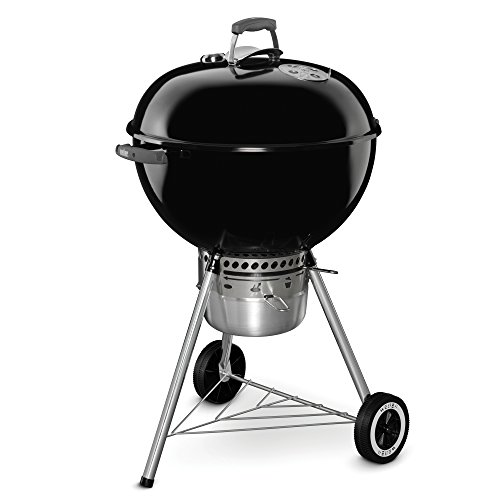
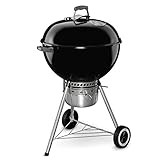
Weber Original Kettle Premium 22-Inch Charcoal Grill
Badge: Best Kettle
The Weber Original Kettle Premium 22-Inch Charcoal Grill is a 22-inch kettle charcoal grill, running on charcoal, and it enters this guide as a linked pick that matches the core brief of this search. Its listing emphasises the details in the spec box below, and those details — not marketing adjectives — are what the assessment here is built on. Consider it against your space first: picture it cooking, picture it stored, and picture it being cleaned, because you will do all three far more often than you will admire its specifications.
In everyday cooking, format is destiny. As a 22-inch kettle charcoal grill, this grill asks a particular routine of its owner: fuel ready in its form, a preheat respected, a grate or plate managed as its material requires, and a cleanup done while the memory of the meal is fresh. Owners whose habits match that routine describe grills like this as effortless; owners whose habits fight it describe the same hardware as disappointing. The reviews in this guide therefore spend as much time on routine as on capability, because routine is where satisfaction is actually decided for a deck, with build quality as the deciding test.
Strengths
- Kettle format is a proven, durable design with a modest round footprint
- Dampers give good heat control for direct and indirect cooking
- One-Touch cleaning makes ash removal unusually easy for charcoal
Trade-offs
- 22 inches is mid-size; very tight balconies should measure carefully
- Charcoal routine (lighting, ash) is slower than gas or electric
- No side tables; you will want a small work surface nearby
Spec box
- Type: Kettle charcoal grill
- Size: 22 inches (per listing title)
- Features: Built-in thermometer, heat control dampers
- Cleaning: One-Touch cleaning system (per listing title)
The honest limitation is the one its trade-offs already name, and it is worth stating without softening: no grill in this guide escapes its format. Choosing the Weber Original Kettle Premium 22-Inch Charcoal Grill means accepting its format’s ceiling — in capacity, in flavour, in routine, or in size — in exchange for its format’s genuine strengths. That is not a criticism; it is the shape of every correct purchase in this category, and the buyers who end up happiest are the ones who chose their ceiling deliberately.
Best for: households whose space, fuel situation and cooking habits match its badge — best kettle / Not suited for: buyers whose core need contradicts that badge; read the trade-offs above before deciding.
Realcook Charcoal Grill with Offset Smoker (800 sq in)
Badge: Best for Big Batches
The Realcook Charcoal Grill with Offset Smoker (800 sq in) is a large barrel grill and offset smoker combo, running on charcoal, and it enters this guide as a prose-only pick in this guide: 800 sq in barrel offset smoker combo — large format, off the ‘small’ core. It is reviewed because readers will meet it in this category and deserve a straight assessment, but it is not presented as an answer to the keyword. Its listing emphasises the details in the spec box below, and those details — not marketing adjectives — are what the assessment here is built on. Consider it against your space first: picture it cooking, picture it stored, and picture it being cleaned, because you will do all three far more often than you will admire its specifications.
In everyday cooking, format is destiny. As a large barrel grill and offset smoker combo, this grill asks a particular routine of its owner: fuel ready in its form, a preheat respected, a grate or plate managed as its material requires, and a cleanup done while the memory of the meal is fresh. Owners whose habits match that routine describe grills like this as effortless; owners whose habits fight it describe the same hardware as disappointing. The reviews in this guide therefore spend as much time on routine as on capability, because routine is where satisfaction is actually decided for a deck, with build quality as the deciding test.
Strengths
- 800 square inches is the largest cooking space in this guide
- Offset smoker box adds genuine low-and-slow smoking capability
- Barrel format handles big gatherings and party batches easily
Trade-offs
- 800 square inches is the opposite of small; it needs a yard, not a balcony
- Offset smoking is a skill with a learning curve and longer cook times
- Charcoal ash and grease cleanup is the heaviest routine in this guide
Spec box
- Type: Barrel charcoal grill with offset smoker
- Cooking space: 800 sq in (per listing title)
- Format: Grill and smoker combo
The honest limitation is the one its trade-offs already name, and it is worth stating without softening: no grill in this guide escapes its format. Choosing the Realcook Charcoal Grill with Offset Smoker (800 sq in) means accepting its format’s ceiling — in capacity, in flavour, in routine, or in size — in exchange for its format’s genuine strengths. That is not a criticism; it is the shape of every correct purchase in this category, and the buyers who end up happiest are the ones who chose their ceiling deliberately.
Best for: households whose space, fuel situation and cooking habits match its badge — best for big batches / Not suited for: buyers whose core need contradicts that badge; read the trade-offs above before deciding.
SUNLIFER Charcoal Grill Offset Smoker
Badge: Best for Smoking
The SUNLIFER Charcoal Grill Offset Smoker is a barrel charcoal grill and smoker combo, running on charcoal, and it enters this guide as a prose-only pick in this guide: barrel charcoal grill/offset smoker combo with spacious cooking area — large format, off the ‘small’ core. It is reviewed because readers will meet it in this category and deserve a straight assessment, but it is not presented as an answer to the keyword. Its listing emphasises the details in the spec box below, and those details — not marketing adjectives — are what the assessment here is built on. Consider it against your space first: picture it cooking, picture it stored, and picture it being cleaned, because you will do all three far more often than you will admire its specifications.
In everyday cooking, format is destiny. As a barrel charcoal grill and smoker combo, this grill asks a particular routine of its owner: fuel ready in its form, a preheat respected, a grate or plate managed as its material requires, and a cleanup done while the memory of the meal is fresh. Owners whose habits match that routine describe grills like this as effortless; owners whose habits fight it describe the same hardware as disappointing. The reviews in this guide therefore spend as much time on routine as on capability, because routine is where satisfaction is actually decided for a deck, with build quality as the deciding test.
Strengths
- Combo format grills and smokes from one unit
- Barrel body gives room for larger cuts and batch cooking
- Charcoal delivers the classic smoke flavour gas cannot copy
Trade-offs
- A barrel combo is a large footprint, not a small grill
- Charcoal fire management takes attention through the whole cook
- Not a format most apartment or balcony rules will welcome
Spec box
- Type: Barrel charcoal grill with offset smoker
- Format: Grill and smoker combo
- Listing describes a spacious cooking area
The honest limitation is the one its trade-offs already name, and it is worth stating without softening: no grill in this guide escapes its format. Choosing the SUNLIFER Charcoal Grill Offset Smoker means accepting its format’s ceiling — in capacity, in flavour, in routine, or in size — in exchange for its format’s genuine strengths. That is not a criticism; it is the shape of every correct purchase in this category, and the buyers who end up happiest are the ones who chose their ceiling deliberately.
Best for: households whose space, fuel situation and cooking habits match its badge — best for smoking / Not suited for: buyers whose core need contradicts that badge; read the trade-offs above before deciding.
Realcook Charcoal Grill with Offset Smoker (Barrel)
Badge: Best Grill-and-Smoke Combo
The Realcook Charcoal Grill with Offset Smoker (Barrel) is a barrel charcoal grill and smoker combo, running on charcoal, and it enters this guide as a prose-only pick in this guide: barrel charcoal grill/offset smoker combo — large format, off the ‘small’ core. It is reviewed because readers will meet it in this category and deserve a straight assessment, but it is not presented as an answer to the keyword. Its listing emphasises the details in the spec box below, and those details — not marketing adjectives — are what the assessment here is built on. Consider it against your space first: picture it cooking, picture it stored, and picture it being cleaned, because you will do all three far more often than you will admire its specifications.
In everyday cooking, format is destiny. As a barrel charcoal grill and smoker combo, this grill asks a particular routine of its owner: fuel ready in its form, a preheat respected, a grate or plate managed as its material requires, and a cleanup done while the memory of the meal is fresh. Owners whose habits match that routine describe grills like this as effortless; owners whose habits fight it describe the same hardware as disappointing. The reviews in this guide therefore spend as much time on routine as on capability, because routine is where satisfaction is actually decided for a deck, with build quality as the deciding test.
Strengths
- Grill-plus-smoker combo covers direct and indirect cooking
- Barrel format suits backyard gatherings and larger batches
- Charcoal smoke flavour for buyers who prioritise taste over convenience
Trade-offs
- Barrel combos are bulky; small-space buyers should measure twice
- Offset fireboxes need fuel tending on long cooks
- Ash disposal and grate cleaning are regular chores
Spec box
- Type: Barrel charcoal grill with offset smoker
- Format: Barbecue smoker grill combo
- Listing positions it for backyard, patio, camping and party use
The honest limitation is the one its trade-offs already name, and it is worth stating without softening: no grill in this guide escapes its format. Choosing the Realcook Charcoal Grill with Offset Smoker (Barrel) means accepting its format’s ceiling — in capacity, in flavour, in routine, or in size — in exchange for its format’s genuine strengths. That is not a criticism; it is the shape of every correct purchase in this category, and the buyers who end up happiest are the ones who chose their ceiling deliberately.
Best for: households whose space, fuel situation and cooking habits match its badge — best grill-and-smoke combo / Not suited for: buyers whose core need contradicts that badge; read the trade-offs above before deciding.
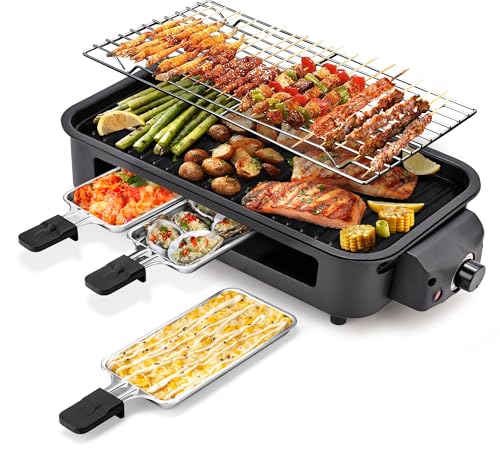
Pukomc Electric Indoor Grill
Badge: Best Indoor Option
The Pukomc Electric Indoor Grill is a countertop electric indoor grill, running on electric, and it enters this guide as a linked pick that matches the core brief of this search. Its listing emphasises the details in the spec box below, and those details — not marketing adjectives — are what the assessment here is built on. Consider it against your space first: picture it cooking, picture it stored, and picture it being cleaned, because you will do all three far more often than you will admire its specifications.
In everyday cooking, format is destiny. As a countertop electric indoor grill, this grill asks a particular routine of its owner: fuel ready in its form, a preheat respected, a grate or plate managed as its material requires, and a cleanup done while the memory of the meal is fresh. Owners whose habits match that routine describe grills like this as effortless; owners whose habits fight it describe the same hardware as disappointing. The reviews in this guide therefore spend as much time on routine as on capability, because routine is where satisfaction is actually decided for a deck, with build quality as the deciding test.
Strengths
- Electric indoor format sidesteps balcony fuel rules entirely
- Removable non-stick plate and dishwasher-safe parts simplify cleanup
- Temperature control gives steadier heat than stovetop pans
Trade-offs
- Indoor electric heat sears differently from open-flame grilling
- Countertop format still needs storage space between uses
- Capacity suits everyday meals rather than large gatherings
Spec box
- Type: Electric indoor grill, 2-in-1
- Power: 1700W (per listing title)
- Features: Smokeless grill net and non-stick removable plate
- Controls: Temperature control
- Cleaning: Dishwasher-safe parts (per listing title)
The honest limitation is the one its trade-offs already name, and it is worth stating without softening: no grill in this guide escapes its format. Choosing the Pukomc Electric Indoor Grill means accepting its format’s ceiling — in capacity, in flavour, in routine, or in size — in exchange for its format’s genuine strengths. That is not a criticism; it is the shape of every correct purchase in this category, and the buyers who end up happiest are the ones who chose their ceiling deliberately.
Best for: households whose space, fuel situation and cooking habits match its badge — best indoor option / Not suited for: buyers whose core need contradicts that badge; read the trade-offs above before deciding.
Comparison Table
The six picks compressed into the attributes buyers compare most. Read across the row of any grill you are considering and check its fuel, format evidence and badge against your space and rules before following its link. The table contains no prices and no scores by design.
| Grill | Badge | Fuel | Key listing detail | Listing |
|---|---|---|---|---|
| Charbroil Portable 1-Burner Propane Grill | Best Portable Gas | Propane gas | Output: 11,000 BTU (per listing title) | Check on Amazon |
| Weber Original Kettle Premium 22-Inch Charcoal Grill | Best Kettle | Charcoal | Size: 22 inches (per listing title) | Check on Amazon |
| Realcook Charcoal Grill with Offset Smoker (800 sq in) | Best for Big Batches | Charcoal | Cooking space: 800 sq in (per listing title) | Prose-only |
| SUNLIFER Charcoal Grill Offset Smoker | Best for Smoking | Charcoal | Format: Grill and smoker combo | Prose-only |
| Realcook Charcoal Grill with Offset Smoker (Barrel) | Best Grill-and-Smoke Combo | Charcoal | Format: Barbecue smoker grill combo | Prose-only |
| Pukomc Electric Indoor Grill | Best Indoor Option | Electric | Power: 1700W (per listing title) | Check on Amazon |
How to Choose the Right Grill for A deck, with build quality as the deciding test
Choose in this order: permission, footprint, fuel, capacity, then features. Permission first, because a grill your building, site or household rules exclude is not a candidate at any quality. Footprint second, measured stored as well as cooking, because you live with the stored grill daily. Fuel third, because fuel decides flavour, routine, startup speed and running logistics for the grill’s whole life. Capacity fourth, sized to your typical meal with batching as the accepted strategy for rare large ones. Features last, because features only matter inside a format that already fits.
Capacity math helps cut through listing language. A small household cooking one course at a time needs surprisingly little grate: burgers, fillets or chicken pieces for two to four people fit on the compact formats in this guide, especially cooked in a planned sequence. Cooking area figures in listings describe the grate, not the experience; what matters is whether your usual meal fits in one or two comfortable batches. If your honest answer is three batches every time, step up one format class — and accept the footprint that comes with it, eyes open.
Tier positioning in this category is qualitative but real. Portable single-format grills and countertop electrics sit at the simpler, lower-cost end of the class as a rule; compact multi-burner gas grills occupy the middle; large barrels, smokers and full cabinet grills sit at the premium-effort end in size, upkeep and commitment even before price is considered. Paying more in this category should buy build quality, heat control and longevity — not merely size you did not need. Related reading: Best Small Barbecue Gas Grills and Best Small Barbecue Grills explore adjacent corners of the same decision.
How to Get the Best From a Small Grill: Setup, Cooking and Care
Step 1 — Set up deliberately. Place the grill on a stable, level surface with the manufacturer’s clearances from walls, railings and anything combustible; put a mat under it on decks and patios; confirm fuel is connected, stored or plugged in as its type requires; and arrange a small work surface and your tools before any heat is involved.
Step 2 — Preheat fully. Give gas grills time for the grate itself to heat-soak, let charcoal reach its settled, ash-covered stage, and let electrics complete their preheat plus a minute. Test with the back of your hand at a safe distance or an inexpensive thermometer if you are learning the grill.
Step 3 — Cook in sequence. Start with foods that rest well, move to the items needing peak heat, and finish with the delicate and the quick. Keep the lid down where the format allows, turn foods once rather than constantly, and verify doneness of poultry and ground meats with a thermometer.
Step 4 — Rest and serve. Rest meats briefly so juices settle; fish needs the shortest rest, thick steaks the longest of the common foods. Serve from the grill in the order foods finish rather than holding everything for a single reveal.
Step 5 — Clean while warm. Brush or scrape the grate, empty grease management once safe, deal with ash only when fully cold, and wipe surfaces. Five minutes now prevents the smoke, sticking and flare-ups that otherwise define the next cook.
Troubleshooting. Problem: food sticks badly → the grate was not hot enough, not clean enough, or the food was moved too early; fix all three next cook. Problem: flare-ups scorch food → excess fat is dripping onto heat; trim fat, move food to a cooler zone, and clean the grease path. Problem: uneven cooking → learn the grill’s hot spots with a bread test (toast slices across the grate and read the pattern), then place foods by their needs rather than by habit.
What ‘Well Built’ Actually Means on a Grill
Start with the lid: it should close evenly, feel rigid rather than tinny, and hold its shape when hot. Grates should be heavy for their size — weight in a grate is heat retention and longevity, not a drawback. Dampers and vents should move smoothly and stay where you set them, because heat control on a charcoal grill is damper control. Legs and frames should not wobble under a firm push, wheels should roll without rattling apart, and fasteners should be sensibly sized rather than decorative.
Then consider the second year. Paint and coatings near the firebox take the hardest ageing; enamelled kettles have a long track record here, which is part of why the kettle format endures. Moving parts you will touch weekly — ash cleaners, grease trays, ignition buttons — deserve the closest inspection, because a well-built grill is mostly a grill whose weekly touches still work in year five. Covers help every grill age better and are the cheapest durability upgrade in this entire guide.
Build Quality by Format: Kettle, Portable Gas and Barrel
Kettles concentrate their build budget in one enamelled bowl and lid, with few parts to fail — a structural advantage for longevity. Portable gas grills spread theirs across a burner, valve and ignition, so burner material and ignition quality are the tells. Barrel smokers have the most seams, doors and joints, and their build quality shows in smoke leakage: a well-built barrel seals well enough to hold temperature; a poor one leaks heat and smoke at every seam and eats fuel.
None of this requires laboratory testing to assess. Manufacturer specifications, grate weight where stated, replacement-part availability and the design’s track record all signal build quality before purchase. A format with plentiful spare parts is a format its maker expects to be repaired rather than replaced, which is itself a build-quality statement.
Related Guides Worth Reading Next
Small-grill decisions rarely stop at one search, and the following guides take the same research-led, size-honest approach to their own questions: Best Small Barbeque Gas Grills and Best Small Bbq Grills. Reading the neighbouring guide before buying is often what turns a good purchase into the right one, because the neighbouring question is frequently the one your household will ask next season.
Thermometers end arguments that guessing starts. Lid thermometers, where fitted, read the air near the lid, not the food; an instant-read thermometer in the food itself is the only honest doneness check, and it matters most on small grills where food sits close to the heat and margins are thin. Chicken and ground meats have safety temperatures that should be verified, not intuited, and even confident steak cooks benefit from a probe while learning a new grill’s hot spots during the first few cooks.
Fuel and consumables planning is unglamorous and decisive. Gas cooks should know their bottle’s rough remaining level before guests arrive; charcoal cooks should store charcoal dry, because damp charcoal lights badly, smokes heavily and heats weakly; electric cooks should know which outlet circuit their grill shares, because a grill plus another heavy appliance can trip a breaker mid-cook. None of these failures is the grill’s fault, all of them ruin dinners, and all of them are prevented by the same five-minute check.
Cleaning while warm is the maintenance secret hiding in plain sight. A grate brushed hot, immediately after cooking, sheds residue in seconds that will take soaking and scraping tomorrow. Grease trays emptied before they overflow stop flare-ups and smells. Ash removed once fully cold keeps airflow honest on the next cook. The total weekly cost of these habits is minutes; the cost of skipping them is a grill that smokes, flares, sticks and tastes of its own history — the four complaints that fill negative reviews of perfectly good grills.
Weather changes grilling more than most specifications do. Wind steals heat from every format, makes charcoal burn unevenly, and can double effective preheat times; cold ambient temperatures do the same more gently; rain tests the cook’s commitment and the grill’s placement. Small grills, with less thermal mass, feel weather more than large ones, which is an argument not against small grills but for placement: a sheltered corner, a windbreak, and realistic timing on bad-weather days recover most of what the weather takes.
Finally, judge any grill in this guide by your second month with it, not your first evening. First cooks flatter or deceive: novelty hides annoyances and unfamiliarity manufactures them. By the second month you will know its true preheat time, its honest capacity for your household, its cleaning burden as you actually perform it, and whether its format fits your space and rules. Every review in this guide is written toward that second-month judgement, because that is the grill you actually live with.
One habit separates satisfied small-grill owners from frustrated ones more reliably than any purchase decision: cooking in a planned sequence instead of all at once. Small surfaces reward order. Foods that rest well — grilled vegetables, sausages, corn, breads — go first and wait happily; foods that demand the hottest grate — steaks, chops, skin-on chicken at the finish — go when the heat is at its peak; delicate items go last, briefly, onto a slightly calmed surface. A cook who sequences can serve a varied meal from the smallest grill in this guide without a single item waiting raw while another burns, and the skill transfers to every grill you will ever own.
Preheating deserves more respect than it gets. Every format in this guide cooks better after a genuine preheat: gas grills need their grates heat-soaked, not merely their air warm; charcoal needs its grey-ash stage reached and its heat bed settled; electrics need their full cycle until the indicator says ready, plus a minute more for the plate itself. Food that lands on an under-heated surface steams, sticks and pales. Food that lands on a properly heated surface sears, releases and browns. The difference is five patient minutes, and it is the cheapest quality upgrade in all of grilling.
Common Buying Mistakes
- Believing the word small in a listing title. Check the format evidence — burners, cooking area, dimensions — against your measured space, not the adjective.
- Buying for the biggest gathering instead of the typical meal. Oversized grills tax every ordinary cook to subsidise one annual party that batching would have handled.
- Skipping the rules check. Buildings, campsites and local codes restrict fuels and formats; discovering that after delivery converts a grill into a return shipment.
- Ignoring the stored footprint. The grill you store is the grill you live with; measure its parked size and its storage home before buying.
- Neglecting warm cleaning. Most sticking, smoking and flare-up complaints trace to residue, not to the grill’s design.
- Judging by burner count or headline output alone. Heat control, grate quality and fit decide daily satisfaction; raw figures decide almost nothing at small-grill scale.
Final Recommendation
If you read nothing else, buy this way: start with the Charbroil Portable 1-Burner Propane Grill, the first linked pick in this guide, unless a trade-off in its review rules it out for your household. It earns that position because it answers the core of best small grills for deck well built — the space, the format and the routine — most completely. Then work through the other linked picks by badge: each is the right answer for a specific household, not a lesser answer overall.
The linked shortlist, for convenience: Check on Amazon (Charbroil Portable 1-Burner Propane Grill) — Check on Amazon (Weber Original Kettle Premium 22-Inch Charcoal Grill) — Check on Amazon (Pukomc Electric Indoor Grill). The prose-only picks remain worth reading if your space or rules are more generous than this keyword assumes — several are excellent machines at their own size — but they are not this search’s answer, and this guide will not pretend otherwise.
Frequently Asked Questions
How can I judge grill build quality without seeing it in person?
Weight in the grates and lid, the materials named in the listing, damper and cleaning-system design, warranty terms, and spare-parts availability. Brands that sell replacement grates, burners and dampers for years are signalling that the grill is built to be kept.
Is a kettle grill really well built, or just simple?
Both, and the simplicity is the build strategy: an enamelled steel bowl and lid, a damper system and an ash cleaner leave very little to break. Decades of kettles in service make the format one of the safest durability bets in grilling.
What fails first on a poorly built deck grill?
Igniters, thin burners, rusting grates, wobbling legs and peeling firebox coatings, roughly in that order. A cover, basic cleaning and storing charcoal dry prevent or delay most of them even on modest grills.
Does heavier always mean better built?
No, but in grates and lids, weight usually tracks material thickness, which tracks heat retention and lifespan. Weight in decorative panels means little; weight where the fire is means a lot.
Are barrel smokers well built enough for deck use?
Some are, but the ones in this pool are large-format yard machines regardless of build, which is why they are prose-only here. Deck owners wanting smoked flavour in a small footprint should look at kettle indirect cooking instead.
How much does a cover actually help?
A fitted cover is the highest-value durability accessory in grilling: it keeps rain off seams, fasteners and grates, and slows every corrosion process. Combined with a dry storage spot for charcoal, it can add years to a grill’s serviceable life.