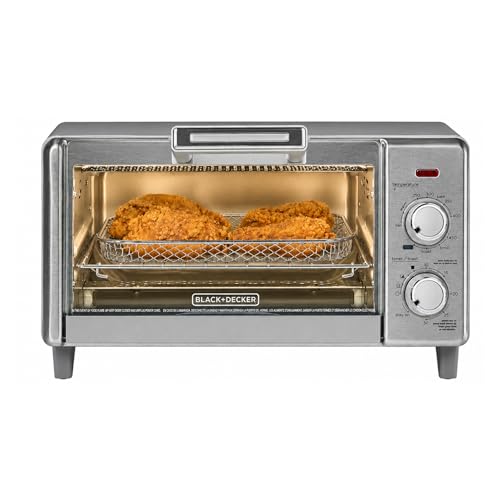
Disclosure: topratedkitchenware.com is reader-supported. When you buy through links on our site, we may earn an affiliate commission from Amazon and other retailers, at no extra cost to you.
Where to buy
Shopping for the best small size toaster ovens runs into a truth the category does not advertise: most modern countertop ovens are not small. Of the six verified models assigned to this guide, exactly one — the BLACK+DECKER TO1313SBD — states a compact format in its verified title, with a 15.47-inch size class and a 9-inch pizza fit, and it is this guide’s one linked pick. The other five are reviewed in full as prose-only size references, because their titles describe the opposite end of the scale: a 12-inch-pizza French-door oven, a nine-function countertop oven with no compact claim, an explicitly XL 14-quart model, a premium full-size flagship and an oven whose title begins with the words Extra-Large. They are here so you can calibrate what small actually means — and so this guide never sells you a large oven wearing a small keyword. Read the full guide ↓ for the detailed reviews, the measuring guide and the how-to section.
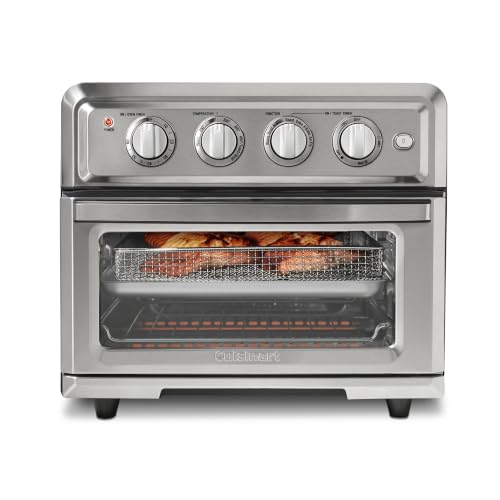
- Cuisinart Air Fryer Toaster Oven TOA-FD70 — Best French Door (prose-only: 12-inch pizza family format, not small)
- Emeril Lagasse Everyday 360 Air Fryer Oven — Best Rotisserie (prose-only: full-size countertop format, no compact claim)
- Chefman Air Fryer 6-in-1 XL 14-Quart Oven — Best Windowed XL (prose-only: explicitly XL, not small)
- Breville Smart Oven Air Fryer Pro BOV900 — Best Premium (prose-only: full-size flagship format, not small)
- BLACK+DECKER TO1313SBD Toaster Oven — Best Verified Compact
- Oster Extra-Large French Door Air Fryer Oven — Best Extra-Large Contrast (prose-only: extra-large by its own title)
Small is a measurement, not a mood, and this guide treats it that way. A genuinely small toaster oven declares itself in numbers a shopper can verify: a compact footprint class, a slice count at the modest end, a pizza diameter in single digits. The TO1313SBD declares all three in its own title — compact convection format, a 15.47-inch class size, a 9-inch pizza fit — which is why it alone carries links and an image here. The prose-only five declare their scale just as honestly in the other direction, and their reviews below read their titles the way you should read any listing: the words XL and Extra-Large are specifications, and a 12-inch pizza fit is a family appliance describing itself.
Why would a small-size guide review large ovens at all? Because smallness is relative, and shoppers calibrate badly without references. A household downsizing from a range oven may experience the Cuisinart as compact; a studio flat will experience it as a landlord. The prose reviews give you the ladder — from the linked compact at the bottom rung through mid-size and premium formats to the extra-large top — so your own counter can be placed on it honestly. And the buying-guide section converts the ladder into a measuring protocol you can apply to any oven anywhere, which is the durable skill this keyword really calls for. Travellers applying the same protocol inside a vehicle will find it continued in Best Small Toaster Ovens For Rv.
Key Takeaways
- One verified compact pick: the BLACK+DECKER TO1313SBD — compact format, 15.47-inch class, 9-inch pizza fit — linked with its official image.
- Five prose-only picks are mid-size to extra-large home ovens, reviewed as calibration references; none is presented as small.
- Small is verified in numbers — footprint class, slice scale, pizza diameter — never in adjectives like handy or neat.
- The words XL and Extra-Large in a title are specifications; believe them.
- A compact oven’s real capacity test is your largest everyday dish and your breakfast headcount, not its brochure geometry.
- Where a title states no size at all, treat smallness as unproven and measure the listing’s dimensions before believing any claim.
In this guide
Quick Picks
| Pick | Badge | Size verdict from verified title | Check price |
|---|---|---|---|
| Cuisinart Air Fryer Toaster Oven TOA-FD70 | Best French Door | Fits a 12-inch pizza — family mid-size, not small | Prose-only — see review |
| Emeril Lagasse Everyday 360 Air Fryer Oven | Best Rotisserie | Full-size countertop format; no size stated — smallness unproven | Prose-only — see review |
| Chefman Air Fryer 6-in-1 XL 14-Quart Oven | Best Windowed XL | XL 14-quart — explicitly extra-large class | Prose-only — see review |
| Breville Smart Oven Air Fryer Pro BOV900 | Best Premium | Full-size premium flagship format, not small | Prose-only — see review |
| BLACK+DECKER TO1313SBD Toaster Oven | Best Verified Compact | Compact; 15.47-inch class; fits a 9-inch pizza — verified small | Check on Amazon |
| Oster Extra-Large French Door Air Fryer Oven | Best Extra-Large Contrast | Extra-large; fits 15 x 12 inch pans — the top of the ladder | Prose-only — see review |
How These Picks Were Chosen
This is a research-led guide claiming no hands-on testing. All six models come from a verified pool confirmed against Amazon’s catalogue data through the Creators API on 2026-11-20, and every size statement in every review is drawn from that model’s confirmed title. The linking rule for a size keyword is absolute: a pick is linked as small only when its title verifies compact scale. The TO1313SBD’s title states a compact convection oven in a 15.47-inch class fitting a 9-inch pizza — linked. The Cuisinart states a 12-inch pizza fit, the Chefman states XL and 14 quarts, the Oster states Extra-Large and 15 x 12 inch pans, the Breville states a full premium format with thirteen functions and no compact claim, and the Emeril states no size at all — five prose-only verdicts, each for a stated reason you can audit in the sources file accompanying this article.
The guide keeps the five in the text rather than deleting them for a reason beyond completeness: size fraud in this category is usually committed by omission and adjacency, not by lying. A large oven photographed on a large counter looks modest; a familiar brand name feels like a known quantity; a function list distracts from a footprint. Reviewing the ladder in full, with each rung’s own words quoted against it, trains the exact scepticism a small-kitchen shopper needs. Readers who want the ladder’s lower rungs explored as a category of their own can continue to Best Smaller Toaster Ovens, and those whose smallness is about storage geometry as much as footprint will value Best Space Saving Toaster Ovens.
Best small size toaster ovens: the one verified compact and the size ladder in detail
Cuisinart Air Fryer Toaster Oven TOA-FD70
Badge: Best French Door
Strengths
- Seven functions with a dedicated pizza mode, in an artisan French-door design.
- Stainless steel finish suits kitchens where the oven is permanently displayed.
- A complete family specification for households that discover they have more room than they feared.
Trade-offs
- Its title states a 12-inch pizza fit — a family mid-size format, not a small oven; prose-only in this guide.
- French doors add width and demand front clearance a small counter rarely has.
- No compact or space-saving claim appears anywhere in its verified title.
Mini spec box
- Capacity: fits a 12-inch pizza
- Functions: 7 — air fry, toast, bake, broil, roast, pizza, warm
- Format: artisan French-door design
- Finish: stainless steel
- Model: TOA-FD70
- Size status: NOT small — family mid-size (prose-only)
The FD70 is the ladder’s most instructive rung because it tempts the downsizer. Coming from a full-size range, a countertop oven that fits a 12-inch pizza feels modest, and its French doors and stainless finish flatter the idea that it is a neat, contained appliance. Its own title corrects the impression: a 12-inch pizza fit is the family benchmark, and family benchmarks are what small kitchens are trying to escape. On a generous counter it is a superb oven — this programme recommends it warmly in family contexts — but in a small-size guide it must sit in prose, as the reference point for where mid-size begins.
If your measurements surprise you — if the counter genuinely offers the width, depth and clearance its doors require — then the honest conclusion is that your kitchen is not as small as the keyword assumed, and the FD70 becomes a legitimate candidate through the family guides rather than this one. That is the ladder working as intended: not forbidding the oven, but naming the kitchen it belongs to.
Best for: family kitchens with real counter room that want French doors and a pizza function / Not suited for: genuinely small counters — it is not a small oven
Prose-only pick — no Amazon link, because its verified title describes a family format, not a small size.
Emeril Lagasse Everyday 360 Air Fryer Oven
Badge: Best Rotisserie
Strengths
- A rotisserie function and nine functions with 360-degree convection — real breadth for family cooking.
- Built as an everyday main-oven alternative, with the presence that role implies.
- Its cooking proposition is strong wherever size is not the constraint.
Trade-offs
- Its verified title states no dimensions, slice count or pizza fit — smallness is unproven, so it is prose-only here.
- A main-oven-alternative format is, by its own positioning, not a compact appliance.
- Rotisserie parts add storage volume a small kitchen must house.
Mini spec box
- Functions: 9-in-1 — including rotisserie and multiple everyday cooking functions
- Air system: 360° convection
- Format: countertop air fryer oven
- Line: Everyday 360
- Size status: NOT verified small — no size stated in title (prose-only)
The Emeril teaches the guide’s subtlest lesson: silence is not smallness. Its verified title talks about functions, convection and a rotisserie, and says nothing about dimensions at all. A shopper skimming for a small oven might read that silence hopefully; this guide reads it as what it is — an unverified size on an oven positioned as a main-oven alternative, which is a full-size ambition. Before any household with a small counter considers it, the listing’s dimension line must be found and measured against the counter, and the smart money says the answer will end the conversation.
None of this diminishes the oven in its own territory. Households with room, a taste for rotisserie cooking and a family repertoire will find the breadth genuine. But a small-size guide that linked it would be laundering an unknown into a promise, and promises are exactly what verification exists to prevent.
Best for: roomy family kitchens that value a rotisserie / Not suited for: small counters — size unverified and format full-size
Prose-only pick — no Amazon link, because its verified title does not state a small or compact size.
Chefman Air Fryer 6-in-1 XL 14-Quart Oven
Badge: Best Windowed XL
Strengths
- A windowed door and touchscreen controls on a six-function cabinet with rotisserie and dehydrator.
- Fourteen quarts of capacity serves volume cooking without batching.
- Its modern interface and visibility are genuinely appealing where space allows.
Trade-offs
- Its title says XL outright — the explicit opposite of this keyword; prose-only.
- A 14-quart cabinet’s footprint, height and storage needs are large-kitchen commitments.
- Touchscreen controls do not shrink the box they are mounted on.
Mini spec box
- Capacity: XL 14-quart
- Functions: 6-in-1 — including rotisserie, food dehydrator, convection oven, bake, broil, reheat
- Controls: touchscreen
- Door: windowed
- Finish: Black
- Size status: NOT small — explicitly XL (prose-only)
The Chefman requires the least interpretation on the ladder: its title contains the letters XL, and this guide believes them. Fourteen quarts is family-plus volume, the windowed door is a large-format pleasure, and the touchscreen is a modern interface on a big box. It appears here because small-size shoppers encounter it constantly — it is prominent, well-featured and frequently surfaced by search — and someone should say plainly, in a guide they trust, that XL is a specification and not a style.
In a kitchen with the room, its review in this programme’s other guides is enthusiastic, and its combination of visibility, touchscreen precision and rotisserie breadth is a real proposition. In a small kitchen it is a non-starter whose only service here is calibration: if the Chefman is what XL looks like, the linked BLACK+DECKER below is what compact looks like, and the distance between those two titles is the distance this keyword spans.
Best for: larger kitchens wanting a windowed, touchscreen XL oven / Not suited for: small counters — explicitly extra-large
Prose-only pick — no Amazon link, because its verified title states an XL size, the opposite of the keyword.
Breville Smart Oven Air Fryer Pro BOV900
Badge: Best Premium
Strengths
- Thirteen functions — the deepest repertoire in this set — for serious, varied cooking.
- Convection credited in its title with reducing cook time by up to 30 percent.
- Brushed stainless steel construction of flagship quality.
Trade-offs
- A full-size premium flagship format; no compact claim appears in its verified title — prose-only here.
- Its price tier and presence both presume a kitchen that can host them permanently.
- Repertoire depth is wasted where the binding constraint is square inches.
Mini spec box
- Functions: 13 — including roast, bake, dehydrate
- Convection: stated to reduce cook time by up to 30%
- Finish: brushed stainless steel
- Model: BOV900BSS
- Size status: NOT small — full-size flagship (prose-only)
The Breville is the ladder’s premium rung, and its presence in a small-size guide makes a point about how flagship appliances colonise wish lists. Thirteen functions, stainless gravitas and a famous name exert a pull that has nothing to do with the buyer’s counter, and small-kitchen shoppers are as susceptible as anyone — more so, because the fantasy of one perfect appliance is strongest where space forbids a second one. Its title, read coldly, describes a full-size flagship with no compact claim, and this guide files it accordingly: prose-only, admired, and addressed to the kitchens that can host it.
The useful takeaway is a discipline: when a premium appliance tempts you out of your size class, demand that its title — not its reputation — argue the case. The BOV900’s title argues repertoire and pace, magnificently, and says nothing about smallness, because smallness is not its virtue. Virtues are specific. Buy the one your kitchen actually lacks.
Best for: serious cooks with full-size counters and deep repertoires / Not suited for: small kitchens — flagship format, no compact claim
Prose-only pick — no Amazon link, because its verified title does not state a small or compact size.
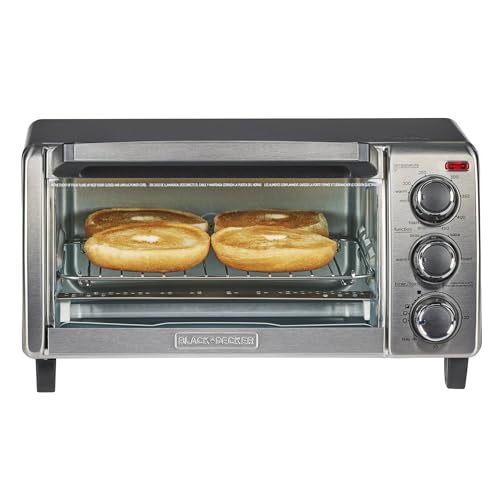
BLACK+DECKER TO1313SBD Toaster Oven
Badge: Best Verified Compact
Strengths
- Compact convection format in a 15.47-inch class — the verified small footprint of this guide.
- Fits a 9-inch pizza, so small does not mean toast-only; personal dinners are fully in scope.
- A removable crumb tray, timer and stay-on function keep a small kitchen’s daily routine simple.
Trade-offs
- Compact capacity serves one or two people; larger households cook in shifts.
- No air fry function is stated in its verified title — crisping specialists should note the gap.
- Simple controls and a silver finish prioritise function over display.
Mini spec box
- Size class: 15.47 inch; compact
- Capacity: fits a 9-inch pizza
- Type: convection toaster oven
- Features: timer, stay-on function, removable crumb tray
- Finish: Silver
- Size status: VERIFIED SMALL — compact stated in title (linked)
Here is the guide’s one linked pick, and its virtues are exactly the ones a small kitchen can spend. The footprint is verified compact — not styled compact, not photographed compact, but stated in its title with a size class attached. Inside that footprint sits a convection oven, which matters more at small scale than anywhere: a fan keeps a small cavity’s results even, so the 9-inch pizza, the tray of roasted vegetables for two and the morning toast all cook properly instead of approximately. The removable crumb tray is the other small-kitchen virtue, because compact ovens live close to their owners and crumbs are a daily fact; a tray that slides out turns cleaning into a ten-second habit instead of a weekly excavation.
The honest limits are capacity and the absent air fry claim. Two people is its household; a third regular mouth starts the shift system. And shoppers whose small-kitchen cooking centres on crisping should read its title as carefully as this guide does — convection is stated, air fry is not — and decide whether the mainstream convection repertoire covers their menu. For the enormous population of one- and two-person households whose cooking is toast, reheating, small bakes and personal pizzas, it covers it completely, in the least counter space this pool can honestly offer. That is what a small-size recommendation is supposed to look like: verified, bounded and sufficient.
Best for: singles, couples, studio flats, offices and dorm-adjacent kitchens / Not suited for: families, batch cooking and shoppers who require a stated air fry function
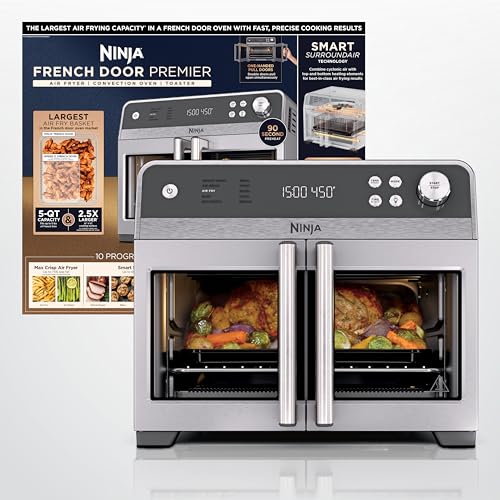
Oster Extra-Large French Door Air Fryer Oven
Badge: Best Extra-Large Contrast
Strengths
- Fits 15 x 12 inch pans — the largest pan claim in this set, and a genuine family asset.
- Six cooking presets and an auto-shutoff timer serve busy, spacious kitchens well.
- Elegant French doors suit entertaining at scale.
Trade-offs
- Its title begins with Extra-Large — the ladder’s top rung and this keyword’s opposite; prose-only.
- Counter width, depth, tray storage and preheat commitment all scale with its size.
- Nothing in its specification attempts smallness, and this guide will not pretend otherwise.
Mini spec box
- Capacity: extra-large; fits 15 x 12 inch pans
- Presets: 6 cooking presets
- Safety: auto-shutoff timer
- Format: French door air fryer countertop oven
- Size status: NOT small — extra-large by its own title (prose-only)
The Oster closes the ladder by defining its top. An oven that fits 15 x 12 inch pans is describing sheet-pan, casserole-dish, feed-the-table cooking, and its title says Extra-Large before it says anything else — the most honest two words in this entire guide. It is reviewed here so that the distance between the keyword and the category’s ceiling is visible in one page: from a compact cabinet that fits a 9-inch pizza to a French-door oven that fits the pans a 9-inch pizza household does not own.
If reading its review makes your kitchen feel bigger than you thought — if the pans it fits are your pans and the counter can host it — then your search was never really for a small oven, and the family guides in this programme will serve you better, with this Oster as a legitimate candidate. If, as is more likely for readers of this keyword, its scale reads as another world, then the ladder has done its work and the linked compact above is your oven. Either outcome is a successful read. Finish-focused shoppers comparing the big formats can also weigh the material question in Best Stainless Toaster Ovens, where size is assumed and finish decides.
Best for: entertainers and large families with spacious counters / Not suited for: small kitchens — extra-large by its own title
Prose-only pick — no Amazon link, because its verified title states an extra-large size, the opposite of the keyword.
Comparison Table
| Pick | Size status (verified title) | Capacity signal | Standout feature | Check price |
|---|---|---|---|---|
| Cuisinart TOA-FD70 | Not small — family mid-size | 12-inch pizza | French doors; pizza function | Prose-only |
| Emeril Lagasse Everyday 360 | Not verified small — no size stated | Full-size format | Rotisserie; 360° convection | Prose-only |
| Chefman 6-in-1 XL | Not small — explicitly XL | XL 14-quart | Windowed door; touchscreen | Prose-only |
| Breville BOV900 | Not small — flagship format | Premium countertop class | 13 functions | Prose-only |
| BLACK+DECKER TO1313SBD | VERIFIED SMALL — compact | 9-inch pizza; 15.47-inch class | Removable crumb tray; convection | Check on Amazon |
| Oster Extra-Large French Door | Not small — extra-large | Fits 15 x 12 inch pans | 6 presets; auto-shutoff | Prose-only |
How to Choose a Small Toaster Oven: The Measuring Protocol
Measure your counter in three dimensions and write the numbers down: width available, depth available, and the height to the underside of the cabinets above, because a small oven that cannot open its door under your cabinets is a large problem in a small box. Then measure your food. Your largest everyday dish sets the interior floor; your breakfast headcount sets the slice requirement; your pizza habit sets the diameter. A compact oven passes when all three food measurements fit inside its stated capacity with room for air to move — the TO1313SBD’s stated terms are a 9-inch pizza and a compact cavity, so households whose largest dish is a personal pizza tray and whose breakfast is two slices at a time pass easily, and everyone else should stop calling their search a small one.
Next, audit what smallness costs and buys with clear eyes. It buys counter you can use for prep, a cavity that preheats quickly, portions that match small households without leftovers engineering, and cleaning that stays trivial. It costs batch capacity, tall-item room and the ability to cook for guests without a plan. Small-kitchen cooks who entertain solve that cost socially — the main oven, a neighbour’s kitchen, a menu designed around the small oven’s strengths — rather than by buying a large oven that taxes them daily to serve a monthly event. Finally, interrogate every candidate’s title the way this guide does: compact stated, or merely implied by a photograph? XL admitted, or discovered in the dimensions line? The title is the manufacturer’s sworn statement; the photograph is advertising. Buy the statement.
Shoppers weighing the adjacent format — an oven combined with microwave functions — against a true compact can see that comparison framed in Best Toaster Microwave Ovens, where the size maths is run for hybrid appliances as well.
How to Use and Care for a Compact Toaster Oven
Setup in a small kitchen is an airflow negotiation. Give the little oven its stated clearances even when the counter argues — vents blocked by a fruit bowl or a wall are the compact oven’s classic failure, because small cabinets run close to their thermal limits. Plug directly into a wall outlet, run the empty first heat cycle with the kitchen ventilated, and test your pans immediately: in a compact cavity, the right small tray is the difference between a versatile appliance and a toast-only one, and many owners buy a perfectly sized small baking pan in the first week and never look back.
Technique rewards the small cavity’s physics. It preheats fast and browns fast, so check food earlier than full-size recipes suggest and learn the oven’s pace on toast, where the feedback is instant. Keep air and convection paths open — a single layer, space around the tray, nothing pressed against the rear wall — because circulation is what makes a small oven cook like a bigger one. Rotate small trays halfway for evenness; the gesture takes two seconds and fixes most compact-oven complaints before they form.
Care is the compact oven’s home advantage, if you keep the rhythm: crumb tray out after toasting — on the linked pick it slides out, which is the whole point — interior wiped while warm, trays washed in the small sink they were designed for. Grease film builds faster in small cavities, so the weekly wipe matters more, not less. An oven this size, kept this way, will hold its performance for years and justify every inch it occupies.
Troubleshooting: three common problems
Problem: food browns too fast on top → what to do: lower the rack position if your model allows, reduce the temperature slightly, and check earlier; compact elements sit close to food, so full-size timings overcook small loads.
Problem: the oven feels weak for frozen items → what to do: preheat fully before loading, cook frozen food in a single layer straight from the freezer without thawing puddles, and give the cavity a minute to recover between batches.
Problem: crumbs and odours accumulate quickly → what to do: empty the crumb tray after every few uses, wipe the interior while warm, and run a short empty heat cycle after fatty cooking to clear residual smells before they season the next meal.
Small Kitchens, Real Scenarios
The studio flat: one counter run, a resident who cooks dinner four nights a week for one or two. The linked compact is not a compromise here; it is the correct appliance, and its 9-inch pizza fit plus convection covers the resident’s actual menu completely. The shared house: five adults, one kitchen, breakfast at staggered hours. A compact oven serves the stagger beautifully — two slices at a time, all morning — and fails only at the Sunday group brunch, which is the main oven’s one weekly appearance. The office kitchenette: reheats and toast for a small team, where the compact’s footprint and crumb discipline make it the only class that survives facilities management. The downsizer’s new kitchen: smaller than the old house, equipped with full-size habits. Here the ladder in this guide does its kindest work, showing exactly which rung the new counter can host — and for many downsizers the honest answer is the mainstream Cuisinart class, reached with relief rather than regret, because their cooking was never small even though their kitchen now is.
When Small Is the Wrong Answer
A guide for a keyword should be willing to argue with it. Small is wrong when the household is not: when three or more people eat breakfast together daily, when the week’s signature meal is a casserole in a pan a compact cannot hold, when batch cooking on Sundays feeds the week. In those kitchens a compact oven becomes a bottleneck that generates the category’s most predictable disappointment, and the mainstream formats reviewed in prose above — the Cuisinart above all — are the honest recommendation. The measure of this guide is not whether it sells you the linked pick; it is whether the oven you buy, small or not, matches the kitchen and the cooking you actually have. Verification serves that match, in both directions.
The Physics of Small Cavities: Why Compact Ovens Cook Differently
A small oven is not a big oven scaled down; it is a different thermal instrument. Its elements sit closer to the food, so radiant heat arrives faster and browning accelerates — the reason compact owners learn to check early. Its cavity holds less air, so preheats are quick and temperature recovers fast after the door opens, but also so that a steaming, covered dish can fog the whole space and soften what should crisp. Its fan, where convection is fitted — as on the linked BLACK+DECKER — moves a smaller volume more completely, which is why compact convection ovens punch above their size on evenness when loads are kept single-layered. Understanding those three facts converts the compact oven’s reputation for quirkiness into a set of predictable behaviours: check early, keep loads dry and uncrowded, let the fan work. Cooks who internalise them stop describing their oven as small and start describing it as quick, which is the same appliance seen accurately.
There is one more physical dividend: proximity is efficiency for small meals. Heating a compact cavity to toast two slices or bake two potatoes spends its energy on a volume proportioned to the task, where a family oven heats a ballroom for a waltz. Households cooking mostly for one or two feel that proportionality in every quick meal, and it compounds across the hundreds of small cooks a year consists of. Size, in other words, is not a compromise the small household tolerates; matched correctly, it is the performance feature itself.
Accessories That Make a Small Oven Feel Bigger
The right accessories expand a compact oven’s repertoire without expanding its footprint, and three earn their storage. A small baking pan sized to the cavity — bought after measuring, not guessed — unlocks bakes, gratins and reheats that the supplied tray handles awkwardly. A compact rack or trivet that lifts food into the cavity’s best airflow improves roasting and reheating out of proportion to its cost. And a pair of small oven mitts suited to tight spaces prevents the burns that big mitts invite in small doors. Beyond those three, restraint is the accessory strategy: every additional gadget must argue with the tape measure, because in a small kitchen the storage an accessory consumes is part of its price. Finish-focused shoppers sometimes ask whether compact models come in the premium materials of the big formats; the material-led field, including the heat-management discussion in Best Stainless Steel Toaster Ovens That Don T Overheat, shows what the larger classes offer and what small kitchens trade away.
Renting, Dorms and First Kitchens: Where Compact Wins Outright
Some kitchens are not merely small but temporary, shared or governed by rules, and there the verified compact’s case becomes overwhelming. Rental kitchens punish permanence: a compact oven moves with you, asks for no installation, and leaves no trace. Dorm-adjacent and studio living adds wattage etiquette and counter politics, both of which a modest appliance respects better than a flagship. First kitchens add a subtler factor — the cook is learning what they actually cook, and a compact oven is the cheapest honest teacher: it covers the beginner’s real repertoire completely, and if the repertoire outgrows it in two years, the upgrade path in this guide is short and the compact retires to an office, a relative or a second life without resentment. Buying small first is not settling; in transitional kitchens it is the only sizing decision that cannot be wrong for long, because the kitchen itself will change before the oven wears out.
Reading Any Listing’s Dimensions Like an Engineer
Listings present size in three places, and the order matters. The title is the sworn summary — compact, XL, extra-large, a pizza diameter — and it is where this guide takes its verdicts. The specification table is the evidence: exterior dimensions, interior dimensions and weight, which you should copy into your notes rather than trust to memory. The photographs are persuasion, scaled by whatever counter the stylist chose, and they should be read last and believed least. Two traps recur. Exterior dimensions are quoted without door swing or handle depth, so add the open-door footprint yourself before declaring a fit. And interior dimensions are sometimes given diagonally or at the widest point of an irregular cavity, so your largest dish should be tested against the smallest interior dimension, not the largest. Engineers assume the least favourable number is the true one; small-kitchen shoppers should borrow the habit, because counters are unforgiving of optimism.
A Compact Oven Week: Seven Days of Real Loads
Monday: toast for two and reheated coffee-shop pastries — the compact’s home ground, done before a big oven would finish preheating. Tuesday: a 9-inch pizza, shared, with a small tray of peppers roasted alongside in shifts. Wednesday: two salmon fillets and a handful of green beans, convection doing its even work. Thursday: leftovers, revived properly — the casserole portion that a microwave would have steamed into sadness returns with its edges intact. Friday: baked potatoes for two, started early and forgotten, the stay-on and timer features earning their quiet keep. Saturday: a small batch of cookies, baked in two trays because the cavity is honest about its size, eaten warm because the second tray timed itself to the first’s disappearance. Sunday: a personal frittata in the small pan bought in week one. Nothing in that week required a bigger oven, and every meal benefited from the small one’s speed. That is the lived content of the phrase right-sized, and it is available only to households whose cooking actually looks like this — which is why this guide keeps asking you to describe yours before it lets you buy.
Common Buying Mistakes
- Believing photographs over titles. A large oven on a large counter photographs small; its title’s XL, quart and pizza figures tell the truth.
- Treating silence as smallness. A title with no size statement, like the Emeril’s here, has made no promise; find the dimensions line before hoping.
- Measuring the counter but not the food. Your largest dish and your headcount are specifications too, and they outrank adjectives.
- Forgetting cabinet height and door swing. Small kitchens fail vertically as often as horizontally; measure all three dimensions.
- Buying small for a household that is not. Batch shifts and brunch bottlenecks are the price; pay it only if your household is genuinely small.
- Skipping the crumb and cleaning design. In a compact cavity, grease and crumbs concentrate; a slide-out tray is a core feature, not a detail.
Final Recommendation
If your kitchen is genuinely small and your household is one or two people, buy the guide’s one verified compact: the BLACK+DECKER TO1313SBD — compact by its own title, convection-equipped, sized for a 9-inch pizza, and easy to keep clean. If your measurements tell a different story — if the pans are big, the breakfasts are many, the counter is generous — believe them instead of the keyword, and take the mainstream or large formats reviewed above through this programme’s family guides. Small is a measurement. Measure, then buy.
Measure first, and let the numbers argue with the adjectives. If they crown the compact, buy it with the confidence that verification gives, and enjoy the rarest sensation in appliance shopping: an oven that fits its kitchen exactly, doing its small job completely, every single day, without apology, negotiation or wasted inches anywhere in the kitchen it serves.
Frequently Asked Questions
What is considered a small toaster oven?
An oven whose verified specification states a compact format — in this guide, a 15.47-inch size class fitting a 9-inch pizza. Slice scale, pizza diameter and footprint class are the working measures. Models whose titles state family pizza fits, XL capacities or extra-large formats are not small, whatever their photographs suggest, and titles that state no size at all have not earned the label.
Why is only one pick in this guide linked?
Because only one pick’s verified title states a compact size. This programme links a pick under a keyword only when the confirmed specification supports the keyword’s core attribute — here, smallness. The other five titles describe mid-size, XL, flagship or extra-large formats, or state no size, so they are reviewed honestly in prose as calibration references.
Is a 9-inch pizza capacity enough?
For one or two people, yes — personal pizzas, small trays and two-person portions are exactly its design brief, and convection keeps results even at that scale. Households that cook family pizzas or entertain with food should step up to the 12-inch class and accept the larger footprint as the honest price of the larger meal.
Can a compact toaster oven replace a microwave for reheating?
For foods whose texture matters — pizza, pastries, roasted anything — the oven reheats better, restoring crispness a microwave cannot. For soups, drinks and soft leftovers, microwave speed wins. Many small kitchens keep the compact oven as the only heating appliance by choosing menus that suit it; the rest pair it with a small microwave and accept the counter negotiation.
How do I measure my counter for a toaster oven?
Record width, depth and the height beneath overhead cabinets, then add the oven’s door clearance — French and drop doors both need room to open fully — and the ventilation clearances its manual states. Compare those totals against the listing’s dimension line for the exact model. If any dimension fails, the oven does not fit, whatever its title’s adjectives promise.
What if my counter is small but my household is not?
Then the binding constraint is the household, and the honest purchase is the mainstream class — accepting a tighter counter choreography in exchange for breakfasts that work. Compact ovens in family service become batch machines, and the daily friction exceeds the space saved within a month. Use the ladder in this guide in the direction your life actually points: counters can be reorganised, headcounts cannot.
Does a smaller oven use less energy?
A smaller cavity generally preheats faster and heats less empty volume for small meals, which suits one- and two-person cooking. The honest comparison is per meal, not per appliance: cooking a family dinner in two compact batches can erase the advantage, which is another way of saying the right size is the efficient size, in both directions.