Disclosure: topratedkitchenware.com is reader-supported. When you buy through links on our site, we may earn an affiliate commission from Amazon and other retailers, at no extra cost to you.
Where to buy
Two of the six grills below genuinely earn the title best small space gas grills — a compact three-burner and a foldable-shelf three-burner — and they are the linked picks in this guide. The other four are covered in prose only, with the reason stated: one burns charcoal rather than gas, and three are full-size four-burner cabinets that happen to share a pool with compact machines. Each linked name takes you to its Amazon listing, where you can check the latest price on Amazon and confirm dimensions before you measure your patio.
- Realcook Charcoal Grill with Offset Smoker (covered in prose only below — see the review for why)
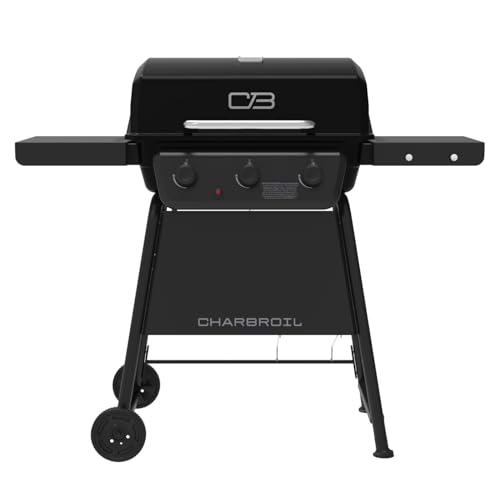
- Char-Broil Classic 3-Burner Propane Gas Grill
- Electactic 4-Burner Gas Grill with Side Burner (covered in prose only below — see the review for why)
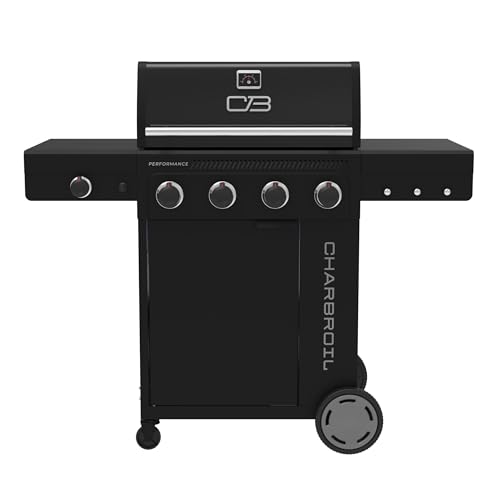
- Char-Broil Performance Series 4-Burner Gas Grill Cabinet (covered in prose only below — see the review for why)
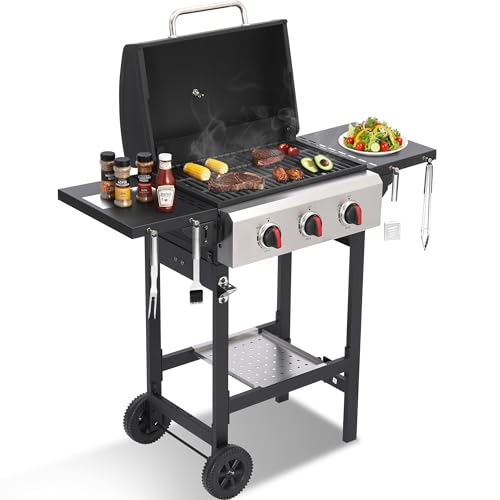
- IdeaMaxx 3-Burner Propane Gas Grill with Cast Iron Grates
- Weber Spirit E-425 Gas Grill (covered in prose only below — see the review for why)
Read the full guide ↓ for the reasoning behind the order, the honest limitations of every pick, and the checks that matter more than any headline claim.
The search for the best small space gas grills starts with a tape measure, not a burner count. Small-space buyers — balcony cooks where gas is permitted, patio households, renters with a corner rather than a garden — need a grill whose total footprint, lid-open height and working clearance fit a defined box of space, while still cooking like a real grill rather than a camping accessory. This guide reads the verified pool through exactly that lens, and it is strict about it: gas fuel is a core requirement, and so is a genuinely compact format.
Two picks pass both tests and are linked: the Char-Broil Classic three-burner, whose listing states a compact design and a modest cooking area, and the IdeaMaxx three-burner, whose foldable side shelves let it shrink against a wall between cooks. The other four are reviewed in prose with their disqualifications stated plainly — a charcoal offset smoker in a gas guide, and three four-burner cabinet grills whose cooking space and cabinet format are full-size by any honest measure, including a Weber Spirit whose quality is not in question and whose size simply is not small-space. Readers with a little more room will find those machines compared in the Best Small Barbecue Gas Grills coverage.
What follows is written for the space-constrained cook: how much grill three burners really buy you, why foldable shelves matter more than a fourth burner you cannot house, where a compact gas grill can legally and safely live, and the ownership habits that keep a small grill small — stored tight, covered, and ready.
Key Takeaways
- Two linked picks only: the Char-Broil Classic 3-burner (compact by design) and the IdeaMaxx 3-burner (foldable shelves) — the rest of the pool is full-size or charcoal, and is prose-only.
- Judge small-space fit by total footprint with shelves up and lid open, not by cooking area alone.
- Three burners is the small-space sweet spot: two heat zones for direct and indirect cooking, in a body that still fits a corner.
- Foldable shelves are a storage feature, not a gimmick — they decide whether the grill lives against the wall or in the middle of the patio.
- Four-burner cabinet grills are fine machines that fail this keyword on size; do not let a good brand talk you out of your tape measure.
- Check balcony and building rules for gas grills before buying — many buildings restrict tank size or gas grills entirely.
In this guide
Quick Picks
One table, six pool products, ranked for a small-space gas brief. The two compact three-burners carry links; the prose-only rows state why each missed the brief. Prices are not printed because they move — check the latest price on Amazon through the links.
| Pick | Badge | Best for | Amazon |
|---|---|---|---|
| Realcook Charcoal Grill with Offset Smoker | Prose-Only — Charcoal, Not Gas | Charcoal smokers who arrived in the wrong guide | Prose-only — no link, see review |
| Char-Broil Classic 3-Burner Propane Gas Grill | Best Overall for Small Spaces | Households with a modest patio that cook for two to six | Check on Amazon |
| Electactic 4-Burner Gas Grill with Side Burner | Prose-Only — Full-Size, Not Small-Space | Full-size patios wanting a side burner | Prose-only — no link, see review |
| Char-Broil Performance Series 4-Burner Gas Grill Cabinet | Prose-Only — Full-Size Cabinet | Families upsizing from a compact grill | Prose-only — no link, see review |
| IdeaMaxx 3-Burner Propane Gas Grill with Cast Iron Grates | Best for Tight Storage | Renters and garage-corner storage with real cooking ambitions | Check on Amazon |
| Weber Spirit E-425 Gas Grill | Prose-Only — Excellent, and Full-Size | Full-size patios and serious grillers | Prose-only — no link, see review |
How These Picks Were Chosen
The pool was verified against Amazon catalogue data on the check date in the sources file, then filtered under Rule 5 of the house brief: picks that contradict the keyword’s core — here gas fuel and a genuinely small-space format — are demoted to prose-only, without links or images, however strong they are in their own class. Fuel was the first gate, which removes the charcoal offset immediately. Format was the second: burner count, stated cooking area, cabinet versus open cart, and whether the design includes space-saving features such as foldable shelves.
Under that filter the two three-burner compacts are the only honest links. The three four-burner cabinets — from Char-Broil’s own Performance line, Electactic and Weber — are not criticised as products; they are excluded because a small-space buyer who orders one discovers the mistake at the doorway, not at the first cook. This guide would rather link two right answers than pad the table with four wrong ones.
The guide is research-led, built from verified listing data and established small-space grilling practice, and it does not claim hands-on testing. Specifications quoted — burner counts, output figures, cooking areas, grate materials — come from the verified listings in the sources file. If your space is a balcony specifically, read this alongside the Best Small Gas Grills For Balcony guide, where railings, rules and clearances get the detailed treatment.
The Best Small Space Gas Grills: 2 Linked Picks and 4 Prose-Only Runners-Up
Realcook Charcoal Grill with Offset Smoker
Badge: Prose-Only — Charcoal, Not Gas
Strengths
- A genuine offset smoker combo for low-and-slow charcoal cooking
- Barrel format grills and smokes in one machine
- No gas connections, bottles or ignition systems to maintain
Trade-offs
- Charcoal is the wrong fuel for this keyword, full stop
- Offset format is not especially small once the firebox is counted
- Fire management replaces the push-button ease gas buyers are shopping for
| Type | Charcoal grill with offset smoker |
| Cooking space | 800 sq. in. (per listing) |
| Fuel | Charcoal |
The Realcook appears in this pool and in this guide’s prose for one reason: completeness. It is a charcoal barrel with an offset smoker, a spacious cooking figure in its listing, and a perfectly coherent product for a backyard cook who wants to smoke. It is also, in a guide to gas grills, simply the wrong fuel — and fuel is a core attribute, not a detail. Gas buyers are choosing instant ignition, clean shut-off and, often, compliance with spaces where charcoal is banned but gas is allowed.
It fails the second core test too: an offset’s total footprint, firebox included, is not a small-space format, and its stated cooking space is larger than either linked pick’s. None of this is a criticism of the machine in its own category, where this site’s smoker coverage treats it on its merits.
It is therefore prose-only, without link or image: present so the pool is honestly accounted for, excluded so the keyword is honestly answered. Readers who find charcoal calling them should follow the smoker guides rather than forcing this guide to pretend fuel does not matter.
Best for: Charcoal smokers who arrived in the wrong guide / Not suited for: Gas buyers, and most small spaces

Char-Broil Classic 3-Burner Propane Gas Grill
Badge: Best Overall for Small Spaces
Strengths
- Compact outdoor design stated in the listing, with a cooking area sized for households rather than events
- Three burners give a genuine two-zone fire — direct on one side, indirect on the other — that two-burner portables cannot match
- Porcelain-coated grates are forgiving to clean and resist rust in outdoor storage
Trade-offs
- Side shelves are fixed in the classic format, so its parked footprint is its working footprint
- Three burners still need a full-size propane tank and the clearances that come with it
- Porcelain coating chips if struck — treat grates with wooden or silicone tools
| Type | Propane gas grill |
| Burners | 3 |
| Output | 30,000 BTU (per listing) |
| Cooking area | 360 sq. in. (per listing) |
| Grates | Porcelain-coated |
The Classic three-burner is the small-space default for a reason: it is a real grill — three burners, a proper lid, porcelain-coated grates — drawn at a scale a modest patio can absorb. The stated cooking area suits a household’s actual cooking: burgers for the family, a couple of chickens spatchcocked, vegetables in a basket beside them. Crucially, three burners restore the technique that tiny grills surrender, the two-zone fire. Sear over the lit side, finish over the unlit side, and most weeknight grilling problems solve themselves.
Its output figure is honest for the class, and in a compact firebox three burners bring the grates to searing temperature quickly without the fuel appetite of a four-burner cabinet. The porcelain-coated grates suit outdoor storage life: they shrug off weather better than bare cast iron and clean up with a brush and heat rather than a seasoning ritual. For a renter or a first-house buyer, that low-fuss ownership is half the product.
The limitation is that compact is relative: the Classic’s shelves do not fold, so the space it works in is the space it parks in, and it still wants a standard tank and safe clearance from walls and railings. Measure with the lid open and a person standing at the controls. If that box fits your corner, this is the linked pick to buy first — the machine the rest of this guide is measured against.
Best for: Households with a modest patio that cook for two to six / Not suited for: Balconies where gas grills or standard tanks are prohibited
Electactic 4-Burner Gas Grill with Side Burner
Badge: Prose-Only — Full-Size, Not Small-Space
Strengths
- Four burners plus a side burner give full family-grill versatility
- Stainless steel construction with a built-in thermometer
- Strong stated output for large, multi-zone cooks
Trade-offs
- A four-burner body with a side burner is a full-size footprint by definition
- The side burner widens the machine precisely where small spaces cannot spare width
- More grill than a small household can house or usually fill
| Type | Propane gas grill with side burner |
| Burners | 4 plus side burner |
| Output | 42,000 BTU (per listing) |
| Body | Stainless steel |
The Electactic is the kind of grill a small-space buyer gets talked into by a feature list: four burners, a side burner for sauces and sides, stainless construction, a thermometer in the lid. Every item is genuinely useful — on a patio that can hold the machine. In a small space, the side burner is not a bonus; it is width you do not have, spent on a function most cooks use a handful of times a year.
This guide’s rule is that size is a core attribute of this keyword, equal to fuel. A four-burner cabinet-format grill fails it regardless of brand or build, and linking it here would set up the exact return-and-regret cycle the guide exists to prevent. The machine belongs in full-size comparisons, where its output and burner count compete fairly.
Prose-only, then, with respect: a capable full-size grill, honestly excluded from a small-space guide. If your measurements say it fits, your keyword was never really small-space — and the Best Small Gas Grills With Side Burner guide is the right room for that conversation.
Best for: Full-size patios wanting a side burner / Not suited for: Small spaces — it is the thing the keyword excludes
Char-Broil Performance Series 4-Burner Gas Grill Cabinet
Badge: Prose-Only — Full-Size Cabinet
Strengths
- Cabinet format hides the tank and adds enclosed storage
- Four burners and a side burner cover large family cooks
- From the same maker as the linked Classic — support and consumables are familiar territory
Trade-offs
- Cabinet plus four burners is the largest format class in this pool
- Enclosed cabinets trap moisture and need airing in humid storage
- It answers a capacity question the small-space keyword is not asking
| Type | Propane gas grill, cabinet format |
| Burners | 4, with side burner |
| Colour | Black |
| Model | 463253925 (per listing) |
The Performance four-burner is instructive because it shares a badge with this guide’s top pick. Same maker, same fuel, same broad design language — and a completely different answer to the keyword, because a four-burner cabinet is a full-size appliance. The cabinet hides the tank and swallows tools and a cover; the burners feed a crowd. It is, in short, the grill you graduate to when the small space is behind you.
Including it as a linked pick here would be a category error with a tape measure attached. Small-space fit is decided in inches, and this machine spends inches on capacity and storage that the keyword’s reader has already said they cannot house. Its presence in the pool is a reminder that product families span sizes, and that a trusted brand name does not shrink a grill.
So: prose-only, no link, no image, and a genuine compliment to its own class. Buy the Classic while space is tight; remember the Performance exists when it is not.
Best for: Families upsizing from a compact grill / Not suited for: The small spaces this keyword describes

IdeaMaxx 3-Burner Propane Gas Grill with Cast Iron Grates
Badge: Best for Tight Storage
Strengths
- Foldable side shelves let it park slim against a wall — the defining small-space feature
- Cast iron grates hold searing heat and lay down proper grill marks
- Three burners with strong stated output for the compact class
Trade-offs
- Cast iron needs seasoning care and dislikes being left wet under a cover
- Folded shelves mean a smaller working station when space is tightest
- A newer name than the legacy brands — long-term parts support is less proven
| Type | Propane gas grill |
| Burners | 3 |
| Output | 38,200 BTU (per listing) |
| Grates | Cast iron |
| Shelves | Foldable side shelves |
The IdeaMaxx earns its link on one feature done properly: side shelves that fold. In a small space the grill’s parked size is the size that matters three hundred days a year, and a three-burner that folds its shelves away can live along a wall, under an eave, or in the corner of a garage in a way fixed-shelf rivals cannot. When cooking, the shelves come up and it is a full three-burner station with cast iron grates; when the meal ends, it shrinks. That rhythm — big at work, small at rest — is precisely what small-space ownership means.
The cast iron grates are the second argument. Iron holds heat through the moment cold food lands on it, which is when compact grills usually falter, and it produces the deep sear marks that porcelain and wire grates imitate politely. The stated output is strong for the class, so preheats are quick and recovery after the lid opens is brisk. For the cook whose constraint is storage rather than cooking ambition, this specification reads like it was written from their notebook.
The trade-offs are care and pedigree. Cast iron asks for the classic discipline — dry it, oil it lightly, never let it sit wet — and a small-space grill stored outdoors under a cover will test that discipline in humid months. The brand also lacks the decades-long parts trail of the legacy names, so check the listing’s current support and consumables picture before ordering. Neither point dethrones it for the tight-storage buyer; both belong in an honest review.
Best for: Renters and garage-corner storage with real cooking ambitions / Not suited for: Anyone who will not maintain cast iron
Weber Spirit E-425 Gas Grill
Badge: Prose-Only — Excellent, and Full-Size
Strengths
- Four burners with a sear zone and boost burners for serious high-heat work
- Porcelain-enamelled cast-iron grates combine sear performance with easier care than bare iron
- A mature product line with the support network that implies
Trade-offs
- Four burners is a full-size grill — the keyword’s core size test fails
- Premium-tier positioning buys capacity a small space cannot use
- Its excellence is precisely the trap: quality does not shrink footprints
| Type | Propane gas grill |
| Burners | 4, with sear zone and boost burners |
| Grates | Porcelain-enamelled cast iron |
| Extras | Weber Works rails (per listing) |
Let this entry be the guide’s proof of honesty: the Weber Spirit E-425 is, as a gas grill, the most accomplished machine in this pool — sear zone, boost burners, porcelain-enamelled cast-iron grates, a deep accessory system — and it is prose-only, because none of that makes four burners small. A guide that linked it under a small-space keyword would be selling brand glow to a reader holding a tape measure.
The Spirit’s natural reader has a patio that fits it and a household that fills it, and for that reader it may be the best machine named anywhere in this article. The small-space reader should take from it a different lesson: the features worth wanting — even heat, good grates, a real sear zone — are the features to demand, at three-burner scale, from the linked picks, not a reason to overbuy size.
It therefore closes the prose-only bench with the strongest possible character reference and no link. When the corner becomes a garden, this is the class of machine to come back for.
Best for: Full-size patios and serious grillers / Not suited for: Small spaces, whatever the brand
Comparison Table
Read the link column as the verdict: two compact three-burners are linked; a charcoal smoker and three full-size four-burners are prose-only, each for a stated core reason.
| Pick | Badge | Standout trait | Watch out for | Amazon |
|---|---|---|---|---|
| Realcook Charcoal Grill with Offset Smoker | Prose-Only — Charcoal, Not Gas | Offset smoking capability | Wrong fuel and a large total format | Prose-only |
| Char-Broil Classic 3-Burner Propane Gas Grill | Best Overall for Small Spaces | True compact three-burner format | Fixed shelves set the parked footprint | Check on Amazon |
| Electactic 4-Burner Gas Grill with Side Burner | Prose-Only — Full-Size, Not Small-Space | Four burners plus side burner | Width, especially at the side burner | Prose-only |
| Char-Broil Performance Series 4-Burner Gas Grill Cabinet | Prose-Only — Full-Size Cabinet | Cabinet storage, four burners | Largest format in this pool alongside its peers | Prose-only |
| IdeaMaxx 3-Burner Propane Gas Grill with Cast Iron Grates | Best for Tight Storage | Foldable shelves, cast iron grates | Cast iron care in outdoor storage | Check on Amazon |
| Weber Spirit E-425 Gas Grill | Prose-Only — Excellent, and Full-Size | Sear zone and premium grates | Four-burner full-size footprint | Prose-only |
How to Choose the Best Small Space Gas Grills Without Buying Twice
Start with three measurements, taken where the grill will actually live: the parked footprint (shelves folded if they fold, doors and tank access included), the working footprint (shelves up, lid open, a cook standing at the controls without squeezing), and the clearance box (distance to walls, railings, overhangs and anything combustible, checked against the manual and local rules). A grill that passes all three is a candidate; a grill that passes only the first will annoy you weekly, and one that fails the third is not a candidate at any price. This is the unglamorous arithmetic the whole keyword turns on.
Then choose burners by zones, not by count pride. Two burners give a hot side and a cooler side; three burners give a proper direct zone, an indirect zone and a buffer between them, which is why both linked picks are three-burner machines. A fourth burner mostly buys area, and area is what a small space is short of. Spend the size budget on grate quality instead — cast iron for searing, porcelain-coated for easy care — because grates touch every meal while the fourth burner touches only the big ones.
Storage behaviour deserves a full paragraph in a small-space decision. Where does the grill sleep: along a wall, in a garage corner, under a cover on the patio? Foldable shelves, a compact tank arrangement and a cover that actually fits decide whether the machine integrates into the space or colonises it. The IdeaMaxx’s folding shelves are the pool’s clearest expression of this, and the Classic’s fixed format is its honest counterpoint — choose by your storage reality, not by the showroom photograph. The Best Small 2 Burner Gas Grills guide covers the even-smaller end if three burners still will not fit.
Finally, check the rules of your specific space before money moves. Apartment and condo rules frequently restrict gas grills by tank size or ban them on balconies outright; landlords and insurers have views; local fire codes set clearances. A five-minute rule check protects the entire purchase, and where gas is barred, the honest pivot is to the electric and indoor categories rather than to a charcoal workaround that is usually barred too and smokier besides.
One more measurement habit worth adopting: photograph your space with the tape measure in frame, grill dimensions from the listing beside it, before ordering. Listings state body dimensions inconsistently — some include shelves, some do not, handles and tank valves come and go — so treat every figure as a claim to verify against the manual’s dimension diagram, which is the authoritative drawing. Five minutes with the diagram has saved more small-space buyers than any review ever written, this one included.
And consider the cook’s triangle in miniature: grill, prep surface and door to the kitchen. In a small space the prep surface is often the grill’s own shelves, which is another reason shelf design matters, and the route to the kitchen should not cross the grill’s hot front. Arranging those three points well makes a compact grill feel twice its size; arranging them badly makes even a small one feel like an obstacle.
How to Set Up, Cook On and Store a Small Gas Grill in a Tight Space
Small-space grilling is a routine as much as a technique: position, check, cook, cool, cover, park. The steps below make that routine safe and repeatable.
- Position the grill on a stable, non-combustible surface with the manual’s clearances on every side, and never under a low overhang; check the tank connection with soapy water for bubbles before the first ignition of the season and after every tank change.
- Preheat with the lid down for ten to fifteen minutes, brush the grates hot, and oil the food rather than the grates for cleaner release and less flare.
- Set up two zones from the start — burners on one side, off or low on the other — so anything that flares or finishes early has a safe harbour waiting.
- Cook with the lid down and the thermometer as a guide, opening briefly; a compact firebox loses heat faster than a big one, and lid discipline is the small grill’s version of insulation.
- Rest meat off the heat, then run the grill hot for a few minutes to burn off residue, brush again, and shut down tank-first so the lines clear.
- When the grill is fully cold, fold shelves if fitted, fit the cover, and park it in its measured spot — the routine that keeps a small space small.
Once a month in season, lift the grates and look at the burners: ports clog with drippings and insects, and a compact grill with one lazy burner cooks lopsidedly until it is cleaned. Once a season, empty and brush the grease tray — in a tight space near walls and railings, grease management is fire management, and it is the least skippable chore in this entire guide.
Troubleshooting
Problem: One side cooks much faster than the other → a burner’s ports are partly blocked or a heat tent has shifted — cool fully, brush the burner and ports clear, reseat the tents, and retest with a slice-of-bread heat map across the grates.
Problem: Flare-ups keep charring food → fat is hitting open flame faster than it can drain — trim excess fat, keep the two-zone harbour lit, move food there at the first flare, and clean the grease tray before the next cook.
Problem: The grill will not reach searing heat → check the tank is open fully, the regulator has not tripped into low-flow (close everything, wait, reopen slowly), and the burners are clear; compact grills show regulator trips as exactly this symptom.
Three Burners Versus Two: The Small-Space Sizing Question
Two-burner grills are smaller, cheaper to run and genuinely sufficient for couples who grill simply — one zone for searing, one for holding. Their limit is technique: indirect cooking for a whole chicken or a thick roast crowds the small grate, and a crowd of guests turns dinner into shifts. Three burners, the size both linked picks chose, is where a compact grill stops being a compromise: a real indirect zone, room for a vegetable basket beside the mains, and burners that can be staged for different foods at once.
The honest way to choose is by your largest regular cook, not your largest imaginable one. If a whole spatchcocked chicken plus sides is the ceiling, three burners in a compact body is the answer and four is storage debt. If two burgers and corn is the ceiling, save the inches and the money and take the two-burner class seriously — the guides linked from this one cover it in the same spirit.
Balcony and Rental Realities for Gas Grills
A small-space grill often lives where rules are written by other people. Before buying, confirm four things in writing where you can: whether gas grills are permitted at all, whether tank size is capped, what clearances the building requires, and where tanks may be stored — many rules forbid indoor tank storage entirely. These are not formalities; a grill that breaches them is a grill you cannot use, and no return window survives the season.
Where gas is permitted, be a good neighbour about smoke and smell: position the grill so cooking smoke drifts away from windows where the layout allows, keep cooks with heavy flare potential for calm days, and keep the grease tray clean, since most balcony smoke complaints are grease smoke, not food smoke. Small-space grilling is a social licence as much as a purchase, and it is kept by exactly this kind of care.
Running Costs and Tank Logistics in the Compact Class
Compact gas grills sip fuel compared with four-burner cabinets, simply because there is less firebox to heat and fewer burners lit for a weeknight cook — a quiet, ongoing saving that never appears on a feature list. The standard tank still applies to both linked picks, which keeps exchanges simple at any refill point, and a compact grill’s quicker preheat trims the wasteful minutes that dominate small-cook fuel use.
Tank logistics in small spaces deserve respect: keep the tank upright, outdoors, and out of living space in line with the rules of your building and locality; keep a cap on the valve outlet when disconnected; and never store a spare tank in an enclosed indoor area. None of this is specific to compact grills, but small-space living puts tanks closer to doors and lives, so the discipline matters more, not less.
Living With a Compact Gas Grill Through a Full Season
Spring is the compact grill’s easiest season: a leak check at the tank, a burner inspection, a grate scrub, and the machine that overwintered in a garage corner is cooking again in an afternoon. This is the first dividend of the format — there is simply less grill to recommission, and a three-burner that slept folded or under a small cover wakes up faster than any cabinet rig. Use the first cook of the year diagnostically: light every burner, watch the flames for even blue rows, and heat-map the grates with slices of bread to learn where this season’s hot spots live.
Summer tests the other side of smallness: frequency. A compact grill in a small home tends to cook more often than a big grill in a big one, because the ceremony is smaller — shorter preheat, quicker cleanup, a machine that lives within arm’s reach of the kitchen door. That frequency is where the format repays its purchase, and also where its consumables tell the truth: a tank lasts a surprising number of weeknight cooks, grates show their quality by August, and the grease tray, emptied monthly, stays a chore instead of becoming an event.
Autumn and winter separate keepers from clutter. A compact grill can move — to the garage, under the eaves, into the shed — in a way that freezes a four-burner cabinet in place, and a grill that winters sheltered needs a fraction of the spring restoration of one that wintered in the weather. If your climate allows winter grilling, the compact’s quick preheat makes it the brave choice for a January steak; if it does not, its movability is the feature that matters. Either way, the season cycle is the real review of a small-space grill, and it is why this guide weighted storage and upkeep as heavily as burners and output from the start.
Tank, Regulator and Hose: The Compact Grill’s Quiet Hardware
The unglamorous hardware decides whether a small gas grill feels reliable or temperamental. The regulator meters flow; if a grill suddenly will not heat, the regulator’s low-flow protection has often tripped after the tank was opened too fast — the cure is to close everything, disconnect, wait, reconnect and open the valve slowly. The hose ages in sunlight and deserves a yearly look for cracking, and the tank itself should stand upright, outdoors, and clear of ignition sources in line with local rules. None of this is specific to compact grills, but a small-space grill lives closer to doors, rails and people, so its hardware discipline matters more, and its simpler two- or three-burner circuit makes every check shorter.
Keep one habit above all: the soapy-water leak check at every tank change. It takes two minutes, it finds the connection that hand-tightening missed, and in a tight space near a wall it is the difference between a non-event and a story. Small grills reward small rituals; this is the one that protects all the others.
Common Buying Mistakes
Small-space grill regret follows patterns, and most of them are visible before purchase to anyone carrying a tape measure.
- Buying a four-burner cabinet because the brand or the sale was persuasive, then living around it for years — three prose-only entries in this guide mark that trap.
- Measuring the grill but not the lid-open height under a shelf or overhang.
- Forgetting the tank: its storage rules, its access for changes, and the clearance its cabinet or cart needs.
- Choosing a side burner over foldable shelves in a space that needed the shelves daily and the burner twice a year.
- Skipping the building-rules check until the grill is assembled on the balcony.
- Neglecting the grease tray because the grill is small — small grills make the same grease as big ones, closer to your walls.
Measure three times, check the rules once in writing, and the small-space category becomes what it promises: a real grill that fits a real life.
Final Recommendation
Buy the Char-Broil Classic three-burner if your space fits a fixed-shelf compact and you want the proven, forgiving default; buy the IdeaMaxx three-burner if storage is your binding constraint and its foldable shelves solve the parking problem, accepting cast iron’s care as the price. The other four pool products are excluded for stated core reasons — wrong fuel, or full-size formats wearing good brands — and this guide links only what a tape measure would approve.
Start your shortlist with Char-Broil Classic 3-Burner Propane Gas Grill and IdeaMaxx 3-Burner Propane Gas Grill with Cast Iron Grates — the three picks that cover the widest range of readers in this guide — then use the detailed reviews above to narrow to the one that fits your counter, your habits and your patience for upkeep.
Frequently Asked Questions
What size grill counts as small-space?
In practice, a two- or three-burner grill with a compact body, modest stated cooking area, and a parked footprint that fits a patio corner or garage wall with safe clearances. Both linked picks are three-burner compacts; the four-burner cabinets in the pool are full-size by the same measure.
Are three burners enough for a family?
For most families, yes — three burners give direct and indirect zones and enough grate for a family meal in one or two batches. What three burners will not do is a whole party at once; households that regularly cook for eight or more should size up deliberately and accept the footprint.
Can I use a gas grill on my apartment balcony?
Only if your building, lease and local fire rules allow it, which many do not — and often with tank-size limits. Check in writing before buying. Where gas is barred, look at electric options rather than charcoal, which is usually restricted as well.
Do foldable shelves really matter?
In small spaces they are the difference between a grill that parks against a wall and one that lives mid-patio. If the grill must be stored slim, treat foldable shelves as a core feature, not an accessory — that is the IdeaMaxx’s whole case, and it is a good one.
Cast iron or porcelain-coated grates for a small grill?
Cast iron sears harder and needs seasoning discipline, especially stored outdoors; porcelain-coated grates are more forgiving of weather and neglect but chip if struck with metal tools. Match the grate to your maintenance temperament — the linked picks offer one of each, deliberately.
Why is a well-known premium grill in this guide not linked?
Because it is a four-burner full-size machine, and size is a core requirement of this keyword. Under Rule 5, a pick that contradicts the keyword’s core is reviewed in prose with the reason stated and carries no link — the rule that keeps a small-space guide honest.
How long does a compact gas grill take to preheat?
Typically ten to fifteen minutes with the lid down — compact fireboxes heat quickly, which is part of their economy. Judge readiness by the lid thermometer settling and the grates’ behaviour with a test sprinkle of water, not by the clock alone.
Should a small-space grill live under a cover outdoors or in a garage?
Either works if it is fully cold, the tank is handled per local rules, and the cover can breathe enough to avoid trapping moisture against the metal. Garage storage suits renters; covered patio storage suits daily cooks. Rust follows trapped damp, not location.
How do I stop a compact gas grill from blowing out in wind?
Position it so the back faces the wind where the layout allows, keep the lid down, and avoid the most exposed spot on the patio for long cooks. Compact fireboxes are honest in wind — they ask for shelter, and a thoughtfully chosen corner, which small-space owners usually have, is the whole fix for most days.
What is the first accessory a small-space grill owner should buy?
A fitted cover, before anything that cooks. In a small space the grill lives outdoors or in a garage corner year-round, and a cover that actually fits its compact body is the cheapest years of burner and grate life on sale. After the cover, an instant-read thermometer — the tool that makes a small, fast firebox feel precise instead of nervous.