A sparkling water maker adds carbon dioxide to still water so you can make soda water, tonic-style mixers and fizzy drinks at home. For cocktail fans it replaces a stack of bottles and lets you fine-tune how bubbly a highball, spritz or mule turns out.
The six picks below include classic water-only carbonators, a model that can carbonate other drinks and a siphon style that works well for bar use. We have not used these products ourselves. Please confirm cylinder compatibility, bottle size and what you can carbonate on the current listing before buying.
As an Amazon Associate we earn from qualifying purchases. Links below are affiliate links, and they do not change the product information we give.
What to Look For
| Feature | Why it matters |
|---|---|
| What it carbonates | Most carbonate water only; a few can also carbonate juice, wine and ready-made cocktails |
| CO2 system | Check cylinder type and how you swap or refill it |
| Bottle type | Glass carafes suit a bar; plastic bottles suit casual use |
| Fizz level | Adjustable carbonation lets you match drinks from soft to sharp |
In this guide
Specs at a Glance
| Maker | Material | Size | Notes |
|---|---|---|---|
| Drinkmate OmniFizz | Plastic and metal | Check the listing for bottle size | Carbonates beyond water |
| SodaStream Terra | Plastic | Check the listing for dimensions | Quick-connect cylinder |
| SodaStream Art | Plastic and metal | Check the listing for size | Lever operation |
| Aarke Carbonator 3 | Stainless steel | Check the listing for dimensions | Metal body; water only |
| iSi Soda Siphon | Stainless steel | Check the listing for capacity | Siphon; chargers required |
| SodaStream Duo | Plastic and glass | Check the listing for contents | Includes glass carafe, per the listing |
The 6 Best Sparkling Water Makers for Cocktails
Top pickBest for carbonating cocktails and mixers
1. Drinkmate OmniFizz Sparkling Drink Maker
A carbonator designed to fizz not just water but also juices, cocktails and other drinks, with a pressure-release design that handles foamy liquids. It is a clear favourite for home bartending, as long as you follow the maker rules for which liquids it can take.
Suits: carbonating cocktails and mixers. Strengths: can carbonate other drinks, per the maker. Weaknesses: bulky, with a learning curve. Skip it if you only need plain soda water.
View Drinkmate OmniFizz on Amazon

Best for simple soda water for mixers
2. SodaStream Terra Sparkling Water Maker
A popular, simple sparkling water maker that uses a quick-connect CO2 cylinder. It makes plain soda water to use as a mixer or a drink on its own.
Suits: simple soda water for mixers. Strengths: easy operation and wide availability. Weaknesses: water only; no flavoured liquids. Skip it if you want to carbonate cocktails.


Best for stylish counters
3. SodaStream Art Sparkling Water Maker
A slimmer, design-led SodaStream with a manual lever and a retro look. It sits neatly on a bar cart or counter.
Suits: stylish counters. Strengths: a sleek design and manual control. Weaknesses: water only. Skip it if you want an automatic push-button model.

Best for design-focused kitchens
4. Aarke Carbonator 3
A stainless steel carbonator from a Swedish design brand with a premium finish and a tidy profile. It makes water fizzy with a clean, elegant look.
Suits: design-focused kitchens. Strengths: a metal build and a refined look. Weaknesses: water only. Skip it if you want a basic plastic unit.


Best for small bars
5. iSi Stainless Steel Soda Siphon
A classic siphon that carbonates water with CO2 chargers and dispenses it by lever. It is a common tool in bars and works for a small group.
Suits: small bars. Strengths: a rugged, bar-style build. Weaknesses: uses single-use chargers. Skip it if you want a countertop machine.

Best for those who want glass or plastic
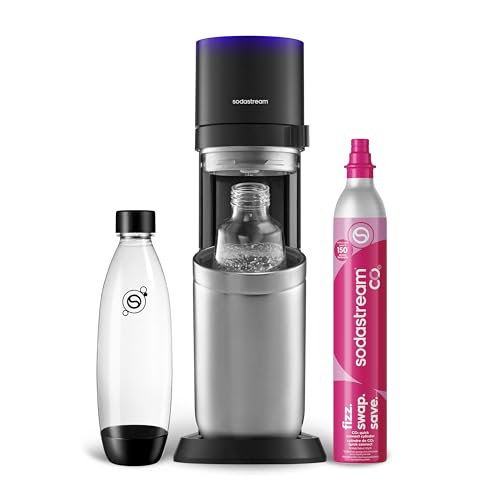
6. SodaStream Duo Sparkling Water Maker
A versatile SodaStream that accepts plastic or glass carafes, giving you the option of a glass bottle on the bar. It lets you pick the look you prefer.
Suits: those who want glass or plastic. Strengths: works with both bottle types, per the listing. Weaknesses: water only. Skip it if you need to fizz juices.
Care and Setup
- Rinse the bottle after use and let it dry fully before the next fill.
- Never carbonate liquids the maker does not allow, since sugar and alcohol can foam and clog the machine.
- Store CO2 cylinders upright and away from heat.
- Clean the nozzle with a damp cloth if it gets sticky.
Mistakes to Avoid
- Carbonating juice or cocktails in a water-only machine.
- Overfilling the bottle past the fill line.
- Using a non-compatible CO2 cylinder.
- Leaving a full cylinder in a hot car.
CO2 Cylinders, Fittings and Refill Options
The gas cylinder is the part of a sparkling water maker you will buy most often, so understand it before you commit. Different machines use different cylinder fittings. Some use a screw-in connection, others a quick-connect or a clip-in design, and a cylinder that fits one system may not fit another. Check the listing for the cylinder type and size, and confirm that replacements are easy to get where you live.
Options for refills include exchanging an empty cylinder for a full one at a retailer, refilling at an authorized refill station, or buying new. Policies and costs differ, and some makers restrict refills with non-approved cylinders. Using the wrong cylinder or refill method can cause leaks or damage the machine. Read the manual and follow the maker’s guidance.
Capacity is stated by the number of liters the cylinder can carbonate, but the actual number depends on how fizzy you like your water. Cocktail drinkers often carbonate more strongly than average, so a cylinder may run out faster than the listing suggests. Keep a spare so you are not caught short before guests arrive.
Siphon-style machines use small single-use chargers instead. They are easy to store and carry but create more waste and cost more per use. Think about how much soda water you drink and how convenient exchange will be. Store cylinders upright, secured, and away from heat sources.
Carbonation Level, Chilling and Water Quality
Good fizz depends on cold water. Cold water holds carbon dioxide much better than warm water, so chill the water thoroughly before carbonating, ideally in the refrigerator for several hours. Carbonating warm water gives weaker bubbles that fade quickly. Using a dedicated bottle that lives in the refrigerator makes this easy.
Control strength with the number of presses or the length of time you carbonate. A light fizz suits delicate drinks, while a sharper, stronger fizz stands up to bold spirits and ginger. Many bartenders prefer a firmer carbonation for highballs, because ice dilution softens the drink. Start with a moderate setting and adjust by taste.
Water quality changes the result. Filtered water tastes cleaner, and very hard water can affect flavor. Some people add a pinch of mineral salts to mimic the taste of commercial club soda, which has a faint mineral edge. Use only what the maker allows and add minerals carefully, since too much can taste salty or interfere with the machine.
- Fill to the marked line so there is room for gas.
- Carbonate right before mixing, because fizz fades after opening.
- Keep bottles tightly capped and cold between uses.
For tonic-style mixers, remember that carbonated water is only the base; flavors and syrups are added afterward.
What You Can and Cannot Carbonate
This is the most important rule for cocktail fans. Most sparkling water makers are designed for plain water only. Putting juice, wine, spirits or sugary syrups into the bottle before carbonating can cause violent foaming, clog the nozzle, damage seals and void the warranty. Foam can also spray out of the machine. Only machines that the maker states can handle other liquids should be used that way, and even then you must follow the manual closely.
The safe approach with a water-only machine is to carbonate plain water, then add your syrup, juice or spirit afterward in the glass or shaker. Add flavorings gently to avoid losing fizz. Stir rather than shake a drink that contains carbonated water.
For machines that claim to carbonate other liquids, check the instructions about maximum sugar or alcohol levels, bottle types, fill levels and cleaning. Cool the liquid first, carbonate in short bursts, and release pressure slowly. Expect more cleaning, since sticky residue builds in the nozzle and cap.
Think about your plans. If you mainly make highballs and spritzes with soda water, a water-only machine is simple and effective. If you want pre-carbonated cocktails or fizzy juices, check carefully that the machine is designed for them. Never assume that a machine can handle any liquid because it looks similar to another.
Bottle Types, Capacity and Bar Handling
Bottles are not interchangeable between machines. Check the listing for compatible bottle types and the fitting style, and use only bottles approved for carbonation, because ordinary bottles may not withstand pressure. Plastic bottles wear out over time and should be replaced on the maker’s schedule, or sooner if they show cracks, scratches or cloudiness. Glass carafes look elegant at a bar but must be handled carefully, since glass under pressure can break if damaged. Follow the maker’s guidance about use and inspection.
Capacity matters for entertaining. A standard-size bottle makes enough soda for a handful of drinks, but a party may need several refills. Having a second bottle lets you chill one while using another. A wide opening is easier to fill with ice water and to clean.
Think about how the bottle sits at your bar. A tall bottle may not fit under cabinets, and a heavy glass carafe takes up room in the refrigerator. Try labeled bottles so you know what is inside, and never mix flavorings into a bottle meant for plain carbonation.
Siphons dispense by lever and suit pouring into a glass, while machine bottles are poured like any bottle. Practice pouring slowly to keep fizz. Rinse bottles after use and keep spare caps and seals. A tidy setup with chilled bottles, a CO2 spare and clean glasses makes service smooth.
Cleaning, Troubleshooting and Safe Storage
Keep the machine clean to protect both flavor and function. Rinse bottles after each use and wash them regularly with warm water and mild soap, using a bottle brush if the shape allows it. Dry them well and store them with the cap off to avoid musty smells. Wipe the nozzle area with a damp cloth to remove residue, and follow the maker’s directions for the machine body, which usually should not be submerged.
Check dishwasher guidance before using one. Some bottles and carafes are dishwasher safe and others are not, and heat can weaken plastic over time.
Common problems include weak fizz, leaks and slow carbonation. Weak fizz is often caused by warm water, an overfilled bottle, an empty cylinder or a loose fitting. Leaks around the cylinder can come from a worn seal or a poorly seated connection. If you hear hissing or smell gas, stop using the machine, check the connections and consult the manual or maker. Do not force fittings.
Store cylinders upright and secure, in a cool place away from heat sources and direct sun. Never leave a full cylinder in a hot car. Keep the machine out of reach of children, and place it on a stable surface. Check the date and condition of cylinders and bottles periodically, and replace damaged parts.
If something feels wrong, such as a bulging bottle or a damaged cylinder, stop using it. Safety checks take little time and prevent accidents.
Sparkling Water Maker FAQ
Can I carbonate cocktails?
Only with machines made for it, such as the Drinkmate OmniFizz. Water-only machines can be damaged by sugar or alcohol.
Is homemade soda water good for cocktails?
Yes. Make it cold and use it fresh for the best fizz in highballs, spritzes and mules. Chilling the water before carbonating helps it hold more gas.
How do CO2 cylinders work?
You attach a cylinder to the machine, and when it empties you exchange or refill it. Check the listing for compatible cylinders.
How long does the fizz last?
Carbonation fades once the bottle is opened. Seal it and keep it cold to hold the bubbles for longer, and avoid shaking the bottle, which releases gas.
Can I use club soda ingredients like minerals in my homemade soda?
Some people add a small pinch of mineral salts to mimic commercial club soda. Only use amounts the maker allows, and add them to the water carefully. Too much can taste salty.
Why is my soda water not very fizzy?
Warm water, an empty or low cylinder, an overfilled bottle and loose fittings are common causes. Chill the water, fill to the line and check the cylinder.
Can I carbonate flavored water or juice?
Only if the maker says the machine can handle it. Sugar and flavorings can foam and clog water-only machines. The safer method is to carbonate plain water and add flavor afterward.
How should I store spare CO2 cylinders?
Keep them upright, secured and in a cool place away from heat and direct sun. Never leave them in a hot car. Follow the maker's storage guidance.
How often should I replace the bottles?
Replace them following the maker's schedule or when they show cracks, scratches or cloudiness. Do not use damaged bottles for carbonation.
Does carbonated water for cocktails need to be freshly made?
Fresh is best, because fizz fades once the bottle is opened. Make it cold and use it soon. Keep bottles tightly capped between uses.
Can I use any CO2 cylinder in my machine?
No. Cylinder fittings differ between systems, and non-approved cylinders can leak or damage the machine. Check the listing and manual for compatible cylinders.
Which Cocktails Benefit Most From Fresh Soda
Not every drink needs home carbonation, and knowing where it helps keeps you from overbuying. Fresh bubbles matter most in drinks where carbonation is the main texture.
Highballs and long drinks
Whiskey and soda, gin and tonic style drinks and vodka sodas are mostly carbonated water, so the quality of the fizz is front and center. Cold water and a fresh charge give lively bubbles that last through the glass. Keep the spirit and glass cold as well.
Spritzes
An aperitivo spritz combines a wine or bitter liqueur with soda, and fresh carbonation adds lift. Pour the soda last and gently to preserve the bubbles. A big, sturdy glass with plenty of ice slows dilution.
Mules, buck-style drinks and ginger-based highballs
These use a ginger mixer, and many people prefer to carbonate plain water and add a ginger syrup. This lets you control sweetness and spice, though you will need a recipe you like.
Drinks where fizz is minor
In a shaken sour or a stirred drink served up, carbonation adds little. A splash of soda for a bit of lift is the most you need, and a bottle of store-bought soda is fine.
Making Syrups and Mixers to Pair With Plain Soda
Because most machines carbonate plain water, flavor comes from what you add afterward. A few simple syrups cover many drinks, and they keep well in the refrigerator.
- Basic simple syrup: equal parts sugar and hot water, stirred until dissolved and cooled before use.
- Citrus or herb syrups: steep peels, mint or basil in a basic syrup, then strain.
- Ginger syrup: simmer sliced fresh ginger in sugar and water for a spicy base.
- Tonic-style syrups: made with cinchona bark and citrus, which are available in many specialty stores. Follow the recipe, since quinine is a strong ingredient.
- Shrubs: a sweet and tart syrup made with fruit, sugar and vinegar, good for mocktails and cocktails.
Add syrup to the glass first, then pour the soda over it. Stirring gently preserves bubbles. If you carbonate a flavored liquid directly, check the manual first, since sugary or pulpy liquids can foam up and clog the machine. For many models, the safe approach is to carbonate water and mix afterward.
Store syrups in clean, sealed bottles, label them with the date and keep them cold. Most simple syrups last a couple of weeks, and a splash of vodka can extend the shelf life slightly. Discard any that look cloudy or smell off.
Cost, Convenience and Waste Compared With Bottled Soda
Many people buy a carbonator to cut down on cans and bottles. Whether it saves money depends on how much you drink and what you replace.
Think about the full cost: the machine, the CO2 cylinder, refills or exchanges, and any bottles you need to replace. Cylinder refills and exchange programs vary by region. Compare the cost per liter with what you now spend on soda water and tonic. For heavy users, the machine can pay off over time, while an occasional drinker may not notice much difference.
Convenience is a bigger factor than cost for some households. There is no need to carry heavy bottles home or store cases of soda, and you can make exactly the amount you need. On the other hand, a machine needs counter or cabinet space, cylinder storage and cleaning.
The environmental picture depends on use. Reusing bottles and refilling cylinders can reduce single-use packaging, but production, shipping and eventual disposal of the equipment matter too. If you are motivated by waste reduction, keep the machine in regular use and take care of the bottles.
A final consideration is consistency. Store-bought soda is uniform, while a home machine depends on your water temperature and technique. If you enjoy the process and want to adjust the fizz level, that variability is a feature.
Hosting and Batching for a Party
Serving drinks to a group changes how you use the machine. Cold water is the key, so fill bottles ahead of time and refrigerate them for several hours. Carbonate a few bottles before guests arrive and keep them sealed in the fridge, then carbonate more as needed.
Pre-mix cocktail bases, such as syrup and spirit, in a pitcher or bottle, and top each glass with soda just before serving. This keeps the bubbles fresh and saves time. Avoid batching with the soda already in the mix, since the fizz fades within a short time.
Set up a small station with ice, glasses, garnishes and a tray, so guests can serve themselves while you keep up with the carbonating. Keep a spare cylinder on hand if you plan to make a large amount, since running out in the middle of an evening is a nuisance.
Garnishes finish the job. A citrus twist, a sprig of mint or a few berries add aroma that carries as the bubbles rise, and expressing the peel over the glass releases oils that make a simple highball taste more complete.
Carbonation Is an Ingredient, Not an Afterthought
A cocktail topped with flat soda is a sentence missing its last word, which is why the machines in this guide, from the SodaStream Terra to the Aarke Carbonator, matter to anyone who mixes drinks at home. Freshly carbonated water carries a bite that bottled soda loses from the moment it is opened, and that bite lifts citrus, sharpens bitterness and lengthens a drink’s finish. Carbonate cold water, always, because cold water holds gas far more willingly than warm, and give the bottle a gentle rest after fizzing so the gas settles into the water rather than escaping in a foam-over when you open it. These two habits, cold water and patience, will improve your soda more than any upgrade between the models listed here.
The Drinkmate OmniFizz breaks the category’s oldest rule by carbonating finished drinks, juices and wine as well as water, which opens a different creative door: a spritz carbonated as a whole, a flat leftover revived, a juice turned sparkling for a child at the same party. The iSi siphon takes the traditional route, charging water in a steel vessel that pours like the soda siphons of old bars. Each approach suits a different kind of host. Decide whether your soda is an ingredient you build drinks upon or a finishing act you perform on them, and the right machine from this list becomes obvious.
Cylinders, Refills and the Rhythm of Supply
A sparkling water habit runs on gas, and running out mid-party is the category’s defining disappointment. Learn how your cylinder exchange works locally before you need it, keep a spare cylinder once your household’s consumption proves steady, and store cylinders upright, cool and away from heat sources. The cost per bottle falls quickly into a comfortable rhythm for regular users, and the waste avoided compared with bought bottles accumulates just as steadily. Track roughly how many bottles a cylinder gives you in your house, with your fizz level, and you will never be surprised by an empty tank again; heavy fizz drinkers simply live on a shorter exchange cycle.
Water quality decides the ceiling here as surely as it does in coffee. Heavily chlorinated tap water carbonates into soda that tastes of the swimming pool, while filtered water gives you a neutral canvas for syrups and cocktails. If your machine’s bottles are proprietary, treat them with respect, replace them at their stated life and never put them through heat they were not designed for. The SodaStream Art and Duo models add glass carafe options for the table, which is more than vanity: soda served in glass at a dinner feels like an occasion, and occasions are what a home bar exists to create.
Syrups, Garnishes and Drinks That Deserve Fresh Soda
A Small Syrup Shelf That Covers the Classics
With fresh soda on demand, a modest shelf of homemade syrups turns your kitchen into a bar of genuine range. A plain rich syrup, a ginger syrup with real bite, a seasonal fruit syrup and something herbal will cover highballs, spritzes and alcohol-free drinks for any guest list. Syrups keep well refrigerated, take minutes to make and let each drinker tune sweetness in their own glass, which bottled mixers never allow. Label them with the date, keep the shelf short enough that everything gets used while it is vivid, and let the seasons rotate the flavours rather than your ambition. A quince syrup in autumn and a rhubarb one in spring will teach you more about drink making than a cupboard of dusty bottles.
The drinks that benefit most are the ones built tall on soda: the highball, where soda is effectively half the drink and its quality cannot hide; the spritz, where bubbles carry aroma to the nose with every sip; and the long alcohol-free serves that finally give non-drinkers something with structure and ceremony. Serve them over plenty of fresh ice in tall glasses, pour the soda down the side to keep its life, and garnish with intent rather than habit. A twist expressed over the surface, a herb slapped awake between your palms, a single good cherry: these small acts, plus living soda, are most of what separates a home drink from a bar drink.
Hosting With a Carbonator
At a party, the carbonator becomes a station, and stations need flow. Set the machine where guests can watch or use it without crowding the person mixing, keep two bottles chilled and rotating, and carbonate in small batches through the evening rather than a large batch at the start, since soda made at seven is tired by ten. Children and non-drinkers gravitate to the machine if you stock juices and syrups for them, which turns a potential bottleneck into the party’s most inclusive feature. The host’s job is simply rhythm: chill, carbonate, serve, repeat, and never let the cold bottle supply fall behind the conversation.
Maintenance is light but real. Wipe the nozzle area, wash bottles by hand or as their maker allows, and descale the machine if your water demands it and the model supports it. Store the machine where it will be used, not in a cupboard that adds friction to every glass, because the entire value of home carbonation lies in its effortlessness at the moment of thirst. A machine that lives on the counter gets used daily; one that must be fetched becomes a birthday present to your future self that never quite arrives. Choose the design you are happy to look at, keep it ready, and the soda habit will sustain itself.
Soda Beyond the Bar
Weekday Glasses and the Quiet Main Benefit
For most owners, the cocktails are the excuse and the weekday glasses are the benefit. A household that drinks sparkling water daily replaces a river of bought bottles with a machine, a cylinder and a tap, and the arithmetic of cost, waste and cupboard space resolves itself within months. Flavour the weekday glass with citrus, cucumber, herbs or a dash of drinking vinegar and it never becomes monotonous. The machines in this guide all serve this double life, party trick and daily utility, and judging them on both, rather than on the dinner party alone, is how you choose the one that will still be earning its place in three years.
Getting the Fizz Right, Bottle by Bottle
Carbonation technique is mostly patience wearing a disguise. Fill the bottle to its line with the coldest water you have, carbonate in the short bursts your machine’s design intends rather than one long blast, and let the sealed bottle rest briefly before releasing the pressure slowly. Rushing the release is what paints kitchens with soda foam, and overfilling is what makes the machine hiss in protest. The SodaStream Terra, Art and Duo each signal a full charge slightly differently, through sound, resistance or a simple count of presses, so learn your own model’s signal and trust it rather than a number copied from the internet. A bottle carbonated this way keeps its life in the glass, which is the entire point: soda should still be dancing when the drink is half finished.
Taste is the other half of technique. If your soda tastes faintly of the machine, wash the bottle, check its age and clean the nozzle area, because flavours lodge in warm plastic and tired seals. If it tastes flat despite good fizz, suspect the water’s temperature at carbonation or a cylinder quietly reaching its end, since a dying cylinder produces a polite fizz that fades in the glass. Keep the spare cylinder habit described earlier in this guide and these mysteries mostly vanish. The Aarke Carbonator’s lever action and the Drinkmate’s fizz infuser reward the same attentiveness; every design in this list is honest machinery that reports its condition through the glass, if the person using it is paying attention.
Flavouring Without Ruining the Machine
The rule that protects most carbonators is simple: carbonate water, flavour afterwards. Sugars and flavourings foamed through a machine designed for water will clog, stain and eventually sour it, which is why the Drinkmate’s ability to carbonate finished drinks is a genuine engineering difference rather than a marketing one, and why its cleaning routine matters more, not less. For every other model, build the drink in the glass or a jug: syrup first, ice, then soda poured gently down the side, then the garnish. This order also gives the drinker control, since a second glass can be made weaker, stronger or entirely different from the same bottle of plain soda, which is the flexibility that makes a home soda programme superior to a fridge of bought mixers.
Herbs, shrubs and drinking vinegars deserve a place in the flavouring drawer alongside syrups, because they bring acidity and complexity that sweetness alone cannot. A basil leaf in a glass of soda and citrus, a spoon of shrub topped up over ice, a cucumber ribbon in a tall glass: these are drinks with architecture, built for adults who are not drinking alcohol as happily as for those who are. Keep the flavours fresh, the bottles of soda cold and the ice plentiful, and your carbonator stops being a gadget and becomes the engine of a small, confident drinks culture in your kitchen, which is a considerably larger thing to own than a machine that makes water fizzy.
The Carbonator’s Place in a Sustainable Kitchen
Waste, Cost and the Long View
The environmental case for home carbonation is made of small numbers multiplied by years: bottles not bought, not transported, not recycled or landfilled, multiplied by every glass your household drinks. The case strengthens with use and collapses with neglect, since a machine abandoned in a cupboard embodies its own small waste. This is why the buying advice in this guide keeps returning to honesty about appetite: the household that loves sparkling water daily will amortise a machine’s footprint quickly, while the occasional drinker may be better served by the iSi siphon or by bought bottles without guilt. Judge your household, choose accordingly and then use what you chose wholeheartedly, because in this category, as in most of the kitchen, the greenest appliance is the one that gets used for a decade.
Weekday Glasses, Dinner Parties and the Morning After
Monday’s glass is functional: sparkling water with lunch, made in ten seconds from the SodaStream on the counter, replacing the bought bottle that used to live in the refrigerator door. By Wednesday the machine has served a dozen such glasses without being noticed, which is the highest praise a utility appliance can earn. Friday changes its register. Friends are coming, the bottles are chilling in rotation, syrups are out, and the Aarke or the Art is suddenly the prettiest object in the kitchen, carbonating to order while the first drinks are built. The same machine, two social classes, no adjustment required: this versatility is why the category survives every kitchen clear-out that claims its neighbours.
Saturday’s party tests the system rather than the machine: two bottles rotating, a spare cylinder known to be full, ice in quantity, and the Drinkmate handling the children’s juice while the water-only machines keep the adults’ highballs alive. A host who has rehearsed this rotation once can run it while holding a conversation, which is the actual specification that matters. Sunday morning delivers the verdict in the form of a quiet glass of soda with citrus, the classic of the genre, made from the same bottle stock and tasting of competence. The carbonator that serves all three days has earned its counter permanently, and the household’s bought-bottle habit becomes a memory discussed with mild disbelief.
Across the week, the small disciplines recur like a refrain: cold water, rested bottles, wiped nozzles, cylinders tracked, flavours built in the glass. They take seconds each and they are the entire difference between a machine that delights for years and one that disappoints by spring. New owners should tape the short list inside a cupboard door for the first month, until the hands know it. After that, the carbonator joins the kettle and the knife block in the category of objects a household uses without thinking, which is to say, the objects that actually constitute a kitchen.
Soda for Households That Are Cutting Back
Alcohol-Free Evenings With Full Ceremony
The fastest-growing occasion for home carbonation is the alcohol-free evening that refuses to feel like an abstinence. Fresh soda is the backbone of that refusal: it gives a drink length, bite and ceremony, carrying syrups, shrubs, citrus and herbs in a tall glass with ice and a garnish that signals adulthood. Households where one person drinks and another does not find the carbonator quietly diplomatic, since both glasses can be built at the same station, to the same standard, with the same care. Keep the flavouring shelf stocked for both, and the machine becomes an instrument of inclusion, which is a larger thing than a drinks gadget and a perfectly good reason to choose the model you will enjoy using nightly.
Cold Water and a Machine That Is Ready
The whole craft of home soda fits in the space between those two conditions. Keep the water cold, keep the machine on the counter with a cylinder whose state you know, flavour in the glass and wipe the nozzle when you pass, and fresh sparkling water becomes as unremarkable and as essential as the kettle’s boil. Choose the maker that suits your drinks, your counter and your eye from the designs in this guide, then use it daily and without ceremony. A year of that use will have replaced a small mountain of bottles, built a shelf of drinks your household calls its own and turned the simplest beverage there is, water with bubbles in it, into a small daily pleasure that your kitchen produces on demand.
That, in the end, is the test of every appliance in these guides, and the carbonator passes it in a particularly pure form: it does one thing, it does it the moment it is wanted, and it makes the people who own it slightly happier several times a day. Buy the one you will keep ready, and keep it ready.
Signs the Habit Has Taken
There are milestones in a carbonator’s life that tell its owner the purchase has become infrastructure. The first is the spare cylinder, bought without debate because an empty tank on a Friday taught its lesson. The second is the syrup shelf acquiring a house standard, the ginger or the citrus that guests now expect. The third is the bought bottle’s disappearance from the shopping list, unnoticed for a month. The fourth, subtlest of all, is a guest asking for the soda by the household’s own name for it. Each milestone marks the machine’s migration from gadget to utility to tradition, and each is earned by the small disciplines, cold water, rested bottles, tracked gas, that this guide has repeated because they are, genuinely, the whole secret.
If the milestones are not arriving, the diagnosis is usually placement or friction rather than the machine: it lives in a cupboard, the bottles are never cold, the cylinder ran dry and was never replaced. Fix the friction before replacing the hardware. Move the machine to the counter, start the cold bottle rotation tonight, order the spare cylinder, and give the habit a month of being easy. Most carbonators that were pronounced disappointing were simply never given a fair system to work in, and the SodaStream, Aarke, Drinkmate and iSi designs in this list all reward a fair system with years of uncomplaining fizz.
How the Habit Rearranges a Kitchen
A settled carbonation habit quietly rearranges the refrigerator. The door shelf that once held bought bottles now holds the rotating stock, two bottles chilling for the machine, one carbonated and ready, perhaps a syrup or two at the front. The crisper gains the citrus and herbs that flavour the weekday glass. Shopping lists lose a heavy, bulky line and gain a light one, gas and fruit, and the recycling bin’s weekly burden drops in a way visitors sometimes notice before the household does. These are small domestic facts, but a kitchen is made of small domestic facts, and an appliance that improves several of them at once has earned its counter space by any honest accounting.
Protect the new order with the same light discipline as the machine itself: bottles washed and rotated, the ready bottle always the coldest, the syrup shelf edited before it sprawls. When the system runs this smoothly, sparkling water stops being a decision and becomes the house’s default refreshment, which is precisely the outcome the machines in this guide were bought to produce. The cocktails, when they come, are built on a foundation of daily competence, and they taste like it.
Frequently Asked Questions
Which cocktails need fresh carbonation the most?
Highballs, spritzes and long drinks that are mostly soda gain the most, because the bubbles carry the texture. Shaken sours and stirred drinks served up need little or none, so store-bought soda works fine for those.
Can I make tonic water at home with a sparkling water maker?
You can carbonate plain water and add a homemade or store-bought tonic syrup. Follow the syrup recipe carefully since quinine is strong. Avoid carbonating the syrup itself, which can foam and damage some machines. Check your manual first.
Is a home carbonator cheaper than buying soda water?
It depends on how much you drink. Add up the machine, cylinder refills and bottle replacements, then compare the cost per liter with what you buy now. Heavy users may save over time, while occasional drinkers may not.
How do I serve sparkling cocktails to a group?
Chill water ahead, pre-mix the cocktail base in a pitcher and add fresh soda to each glass just before serving. Batching soda into the mix makes it go flat. Keep a spare CO2 cylinder in case you run out.
The Short Version
For fizzing the cocktail itself, the Drinkmate OmniFizz. For simple soda water, the SodaStream Terra. For a sleek design, the SodaStream Art. For a premium-looking unit, the Aarke Carbonator 3. For bar-style service, the iSi Soda Siphon. For glass-friendly bar use, the SodaStream Duo.

