A tilt-head stand mixer lifts its head back so you can reach the bowl and swap attachments. Most come with a flat beater, a whisk and a dough hook. Bowl size, motor wattage and speed count vary a lot between models, and so does weight.
The six mixers below range from a compact 3.2 quart mixer to a 6.5 quart model. Sizes, wattage and attachments come from each product’s listing page. We have not used these mixers ourselves. Capacity and noise statements are the makers’ own.
As an Amazon Associate we earn from qualifying purchases. Links below are affiliate links, and they do not change the product information we give.
In this guide
Quick Picks
| Product | Type | Best for |
|---|---|---|
| Delish by Dash Stand Mixer – Compact Mixer for Everyday Baking | Stand mixer | baking |
| Kitchen in the Box Stand Mixer 3.5 QT Kitchen Electric Mixer | Stand mixer | baking |
| KitchenAid Artisan 5-Qt Tilt Head Stand Mixer KSM150PS Almond | Stand mixer | baking |
| Cuisinart Precision Master 5.5 Qt. 12-Speed Stand Mixer SM-50BCNAS | Stand mixer | baking |
| Kitchen in the box Stand Mixer 8.5 QT 900 Watt Heavy Dough Mixer | Stand mixer | baking |
| Kitchen in the box Stand Mixer 3.2Qt Small Electric Food Mixer 6 | Stand mixer | baking |
Our Picks
Top pickBest for baking
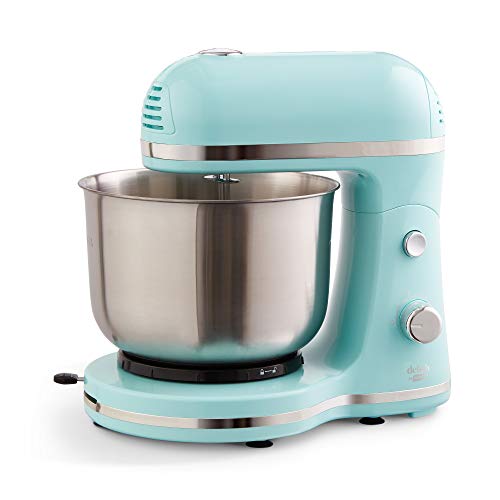
1. Delish by Dash Stand Mixer – Compact Mixer for Everyday Baking
A Delish by Dash Stand Mixer – Compact Mixer for Everyday Baking (stand mixer), per the listing. Check price on Amazon.
Good for: baking. Watch out: Check bowl size.

Best for baking
2. Kitchen in the Box Stand Mixer 3.5 QT Kitchen Electric Mixer
A Kitchen in the Box Stand Mixer 3.5 QT Kitchen Electric Mixer (stand mixer), per the listing. Check price on Amazon.
Good for: baking. Watch out: Check bowl size.
Best for baking
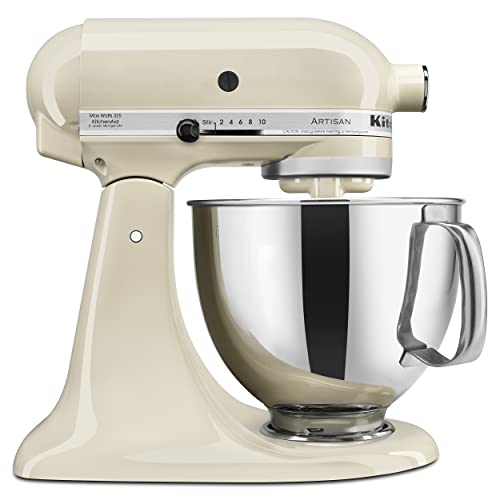
3. KitchenAid Artisan 5-Qt Tilt Head Stand Mixer KSM150PS Almond
A KitchenAid Artisan 5-Qt Tilt Head Stand Mixer KSM150PS Almond (stand mixer), per the listing. Check price on Amazon.
Good for: baking. Watch out: Check bowl size.

Best for baking
4. Cuisinart Precision Master 5.5 Qt. 12-Speed Stand Mixer SM-50BCNAS
A Cuisinart Precision Master 5.5 Qt. 12-Speed Stand Mixer SM-50BCNAS (stand mixer), per the listing. Check price on Amazon.
Good for: baking. Watch out: Check bowl size.

Best for baking
5. Kitchen in the box Stand Mixer 8.5 QT 900 Watt Heavy Dough Mixer
A Kitchen in the box Stand Mixer 8.5 QT 900 Watt Heavy Dough Mixer (stand mixer), per the listing. Check price on Amazon.
Good for: baking. Watch out: Check bowl size.
Best for baking
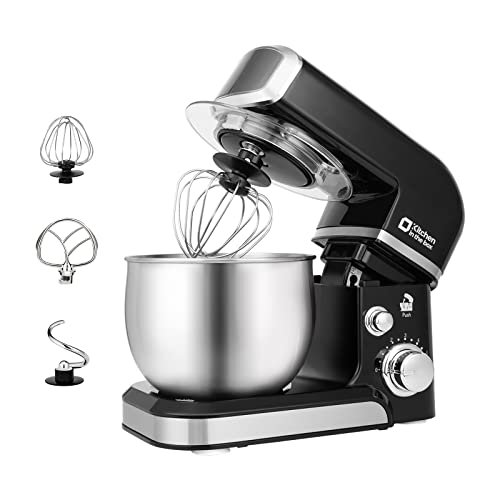
6. Kitchen in the box Stand Mixer 3.2Qt Small Electric Food Mixer 6
A Kitchen in the box Stand Mixer 3.2Qt Small Electric Food Mixer 6 (stand mixer), per the listing. Check price on Amazon.
Good for: baking. Watch out: Check bowl size.

Best Picks by Category
These labels summarize listing data and are not hands-on test results.
- Top rated: KitchenAid Artisan 5-Qt Tilt Head Stand Mixer KSM150PS Almond.
- Most reviewed: KitchenAid Artisan 5-Qt Tilt Head Stand Mixer KSM150PS Almond.
- Best value: Kitchen in the box Stand Mixer 3.2Qt Small Electric Food Mixer 6 — a budget-tier pick; check price on Amazon.
- Lowest price: Kitchen in the Box Stand Mixer 3.5 QT Kitchen Electric Mixer — a budget-tier pick; check price on Amazon.
- Premium option: KitchenAid Artisan 5-Qt Tilt Head Stand Mixer KSM150PS Almond — a premium-tier pick; check price on Amazon.
Price, Rating and Review Comparison
The table lists the picks with their price tier. Prices change often, so check price on Amazon.
| Product | Price | Rating | Ratings | Price tier |
|---|---|---|---|---|
| Kitchen in the Box Stand Mixer 3.5 QT Kitchen Electric Mixer | Check price on Amazon | — | — | Budget |
| Kitchen in the box Stand Mixer 3.2Qt Small Electric Food Mixer 6 | Check price on Amazon | — | — | Budget |
| Delish by Dash Stand Mixer – Compact Mixer for Everyday Baking | Check price on Amazon | — | — | Budget |
| Kitchen in the box Stand Mixer 8.5 QT 900 Watt Heavy Dough Mixer | Check price on Amazon | — | — | Mid-range |
| Cuisinart Precision Master 5.5 Qt. 12-Speed Stand Mixer SM-50BCNAS | Check price on Amazon | — | — | Mid-range |
| KitchenAid Artisan 5-Qt Tilt Head Stand Mixer KSM150PS Almond | Check price on Amazon | — | — | Premium |
How Much Feedback Backs Each Rating
A high average from a handful of ratings is weaker evidence than a slightly lower average from thousands. Here is how the sample size looks for each pick.
- Delish by Dash Stand Mixer – Compact Mixer for Everyday Baking: a large sample of ratings.
- Kitchen in the Box Stand Mixer 3.5 QT Kitchen Electric Mixer: a moderate sample of ratings.
- KitchenAid Artisan 5-Qt Tilt Head Stand Mixer KSM150PS Almond: a large sample of ratings.
- Cuisinart Precision Master 5.5 Qt. 12-Speed Stand Mixer SM-50BCNAS: a large sample of ratings.
- Kitchen in the box Stand Mixer 8.5 QT 900 Watt Heavy Dough Mixer: a small sample of ratings, so treat its average cautiously.
- Kitchen in the box Stand Mixer 3.2Qt Small Electric Food Mixer 6: a large sample of ratings.
Tilt-Head Versus Bowl-Lift Designs
Stand mixers come in two main layouts. Tilt-head mixers have a head that hinges back, giving easy access to the bowl and beater, so adding ingredients and scraping the bowl is simple. They suit everyday baking such as cakes, cookies and typical bread doughs, and they are a common choice for home kitchens. Bowl-lift mixers keep the head fixed and raise the bowl on arms, which tends to be stiffer and better for large or heavy batches.
Think about your counter and cabinet space. A tilt-head needs clearance above the mixer to tip the head back, which matters under wall cabinets. A bowl-lift is usually taller and heavier. Check the listing’s dimensions and weight, and measure the space where the mixer will sit and where you will store it.
The post lists compact mixers alongside larger ones, so the choice is also about batch size. If you mostly bake for one or two people, a smaller unit may be enough. If you bake bread often or make double batches, think about capacity and a sturdy build.
Bowl Capacity and Real Batch Sizes
Bowl size is given in quarts, but the usable amount is less than the nominal capacity. Wet mixtures like batters fill a bowl closer to its limit, while dense bread dough needs more room and puts more strain on the motor. The listing or manual often suggests maximum amounts of flour or numbers of cookies, so use that as a guide.
A small bowl is fine for a couple of dozen cookies or one cake, but it can struggle with a large bread dough or a heavy batch. A large bowl handles big batches, though it may be awkward for tiny amounts, since the beater may not reach small quantities of whipped cream or egg whites well.
Consider the bowl material and handle. Metal bowls are durable and chill well, while glass or plastic bowls let you see the mixing but may be heavier or less sturdy. A handle makes pouring easier. Check whether extra bowls are available, as swapping bowls speeds up recipes that need separate mixing steps. Check also that the bowl locks securely to the base.
What to Look For
| Feature | Why it matters |
|---|---|
| Bowl size | Bigger bowls suit larger batches and heavier dough |
| Motor and speeds | Wattage and speed steps shape control from folding to kneading |
| Attachments | Beater, whisk, dough hook and a splash guard cover most tasks |
| Weight and footprint | Lighter mixers move easily, heavier ones tend to sit steadier |
Specs at a Glance
| Mixer | Bowl and speeds | Power | Notes |
|---|---|---|---|
| KitchenAid KSM150PS | 5 qt; 10 speeds | 325 W | Metal construction; dishwasher-safe bowl |
| Cuisinart SM-50BCNAS | 5.5 qt; 12 speeds | 500 W | Die-cast; 17 lb; power port; 3-year warranty |
| Martha Stewart 5.3 qt | 5.3 qt; 12 speeds | 660 W | 9 lb; silicone-edge beater; splash shield |
| bella STIR | 5.3 qt; 12 speeds | 500 W | Push-button control; suction cup base |
| Aucma 6.5 qt | 6.5 qt; 6 speeds with pulse | 660 W | ABS housing; 11.7 lb; splash guard |
| Kitchen in the box | 3.2 qt; 6 speeds | 300 W | 7 lb; 12.9 x 7 x 10.2 in. |
The 6 Best Stand Mixers
Top pickBest for a familiar classic layout
1. KitchenAid Artisan 5-Qt Tilt Head KSM150PS
A 5 quart tilt-head mixer listed at 325 watts with ten speeds, metal construction and a dishwasher-safe stainless bowl with a handle. The maker says it mixes up to nine dozen cookies in one batch with the flat beater. Listed dimensions are 9.3 by 14.3 by 14 inches. The weight is listed in kilograms and looks inconsistent, so we do not repeat it.
Suits: a familiar classic layout. Strengths: metal build and ten speeds. Weaknesses: the lowest wattage of the 5 quart group. Skip it if you want a 12-speed mixer.
Best for a full kit with a power port
2. Cuisinart Precision Master 5.5 Qt SM-50BCNAS
A 500 watt, 12-speed mixer with die-cast construction, planetary mixing action and a 5.5 quart polished stainless bowl. It includes a whisk, dough hook, flat paddle and splash guard with a pour spout, plus a front power port for optional attachments. It weighs 17 pounds and has a 3-year warranty.
Suits: a full kit with a power port. Strengths: 12 speeds and a 3-year warranty. Weaknesses: a heavy 17 pounds. Skip it if you need to lift it often.
View Cuisinart Precision Master 5.5 Qt. 12-Speed Stand Mixer, SM-50BCNAS on Amazon

Best for smaller kitchens that want 5.3 quarts
3. Martha Stewart 5.3QT Tilt Head Stand Mixer
A 660 watt, 12-speed mixer with a 5.3 quart stainless bowl, a whisk, a dough hook and a flat beater with a silicone edge. A removable splash shield with a pour chute is included. It weighs 9 pounds, and the maker calls the design slim and space-saving.
Suits: smaller kitchens that want 5.3 quarts. Strengths: 660 watts and a silicone-edge beater. Weaknesses: lighter than the 17 pound Cuisinart. Skip it if you want a metal-body mixer.

View Martha Stewart 5.3QT Tilt Head Stand Mixer, 12 Speeds, Stainless Steel Bowl on Amazon

Best for push-button speed control
4. bella STIR 5.3Qt Tilt-Head Stand Mixer
A 500 watt mixer with 12 speeds set by push button, planetary mixing action and a 5.3 quart stainless bowl with a handle. The maker describes a lightweight design and a suction cup base for stability. Listed dimensions are 8.86 by 16.02 by 13.58 inches. Weight is not listed.
Suits: push-button speed control. Strengths: a suction cup base and 12 speeds. Weaknesses: no weight listed. Skip it if you prefer a knob.

View bella STIR 5.3Qt Tilt-Head Stand Mixer, 12-Speed Countertop Mixer, Aloe on Amazon

Best for the biggest bowl here
5. Aucma 6.5-QT Tilt-Head Stand Mixer
A 660 watt mixer with a 6.5 quart bowl, six speeds plus pulse and an ABS housing with a blue LED power indicator. The maker states a noise level of 76 dB or less. A whisk, dough hook, beater and splash guard with access hatch are included. It weighs 11.7 pounds.
Suits: the biggest bowl here. Strengths: 6.5 quarts and a pulse option. Weaknesses: only six speeds and a plastic housing. Skip it if you want a metal body.
Best for small kitchens and small batches
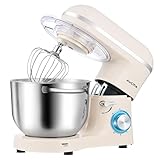
6. Kitchen in the box 3.2Qt Stand Mixer
A compact 300 watt tilt-head mixer with six speeds, a stainless bowl, a transparent splash lid, four anti-slip suction feet and a whisk, dough hook and flat beater. It measures 12.9 by 7 by 10.2 inches and weighs 7 pounds. The title says 3.2 quarts while the specifications say 3 liters, so check capacity before relying on it.
Suits: small kitchens and small batches. Strengths: a light, compact body. Weaknesses: the smallest bowl and lowest wattage. Skip it if you bake large batches.
Care and Setup
- Unplug the mixer before changing attachments.
- Check which attachments are dishwasher safe; the motor head is not.
- Wipe the head with a damp cloth.
- Start at a low speed and raise it gradually to limit splatter.
Mistakes to Avoid
- Overloading a small mixer with heavy dough.
- Raising the head while the mixer is running.
- Judging power by wattage alone.
- Skipping the splash guard on fast speeds.
Tilt-Head Benefits and Limits
This guide focuses on tilt-head models, so it helps to understand what that design gives you and what it asks you to accept. The motor head hinges back, which opens the top of the bowl for adding ingredients, scraping the sides and swapping tools. It is a convenient layout for everyday baking such as cookies, cakes, frostings and batters.
The tradeoff is rigidity. The head is held in place by a hinge and a lock, so a very stiff load can make it rock. Bowl-lift mixers, which raise the bowl to a fixed head, are generally steadier for heavy dough, though they are usually larger and heavier. If you mostly make batter, creamed mixtures and moderate doughs, a tilt-head model is a practical match.
Look at the lock. A head that engages with a firm click and stays put when mixing is reassuring. Also check how high the head rises and whether it stays open on its own, since a head that falls shut while you are scraping the bowl is annoying.
When comparing models, keep in mind that the same layout can feel quite different from one maker to another. Weight, base width, feet and bowl handle design all change how steady and comfortable the machine is. Reading owner questions on the listing may help you spot recurring complaints about a specific model.
Reading Wattage and Speed Claims Sensibly
Wattage and speed counts appear prominently on listings, but they do not tell the whole story. Wattage describes electrical input, not how much torque reaches the hook or how well the gears hold up. Two mixers with the same wattage can behave differently under load, depending on gearing, build and how the maker rates the figure.
Speed counts are similar. More speeds can give finer control, from a slow fold to a fast whip, but the useful range matters more than the number. A good low speed prevents flour from flying out of the bowl, and a fast top speed helps with whipping. Some models add a pulse setting for short bursts.
Instead of focusing on one number, consider the following:
- Maker guidance on the heaviest dough or batch the machine should handle.
- Whether the manual lists recommended speeds for each tool.
- How the body is built, including whether gears are metal or plastic if the listing says.
- Stated run times and rest periods for heavy mixing.
- The warranty, which hints at how much confidence the maker has.
Noise statements are also the maker’s own. If a quiet machine matters to you, look for owner comments describing real use, and keep in mind that sound is subjective. When listings give conflicting figures, trust the manual or ask the seller.
Matching Bowl Size to Your Household
Bowl size is the most visible difference between tilt-head mixers, and choosing well avoids frustration. Think in terms of the batches you actually make. A small bowl suits one or two people baking occasionally, while a mid-size bowl covers most family recipes. A larger bowl helps if you double recipes, bake for gatherings or make big batches of cookies.
It helps to check how much room the bowl really offers for mixtures that grow, such as whipped egg whites or bread dough. Stated capacity is a maximum volume, and a recipe that fills the bowl to the brim will splash. Many cooks aim to stay comfortably below the top.
Consider how the mixer fits your space too. Measure the height with the head raised, since a mixer that fits under a cabinet when closed may not open fully. Check the footprint and weight if you plan to move it between cupboard and counter. A heavy mixer may stay put on the counter, which is fine if you have room, but awkward if you do not.
Compact models trade capacity for convenience. If your baking is small scale and storage is tight, that can be a good deal. If you suspect your needs will grow, a mid-size bowl is often the safer choice.
Daily Use, Cleaning and Longevity
Good habits keep a mixer working for years. Unplug it before attaching or removing tools, and make sure the head is locked down before starting. Begin at a low speed and increase gradually. Keep fingers, spatulas and hair clear of moving parts, and use a spatula only when the machine is off.
For cleaning, wipe the housing with a damp cloth and dry it. Do not immerse the base or let water run into the head. Bowls and tools differ in what they tolerate, so check the manual before using a dishwasher. Hand washing is a safe default for coated tools and anything with a finish you want to preserve.
Check the attachment shaft occasionally and keep it clean, as dried batter can make tools stick. Make sure the beater clears the bowl without hitting it. If your model has a height adjustment, your manual explains how to set it.
Signs that a mixer needs attention include a hot housing, odd noises, a head that no longer locks or a hook that wobbles. Stop using it and check the manual or contact the maker. Keeping the packaging and receipt for the warranty period also makes any claim easier to handle.
Which Mixer Fits Which Kitchen
With six mixers on the list, the quickest way to narrow the choice is to start from how you bake rather than from the spec sheet. Think about batch size, storage space, how often you will lift the mixer, and whether you want a metal or plastic body. The notes below use only the figures given in the listings above.
If you bake for a family and want the most capacity, the Aucma has the largest bowl at 6.5 quarts. The 5.3 quart Martha Stewart and bella STIR sit just below the 5.5 quart Cuisinart, and the 5 quart KitchenAid is the smallest of the full-size group. For one or two people baking now and then, the Kitchen in the box is the compact option, though its title and specifications give the capacity in two different units, so confirm it first.
If weight matters, the listed numbers differ a lot. The Cuisinart is listed at 17 pounds, which tends to help stability but makes it a poor fit if you store it in a cupboard. The Martha Stewart is listed at 9 pounds, the Aucma at 11.7 pounds and the Kitchen in the box at 7 pounds. The bella STIR does not list a weight, so a suction cup base is the stability feature to look at.
If you like physical dials and a classic layout, the KitchenAid offers ten speeds with a familiar design. If you prefer push buttons, the bella STIR is the one that uses them. If you want a front power port for optional attachments, the Cuisinart is the pick that mentions it. Match the feature you care about most first, then check the rest.
Metal Body Versus Plastic Housing
The housing material is one of the clearest differences among these mixers. The KitchenAid listing mentions metal construction, the Cuisinart is described as die-cast, and the Aucma lists an ABS housing. The others do not state a material in the information above, so check each listing and manual before assuming anything.
A metal or die-cast body usually adds weight, and weight tends to reduce movement on the counter when the mixer works through thick mixtures. It can also feel more solid when the head is locked down. The cost of that solidity is storage: a heavy mixer is harder to lift into a cupboard and may be better left on the counter permanently.
A plastic housing keeps the weight down, which many people prefer when counter space is limited or when the mixer has to travel between shelf and counter. Plastic is not automatically a weakness. What matters is how the whole machine is built, including the gears, the head lock and the base. Wattage and housing material together do not tell you how long a mixer will last.
When you read a listing, look for words about gears and internal parts rather than only the outer shell. If the maker states what the gears are made of, that is useful information. If it does not, the manual or the seller may answer. Also look at the warranty term, since a longer warranty is one indicator of how much confidence the maker places in the build. The Cuisinart lists a 3-year warranty in the details above.
What Each Attachment Is For
Most tilt-head mixers arrive with three tools, and using each for its intended job gives better results and puts less strain on the motor. Knowing the purpose of each one also helps you judge whether a listing includes what you need.
- Flat beater: for cake batter, cookie dough, mashed potatoes, frosting and general mixing. Some models, such as the Martha Stewart, list a beater with a silicone edge that helps scrape the bowl as it turns.
- Whisk or wire whip: for incorporating air into egg whites, whipped cream and light mixtures. It is not meant for stiff dough or heavy batters, which can bend the wires.
- Dough hook: for kneading yeast dough. Keep batches within the maker’s stated limit, since bread dough is the heaviest load a tilt-head mixer is likely to see.
- Splash guard or shield: keeps flour and liquid in the bowl. Several listings above include one, and some have a pour spout or access hatch for adding ingredients while the mixer runs.
A power port, as on the Cuisinart, lets you fit optional attachments if the maker sells them. Check which ones are compatible before you count on this feature, since compatibility varies by model. If you want specialty accessories later, confirm that the mixer you pick actually has a way to take them.
What to Check on the Listing Before You Buy
Listings for small appliances are sometimes inconsistent, and a few minutes of checking can prevent a return. This guide already noticed two examples: the KitchenAid weight is listed in a way that looks inconsistent, and the Kitchen in the box title says quarts while its specifications say liters. Those are the sort of details to confirm before paying.
Work through this short list for any mixer you are considering:
- Bowl capacity in quarts, and whether the figure is a working capacity or a brim-full maximum.
- Listed weight and dimensions, including the height with the head raised.
- Which tools are included and which cost extra.
- Whether the bowl and tools are dishwasher safe, and which parts need hand washing.
- Warranty length and what it covers, plus how to make a claim.
- Voltage and plug type, which matters if you are buying for use outside your usual region.
- The maker’s guidance on the heaviest dough or batch it can handle.
Owner questions and answers on the listing can fill gaps the description leaves open. Treat single complaints with caution, but look for the same issue repeated by several people. If the listing and the manual disagree, the manual is the safer source, and the seller can usually clarify before you order.
Budget Tiers in Plain Terms
Prices change often, so this guide does not quote them. It helps instead to think in qualitative tiers and decide what each one usually asks you to give up. Check the current price on the product page before you decide.
At the lower end, you tend to get a compact body, a lighter build and fewer extras. The Kitchen in the box fits this idea with its small bowl, lower wattage and light weight. That can be a sensible choice for occasional baking, but it is not designed for large batches or heavy dough.
In the middle, mixers generally offer a larger bowl, more speeds and a fuller set of tools. Several models above sit here, with 5.3 quart bowls, 12 speeds and a splash shield. Many households find this range covers cakes, cookies, frosting and the occasional bread dough without much compromise.
At the higher end, you are more likely to be paying for a heavier build, a long-standing design, a longer warranty or an extra feature such as a power port. Whether that is worth it depends on how often you bake and how long you expect to keep the machine. A person who bakes weekly may value durability more than someone who bakes a few times a year.
Whatever the tier, compare the same things across models: capacity, build, warranty and tools included. A lower price is only a good deal if the mixer handles the recipes you actually make.
Getting Better Results From Your Mixer
Technique matters as much as the machine. A few habits improve results with any tilt-head model and reduce wear on the motor.
Start with ingredients at the right temperature. Butter for creaming should be soft but not melted, and eggs mix in more smoothly at room temperature. Cold, hard butter forces the beater to work harder and can leave lumps. When a recipe calls for creaming, mix long enough to look pale and fluffy, then stop and scrape the sides of the bowl.
Scrape the bowl with the mixer turned off. Ingredients often collect at the bottom or along the sides, where the beater does not reach, so a quick scrape and a short extra mix gives an even batter. If your beater clears the bowl poorly, check the manual for a height adjustment.
Add dry ingredients in stages, mixing on a low speed so flour does not fly out. Once flour is incorporated, stop. Over-mixing a cake or cookie batter can make it tougher. For whipping egg whites or cream, make sure the bowl and whisk are clean and dry, since traces of grease can stop whites from rising.
For dough, knead in short intervals and let the machine rest if the head feels warm. If the mixer strains or the head rocks, reduce the batch or the speed. Following the maker’s stated limits is the best way to keep a motor healthy.
Signs It Is Time to Replace Your Mixer
A well-treated mixer can last many years, but nothing lasts forever. Knowing the warning signs helps you decide between a repair, a warranty claim and a new purchase.
A head that will not lock, or that lifts during mixing, is a safety and performance problem. A grinding or clicking sound that was not there before can point to worn internal parts. A burning smell, a housing that gets very hot or a motor that stalls under moderate loads are all reasons to stop using the machine and read the manual or contact the maker.
Other signs are less dramatic. A beater that now hits the bowl, a bowl that wobbles in its seat or tools that no longer fit snugly can often be fixed by following the manual’s adjustment steps. If adjustment does not help, check whether replacement parts are sold for your model.
Before replacing a mixer, check the warranty. Keep the receipt and packaging details from the start, because claims are easier with proof of purchase. If the mixer is out of warranty and repair costs are unclear, compare that with a new model that better matches your baking. If you have outgrown a compact model, moving to a larger bowl may solve the problem more fully than repairing the old one.
Stand Mixer FAQ
How big a bowl do I need?
For two people, a 3 to 4 quart bowl may do. For larger batches, look at 5 quarts or more.
Are the attachments dishwasher safe?
Several listings say so for the bowl and attachments. Read each listing for the details.
Is a tilt-head mixer suitable for bread dough?
It can be for moderate batches within the maker's stated limits. For frequent, large or very stiff doughs, many bakers prefer a bowl-lift model. Check the manual for the recommended dough amount.
Does higher wattage mean a stronger mixer?
Not always. Wattage is an electrical figure, and gearing, build and design affect how much useful force reaches the tool. Use it alongside the maker's stated limits.
Why does my tilt head rock during mixing?
A heavy or stiff mixture can make the head move. Reduce the batch, lower the speed and check that the head lock is fully engaged and the mixer sits on a level surface.
Do more speeds make a mixer better?
Not necessarily. A useful low speed and a fast top speed matter more than the count. Extra steps can give finer control, but the range counts most.
How full can I fill the bowl?
Stay comfortably below the stated maximum, especially for mixtures that grow or splash. The manual may give guidance for different recipes.
Can I put the bowl and attachments in the dishwasher?
It depends on the model and finish. Read the listing and manual, and hand wash if you are unsure. The motor head should never go in water.
What should I check if the beater touches the bowl?
Look for a height adjustment in the manual and follow its steps. Also confirm the bowl is seated properly and the tool is fully attached.
Can I use a tilt-head mixer to whip egg whites and cream?
Yes, the whisk attachment is made for that job. Make sure the bowl and whisk are clean and dry, since grease can stop whites from rising. Start slowly and raise the speed gradually to limit splatter.
Is a larger bowl always better?
Not always. A very large bowl can leave small batches spread thinly so the beater misses some of the mixture. A mid-size bowl often covers the widest range of recipes. Pick the size that matches the batches you actually make.
Why does the listing weight matter?
Weight affects how steady the mixer sits and how easy it is to move. A heavy model tends to stay put during stiff mixing but is harder to store. Check the listed weight, and ask the seller if the listing seems inconsistent.
Do I need a splash guard?
It is helpful, especially at faster speeds or when adding flour. It keeps ingredients in the bowl and reduces cleanup. Several mixers above include one, so check that yours is in the box.
Should I buy extra attachments right away?
Usually not. Start with the included beater, whisk and dough hook and see which tasks you do most. If you later want optional attachments, confirm compatibility with your model first.
How long should I knead dough in a stand mixer?
Follow the recipe's time, and keep batches within the maker's limit. Knead in short intervals and let the motor rest if the head feels warm. If the mixer strains, reduce the amount of dough.
Is a suction cup base reliable?
It can add stability on a clean, flat, smooth surface. It may grip less well on textured counters, so test it with the mixer off before you start. Keep the surface and the feet clean and dry.
The Short Version
For a classic 5 quart layout, the KitchenAid. For a full kit with a power port, the Cuisinart. For 660 watts in 5.3 quarts, the Martha Stewart. For push-button control, the bella. For the biggest bowl, the Aucma. For a compact mixer, the Kitchen in the box.
How Experienced Buyers Narrow Down Stand Mixers in Practice
Most people start by looking at the headline features of stand mixers, but experienced buyers work in the opposite direction. They start with the job in front of them. Write down the three tasks you do most often with a stand mixer, how often you do them, and where the mixer will live between uses. That short list quickly rules out options that look appealing in a photo but do not match daily life. A product that is perfect for a weekend project can be a poor fit for a busy weekday routine, and the reverse is just as true.
Next, they separate must-have features from nice extras. A must-have is anything that affects safety, fit or the main result: the right size for your space, a material that suits the temperatures and ingredients you use, and controls or parts you can handle comfortably. Extras are the features you enjoy once the basics are right. Putting must-haves first prevents a common trap, where an attractive extra hides a basic mismatch that you will notice every single time you use the mixer.
Finally, they read the listing like a checklist rather than an advertisement. They confirm what is actually included in the box, what is sold separately, and what the maker says about care and limits. If two sources disagree, they trust the manual. That habit takes only a few minutes, yet it explains why some buyers stay happy with a modest choice for years while others return a more impressive one within a week.
A Realistic Week of Use: Where Stand Mixers Earn Their Keep
It helps to picture a normal week rather than a special occasion. On a weekday morning, you want a stand mixer that is quick to reach, simple to set up and easy to clean afterwards, because time is short and patience is shorter. If using it feels like a project, it will gradually be skipped, no matter how good the result is when you do make the effort. Ease of handling in the first minute often matters more than any advanced feature.
Weekends tell a different story. That is when larger batches, guests, experiments and leftovers appear, and when capacity, stability and versatility are tested. A choice that handles both rhythms well is usually the right one: compact and forgiving on busy days, capable when you ask more of it. Think about which rhythm dominates in your home, and weight your decision towards that one, while checking that the other rhythm is still workable.
Also consider who else will use the mixer. A partner, a teenager, a grandparent or a housemate may have different grip strength, height, eyesight or confidence. Controls that are easy to read, parts that are not too heavy, and instructions that make sense to a first-time user all widen the circle of people who can use the product safely and happily. The best choice is rarely the one that suits only its most enthusiastic user.
Step by Step: Getting the Best Result Every Time
Good results with stand mixers follow a repeatable routine. Begin by preparing your space: clear a dry, level area, gather everything you need within reach, and check that all parts are clean, dry and undamaged before you start. A quick visual check for chips, cracks, loose parts or worn seals takes seconds and prevents most avoidable problems. If anything looks damaged, set that piece aside rather than hoping it will be fine.
During use, work in a calm order. Add ingredients or items gradually instead of all at once, keep an eye on how the mixer is responding, and adjust early rather than forcing things at the end. Most mistakes happen when people rush the middle stage: overfilling, overheating, overtightening or skipping a pause that the maker recommends. Following the sequence in the manual, even loosely, gives a more even result and puts less strain on both the product and the person using it.
When you finish, deal with cleaning straight away while residues are still soft. Empty, rinse or wipe as the maker directs, dry parts fully before storing them, and put everything back in its usual place. That closing routine is unglamorous, but it is what keeps a stand mixer pleasant to use months later. Products rarely fail from one dramatic event; they decline through small residues, damp storage and hurried handling repeated over time.
Cleaning and Care in More Depth
Care instructions for stand mixers often sound simple, yet the details decide how long they stay in good condition. Warm water and a soft cloth or sponge handle most everyday cleaning. Abrasive pads, harsh scouring powders and sudden temperature changes are the usual causes of surface damage, cloudiness or weakened parts, so avoid them unless the maker specifically allows them. If a label says hand wash only, treat that as a design decision, not a suggestion.
Pay special attention to the places dirt hides: rims, hinges, seals, threads, handles and the underside of lids or bases. Residue in those spots can cause odours, stains, poor sealing or stiffness that people later blame on the product itself. A soft brush or an old toothbrush is ideal for narrow grooves. After washing, dry thoroughly. Storing parts while they are still damp invites musty smells and can shorten the life of seals and finishes.
Once in a while, do a deeper reset. Soak washable parts if the maker permits it, inspect seals and edges under good light, and replace any part that is cracked, warped or no longer fits properly. Keeping a note of when you bought the item and where the manual lives makes warranty questions and replacement parts far easier to handle later.
Planning Your Baking Around a Tilt-Head Mixer
Once a tilt-head mixer lives on your counter, it quietly changes how you plan baking. Recipes that felt like hard work by hand, such as enriched doughs, large cookie batches and layered cakes, become realistic on a weeknight. To get that benefit, organise recipes by the tool they need most: the flat beater for batters and cookie dough, the whisk for egg whites and cream, and the dough hook for yeast doughs. Grouping similar jobs together means fewer attachment changes and less washing between tasks.
Think about timing as well. A mixer works fastest when ingredients are prepared before you start: butter softened, eggs at room temperature, dry ingredients measured and liquids to hand. That preparation, sometimes called setting up your station, prevents the stop-start pattern that leads to over-mixing. It also means the machine runs for shorter, steadier periods, which is kinder to the motor than repeated short bursts with the bowl half empty or overloaded.
For households that bake for events, a simple batch plan helps. Decide what can be mixed ahead, what freezes well as dough, and what is best made fresh. A tilt-head mixer handles moderate batches comfortably, so two smaller batches often give a better result than one very large one that strains the head lock. Keeping batches within the maker guidance protects both texture and the machine.
The Six Mixers Compared in Everyday Terms
Specifications only tell part of the story. This walk-through compares the six mixers above by the kind of baking day each one suits, using only the details already given in their reviews.
KitchenAid Artisan KSM150PS for the classic baking routine
With its five quart bowl, ten speeds and metal construction, this is the familiar layout many bakers picture first. It suits regular family baking where a trusted format matters more than the highest wattage figure. Its dishwasher-safe bowl is a practical plus for frequent use. Choose it when you want the classic option and your batches are moderate rather than very large or very stiff.
Cuisinart Precision Master for the well-equipped counter
The larger bowl, twelve speeds, die-cast build and front power port make this the choice for someone who wants a full kit in one purchase. The splash guard with a pour spout and the longer warranty add to that complete feeling. Its weight means it is happiest living on the counter, so measure your space and be honest about whether you will move it often.
Martha Stewart 5.3 quart for power in a lighter body
This model pairs the joint-highest wattage in the list with a notably light weight and a silicone-edge beater that helps scrape the bowl as it turns. That combination suits smaller kitchens where the mixer must be lifted in and out of storage but still handle regular baking. The splash shield with a pour chute is a thoughtful extra for adding ingredients neatly.
bella STIR for push-button simplicity
Twelve speeds controlled by push buttons, planetary mixing action and a suction cup base give this mixer a distinct character. It suits bakers who prefer simple, direct controls over a dial, and the handled bowl makes pouring batters easier. Because its weight is not listed, check the current listing carefully and think about how its base will behave on your particular counter surface.
Aucma 6.5 quart for the biggest batches
The largest bowl in the group and a pulse option make this the natural pick for bakers who regularly double recipes or bake for gatherings. Six speeds are fewer than rivals offer, but for many doughs and batters the range is workable. Its plastic housing keeps weight moderate for its size, which matters when a large mixer still needs to be moved.
Kitchen in the box 3.2 quart for small kitchens and small batches
This compact, light mixer is built for one or two people, occasional baking and tight storage. Its suction feet and splash lid suit small counters, and its size makes it easy to put away. It is not the tool for large or heavy doughs, and the capacity figures in its title and specifications differ, so confirm them on the listing before relying on either number.
More Questions, Answered
How do I know which size or style is right for me?
Start with the tasks you do most often and the space you have, then choose the smallest option that handles those tasks comfortably. A mid-range size suits most households, while very small or very large versions are best when you are sure your routine demands them. Check the measurements on the listing against your shelves, cupboards or counter before ordering.
What should I check as soon as it arrives?
Unpack it on a clean surface, compare the contents with the listing, and inspect every piece for chips, cracks or missing parts before first use. Wash washable parts as the maker directs, read the safety notes in the manual, and keep the packaging until you are sure everything fits and works as expected.
How can I make it last longer?
Use it within the limits the maker states, clean it promptly after use, dry it fully before storing, and handle temperature changes gradually where the material requires it. Inspect seals, edges and moving parts from time to time, and replace worn parts rather than forcing them. Careful everyday handling does more for lifespan than any special treatment.
When is it time to replace it?
Replace any piece that is cracked, deeply chipped, warped or no longer seals, locks or sits securely as it should. Persistent odours, stains that affect use, or parts that have become loose or stiff despite cleaning are also signs. If the manual offers replacement parts, that route can extend the life of the rest of the set.
Value Over Time: Thinking Beyond the First Month
The first month with a stand mixer is a poor judge of its value. Novelty makes almost anything feel worthwhile at first, and small annoyances are easy to forgive while a purchase is new. The real test comes later, when the routine has settled and you can see whether the mixer has become a natural part of your kitchen or a resident of the back of a cupboard. When you are deciding, try to judge by that later picture rather than by the excitement of delivery day.
Value also depends on cost per use, which you can estimate honestly. Something used several times a week for years can justify a higher tier, while something used a few times a year rarely can, however impressive it looks. This is why the guides in this series keep returning to habits: how often you cook, bake, blend, store or serve decides what a sensible purchase looks like far more reliably than any single feature list.
There is a second, quieter kind of value in choosing well the first time. A purchase that fits avoids the waste of a return, a replacement and a cupboard full of nearly right alternatives. Taking an extra ten minutes to measure, compare what is included and read the care guidance is the cheapest upgrade available with stand mixers, and it is available before you spend anything at all.