Stanley Quencher style tumblers are popular because they hold plenty and keep drinks cold. The cup is only part of the story, though. Straws wear out, the base can scratch or dent, and the tall shape does not always fit a car cup holder. A few simple accessories solve these problems.
The six items below cover straws, boots, cleaning tools and cup-holder helpers. Many are made by third parties rather than by Stanley. We have not used these products ourselves, so confirm that each one fits your exact Stanley model on the current listing before buying, since sizes and lid designs differ between versions.
As an Amazon Associate we earn from qualifying purchases. Links below are affiliate links, and they do not change the product information we give.
What to Look For
| Feature | Why it matters |
|---|---|
| Fit | Match the accessory to your exact tumbler size and lid style |
| Material | Silicone boots and BPA-free straws should be flexible and easy to clean |
| Cleaning | Long, thin brushes reach the bottom of a tall cup |
| Use | A cup-holder adapter helps the tumbler stay upright in the car |
In this guide
Specs at a Glance
| Accessory | Material | Fit | Notes |
|---|---|---|---|
| Stanley replacement straws | Plastic or silicone | Check the model on the listing | Usually sold in multi-packs |
| Silicone tumbler boot | Silicone | Specific to tumbler size | Protects the base from dents |
| Straw cleaning brush set | Nylon and steel | Narrow and long | Reaches into straws and corners |
| Cup-holder expander adapter | Plastic and silicone | Fits many tall cups | Helps in car holders |
| Tumbler carry strap | Fabric or nylon | Handle loops vary | Frees up a hand |
| Replacement lid | Plastic | Model specific | For worn or lost lids |
The 6 Best Stanley Tumbler Accessories
Top pickBest for heavy daily use
1. Stanley Quencher Replacement Straws
Replacement straws are the first accessory most owners need. Look for a pack made for your tumbler version, and choose one with a good fit and a flexible, easy-to-clean material.
Suits: heavy daily use. Strengths: a spare pack at hand. Weaknesses: fit differs between versions. Skip it if your lid does not use a straw.
View Stanley Quencher Replacement Straws on Amazon

Best for protecting the base
2. Silicone Boot for Stanley Quencher
A silicone sleeve that fits over the base of the tumbler. It cushions drops, reduces noise on a desk and helps protect the finish from scratches. Make sure the size listed matches your tumbler.
Suits: protecting the base. Strengths: cushioning and a quieter cup. Weaknesses: wrong sizing is common. Skip it if you want a smooth base for a cup holder.
View Silicone Boot for Stanley Quencher on Amazon
Best for regular washing
3. Straw Cleaning Brush Set for Tumblers
A set of thin brushes, often with a longer one for the cup and a smaller one for straws and lid parts. They help clean the places a sponge does not reach, which is where odors build up.
Suits: regular washing. Strengths: long reach and easy to replace. Weaknesses: bristles wear out. Skip it if you only use a dishwasher.
View Straw Cleaning Brush Set for Tumblers on Amazon
Best for car commuters
4. Cup Holder Expander for Tumblers
Many tall tumblers do not fit standard cup holders, and an expander adapter holds the cup steady so it does not tip. Some versions add a small base that fits narrow holders too.
Suits: car commuters. Strengths: stability in a cup holder. Weaknesses: not every car fits. Skip it if you drive with a small console.
View Cup Holder Expander for Tumblers on Amazon

Best for walking and commuting
5. Tumbler Carry Strap with Handle
A fabric or nylon strap that clips onto a tumbler so you can carry it over a shoulder or wrist. It frees your hands for bags and keys, and works well when walking or traveling.
Suits: walking and commuting. Strengths: hands-free carrying. Weaknesses: strap attachment varies. Skip it if you have a model with a built-in handle.
View Tumbler Carry Strap with Handle on Amazon
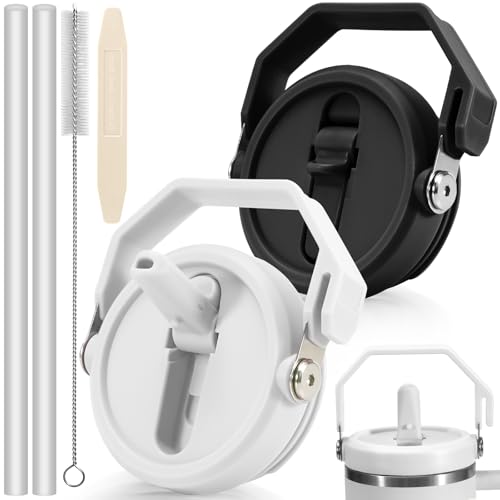
Best for worn or lost lids
6. Replacement Lid for Stanley Quencher
A new lid can revive a tumbler when the original cracks, leaks or goes missing. Check the version of your cup, because lids are not interchangeable across all models.
Suits: worn or lost lids. Strengths: a fresh seal. Weaknesses: version confusion. Skip it if your lid is in good shape.
View Replacement Lid for Stanley Quencher on Amazon
Care and Setup
- Wash straws and lids after each day of use.
- Remove the silicone gasket now and then and let it dry.
- Use a brush to clean the cup base and the lid threads.
- Replace a straw if it looks cloudy or smells off.
Mistakes to Avoid
- Buying a boot without checking the tumbler size.
- Assuming every lid fits every Stanley model.
- Leaving a drink in a closed tumbler in a hot car.
- Using abrasive pads on the outside finish.
Confirming Fit Before You Buy Anything
Most accessory problems start with a wrong-size order. Quencher-style tumblers come in several capacities and a few generations, and the base width, lid design and handle shape can differ between them. An accessory built for one version may be loose, tight or simply the wrong shape on another. Third-party sellers often list one product as fitting many sizes, which is not always accurate.
Start by finding your tumbler’s exact size, usually printed on the base or the box, and note which lid style you have: a flip-style lid, a rotating cover or a straw-only cap. Then compare these details with the listing. Look for the capacity and generation named in the title or the compatibility section, and read the product photos for the base diameter.
Measure if the listing gives dimensions. For a boot, check the inner diameter against the base of your cup. For a cup holder adapter, check the outer size against your car’s holder. For a replacement straw, check the length in inches and whether it is meant to fit your lid hole and gasket. If in doubt, ask the seller or check reviews for people with your size, remembering that reviews are opinions.
- Note capacity, generation and lid style.
- Compare the base diameter with listed boot sizes.
- Check straw length against your cup height.
- Keep packaging until you have tested the fit.
Straws, Lids and Gaskets Explained
The lid system of a tumbler has several parts that wear differently. The straw carries the drink, the lid holds it, and a small silicone gasket seals the lid to the cup. Over time the gasket can stretch, trap residue and lose its seal, and straws can stain, absorb flavours or crack at the bend.
When buying replacement straws, look at the material, the length and the diameter. Hard clear plastic keeps its shape but can crack, while softer silicone is flexible and quieter but can hold odors if not cleaned well. Wider straws suit smoothies and thick drinks, while narrower ones suit water. Check whether the pack includes a cleaning brush and whether a longer straw leaves room to remove the lid.
If you replace the lid, confirm that it threads onto your cup and matches the capacity. A lid that fits loosely may leak, and one that is forced on can crack the threads. Replacement gaskets are often sold separately and can fix a leak without buying a whole lid. Always rinse new parts before the first use.
Keep in mind that tumblers are insulated with a vacuum between the walls. Replacement lids and straws do not change the insulation, but they do change how well the drink stays cold when the lid leaks.
Protecting the Base and Fitting Cup Holders
A tall tumbler can be awkward in a car. Many cup holders are narrower than the base, so the cup tips or jams. Adapters that sit in the holder and widen or narrow it help hold the tumbler upright. Check both the diameter of your holder and the depth, because a deep holder with a short adapter may leave the cup wobbling.
Silicone boots protect the base from scratches and drops, quiet the sound of setting the cup on a desk and help it grip slippery surfaces. They also add width, which can stop the tumbler from fitting a holder that it fits without a boot. Decide whether you want protection or holder compatibility, or consider a boot that is designed to be slim.
Think about heat and cleaning. Boots can trap water and grime between the silicone and the cup, so remove and dry them regularly. Avoid leaving a boot on a hot cup in direct sun for long periods, and check that the silicone is food-safe or at least intended for drinkware.
Carry straps and handles are the other common aid. Check that the clip or loop fits your cup’s handle and that it can carry the full weight of a filled cup. Test it over a short distance before relying on it on a long walk.
Cleaning Tools and Odor Control
A tall, narrow tumbler is hard to clean with a sponge. Odors build up in the straw, the lid channels and under the gasket. A set with a long bottle brush, a straw brush and a small detail brush covers most areas. Choose brushes with firm but non-scratching bristles, and check that the handle is long enough to reach the bottom.
Wash after each day of use. Take the lid apart as far as the design allows, and remove the gasket gently. Wash in warm soapy water, rinse well and dry all parts fully before reassembling. Leaving moisture in a closed tumbler encourages odors and mold.
For stubborn smells, soak parts in a mix of warm water and white vinegar or baking soda for a short time, then rinse thoroughly. Avoid bleach unless the maker says it is safe, and do not use abrasive pads on the interior. Check the care guidance for the cup itself, since the dishwasher is not suitable for every part.
Store the tumbler with the lid off so air can circulate. Replace brushes when the bristles flatten or discolor. A fresh brush cleans better and avoids spreading buildup.
Safe Materials, Safe Habits and Replacement Signs
Accessories that touch your drink should be made from food-safe materials. Listings often mention BPA-free plastic or food-grade silicone, but those claims are the seller’s. Choose accessories from clear sellers with product details, rinse them before use and avoid anything with a strong chemical smell.
Think about heat. Hot drinks can soften some plastics and warp cheap straws. Check the listing for temperature guidance, and use accessories as intended. Do not leave a drink in a closed tumbler in a hot car, since pressure and heat can cause leaks or damage the lid.
Replacement signs are easy to spot. Replace straws that are cloudy, cracked, stained or smell off. Replace gaskets that are stretched, torn or leave the lid loose. Replace boots that are split or have lost their grip. Replace lids with cracked threads or hinges that no longer close.
When buying, ask a few questions. Does it list my exact size? What material is it? Can it be washed in the dishwasher? What is the return policy? A small accessory that fits well will be used daily, while a poorly fitting one ends up in a drawer.
How the Accessories in This Guide Work Together as a System
Bought one at a time, these accessories can feel like clutter; bought as a small system, they solve distinct problems that rarely overlap. The Stanley Quencher Replacement Straws and the Replacement Lid for Stanley Quencher are the wear parts of the setup: they touch your drink and your mouth, they age fastest, and they are the pieces most worth keeping spares of. The Silicone Boot for Stanley Quencher protects the tumbler itself, absorbing the knocks that would otherwise dent the base or chip the finish. Thinking of the list this way, as consumables, protection and carrying gear, stops the common mistake of buying three versions of the same idea while the part that actually leaks goes unreplaced.
The carrying and car pieces solve a different layer of the problem. The Cup Holder Expander for Tumblers addresses the mismatch between a wide tumbler base and the narrow holders molded into most vehicles, while the Tumbler Carry Strap with Handle changes how the tumbler moves with you on foot, freeing a hand and keeping the cup upright against your side. Neither improves the drink itself; both improve the odds that the drink arrives where you are going. If your tumbler mostly lives on a desk, you can skip both with a clear conscience and put the money toward spare lids and straws instead.
The Straw Cleaning Brush Set for Tumblers is the quiet member of the system and arguably the one that protects your enjoyment most. Straws and narrow lid channels develop residue that rinsing alone does not shift, and a brush that actually fits is the difference between a tumbler that tastes clean and one that slowly picks up a stale note. Pair the brushes with a simple weekly routine and the rest of the accessories last longer too, because gaskets and straw tips degrade faster when they sit in old residue. Buy the system in that order: hygiene first, wear parts second, protection and carrying last.
Checking Compatibility Like a Skeptic Before Anything Goes in the Cart
Stanley’s range spans several sizes and more than one lid generation, and accessory listings are not always careful about which combination they fit. Before ordering any pick here, confirm three things in the listing itself: the tumbler size it names, the lid style it names, and whether the part is made by the original maker or a third party. Third-party parts can be excellent value, but their tolerances vary more, so the fit check matters more, not less. When a listing is vague about the model, treat that as your answer and look at a clearer listing instead.
Straws deserve a specific check, because length and angle both matter. A straw cut for a smaller cup will sit short in a taller one and rattle against the lid, while an overly long straw bottoms out and can block flow. Measure your current straw against the listing’s stated length rather than guessing from photos, which are rarely to scale. For replacement lids, match the drinking opening and the gasket groove as well as the diameter; two lids can share a diameter and still seal differently because the thread or snap profile differs.
Boots and sleeves need the base diameter, not the cup’s headline size, because ranges taper differently. If your tumbler already has small dents near the base, a snug boot may be hard to seat; a slightly more flexible material usually copes better. Keep the packaging until you have test-fitted everything with water at the sink. A two-minute test with plain water, tipping the sealed tumbler over the sink and squeezing gently, reveals most fit problems while returns are still painless.
Daily Habits That Make Straws, Lids and Gaskets Last Longer
Silicone and plastic parts rarely fail suddenly; they wear out through a thousand small habits. Avoid leaving a sealed tumbler in a hot car, where heat and pressure age gaskets and can warp thin lid parts. When you wash up, remove the gasket rather than washing around it, because the groove underneath is where moisture and residue collect. Let every part dry fully before reassembling, since a lid put away damp will smell musty within days and the smell transfers to the next drink.
Straws last longer when they are not used as stirrers against ice or chewed absent-mindedly at a desk, both of which split tips and roughen the bore so residue clings faster. If you drink smoothies or protein shakes, rinse the straw immediately after finishing; dried smoothie residue is the single hardest thing to clean from a narrow tube and the main reason brushes like the Straw Cleaning Brush Set for Tumblers earn their place. A quick rinse takes seconds and turns the weekly deep clean into a formality.
Rotate spares if you bought a multipack. Using one straw until it dies while the rest sit in a drawer means the spare set ages unused and you relearn the replacement search from scratch each time. Rotating evens the wear and makes it obvious when the whole set is nearing replacement. As a rough rhythm, inspect straws and gaskets monthly under good light: cloudiness that does not wash off, a persistent odor after cleaning, or a gasket that no longer springs back when pinched are all reliable signs that a replacement from picks like the Stanley Quencher Replacement Straws or Replacement Lid for Stanley Quencher will improve the seal and the taste.
On the Move: Cars, Gym Bags, Desks and School Runs
Most tumbler frustration happens in transit, so it is worth matching accessories to the journey rather than the kitchen. In the car, stability is the whole game: the tumbler should sit low, resist tipping under braking, and be reachable without looking down. That is the case for the Cup Holder Expander for Tumblers when your holder is too narrow, and for a boot like the Silicone Boot for Stanley Quencher when the holder is wide and the cup rattles. Test the setup on a short drive with water before trusting it with coffee on a work shirt day.
In a gym bag or backpack, the lid is the weak point, because side pressure against the drinking opening can defeat a seal that holds perfectly upright. Pack the tumbler upright in a side pocket where possible, and treat any lid without a positive lock as spill-resistant rather than leakproof, whatever the listing implies. A carry strap such as the Tumbler Carry Strap with Handle helps here too, since a tumbler carried by hand or clipped outside the bag cannot leak onto kit inside it. For school runs and children’s drinks, prioritize the lid that small hands can open reliably over the one with the cleverest seal.
At a desk, the risks are quieter: condensation rings, a knocked cup near a keyboard, and a straw that slowly flavors water with yesterday’s coffee. A boot doubles as a coaster, and keeping one spare lid and straw set at work ends the forgotten-tumbler problem. These are small, unglamorous wins, but they are the difference between accessories that get used daily and a drawer of good intentions. Choose for the journey you actually make most often, and the picks in this guide sort themselves quickly.
Extra Questions Readers Ask About Tumbler Accessories
Can I mix accessories between different tumbler brands?
Sometimes, but never assume it. Straws are the most forgiving, since only length and diameter matter, while lids are the least forgiving because threads, snap profiles and gasket grooves are brand and model specific. Boots sit in between: a flexible boot may stretch over a similar base from another brand, yet sit loose enough to trap water underneath. If you own more than one brand, keep each set of spares labeled in its own bag, because parts that look identical on a counter often differ by a few millimeters where it counts.
Why does my tumbler taste stale even after washing?
The usual culprits are the gasket groove and the inside of the straw, the two places a quick wash never reaches. Remove the gasket, clean the groove with a small brush, and run a straw brush through the straw with warm soapy water. If a plastic taste persists in a new accessory, a soak in warm water with a little baking soda, followed by a thorough rinse and full air-dry, usually clears it. Replace any part that still smells after a proper deep clean; porous, aged material holds odor in a way cleaning cannot reverse.
How many spare straws and lids is it sensible to own?
For one daily tumbler, one spare lid and two spare straws cover most real life: one in use, one drying, and one for the day a straw is left at the office or dropped somewhere unrecoverable. Households where several people use the same model can share a labeled spare set. Buying far beyond that rarely pays, because models change and old spares stop fitting new cups. Restock when you open the last spare rather than on a schedule, and recheck the model name each time, since a mid-range refresh can quietly change a lid fitting.
Seasonal Use: Summer Ice, Winter Heat and Everything Between
Accessories earn their keep differently across the year. In summer, the weak points are melted ice, warm gaskets softened by heat and tumblers left in hot cars, where a boot like the Silicone Boot for Stanley Quencher also insulates your hand from a sun-warmed cup. Spare straws matter more in iced-drink season because they are used daily and washed constantly. Planning a small summer kit, spare straw, spare lid, boot fitted, means the season’s heaviest use never catches you with a part soaking in the sink when you need to leave.
Winter flips the priorities. Hot drinks test lids and seals, steam finds any weakness in a gasket, and a lid that wept a little with cold water in July can dribble coffee in January. Test your sealing lid with hot water at the sink when the season turns, and replace a tired gasket before it fails on a coat. Carry straps like the Tumbler Carry Strap with Handle matter more with gloves and layers, when a smooth cup is harder to grip, and a strap turns a fumble into a swing instead of a spill.
Between seasons, give the whole kit one honest inspection. Wash every part, dry it fully, check straws against the light for cracks and clouding, pinch gaskets for spring, and test-fit the boot and any car adapter while there is no journey depending on them. Ten minutes twice a year replaces the usual pattern of discovering a failed part at the worst moment. Households that keep that rhythm find their accessories last noticeably longer, simply because small problems are caught while they are still small.
Sharing, Kids and Second Tumblers: Organizing a Household Set
One tumbler is a personal kit; a household of tumblers is a small logistics problem. Parts migrate between cups, lids get swapped onto the wrong base and straws vanish into the wrong drawer. A simple labeling habit, a dot of color or initials under the boot, ends most of it. Keep each tumbler’s spares in its own labeled bag, because the day two similar lids sit side by side on a counter is the day the wrong one goes out the door and leaks in someone’s bag.
Children change the accessory priorities. For younger drinkers, the lid they can open and close reliably beats the lid with the cleverest seal, and a straw with a stopper that cannot be pulled free is worth more than any carrying gadget. Boots earn double value on children’s cups, which are dropped more and dented faster. Expect to replace children’s straws more often, since chewing is a stage, not a defect, and keep the brush set where you will actually use it after school drinks, not in a distant cupboard.
A second tumbler, bought when the first proves itself, simplifies everything else. One can be washing while the other is in use, one can live at work while the other travels, and flavor-sensitive drinkers can dedicate one to coffee and one to water. When you buy that second cup, check whether your existing accessories fit it before assuming a whole new kit is needed; within the same range, boots and straws often carry over, and the money saved buys the spare lids that actually wear out.
What to Keep in the Car, the Bag and the Spares Drawer
A small amount of deliberate duplication ends most accessory emergencies. In the car, keep nothing but the fitted setup itself, because loose straws and lids in a glovebox gather dust and grit that end up in a drink. At home, the spares drawer wants one spare lid, two spare straws, the brush set and any fitting tool the parts came with, kept together in one labeled container rather than scattered through the kitchen’s general drawer, where small silicone parts go to disappear.
At work or school, a single spare straw and a cloth for spills cover most real incidents. Anything more is luggage. The point of the system is that a failure at any station in your day has a known, boring solution, and boring is exactly what you want from drinkware logistics. Review the drawers when you replace a part, and throw away the cracked straw you kept meaning to throw away; spares only work when every piece in the drawer is genuinely usable.
When you travel, pack the tumbler empty with its lid loosened, a spare straw inside the cup and the boot fitted, because pressure changes and baggage handling test seals in ways a commute never does. On arrival, wash before the first fill if the cup traveled in checked luggage. These tiny rituals take a minute and they are the difference between accessories that feel like a system and a bag of parts that almost fits.
Finally, buy spares at the moment of need plus one. When a straw cracks, order the replacement and one extra while the model name is in front of you and the listing is already found. That habit keeps the drawer stocked without stockpiling, and it means the next failure, whenever it comes, is a thirty-second swap instead of a fresh research project conducted while your drink waits, warming, on the counter.
A Final Decision Checklist Before You Buy
Before you settle on a final choice, run one last comparison against your own routine rather than against the marketing. List the three jobs your Stanley tumbler accessory will do most often, in the order you actually do them, and check the pick you favor against each one in turn. Most disappointment in this category comes from a product that excels at a job its owner rarely gives it, while being merely adequate at the daily task. A few minutes with that list is the cheapest insurance in the whole purchase, and it frequently moves readers one place up or down this guide’s list, which is exactly what a list is for.
It also helps to decide in advance what would make you return or replace the purchase, because that decision is clearer before a box is open than after a week of hoping a mismatch improves. A fit that is wrong, a part that does not seal, seat or connect as described, or a result that falls short on the first honest test are all legitimate reasons to act quickly while returns are simple. Minor unfamiliarity is not; most products in this guide have a short learning curve, and the second or third use is the fairer test. Knowing the difference in advance protects both your money and your patience.
Finally, keep the paperwork and the product details together somewhere you will find them in a year: the exact model name, the date it went into use and any spare parts you bought with it. Future you, ordering a replacement part or checking whether a new accessory fits, will be grateful for thirty seconds of filing today. Good ownership in this category is mostly that, a series of small, unglamorous habits that keep a well-chosen product performing the way it did in its first week, long after the excitement of choosing it has faded.
One more check is worth making before you order: measure the space, surface or cupboard where this purchase will actually live, and compare those numbers with the product’s stated dimensions rather than its photographs. Listings are shot to flatter, and scale is the first casualty of flattering photography. A product that fits its home gets used daily; one that must be stored awkwardly, dragged out or worked around will be quietly resented within a month, however well it performs. Two minutes with a tape measure has saved more purchases in this category than any other single habit.
If you are buying for someone else, weight the forgiving end of this guide more heavily than you would for yourself. A gift succeeds when it fits the recipient’s routine without asking them to change it, so favor the pick that tolerates varied habits, washes easily and does not depend on accessories they do not own. Include the receipt or a note of the exact model, and mention care in one friendly sentence rather than a lecture. The best-regarded gifts in this category are the ones still in daily use a year later, and that outcome is decided by fit long before it is decided by quality.
And if two picks still seem equal after all of this, choose the one whose maker supports it better where you live: clearer documentation, easier spare parts and a range that stays available for replacements. Small differences in the product itself fade within weeks of use, while support is the gift that keeps arriving for years. That tie-breaker, applied calmly, ends most deadlocks in this guide, and it has the extra virtue of being right even when the products themselves are too close to call.
Stanley Tumbler Accessories FAQ
Do these accessories fit all Stanley tumblers?
Not always. Check your exact model, size and lid style against the listing.
Are third-party accessories safe?
Look for food-safe materials in the listing, and wash new parts before first use.
How often should I replace the straw?
When it looks worn, stained or hard to clean. Many people keep a few spares.
Do I need a boot?
It is optional, but it can help protect the base if you drop the cup often.
How can I tell which generation my tumbler is?
Check the base, the box and the lid style, and compare with the listing photos. If unsure, measure the base diameter and the cup height and match them to the accessory details.
Why does my lid leak after a few months?
The gasket may be stretched or dirty, or the threads may not be seated. Clean and reseat the gasket first, and replace it if it is torn or loose.
Can I put a boot on any tumbler?
No. Boots are sized for specific bases. Check the inner diameter and the capacity named in the listing.
Do I need to remove the boot to clean the cup?
Yes, now and then. Water and grime can collect between the silicone and the cup, so dry both before refitting.
Are silicone straws better than plastic ones?
They are softer and less likely to crack, but can hold odors if not cleaned. Hard plastic keeps its shape but can crack at the bend.
What is the best way to carry a tumbler?
A strap or handle that fits your cup works well. Test it with a full cup before walking long distances.
Can I run the straw through the dishwasher?
It depends on the material. Check the listing, and use a brush for long straws so residue does not remain inside.
Taking a Tumbler on the Road: Spills, Tipping and Cup Holders
A large tumbler that is fine on a desk can be a nuisance in a moving car. The cup is tall, the base is narrow in the bottom half, and the lid is designed for sipping rather than sealing. A sudden stop can send it sliding off a seat, and a lid that opens or leaks lets liquid reach upholstery. If you drive with your tumbler daily, treat the lid as a limited-protection part. A closed flip or rotating cover reduces splashes, but few straw lids are watertight if the cup tips over.
Where you put the tumbler matters more than any accessory. A cup holder that fits the base snugly is the safest spot, which is where a cup holder expander earns its place. A holder that is too wide lets the cup rock, and one that is too narrow squeezes or forces the cup. If the car has no suitable holder, a console pocket or a door bin with a non-slip mat is better than the seat.
- Fit the base first. Measure it, then compare that figure with the holder diameter before you buy an expander.
- Close the lid before moving the car, even for short trips.
- Keep the straw clear of the console, since a bent straw can stick out and catch on a sleeve.
- Do not leave a full tumbler in a hot parked car, because pressure and heat can push liquid past the lid seal.
A carry strap with a handle helps off the road. It frees one hand and reduces drops when you carry a heavy cup, though you should check the clip or loop against the handle shape on your own tumbler before relying on it with a full load.
Hot Drinks, Cold Drinks and How Accessories Cope
The same tumbler may hold iced water in the morning and hot coffee in the afternoon, and accessories respond differently. Silicone boots tolerate a wide temperature range, but a boot on a cup with a very hot or very cold wall traps moisture against the metal, and condensation can collect under it. Take it off now and then to dry both parts.
Plastic straws are usually fine with cold drinks, but hot liquid can soften some plastics and affect how they hold their shape over time. Silicone straws are more flexible and often tolerate warmth, though they pick up flavors and stain more readily. If you want to drink hot beverages through a straw, check that the material is rated for it, and let the drink cool slightly, since hot liquid in a narrow tube can burn the mouth.
Lids deserve the same attention. Gaskets and flip tabs stiffen in cold weather and soften after long heat exposure. If a lid starts to feel loose after a hot summer in a car or a winter outdoors, inspect the seal ring for flattening or cracks before you assume the cup is faulty.
Matching Accessories to How You Use the Tumbler
It is easy to buy a full kit and use half of it. Think about your routine first. For a desk worker, the most useful items are a spare straw, a brush and perhaps a replacement lid, since the tumbler rarely moves. A commuter benefits more from a strap, a cup holder expander and a boot to cushion knocks. For gym use, a strap and a cleaning set matter most, because sweat, protein powder and sports drinks leave residue that normal rinsing misses.
Families sharing tumblers should have extra straws and clearly separate lids, so you can wash each one on its own. Students may prefer a boot, since it protects against drops on hard floors and reduces the noise of a metal cup on a desk.
- Desk: spare straw, brush, lid.
- Car commuter: expander, strap, boot.
- Gym: strap, brush set, extra straws.
- Travel: sealed lid, boot, a way to keep parts clean in a bag.
Where to Spend and Where to Save
Not every accessory deserves the same budget. Straws and cleaning brushes are cheap, replaceable and worn quickly, so there is little reason to pay a premium. Buy a multi-pack and replace straws on a schedule. Lids and gaskets are the opposite. They form the seal that keeps drinks inside, so a poorly molded replacement that does not seat fully costs more in frustration than you saved. Where possible, check that the listing names a compatible model and read the reviews for fit complaints.
Boots and expanders sit in the middle. A well-fitted silicone boot protects the base and dampens sound, but a loose one slides off and can be lost. A cheap expander that flexes under weight wobbles in the car holder. For these, thicker walls and a snug fit are worth a small price increase.
Finally, keep in mind that accessories wear out too. A boot cracks, a straw clouds and a lid gasket flattens. Replacing the part at the first sign of trouble is cheaper than replacing the cup, and it keeps the tumbler useful for years.
Frequently Asked Questions
Will a tumbler leak if it tips over in the car?
Often yes. Most straw lids are made for sipping and are not fully watertight. A closed cover helps, but if a full cup tips, liquid can still escape around the straw hole. Use a cup holder and close the lid to cut the risk.
Can I put hot coffee in a tumbler with a straw lid?
You can if the cup is rated for hot drinks, but a straw lid is not designed to hold pressure from steam. Fill below the maximum, let it cool slightly, and use caution drinking through the straw, since hot liquid can burn.
How do I stop condensation under a silicone boot?
Remove the boot occasionally and dry both the boot and the base of the cup. Water trapped there can leave marks and encourage mildew. Wipe the surfaces before refitting, and avoid leaving the cup wet in a closed bag.
Is it worth buying a spare lid?
A spare is handy if you use the tumbler daily or share it. Lids wear first, and having one on hand lets you wash and fully dry the other. Check the listing names your tumbler model, since lids rarely interchange between sizes.
The Short Version
For spare straws, the Quencher replacement set. For base protection, the silicone boot. For cleaning, the brush set. For car holders, the expander. For hands-free carrying, the carry strap. For a damaged lid, the replacement lid.

