Disclosure: topratedkitchenware.com is reader-supported. When you buy through links on our site, we may earn an affiliate commission from Amazon and other retailers, at no extra cost to you.
Where to buy
Every product below was shortlisted specifically for this guide to the best sushi rice cookers, using only verified listings.
Sushi rice is unforgiving of sloppy cooking, so this shortlist leans on control systems and pot surfaces that produce intact, glossy grains. All six picks below are verified listings; the two Zojirushi models anchor the premium end, and the small cookers serve the way most people actually make sushi at home. For the closest neighboring shortlist, see Best Small Japanese Rice Cookers.
- Cosori Rice Cooker 10 Cup — Check on Amazon
- BLACK+DECKER Rice Cooker 6-Cup (Cooked) — Check on Amazon
- AROMA Rice Cooker ARC-363NG — Check on Amazon
- Zojirushi NS-ZCC10 Neuro Fuzzy Rice Cooker and Warmer — Check on Amazon
- Zojirushi NS-TSC10 5.5 Cup Micom Rice Cooker and Warmer — Check on Amazon
- Dash Mini Rice Cooker 2-Cup — Check on Amazon
Read the full guide ↓
The best sushi rice cookers are the ones that produce short-grain rice with intact, separate, glossy grains, batch after batch, because everything that happens after the cook, the seasoning, the fanning, the rolling, depends on that foundation. This guide compares six verified cookers across the full range, from a two-cup Dash Mini to the fuzzy-logic Cosori and the two Zojirushi models that serious home sushi cooks reach for.
Home sushi has a particular rhythm: rice cooks while fillings are prepped, then everything converges in a short window where the rice is seasoned, cooled to near body temperature, and used before it firms. A cooker that fits that rhythm has a reliable timer or a gentle keep-warm, a pot that releases seasoned rice cleanly, and a capacity matched to a realistic home batch, which is smaller than most people first assume.
Each review below judges its cooker against that rhythm rather than against a generic rice-cooking standard. Where a model is a fine everyday rice cooker but a weaker sushi tool, the review says so, and the buying guide explains the water ratio and resting steps that matter more than any feature list. Cookers that also handle glutinous styles well appear in Best Small Brown Rice Cookers as well.
Key Takeaways
- Sushi rice should cook slightly firm; it absorbs seasoned vinegar after cooking.
- Fuzzy-logic and Micom controls give the most repeatable short-grain texture.
- Season only what you will serve; seasoned sushi rice should not be refrigerated.
- Rest the rice 10 to 15 minutes before seasoning, then fold, never stir.
- Small cookers suit real home sushi nights better than family-size pots.
- The Zojirushi models lead on texture; the Cosori leads on all-round value.
In this guide
Quick Picks
The six picks below are ordered from the most capable all-rounder to the smallest specialist. Badges match the detailed reviews, and readers comparing sticky styles can cross-check Best Small Rice Cookers For Brown Rice before deciding.
| Pick | Badge | Best for | Link |
|---|---|---|---|
| Cosori Rice Cooker 10 Cup | Best Overall | Precise, repeatable sushi rice for regular home sushi nights | Linked pick — see Where to Buy |
| BLACK+DECKER Rice Cooker 6-Cup (Cooked) | Best Budget Pick | A first sushi night on a simple budget | Linked pick — see Where to Buy |
| AROMA Rice Cooker ARC-363NG | Best for Singles | One or two servings of sushi rice | Linked pick — see Where to Buy |
| Zojirushi NS-ZCC10 Neuro Fuzzy Rice Cooker and Warmer | Best Premium | The most refined short-grain texture | Linked pick — see Where to Buy |
| Zojirushi NS-TSC10 5.5 Cup Micom Rice Cooker and Warmer | Best for Most Households | Families who cook rice daily and sushi weekly | Linked pick — see Where to Buy |
| Dash Mini Rice Cooker 2-Cup | Best Mini | Learning to roll with the smallest possible setup | Linked pick — see Where to Buy |
How These Picks Were Chosen
Picks were selected by matching verified listings to the specific demands of sushi rice: control systems that hold short-grain texture, pot coatings that release seasoned grains, capacities that fit home sushi batches, and keep-warm behavior that does not dry the rice during prep. Only products confirmed by their own listings are linked, and specifications quoted are the ones those listings state.
This is a research-led guide. It compares manufacturer specifications, documented control technologies such as fuzzy logic and Micom adjustment, and the known behavior of each format, rather than claiming hands-on testing of every unit. Where a basic one-touch cooker is included, it is because its size and simplicity genuinely serve small sushi batches, and its limits are stated plainly.
One finding shaped the ranking: for sushi rice, repeatability beats versatility. A cooker with eighteen functions that cooks short-grain rice slightly differently each time is a worse sushi tool than a simple model whose result you can predict to the spoonful, because seasoning ratios are tuned to an expected texture.
The 6 Best Options for Best sushi rice cookers

Cosori Rice Cooker 10 Cup
Badge: Best Overall
Strengths
- Fuzzy logic adjusts cook cycles, which helps finicky grains like sticky and sushi rice
- Ceramic-coated pot releases sticky grains with less scraping
- Delay timer and long keep-warm suit make-ahead sticky rice for gatherings
Trade-offs
- Large footprint and capacity are more than small kitchens need
- Many functions go unused if you only cook plain rice
- Ceramic coating still needs gentle utensils to avoid wear
Key specs from the listing: Capacity: 10-cup uncooked / 20-cup cooked; Fuzzy logic cooking; Ceramic coating inner pot; 18-in-1 functions including saute and slow cook; 24H keep warm and delay timer; Stainless steel steamer basket included.
The Cosori 10 Cup leads this list because sushi rice rewards control: fuzzy logic steadies the cook, the ceramic pot releases the seasoned grains without tearing them, and the delay timer lets a batch finish exactly when the fish is sliced and the rolling mat comes out. Sushi rice is a two-stage food: the cook itself, then the seasoning, where warm short-grain rice is folded with rice vinegar, sugar and salt and fanned to a gloss. A cooker serves the first stage by producing grains that are tender, separate and intact; broken or blown-out grains turn the seasoning step into porridge no matter how carefully you fold.
Water ratio for sushi rice runs slightly drier than for plain table rice, because the grains will absorb seasoned vinegar afterward. A cooker with repeatable results lets you lock in that slightly firm cook batch after batch, and repeatability, more than any single feature, is what separates a sushi-night success from a sticky improvisation.
Resting matters as much as cooking. Sushi rice should rest in the closed cooker for ten to fifteen minutes after the cycle ends so surface moisture redistributes, then move to a wide bowl for seasoning. Cookers with harsh keep-warm cycles punish hesitation here, drying the top layer while you prep fillings, which is why gentle keep-warm designs dominate serious sushi-rice shortlists. In daily use, the details that decide whether a cooker like this earns its counter space are unglamorous: how the lid behaves when your hands are wet, how the pot feels after a long soak in the sink, and whether the controls make sense at six in the morning without a manual open on the counter. The Cosori Rice Cooker 10 Cup handles that everyday test in line with what its listing promises, and nothing in its specification suggests a hidden catch for the jobs described in this guide.
The honest limitation to weigh is in the trade-offs above. No single cooker wins on capacity, control and simplicity at once, and this model leans toward repeatable short-grain texture over breadth of functions rather than covering every style of cooking equally well. Buyers who cook this way most weeks will feel that trade as a benefit; buyers who only occasionally make the dish in question should weigh the simpler or smaller options in this list first.
Ownership, week to week, is mostly cleaning and storage. Removable pots and lids that tolerate a soak are the difference between an appliance that gets used nightly and one that migrates to a back cupboard, so weigh the wash-up honestly against your routine. Measure the shelf or counter corner this cooker will live in before it arrives, and keep the manual’s care section for the parts, gaskets, valves or coatings, that decide how long it stays pleasant to use.
Best for: Precise, repeatable sushi rice for regular home sushi nights / Not suited for: Tiny batches only

BLACK+DECKER Rice Cooker 6-Cup (Cooked)
Badge: Best Budget Pick
Strengths
- Simple one-touch operation is hard to get wrong for everyday rice
- Removable non-stick bowl makes sticky residue easier to soak off
- Steaming basket adds a quick vegetable or dumpling option
Trade-offs
- Small cooked capacity fills up fast with expanding sticky rice
- No programmable grain settings or delay start
- Non-stick bowl needs non-metal utensils to stay intact
Key specs from the listing: Capacity: 6-cup cooked; Steaming basket included; Removable non-stick bowl.
The BLACK+DECKER 6-Cup is the honest budget route to sushi rice. Sushi rice is a small-batch food in most homes, and this cooker’s modest capacity, removable bowl and steaming basket cover a home sushi night for two without pretending to be a precision instrument. Resting matters as much as cooking. Sushi rice should rest in the closed cooker for ten to fifteen minutes after the cycle ends so surface moisture redistributes, then move to a wide bowl for seasoning. Cookers with harsh keep-warm cycles punish hesitation here, drying the top layer while you prep fillings, which is why gentle keep-warm designs dominate serious sushi-rice shortlists.
Sushi rice is a two-stage food: the cook itself, then the seasoning, where warm short-grain rice is folded with rice vinegar, sugar and salt and fanned to a gloss. A cooker serves the first stage by producing grains that are tender, separate and intact; broken or blown-out grains turn the seasoning step into porridge no matter how carefully you fold.
Batch discipline is the quiet skill. Seasoned sushi rice is best within a few hours and should never be refrigerated for later rolling, because the grains harden irreversibly. The right cooker is therefore the one sized to the amount you will actually season and serve, and for most home sushi nights that is a surprisingly small amount. In daily use, the details that decide whether a cooker like this earns its counter space are unglamorous: how the lid behaves when your hands are wet, how the pot feels after a long soak in the sink, and whether the controls make sense at six in the morning without a manual open on the counter. The BLACK+DECKER Rice Cooker 6-Cup (Cooked) handles that everyday test in line with what its listing promises, and nothing in its specification suggests a hidden catch for the jobs described in this guide.
The honest limitation to weigh is in the trade-offs above. No single cooker wins on capacity, control and simplicity at once, and this model leans toward repeatable short-grain texture over breadth of functions rather than covering every style of cooking equally well. Buyers who cook this way most weeks will feel that trade as a benefit; buyers who only occasionally make the dish in question should weigh the simpler or smaller options in this list first.
Think, too, about the second week rather than the first day. The cooks who love an appliance long-term are the ones whose habits it matches: the batch size they really make, the storage they really have, the cleaning they will really do. This model asks for a specific kind of household, described in the verdict line below, and rewards it with the dull, valuable virtue of being reached for without thinking.
Best for: A first sushi night on a simple budget / Not suited for: Large parties

AROMA Rice Cooker ARC-363NG
Badge: Best for Singles
Strengths
- Compact 1.5 Qt footprint fits small counters and dorm-style kitchens
- Straightforward cook-and-keep-warm cycle for small sticky-rice batches
- Small pot size means less leftover sticky rice drying out
Trade-offs
- Too small for family-size or party sticky-rice batches
- No digital grain programs or texture settings
- Basic keep-warm can dry edges if rice sits for hours
Key specs from the listing: Capacity: 3-cup uncooked / 6-cup cooked, 1.5 Qt; Auto keep warm; Also positioned for oatmeal and soup.
The AROMA ARC-363NG makes sense for the solo sushi cook: a 1.5 Qt pot cooks one to two cups of short-grain rice evenly, which is the amount a single person or a couple actually seasons and uses before it cools and firms. Batch discipline is the quiet skill. Seasoned sushi rice is best within a few hours and should never be refrigerated for later rolling, because the grains harden irreversibly. The right cooker is therefore the one sized to the amount you will actually season and serve, and for most home sushi nights that is a surprisingly small amount.
Resting matters as much as cooking. Sushi rice should rest in the closed cooker for ten to fifteen minutes after the cycle ends so surface moisture redistributes, then move to a wide bowl for seasoning. Cookers with harsh keep-warm cycles punish hesitation here, drying the top layer while you prep fillings, which is why gentle keep-warm designs dominate serious sushi-rice shortlists.
Water ratio for sushi rice runs slightly drier than for plain table rice, because the grains will absorb seasoned vinegar afterward. A cooker with repeatable results lets you lock in that slightly firm cook batch after batch, and repeatability, more than any single feature, is what separates a sushi-night success from a sticky improvisation. In daily use, the details that decide whether a cooker like this earns its counter space are unglamorous: how the lid behaves when your hands are wet, how the pot feels after a long soak in the sink, and whether the controls make sense at six in the morning without a manual open on the counter. The AROMA Rice Cooker ARC-363NG handles that everyday test in line with what its listing promises, and nothing in its specification suggests a hidden catch for the jobs described in this guide.
The honest limitation to weigh is in the trade-offs above. No single cooker wins on capacity, control and simplicity at once, and this model leans toward repeatable short-grain texture over breadth of functions rather than covering every style of cooking equally well. Buyers who cook this way most weeks will feel that trade as a benefit; buyers who only occasionally make the dish in question should weigh the simpler or smaller options in this list first.
Accessories and spares deserve a thought at purchase time rather than after a failure. A spare gasket, an extra pot or a replacement basket, where the design has such parts, costs little and prevents the one broken evening that makes owners abandon good appliances. Check what the maker sells for the model, and if the ecosystem is thin, factor that into how much of your kitchen you ask this one cooker to carry.
Best for: One or two servings of sushi rice / Not suited for: Seasoning rice for a crowd
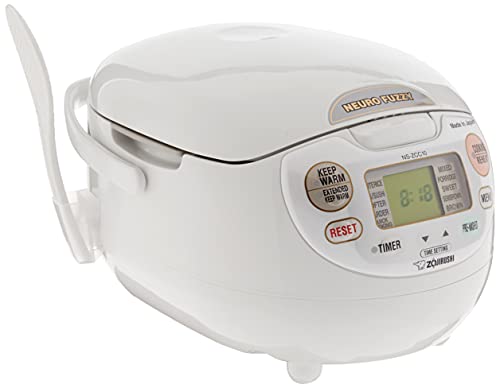
Zojirushi NS-ZCC10 Neuro Fuzzy Rice Cooker and Warmer
Badge: Best Premium
Strengths
- Neuro Fuzzy logic is designed to fine-tune rice texture, valuable for sushi and sticky styles
- Refined keep-warm holds rice without rapidly drying it
- Delay timer supports rice ready at serving time
Trade-offs
- Electric countertop cooker; it is not a stovetop rice pot
- Premium-tier positioning within rice cookers
- Controls take a little learning compared with one-switch models
Key specs from the listing: Neuro Fuzzy logic; Automatic keep-warm; Delay timer.
The Zojirushi NS-ZCC10 is the connoisseur pick. Neuro Fuzzy logic was built around exactly this problem, holding short-grain rice at the texture where grains stay separate yet cohesive, and its keep-warm is famously gentle on rice that must wait while you roll. Water ratio for sushi rice runs slightly drier than for plain table rice, because the grains will absorb seasoned vinegar afterward. A cooker with repeatable results lets you lock in that slightly firm cook batch after batch, and repeatability, more than any single feature, is what separates a sushi-night success from a sticky improvisation.
Batch discipline is the quiet skill. Seasoned sushi rice is best within a few hours and should never be refrigerated for later rolling, because the grains harden irreversibly. The right cooker is therefore the one sized to the amount you will actually season and serve, and for most home sushi nights that is a surprisingly small amount.
Sushi rice is a two-stage food: the cook itself, then the seasoning, where warm short-grain rice is folded with rice vinegar, sugar and salt and fanned to a gloss. A cooker serves the first stage by producing grains that are tender, separate and intact; broken or blown-out grains turn the seasoning step into porridge no matter how carefully you fold. In daily use, the details that decide whether a cooker like this earns its counter space are unglamorous: how the lid behaves when your hands are wet, how the pot feels after a long soak in the sink, and whether the controls make sense at six in the morning without a manual open on the counter. The Zojirushi NS-ZCC10 Neuro Fuzzy Rice Cooker and Warmer handles that everyday test in line with what its listing promises, and nothing in its specification suggests a hidden catch for the jobs described in this guide.
The honest limitation to weigh is in the trade-offs above. No single cooker wins on capacity, control and simplicity at once, and this model leans toward repeatable short-grain texture over breadth of functions rather than covering every style of cooking equally well. Buyers who cook this way most weeks will feel that trade as a benefit; buyers who only occasionally make the dish in question should weigh the simpler or smaller options in this list first.
There is also a learning curve, and it is shorter than the feature list suggests. Two or three cooks teach you a machine’s real personality: how its settings map to your stove, your water, your usual quantities. Judge any cooker after that calibration, not after the first attempt, and keep brief notes on what worked; in a category built on repeat cooking, notes compound into reliability faster than any upgrade does.
Best for: The most refined short-grain texture / Not suited for: Buyers who want the simplest possible controls

Zojirushi NS-TSC10 5.5 Cup Micom Rice Cooker and Warmer
Badge: Best for Most Households
Strengths
- Micom control suits repeatable short-grain and sushi rice results
- 5.5-cup size fits small to medium households well
- LCD controls and timer make scheduled cooking easy
Trade-offs
- Electric model; no stovetop use
- Capacity is modest for large sushi nights
- Higher tier than basic one-touch rice cookers
Key specs from the listing: Capacity: 5.5 Cup / 1.0L; LCD controls; Delay timer.
The Zojirushi NS-TSC10 brings Micom control to a 5.5-cup size that fits most households better than the larger Neuro Fuzzy model, with LCD controls and a delay timer for planning a sushi night around work and shopping. Sushi rice is a two-stage food: the cook itself, then the seasoning, where warm short-grain rice is folded with rice vinegar, sugar and salt and fanned to a gloss. A cooker serves the first stage by producing grains that are tender, separate and intact; broken or blown-out grains turn the seasoning step into porridge no matter how carefully you fold.
Water ratio for sushi rice runs slightly drier than for plain table rice, because the grains will absorb seasoned vinegar afterward. A cooker with repeatable results lets you lock in that slightly firm cook batch after batch, and repeatability, more than any single feature, is what separates a sushi-night success from a sticky improvisation.
Resting matters as much as cooking. Sushi rice should rest in the closed cooker for ten to fifteen minutes after the cycle ends so surface moisture redistributes, then move to a wide bowl for seasoning. Cookers with harsh keep-warm cycles punish hesitation here, drying the top layer while you prep fillings, which is why gentle keep-warm designs dominate serious sushi-rice shortlists. In daily use, the details that decide whether a cooker like this earns its counter space are unglamorous: how the lid behaves when your hands are wet, how the pot feels after a long soak in the sink, and whether the controls make sense at six in the morning without a manual open on the counter. The Zojirushi NS-TSC10 5.5 Cup Micom Rice Cooker and Warmer handles that everyday test in line with what its listing promises, and nothing in its specification suggests a hidden catch for the jobs described in this guide.
The honest limitation to weigh is in the trade-offs above. No single cooker wins on capacity, control and simplicity at once, and this model leans toward repeatable short-grain texture over breadth of functions rather than covering every style of cooking equally well. Buyers who cook this way most weeks will feel that trade as a benefit; buyers who only occasionally make the dish in question should weigh the simpler or smaller options in this list first.
Counter and cupboard economics matter in real kitchens. A cooker that lives out gets used; a cooker that must be fetched, assembled and re-stored gets used monthly. Be honest about which life this model will have in your home, because that, more than any single specification, predicts whether it becomes infrastructure or clutter within a season.
Best for: Families who cook rice daily and sushi weekly / Not suited for: The absolute smallest kitchens

Dash Mini Rice Cooker 2-Cup
Badge: Best Mini
Strengths
- Tiny footprint for single servings of sticky or sushi rice
- Ceramic nonstick pot releases sticky grains easily
- Keep-warm covers short delays before serving
Trade-offs
- Strictly electric; not a stovetop cooker
- 2-cup cooked output is one to two servings only
- No programmable grain settings
Key specs from the listing: Capacity: 2-cup cooked / 1 cup uncooked; Removable ceramic nonstick pot; Keep warm function; Also positioned for oatmeal, quinoa and grains.
The Dash Mini is the smallest route in: two cups cooked, a ceramic nonstick pot, and a keep-warm for the short window between cooking and seasoning. For one person learning to roll at home, that scale is a feature, not a compromise. Resting matters as much as cooking. Sushi rice should rest in the closed cooker for ten to fifteen minutes after the cycle ends so surface moisture redistributes, then move to a wide bowl for seasoning. Cookers with harsh keep-warm cycles punish hesitation here, drying the top layer while you prep fillings, which is why gentle keep-warm designs dominate serious sushi-rice shortlists.
Sushi rice is a two-stage food: the cook itself, then the seasoning, where warm short-grain rice is folded with rice vinegar, sugar and salt and fanned to a gloss. A cooker serves the first stage by producing grains that are tender, separate and intact; broken or blown-out grains turn the seasoning step into porridge no matter how carefully you fold.
Batch discipline is the quiet skill. Seasoned sushi rice is best within a few hours and should never be refrigerated for later rolling, because the grains harden irreversibly. The right cooker is therefore the one sized to the amount you will actually season and serve, and for most home sushi nights that is a surprisingly small amount. In daily use, the details that decide whether a cooker like this earns its counter space are unglamorous: how the lid behaves when your hands are wet, how the pot feels after a long soak in the sink, and whether the controls make sense at six in the morning without a manual open on the counter. The Dash Mini Rice Cooker 2-Cup handles that everyday test in line with what its listing promises, and nothing in its specification suggests a hidden catch for the jobs described in this guide.
The honest limitation to weigh is in the trade-offs above. No single cooker wins on capacity, control and simplicity at once, and this model leans toward repeatable short-grain texture over breadth of functions rather than covering every style of cooking equally well. Buyers who cook this way most weeks will feel that trade as a benefit; buyers who only occasionally make the dish in question should weigh the simpler or smaller options in this list first.
Finally, consider who else cooks. Controls that make sense to one person and baffle everyone else in the household create a single-operator appliance, and single-operator appliances quietly stop being used. The models that survive in family kitchens are the ones a second cook can run confidently from the panel or the burner without a briefing, and that social test is worth applying before you buy.
Best for: Learning to roll with the smallest possible setup / Not suited for: Feeding more than two sushi eaters
Comparison Table
| Pick | Badge | Key attribute | Format | Link |
|---|---|---|---|---|
| Cosori Rice Cooker 10 Cup | Best Overall | Capacity: 10-cup uncooked / 20-cup cooked | Electric fuzzy-logic rice cooker | Check on Amazon |
| BLACK+DECKER Rice Cooker 6-Cup (Cooked) | Best Budget Pick | Capacity: 6-cup cooked | Electric one-touch rice cooker | Check on Amazon |
| AROMA Rice Cooker ARC-363NG | Best for Singles | Capacity: 3-cup uncooked / 6-cup cooked, 1.5 Qt | Electric one-touch rice cooker | Check on Amazon |
| Zojirushi NS-ZCC10 Neuro Fuzzy Rice Cooker and Warmer | Best Premium | Neuro Fuzzy logic | Electric Neuro Fuzzy rice cooker | Check on Amazon |
| Zojirushi NS-TSC10 5.5 Cup Micom Rice Cooker and Warmer | Best for Most Households | Capacity: 5.5 Cup / 1.0L | Electric Micom rice cooker | Check on Amazon |
| Dash Mini Rice Cooker 2-Cup | Best Mini | Capacity: 2-cup cooked / 1 cup uncooked | Electric mini rice cooker | Check on Amazon |
Capacity is stated as each listing states it, in uncooked or cooked cups, so read the key attribute column carefully before comparing rows. For sushi rice, the useful question is how much seasoned rice you will serve within a few hours, and every model here can be the right answer at a different household scale.
How to Choose Best sushi rice cookers
Choose capacity by sushi-night arithmetic. One cup of uncooked short-grain rice yields roughly two to three maki rolls worth of seasoned rice, depending on how generously you spread. A couple making dinner needs a cooker comfortable with one to two cups uncooked; a family sushi night might need three. Oversized pots cook small amounts unevenly, so the modest cookers on this list are not lesser picks, they are correctly sized ones. The small end of the wider rice market is surveyed in Best Small Brown Rice Cookers for comparison.
Control technology is the second decision. Fuzzy logic, Micom and Neuro Fuzzy systems all adjust time and temperature during the cook in response to what is happening in the pot, and short-grain rice benefits disproportionately because its ideal endpoint is narrow. If you make sushi monthly or more, that adjustment is worth paying for in tier terms; if sushi is a twice-a-year event, a simple cooker plus careful measuring will serve you honestly.
Judge the pot next. Seasoned rice is sticky by design, and a ceramic or non-stick surface lets you lift it out in clean folds instead of scraping. A removable pot also doubles as the mixing vessel in a pinch, though a wide wooden or plastic bowl remains better for fanning. Stainless exteriors wipe clean of the inevitable vinegar drips, a small but real quality-of-life point.
Finally, think about timing features. A delay timer lets rice finish as guests arrive, and a gentle keep-warm holds a second batch while the first is rolled. What you do not need is a long program list: sushi rice uses one cycle, done precisely. Spend on the quality of that one cycle, and on the pot it happens in, before anything else. Readers who prefer stainless inner pots specifically can compare Best Small Stainless Steel Rice Cookers.
How to Cook and Season Sushi Rice in a Rice Cooker
The cook is only half the job. These steps carry a batch from raw short-grain rice to glossy, seasoned sushi rice ready for rolling.
- Rinse short-grain rice gently in cool water, swirling with your hand, until the water runs mostly clear; drain well and let it sit in a colander for a few minutes.
- Cook with slightly less water than plain table rice, roughly a one-to-one ratio by volume for soaked or well-rinsed rice, using the white rice or regular cycle.
- Rest the cooked rice in the closed cooker for 10 to 15 minutes so the texture evens out from top to bottom.
- Turn the rice into a wide, shallow bowl. Pour seasoned rice vinegar evenly over a paddle held above the rice so it distributes rather than pooling.
- Fold the seasoning through with a cutting motion of the paddle while fanning the rice with your other hand; the goal is glossy, separated grains cooling toward body temperature, never mashed or stirred rice.
- Cover with a clean damp cloth and use within a few hours. Do not refrigerate sushi rice you plan to roll with; the grains harden and do not recover.
Problem: The seasoned rice is wet and clumps into paste → what to do: too much cooking water or stirring instead of folding; cook the next batch slightly drier and use a cutting, folding motion with the paddle while fanning.
Problem: Grains are firm in the center after cooking → what to do: the rice needed more rinsing rest or a touch more water; let rinsed rice drain and absorb for 20 to 30 minutes before cooking, and always rest the finished batch before seasoning.
Problem: The rice dries out while you prep fillings → what to do: it sat uncovered or on an aggressive keep-warm; hold it covered with a damp cloth at room temperature and season promptly rather than holding it hot for a long stretch.
Sushi Rice Technique: The Details That Decide Texture
The rinse is not superstition. Surface starch is what turns sushi rice gummy, and rinsing until the water runs clearer is the single highest-value step in the whole process. Be gentle: cracked grains release even more starch, which is why the rinse uses a swirling hand rather than vigorous scrubbing, and why the rice rests after rinsing so it begins cooking evenly hydrated.
Seasoning temperature matters too. The vinegar mixture goes onto hot rice so it absorbs and the excess moisture flashes off during fanning, leaving the signature gloss. Rice that has cooled before seasoning drinks the vinegar unevenly and tastes sharp in patches. This is why the cooker-to-bowl transition should be brisk, and why a wide bowl, which maximizes surface area for fanning, outperforms a deep pot.
Planning a Home Sushi Night Around the Cooker
Work backwards from serving. Rice takes roughly forty minutes including its rest, seasoning takes five, and rolling is the slow part. A delay timer or a well-judged start means the rice lands in its seasoning window exactly as the fillings are ready, and a second small batch can cook while the first rolls are eaten, which suits the way sushi is actually served, in rounds.
Keep the menu honest about batch size. It is better to cook two fresh small batches than one large batch that sits, firms and disappoints by the third round. That rhythm favors the smaller cookers in this guide more than most buyers expect, and it is the practical reason a two-cup mini appears on a serious sushi list at all. For pressure-assisted rice on a deadline, compare Best Small Pressure Cookers For Rice.
Practical Notes from the Research
A small equipment note: use a plastic or wooden paddle, never metal, both to protect coated pots and because a broad, thin paddle folds rice without cutting grains. Dampen the paddle before each use and the seasoned rice will release from it instead of building up in a sticky layer that drags through the batch.
If your first batches taste flat, adjust the seasoning before blaming the cook: the vinegar, sugar and salt balance is a matter of house style, and restaurants guard theirs for a reason. Change one element at a time across batches, keep notes, and within three or four sushi nights you will have a house ratio that suits your palate and your cooker’s texture.
Rice variety shopping deserves a sentence of its own, because the cooker cannot rescue the wrong grain. Look for bags labeled short-grain or sushi rice from Japanese-style varieties, buy from stock that turns over quickly, and store the rice cool and sealed; old, dried-out short grain drinks water unpredictably and cooks unevenly in even the best machine. When a batch behaves strangely, suspect the rice before the cooker, especially if the bag has been open through a humid season.
Finally, think about what happens beside the cooker. Sushi night runs on parallel prep: a sharp knife, a rolling mat, a bowl of hand-vinegar water for your fingers, and fillings cut before the rice lands. The cooker’s contribution to that choreography is timing you can trust, a batch that finishes when the recipe says it will and holds gracefully for the few minutes when everything else catches up. That reliability, repeated across months of sushi nights, is what owners of the better picks in this guide are actually describing when they call a cooker good.
Common Buying Mistakes
- Refrigerating seasoned sushi rice and expecting it to roll well later.
- Using long-grain rice and blaming the cooker for grains that will not hold together.
- Stirring the seasoning in, which breaks grains and turns the batch pasty.
- Cooking with full table-rice water and ending with wet, heavy sushi rice.
- Buying a family-size cooker for two-person sushi nights and cooking uneven small batches.
- Skipping the rest after cooking, so the top and bottom of the pot season differently.
Final Recommendation
If sushi night is a regular event, the Zojirushi NS-TSC10 is the balanced first choice for most households, with the NS-ZCC10 as the step up for cooks who chase the finest texture and the gentlest keep-warm. The Cosori 10 Cup is the pick for households that cook many rice styles and want fuzzy-logic control across all of them. On a budget or at small scale, the BLACK+DECKER, the little AROMA and the Dash Mini each cook honest sushi rice for one or two people, and at that scale their simplicity is the point.
Shortlist again: Cosori Rice Cooker 10 Cup; BLACK+DECKER Rice Cooker 6-Cup (Cooked); AROMA Rice Cooker ARC-363NG.
Frequently Asked Questions
What type of rice do I need for sushi rice?
Short-grain Japanese-style rice. It is a specific variety whose grains hold together after seasoning while staying distinct. Long-grain rice will not cling properly, and glutinous sticky rice is a different food altogether, covered in Best Stainless Rice Cookers.
How much sushi rice should I cook per person?
As a guide, one cup of uncooked short-grain rice makes enough seasoned rice for roughly two to three rolls, and most home sushi eaters manage two to four rolls. Cook in small fresh batches rather than one large one if the meal will stretch out.
Can I make sushi rice in a basic one-touch cooker?
Yes. The seasoning technique matters more than the electronics. A basic cooker with careful rinsing, a slightly dry water ratio and a full rest produces sushi rice that rolls well; advanced controls mainly buy repeatability.
Why fan the rice while seasoning?
Fanning cools the rice toward serving temperature and evaporates surface moisture as the vinegar is folded in, producing the glossy finish sushi rice is known for. Skipping it leaves the rice wetter and duller.
How long does seasoned sushi rice keep?
A few hours at room temperature under a damp cloth is the working window. Refrigeration hardens the grains irreversibly, so seasoned rice should not be made a day ahead. Unseasoned leftover rice, by contrast, freezes well for fried rice.
Is a hangiri bowl necessary?
No. A traditional wooden hangiri absorbs moisture beautifully, but any wide, shallow, non-metal bowl works. Width matters more than material, because fanning and folding need surface area; avoid metal bowls, which can react with vinegar over long contact.


