Disclosure: topratedkitchenware.com is reader-supported. When you buy through links on our site, we may earn an affiliate commission from Amazon and other retailers, at no extra cost to you.
Where to buy
This guide approaches the best toasters cooks illustrated search the way a test kitchen would want it approached: through method, food, and repetition. One boundary comes first, and it is absolute. This site is not Cook’s Illustrated, we do not have that magazine’s test results for these models, and no pick below is described as tested, chosen, or recommended by their kitchen, because printing such a claim without their data would be fabrication dressed as research. What this page can legitimately do is explain how a test kitchen evaluates a toaster, not with scores invented for the occasion but with real breads, real bagels, frozen slices, and batch after batch of repetition, and then hold a verified shortlist up against that standard, separating what a product’s specification can promise from what only cooking can reveal. The six picks are verified through Amazon’s Creators API data, every specification comes from the product’s own title, and our links go to the Amazon listings so you can check the latest price and the complete specification for the exact model before you run your own kitchen trials.
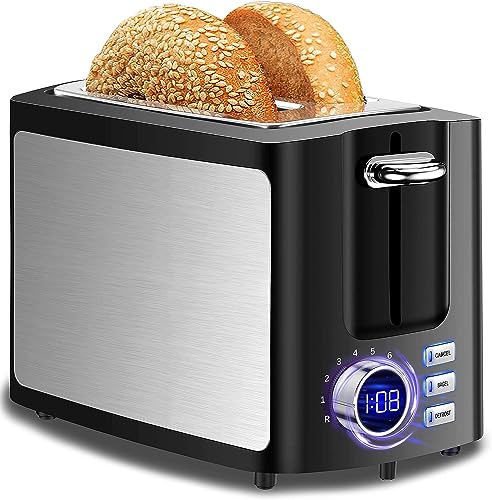
- Hommater 2 Slice Wide Slot Smart Toaster with LCD Countdown
- Amazon Basics 2 Slice Toaster, 900W, Black & Silver
- Elite Gourmet 2-Slice Cool-Touch Toaster, ECT1027B
- Hamilton Beach Extra-Wide Slot 2 Slice Toaster, 22634
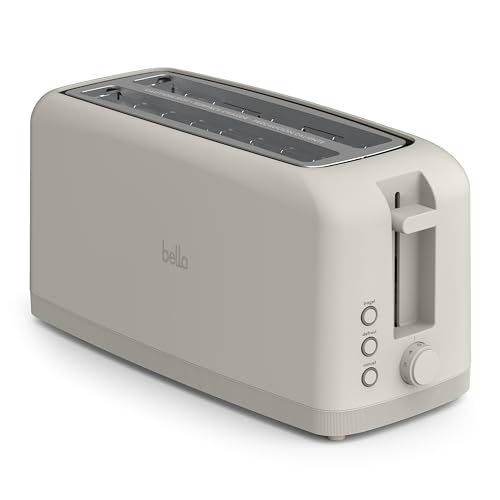
- bella Fits-Anywhere Slim Toaster, 4 Slice Extra Long & Wide Slot, Oatmilk
- BLACK+DECKER 2-Slice Toaster with Extra-Wide Slots
Read the full guide ↓ for the test-kitchen briefing, the per-model reviews read through a cook’s eyes, and a home protocol that turns your first week into a small, honest test kitchen of your own.
A test kitchen’s relationship with a toaster is different from a laboratory’s, and the difference is flavour. Where a measurement programme asks how evenly a standard loaf browns, a test kitchen asks the same question with the breads people actually cook: the thick slice cut from a bakery loaf, the bagel that must crisp on its cut face while staying chewy inside, the frozen waffle-adjacent slice on a school morning, the single piece of toast for one person eating alone, the fourth batch in a row when guests are at the table and the elements are heat-soaked and the results either hold or drift. It repeats those cases until patterns emerge that no single breakfast could show, and it cares about the cook’s experience throughout: whether the controls make sense mid-recipe, whether small items can be retrieved without breaking a rhythm, whether the machine announces itself or disappears into the work. Shoppers searching best toasters cooks illustrated are looking for that sensibility, and this guide honours it without counterfeiting its conclusions. The six machines below were verified against their Creators API titles on 2026-11-20, and their stated facts frame the kitchen questions precisely. The Hommater states a countdown display, nine shades, and a reheat function, the control set of a cook who times components. The Amazon Basics states its wattage, 900W, its defrost and bagel buttons, and its cord wrap, the complete modest file of a working tool. The Elite Gourmet states a cool-touch body and a slot width as a measurement, 1.25 inches. The Hamilton Beach states Toast Boost, auto shutoff, defrost, and its model number, 22634. The bella states four slices in one extra long and wide slot, the format question of the set. The BLACK+DECKER states an extra lift lever and a bagel mode. What none of their titles can state, and what this guide will not invent, is how any of them actually cooks; that verdict belongs to bread, repetition, and your own first week, run with the protocol in the later sections. Readers who want the measurement-programme counterpart to this kitchen view can read our explainer on laboratory criteria after this page; the two methods are allies, and serious cooks use both.
Key Takeaways
- This guide claims no Cook’s Illustrated results for these models; it teaches the test-kitchen method and applies it honestly to verified specifications.
- A test kitchen judges a toaster on real foods, sandwich loaf, artisan slices, bagels, frozen bread, repeated batches, and on how the machine behaves while someone is actually cooking.
- Specifications frame the cooking questions: stated slot width decides which breads are even possible, stated defrost decides the frozen case, stated lift features decide the crumpet and muffin case.
- The bella is the only four-slice pick, and its long slot is the format a test kitchen would probe hardest, for end-to-end evenness with long slices.
- Repeatability is the cook’s core criterion, and the Hommater’s stated countdown and nine shades are the pool’s strongest specification-side support for cooking to a repeatable result.
- Your first week is the real test kitchen: same breads, repeated cycles, notes taken. This guide gives you the protocol.
In this guide
Quick Picks
| Pick | Badge | Stated capacity | Standout stated feature | Link |
|---|---|---|---|---|
| Hommater 2 Slice Smart Toaster | Best for Cooks | 2 Slice | LCD countdown timer, 9 shades, reheat | Check on Amazon |
| Amazon Basics 2 Slice Toaster | Best Working Tool | 2 Slice | Stated 900W, cord wrap, crumb tray | Check on Amazon |
| Elite Gourmet ECT1027B | Best Cool-Touch Pick | 2-Slice | Cool-touch body, 1.25-inch extra-wide slots | Check on Amazon |
| Hamilton Beach 22634 | Best All-Rounder | 2 Slice | Toast Boost, auto shutoff, model number stated | Check on Amazon |
| bella Fits-Anywhere Slim Toaster | Best for Families | 4 Slice | Extra long and wide slot, slim body | Check on Amazon |
| BLACK+DECKER 2-Slice Toaster | Best Extra-Lift Pick | 2-Slice | Extra lift lever, bagel mode, 7 shades | Check on Amazon |
Badges here are assigned as a test kitchen would assign provisional roles before the cooking starts. Best for Cooks goes to the Hommater because timed, repeatable output is the kitchen virtue, and its stated countdown, wide shade range, and reheat function are the tools of a cook running components to a deadline. Best Working Tool goes to the Amazon Basics because test kitchens keep a soft spot for the unglamorous instrument whose specification is complete, whose controls need no manual, and whose cord wraps when the bench must be cleared for real work. Best All-Rounder goes to the Hamilton Beach for the widest stated coverage of the awkward cases, small items, frozen slices, forgotten cycles. The reviews below keep the kitchen’s discipline: every claim tied to a stated title, every cooking question named as a question where the title cannot answer it, and a home protocol at the end that lets your own batches settle what no guide honestly can.
How These Picks Were Chosen
The pool was verified through Amazon’s Creators API, and we read the titles the way a test kitchen reads a specification sheet before the first loaf is cut: as a set of promises about what the machine is built to attempt. Slot promises came first, because they decide the menu. The Elite Gourmet states its width as a measurement, the bella states length and width together, and the rest state extra-wide or wide designs suited to bagels and thick cuts. Function promises came second, mapped to the standard kitchen cases: defrost, stated by the Hommater, the Amazon Basics, and the Hamilton Beach, for the frozen case; bagel treatments, stated as a mode by the BLACK+DECKER and as buttons by the Amazon Basics and Hamilton Beach, for the bagel case; retrieval, stated as Toast Boost and an extra lift lever, for the small-item case; a countdown and a reheat function, the Hommater’s alone, for the timed and interrupted cases. Safety and housekeeping promises completed the file: a cool-touch body, an auto shutoff, removable and slide-out trays, a cord wrap. We then recorded, in the open, the questions no title answers: browning evenness on any bread, drift across repeated batches, single-slice behaviour, and the texture outcomes, crisp shell, tender crumb, that are the entire point of toast and the entire reason test kitchens exist. This is a research-led guide written in the test-kitchen spirit; it is not a test, it borrows no one’s results, and its recommendations are framed as the designs best built to face the cooking, with your first week appointed as the judge. That restraint is not a lack of confidence. It is the method itself, and a kitchen that preached repetition and evidence while inventing its own would have failed its first lesson.
The 6 Best Toasters, Read Through a Test Kitchen’s Eyes
Badges match the Quick Picks table. Each review uses only stated specifications, names the cooking questions the design raises, states one honest limitation, and ends with a plain verdict and a link.
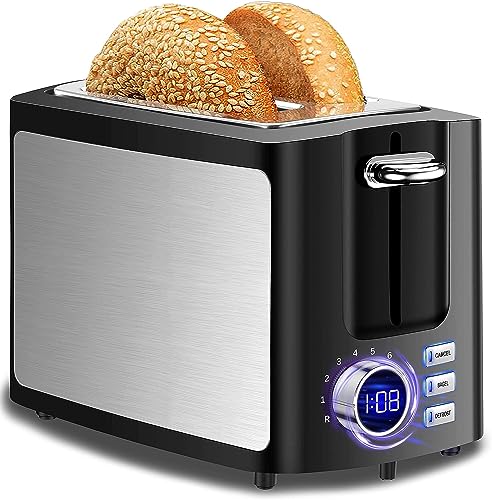
Hommater 2 Slice Wide Slot Smart Toaster
Badge: Best for Cooks
Strengths
- LCD digital countdown timer stated, the control a cook uses to land toast with eggs, not after them.
- Nine shade settings stated, fine steps for dialling a specific loaf to a repeatable result.
- Bagel, defrost, cancel, and reheat functions all stated, covering the standard kitchen cases in one title.
Trade-offs
- No crumb tray detail stated in the title, a housekeeping question a working kitchen asks early.
- Two-slice capacity, so batch cooking for a table runs in sequenced pairs.
- No model number stated; identification rests on the full title.
Mini spec box: Capacity as stated: 2 Slice. Slots: wide slot. Shades: 9 settings. Display: LCD digital countdown timer. Functions stated: Bagel, Defrost, Cancel, Reheat.
A test kitchen thinks in components and deadlines, and the Hommater is the only pick here that speaks that language fluently. The countdown timer turns the toaster from an interruption into an instrument: poached eggs at three minutes, toast landing at the same moment, because the number on the display let the cook sequence them. Nine shades matter to a cook for a reason a casual user might miss: dialling in a new loaf is an experiment, one setting too pale, one too dark, and fine steps let the experiment converge on the exact point where a particular sourdough’s crust crisps without its crumb drying, a point that can then be repeated by number all month. The stated reheat function is the professional’s quiet favourite, because in a real kitchen toast is constantly orphaned by a sauce that needed thirty more seconds, and reheating without re-browning is the difference between a component rescued and a component remade. What the title cannot tell the kitchen is the outcome data: how even the browning runs across the wide slot, how the ninth shade differs from the eighth on a moist loaf, how batch three compares with batch one. Those are your first week’s experiments, and this machine gives you the best instruments in the pool for running them.
Best for: cooks who time components and dial in specific loaves / Not suited for: families needing four slices at once

Amazon Basics 2 Slice Toaster, 900W
Badge: Best Working Tool
Strengths
- Only pick stating power in the title, 900W, the first line of any honest spec sheet.
- Defrost, cancel, and bagel buttons with six browning settings stated, the working set with nothing ornamental.
- Cord wrap and removable crumb tray stated, the housekeeping of a bench that must clear for other work.
Trade-offs
- Six browning settings is the pool’s joint-narrowest range, coarser steps for loaf-dialling.
- Two-slice capacity.
- No lift feature or display stated; small items and timing are handled by technique, not by the machine.
Mini spec box: Capacity as stated: 2 Slice. Slots: extra wide, for bagels. Power as stated: 900W. Browning settings: 6. Functions stated: Defrost, Cancel, Bagel. Extras: removable crumb tray, cord wrap. Colour stated: Black & Silver.
Every test kitchen owns tools it respects without admiring, and the Amazon Basics is this pool’s candidate for that shelf. Its virtues are the working ones. The specification is complete on a single reading, wattage included, which means a cook knows exactly what has been promised before the first slice. The functions are the three a working morning actually presses, defrost for the frozen loaf, bagel for the halved round, cancel for the moment the plan changes. The tray comes out and the cord wraps, because in a kitchen where the bench is a workspace rather than a display, a toaster that stores cleanly and cleans quickly gets used more and resented never. The kitchen questions it leaves open are the honest ones: six settings make for coarser dialling when a fussy loaf wants a half-step that does not exist, and small items will be a tongs technique rather than a lever. For the cook whose toast is a staple rather than a project, sandwich slices, frozen rounds, the occasional bagel, those are acceptable terms, stated in advance, which is more than many louder machines offer.
Best for: working kitchens, second benches, and cooks who value a complete modest spec / Not suited for: precision loaf-diallers wanting fine shade steps

Elite Gourmet 2-Slice Cool-Touch Toaster, ECT1027B
Badge: Best Cool-Touch Pick
Strengths
- Cool-touch body stated, a genuine virtue in a working kitchen where the cook brushes past the machine with pans in hand.
- Slot width stated as a measurement, 1.25 inches, so a cook can judge bread fit before buying.
- Model number ECT1027B stated, the identifier a kitchen uses for manuals, support, and replacement.
Trade-offs
- No defrost or reheat function stated, narrowing the frozen and interrupted cases.
- Black only, as stated.
- Two-slice capacity.
Mini spec box: Capacity as stated: 2-Slice. Slot width as stated: 1.25-inch extra-wide. Shades: 6. Functions stated: Cancel, bagels and thick bread. Colour stated: Black. Model: ECT1027B.
The test kitchen reads the Elite Gourmet’s title with approval for its manners: it states a measurement where others state an adjective. A cook holding a thick-cut slice can compare it against 1.25 inches and know, before money moves, whether the morning’s bread fits the machine. The cool-touch body earns a kitchen-specific respect as well, because a working bench is a choreography of hot pans, wet hands, and quick turns, and an exterior that stays civilised removes one small hazard from every single service. Six shades is the standard working range. The file’s gaps are the frozen and interrupted cases, neither defrost nor reheat being stated, and a kitchen that freezes its loaves or cooks in interrupted bursts should weigh that silence at full value. Within its stated territory, fresh and same-day breads, thick cuts and bagels, a family kitchen with traffic, this is a precisely described tool, and precise description is the first thing a test kitchen asks of any product that wants bench space.
Best for: family working kitchens and thick-cut bread households / Not suited for: freezer-first cooks needing stated defrost
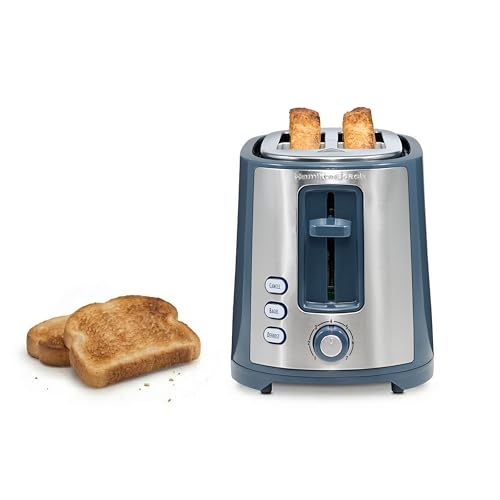
Hamilton Beach Extra-Wide Slot 2 Slice Toaster, 22634
Badge: Best All-Rounder
Strengths
- Toast Boost stated, the retrieval answer for crumpets, muffins, and small ends of loaves.
- Defrost button stated, covering the frozen case that working kitchens meet weekly.
- Auto shutoff, seven shades, slide-out crumb tray, and model number 22634 all stated.
Trade-offs
- Kitchen Makeover Blue is a finish a cook must genuinely want on the bench.
- Two-slice capacity, so guest batches are sequenced.
- No countdown or reheat stated; timing is by the cook’s own clock.
Mini spec box: Capacity as stated: 2 Slice. Slots: extra-wide slot. Shades: 7. Functions stated: Bagel, Defrost, Toast Boost, auto shutoff. Crumb tray: slide-out. Colour stated: Kitchen Makeover Blue. Model: 22634.
The Hamilton Beach reads like a machine designed by someone who kept a list of kitchen annoyances and answered them in order. Small items that sink: Toast Boost lifts them. Frozen bread on a weekday: a stated defrost. A cycle forgotten while a pan demanded attention: auto shutoff. Crumbs in a machine used daily: a slide-out tray. Seven shades for the household’s spread, and a model number over the whole design so the kitchen can speak about it precisely. A test kitchen would still put its real questions to the bread, evenness across the extra-wide slot, behaviour on the second and third consecutive batches, the bagel case with the cut side in, and this guide leaves those questions exactly where they belong, with your first week’s cooking. What can be said on the evidence is that no other pick states answers to as many of the standard cases in advance, and in a busy kitchen the cases are the job. The colour remains the one non-negotiable deliberation: blue is a presence on the bench, welcome in the right kitchen and loud in the wrong one, and cooks choose their bench companions for years at a time.
Best for: busy all-purpose kitchens meeting every standard case weekly / Not suited for: four-slice households and cooks wanting a countdown display

bella Fits-Anywhere Slim Toaster, 4 Slice
Badge: Best for Families
Strengths
- Only stated four-slice capacity in the pool, in an extra long and wide slot.
- Long-slot format is the artisan case: whole long slices, toasted in one piece.
- Slim body respects the working bench, leaving room for boards and bowls.
Trade-offs
- No shade count, defrost, or bagel function stated in the title, so the control story must be confirmed on the listing.
- End-to-end evenness in a long slot is the open cooking question, answerable only by toasting.
- Oatmilk finish only, as stated.
Mini spec box: Capacity as stated: 4 Slice. Slot: extra long and wide. Body: Fits-Anywhere slim. Finish stated: Oatmilk.
A test kitchen would clear a morning for the bella, because it is the design with a thesis. The thesis is that capacity and bread shape are the same problem: one extra long slot that takes four standard slices in a row also takes the long oval slice from a bakery sourdough whole, without trimming, folding, or the half-toasted compromise that standard slots impose on artisan loaves. For the cook who bakes or buys real bread, that is not a styling flourish; it is the difference between toasting the loaf you have and toasting the loaf the machine wishes you had. The questions the thesis must survive are empirical and this guide lists them rather than answering them: does browning hold from the slot’s centre to its ends, does a full row of four match the result of two, does one long slice alone brown evenly along its length? Your home protocol below is built to ask exactly those questions in exactly that order. The control silence in the title, no stated shade count or functions, is the counterweight to weigh before purchase, by reading the current listing in full. If the controls confirm and the long-slot experiments pass on your bread, this is the most interesting machine in the pool and the only one that changes what a household can toast.
Best for: artisan bread households and families in slim kitchens / Not suited for: shoppers who need stated defrost or shade details in the title
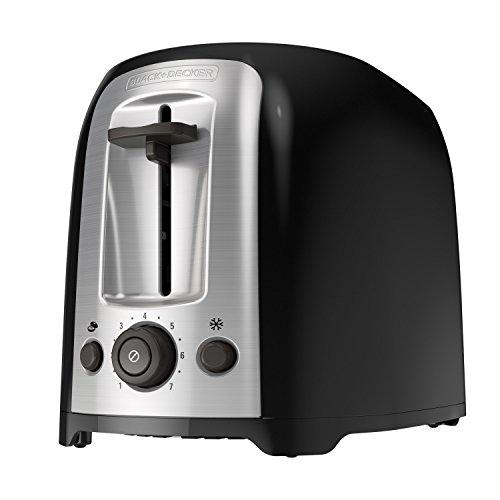
BLACK+DECKER 2-Slice Toaster with Extra-Wide Slots
Badge: Best Extra-Lift Pick
Strengths
- Extra lift lever stated, the retrieval mechanism for muffins, crumpets, and small slices.
- Bagel mode stated alongside extra-wide slots, the complete bagel case in one title.
- Seven shade settings and a removable crumb tray stated.
Trade-offs
- No defrost function stated, the frozen case unsupported on the evidence.
- No model number stated; match the full title.
- Two-slice capacity.
Mini spec box: Capacity as stated: 2-Slice. Slots: extra-wide. Shades: 7 settings. Functions stated: bagel mode, extra lift lever. Crumb tray: removable.
The BLACK+DECKER’s title describes a machine that has thought hardest about two specific foods: the bagel and the small round things, muffins and crumpets, that share a toaster’s life. For the bagel it states both halves of the answer, width to fit the half and a mode to treat the cut face differently from the crust, which is the whole culinary content of a bagel mode when it is done properly. For the small things it states the lift lever, and a cook who has fished a crumpet out with a chopstick while a pan waited will not need that feature’s value explained. Seven shades covers the household, and the removable tray keeps the working clean simple. The frozen case is the file’s open page, no defrost stated, and kitchens that live from the freezer should mark it as such and choose accordingly. As the familiar, food-focused two-slice tool, it makes its case the way a test kitchen likes a case made: feature by feature, each one attached to a food or a moment rather than to a superlative. The bagel method itself gets a fuller treatment in our dedicated guide to Best Toasters For Bagels.
Best for: bagel households and small-item toasters who cook fresh / Not suited for: freezer-first kitchens needing stated defrost
Comparison Table
| Pick | Capacity | Shades stated | Cook’s headline | Open kitchen question | Amazon |
|---|---|---|---|---|---|
| Hommater Smart Toaster | 2 Slice | 9 | Countdown, reheat, defrost stated | Crumb arrangement not stated | Check on Amazon |
| Amazon Basics 2 Slice | 2 Slice | 6 | Fully stated working spec, 900W | Coarse steps for fine dialling | Check on Amazon |
| Elite Gourmet ECT1027B | 2-Slice | 6 | Measured slot width, cool-touch | Frozen case unsupported in title | Check on Amazon |
| Hamilton Beach 22634 | 2 Slice | 7 | Boost, defrost, shutoff stated | Batch-to-batch drift, to be cooked | Check on Amazon |
| bella Fits-Anywhere Slim | 4 Slice | Not stated | Long-slot artisan format | End-to-end evenness, to be cooked | Check on Amazon |
| BLACK+DECKER 2-Slice | 2-Slice | 7 | Bagel mode plus lift lever | Frozen case unsupported in title | Check on Amazon |
The open-question column is this table’s signature, and it is there to be used: those six questions are your first week’s assignment, one per pick, and any guide that filled them in from a specification sheet would be inventing the only data that matters. A test kitchen’s table would carry results in that column. Yours will, after a week of breakfasts, which is precisely the relationship between their method and your kitchen that this guide has been building.
How to Choose a Toaster the Test-Kitchen Way
Choose by cases, the way a kitchen tests. List the foods your household actually toasts in a month, with rough frequencies, and let the list interrogate the titles. Sandwich loaf daily: every pick here is built for it, so the decision moves to capacity and repeatability, the bella’s four slices for families, the Hommater’s countdown and fine shades for cooks who dial in. Artisan and bakery loaves weekly: slot geometry leads, the bella’s long slot for whole long slices, the Elite Gourmet’s measured 1.25-inch width for thick cuts, and any standard slot is a compromise you should choose knowingly. Bagels weekly: require the case stated in full, width plus a mode or button, which the BLACK+DECKER, Amazon Basics, and Hamilton Beach titles variously supply. Frozen bread as a routine: require stated defrost, the same three names minus BLACK+DECKER and plus the Hommater. Small items, crumpets, muffins, ends of loaves: require a stated lift, Toast Boost or the extra lift lever. Timed cooked breakfasts: the countdown is the Hommater’s alone. A hot, busy bench: the cool-touch claim is the Elite Gourmet’s alone, and its wider context is discussed in our guide to Best Toasters Don T Get Hot On Outside. Then apply the kitchen’s final filter, which is repetition: whichever machine you choose must produce your household’s result on the tenth morning as reliably as the first, so favour the design whose controls let you return to a setting exactly, numbered shades, a remembered position, a countdown you can plan around, over any design that asks you to guess twice a day forever. That filter, more than any feature, is what separates a test kitchen’s favourite from a showroom’s.
How to Use, Clean, and Look After Your Toaster: The Home Test-Kitchen Protocol
Run your first week as a small test kitchen, with a notebook, because notes are what separate data from impressions. Session one, the house loaf: toast your standard bread at a middle setting, record the setting and the result in words a cook would use, colour at the centre and edges, crispness of the crust, tenderness of the crumb, then adjust one step and repeat until the loaf is dialled; that number is now your household standard. Session two, the repeat: run the identical cycle three times across the morning and compare, learning the two physical truths every test kitchen builds into its method, a cold machine’s first cycle runs pale, and a heat-soaked machine’s later cycles run dark, so family service steps the setting down after round one. Session three, the cases: one frozen slice, using the stated defrost cycle where your model has one, because defrost thaws before crisping while a long standard cycle dries the crumb; one bagel, cut side to the centre elements under the bagel mode or button where stated, judging whether the cut face crisps while the crust stays supple; one small item, retrieved by the stated lift feature where fitted, with wooden tongs as the permanent backup and metal implements banned from a plugged-in machine by house law. Session four, the long or thick case if your household bakes: the longest, thickest slice you own, centred in the slot, watched for the end-to-end question that the bella’s format poses and that thick cuts pose everywhere. Housekeeping runs through all four sessions as a scored criterion, not an afterthought: empty the crumb tray, removable on the Amazon Basics and BLACK+DECKER, slide-out on the Hamilton Beach, at the week’s end and judge the chore; shake out tray-less models unplugged and fully cool; wipe exteriors with a damp cloth and never immerse the machine. Three problems the protocol exists to catch, with the kitchen’s standard responses. Problem: one face browns faster than the other → centre the slice, clear crumbs from the slot walls, and check whether a thick and a thin slice shared the cycle. Problem: frozen toast dries before it crisps → the defrost cycle, where stated, is the tool; where it is not stated, a lower setting and patience beat a longer blast. Problem: batch three is darker than batch one at the same setting → heat soak, the most predictable effect in toasting; step down and note the offset in the book. A machine that passes your four sessions on your bread has been tested the only way that was ever going to predict your mornings, and the notebook beside it is your household’s own little illustrated annual, earned rather than borrowed.
What a Test Kitchen Would Still Want to Know
Honesty about method means ending with the open file. A professional test kitchen, given these six machines, would still run the trials this guide has described and several more: crumb-shedding measured across dozens of cycles, exterior temperatures mapped during back-to-back service, single-slice performance in each slot position, the behaviour of very moist and very dry loaves at the extremes of the shade range, and the long question of whether results at month six match results at week one. It would publish its method with its verdicts, name the exact models and the breads used, and let other kitchens repeat the work. This guide has given you the specification audit, the case analysis, and the home protocol, and it has left the trial results blank because they are not ours to print. If you read any source that fills them in for these models without showing a method, a model number, and a loaf, you are reading marketing in a lab coat, and the correct response is the test kitchen’s own: interesting claim; show me the batches. Readers whose kitchens lean toward the very large end of the bread spectrum will find the geometry questions extended in our guide to Best Toasters For Big Bread, where slot dimensions carry the whole argument.
The Foods That Decide It: A Case-by-Case Reading of the Pool
Before the mistakes section, it is worth walking the standard test battery food by food and noting, on the stated evidence alone, where each case is decided. The sandwich loaf is the baseline and the great leveller: all six designs are built for it, so the case is decided by capacity and by the repeatability supports, the bella’s four-at-once for the family table, the Hommater’s numbered precision for the dialled household. The artisan loaf is the geometry case, and it splits the pool honestly: the bella’s long slot and the Elite Gourmet’s measured width are the two stated answers, while standard extra-wide slots, however generous, still ask a long slice to be trimmed or turned. The bagel is the discrimination case, crisp cut face against supple crust, and it belongs to the titles that state a treatment, a mode on the BLACK+DECKER, buttons on the Amazon Basics and the Hamilton Beach, with width everywhere in support. The frozen slice is the sequencing case, and it belongs to the three titles that state defrost, because thaw-then-crisp is a programme, not a longer blast of the standard one. The crumpet and the muffin are the retrieval case, and they belong to the stated lift mechanisms, Toast Boost and the extra lift lever, with tongs as the honourable fallback everywhere else. The single slice for one person is the humility case: every two-slice machine meets it, results vary by slot position in ways only your protocol will map, and no title in the pool claims otherwise, which is its own kind of honesty. Read as a battery, the pool covers every case somewhere and no pick covers every case in its title, which is exactly why the choice must be led by your household’s frequencies rather than by any total. A test kitchen would say the same of its own results table, and would then go back to the bench and cook the deciding cases again, because in a kitchen the last word belongs to the food.
Keeping a Kitchen Notebook: The Habit Behind Every Good Verdict
The difference between a test kitchen and a kitchen with opinions is a notebook, and adopting the habit costs a household one page per appliance. For a toaster, the page wants five entries: the house loaf and its setting, the frozen setting, the bagel setting, the offset for back-to-back batches, and the date the tray was last emptied, because crumbs are data too. Each entry is written once and amended rarely, when a new loaf replaces the old or a season changes the bread’s moisture, and together they convert the machine from a daily negotiation into a solved system. The notebook also disciplines buying. When this toaster eventually retires, its page is the specification for its successor, written in the only terms that ever mattered: these breads, these settings, these cases, this household. Compare that page against a new pool of stated titles and the shortlist writes itself in minutes, with the same method this guide used, cases first, titles second, verdicts last and earned. It is a small practice with a long reach, and it is the truest thing a shopper can take from the test-kitchen tradition, more durable than any single ranking, because rankings expire with model years and the habit of recording what your own cooking proved does not.
Common Buying Mistakes
The first test-kitchen mistake is judging a toaster on one slice of one bread on one morning, a sample size no kitchen would publish and no household should buy on. The second is borrowing a verdict: assuming a famous kitchen’s conclusions about other models, other years, or other variants transfer to the unit in your cart. Third, ignoring the cases your household actually cooks, buying for the sandwich loaf and discovering the artisan loaf, the frozen slice, and the crumpet were the real exam. Fourth, treating slot adjectives as measurements; a kitchen measures, and so should a shopper, which is why the one stated width in this pool earns its emphasis. Fifth, forgetting repetition: a machine that dazzles once and drifts across batches will lose to a plainer machine that repeats, every week of its life. Sixth, neglecting the housekeeping criterion until the crumbs deliver the verdict. Each mistake is a shortcut past the method, and the method, as this guide has tried to show, is not the obstacle to a good purchase; it is the purchase, arriving a week early.
Final Recommendation
For the cooking household, the Hommater Smart Toaster is the design a test kitchen would reach for first: countdown for timing, nine shades for dialling, reheat for the realities of a working bench. For the complete working tool, take the Amazon Basics 2 Slice Toaster, and for the widest case coverage, the Elite Gourmet ECT1027B where a cool-touch body and a measured slot lead, keeping the Hamilton Beach in view for its boost and shutoff. Check the latest price on Amazon for your pick, confirm its full title, and then do the thing this whole guide has been pointing at: run the protocol, take the notes, and let your own batches deliver the verdict. That is not a lesser ending than a borrowed ranking. It is how rankings worth trusting are made.
Frequently Asked Questions
Has Cook’s Illustrated tested these exact toasters?
This guide does not claim that, and you should check the magazine’s own current publications for its tested models and verdicts. Test kitchens revise their lineups as ranges change. What this page provides is the method such a kitchen uses, real foods, repeated batches, named criteria, applied honestly to a verified shortlist, plus a protocol for running the decisive trials in your own kitchen.
What breads does a test kitchen use on a toaster?
The working set covers the cases households actually meet: a standard sandwich loaf for the baseline, thick and artisan slices for the geometry case, bagels for the split-heating case, frozen slices for the defrost case, and small items such as muffins or crumpets for the retrieval case, each repeated across batches so that drift and consistency show themselves.
Why does repetition matter so much in toaster testing?
Because a single cycle can flatter any machine. Repetition exposes the properties a household lives with: whether a setting returns the same result tomorrow, whether the third batch browns like the first or darker as the elements heat-soak, and whether the machine’s controls let the cook correct course precisely. Consistency across batches is the closest thing toasting has to a professional virtue.
How should I judge a bagel mode at home?
Toast a halved bagel with the cut side facing the centre elements, as bagel modes generally expect, and judge the two faces separately: the cut side should crisp and colour, the crust side should warm and stay supple rather than harden. If both faces come out identical, the mode is doing little; if the crust scorches, the setting wants a step down. Note the result with the setting in your kitchen notebook.
What is the home cook’s version of evenness testing?
A full load of the same loaf in one cycle, laid out in slot order on the counter and compared centre to edge and slice to slice, ideally photographed for an honest record. Repeat it at your chosen setting on a second day. Evenness you can see across your own standard loaf, on two separate mornings, is the evidence your household’s verdict should rest on.
Which pick best suits a baker who makes their own bread?
Start with slot geometry. The bella’s extra long and wide slot takes long homemade slices whole, and the Elite Gourmet states its width as a measurement, 1.25 inches, for judging thick hand-cut slices. Then weigh dialling precision, where the Hommater’s nine stated shades help converge on a new loaf’s ideal setting, and record each loaf’s number in your notebook as a baker already does for oven temperatures.
Can a specification sheet ever substitute for testing?
No, and this guide has not pretended otherwise. A specification decides what is possible, which breads fit, which cases are supported, which features exist, and it exposes what a manufacturer is willing to state. Testing decides what is true in performance. The wise purchase uses the specification to shortlist and the first week’s cooking to confirm, which is the sequence every section of this page has followed. For the durability end of the same philosophy, see our guide to Best Toasters Ever Made.