Disclosure: topratedkitchenware.com is reader-supported. When you buy through links on our site, we may earn an affiliate commission from Amazon and other retailers, at no extra cost to you.
Where to buy
The best toasters reddit threads argue about are rarely the ones with the longest feature lists — community affection flows to machines that brown evenly, survive years and can be understood at a glance. The six verified designs below are ranked with that community wisdom in one hand and the listings in the other: every feature quoted is confirmed, and the discussion sections translate years of forum argument into buying rules. Check the latest price on Amazon through the links when a pick wins you over.
- Hamilton Beach 22634 Extra-Wide Slot 2 Slice Toaster
- bella Fits-Anywhere Slim Toaster, 4 Slice
- BLACK+DECKER 2-Slice Toaster with Extra-Wide Slots
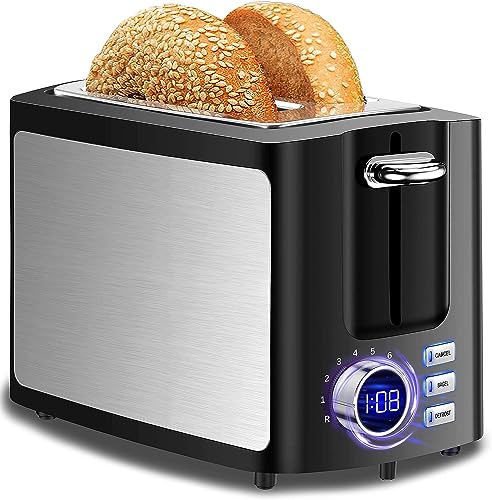
- Hommater 2-Slice Wide Slot Smart Toaster with LCD Countdown
- Amazon Basics 2 Slice Toaster with Extra Wide Slots
- Elite Gourmet ECT1027B 2-Slice Cool-Touch Toaster
Read the full guide ↓
Ask the internet for the best toasters reddit users actually recommend and a pattern emerges within a few threads: the community is not really arguing about toasters. It is arguing about what appliances have become. Thread after thread pits simple, repairable, long-lived machines against feature-stacked newcomers, and the toaster — the simplest powered appliance in the kitchen — is where that argument burns hottest. This guide takes the community seriously without surrendering to it. It ranks six verified current designs on their stated merits, then spends two full sections on what forum discussions genuinely teach: the consensus worth following, the nostalgia worth discounting, and the complaints that surface in threads years before they surface anywhere else.
The six picks map neatly onto the community’s own factions. The Hamilton Beach, with auto shutoff, Toast Boost and a complete named control set, is the pragmatist’s machine. The bella answers the threads’ most practical recurring question — what actually fits a wide artisan loaf — with a long slot and four-slice capacity. The BLACK+DECKER is the proven wide-slot pattern that longevity threads respect. The Hommater is the test case for the other side: a countdown display and nine shades from a newer brand, asking whether features can earn trust. The Amazon Basics states its whole specification like a forum member wrote the listing, and the Elite Gourmet’s cool-touch sides answer the child-safety threads directly. Readers who also follow Best Toasters Ratings will recognise how differently forums weigh evidence from score pages.
A honesty note before the verdicts: community discussion is anecdote at scale. Its strength is pattern-spotting across thousands of kitchens and years; its weakness is that the happiest owners rarely post, the angriest always do, and yesterday’s production runs are praised in threads that today’s buyers read as current. The sections below keep the signal and filter the noise — which is, in the end, exactly what the best forum members do for each other.
Key Takeaways
- Community consensus prizes even browning, longevity and simplicity — in that order, and it is mostly right.
- The Hamilton Beach leads this ranking: a complete, named control set with safety features the forums respect.
- Forums are early-warning systems: recurring failure patterns appear in threads long before they reach review roundups.
- Discount the nostalgia: vintage machines praised in threads were built for different bread, different elements and different safety rules.
- The bella is the community’s practical answer to the artisan-loaf question — a long slot, honestly stated.
In this guide
Quick Picks
Six verified toasters, ranked with forum wisdom applied as a filter rather than a verdict — longevity, evenness and honesty of specification all scored.
| Pick | Badge | Why it stands out |
|---|---|---|
| Hamilton Beach 22634 Toaster | Best Overall | Auto shutoff and Toast Boost: the safety set forum pragmatists ask for by name |
| bella Fits-Anywhere Slim Toaster | Best for Families | Four slices and the long slot the artisan-bread threads keep demanding |
| BLACK+DECKER 2-Slice Toaster | Best Wide-Slot Classic | The proven wide-slot pattern with the deepest ownership history here |
| Hommater 2-Slice Smart Toaster | Best for Fine Control | A countdown and nine shades — the feature case, argued on its merits |
| Amazon Basics 2 Slice Toaster | Best Cool-Touch Pick | A specification stated in full, the way forum members insist listings should be |
| Elite Gourmet ECT1027B Cool-Touch Toaster | Best Value Pick | Cool-touch sides answering the child-safety threads with a stated design |
How These Picks Were Chosen
This guide is research-led, and it is worth being plain about what that means. We did not run a test kitchen, toast a hundred loaves, or handle pre-release samples. Instead, every pick in this list was verified through Amazon’s Creators API, which returned each product’s confirmed title, brand and listing details; the specifications quoted in the spec boxes are taken from those verified titles and from nothing else. Where a listing title does not state a feature — a shade count, a wattage, a named button — we say so rather than filling the gap from memory or from a different model in the same range.
The shortlist was built by comparing the verified toaster pool on the attributes that decide daily satisfaction: slot width and format, because bread that does not fit cannot toast; the number and spread of shade settings, because repeatability is what separates a good morning from a guessing game; the presence of bagel and defrost functions, because frozen and thick bread behave differently from fresh sandwich slices; crumb management, because a tray you can slide out beats crumbs you cannot reach; and safety and retrieval details such as cool-touch sides, auto shutoff and high-lift levers, which sound minor until a small slice is sitting out of reach above hot elements.
For the community edition, the standard criteria — slot fit, shade control, functions, cleaning, safety — were re-weighted by the values forum discussions consistently reward: completeness of stated specification, because threads punish vague listings; mechanical simplicity where it does not cost function; and the presence of the specific features long-running threads ask for, such as high lift and cool-touch sides. Newer brands were neither favoured nor penalised, but their reviews below state plainly what is and is not yet proven about them.
Two honesty rules governed the writing. First, no prices and no ratings appear anywhere in this guide: prices move, ratings drift, and a number printed here would quietly become wrong, so every pick simply invites you to check the latest price on Amazon. Second, where the pool and the keyword pull in different directions, we say so in the open — in a note inside the relevant section and in the sources file published with this article — instead of dressing a mismatch up as a match. A shorter, honest guide beats a longer, padded one.
The 6 Best Toasters, Reviewed in Detail
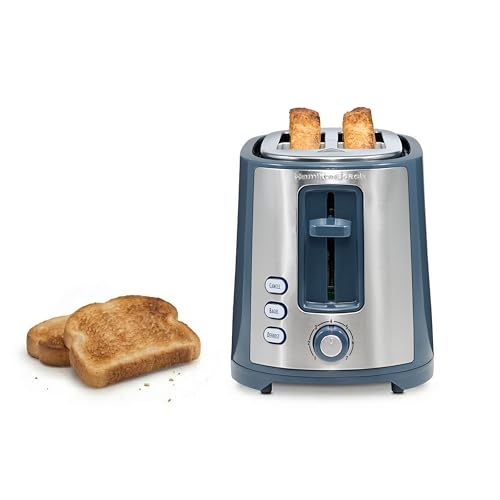
Hamilton Beach 22634 Extra-Wide Slot 2 Slice Toaster
Badge: Best Overall
Strengths
- Toast Boost lifts small items higher, solving the stuck-crumpet problem directly
- Auto shutoff adds a layer of safety if a cycle is ever interrupted or forgotten
- Seven shades plus named bagel and defrost buttons make the control set complete
Trade-offs
- The blue finish is a statement — it will either anchor your kitchen’s colour or clash with it
- Two-slice capacity, again, is the ceiling for larger breakfast rounds
- No countdown display, so timing feedback is limited to the pop itself
Key specs (from the verified listing)
- Format: 2-slice pop-up toaster
- Slots: extra-wide
- Shade settings: 7
- Buttons: bagel and defrost
- Auto shutoff
- Toast Boost for higher lift
- Slide-out crumb tray
- Finish: Kitchen Makeover Blue; model 22634
The Hamilton Beach 22634 combines the pool’s most safety-conscious control set with its boldest finish. Start with the working features: extra-wide slots, seven shade settings, dedicated bagel and defrost buttons, auto shutoff, Toast Boost and a slide-out crumb tray. Toast Boost deserves its name in the listing — it raises finished items higher than a standard carriage, which is exactly what small slices, English muffins and crumpets need, and auto shutoff means a cycle cannot linger indefinitely if something goes wrong or the kitchen empties mid-breakfast.
Then there is the colour. The listing calls the finish Kitchen Makeover Blue, and it is genuinely that: a toaster you choose partly as a kitchen accent, from a long-established American small-appliance brand. If your kitchen runs to pale blues, white cabinetry or a deliberate pop of colour, it will look intentional; in a strictly stainless scheme it will look like a guest. Performance-wise its honest limits are the familiar ones for this class — two slices at a time and no countdown display — but as a complete, safe and characterful two-slice package, it is one of the strongest all-round designs in this pool.
Forum pragmatists ask for three things by name — a lift that works, a shutoff that protects, controls that state their jobs — and this design lists all three. The blue finish starts arguments in threads; the control set ends them.
Best for: safety-conscious households and anyone who wants a reliable brand name with a colourful finish / Not suited for: four-slice households, or kitchens committed to an all-stainless look

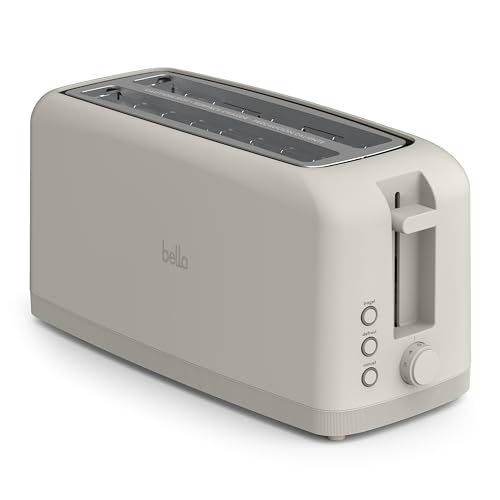
bella Fits-Anywhere Slim Toaster, 4 Slice
Badge: Best for Families
Strengths
- Four slices per cycle doubles the throughput of every other pick in this pool
- The extra long slot swallows artisan and sourdough slices that defeat standard slots
- A slim profile returns counter depth that a conventional four-slice body would consume
Trade-offs
- The listing title states fewer control details — no shade count or named bagel/defrost buttons
- A single long slot gives less independent control than two separately controlled slot pairs
- The oatmilk finish is distinctive; it will not disappear into a stainless appliance run
Key specs (from the verified listing)
- Format: slim-profile toaster
- Capacity: 4 slices via an extra long slot layout
- Slot: extra long and wide, suited to artisan loaves
- Finish: Oatmilk
- Design line: Fits-Anywhere
The bella Fits-Anywhere is the pool’s structural outlier, and for many kitchens the most interesting design here: a slim-profile toaster that handles four slices through an extra long and wide slot, finished in a soft colour the listing calls Oatmilk. Where a conventional four-slice toaster is a deep, boxy appliance, a slim long-slot body slides along the back of the counter, and the long slot solves the artisan-bread problem — wide sourdough and bakery slices that must be trimmed, forced or toasted in two passes in a standard slot fit here in one piece.
Throughput is the other headline. Four slices per cycle halves breakfast queuing for families compared with every two-slice pick in this guide, and the wide slot still takes bagels and thick cuts. The honest trade-offs sit in the stated specification: the listing title does not name a shade count, a bagel setting or a defrost button, so if those one-button routines matter to you, check the listing’s full specification before ordering, and expect a single shared control rhythm rather than two independently timed slot pairs. Buy it for shape and capacity; it is the only pick here designed around the counter itself.
The artisan-bread threads ask one question — what fits a wide loaf without surgery — and this is the pool’s structural answer. Community sceptics will note the unstated control details; the honest reply is to check the listing, as its review says.
Best for: families, artisan-bread households and anyone short on counter depth / Not suited for: buyers who want a stated shade count and named bagel/defrost buttons confirmed in the title
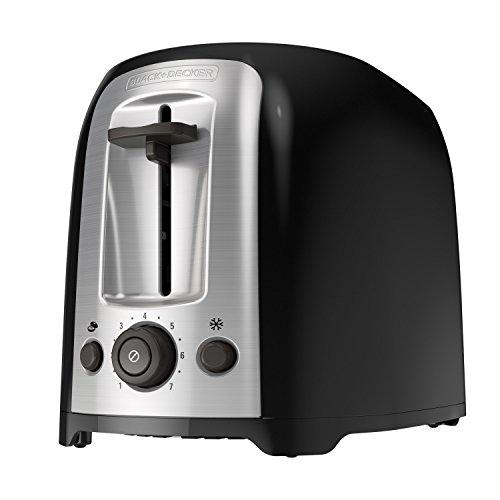
BLACK+DECKER 2-Slice Toaster with Extra-Wide Slots
Badge: Best Wide-Slot Classic
Strengths
- Extra-wide slots take bagel halves and thick-cut bread without trimming or forcing
- Seven shade settings give a usable spread from gentle warming to deep, crisp browning
- The extra lift lever raises small slices and crumpets high enough to grab safely
Trade-offs
- Two slices at a time is slow when a household wants four pieces on the table together
- The stated feature set is deliberately basic, with no countdown display or digital timer
- Wide slots centre thin sandwich bread less precisely than they centre thick slices
Key specs (from the verified listing)
- Format: 2-slice pop-up toaster
- Slots: extra-wide, suited to bagels and thick bread
- Shade settings: 7
- Bagel mode: yes
- Extra lift lever for small slices
- Removable crumb tray
The BLACK+DECKER is the straightforward, wide-slot workhorse of this pool: a two-slice pop-up toaster whose extra-wide slots, bagel mode and seven shade settings cover the jobs most kitchens actually ask of a toaster. The design makes no attempt to be clever. You choose a shade, press the lever, and the bagel mode adjusts the cycle for a thick, one-sided item whose cut face you want toasted while the crust side stays softer. That honesty is its appeal — every control maps to one obvious job, so a guest or a teenager can use it without a manual.
Two details lift it above the most basic machines. The extra lift lever matters more than it sounds: short slices, crumpets and the end pieces of a loaf sit deep in wide slots, and being able to raise them clear of the elements beats fishing with a fork near live elements. The removable crumb tray keeps the counter and the toaster’s interior cleaner with a weekly slide-out rather than a shake over the sink. Its honest limitation is throughput and feedback — two slices per cycle, and no display telling you how long is left, so busy households queue. Treat it as a dependable everyday toaster for one or two people, not a family production line.
Longevity threads respect patterns that stay in production, and this wide-slot design is the pool’s elder statesman. Read its recent feedback rather than its archive: forums themselves warn that production eras differ.
Best for: one or two people who toast bagels and thick bread daily and want simple, proven controls / Not suited for: families who need four slices at once, or anyone who wants a countdown display
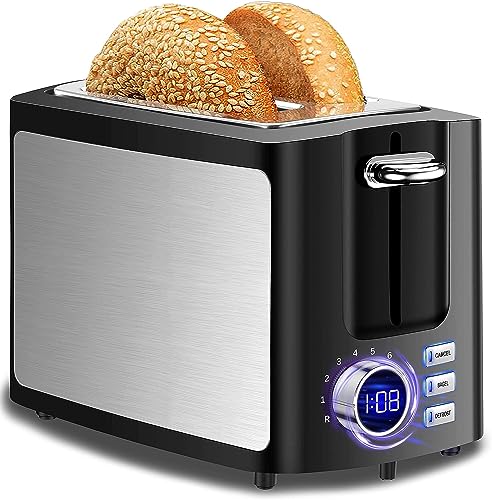
Hommater 2-Slice Wide Slot Smart Toaster with LCD Countdown
Badge: Best for Fine Control
Strengths
- The LCD countdown removes the guesswork — you can see exactly how long a cycle has left
- Nine shade settings are the finest gradation in this pool, useful for picky preferences
- A dedicated reheat function warms finished toast without pushing it further brown
Trade-offs
- A newer, lesser-known brand, so long-term parts and support are less proven than the big names
- Nine shades is more granularity than most households will ever distinguish in practice
- Two-slice capacity still limits it to smaller households and slower breakfast runs
Key specs (from the verified listing)
- Format: 2-slice pop-up toaster
- Slots: wide slot design
- Shade settings: 9
- LCD digital countdown timer
- Functions: bagel, defrost, cancel, reheat
The Hommater is the pool’s technology-led option: a two-slice wide-slot toaster built around an LCD digital countdown timer and nine shade settings, with bagel, defrost, cancel and reheat functions. The countdown sounds like a gimmick until you live with a toaster that gives no feedback at all — knowing whether a cycle has ten seconds or a minute left changes whether you start the eggs now or wait. For households where two people like visibly different shades, the nine-step dial also makes preferences repeatable: note your number once and you can return to it exactly.
The function set is complete for frozen and fresh bread alike. Defrost adds the thaw time frozen slices need before browning, and reheat rescues toast that popped while you were distracted, warming it through instead of browning it a second time. The honest limitation is provenance: Hommater is a newer name than the established brands in this guide, so while the verified listing confirms the features above, long-term durability and after-sales support are less documented. Buy it for the display and the fine control, and keep the packaging and order details in case you need that support.
This is the pick that splits the community: display and nine-step control to the feature camp, an unproven long-term record to the sceptics. Both are right about the facts; your household’s patience for newer brands decides the verdict.
Best for: anyone who values a countdown display and precise, repeatable shade settings / Not suited for: buyers who prioritise a long-established brand’s service network over features

Amazon Basics 2 Slice Toaster with Extra Wide Slots
Badge: Best Cool-Touch Pick
Strengths
- The most completely stated specification in the pool, including its 900W power figure
- Extra-wide slots and a bagel button handle thick items without a separate appliance
- Cord wrap and a removable crumb tray keep a small counter tidy between uses
Trade-offs
- Six browning settings offer slightly coarser control than the seven- and nine-step rivals
- A plain black-and-silver finish will not suit kitchens chasing a particular colour scheme
- Two slices per cycle, like most of this pool, caps its breakfast throughput
Key specs (from the verified listing)
- Format: 2-slice pop-up toaster
- Slots: extra wide, sized for bagels
- Browning settings: 6
- Power: 900W (as stated in the listing title)
- Buttons: defrost, cancel, bagel
- Removable crumb tray and cord wrap
- Finish: black and silver
The Amazon Basics toaster is the pool’s no-nonsense value design, and unusually for this class its listing states the full working specification: extra-wide slots for bagels, six browning settings, defrost, cancel and bagel buttons, a removable crumb tray, cord wrap and a stated 900W. That completeness makes it the easiest pick here to buy with your eyes open — what is in the title is what arrives, and the feature set covers the complete everyday brief: fresh bread, frozen bread, bagels, and a cancel button for the morning you change your mind mid-cycle.
In daily use its virtues are tidiness and predictability. The cord wrap keeps the lead off the worktop in small kitchens and rental flats where the toaster lives in a cupboard between uses, and the slide-out tray means crumbs go in the bin rather than building up inside the slots. Six settings is one step coarser than some rivals, and in practice the middle of the dial will handle most bread, with the ends reserved for very light warming or very dark, sturdy slices. Its honest limitation is ambition: it will not countdown your toast or toast four slices, but as a simple, fully specified two-slice machine it is hard to fault.
If forum members wrote listings, they would look like this one — every working detail stated, nothing dressed up. Its threads would be boring, which in appliance forums is the highest available praise.
Best for: budget-conscious buyers, renters and small kitchens that want a complete, stated specification / Not suited for: anyone who needs four-slice capacity or a digital countdown display

Elite Gourmet ECT1027B 2-Slice Cool-Touch Toaster
Badge: Best Value Pick
Strengths
- Cool-touch sides are a genuine safety plus in homes with children or tight counters
- The stated 1.25-inch slot width is one of the few exact slot measurements in this pool
- Six shades plus a cancel control cover the everyday fresh and thick-bread brief
Trade-offs
- No dedicated bagel or defrost button is stated, so frozen bread needs manual shade tweaks
- Black is the stated finish here, which limits colour matching in pale kitchens
- A compact two-slice format shares the pool’s usual throughput ceiling
Key specs (from the verified listing)
- Format: 2-slice pop-up toaster
- Slots: 1.25-inch extra-wide, for bagels and thick bread
- Shade settings: 6
- Cool-touch exterior (as stated in the listing title)
- Cancel function
- Model: ECT1027B, black
The Elite Gourmet ECT1027B earns its place on one clearly stated idea: a cool-touch exterior on a two-slice toaster with 1.25-inch extra-wide slots and six shade settings. Toasters get hot — the elements have to — and in a crowded kitchen the casing is what brushes against a child’s hand, a tea towel or the side of the fridge. A design that keeps its outer walls cooler is a practical safety choice rather than a luxury, and it also makes the toaster easier to slide aside straight after use in a small space.
The slot width being stated as a measurement is quietly useful: 1.25 inches accommodates bagels and thick-cut bread, which the listing names directly, so you can compare your usual loaf against a number instead of a marketing adjective. What the stated feature set does not include is a named bagel or defrost button — the listing promises a cancel function and shades, so frozen slices will need a step up the dial and a watchful eye the first few times. That is the honest trade: you gain the cool-touch casing and a measured slot, and you give up some one-button convenience found elsewhere in this pool.
The child-safety threads ask whether cool-touch claims survive real kitchens, and the stated slot measurement gives this design a second, quieter credibility: a listing willing to publish numbers is a listing willing to be checked, a theme Best Toasters Online shoppers will appreciate.
Best for: households with children, and anyone whose toaster sits within touching distance of daily traffic / Not suited for: frozen-bread households that rely on a dedicated defrost cycle every morning
Comparison Table
The community’s values in table form: format, control and the one feature each design’s forum thread would be about.
| Pick | Format | Shades | Standout feature | Link |
|---|---|---|---|---|
| Hamilton Beach 22634 Toaster | 2-slice pop-up | 7 | Toast Boost and auto shutoff | Check on Amazon |
| bella Fits-Anywhere Slim Toaster | Slim 4-slice long slot | Not stated in title | Four slices, artisan-length slot | Check on Amazon |
| BLACK+DECKER 2-Slice Toaster | 2-slice pop-up | 7 | Extra lift lever and bagel mode | Check on Amazon |
| Hommater 2-Slice Smart Toaster | 2-slice pop-up | 9 | LCD countdown timer | Check on Amazon |
| Amazon Basics 2 Slice Toaster | 2-slice pop-up | 6 | Stated 900W, cord wrap | Check on Amazon |
| Elite Gourmet ECT1027B Cool-Touch Toaster | 2-slice pop-up | 6 | Cool-touch exterior, 1.25-inch slots | Check on Amazon |
How to Choose the Best Toasters Reddit Threads Would Approve Of
Start with the bread, not the toaster. The single most common reason a toaster disappoints is a slot that does not match the loaf: standard slots handle sandwich bread, but bagel halves, thick-cut farmhouse slices, crumpets and wide artisan sourdough each stress a design differently. Extra-wide slots — the pattern across most of this pool — cover bagels and thick cuts. An extra long slot, like the bella’s, is the answer for wide artisan slices. Measure your usual slice before you shop; it takes ten seconds and eliminates half the wrong purchases in this category.
Next, decide your capacity honestly. A two-slice toaster suits one or two people whose breakfasts are staggered. The moment three or four people want toast in the same ten minutes, a two-slice machine becomes a queue, and the second round eats while the first round cools. That is the one situation where a four-slice design is not a luxury but the correct tool. If your household is between the two, think about staggering: a two-slice machine with a reheat function can hold a pattern together, because the first slices can be warmed through without browning further when the second pair pops.
Shade settings are about repeatability, not range. Nobody needs the darkest setting a toaster offers; what you need is to find your setting once and return to it. Six settings is workable, seven is comfortable, and nine — the Hommater’s count — lets two fussy people each keep a number. What matters more than the count is consistency: a good toaster gives the same result on the same setting across a morning, including the second cycle, when the elements are already hot and many cheap designs overshoot. When you read owner feedback anywhere, consistency complaints are the ones to weight.
Then work through the functions your bread actually needs. Bagel mode exists because a bagel’s cut face and crust want different treatment; if you toast bagels weekly, treat it as essential, and if you never do, ignore it entirely. Defrost matters in households that freeze bread — which is most households that buy sliced loaves — because frozen slices browned on a fresh setting emerge dark outside and cold in the middle. A cancel button is the humble essential: it is the difference between rescuing a cycle and unplugging an appliance. Reheat is the quiet luxury that fixes toast popped too early.
Finally, judge the ownership details. A removable or slide-out crumb tray decides whether cleaning is a ten-second habit or a monthly excavation. High lift — named as an extra lift lever or Toast Boost in this pool — decides whether small items are retrievable without tools. Cool-touch sides and auto shutoff decide how forgiving the machine is in a busy or child-populated kitchen. And measure the counter: depth, not width, is what most toasters steal, which is why a slim long-slot design exists at all. Choose on those five axes — bread fit, capacity, repeatability, functions, ownership — and the right pick in this guide usually names itself.
How to Use, Clean, and Look After Your Toaster
Good toast is mostly technique, and the technique is learnable in a week. Follow these steps when a new toaster arrives, and most early disappointment — the pale first slice, the mysteriously dark second — explains itself.
- Run two empty or sacrificial cycles first. New elements carry manufacturing residues that smoke and smell on first heat. Two cycles on a middle setting, in a ventilated kitchen, burn that off; use the cheapest slices you have if you prefer something in the slots.
- Calibrate with your real bread. Toast one slice at the middle setting and judge it. Move one step at a time from there, and write your number down — on the fridge, in a phone note, anywhere. Every bread type gets its own number: fresh white, wholemeal, frozen, and bagels will all differ.
- Respect the hot second cycle. A toaster already at temperature browns faster. When you run back-to-back cycles for a household, drop the setting half a step to a full step for the second round, or accept a darker result knowingly.
- Use the right function, not a workaround. Frozen bread goes on defrost, bagels go cut-side as the manual directs on bagel mode, and yesterday’s toast goes on reheat — each exists because the timing genuinely differs.
- Retrieve with the lever, not with tools. Use the high-lift feature for small items. Never insert a metal utensil into a plugged-in toaster, for the obvious reason.
Cleaning is a rhythm, not an event. Empty the crumb tray weekly if you toast daily — slide it out, tip it into the bin, wipe it, and slide it back. Once a month, unplug the toaster, let it cool fully, turn it over a bin and shake gently to dislodge what the tray missed. Wipe the exterior with a barely damp cloth; never immerse the appliance, never spray cleaner into the slots, and never use abrasive pads on coloured or coated finishes. If your kitchen fills with crumbs around the toaster, the tray routine is the fix, not a bigger clean.
Troubleshooting: three common problems
Problem: one side of the slice browns more than the other → centre the slice in the slot, check that a previous cycle has not left one element bank hotter, and rotate the slice halfway through only if your design allows pausing; persistent one-sided results on every bread type suggest an element fault, not user error.
Problem: toast is dark outside but cold or soft in the middle → the bread almost certainly started frozen without the defrost function, or the slice is thicker than the slot comfortably holds; use defrost, or drop the shade and run a second short cycle.
Problem: small items sit too low to reach → use the high-lift lever or Toast Boost if your model has it; if it does not, switch the power off at the wall and lift the carriage lever manually, using a wooden utensil — never metal — only once the appliance is unplugged and cool.
What Community Threads Keep Coming Back To
Read enough toaster threads and the same five themes recur with metronome regularity. First, evenness: the community’s core demand is boring, identical browning, slice after slice, and its members describe failures in forensic detail — which side, which bread, which cycle. Second, longevity: threads are full of machines measured in decades, and of modern replacements measured in months, and the contrast fuels the third theme, repairability — the wish for appliances a owner can open, clean and keep, rather than sealed units destined for landfill at the first failed element.
The fourth theme is feature scepticism, and it is more nuanced than its reputation. Forum members do not hate features; they hate features that substitute for the core job. A countdown display on a toaster that browns unevenly is an insult, while the same display on a consistent machine is a convenience — the Hommater’s reception in any honest thread would turn entirely on its repeatability reports. Fifth, and most practical: fit. The artisan-loaf threads, the crumpet threads, the small-counter threads all reduce to households describing the gap between their bread and their slots, which is why the bella’s long slot earns community respect despite its unstated details elsewhere.
Woven through all five is a distinctive evidentiary style. Forum members trust photographs of actual toast, timelines of ownership, and updates posted years later — ‘still going’ posts carry more weight than any launch review. They also practise a rough form of the Best Toasters Sweethome discipline: repeatability of reports across independent owners is their version of a test protocol. A buyer who learns to read for those patterns gets the community’s real value, which was never any single recommendation.
Where the Community Consensus Is Right — and Where It Misleads
The consensus is right about the hierarchy of virtues. Even browning first, longevity second, features last is the correct order for an appliance used daily and judged in seconds, and buyers who follow it rarely regret a purchase. The consensus is also right as an early-warning system: when a model’s element failures or carriage faults begin clustering in threads, they are describing a pattern that formal channels will take far longer to acknowledge. Treat a recurring, specific, operational complaint — same fault, same age, many owners — as the strongest negative evidence available anywhere, stronger than any score.
Where threads mislead is subtler. Survivorship shapes everything: the forty-year-old toaster in a thread is the one that survived, not the thousand that did not, and its modern equivalent cannot be identified by nostalgia. Production drift cuts the other way — a model praised across a decade may have changed factories twice inside that decade, so old praise attaches to a name, not necessarily to the unit shipping now; the Best Toasters Nz problem of market versions is the same trap wearing a different coat. And the angriest-voice effect is real: owners post at the extremes, so thread sentiment overstates both disaster and delight.
The synthesis this guide recommends is simple. Use the community for patterns, failure warnings and fit reports — the things thousands of kitchens genuinely know. Use verified listings for specifications — the things only the manufacturer can state. Use your own bread, counter and household for the final call. A toaster bought at the intersection of those three evidence types is as close to a sure thing as this category offers, and it is how the six picks above were ranked.
Common Buying Mistakes
Buying the slot before measuring the bread. The most expensive toaster mistake costs nothing to avoid: a tape measure against your usual slice. Wide artisan loaves in standard slots and bagel halves forced into narrow ones account for more returns in this category than any mechanical failure. If your bread is wide, the long-slot design exists precisely for you; if it is thick, the stated slot widths in the spec boxes are the numbers to compare.
Paying for capacity you will queue for anyway — or skipping capacity you need. Both directions happen. Singles buy four-slice machines that dominate a small counter and run half-empty for years; families buy elegant two-slice machines and spend every morning running a toast rota. Count the people who eat toast at the same time on a school or work morning, and buy for that number, not for the household’s total size.
Judging shade dials by their maximum. A dial that goes very dark proves nothing; every toaster can burn bread. What you are buying is the middle of the dial — fine, repeatable steps around the shades real people use. A nine-step dial is genuinely useful for a household with strong and differing preferences, and genuinely pointless for a household that will park on one number forever. Match the granularity to the people.
Ignoring the crumb tray until it matters. Crumbs accumulate invisibly, scorch, smoke, and eventually flavour everything the toaster makes. A removable or slide-out tray turns the fix into a weekly ten seconds; a fixed base turns it into an upside-down shake over the sink. Check which design you are buying before the first month teaches you the difference.
Treating the first week as the verdict. Every toaster in this guide needs calibration: a sacrificial first cycle, a setting found for each bread you use, and an adjustment for hot second cycles. Buyers who judge on the first two slices — usually pale, because the elements were cold and the setting was a guess — return machines that would have served them well for years. Give any pick here one honest week of calibration before you judge it.
Final Recommendation
Start where the pragmatists start: the Hamilton Beach, whose named safety set and complete controls satisfy nearly every recurring forum demand in one machine. Families and artisan bakers should take the bella’s long slot and four-slice capacity; traditionalists, the BLACK+DECKER’s proven wide-slot pattern. The Hommater is the considered gamble — real features, honestly listed, from a name still earning its longevity record — and the Amazon Basics is the listing-writing lesson the whole category should copy. The Elite Gourmet closes the list as the household-safety specialist. Buy on pattern, specification and fit together, and you will have used the community the way its best members use it themselves.
Start with the first three picks if you want the shortest route to a decision: Hamilton Beach 22634 Toaster, bella Fits-Anywhere Slim Toaster and BLACK+DECKER 2-Slice Toaster cover the widest spread of households in this guide between them.
Frequently Asked Questions
What do Reddit users usually say makes a toaster good?
The recurring consensus is unglamorous: even, repeatable browning; a build that lasts; slots that fit real bread; and controls that do one obvious job each. Features are welcomed only after those four are proven, and the most respected posts are long-term updates — owners reporting back after years — rather than first impressions.
Should I buy a vintage toaster because forums praise them?
Enjoy the praise, but buy with care. Surviving vintage machines are the best of their era, not a representative sample; they were built to different safety expectations, their elements and insulation have aged, and their slots predate modern wide and artisan loaves. A current design with a complete stated specification — several in this guide qualify — is the safer route to the same virtues.
How seriously should I take failure reports in forum threads?
Very seriously when they form a pattern: the same fault, described operationally, at a similar age, by independent owners. That clustering is the community’s unique gift — an early-warning system no single reviewer can match. A lone furious post, by contrast, is one kitchen’s story; note it, but wait for corroboration before letting it veto a sound design.
How long should a toaster last?
A toaster is a simple appliance — elements, a carriage, a timer mechanism — and a well-kept one should give years of daily service. Longevity is decided less by the brand badge than by crumb discipline and by not forcing the lever. Empty the tray weekly, let the carriage work unforced, and keep the slots free of foil and packaging. When an element bank fails or browning becomes permanently one-sided, replacement is usually more sensible than repair at this product tier.
Is a bagel setting actually different from turning the dial up?
Yes, in intent. A bagel is thick and one-sided: the cut face wants full toasting while the rounded crust wants warming, and a bagel mode adjusts the cycle to that pattern rather than simply browning everything harder for longer. Turning the dial up on a normal cycle over-browns the crust before the cut face is right. If bagels are a weekly food in your house, a named bagel function — stated on most picks in this guide — is worth having; if they are a monthly food, the dial workaround is survivable.
Why does the second round of toast come out darker?
Because the toaster is already hot. The elements and the slot walls hold heat from the first cycle, so the second batch starts browning from a higher base and reaches a given shade faster. It is physics, not a fault. The fix is to drop the setting slightly for back-to-back rounds, or to accept the darker second round as the household’s standing arrangement — many families simply assign the second round to whoever likes their toast darkest.