A tulip beer glass has a rounded bowl that narrows toward the rim and then flares slightly at the lip. The bowl gives a beer room to foam, the narrowing traps aroma, and the flared lip guides the first sip onto the tongue. That makes the shape a favorite for hoppy IPAs and for Belgian ales, where the nose is half the experience.
The six glasses below range from a ribbed IPA glass to a stemmed tasting glass and a brewery-branded tulip. We have not used these products ourselves, so treat every description as a starting point and confirm size, material and set count on the current listing before buying.
As an Amazon Associate we earn from qualifying purchases. Links below are affiliate links, and they do not change the product information we give.
What to Look For
| Feature | Why it matters |
|---|---|
| Bowl shape | A narrowing bowl concentrates hop and yeast aromas |
| Rim | A gently flared lip helps foam release and directs the pour |
| Material | Thin lead-free crystal feels refined; thicker glass survives rougher handling |
| Stem or stemless | A stem keeps warm hands off the beer; stemless is easier to store |
| Cleaning | Ribbed or etched bases need a soft brush; plain glass is simpler |
In this guide
Specs at a Glance
| Glass | Style | Material | Notes |
|---|---|---|---|
| Spiegelau IPA Glass | Ribbed tulip | Lead-free crystal | Made for hop aroma |
| Rastal Teku | Stemmed tulip | Thin crystal glass | Tasting style |
| Duvel Tulip Glass | Branded tulip | Glass | Made for strong golden ale |
| Libbey Craft Brews Belgian | Short tulip | Glass | Everyday workhorse |
| Schott Zwiesel Beer Basic Tulip | Stemmed tulip | Tritan crystal glass | Check set size |
| Stolzle Lausitz Craft Beer Tulip | Stemmed tulip | Glass | Check the listing for sizes |
The 6 Best Tulip Beer Glasses
Top pickBest for hop-heavy IPAs
1. Spiegelau IPA Glass
A modern tulip designed with hop-forward beer in mind. The ribbed lower bowl is meant to keep carbonation moving and the aroma lively, and the crystal is lead-free and fairly thin.
Suits: hop-heavy IPAs. Strengths: a purpose-built shape and a good reputation among craft fans. Weaknesses: thin crystal calls for careful hand washing. Skip it if you want a glass that can take rough dishwashers.
View Spiegelau IPA Glass on Amazon
Best for belgian ales and tasting flights
2. Rastal Teku Stemmed Beer Glass
A tall stemmed tulip developed by a beer-loving group in Italy and made by Rastal. It is built for tasting, with a wide bowl for aroma and a narrow rim for focus.
Suits: Belgian ales and tasting flights. Strengths: elegant, narrow-rim design that suits complex beer. Weaknesses: tall, so it needs a roomy shelf. Skip it if you prefer sturdy pub glasses.
View Rastal Teku Stemmed Beer Glass on Amazon

Best for belgian golden ales and tripels
3. Duvel Belgian Beer Tulip Glass
The branded glass for Duvel strong golden ale, with a short stem and a bowl that tapers to the rim. It is a nice match for any Belgian golden or tripel.
Suits: Belgian golden ales and tripels. Strengths: authentic shape and a brewery pedigree. Weaknesses: carries logo branding. Skip it if you dislike printed logos.
View Duvel Tulip Glass on Amazon
Best for casual drinkers and groups
4. Libbey Craft Brews Belgian Beer Glass
A sturdy, bar-style tulip from a long-standing glassmaker. It is made for regular use and usually sold in sets, so it works for households that pour often.
Suits: casual drinkers and groups. Strengths: a durable build and a friendly shape. Weaknesses: less refined than crystal. Skip it if you want thin, delicate crystal.
View Libbey Craft Brews Belgian Glass on Amazon
Best for buyers who want durability with style
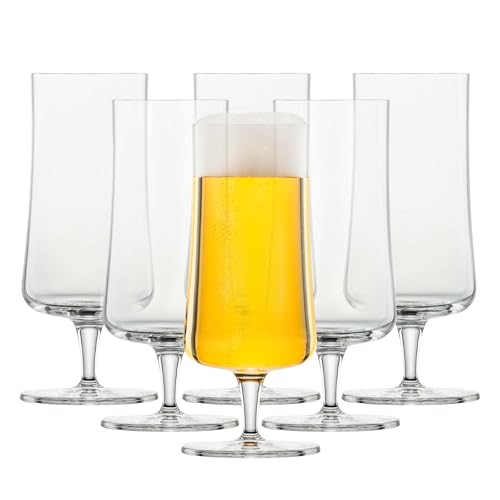
5. Schott Zwiesel Beer Basic Tulip
A stemmed tulip from a German maker known for break-resistant Tritan crystal. It suits both IPAs and Belgian ales and tends to hold up well in the dishwasher.
Suits: buyers who want durability with style. Strengths: resilient crystal and a clean design. Weaknesses: stemmed shape takes up more room. Skip it if you need stemless glasses.
View Schott Zwiesel Beer Basic Tulip on Amazon
Best for collectors building a beer set
6. Stolzle Lausitz Craft Beer Tulip Glass
A craft-beer tulip from a respected European glassworks. The slim bowl and flared rim are tuned for aroma, and the maker offers other beer shapes if you build a collection.
Suits: collectors building a beer set. Strengths: a refined profile and a quality finish. Weaknesses: availability and set size vary. Skip it if you want an easy single-glass buy.
View Stolzle Lausitz Craft Beer Tulip on Amazon
Care and Setup
- Rinse with warm water right after use so yeast and hop residue do not dry on.
- Hand wash fine crystal with a soft sponge and no abrasive pad.
- Air dry upside down on a clean rack, or polish with a lint-free cloth.
- Pour slowly down the inside wall, then finish with a firmer pour to build a head.
Mistakes to Avoid
- Chilling the glass in the freezer, which dulls aroma.
- Filling to the brim and leaving no room for foam.
- Using a scented dish soap that leaves a film.
- Choosing a heavy mug when the beer is aromatic.
How Tulip Geometry Shapes Aroma and Head
The tulip shape has three working parts. The wide lower bowl gives the beer room to swirl and release volatile aromas. The narrowing shoulder gathers those aromas and concentrates them toward the top. The slight outward flare at the lip guides the beer onto the front of the tongue and lets the foam rest on the rim rather than collapsing.
This geometry suits beers where aroma matters. Hoppy IPAs carry citrus, pine and tropical notes that fade quickly in a straight-sided pint glass. Belgian ales carry fruity esters and spicy yeast notes that benefit from a glass that holds them in. The bowl also supports a generous head, which in turn traps more aroma and releases it slowly as bubbles pop.
Not all tulips are the same. A tall, slim tulip emphasizes aroma focus but offers less room for swirling. A wider, shorter bowl has more surface area and a more open aroma. A deeper bowl can hold bigger pours, but too much glass can leave a small beer looking lost. Choose a size that suits your usual serving. Many glasses are sized for twelve-ounce or larger bottles, and some are made for larger sharing bottles.
Because details vary, check the listing for capacity, height and rim diameter. Treat claims about aroma as the makers’ own, and trust your nose.
- The bowl releases aroma, the shoulder gathers it, and the lip directs the sip.
- Slimmer tulips focus scent; wider ones give more swirl.
- Match capacity to your usual bottle or pour.
Matching the Glass to the Beer Style
Different beers reward different shapes. A hoppy IPA benefits from a glass that traps volatile hop oils, so a tulip with a pronounced shoulder suits it. Double and imperial IPAs, which are stronger and more intense, pair well with a tulip that holds a modest pour and lets the beer warm gently while the aromas develop.
Belgian golden strong ales and tripels have a lively carbonation and fruity yeast character. A tulip with a rounded bowl and a flared lip helps build and hold a thick head. Abbey and dubbel styles, with darker malt and dried fruit notes, also suit a stemmed tulip, which keeps the beer from warming too fast. Saisons and farmhouse ales, with peppery, dry character, suit the same shape.
Some beers are better in other glasses. Light lagers and pilsners suit tall, narrow glasses that show off clarity and carbonation. Stouts and porters work in snifters or wider tulips that allow the roasty aromas to open. Wheat beers prefer tall, curved glasses that support the head. If you drink mostly hoppy and Belgian-style beers, a set of tulips covers a lot of ground.
Think about pour size. Tulips are not meant to be filled to the brim. Leave room for the head and for swirling, and pour smaller amounts more often if you want to keep the beer fresh and cool.
Pouring Technique and Serving Temperature
How you pour matters as much as the glass. Hold the glass at an angle and pour gently down the side until it is about half full, then straighten the glass and pour more firmly into the center to build a head. This releases carbon dioxide and aroma, while giving a stable foam. Bottle-conditioned beers may have yeast at the bottom, so decide whether to pour it in or leave it, depending on the style and your taste.
Temperature changes flavor. Beers served ice cold taste muted, with aromas locked away. Slightly warmer temperatures release more aroma and flavor. Many hoppy and Belgian-style beers show best a little warmer than a typical refrigerator. Let the beer sit a short while after pouring, and sip over time as it warms.
Avoid chilling the glass in the freezer, which can leave frost that melts into the beer and dilutes it, and which dulls aroma. A quick rinse in cool water just before pouring removes dust and gives a clean surface for the foam. Make sure the glass is free of soap or oil, because any residue breaks the head.
Take time to smell before tasting. Swirl gently, bring the glass to your nose and notice the scents. Then take a small sip and let the beer coat your tongue. The shape of the glass is designed for this ritual.
Stems, Wall Thickness and Everyday Durability
Tulip glasses come with or without stems, in thin crystal or thicker glass. A stem keeps your hand from warming the beer and makes the glass look elegant, but it is a weak point. Stems snap more easily than solid bases, and stemmed glasses take up more shelf space. Short stems or solid feet offer some stability while keeping a refined look.
Wall thickness affects feel and durability. Thin walls feel delicate and light, bring the beer close to your lips and look refined. They are also more prone to chipping, especially at the rim. Thicker glass resists knocks and suits busy households and dishwashers, though it can feel heavier and less refined.
Your habits should guide the choice. If you wash by hand and treat glasses with care, finer crystal is a pleasure. If glasses go in the dishwasher and get knocked about, pick a tougher design. Some makers describe their glasses as break resistant or suitable for dishwashers, but treat those as claims and follow the care instructions.
Consider storage as well. Tall stemmed glasses need space on a shelf, and hanging them by the stem is not always safe. Measure your cupboard height and check the dimensions. Ribbed or etched bases collect residue and need a soft brush.
Cleaning for Better Head and When to Replace
A clean glass makes a visible difference to a beer’s head. Fat, oil, soap film and lipstick all cause foam to collapse. Wash glasses separately from greasy dishes, with a mild unscented detergent and a soft sponge or brush. Rinse thoroughly with warm water, and let the glass air dry upside down on a clean rack or dry it with a lint-free cloth.
A simple test is the sheeting test. Fill the glass with water and pour it out. If the water drains in an even sheet, the glass is clean. If droplets cling or beads form, there is residue. Rewash with a gentle cleaner, and avoid fragrant dish soaps that leave scented film.
Hand washing is best for fine crystal. For dishwashers, use a gentle cycle, space the glasses so they do not touch, and avoid heavy rinse aids if they leave a film. Store glasses upright or on a rack away from cooking smells.
Questions to ask before buying: What capacity fits my beer? Do I want a stem? How will I wash them? Is the set size right? What does the listing say about care?
Replace a glass when the rim has chips, there are cracks or hairlines, the surface is permanently cloudy or etched, or the stem wobbles. A chipped rim can cut lips and also interferes with the head.
Six Tulip Glasses Compared by Pour, Head and Hand Feel
The six glasses here divide by temperament as much as by shape. The Spiegelau IPA Glass is the enthusiast’s choice, shaped to concentrate aroma and show a carefully poured beer at its best. The Rastal Teku Stemmed Beer Glass covers similar ground in a form most drinkers find familiar from pubs, while the Duvel Belgian Beer Tulip Glass is the practical set for households that want the right shape without treating every pour like a ceremony. Reading the list this way keeps you from paying for delicacy you will not use, or settling for a tankard when aroma is the whole reason you bought the beer.
Further down, the Libbey Craft Brews Belgian Beer Glass leans toward durability and easy care, the sort of glass that survives a crowded dishwasher rack and a busy kitchen. The Schott Zwiesel Beer Basic Tulip offers a variation in capacity or profile that suits a particular serving habit, and the Stolzle Lausitz Craft Beer Tulip Glass rounds out the list as the value or specialty option worth considering once you know your own routine. None of these choices is permanent; beer glassware is one of the easiest parts of a kitchen to build gradually, starting with the shape you will reach for most weeks.
A practical way to decide is to look at what you actually drink. If one style dominates your fridge, weight your choice toward the pick shaped for it, even if it sits higher in the list. If your drinking is varied, favor the most versatile shape and add a specialty glass later. Check capacity against the bottles and cans you buy most, because a glass that forces you to pour in two stages with a foam-over in between will quietly stop being used, whatever its pedigree.
Pouring Into a Tulip: Technique for Aroma and Foam
A shaped glass only does its job when the pour respects it. Start with the glass held at an angle and pour down the side until it is about half full, then straighten the glass and aim for the center to build the head you want. A modest head is not wasted beer; it releases aroma, protects the surface from the air and gives the first sip its texture. Pouring straight down from the start traps large, loose bubbles that collapse quickly, while never building a head leaves the beer tasting flatter and more one-dimensional than it should.
Temperature partners with technique. Most full-flavored styles show more character a few degrees above fridge-cold, so let a bottle stand on the counter briefly before pouring, especially in winter when fridges run cold. If a beer tastes muted, wait five minutes and try again before blaming the glass or the brew; the change is often surprising. Conversely, a glass stored in a warm cupboard above a cooker can take the edge off a crisp pour, so keep everyday glassware somewhere neutral.
Glass preparation matters most for the first pour of the evening. A quick rinse with cold water just before pouring wets the surface, reduces excess foaming on contact and washes away any cupboard dust. Never pour into a glass that still carries detergent film or the faint smell of the cupboard; beer is unforgiving about both. With those basics in place, the differences between picks like the Spiegelau IPA Glass and the Libbey Craft Brews Belgian Beer Glass become easy to notice, because each shape presents the same well-poured beer in its own way.
Beer-Clean Care: Keeping Foam and Flavor Honest
Beer drinkers borrow a useful term from brewers: beer-clean, meaning a glass so free of residue that foam clings to its sides in rings as you drink. Grease is the enemy, and it arrives innocently, from lip balm, from a dishwasher shared with roasting pans, and from drying cloths that have wiped everything else in the kitchen. If your pours look lively in the bottle but die in the glass, suspect the glass before the beer, and wash one glass carefully by hand to test the theory.
A sound routine is simple. Wash beer glasses separately where you can, in hot water with a small amount of detergent, using a brush that reaches the base where residue collects. Rinse in clean water and air-dry upside down on a rack or clean liner rather than toweling, since cloths redeposit lint and oils. If foam still sheets off a clean-looking glass, a soak in warm water with a little baking soda, followed by a thorough rinse, often restores it. Glasses that stay dull after that treatment may be etched, and etched glass never quite pours the same again.
Storage finishes the job. Keep beer glasses away from strong cupboard smells and out of the steamiest spot in the kitchen, and avoid stacking shaped glasses that were not designed for it, since rims chip where they rub. The sturdier picks in this guide tolerate real life better, but even they reward a shelf of their own. Treat the routine as part of the hobby rather than housekeeping: a beer-clean glass is the cheapest upgrade available to any pour, and it costs nothing but a minute of attention.
Building a Small Collection Without Duplicating Shapes
Most drinkers need fewer glasses than marketing suggests. One versatile shape for everyday drinking, plus one specialty shape for the style you love most, covers the large majority of pours. Add a third only when a genuinely different style becomes a regular habit. That discipline keeps cupboards manageable and means the glasses you own are the glasses you know well, including how each one pours and how much head it builds with your usual technique.
When you do expand, buy in the quantity you actually serve. A household that mostly drinks alone or in pairs gains little from a large set of one shape; two good glasses used constantly teach you more than six that rotate rarely. For gatherings, a matched set of the sturdier picks avoids the anxiety of handing a delicate glass to a guest on a crowded patio. Label the shelf if you must, but better, keep the fragile pieces visibly separate so choosing the right glass is effortless in the moment.
Finally, let experience direct the next purchase. If you notice a favorite style always seems cramped in your current glass, or its aroma feels lost, that is a precise brief for the next shape to add. If everything you drink tastes as it should, your collection is complete for now, whatever the catalogs say. The picks in this guide are best used that way, as answers to noticed problems rather than as a checklist to complete.
Extra Questions Readers Ask About Beer Glassware
Can I chill beer glasses in the freezer?
You can, but for full-flavored styles it usually works against you. A frosted glass numbs aroma, over-chills the first half of the pour and can shock a fine head into collapsing. It also risks thermal stress in thinner glassware. A cool glass from a normal cupboard, rinsed in cold water, serves most styles better. Reserve the freezer treatment for hot days and light, crisp beers where refreshment matters more than aroma, and never freeze a glass you would be sorry to lose.
Why does the same beer taste different in two glasses?
Shape changes how much aroma reaches your nose, how the head forms and lasts, and how quickly the beer warms and loses carbonation. A narrower opening concentrates aroma, a wider bowl lets it disperse, and wall thickness changes how the glass feels and how fast the drink warms in your hand. Those are physical effects, not suggestion, though they are modest next to the beer’s own quality and serving temperature. Pour the same bottle into two shapes side by side once, and the differences stop being abstract.
How many glasses should a set contain?
Match the set to your usual company. Two is enough for many households, four covers most small gatherings, and larger sets mainly earn their shelf space if you host often. Remember that a broken glass from an established range can usually be replaced to match, so there is no need to overbuy against accidents. Start with the quantity you will use weekly, keep the range name noted, and top up when your habits prove you need more.
Serving Different Strengths and Styles With Confidence
Strength changes how a glass should be used. Strong beers reward smaller pours and a shape that gathers aroma, because alcohol warmth can overwhelm a large, fast serving. Pour a strong beer to a modest level, let it warm a few degrees as you drink and notice how the flavor opens; the second half of a slowly warming glass often tastes more interesting than the first. That is a feature of the style, not a flaw in your glassware, and the picks in this guide that suit contemplative drinking exist for exactly that pace.
Session-strength beers ask the opposite: a glass that keeps a lively head, drinks easily and suits a second pour without ceremony. Wall thickness and weight matter here, because a glass held for an evening should feel balanced full and empty. If your drinking spans both worlds, own for the world you visit most and borrow shapes across without guilt; a strong beer in an everyday glass loses a little aroma, not its character, and a light beer in a fine glass is simply a pleasant pour.
Food changes the choice again. Rich, heavy dishes pair happily with smaller, stronger pours that refresh rather than add weight, while light food lets a delicate beer and a fine glass share the stage. None of this needs a rule book at the table. It needs the habit of glancing at the bottle’s strength and the meal in front of you before choosing the glass, a two-second decision that makes any of these picks, from the Spiegelau IPA Glass to the Stolzle Lausitz Craft Beer Tulip Glass, look well chosen.
Glassware at Gatherings: Serving a Crowd Without Losing the Good Glasses
Parties are where beer glassware goes to die, so plan for the crowd you expect rather than hoping for care. Put the sturdy picks into general service, keep the finest shapes for the host’s own pour or a small tasting moment, and give guests a glass they can set down anywhere without your quiet anxiety following it. A rinse station or a simple tray for used glasses prevents the windowsill-and-bookshelf scatter that accounts for most breakages by morning.
Variety helps a crowd more than uniformity. Offer two shapes if you have them, a versatile everyday glass and one specialty shape for the enthusiast who will appreciate it, and let people choose. Labeling is overkill; enthusiasm is contagious, and the guest who asks why the shapes differ has just started the best conversation a beer shelf can host. Keep pours modest at gatherings, both for the beer’s sake and because a smaller pour in the right glass looks and tastes more generous than a brimful one in the wrong glass.
After the event, wash up with the beer-clean routine while the evening is fresh in your mind, noting any glass that took a knock for a closer look in daylight. Chips hide in party lighting. Retire damaged pieces without sentiment, replace from the same range while it is current and record what your shelf now holds. Hosts who run that small loop find their collection improves year by year instead of slowly dissolving into mismatched survivors.
Tasting Sessions at Home: Comparing Styles Like a Brewer
A home tasting needs no ceremony, only structure. Choose two or three beers in the same family, pour modest measures into the same shape of glass, and taste from lightest to strongest, smelling each before sipping. Note aroma, first flavor, texture and finish in a word or two each. Within one session, the role of the glass becomes obvious, because everything else is held constant, and drinkers who do this twice a year choose future glassware with a precision no review can give them.
Temperature discipline makes or breaks a tasting. Bottles stored together and poured in sequence will drift apart in temperature if the session dawdles, so keep the unopened bottles cool and pour each just before its turn. Rinse the glass with water between very different beers, and dry it, since a few drops of a strong, dark beer will season the next pale pour noticeably. Palate fatigue is real; bread or plain crackers and water between rounds keep the later beers judged fairly.
Invite disagreement and record it. Two drinkers using the same glasses will still prefer different pours, and that is the useful discovery: it tells you which qualities your household actually values, aroma, texture or refreshment, and therefore which shapes deserve shelf space. A collection built on your own tasting notes, however rough, will always serve you better than one built on general reputation.
Keep sessions small and occasional, and they stay a pleasure rather than a project. The glasses in this guide, from the Spiegelau IPA Glass to the sturdier everyday picks, all perform honestly in this setting, and the differences your notes reveal are exactly the differences worth paying for next time you add a shape to the shelf.
A Final Decision Checklist Before You Buy
If you are buying for someone else, weight the forgiving end of this guide more heavily than you would for yourself. A gift succeeds when it fits the recipient’s routine without asking them to change it, so favor the pick that tolerates varied habits, washes easily and does not depend on accessories they do not own. Include the receipt or a note of the exact model, and mention care in one friendly sentence rather than a lecture. The best-regarded gifts in this category are the ones still in daily use a year later, and that outcome is decided by fit long before it is decided by quality.
And if two picks still seem equal after all of this, choose the one whose maker supports it better where you live: clearer documentation, easier spare parts and a range that stays available for replacements. Small differences in the product itself fade within weeks of use, while support is the gift that keeps arriving for years. That tie-breaker, applied calmly, ends most deadlocks in this guide, and it has the extra virtue of being right even when the products themselves are too close to call.
Before you settle on a final choice, run one last comparison against your own routine rather than against the marketing. List the three jobs your tulip beer glass will do most often, in the order you actually do them, and check the pick you favor against each one in turn. Most disappointment in this category comes from a product that excels at a job its owner rarely gives it, while being merely adequate at the daily task. A few minutes with that list is the cheapest insurance in the whole purchase, and it frequently moves readers one place up or down this guide’s list, which is exactly what a list is for.
It also helps to decide in advance what would make you return or replace the purchase, because that decision is clearer before a box is open than after a week of hoping a mismatch improves. A fit that is wrong, a part that does not seal, seat or connect as described, or a result that falls short on the first honest test are all legitimate reasons to act quickly while returns are simple. Minor unfamiliarity is not; most products in this guide have a short learning curve, and the second or third use is the fairer test. Knowing the difference in advance protects both your money and your patience.
Finally, keep the paperwork and the product details together somewhere you will find them in a year: the exact model name, the date it went into use and any spare parts you bought with it. Future you, ordering a replacement part or checking whether a new accessory fits, will be grateful for thirty seconds of filing today. Good ownership in this category is mostly that, a series of small, unglamorous habits that keep a well-chosen product performing the way it did in its first week, long after the excitement of choosing it has faded.
One more check is worth making before you order: measure the space, surface or cupboard where this purchase will actually live, and compare those numbers with the product’s stated dimensions rather than its photographs. Listings are shot to flatter, and scale is the first casualty of flattering photography. A product that fits its home gets used daily; one that must be stored awkwardly, dragged out or worked around will be quietly resented within a month, however well it performs. Two minutes with a tape measure has saved more purchases in this category than any other single habit.
Tulip Beer Glass FAQ
Is a tulip glass better than a pint glass for IPA?
Often, because the narrowing bowl holds hop aroma near your nose. A pint glass lets it drift away.
Do Belgian ales need a stem?
Not strictly, but a stem keeps warm hands off the beer and makes a tulip look the part.
Can these glasses go in the dishwasher?
Some can, but thin crystal is safer by hand. Follow the maker’s care guidance on each listing.
What size tulip glass should I buy?
Match it to your usual pour. A glass that holds a standard bottle with room for foam suits most people. Larger tulips suit big sharing bottles.
How full should I fill a tulip glass?
Leave room for the head and for swirling, typically with the beer below the widest part of the bowl or a little above. Pour more often in smaller amounts.
Why does my beer lose its head quickly?
Residue from soap, oil or lipstick breaks foam. Clean thoroughly, rinse well and avoid scented detergent. The beer's style also affects head.
Is a stemless tulip acceptable?
Yes, for casual drinking. A stem helps keep the beer cool, while stemless glasses are sturdier and easier to store.
Can I use a tulip glass for stout?
It works for stronger, aromatic stouts, though a snifter or wide tulip is often preferred to let roasty aromas open.
How should I store tulip glasses?
Upright on a shelf with space around them, away from cooking smells. Avoid hanging thin stems.
Should I serve Belgian ales very cold?
Slightly cool rather than ice cold usually shows more flavor and aroma. Let the beer warm a little in the glass.
Pouring Bottle-Conditioned Beers and Handling Yeast Sediment
Many Belgian ales are bottle-conditioned, which means a thin layer of yeast settles at the bottom of the bottle. That sediment is harmless, but it clouds the beer and can add a bready, slightly bitter note if it all ends up in the glass. A tulip handles this well because its generous bowl gives you room to pour with care.
Store bottle-conditioned beers upright for a day or so before serving so the yeast collects at the base. Chill them gently, then open the bottle slowly to avoid a gush. Pour in one steady motion with the glass tilted, and stop when the liquid in the neck begins to turn cloudy. Some drinkers like to swirl the last bit and add it for a hazier look and fuller body, while others leave it behind for a cleaner flavor. Both are valid, and it is a matter of taste.
If your glass has a fine rim, take extra care not to chip it against the bottle neck. A slightly wider mouth makes pouring easier for beginners, but a narrow one concentrates aroma better. Think about which matters more in your routine.
Hosting a Tasting Night With Tulips
A set of tulip glasses turns a small gathering into a tasting. Pick three or four beers that show contrast, for example a hop-forward IPA, a fruity Belgian blonde, a spicy tripel and a dark dubbel. Pour small portions of around three to four ounces, so guests can sample without being overwhelmed. A tulip makes this easy, because its bowl lets even a short pour release aroma.
Order matters. Begin with lighter and less alcoholic beers and finish with stronger or more intense ones, so the strong flavors do not overwhelm the delicate ones. Offer water and plain crackers or bread between samples to reset the palate. Rinse glasses with cool water between rounds if you are reusing them, and avoid soap residue, which can flatten the foam.
- Plan about one glass per guest per beer if you want to avoid rinsing mid-event.
- Label the beers with a small card so guests can compare notes.
- Keep bottles in an ice bucket, and pull the stronger ones out a few minutes early so they warm slightly.
Glass Material, Rim Finish and Wall Thickness
Tulips come in several materials, and each has trade-offs. Standard soda-lime glass is inexpensive and durable, which suits everyday use and big sets. Lead-free crystal is lighter and thinner, often with a finer rim, and many drinkers feel that a thin rim improves the way beer reaches the tongue. The downside is fragility, and thin crystal often does better when washed by hand.
The rim finish also matters. A cut and polished rim is smooth and thin, while a rolled rim is thicker and usually stronger. Some glasses include a small etched spot at the bottom that helps carbonation form a steady stream of bubbles, which can keep a head alive longer and carry aroma upward. If the listing mentions this feature, it is a small bonus rather than a necessity.
Think about weight and balance too. A glass that feels top-heavy can tip when set down on a bar or a picnic table. If you plan to use them outdoors, favor a sturdier base and a thicker wall.
Where Tulips Fall Short
A tulip is not the right glass for every beer. Very light lagers and pilsners look best in a tall, slim glass that shows off clarity and carbonation. Stouts and porters do well in a snifter or a wider tumbler, which gives room for roasty aromas. A tulip also holds less than a pint glass, so it is a poor fit if you want a large session pour.
Capacity is worth thinking about before you buy. Many tulips hold roughly twelve to sixteen ounces when filled to the top, but you will leave room for the head, so the actual pour is smaller. If you usually open a twelve-ounce bottle, a glass of that capacity or slightly larger works well. A very large bowl can feel empty with a small pour and lets aroma escape too quickly.
Gifting and Building a Set Over Time
Tulip glasses make a straightforward gift for a beer fan, especially when paired with a few good bottles. Choose a set of four or six so the recipient can share with friends. A boxed set with a presentation case is a thoughtful touch, although the packaging adds nothing to the beer itself.
If you are building a collection for yourself, start with two or four of one type, so the set matches and stacks neatly. Add a second style later, such as a stemmed Teku-like glass for aroma-focused beers, once you know your preferences. Resist buying an entire cabinet at once. Most drinkers settle on one or two shapes they reach for most often, and spending on those pays off more than owning a dozen styles.
Related guides
Frequently Asked Questions
Should I pour the yeast from a Belgian bottle into the glass?
It depends on the beer and your taste. Pouring leaves the yeast in the bottle for a clearer, cleaner flavor, while swirling it in adds haze and a fuller, bready character. Some brewers recommend leaving it behind for certain styles, so check the label if you are unsure.
How much beer should I pour for a tasting?
Around three to four ounces per sample is typical. That is enough to smell and taste, without making the evening too heavy. A tulip bowl lets even a small pour release aroma, so you do not need to fill the glass to enjoy the beer.
Is crystal better than regular glass for beer?
Crystal is usually thinner and lighter, which many people find pleasant to drink from, but it is more fragile and often needs hand washing. Regular glass is tougher and cheaper. Choose crystal for special occasions or careful use, and standard glass for everyday sets and parties.
Do I need different tulip glasses for IPAs and Belgian beers?
Not necessarily. A single well-shaped tulip works well for both. Some IPA-specific glasses add ridges or a tighter bowl to emphasize hop aroma, but they are not required. If you only want one style of glass, a standard tulip is a flexible choice.
The Short Version
For an IPA, the Spiegelau. For tasting, the Rastal Teku. For authentic Belgian style, the Duvel. For daily use, the Libbey. For durable stems, the Schott Zwiesel. For a collector’s set, the Stolzle Lausitz.

