A good coffee tumbler keeps a drink hot for hours and survives a bumpy commute without leaking. The things that matter most are vacuum insulation, a lid with a real seal, and a body that fits the cup holder you have.
The six picks below include a heated mug, a classic trigger-action travel mug and a few lids designed for sipping hot drinks. We have not used these products ourselves, so confirm capacity, lid type and cleaning guidance on the current listing before buying.
As an Amazon Associate we earn from qualifying purchases. Links below are affiliate links, and they do not change the product information we give.
What to Look For
| Feature | Why it matters |
|---|---|
| Insulation | Double-wall vacuum steel is best for hours of heat |
| Lid seal | A locking or auto-seal lid helps prevent spills in a bag |
| Sip opening | A small opening limits scalding; a wide one cools faster |
| Fit | Check base width against your car cup holder |
| Cleaning | Wide mouths and removable gaskets make coffee stains easier to scrub |
| Weight | A heavy steel mug is stable but tiring in a bag; a lighter one is easier to carry |
In this guide
Specs at a Glance
| Tumbler | Body | Lid | Notes |
|---|---|---|---|
| Zojirushi SM-SA Stainless Mug | Stainless steel | Flip-open lid | Long insulation reputation |
| Contigo Autoseal West Loop | Stainless steel | Autoseal button | One-handed use |
| Stanley Classic Trigger-Action Mug | Stainless steel | Trigger-action lid | Tough everyday mug |
| Ember Travel Mug 2 | Stainless steel with heating | Press lid | Battery-powered temperature control |
| YETI Rambler with MagSlider | Stainless steel | Magnetic slider | Simple wash and carry |
| Hydro Flask Coffee with Flex Sip | Stainless steel | Flex Sip lid | Soft-touch finish |
The 6 Best Tumblers for Hot Coffee
Top pickBest for commuters who want long heat
1. Zojirushi Stainless Steel Travel Mug (SM-SA)
A narrow, tall vacuum-insulated mug with a flip-open lid and a reputation for keeping coffee hot for a very long time. A classic for commuters.
Suits: commuters who want long heat. Strengths: strong insulation and a tight seal. Weaknesses: small opening for cleaning. Skip it if you want a wide cup.
View Zojirushi Stainless Steel Travel Mug on Amazon

Best for driving and walking
2. Contigo Autoseal West Loop Travel Mug
A travel mug with a button-operated autoseal lid that closes between sips. It is built for one-handed car use.
Suits: driving and walking. Strengths: a lid that reseals automatically. Weaknesses: some hand washing recommended for the lid. Skip it if you want a bare open top.

Best for rough daily use
3. Stanley Classic Trigger-Action Travel Mug
A rugged stainless steel mug with a trigger-action lid. Its heritage and tough body suit workshops, trucks and job sites.
Suits: rough daily use. Strengths: a durable body and a simple lid. Weaknesses: style is utilitarian. Skip it if you prefer a colorful modern mug.
View Stanley Classic Trigger-Action Mug on Amazon
Best for people who sip slowly
4. Ember Travel Mug 2
A battery-powered mug that holds coffee at a chosen temperature and works with a companion app. It is the gadget pick here.
Suits: people who sip slowly. Strengths: set temperature control. Weaknesses: needs charging and has extra care steps. Skip it if you want a no-fuss mug.
View Ember Travel Mug 2 on Amazon
Best for desk and truck use
5. YETI Rambler Tumbler with MagSlider Lid
A tough double-wall tumbler with a magnetic slide lid that works for hot and cold drinks. It is simple to wash and easy to carry.
Suits: desk and truck use. Strengths: a rugged body and easy cleaning. Weaknesses: the lid is not fully sealed. Skip it if you carry it loose in a bag.
View YETI Rambler with MagSlider on Amazon
Best for walks and commutes
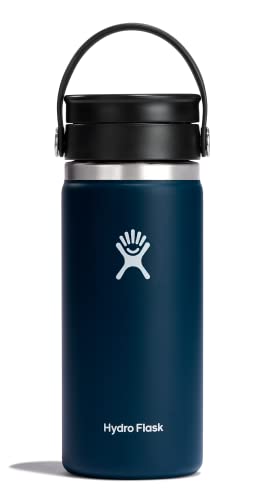
6. Hydro Flask Coffee Mug with Flex Sip Lid
A vacuum-insulated mug with a lid built for sipping hot drinks. The soft-touch finish gives a good grip.
Suits: walks and commutes. Strengths: a comfortable grip and a clean look. Weaknesses: the finish can scratch. Skip it if you want a basic steel look.

Care and Setup
- Rinse coffee out right after finishing so oils do not set.
- Soak with baking soda to clear stains and lingering smells.
- Take lid gaskets out and clean them occasionally.
- Preheat the mug with hot tap water before filling.
- Run a cup of hot water with a drop of mild soap through the mug before first use.
- Use a bottle brush to reach the bottom corners where coffee film collects.
Mistakes to Avoid
- Leaving coffee in the mug overnight.
- Filling to the very top and leaving no space for the lid.
- Microwaving a steel mug.
- Skipping a spill test before carrying it in a bag.
- Using bleach or harsh cleaners that can dull the finish.
- Assuming dishwasher safe covers every part, including the lid.
Preheating and Filling Habits That Help Coffee Stay Hot
An insulated mug can only hold the heat you give it, and a cold steel wall takes a surprising amount away from a fresh cup. The simplest improvement costs nothing: preheat the empty mug. Fill it with hot tap water or boiling water from the kettle, put the lid on for a minute or two, then pour it out and add the coffee right away. The inner wall is then already warm, so the coffee loses less heat in the first minutes, which is when most of the loss occurs.
Fill level matters too. A mug that is nearly full keeps heat better than one that is half empty, because a large air space inside cools the drink and the surface faster. If you only pour a small amount, a smaller mug is often better. Leave a little room below the rim so you can close the lid without spilling, and check the maker’s fill line if there is one. Never fill past a marked limit, because hot coffee expands slightly and can push out of a vent.
Closing the lid promptly and keeping it closed also helps. Each time you open a wide mouth, steam escapes and cool air enters. If you sip frequently, a narrow drinking hole loses less than a wide opening. In cold weather, keep the mug inside your coat or the cab rather than on a cold surface, and avoid placing it directly on a metal roof or tailgate. These small habits make more difference than the gap between two similar products, so use them with any mug you choose.
Lid Mechanisms and Burn Safety
Hot coffee needs a lid that opens easily for sipping and closes reliably, and the mechanisms differ. A push-button or autoseal design opens when you press a button and closes when you release it, which suits driving or walking because you can drink one-handed and the lid shuts itself. A trigger design lets you hold a trigger while sipping. A flip or slide lid is simple but must be closed by hand. A screw cap seals tightly and is good for a bag, but it takes two hands.
Because hot liquid can scald, safety features are worth reading about. A vent lets air in as you sip, so coffee flows smoothly and does not surge into your mouth. Some lids have a small steam vent. Check that the opening is placed so liquid flows towards your lips, not onto your chin, and that the rim is comfortable. Avoid drinking while the coffee is at its hottest; give it a few moments to cool after pouring and test a small sip.
Do not leave a mug where it can tip over, particularly with children or pets around. Never use a damaged lid, since a cracked seal can allow splashes. When carrying a mug in a car, use a cup holder, keep the lid closed and avoid putting it on a seat. Do not squeeze the body of a mug filled with hot coffee, as pressure can force liquid out of the lid. If you are using a heated mug with a battery, follow the manual regarding charging and safe operation.
Fit for Cup Holders, Brewers and Bags
A mug that does not fit your routine will end up in a cupboard. Start with the car. Measure the diameter of the cup holder, or find the spec in the manual, and compare it with the base of the mug. Some mugs have tapered bases that fit a range of holders, while others are straight and wide. Also check the height, since a tall mug can block a gear shift or an infotainment screen.
At home, think about how you make coffee. If you brew straight into the mug from a single-serve machine or a coffee maker, you need enough clearance under the spout. Many mugs are too tall for some brewers, and a wide mouth makes pouring from a kettle easier. If you use a pour-over or a press, a mug with a wide mouth is simpler to fill without spilling.
For bags and backpacks, a slim profile fits side pockets, and a secure lid prevents leaks, though no lid is completely spillproof when lying down unless the maker states so clearly. Test it at home with water before relying on it. Weight is another point: steel and heated mugs weigh more than plastic, and a full large mug can weigh enough to be noticed in a bag. Check dimensions and weight on the listing, and compare with the space you have. A handle can make a mug easier to carry but may stop it fitting in a holder.
Flavor, Coffee Oils and Cleaning Routines
Coffee leaves oils and stains on any surface, and a mug that is not cleaned properly can make fresh coffee taste stale or bitter. Stainless steel interiors are common and do not hold flavors strongly, though they can pick up a faint metallic note, especially in new mugs. Washing a new mug thoroughly before the first use and rinsing it well helps. Some mugs have a coating or a ceramic-style lining inside; check the listing and the care instructions, since coatings can scratch if you use abrasive tools.
Rinse the mug soon after finishing your coffee. If you let it sit, oils dry and build up. Use warm water, mild soap and a bottle brush for the corners and the base. For stubborn stains and smells, soak with warm water and baking soda for a while, and rinse well. A diluted vinegar soak can remove mineral film. Some people use denture tablets or a cleaner made for coffee equipment; follow the product instructions and the mug maker’s advice.
Pay attention to the lid. Milk, sugar and coffee oils collect in seals, vents and buttons. Take the lid apart if the manual allows and clean each piece, including the gasket. Let all parts dry before putting the lid back on, as trapped moisture leads to odors. If the maker states that the mug is dishwasher safe, you may use it, but hand washing is often gentler on coatings, seals and printed finishes. Do not immerse electronic parts of a heated mug; read the manual for the care of any electrical base or charging parts.
Heated Mugs, Budget Tiers and When to Replace
A heated mug, like the one named in this guide, uses a battery and a heating element to keep coffee at a set temperature. That is useful if you sip slowly over a long morning, but it adds weight, a charging routine and more parts that can fail. Check the listing for battery life, charging method, the temperature range and whether the mug needs a charging coaster. Read whether the heated feature works when the lid is open or the mug is nearly empty, and what the maker says about water exposure.
Standard insulated mugs suit most people and need no charging. Budget tiers mostly separate basic lids and thinner walls from thicker bodies, better seals and extra features. Spend more where your habits demand it: a better lid if you commute, better insulation if you sip slowly, easier cleaning if you use it daily. Ask before buying: Does the lid come apart for cleaning? Is it dishwasher safe? Does it fit my car? Are spare lids and gaskets sold?
- Replace the mug if the exterior becomes hot to the touch when filled, which can signal lost insulation.
- Replace the lid or gasket when seals are cracked, warped or no longer closing.
- Retire a mug with a leaking seam, a deep dent or flaking interior coating.
- Stop using a heated mug that overheats, smells of burning or charges erratically.
Consult the manual or the maker for warranty support before discarding.
Features That Matter for Hot Drinks
A travel tumbler sounds simple, but hot coffee puts special demands on the design. Think about the details below before you decide.
- Insulation type. Double-wall vacuum construction is the usual approach for keeping liquids warm. Check the listing for how it is described.
- Lid seal. A slider, a flip cap or a screw-on lid each handle leaks differently. Read whether the lid is leakproof or only splash resistant.
- Opening size. A wider mouth is easier to fill and clean, while a narrow one sips more neatly.
- Cup holder fit. Measure the base diameter against your car’s cup holder.
- Handle or no handle. A handle helps with big tumblers but may not fit all holders.
- Capacity. Common sizes range from small commuter cups to very large sizes. Choose a volume you will actually finish.
Lid Types Compared
| Lid | Strength | Watch out for |
|---|---|---|
| Slider lid | One-handed use, easy sipping | Not always sealed when tipped |
| Flip top | Clear open and closed positions | Small hinge to keep clean |
| Screw-on sealed lid | Strongest seal in a bag | Must open fully to sip |
| Straw lid | Convenient for cold drinks | Hot liquids may need a different lid, check the maker |
More on Mistakes to Avoid
- Filling to the brim, which leaves no room for the lid and can lead to spills.
- Putting the tumbler in a dishwasher when the label says hand wash.
- Ignoring the gasket, where coffee residue can build up.
- Carrying hot drinks in a tumbler with a lid that is only meant for cold drinks.
- Letting dried coffee sit inside for days.
Cleaning and Care
Rinse right after use, then wash with warm water and mild soap. A bottle brush reaches the bottom. Remove the lid gasket if the design allows it and wash it separately, as the maker directs. Coffee oils can leave stains, and a paste of baking soda and water may help if the maker approves. Dry fully before storing with the lid off so odors do not linger.
Handling Hot Liquids
Hot drinks can scald, so take care when opening the lid, especially while moving. Follow the maker’s guidance on fill levels and lid use, and let a very hot drink settle before sipping.
A Quick Checklist Before You Order
- Will the tumbler ride in a bag? If so, a sealed lid is worth the extra step of unscrewing it.
- Does it fit your cup holder, desk coaster and coffee maker spout?
- Is the lid easy to take apart for cleaning?
- What does the listing say about dishwasher use?
- Does the finish look durable, such as a powder coat, or is it plain steel?
A Decision Guide by Routine
Commuters who sip slowly for an hour often appreciate a slider lid with a medium opening. Desk workers can choose a larger size and a handle, and refill it from the office pot. Hikers and campers should look for a screw-on lid and a rugged outer layer. If you enjoy both hot and cold drinks, a tumbler with a lid that swaps for a straw top may be useful, as long as the maker states it is suitable for hot liquids. Anyone who carries a tumbler daily will probably want two lids in the house so one can dry while the other is in use.
Six Coffee Tumblers Compared by Commute, Desk and Car
Six tumblers can share a capacity and still live very different lives. The Zojirushi Stainless Steel Travel Mug (SM-SA) is the refinement pick, the one whose lid action, balance and finish reward someone who uses it all day, every day. The Contigo Autoseal West Loop Travel Mug answers with mechanism and convenience, built around a closure you can trust in motion. The Stanley Classic Trigger-Action Travel Mug is the durability-first choice, the tumbler that shrugs off drops, site work and being tossed into a truck bed. Each leads the list for a reason, and the reasons are about lifestyle more than insulation, because every pick here keeps drinks at temperature respectably.
The rest of the list widens the field. The Ember Travel Mug 2 adds active temperature control to the category, a different promise entirely, suited to the slow drinker at a desk. The YETI Rambler Tumbler with MagSlider Lid is the big, easy-clean classic whose sliding lid trades absolute sealing for simplicity, while the Hydro Flask Coffee Mug with Flex Sip Lid competes on feel and grip, the qualities you notice in the first ten seconds of every use. Notice what is not being ranked: there is no single warmest or coldest winner that settles the choice, because lid behavior, size and cleaning effort decide satisfaction long after insulation differences fade into the background.
A reliable way to choose is to describe your worst normal day for a tumbler, not your best. The commuter who juggles a bag and a train door needs the Contigo Autoseal West Loop Travel Mug style of closure; the desk worker who nurses one coffee until noon is the Ember Travel Mug 2 audience; the parent whose cup lives in a stroller holder needs stability and a lid that survives being dropped on pavement. Match the pick to the day that goes wrong, and the ordinary days take care of themselves.
Seals and Sips: What Leakproof Really Means for Hot Coffee
More disappointment gathers around lids than any other part of a tumbler, mostly because words like leakproof are used loosely. A sliding lid resists splashes; it does not seal, and it will weep in a bag no matter how carefully it is closed. A flip or button lid with a proper gasket can be genuinely sealed when new and clean, yet still vent under pressure changes or when a coffee’s steam builds in a hot car. Read each pick’s closure for what it mechanically is, not what the listing calls it, and your expectations will finally match your experience.
Seals age. Gaskets compress, pick up flavors and eventually stop springing back, and a lid that was trustworthy in month one can start weeping in month twelve for no more dramatic reason than that. The good news is that gaskets and often whole lids are replaceable on established ranges, which is one reason this guide favors known names. Inspect the gasket when you wash the lid, keep it seated evenly all the way around, and never close a lid over a trapped grain of coffee or sugar, which defeats the seal as surely as damage does.
Test a new tumbler at the sink before trusting it in a bag. Fill it with water, close it as you normally would, and hold it upside down over the sink for ten seconds, then give it the gentle shake of a walk to the car. That ten-second honesty test, repeated whenever you replace a gasket, tells you more than any product page. If a pick like the YETI Rambler Tumbler with MagSlider Lid weeps by design, enjoy it for what it is, a superb open-top and car-cup companion, and give the bag duty to a sealing design instead of being annoyed at the wrong tool.
Cleaning and Flavor: Keeping Each Drink Tasting Like Itself
Tumblers fail by flavor before they fail by function. Coffee oils coat steel, milk residue hides in lid mechanisms, and a cup that held a flavored drink yesterday will season today’s water faintly if it was only rinsed. The fix is a rhythm rather than a deep-clean marathon: rinse promptly, wash lids apart rather than assembled, and let everything dry open before closing it away. A tumbler stored sealed and damp will smell stale within days, and the smell is remarkably hard to evict once it settles into a gasket.
Weekly, give the lid the attention its design deserves. Pop out the gasket where the maker allows, brush the grooves and sliders, and check the vent hole that lets you drink smoothly, because a partly blocked vent makes even a good lid dribble. For stubborn coffee staining inside the cup, a soak with warm water and a little baking soda lifts most discoloration without scratching, and a bottle brush reaches the base corners a sponge misses. Avoid harsh scouring on coated exteriors, which dulls the finish and gives future grime a rougher surface to hold.
Assign flavors if your household is sensitive. Some drinkers keep one tumbler for coffee and another for water and never notice a problem again, which is a cheaper solution than any cleaning product. The easy-washing designs in this guide, notably the wide-mouth YETI Rambler Tumbler with MagSlider Lid, suit the single-cup household best, while intricate lids like the Contigo Autoseal West Loop Travel Mug reward owners who genuinely do not mind the weekly two-minute strip-down. Choose with your real habits in view; the cleanest tumbler is the one whose cleaning you will actually perform.
Sizing, Fit and Carrying: The Practicalities That Decide Daily Use
Capacity numbers only help once you know your pour. Measure the drink you actually make, including ice for cold drinks, and choose a size that holds it without riding at the brim, because a tumbler filled to the top defeats its lid and its insulation alike. Bigger is not automatically better: an oversized cup rattles in standard holders, feels clumsy for small hands and keeps a half-finished drink sloshing at the temperature danger zone of lukewarm for hours.
Fit checks take two minutes and save real annoyance. Measure your car’s holder and your bag’s bottle pocket before ordering, and remember that handles, while comfortable, change what a tumbler fits into. Under a coffee machine or water dispenser, height matters as much as width; a tall tumbler that cannot slide under the spout will be filled awkwardly at an angle every single day. The Hydro Flask Coffee Mug with Flex Sip Lid style of tapered design exists precisely because these clearances are the category’s quiet battleground.
Carrying comfort finishes the picture. A full large tumbler is heavier than new owners expect, and a smooth, condensation-free exterior is easier to hold securely than a wet one. If you walk with your drink, a lid you can operate one-handed without looking is worth more than a small insulation advantage. These are unglamorous criteria, and they are also the ones that decide, six months on, whether a tumbler is your daily companion or a cupboard resident behind the Zojirushi Stainless Steel Travel Mug (SM-SA) you reach for instead.
Extra Questions Readers Ask About Tumblers
Can I put a tumbler in the freezer or microwave?
Insulated tumblers belong in neither. Freezing can damage seals and does nothing useful for a vacuum-insulated wall, while microwaving an insulated steel cup is unsafe and a coated or electronic model like a heated mug must never be microwaved at all. If you want a colder drink, chill the drink itself or add ice; if you want it hotter, fill with hot liquid or use a vessel made for the microwave. Treat the tumbler as the carrying and holding stage of the drink’s life, not the heating or cooling stage.
Why does ice melt faster in one tumbler than another?
Lid opening size, how full the cup is and how often it is opened matter as much as the wall. A wide drinking opening admits warm air at every sip, and a half-empty cup has a large pocket of warm air working on the ice. Fill the cup properly, keep the lid closed between sips and start with cold liquid rather than room-temperature liquid over ice. With those habits equal, the differences between the insulated picks in this guide shrink to the point where lid style and size should drive your choice.
When should a tumbler be replaced?
Replace it when the vacuum fails, which shows as the exterior sweating or warming noticeably with a hot or iced drink, when a lid’s mechanism stays unreliable after a new gasket, or when interior damage or persistent odor survives a proper deep clean. Cosmetic dents that do not affect the wall are just biography. A tumbler that still insulates and seals owes you nothing more, whatever newer shapes appear, which is why the durable picks here, like the Stanley Classic Trigger-Action Travel Mug, can be the cheapest per year of anything on the list.
Travel and Commute Scenarios, Tested Honestly
Picture the three journeys a tumbler actually makes. The car commute asks for holder fit, one-handed drinking and a lid that forgives braking; the train or bus asks for a true seal and a profile that survives a bag; the desk asks for capacity, quiet manners and a base that will not ring like a bell on a hard surface. No single pick in this guide wins all three journeys outright, which is why honest readers often end up with a first choice and a clear runner-up rather than a single verdict.
Test your finalist against your real route during the return window. Fill it as you normally would, carry it the way you normally do and use it at the speed your morning actually runs. A lid that needs two hands and full attention will reveal itself at the first doorway; a base that rattles in your holder will announce itself by the second junction. These are not flaws in the product so much as mismatches with your life, and the time to discover them is while exchanging is easy.
Seasoned commuters keep the system simple: the same tumbler, the same pocket or holder, a spare gasket at home and a washing rhythm tied to the day of the week. That simplicity is the real luxury in this category. Whether the daily cup is the Zojirushi Stainless Steel Travel Mug (SM-SA) or the Stanley Classic Trigger-Action Travel Mug, familiarity with its lid, weight and cleaning turns a purchase into a habit, and habits, not specifications, are what get used five hundred mornings in a row.
Two-Tumbler Households and Hand-Me-Downs: Getting Full Value
A second tumbler changes the arithmetic of the first. With two in rotation, each is washed and dried properly instead of rinsed and refilled in a rush, gaskets rest and recover their shape, and a forgotten cup at the office stops being a crisis. Many households arrive here by accident, keeping a new favorite and demoting the older cup to car or garden duty, and that cascade is a perfectly good strategy: a tumbler too scuffed for the desk may serve for years where its toughness, like the Stanley Classic Trigger-Action Travel Mug style of build, matters more than its looks.
Handing a tumbler on works when its insulation still works. Test a candidate honestly, hot water and a wait, checking whether the exterior stays neutral, and pass it on with a fresh gasket if the design allows one. That small renewal makes the difference between a welcome gift and a donated problem. Keep the model name with the cup if you can; the next owner’s first spare-part search will thank you.
Retire a tumbler properly at the end. Steel bodies are widely recyclable once lids and plastic parts are separated according to local rules, and electronic models like the Ember Travel Mug 2 should go through electronics recycling because of their batteries. A category built on avoiding disposable cups owes its own products a tidy ending, and a household that buys well, rotates two and retires responsibly will spend remarkably little per year for drinks that travel well every single day.
Office, School and Shared Spaces: Etiquette and Survival
A tumbler in shared spaces lives a social life. Label yours, because identical models multiply in offices and schools, and an unlabeled cup will eventually be washed, borrowed or adopted by someone else. Choose a distinguishing boot, band or sticker at the base rather than on the lid, since lids get swapped in communal washing. That tiny mark also settles the end-of-day question of whose cup is still in the meeting room.
Respect the shared sink. Rinse your cup when you finish rather than leaving milk or smoothie residue for the next person, and never leave a sealed, warm tumbler in a communal fridge to become a science project with your name on it. If your workplace has a cup shelf, keep yours in the same spot; systems survive on predictability. These courtesies sound minor until you have worked somewhere without them, at which point they sound like civilization itself.
For school use, durability and openability outrank insulation records. A cup a child can open with cold playground hands, that survives being dropped on concrete and that washes clean of juice and milk smells is the right cup, whatever its specifications promise. Boots and simple lids earn their price here within a term. Expect losses anyway, and send the second-best tumbler to school while the favorite stays home; that is not cynicism, it is logistics.
At the end of a shared-space day, the habit that saves every tumbler is the same: empty it, rinse it, leave it open to dry. A cup closed wet overnight in a locker or bag will greet you with a smell that no amount of morning washing quite removes before the first fill. Two minutes in the evening is the whole secret, and it is why some five-year-old tumblers in this guide’s class still smell like nothing at all.
A Final Decision Checklist Before You Buy
Finally, keep the paperwork and the product details together somewhere you will find them in a year: the exact model name, the date it went into use and any spare parts you bought with it. Future you, ordering a replacement part or checking whether a new accessory fits, will be grateful for thirty seconds of filing today. Good ownership in this category is mostly that, a series of small, unglamorous habits that keep a well-chosen product performing the way it did in its first week, long after the excitement of choosing it has faded.
One more check is worth making before you order: measure the space, surface or cupboard where this purchase will actually live, and compare those numbers with the product’s stated dimensions rather than its photographs. Listings are shot to flatter, and scale is the first casualty of flattering photography. A product that fits its home gets used daily; one that must be stored awkwardly, dragged out or worked around will be quietly resented within a month, however well it performs. Two minutes with a tape measure has saved more purchases in this category than any other single habit.
If you are buying for someone else, weight the forgiving end of this guide more heavily than you would for yourself. A gift succeeds when it fits the recipient’s routine without asking them to change it, so favor the pick that tolerates varied habits, washes easily and does not depend on accessories they do not own. Include the receipt or a note of the exact model, and mention care in one friendly sentence rather than a lecture. The best-regarded gifts in this category are the ones still in daily use a year later, and that outcome is decided by fit long before it is decided by quality.
And if two picks still seem equal after all of this, choose the one whose maker supports it better where you live: clearer documentation, easier spare parts and a range that stays available for replacements. Small differences in the product itself fade within weeks of use, while support is the gift that keeps arriving for years. That tie-breaker, applied calmly, ends most deadlocks in this guide, and it has the extra virtue of being right even when the products themselves are too close to call.
Before you settle on a final choice, run one last comparison against your own routine rather than against the marketing. List the three jobs your tumbler for hot coffee will do most often, in the order you actually do them, and check the pick you favor against each one in turn. Most disappointment in this category comes from a product that excels at a job its owner rarely gives it, while being merely adequate at the daily task. A few minutes with that list is the cheapest insurance in the whole purchase, and it frequently moves readers one place up or down this guide’s list, which is exactly what a list is for.
It also helps to decide in advance what would make you return or replace the purchase, because that decision is clearer before a box is open than after a week of hoping a mismatch improves. A fit that is wrong, a part that does not seal, seat or connect as described, or a result that falls short on the first honest test are all legitimate reasons to act quickly while returns are simple. Minor unfamiliarity is not; most products in this guide have a short learning curve, and the second or third use is the fairer test. Knowing the difference in advance protects both your money and your patience.
Thinking Past the Purchase: Year Two and Beyond
Think, too, about who else will use this purchase and what they will do with it when you are not watching. A product that only works when handled exactly your way will be handled every other way within a month in any real household. The forgiving picks in this guide earn that description honestly: they tolerate the hurried morning, the helpful guest and the teenager learning the routine. If your household is lively, forgiveness is not a soft quality; it is the difference between a product that ages gracefully and one that is quietly worked around.
Consider the second year, not just the second week. Ask what will wear, what can be cleaned back to new, what can be replaced separately and what failure would retire the whole purchase. A product whose weak point is a cheap, replaceable part is a fundamentally better buy than one whose weak point is structural, even when the two look identical on day one. Most of the picks in this guide were chosen with that second year in view, and the ones that were not are described plainly enough for you to judge the trade for yourself.
It is also worth deciding how you will know the purchase succeeded. Pick one simple test in advance: the job it must do well in its first week, the result you will look for, and the moment you will judge it. Buyers who set that test beforehand are measurably happier, because they evaluate the product against their own brief instead of against a shifting feeling. If the pick passes your test, stop researching; the search that continues after success only manufactures doubt.
Last, leave a little room in the budget and the cupboard for the accessory or spare you will inevitably want once the product is in daily use. Nearly every category in this guide has one: the extra part, the better-fitting add-on, the spare that turns a failure into a pause. Planning for it is not overspending; it is recognizing that ownership has a shape, and that the households happiest with their purchases are the ones who budgeted for the whole shape rather than the first box.
Hot Coffee Tumbler FAQ
Which lid is the most leakproof?
Locking and autoseal lids are the most spill resistant. Slide and press-in lids are mainly splash resistant.
Are these safe for hot drinks?
Yes for the steel models designed as travel mugs. Check each maker’s guidance on the listing.
How long will coffee stay hot?
It varies with the mug, the lid and how full it is. Insulated steel is the best bet for hours.
Can I put cream or milk in it?
You can, but wash soon after. Dairy residue leaves a smell faster than plain coffee does.
Should I preheat my travel mug?
Yes, it helps. Fill it with hot water for a minute or two, pour it out and add your coffee. A warm inner wall steals less heat from the first pour.
Why does my coffee taste metallic in a new mug?
New stainless steel can leave a slight taste. Wash the mug well before first use, and rinse several times. A soak in warm water with baking soda may help. If the taste persists, contact the maker.
Can I brew coffee directly in a travel mug?
Some mugs are made with removable filters or infusers, but most are not. Check the listing and the manual. Using a mug in a way the maker does not recommend can damage it.
How do I clean the lid thoroughly?
Take it apart as far as the manual permits, remove the gasket, wash each part in warm soapy water with a small brush and let everything dry before reassembling. Repeat regularly if you use milk or sugar.
Is it safe to leave a mug in a hot car?
Heat in a parked car can affect plastics, seals and batteries, especially in heated mugs. Take the mug out when you leave the car, and check the maker's temperature guidance.
Do heated mugs work like a hot plate?
They are designed to maintain a set temperature, not to reheat cold coffee quickly. Check the product details for how they behave and for how long a charge lasts.
What size mug suits one coffee?
It depends on your usual cup. Measure how much you pour, then choose a mug a little larger, since a nearly full mug keeps heat better than a half-empty one.
The Short Version
For long heat, the Zojirushi. For one-handed use, the Contigo. For a tough classic, the Stanley. For set temperature, the Ember. For an easy wash, the YETI. For a soft-touch grip, the Hydro Flask.