Disclosure: topratedkitchenware.com is reader-supported. When you buy through links on our site, we may earn an affiliate commission from Amazon and other retailers, at no extra cost to you.
Where to buy
This shortlist covers the best type of grates for gas grills as audited against the verified listings. Short on time? This guide answers a materials question – which grate type suits a gas grill – using six verified gas grills whose listings between them name porcelain-coated, cast iron and porcelain-enamelled cast-iron grates. Each pick is linked to its listing so you can see the grate claim in the manufacturer’s own words.
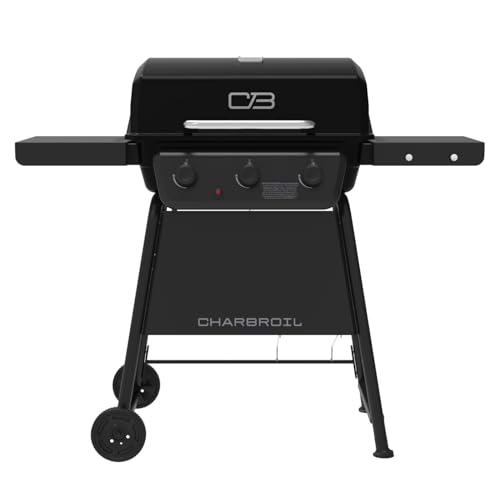
- Charbroil Classic 3-Burner Propane Gas Grill (360 Sq. In.) – Best Porcelain-Coated Example
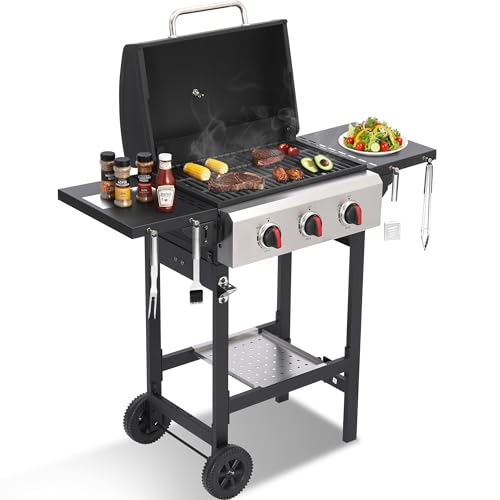
- IdeaMaxx 3-Burner Propane Gas Grill with Cast Iron Grates – Best Cast Iron Example
- Weber Spirit E-425 Gas Grill (4-Burner) – Best Enamelled Iron Example
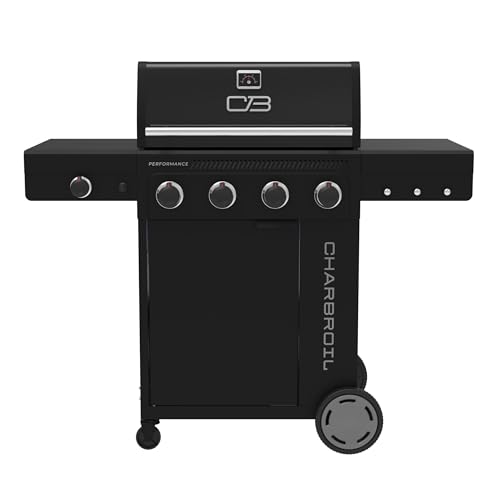
- Monument Grills 4-Burner Propane Gas Grill, Mesa II 410FBZ – Best Full-Size Gas Example
- AMERLIFE 60,000 BTU 6-Burner Propane Gas Grill with Side Burner – Best Large Cast Iron Example
- Charbroil Portable Convective 1-Burner Propane Gas Grill (465133010) – Best Portable Gas Example
Read the full guide below for the research method, the detailed reviews, the comparison table, the buying guide and the care instructions.
The question behind the best type of grates for gas grills sounds simple and is not, because a grate is the only part of the grill the food actually touches. Burners make heat, lids trap it, but the grate decides whether a steak sears or steams, whether fish releases or shreds, and whether the surface still looks respectable after three seasons of Sunday cooking. Material, mass and bar shape all feed into that verdict.
This guide answers the question with evidence instead of slogans: six verified gas grills whose listings name their grate materials where it matters. A Charbroil Classic carries porcelain-coated grates, an IdeaMaxx and a large AMERLIFE carry cast iron, and a Weber Spirit carries porcelain-enamelled cast iron – the three mainstream answers side by side. A Monument with a dedicated broil zone and a one-burner Charbroil portable complete the picture at the full-size and portable extremes, with an honest note where a listing does not name its grate material.
Read the type comparison first if you are choosing a material, then the reviews if you are choosing a grill. Shoppers who already know they want one specific material can jump straight to Best Stainless Steel Cooking Grates For Gas Grills for the stainless end of the same conversation.
Key Takeaways
- There is no single best grate material – there is a best match between material, your cleaning habits and what you cook most.
- Cast iron sears hardest and holds heat best, and asks for seasoning-style care in return.
- Porcelain-enamelled cast iron is the mainstream compromise: iron’s heat with an easier, rust-resistant surface – until the enamel chips.
- Porcelain-coated steel is the lighter, simpler option on compact grills like the Charbroil Classic in this pool.
- Two listings in this pool do not name their grate material; the guide flags that silence instead of guessing.
- Bar shape matters alongside material: wide flat bars mark broadly and support delicate food better than thin rods.
In this guide
Quick Picks
| Pick | Badge | Why it made the list |
|---|---|---|
| Charbroil Classic 3-Burner Propane Gas Grill (360 Sq. In.) | Best Porcelain-Coated Example | 3-burner gas with porcelain-coated grates named in the listing |
| IdeaMaxx 3-Burner Propane Gas Grill with Cast Iron Grates | Best Cast Iron Example | 3-burner propane with cast iron grates named in the listing |
| Weber Spirit E-425 Gas Grill (4-Burner) | Best Enamelled Iron Example | Weber 4-burner with porcelain-enamelled cast-iron grates |
| Monument Grills 4-Burner Propane Gas Grill, Mesa II 410FBZ | Best Full-Size Gas Example | Monument 4-burner with a broil zone – grate material not named in the listing |
| AMERLIFE 60,000 BTU 6-Burner Propane Gas Grill with Side Burner | Best Large Cast Iron Example | 6-burner with cast iron grates over 650 sq in |
| Charbroil Portable Convective 1-Burner Propane Gas Grill (465133010) | Best Portable Gas Example | 1-burner portable propane – the small-format end of the grate question |
How These Picks Were Chosen
The pool for this guide was audited on one question first: does the verified listing name the grate material? Three mainstream materials are named across the six picks – porcelain-coated on the Charbroil Classic, cast iron on the IdeaMaxx and the AMERLIFE, and porcelain-enamelled cast iron on the Weber Spirit – which lets the guide compare types from listings rather than from marketing memory.
Two listings, the Monument and the Charbroil portable, do not state a grate material in their verified titles. They remain in the guide – linked, because they are squarely gas grills and the guide is about gas-grill grates – but their reviews say plainly that the grate material is unstated, and the buying guide explains how to confirm it on the live listing before ordering. Nothing in this guide invents a material for them.
This is research-led guidance, not a hands-on test programme: no grate was seasoned, chipped or scrubbed for this guide. The judgements rest on the verified listing data and on the well-established behaviour of each material, and the guide is explicit about which claims come from which source. Readers comparing the propane-specific framing can cross-check with Best Type Of Grates For Propane Grills, the sibling guide to this one.
The 6 Best type of grates for gas grills Candidates, Reviewed in Detail
The reviews follow the pool order and each one leads with its grate story: the material where the listing names it, the silence where it does not, and what that material means at the cooking surface.
Spec boxes quote only verified listing data, badges match the Quick Picks table, and every review closes with a best-for and not-suited-for line so the material comparison can be read from the verdicts alone.

Charbroil Classic 3-Burner Propane Gas Grill (360 Sq. In.)
Badge: Best Porcelain-Coated Example
Strengths
- 360 sq in and three burners is a genuinely compact full-grill format
- Porcelain-coated grates are low-maintenance for casual cooks
- Side shelves give prep room that true portables lack
Trade-offs
- Propane rules still apply – many apartment balconies prohibit gas grills
- 30,000 BTU is adequate, not scorching, across three burners
- Compact means family-size batches, not party-size
Mini spec box: 3-burner propane gas grill; 30,000 BTU (per API title); 360 sq in cooking area (per API title); Porcelain-coated grates; Compact design with side shelves (per API title).
Charbroil’s Classic 3-burner is a compact propane grill: 30,000 BTU, 360 square inches of cooking area, porcelain-coated grates and side shelves in a footprint the listing itself calls compact. For apartment and small-patio shoppers whose building allows gas on the balcony, this is the shape of the answer – a real grill, shrunk honestly.
The porcelain-coated grates trade a little sear drama for easy care, which suits the casual rhythm of apartment grilling. Check your lease and local rules first: the best compact gas grill is worthless where propane is prohibited, which is why the electric picks in this guide exist.
Day to day it grills a family dinner in one batch, lights instantly and cleans up without grate oiling rituals. The honest limitation is headroom – output and area both cap out when the guest list grows, and rule-restricted balconies rule it out entirely.
Ownership note: porcelain-coated grates should be cleaned with a brass or nylon brush, not steel, to protect the coating. On balconies, keep the grill’s required clearance from railings and walls – compact grills still produce full-size heat.
As this guide’s porcelain-coated example, the Classic shows the material’s honest bargain: an easy, forgiving surface on a compact grill, in exchange for gentler brushing and a coating with a finite life. For many households that trade is exactly right.
Best for: small patios and gas-permitted balconies wanting a real 3-burner grill / Not suited for: apartments that prohibit propane, or hosts cooking for crowds
Check on Amazon for the current listing, configuration and latest price.

IdeaMaxx 3-Burner Propane Gas Grill with Cast Iron Grates
Badge: Best Cast Iron Example
Strengths
- Three burners give a real two-zone fire in a portable-leaning format
- Foldable side shelves shrink the parked footprint
- Cast iron grates hold heat for proper sear marks
Trade-offs
- Three burners is mid-size – small only relative to 4-6 burner grills
- Cast iron grates need oiling to resist rust
- Portable here means movable and foldable, not tabletop-tiny
Mini spec box: 3-burner propane gas grill; 38,200 BTU output (per API title); Cast iron grates; Foldable side shelves; Portable positioning for patio and camping (per API title).
IdeaMaxx’s 3-burner runs 38,200 BTU through cast iron grates, with foldable side shelves and a portable positioning aimed at patios and camping. The three-burner layout is the sweet spot many small households actually need: enough width for a direct and indirect zone, without the parked bulk of a four or six-burner cabinet grill.
In the small-grill guides this pick links as the gas option for cooks who have a little outdoor room – a small patio, a deck corner, a campsite pitch – rather than a balcony rail. Read ‘small’ honestly: it is compact for a full gas grill, not a miniature.
Day to day it preheats fast, sears on cast iron and folds its shelves away when the cook is done. The honest limitation is grate care and size class: oil the iron after cooking, and measure your space – it is the biggest thing some ‘small grill’ shoppers should buy, and too big for others.
Ownership note: foldable shelves make this the rare gas grill that stores against a wall, but fold them only when the grill is fully cool. Cast iron grates plus camping duty means a light oil film before storage trips, or you will meet surface rust at the next pitch.
The IdeaMaxx is the pool’s straightforward cast iron case in a mid-size format: the listing names cast iron grates on a three-burner propane grill, so its review is the reference point for what iron asks and what it returns.
Best for: small-patio and camping cooks who want a real 3-burner gas fire / Not suited for: balcony rails, indoor use or anyone needing a true tabletop grill
Check on Amazon for the current listing, configuration and latest price.

Weber Spirit E-425 Gas Grill (4-Burner)
Badge: Best Enamelled Iron Example
Strengths
- Weber’s build quality and parts ecosystem are the benchmark in gas grills
- A boosted sear zone solves the classic gas-grill weakness
- Porcelain-enameled cast iron balances sear marks with easier care
Trade-offs
- A full-size 4-burner grill – not a small grill by any honest measure
- Premium-tier positioning within any pool it appears in
- Its size is exactly why it is prose-only in small-grill guides
Mini spec box: 4-burner propane gas grill; Sear Zone with Boost Burners (per API title); Porcelain-enameled cast-iron grates; Weber Works rails (per API title); Black finish.
The Spirit E-425 is Weber’s mainstream four-burner: a Sear Zone with Boost Burners, porcelain-enameled cast-iron grates and Weber Works rails for accessories. As a gas grill it is close to the category reference – even heat, strong searing on demand and a support ecosystem that keeps parts available for years.
In a small-grills guide it is covered prose-only, because four burners and a full cart footprint are not small, and pretending otherwise would betray the search. It stays in the review set as the quality benchmark: the grill small-grill shoppers are often downsizing from, or sizing up to later.
On a patio it is an easy daily driver: fast ignition, predictable zones, grates that clean up without babying. The honest limitation, for this guide, is purely dimensional – it needs a real patio and a real parking spot.
Ownership note: the Weber ecosystem is the long game – replacement grates, covers and accessories stay available for years, which is why the brand anchors so many patios. The boost burners are for the first two minutes of a steak, not the whole cook; zone discipline is what makes the feature pay.
The Weber is the enamelled-iron reference: porcelain enamel over cast iron is the industry’s favourite compromise, and the Spirit’s Sear Zone shows why – iron mass where the heat is highest, a coating where the cleaning happens.
Best for: patio cooks who want the benchmark 4-burner gas grill / Not suited for: small-space shoppers – see the compact and portable picks in this guide
Check on Amazon for the current listing, configuration and latest price.

Monument Grills 4-Burner Propane Gas Grill, Mesa II 410FBZ
Badge: Best Full-Size Gas Example
Strengths
- A dedicated Broil Zone for harder searing than a standard burner layout
- Fast preheat claim – 500F in 5 minutes per the listing
- Foldable side shelves trim the storage footprint when parked
Trade-offs
- A full-size 4-burner patio grill – not portable and not a boat grill
- Foldable shelves help storage but the firebox itself is full width
- Broil-zone designs reward learning a two-zone routine
Mini spec box: 4-burner propane gas grill; Stainless steel outdoor construction (per API title); Advanced Broil Zone (per API title); Reaches 500F in 5 minutes (per API title); Foldable side shelves; Fast assembly (per API title).
Monument’s Mesa II is a stainless steel 4-burner propane grill built around an Advanced Broil Zone, with a listing claim of 500F in five minutes and foldable side shelves. The broil zone is the meaningful feature: a hotter dedicated area for steaks and chops while the remaining burners handle gentler work.
In the skiff-boat guide this pick is prose-only, and the reason is simple geometry: a full-size four-burner patio grill does not mount on a skiff rail, no matter how good its shelves fold. It stays in the review set so readers can see the contrast between patio capacity and true boat-portable design.
On a patio, day to day, it is a fast-heating family grill with a real sear zone and shelves that fold away between cooks. The honest limitation for this guide’s purpose is that none of that portability-adjacent design makes it a marine or small-boat product.
Ownership note: a dedicated broil zone changes how you should plan a cook – sear in the zone, finish in the gentler area, and rest on the warming space. Foldable shelves are also a storage lesson: measure the grill folded, not open, when you plan where it parks for winter.
The Monument’s contribution is a caution and a feature at once: a broil zone is a genuine searing tool, but its listing does not name the grate material, so a material-led buyer must confirm that one fact on the live listing before anything else.
Best for: patio cooks who want a stainless 4-burner with a dedicated sear zone / Not suited for: boat, skiff or any use that requires a genuinely portable grill
Check on Amazon for the current listing, configuration and latest price.

AMERLIFE 60,000 BTU 6-Burner Propane Gas Grill with Side Burner
Badge: Best Large Cast Iron Example
Strengths
- 650 sq in and six burners is the largest capacity in its pools
- A side burner and warming rack complete the outdoor-kitchen picture
- Built-in thermometer supports lid-down roasting at scale
Trade-offs
- The largest footprint here – the opposite of a small grill
- Six burners burn propane fast when all are lit
- Cast iron grates at this size are heavy to handle for cleaning
Mini spec box: 6-burner propane gas grill; 60,000 BTU total output (per API title); 650 sq in cooking area (per API title); Cast iron grates and warming rack; Built-in thermometer; side burner included.
AMERLIFE’s six-burner is a 60,000 BTU propane grill with 650 square inches of cooking area, cast iron grates, a warming rack, a built-in thermometer and a side burner. It is an event grill: burgers for a team, multiple zones for mixed menus, and a warming rack to stage finished food.
Wherever it appears in a small-grill guide it is prose-only by definition – six burners and 650 square inches cannot be called small with a straight face. Its presence is useful context: it marks the far end of the size spectrum the small-grill shopper is deliberately avoiding.
Day to day for a big household it behaves like an outdoor range, with zones for everything at once. The honest limitation is running cost and space: lighting six burners for two burgers is waste, and the grill parks like furniture.
Ownership note: a six-burner rewards menu planning – light only the zones you need and the propane bill stays sane. The warming rack is the unsung feature at this size: it stages finished food at serving temperature while the last items finish, which is how big cooks stay relaxed.
At six burners and 650 square inches, the AMERLIFE shows cast iron at crowd scale: a lot of iron to season and brush, and a lot of searing surface that holds its temperature through back-to-back batches.
Best for: large households and frequent hosts who cook in volume / Not suited for: small spaces, couples or anyone counting propane
Check on Amazon for the current listing, configuration and latest price.

Charbroil Portable Convective 1-Burner Propane Gas Grill (465133010)
Badge: Best Portable Gas Example
Strengths
- Genuinely portable – the smallest, simplest grill in this pool
- Single-burner propane convenience with no charcoal mess
- A long-running, widely available portable design
Trade-offs
- Aluminized steel, NOT stainless steel – it sits outside this guide’s core material
- One burner means one heat zone and modest cooking area
- 11,000 BTU is gentle heat; thick steaks sear slowly
Mini spec box: 1-burner portable propane gas grill; 11,000 BTU (per API title); Aluminized steel construction, black finish; Portable format.
Charbroil’s little portable is a single-burner propane grill rated at 11,000 BTU, built from aluminized steel in a black finish. It is the grill people throw in a trunk, set on a picnic table or carry onto a small boat, and its convective design is tuned for even, gentle cooking rather than steakhouse searing.
It appears in this guide prose-only for one clear reason: aluminized steel is not stainless steel. The material is a legitimate, rust-resistant choice for a portable, but a guide about stainless steel grills cannot link it as if it belonged to the category. Read it as the portable alternative in the room.
In daily use it is a two-person, small-batch grill: burgers, dogs, skewers and vegetables in modest quantities, with fast setup and fast cleanup. The honest limitation is physics – one burner and 11,000 BTU cannot create a hard sear zone and a gentle zone at once, and a crowd will eat in shifts.
Ownership note: portable grills live hard lives – trunk heat, campsite dust, boat spray – and aluminized steel handles that life at a low replacement cost, which is the honest case for the material. Its single burner also makes it the most propane-frugal grill in this pool, a real virtue on long trips away from refill stations.
The portable closes the guide at the small end, where grate questions change character: on a single-burner portable the grate is small, light and secondary to portability itself, and its listing names the aluminized steel body rather than a grate material.
Best for: tailgaters, campers and couples who want the simplest portable propane grill / Not suited for: anyone shopping specifically for stainless steel, or hosts cooking for a crowd
Check on Amazon for the current listing, configuration and latest price.
Comparison Table
| Pick | Badge | Headline spec (from listing) | Standout trait |
|---|---|---|---|
| Charbroil Classic 3-Burner Propane Gas Grill (360 Sq. In.) | Best Porcelain-Coated Example | 3-burner propane gas grill | 3-burner gas with porcelain-coated grates named in the listing |
| IdeaMaxx 3-Burner Propane Gas Grill with Cast Iron Grates | Best Cast Iron Example | 3-burner propane gas grill | 3-burner propane with cast iron grates named in the listing |
| Weber Spirit E-425 Gas Grill (4-Burner) | Best Enamelled Iron Example | 4-burner propane gas grill | Weber 4-burner with porcelain-enamelled cast-iron grates |
| Monument Grills 4-Burner Propane Gas Grill, Mesa II 410FBZ | Best Full-Size Gas Example | 4-burner propane gas grill | Monument 4-burner with a broil zone – grate material not named in the listing |
| AMERLIFE 60,000 BTU 6-Burner Propane Gas Grill with Side Burner | Best Large Cast Iron Example | 6-burner propane gas grill | 6-burner with cast iron grates over 650 sq in |
| Charbroil Portable Convective 1-Burner Propane Gas Grill (465133010) | Best Portable Gas Example | 1-burner portable propane gas grill | 1-burner portable propane – the small-format end of the grate question |
The headline-spec column is the audit trail for this guide: grate materials appear in it only where the verified listing states them, which is exactly the discipline the buying guide below teaches.
How to Choose Best type of grates for gas grills
Four grate materials cover nearly every gas grill sold. Bare cast iron is the traditional heavyweight: it holds the most heat, marks food the deepest and forgives rough treatment, but it rusts the moment its seasoning is neglected. Porcelain-enamelled cast iron keeps the iron core’s heat and adds a glassy coating that resists rust and releases food more easily – until the enamel chips, usually from a dropped tool or a thermal shock, after which the exposed iron underneath rusts like any bare iron. Porcelain-coated steel is lighter and cheaper, cooks perfectly well and asks only for gentler brushing, though the thinner coating wears sooner. Stainless steel rod grates are the premium answer: no coating to chip, no seasoning to maintain, excellent corrosion resistance, at the cost of less heat mass than thick iron and a price tier above the rest.
Match the material to your maintenance personality before your cooking ambitions. A cast iron grate rewards the cook who will brush and oil it while it is still warm, every time, and punishes the cook who will not – rust on neglected iron is not a defect, it is the material working as chemistry dictates. If your honest routine is a quick brush and a cover, porcelain-enamelled iron or coated steel will look better in year three than iron you meant to season.
Weigh mass alongside material. Thick iron bars store heat, so a full grate of cold burgers barely dents the surface temperature and searing continues; lighter coated-steel grates dip and recover from the burners, which cooks the same food perfectly well given a complete preheat. The practical difference shows in back-to-back batches and thick steaks, not in a single round of sausages.
What a grate actually does at the surface is manage contact. Food cooks where it touches hot metal, and rests where it does not, which is why grate geometry matters as much as material: wide, flat-topped bars give broad, even marks and support delicate fish; thin round rods give narrow marks, more open flame contact and more flare-up drama. Mass matters too. A heavy iron grate stores enough heat that a cold steak barely dents its temperature, so the sear forms instead of steaming; a light steel grate dips, recovers from the burner, and can still cook beautifully – it simply asks for a fuller preheat and a little patience before the second batch lands.
Check what the listing does not say. When a gas grill’s title names burners, output and area but no grate material – as two listings in this pool do – the material is usually the economical default for the tier. That is not a scandal; it is a pricing fact. Confirm it on the live listing or the manufacturer’s specification, and judge the grill with the real material in mind rather than the one the photographs suggested. The same check applies when browsing Best Type Of Grill Grate For Gas Grills, the singular-phrased sibling of this search.
Finally, think in replacement terms. Grates are wear parts on every material: coatings eventually tire, iron eventually pits if neglected, and even stainless rods bend under a dropped cast-iron pan. A grill whose maker sells replacement grates in the original material – and ideally offers the other materials as upgrades – gives you a second chance to choose your type, which softens the risk of choosing imperfectly the first time.
How to Season, Clean and Care for Each Grate Type
The routine below is split by material because the materials genuinely differ: what saves cast iron can ruin a porcelain coating. Find your grate’s paragraph in the steps and follow that column.
Every routine shares the same opening move – a full preheat – and the same closing one: a dry, covered grill.
- Preheat fully, every time. Ten to fifteen minutes with the lid down brings any grate material to cooking temperature, burns off the last session’s residue and is the single biggest factor in food releasing cleanly.
- Brush hot, with the right brush. Brush immediately after cooking while residue is soft: a brass or nylon brush for porcelain-coated and enamelled grates, a sturdier brush for bare iron and stainless rods.
- Oil bare cast iron lightly. While the iron is still warm, wipe on a thin film of high-heat oil with a folded paper towel held in tongs; the film maintains the seasoning that keeps iron rust-free.
- Never chip at enamel. If food sticks to a porcelain-enamelled grate, soak the cooled grate in warm soapy water and lift the residue with a plastic scraper – metal chopping is how enamel chips start.
- Wash coated grates gently. Porcelain-coated steel grates can be washed in the sink once cool; dry them thoroughly before they go back, because the coating’s cut edges are where rust begins.
- Empty the grease tray. Whatever the grate material, scrape and empty the tray beneath every few cooks; baked grease is corrosive, smoky and the usual start of flare-up stories.
- Store dry under a breathable cover. Let the grill cool and dry before covering, and run the burners briefly in damp months to keep the firebox – and the grates above it – dry.
Troubleshooting
Problem: rust spots blooming on cast iron -> the seasoning layer has worn through – scrub the spots back to bright metal, dry the grate over heat, and rebuild the seasoning with two or three thin oil films baked on at high heat.
Problem: a chip in a porcelain-enamelled grate -> the exposed iron underneath will rust if ignored – clean the chip, dry it, and touch it with a thin film of cooking oil after each use; a spreading chip pattern means the grate is entering replacement territory.
Problem: food sticking on every material at once -> the grate was not fully preheated, or the food went on wet – pat proteins dry, give the grill its full preheat, and wait for the natural release before turning.
Cast Iron vs Porcelain-Enamelled Iron: The Real Argument
Most gas-grill shoppers end up choosing between these two, because they share the same heavy core and differ only at the surface. Bare iron’s surface is seasoning – polymerised oil that builds with use, releases food increasingly well, and can always be stripped and rebuilt. Enamel’s surface is glass – slicker on day one, indifferent to rust, and impossible to rebuild once chipped. The argument is therefore really about time horizons and habits: iron improves under a cook who maintains it and degrades under one who does not, while enamel starts at its best and declines slowly regardless of who owns it.
Heat behaviour separates them less than folklore claims. The enamel layer is thin, so an enamelled iron grate stores and releases heat almost exactly like bare iron of the same mass – the Weber in this pool sears on that principle. Where they genuinely differ is abuse tolerance: iron forgives a dropped pan, a steel brush and a forgotten month; enamel forgives rust, neglect and acidic marinades left overnight. Choose the forgiveness that matches your actual failure mode, not your aspirational one.
Price spreads follow the same logic, and readers weighing the two on a compact grill can see the coated end of the market in Best Small 2 Burner Gas Grills, where porcelain coatings dominate for exactly the low-maintenance reasons above.
Grate Geometry: Bars, Rods and Grids
Material gets the headlines, but geometry decides half of what you taste. Wide flat bars maximise contact, so they lay down the broad, even marks associated with steakhouse presentation and they support fish fillets and asparagus without sagging between gaps. Round rods minimise contact, letting more flame and rendered fat interact with the food – more drama, more flare-ups, narrower marks. Grid and mesh patterns sit between the two and shine with small items that would fall through either.
Spacing is the quiet variable. Closely spaced bars suit vegetables, shrimp and delicate fish; wide spacing suits thick steaks and chops that need no support. None of the listings in this pool specifies bar geometry, which is normal for the class – geometry is judged from photographs and, better, from the replacement-grate market for the model, where alternative geometries are often sold for the same firebox.
The practical synthesis: pick the material for your maintenance life, then check the geometry against your three most-cooked foods. A grill whose grate suits your staples will feel ‘better’ than a theoretically superior material in the wrong pattern, every single weeknight.
When to Replace a Grate Instead of Saving It
Every grate material announces its end differently, and reading the announcement early is cheaper than reading it late. Cast iron is finished when pitting deepens into flakes that survive a brush-down – food then sticks in the pits and rust returns within days of seasoning. Porcelain coatings are finished when chips multiply beyond spot maintenance or the coating crazes into a network of fine cracks; both expose iron faster than oil films can protect it. Stainless rods are finished when they warp or sag, which usually traces back to a grease fire rather than ordinary use.
Replacement is also an opportunity the original purchase never offered: most fireboxes accept more than one material, so the cook who learned on porcelain-coated steel can replace with enamelled iron, and the iron cook tired of seasoning can move to stainless rods. Confirm the exact grate dimensions and shape for your model before ordering, keep the old grate as a secondary surface for vegetables or warming if it is merely tired rather than failed, and the second grate you own will fit your habits better than the first one did.
Until replacement day, the care routine in this guide is what stretches the interval – and stretching it is pure savings, because a grate’s cost spread across eight seasons instead of three is the cheapest upgrade in grilling.
One audit habit is worth adopting from this guide: when a listing names a grate material, note which material, and when it is silent, note that too. The two situations price differently, and the note takes ten seconds to make at the moment it is easiest to forget.
And a word for second-hand buyers: grates are the fastest honest inspection on a used gas grill. A sound grate over a sound firebox is a bargain at almost any tier; a failed grate often signals a neglected firebox beneath it, which is the expensive part to discover later.
A final grate variable deserves its own paragraph because it hides in plain sight: grate thickness is rarely in a title, yet it is half of what owners describe as a grill ‘feeling solid’. A thick grate resists warping across thousands of heat cycles, holds its bars level so food cooks evenly, and survives the occasional dropped pan that would bend a light grate into a rocking surface. You cannot read thickness from a listing, but you can read its proxies – the grate’s replacement weight in the parts catalogue, and whether the maker sells the grate as a named upgrade or an anonymous consumable. Where the parts page treats the grate as a component with a specification, the original is usually built like one.
There is also a seasonal rhythm to grate ownership that the type choice should anticipate. Spring is for inspection and rescue – rust spots, chips and seasoning are all cheapest to fix before the first cookout. Summer is for the after-cook minute and nothing more. Autumn is for the honest assessment: another season of care, or a replacement ordered while the parts pages are unhurried. Owners who run that rhythm get the long end of every material’s lifespan range quoted in this guide; owners who improvise get the short end, whatever type they bought.
And if you inherit a grill rather than buying one – a house purchase, a hand-me-down – the grate is where your ownership starts. Identify its material with the checks in the FAQ below, rescue what is rescuable, replace what is not, and the inherited machine becomes yours at grate cost. It is the friendliest entry point into the whole category, and the type knowledge in this guide is exactly the knowledge it rewards.
Common Buying Mistakes
- Choosing cast iron while knowing you will not season it, then blaming the material for rust.
- Scrubbing a porcelain coating with a steel brush or chopping stuck food free with a metal spatula.
- Assuming a listing that names no grate material must be stainless – silence usually means the economical default.
- Judging grates by material alone and ignoring bar shape, spacing and mass.
- Quenching a hot grate with cold water to ‘shock food off’, warping bars and cracking enamel.
- Letting the grease tray fill until its contents season the underside of the grate for you.
Final Recommendation
If you want one answer to carry away: porcelain-enamelled cast iron, represented here by the Weber Spirit, is the best default type for most gas-grill owners – iron’s searing mass under a surface that forgives an ordinary cleaning routine. It is the type this guide would hand a first-time buyer without knowing anything else about them.
Choose bare cast iron – the IdeaMaxx in the mid-size class, the AMERLIFE at crowd scale – if you know you will keep the brush-and-oil routine, because no coated surface matches seasoned iron at year five under a disciplined owner. Choose porcelain-coated steel, as on the Charbroil Classic, if low weight, low fuss and a compact grill describe your life, and treat the grate as a wear part with a replacement plan.
Whatever type you land on, verify the material claim on the live listing before ordering – configurations change, and the grate is the one component whose material you will interact with at every single cook.
Start your shortlist with Charbroil Classic 3-Burner Propane Gas Grill (360 Sq. In.), IdeaMaxx 3-Burner Propane Gas Grill with Cast Iron Grates and Weber Spirit E-425 Gas Grill (4-Burner) – compare their current listings, configurations and latest prices, then commit to the one that matches your space and your cooking.
Frequently Asked Questions
What is the best grate type for a gas grill overall?
For most owners, porcelain-enamelled cast iron: it keeps cast iron’s heat storage and searing while adding a rust-resistant, easier-cleaning surface. Bare cast iron suits disciplined maintainers, porcelain-coated steel suits low-fuss compact cooking, and stainless rods suit buyers who prioritise corrosion resistance above heat mass.
Do porcelain-coated grates rust?
The coating itself does not rust, but chips and worn edges expose the steel or iron beneath, which does. Gentle brushing, no metal chopping at stuck food, and thorough drying after washing keep the coating – and therefore the rust protection – intact for years.
How long should a grill grate last?
It depends on material and routine rather than on a fixed calendar. A seasoned cast iron grate can serve for the life of the grill, a porcelain coating typically tires before the firebox does, and stainless rods usually outlast both. The care steps in this guide are what move any material toward the long end of its range.
Can I change my grill’s grate material later?
Usually, yes. Most fireboxes accept replacement grates in more than one material, provided the dimensions and shape match the model. Confirm the measurements for your exact grill before ordering, and treat replacement time as a chance to switch to the material your habits actually suit.
Why do some listings not name the grate material?
Because the title is advertising space, and brands spend it on the claims that sell the grill – burners, output, area. An unnamed grate is normally the economical standard for the tier. The material is still worth confirming on the full listing or manufacturer specification before you buy.
Are thicker grates always better?
Thicker, heavier grates store more heat and sear more consistently, especially across back-to-back batches. For a single round of burgers or vegetables the difference is small, and lighter grates preheat faster. Match the mass to how you actually cook rather than treating weight as a universal virtue.