Disclosure: topratedkitchenware.com is reader-supported. When you buy through links on our site, we may earn an affiliate commission from Amazon and other retailers, at no extra cost to you.
Where to buy
These are the documented picks for best type of oil for air fryers. The linked picks below can be checked on Amazon, where the listing confirms the current specification and availability for the exact model. Prose-only picks, where a machine does not meet this guide’s core criterion, are listed without a link and explained in their reviews. Read the full guide ↓
- Emeril Lagasse 26-Quart French Door Air Fryer Oven — Best First Choice. Check on Amazon for the current listing.
- Nuwave Bravo XL Pro 30-Quart Air Fryer Oven — Best for Entertaining. Check on Amazon for the current listing.
- Emeril Lagasse Everyday 360 Air Fryer Oven — Best for Meat Lovers. Check on Amazon for the current listing.
- Breville Smart Oven Air Fryer Pro — Best Simple Controls. Check on Amazon for the current listing.
- Chefman 14-Quart 6-in-1 Air Fryer Oven — Best Everyday Oven. Check on Amazon for the current listing.
- Cuisinart French-Door Air Fryer Toaster Oven TOA-FD70 — Best for Serious Cooks. Check on Amazon for the current listing.
The best type of oil for air fryers is a shorter answer than the internet makes it sound: a neutral, refined oil with a high smoke point, applied lightly, to dry food. Avocado oil and refined grapeseed or similar high-heat oils handle the fryer’s top temperatures without smoking or turning bitter; stronger-flavoured oils have their place at lower temperatures and as finishing touches. This guide explains the why behind that answer in full, smoke points, refined versus unrefined, spray versus toss, and the oils to keep out of the basket, then reviews six verified fryers whose temperature ranges put that guidance to work.
Oil in a fryer is not the cooking medium it is in deep frying. It is a seasoning delivery system and a browning aid: a film, not a bath. That is why the type matters more than the quantity, and why technique, patting food dry, coating evenly, avoiding aerosol propellants on coated baskets, decides results as much as the bottle you choose. A teaspoon used well outperforms a puddle used carelessly in every recipe in this category.
The fryer reviews below are framed around temperature range and control, because those are the machine traits that interact with oil: a wide range lets you use delicate oils low and sturdy oils high, while a hard ceiling demands the sturdiest oils only. For the broader machine picture, Best Potatoes For Air Fryers shows these same principles at work on the most oil-sensitive staple of all.
Key Takeaways
- Default answer: a refined, neutral, high-smoke-point oil, avocado or grapeseed style, used lightly.
- Refined oils tolerate fryer heat; unrefined and strongly flavoured oils belong at low heat or on finished food.
- Oil is a film, not a bath: coat dry food evenly, ideally by tossing in a bowl or with a pump spray.
- Keep aerosol cooking sprays off coated baskets; their propellants and additives can damage coatings over time.
- All six fryers reviewed here are linked, and their temperature ranges decide which oils they can use where.
In this guide
Quick Picks
| Pick | Badge | Standout trait | Check |
|---|---|---|---|
| Emeril Lagasse 26-Quart French Door Air Fryer Oven | Best First Choice | 26 quarts, extra-large interior | Check on Amazon |
| Nuwave Bravo XL Pro 30-Quart Air Fryer Oven | Best for Entertaining | 30 quarts | Check on Amazon |
| Emeril Lagasse Everyday 360 Air Fryer Oven | Best for Meat Lovers | 9-in-1 countertop oven | Check on Amazon |
| Breville Smart Oven Air Fryer Pro | Best Simple Controls | BOV900BSS, brushed stainless steel | Check on Amazon |
| Chefman 14-Quart 6-in-1 Air Fryer Oven | Best Everyday Oven | 14 quarts | Check on Amazon |
| Cuisinart French-Door Air Fryer Toaster Oven TOA-FD70 | Best for Serious Cooks | 7, including air fry, toast, bake, broil, roast, pizza and warm | Check on Amazon |
How These Picks Were Chosen
This guide is research-led, and it says so plainly: the picks were not cooked on in a test kitchen, and no hands-on claim is made anywhere in it. Instead, every machine was documented from its verified listing, the manufacturer’s confirmed description of capacity, functions, temperature range and included accessories, and only facts that listing supports appear in the reviews. Where a listing is silent, the review is silent too, which is why some specification boxes are shorter than others: an honest gap beats an invented number.
The comparison behind the ranking worked on the questions households actually ask. What does it cook, in what format, at what verified size? Which features change finished food, and which merely lengthen a feature list? How does it load, wash and store? Machines were ordered by how completely they answer the keyword’s brief, and where a machine contradicted that brief on a core attribute, it was not quietly linked anyway: it was covered prose-only, with the reason stated in its review and recorded in this article’s sources file.
Two rules governed every line. First, no static prices and no fixed ratings appear anywhere, because both change constantly and printing them helps no one; value is discussed in tiers and terms instead. Second, internal links in this guide point only to companion guides in the same cluster, so a reader can keep researching a format without leaving the topic. The result is a guide designed to still be true, and still be useful, long after any individual listing changes its price or its position.
Companion research sits close by in this cluster: readers comparing adjacent formats will find Best Power Hot Air Fryers and Best Prices For Air Fryers useful next reads, and both were written under the same verification rules as this guide.
The 6 Best Type of oil for air fryers — Detailed Reviews
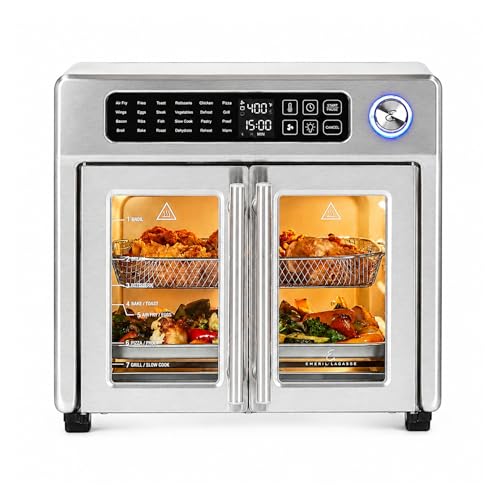
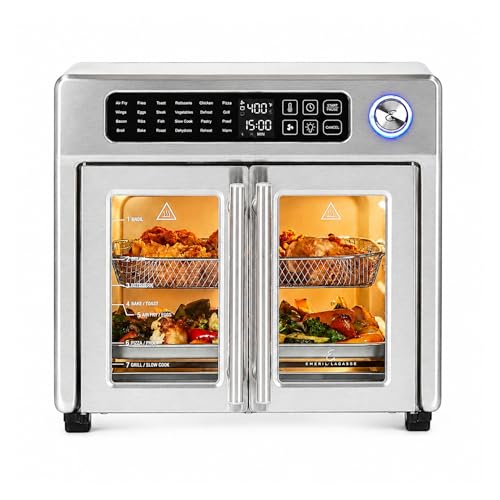
Emeril Lagasse 26-Quart French Door Air Fryer Oven
Badge: Best First Choice
Strengths
- French doors open with one hand and keep drips off the door glass
- Huge interior takes family trays and larger roasts
- 24 presets and six included accessories cover most weeknight jobs
Trade-offs
- Needs serious counter width and cabinet clearance
- Oven-style air frying is gentler than a focused basket for small batches
- More racks and trays to store and wash
Key specifications (from the verified listing)
- Capacity: 26 quarts, extra-large interior
- Style: French door countertop convection oven
- 24 one-touch preset options
- Six cooking accessories included
Here is what the confirmed specifications support. This Emeril Lagasse oven puts 26 quarts behind a pair of French doors, which makes loading wide trays easier than a drop-down door. Twenty-four one-touch presets and six included accessories frame it as a second oven that also air fries, rather than a small dedicated basket. Read the rest of this review as an interpretation of those facts for the job at hand, not as a hands-on lab claim.
Oil choice interacts with a fryer through its temperature range, and the Emeril Lagasse 26-Quart French Door Air Fryer Oven makes that concrete: it offers 26 quarts behind French doors. A wide range is an oil wardrobe: gentle heat for delicate flavours and dehydrating, hard heat where only the sturdiest refined oils stay composed. A narrow, hot range simplifies the wardrobe to the high-smoke-point shelf. The review below reads this machine through that interaction, because the best oil advice in the world still has to survive contact with a real machine’s real temperatures.
A final word on fit. Every machine in this guide is somebody’s perfect purchase and somebody else’s mistake, and the variable is never quality alone; it is the match between the machine’s design and the household’s habits. Here the match turns on accepting one clear compromise: needs serious counter width and cabinet clearance. Accept it, and the strengths in this review describe your daily experience. Resist it, and the same machine will frustrate you in the same place every week. Read the verdict line as the summary of that match, check the verified listing for the specifications that matter to your kitchen, and buy, or walk away, with your eyes open.
There is also a learning curve worth naming honestly, because it is short and it is the same for every machine in this guide. The first cooks are calibration: your portions, your seasoning, your model’s pace. By the fifth or sixth cook the adjustments become instinct, the timings get written beside your recipes, and one strength in particular becomes the reason the machine is reached for, which for this model is likely to be this: huge interior takes family trays and larger roasts. Judge any fryer after that calibration, not before it, and extend the same patience to whichever pick you choose from this page.
Best for: readers whose cooking matches this machine’s format and strengths / Not suited for: households whose main meals fall outside that format

Nuwave Bravo XL Pro 30-Quart Air Fryer Oven
Badge: Best for Entertaining
Strengths
- The 500°F ceiling sears harder than most countertop ovens
- A temperature probe takes the guesswork out of roasts and chicken
- 142 presets plus grill-combo cooking give unusual range
Trade-offs
- The largest footprint in this line-up
- A long preset list takes time to learn
- Oven format means longer preheats than a small basket
Key specifications (from the verified listing)
- Capacity: 30 quarts
- Temperature range: 50-500°F
- 142 presets, with grill combo cooking
- Smarter probe included; PFAS-free interior; stainless steel build
Start with what the verified listing actually establishes. The Nuwave Bravo XL Pro is built around range: a 50-500°F span, 142 presets, a grill combo mode and a smarter temperature probe in a 30-quart stainless cabinet. The PFAS-free interior will matter to buyers avoiding coated surfaces, and the probe suits anyone who cooks meat to temperature rather than to a timer. Those are the facts this review leans on; anything the listing does not state, this guide does not invent.
Oil choice interacts with a fryer through its temperature range, and the Nuwave Bravo XL Pro 30-Quart Air Fryer Oven makes that concrete: it offers 30 quarts in stainless steel. A wide range is an oil wardrobe: gentle heat for delicate flavours and dehydrating, hard heat where only the sturdiest refined oils stay composed. A narrow, hot range simplifies the wardrobe to the high-smoke-point shelf. The review below reads this machine through that interaction, because the best oil advice in the world still has to survive contact with a real machine’s real temperatures.
Ownership is where the honest compromises live, so weigh them plainly. The main one here: the largest footprint in this line-up. Against that, set the strengths above, which are the reasons this machine earns its place in this guide at all. Day to day, the pattern of use is predictable: it will be brilliant at the meals its format suits, adequate at the meals on its border, and the wrong tool for the meals named in its verdict line, and knowing that map before you buy is the difference between a machine that is used daily and one that is stored. Wash it the way its design asks, give it the counter position its doors or baskets need, and it will repay the small disciplines with years of unremarkable, reliable service, which is the highest praise a kitchen appliance can honestly earn.
In practice, the detail owners end up valuing is rarely the headline one. Here, expect the everyday appreciation to settle on this: a temperature probe takes the guesswork out of roasts and chicken. It is the kind of strength that does not photograph, because it shows up on an ordinary Tuesday, in the speed of a weeknight cook or the ease of the wash that follows, rather than in a first-weekend performance. Plan your first few cooks around it: use the machine for the meals it suits, in the portions its format prefers, and let familiarity, rather than the manual’s ambitions, set the rhythm of how it joins your kitchen.
Best for: readers whose cooking matches this machine’s format and strengths / Not suited for: households whose main meals fall outside that format
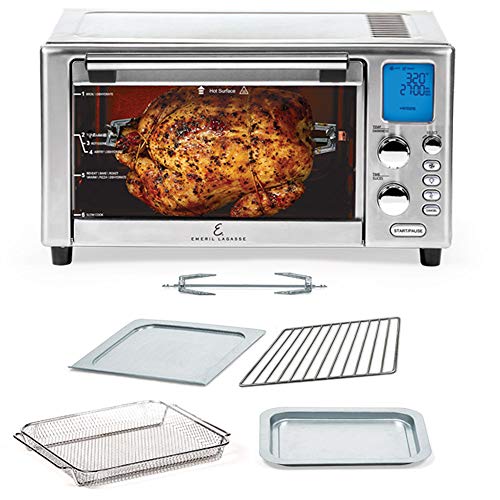
Emeril Lagasse Everyday 360 Air Fryer Oven
Badge: Best for Meat Lovers
Strengths
- 360° convection wraps heat around food on the rack
- Rotisserie adds whole-bird cooking most baskets cannot do
- Nine functions replace several single-purpose appliances
Trade-offs
- Oven format preheats slower than a compact basket
- Rotisserie parts add washing-up
- Counter footprint is family-oven sized, not compact
Key specifications (from the verified listing)
- Functions: 9-in-1 countertop oven
- 360° convection airflow
- Rotisserie included among its cooking functions
The verified listing is the ground truth here. The Everyday 360 builds its cooking around all-around convection: heated air circulates through the whole cavity, and a rotisserie function turns whole birds and roasts that would never fit a basket. Nine functions position it as an everyday second oven with air frying at the centre. Everything in this review traces back to those confirmed details rather than to marketing shorthand.
Oil choice interacts with a fryer through its temperature range, and the Emeril Lagasse Everyday 360 Air Fryer Oven makes that concrete: it offers a 9-in-1 oven cavity with 360-degree convection. A wide range is an oil wardrobe: gentle heat for delicate flavours and dehydrating, hard heat where only the sturdiest refined oils stay composed. A narrow, hot range simplifies the wardrobe to the high-smoke-point shelf. The review below reads this machine through that interaction, because the best oil advice in the world still has to survive contact with a real machine’s real temperatures.
Judge the daily reality as carefully as the cooking. The compromise to accept is this: oven format preheats slower than a compact basket. Everything else about ownership is routine: a wash cycle matched to what you cooked, a wipe while the cavity or basket is warm, and storage for the accessories where you will actually reach them. Readers who cook the meals this machine suits will experience that routine as a fair price for its strengths, and readers who mostly cook the meals it does not suit should believe the verdict line and choose a different format, because no amount of enthusiasm converts the wrong format into the right one. That honesty, applied before purchase, is the entire method of this guide.
Day-to-day, this machine will teach you its own preferences within a fortnight: which rack or basket position browns your food best, how its timing compares with the recipes you follow, and which of its strengths becomes your household’s favourite. The one to build around is this: rotisserie adds whole-bird cooking most baskets cannot do. Cooks who lean into a machine’s genuine strengths, instead of fighting its design toward meals it was not built for, are the ones still using it, happily and unthinkingly, a year after purchase, and that quiet outcome is the real product being reviewed here.
Best for: readers whose cooking matches this machine’s format and strengths / Not suited for: households whose main meals fall outside that format
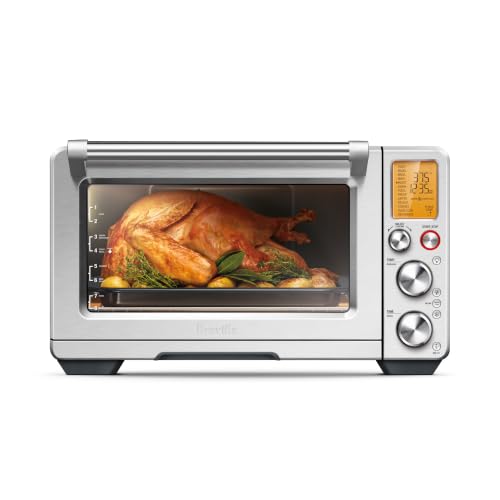
Breville Smart Oven Air Fryer Pro
Badge: Best Simple Controls
Strengths
- Thirteen functions with Breville’s usual control polish
- Convection speeds up roasts and bakes
- Stainless build suits buyers keeping an oven long-term
Trade-offs
- Premium-tier positioning in this category
- Oven cavity is slower for a single small portion than a basket
- Large trays and racks mean more washing than a basket liner
Key specifications (from the verified listing)
- Model: BOV900BSS, brushed stainless steel
- 13 cooking functions, including roast, bake and dehydrate
- Convection setting reduces cook time by up to 30% (maker’s figure)
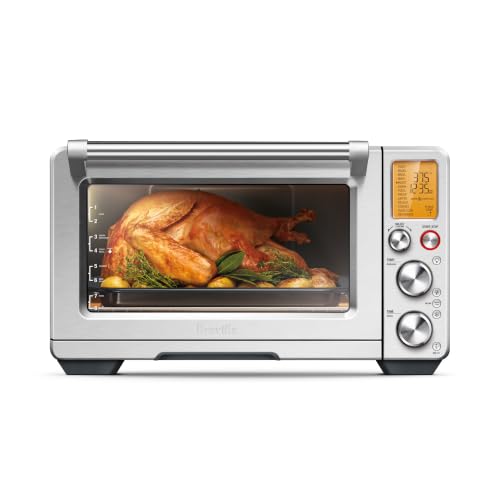
Here is what the confirmed specifications support. Breville’s Smart Oven Air Fryer Pro is the polished all-rounder here: thirteen functions in a brushed stainless body, with a convection setting the maker says cuts cook time by up to 30%. It behaves like a serious small oven first, with air frying as one of its strongest modes. Read the rest of this review as an interpretation of those facts for the job at hand, not as a hands-on lab claim.
Oil choice interacts with a fryer through its temperature range, and the Breville Smart Oven Air Fryer Pro makes that concrete: it offers a brushed stainless oven cavity. A wide range is an oil wardrobe: gentle heat for delicate flavours and dehydrating, hard heat where only the sturdiest refined oils stay composed. A narrow, hot range simplifies the wardrobe to the high-smoke-point shelf. The review below reads this machine through that interaction, because the best oil advice in the world still has to survive contact with a real machine’s real temperatures.
A final word on fit. Every machine in this guide is somebody’s perfect purchase and somebody else’s mistake, and the variable is never quality alone; it is the match between the machine’s design and the household’s habits. Here the match turns on accepting one clear compromise: premium-tier positioning in this category. Accept it, and the strengths in this review describe your daily experience. Resist it, and the same machine will frustrate you in the same place every week. Read the verdict line as the summary of that match, check the verified listing for the specifications that matter to your kitchen, and buy, or walk away, with your eyes open.
There is also a learning curve worth naming honestly, because it is short and it is the same for every machine in this guide. The first cooks are calibration: your portions, your seasoning, your model’s pace. By the fifth or sixth cook the adjustments become instinct, the timings get written beside your recipes, and one strength in particular becomes the reason the machine is reached for, which for this model is likely to be this: convection speeds up roasts and bakes. Judge any fryer after that calibration, not before it, and extend the same patience to whichever pick you choose from this page.
Best for: readers whose cooking matches this machine’s format and strengths / Not suited for: households whose main meals fall outside that format

Chefman 14-Quart 6-in-1 Air Fryer Oven
Badge: Best Everyday Oven
Strengths
- The window lets you watch browning without opening the door
- Rotisserie and dehydrator widen the repertoire
- Touchscreen controls are easy to wipe clean
Trade-offs
- 14 quarts is mid-sized: big for one, tight for a crowd
- Windowed door needs regular degreasing to stay clear
- Oven racks crisp differently from a perforated basket
Key specifications (from the verified listing)
- Capacity: 14 quarts
- Functions: 6-in-1 with rotisserie and food dehydrator
- Touchscreen controls; convection oven, bake, broil and reheat
- Windowed door
Start with what the verified listing actually establishes. Chefman’s 14-quart oven adds a windowed door, which sounds minor until you are cooking something that goes from golden to dark quickly: you can watch it without dumping heat. Rotisserie and dehydrator functions, run from a touchscreen, make it a genuine multi-tasker at a mid-size footprint. Those are the facts this review leans on; anything the listing does not state, this guide does not invent.
Oil choice interacts with a fryer through its temperature range, and the Chefman 14-Quart 6-in-1 Air Fryer Oven makes that concrete: it offers 14 quarts behind a windowed door. A wide range is an oil wardrobe: gentle heat for delicate flavours and dehydrating, hard heat where only the sturdiest refined oils stay composed. A narrow, hot range simplifies the wardrobe to the high-smoke-point shelf. The review below reads this machine through that interaction, because the best oil advice in the world still has to survive contact with a real machine’s real temperatures.
Ownership is where the honest compromises live, so weigh them plainly. The main one here: 14 quarts is mid-sized: big for one, tight for a crowd. Against that, set the strengths above, which are the reasons this machine earns its place in this guide at all. Day to day, the pattern of use is predictable: it will be brilliant at the meals its format suits, adequate at the meals on its border, and the wrong tool for the meals named in its verdict line, and knowing that map before you buy is the difference between a machine that is used daily and one that is stored. Wash it the way its design asks, give it the counter position its doors or baskets need, and it will repay the small disciplines with years of unremarkable, reliable service, which is the highest praise a kitchen appliance can honestly earn.
In practice, the detail owners end up valuing is rarely the headline one. Here, expect the everyday appreciation to settle on this: rotisserie and dehydrator widen the repertoire. It is the kind of strength that does not photograph, because it shows up on an ordinary Tuesday, in the speed of a weeknight cook or the ease of the wash that follows, rather than in a first-weekend performance. Plan your first few cooks around it: use the machine for the meals it suits, in the portions its format prefers, and let familiarity, rather than the manual’s ambitions, set the rhythm of how it joins your kitchen.
Best for: readers whose cooking matches this machine’s format and strengths / Not suited for: households whose main meals fall outside that format

Cuisinart French-Door Air Fryer Toaster Oven TOA-FD70
Badge: Best for Serious Cooks
Strengths
- French doors open wide for pizzas and sheet trays
- Dedicated toast and pizza functions suit daily oven duty
- Stainless build and a focused seven-function layout
Trade-offs
- Oven-style airflow is less intense than a small basket
- French doors need side clearance to swing
- No rotisserie on this model
Key specifications (from the verified listing)
- Functions: 7, including air fry, toast, bake, broil, roast, pizza and warm
- Artisan French-door design, stainless steel
- Fits a 12-inch pizza
The verified listing is the ground truth here. Cuisinart’s TOA-FD70 wraps seven functions around an artisan French-door front: air fry, toast, bake, broil, roast, pizza and warm in a stainless cavity sized for a 12-inch pizza. It is designed to live where a toaster oven lived, and to do that job plus proper air frying. Everything in this review traces back to those confirmed details rather than to marketing shorthand.
Oil choice interacts with a fryer through its temperature range, and the Cuisinart French-Door Air Fryer Toaster Oven TOA-FD70 makes that concrete: it offers a French-door oven cavity that fits a 12-inch pizza. A wide range is an oil wardrobe: gentle heat for delicate flavours and dehydrating, hard heat where only the sturdiest refined oils stay composed. A narrow, hot range simplifies the wardrobe to the high-smoke-point shelf. The review below reads this machine through that interaction, because the best oil advice in the world still has to survive contact with a real machine’s real temperatures.
Judge the daily reality as carefully as the cooking. The compromise to accept is this: oven-style airflow is less intense than a small basket. Everything else about ownership is routine: a wash cycle matched to what you cooked, a wipe while the cavity or basket is warm, and storage for the accessories where you will actually reach them. Readers who cook the meals this machine suits will experience that routine as a fair price for its strengths, and readers who mostly cook the meals it does not suit should believe the verdict line and choose a different format, because no amount of enthusiasm converts the wrong format into the right one. That honesty, applied before purchase, is the entire method of this guide.
Day-to-day, this machine will teach you its own preferences within a fortnight: which rack or basket position browns your food best, how its timing compares with the recipes you follow, and which of its strengths becomes your household’s favourite. The one to build around is this: dedicated toast and pizza functions suit daily oven duty. Cooks who lean into a machine’s genuine strengths, instead of fighting its design toward meals it was not built for, are the ones still using it, happily and unthinkingly, a year after purchase, and that quiet outcome is the real product being reviewed here.
Best for: readers whose cooking matches this machine’s format and strengths / Not suited for: households whose main meals fall outside that format
Comparison Table
| Pick | Badge | Format in brief | Check |
|---|---|---|---|
| Emeril Lagasse 26-Quart French Door Air Fryer Oven | Best First Choice | 26 quarts behind French doors | Check on Amazon |
| Nuwave Bravo XL Pro 30-Quart Air Fryer Oven | Best for Entertaining | 30 quarts in stainless steel | Check on Amazon |
| Emeril Lagasse Everyday 360 Air Fryer Oven | Best for Meat Lovers | a 9-in-1 oven cavity with 360-degree convection | Check on Amazon |
| Breville Smart Oven Air Fryer Pro | Best Simple Controls | a brushed stainless oven cavity | Check on Amazon |
| Chefman 14-Quart 6-in-1 Air Fryer Oven | Best Everyday Oven | 14 quarts behind a windowed door | Check on Amazon |
| Cuisinart French-Door Air Fryer Toaster Oven TOA-FD70 | Best for Serious Cooks | a French-door oven cavity that fits a 12-inch pizza | Check on Amazon |
How to Choose the Right Machine for Type of oil for air fryers
Capacity is the first decision and the most mis-sold. Ignore headline numbers long enough to ask what the machine must hold: your usual portion, your favourite pan, your family’s pizza. Verified internal dimensions and stated food fits, a pizza diameter, a slice count, a bird weight where the listing provides one, tell you more than any quart figure, because shape decides what fits and volume merely suggests it. Buy for the meals you cook weekly, and let the occasional feast borrow the big oven rather than dictating a daily appliance.
Format is the second decision. Baskets concentrate airflow for intense crisping of fries, wings and small items. Dual baskets add parallel cooking, two foods, two temperatures, one finish. Ovens spread food across trays for toast, pizzas, bakes and roasts, with gentler airflow and far more shape freedom. Neither family is better; each is better at its own cooking, and the reviews in this guide are organised so you can match format to your meals before you compare models within it.
Temperature range and control form the third decision. A wide range opens gentle work at the bottom, dehydrating, proofing, slow roasting, and hard browning at the top. A probe, where fitted, converts meat cookery from timing to measurement. Presets are the least important control feature: useful shortcuts for foods you cook identically every week, decoration otherwise. Judge the range and the probe first, the dial or screen second, and the preset count last.
Cleaning and ergonomics are the fourth decision, and the one owners feel longest. Baskets and plates that fit your sink and dishwasher get washed properly. Crumb trays that slide out get emptied. Doors that open where your cabinets allow get used. None of this appears in a hero photograph, and all of it decides whether the machine is a pleasure in month six. Read each review’s trade-offs with your own kitchen in mind, because the right compromise is a personal fact, not a ranking.
Value, discussed honestly without prices, is the fifth decision. This category has recognisable tiers: entry machines that crisp competently with simple controls, a broad middle where the best cost-to-cooking balance lives, and a premium tier selling build, precision and quiet engineering. The middle tier is the right answer for most households, because the cooking physics does not improve in proportion to the tier. Move up only for a named reason, a probe, a format your pans demand, a capacity your household fills weekly, and let the premium badge alone persuade no one.
Accessories and ecosystem form the sixth decision, and the honest answer is restraint. The accessories that earn their storage are the ones matched to your top meals: an extra tray for oven cooks, a second basket plate for heavy snack households, ramekins and small pans sized to the cavity you bought. The rest, the novelty racks and single-recipe gadgets, migrate to the back of a cupboard within a month. Buy the machine for its verified design, cook with what it includes for a fortnight, and let real meals, not the listing, nominate any accessory worth adding.
Build a two-bottle oil shelf and stop researching. Bottle one: a refined high-smoke-point neutral oil for all high-heat frying, roasting and reheating. Bottle two: a flavour oil you love, used at moderate temperatures or as a finish. That pair covers the entire category; additional bottles are a hobby, not a requirement, and hobbies are allowed but should be recognised as such.
When choosing a fryer with oil in mind, read its verified temperature range as an oil specification. Machines that run low suit delicate work and a wider oil wardrobe; machines with hard high ceilings demand the sturdy refined shelf. The reviews above state each machine’s confirmed range where the listing provides it, so you can match machine and oil shelf together.
One more comparison habit before the practical sections: readers still split between the formats in this guide often settle the question in the neighbouring cluster guides, particularly Best Prices On Air Fryers For Black Friday and Best Prices On Instat Vorteax Air Fryers, which apply the same verified-facts method to their own briefs.
Oiling Technique, Step by Step, for Fries, Wings and Vegetables
The method is identical across foods with small adjustments. Dry the food thoroughly. Place it in a bowl, add a light measure of your high-heat oil and the dry seasoning, and toss until every surface carries a thin, even gloss. Load a single layer, cook, shake or turn halfway, and finish with salt and any flavour oil or fresh herbs off the heat. Wings and fatty fish skip the bowl’s oil entirely; breaded items get the pump spray instead of the toss, so the coating stays put.
- Pat the food completely dry; oil cannot coat a wet surface evenly.
- Toss in a bowl with a light measure of refined high-smoke-point oil and dry seasoning.
- Load a single layer with gaps and cook, shaking or turning halfway.
- For breaded food, use a pump sprayer rather than tossing, to protect the coating.
- Finish with salt, fresh herbs or a drizzle of flavour oil off the heat.
Problem: food smokes and tastes acrid → The oil broke down: either a delicate unrefined oil at frying heat, or too much oil pooling. Switch to the refined high-heat bottle, use less, and make sure the basket is clean, since old residue smokes before fresh oil does.
Problem: browning is patchy and pale → The coat was uneven or the food went in wet. Dry first, toss in a bowl rather than drizzling in the basket, and do not crowd; patches of bare, wet surface cannot brown.
Problem: the basket coating is getting sticky and dull → Aerosol spray residue is the classic cause. Switch to a pump sprayer or brush with ordinary oil, and wash the basket with a soft sponge after fatty cooks so residue never bakes in layers.
Smoke Points, Refining and What the Numbers Actually Mean
An oil’s smoke point is the temperature where it begins to break down visibly, smoking, turning acrid and coating food in flavours nobody ordered. Refining raises that point by removing the compounds that burn early, which is why refined avocado and grapeseed style oils sit comfortably at the temperatures fryers reach, while their unrefined cousins, and unrefined extra-virgin olive oil in particular, are built for gentler work. Published smoke points vary by source and by bottle, so treat any single figure as approximate and prefer the pattern, refined and neutral for high heat, over false precision.
Flavour is the other half of the choice. Neutral oils disappear, letting the food and its seasoning speak, which is right for fries, wings and most weeknight cooking. Characterful oils, a good olive oil, toasted sesame, flavoured oils, announce themselves, and the fryer trick is to add them where heat will not erase or embitter them: tossed through vegetables at moderate temperatures, or drizzled over finished food, where a teaspoon perfumes a whole tray for almost no cost.
Butter and other low-tolerance fats follow the same logic. They burn early at frying temperatures, so they belong in brief finishes, garlic butter over finished wings, a knob melting over hot vegetables, rather than as the cooking coat. The fryer’s heat is a tool with a range; matching the fat to the temperature is the whole skill.
How Much Oil, Applied How: Toss, Brush, Pump, Never Aerosol
Amount first: most fryer food wants a light, even film, roughly a teaspoon or two across a basket of fries or vegetables, more for lean breaded items that need help browning, none for fatty foods like wings and salmon skin that bring their own. The test is visual: surfaces should look lightly glossed, never pooled or dripping, because excess oil smokes, spits and softens the crust it was meant to crisp.
Application decides evenness. Tossing food in a bowl with the oil and seasoning coats every surface and is the gold standard for fries, wedges and vegetables. A brush suits flat items and delicate fish. A refillable pump sprayer gives the finest mist for breaded foods and reheats. What to avoid on coated baskets and trays is the aerosol can: the propellants and emulsifiers in many spray oils are widely reported to build a stubborn residue and can degrade non-stick coatings over time, so the pump sprayer is both the better tool and the cheaper habit.
Timing completes the method. Oil goes on before cooking, onto dry food, with salt after cooking for fries so it sticks to the hot oiled surface. Marinades heavy with oil and sugar need care at high heat, since sugars scorch; pat marinated food down and watch the finish. These small disciplines, repeated, are what separate fryer food that tastes clean from fryer food that tastes of the bottle.
Living With the Machine: Month Three Onwards
By month three, a fryer has stopped being a purchase and become a habit, and the questions that matter change. Novelty features have been forgotten; what remains is the rhythm: how fast it preheats on a tired evening, how the basket or trays are holding up to weekly washing, whether the controls still make sense to a half-awake cook at breakfast. The machines in this guide were reviewed with that month in mind, which is why their trade-off lists dwell on washing, doors, footprints and residue rather than on launch-day excitement.
Two habits separate the machines that stay loved from the machines that migrate to cupboards. The first is a cleaning rhythm matched to the format: small, frequent, and never postponed past the point where residue bakes into permanence. The second is honest deployment: using the machine for the meals it suits, at the portions it prefers, instead of forcing it through every cooking task in the house. A fryer used for its true strengths five times a week is a triumph of a purchase, whatever its ranking, and a fryer forced into the wrong jobs daily is a disappointment with any badge.
Accessories, storage and placement settle in this period too. The machine finds its permanent home, on the counter if it earns the view, in a cupboard if it is light enough to fetch without resentment, and its included trays and racks find their drawer. If a gap appears, a small pan that fits the cavity, a pump sprayer for oil, a trivet for hot trays, it announces itself through real cooking, and those are the only accessories worth buying: the ones your own meals nominate.
Common Buying Mistakes
- Using delicate unrefined oils at maximum temperature and blaming the food for the smoke.
- Pouring oil into the basket instead of coating the food in a bowl.
- Spraying coated baskets with aerosol oils until the coating turns sticky.
- Oiling fatty foods that render their own fat and need none.
- Buying five specialty oils when a refined workhorse and one flavour oil cover everything.
Final Recommendation
Start with the Emeril Lagasse 26-Quart French Door Air Fryer Oven. It earns the first recommendation in this guide because its verified design answers the brief most completely: 26 quarts behind French doors, with strengths that land on the meals this keyword is really about. Readers whose cooking leans the other way should choose by format from the shortlist below rather than by rank, because in this category the right format beats the top-ranked machine every time your meals disagree with it.
Shortlist, in the order this guide would check them:
- Emeril Lagasse 26-Quart French Door Air Fryer Oven — check the current listing on Amazon.
- Nuwave Bravo XL Pro 30-Quart Air Fryer Oven — check the current listing on Amazon.
- Emeril Lagasse Everyday 360 Air Fryer Oven — check the current listing on Amazon.
Frequently Asked Questions
What is the best all-round oil for an air fryer?
A refined, neutral oil with a high smoke point, avocado oil being the most commonly recommended and refined grapeseed a close alternative. It tolerates the full temperature range of most fryers, tastes of nothing, and works for fries, vegetables, chicken and reheats alike. Keep a second, flavourful oil for finishes and you are fully equipped.
Can I use extra-virgin olive oil in an air fryer?
Yes, with temperature awareness. At moderate roasting temperatures it performs well and flavours vegetables beautifully. At the top of a fryer’s range, especially unrefined versions, it can smoke and turn bitter, so hard frying belongs to refined oils and olive oil’s best fryer work is mid-heat cooking and finishing drizzles.
How much oil does air frying actually need?
Far less than deep frying: a light film, often a teaspoon or two across a whole basket of fries or vegetables, and none at all for fatty foods like wings, sausages and salmon skin. The oil’s job is to carry seasoning and encourage browning, not to submerge anything.
Why should I avoid aerosol cooking spray on the basket?
Many aerosol sprays contain propellants and emulsifiers that leave a stubborn, gummy residue on non-stick coatings and are widely reported to degrade them over time. A refillable pump sprayer filled with your regular oil gives the same fine mist without the additives, and costs less over a year of cooking.
Do I need oil for frozen foods?
Most frozen fryer foods, fries, nuggets, breaded items, arrive with oil already in their coating and need none added. Plain frozen vegetables benefit from the standard light toss. When in doubt, cook the first batch unoiled and judge the result; adding oil is easy, removing it is not.
Which oils should stay out of the fryer entirely?
Anything with a genuinely low tolerance for heat used at frying temperatures: unrefined delicate oils, butter as a cooking coat, and flavoured oils whose aromatics burn. All of them still have a role, as finishes over cooked food, where their flavour survives and their fragility does not matter.