Disclosure: topratedkitchenware.com is reader-supported. When you buy through links on our site, we may earn an affiliate commission from Amazon and other retailers, at no extra cost to you.
Where to buy
The linked picks in this guide to best types of coffee makers are listed on Amazon, where you can check the latest price on Amazon, confirm the exact variant and read the current listing details before ordering. Listings and bundles change, so match the full model name on the listing to the pick reviewed below.
- Best Overall: Keurig K-Mini Mate Single Serve Coffee Maker — Check on Amazon
- Tastyle Mini Single Serve Coffee Maker K310IC — Check on Amazon
- Keurig K-Express Single Serve Coffee Maker (Evergreen) — Check on Amazon
- Keurig K-Express Single Serve Coffee Maker (Mint) — Check on Amazon
- Hamilton Beach FlexBrew Advanced 4-in-1 Single Serve Coffee Maker — Check on Amazon
- Ninja Single Serve Coffee Maker PB051 — Check on Amazon
Read the full guide ↓
If you are searching for the best types of coffee makers, this guide was written for one job: matching you to a coffee maker that genuinely fits understanding the main types of coffee makers — and where single-serve machines, the type this verified pool covers, honestly sit among them, without the usual fog of marketing words and mismatched listings. Six verified picks are compared below — what each does well, where each honestly falls short, and who should buy which.
Coffee makers are not one product with many prices; they are several genuinely different brewing methods sharing a name. Drip machines pour hot water over a filter bed of grounds. Espresso machines force pressurised water through a fine puck. French presses steep and plunge. Cold brew makers steep for hours without heat. And single-serve machines — the type every verified pick in this guide belongs to — brew one cup at a time from pods, grounds, or both. Knowing which type you are shopping for is the first and most consequential decision in this whole category.
This guide therefore does two jobs. It reviews six verified single-serve machines in full, with links, because single-serve is the type the pool can honestly supply — and for many households it is genuinely the right type. And it maps the other major types in plain prose, explaining what each does well, what each demands of you, and which drinker each suits, so that if your type turns out to be drip, press or espresso, you leave knowing it and knowing why.
Read the type map first if you are undecided; read the reviews first if you already know single-serve is your type. Either way, the buying sections translate the map into a decision: servings per day, drinks per week, counter space and cleaning appetite decide the type far more reliably than any feature list.
Two comparisons worth keeping open while you read: readers weighing the neighbouring brief often cross-check Best Sigle Brew Coffee Makers With Water Line Hookup for the closest alternative angle, and Best Simple Coffee Makers when their routine leans the other way. Both guides use the same verified pool standards as this one.
Key Takeaways
- Our first choice for most readers is the Keurig K-Mini Mate Single Serve Coffee Maker — it fits the brief of best types of coffee makers most completely of the verified picks.
- Format beats features: the right water supply, brewing format and serving size for your routine matter more than modes or style settings.
- Fresh water, an even grounds bed and prompt cleanup fix more coffee problems than upgrades do.
- No prices are printed in this guide, deliberately: check the latest price on Amazon on the live listing, where the exact variant is confirmed at the same time.
- Every pick below was verified against the Creators API pool for this site; only API-confirmed products that match the brief carry Amazon links and images.
In this guide
Quick Picks
Six picks, six distinct jobs. Badges are used consistently here and in the detailed reviews, so you can track a pick from this summary to its full review of best types of coffee makers below.
| Pick | Badge | Why it is here | Link |
|---|---|---|---|
| Keurig K-Mini Mate Single Serve Coffee Maker | Best Overall | Best suited to: students, desk drinkers and small-space households who brew one pod cup at a time. | Check on Amazon |
| Tastyle Mini Single Serve Coffee Maker K310IC | Best for Small Spaces | Best suited to: space-limited drinkers — dorms, RVs, small offices — who want pod and grounds flexibility plus iced coffee. | Check on Amazon |
| Keurig K-Express Single Serve Coffee Maker (Evergreen) | Best for Flexibility | Best suited to: pod drinkers who like a distinctive Evergreen finish and a simple three-size routine. | Check on Amazon |
| Keurig K-Express Single Serve Coffee Maker (Mint) | Most Versatile | Best suited to: style-conscious solo drinkers who want the standard pod routine with a lighter countertop look. | Check on Amazon |
| Hamilton Beach FlexBrew Advanced 4-in-1 Single Serve Coffee Maker | Best for Big Cups | Best suited to: households split between pod drinkers and grounds drinkers who still brew one cup at a time. | Check on Amazon |
| Ninja Single Serve Coffee Maker PB051 | Best Premium Pick | Best suited to: single-serve drinkers who brew often, brew big cups, and want style control rather than one fixed cup. | Check on Amazon |
How These Picks Were Chosen
The comparison weighed the things that decide daily satisfaction with a coffee maker: how the water is supplied and stored, which formats it brews (pods, grounds, or both), the cup sizes on offer, how much counter and storage space the machine really needs, and how much routine — filling, rinsing, descaling — it asks of you every week.
This is research-led guidance, not a claim of hands-on bench testing. Specifications quoted in the mini spec boxes come only from the verified listing data for each pick; where a detail is not in that data, it is left out rather than guessed. Prices and ratings are deliberately never printed, because both change constantly — the live listing is the only honest place to check them.
Badges were assigned after the comparison, not before it: each pick earned its badge by being the strongest verified option for a recognisable reader profile, and the same badges are used in the Quick Picks table and the detailed reviews so you can follow one pick through the whole guide.
Readers comparing across this cluster may also find Best Simple Coffee Makers With Pods useful for a neighbouring take on similar machines.
The 6 Best Options for Best types of coffee makers
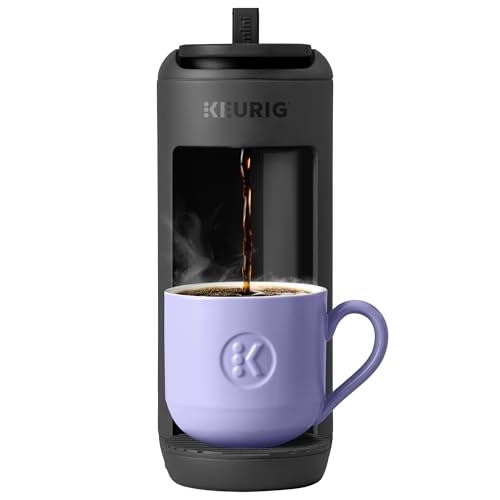
Keurig K-Mini Mate Single Serve Coffee Maker
Badge: Best Overall
Keurig K-Mini Mate Single Serve Coffee Maker is best suited to students, desk drinkers and small-space households who brew one pod cup at a time. In the context of best types of coffee makers, its role in this line-up is specific: it is the pick we would steer toward a reader whose routine matches that description, rather than a generic recommendation for everyone.
Strengths
- About as compact as a pod brewer gets; aimed at small spaces, dorms and offices
- One-cup routine with the full K-Cup catalogue available
- Simple format that is easy to move, store and take along
Trade-offs
- You add water for each cup; there is no reservoir
- Pod-only brewing
- 12 oz maximum cup is modest for big-mug drinkers
Key specs (from the verified listing): Brews up to a 12 oz cup; Compact, portable design; Single serve K-Cup pod brewer; Colour: Black.
The honest limitation to weigh is its water-per-cup design: maximum portability, minimum water storage — every cup starts with a fresh fill. None of that disqualifies it from its own job — every pick in this guide has a limitation, and pretending otherwise would make the reviews useless — but it should decide whether this is your pick or the next one. Results in the cup will also depend on the water, loading and cleaning habits covered later in this guide; machine and method together produce the result, never the machine alone.
In day-to-day use for best types of coffee makers, expect this pick to be at its best when its routine is kept simple and regular — fresh water, the right format for the drinker, and cleanup done while it is still a thirty-second job — and at its most strained when asked to work outside its format in bulk, in haste, or for a crowd it was not sized for. That pattern, excellent inside its brief and ordinary outside it, is true of every machine in this guide, and the reviews are written to make each pick’s brief as clear as its badge.
Best for: readers who match the profile above / Not suited for: readers whose routine contradicts it — in particular anyone for whom the limitation just described is a daily event rather than an occasional one.
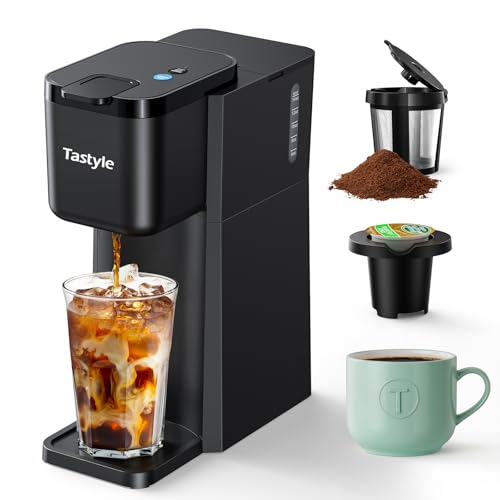
Tastyle Mini Single Serve Coffee Maker K310IC
Badge: Best for Small Spaces
Tastyle Mini Single Serve Coffee Maker K310IC is best suited to space-limited drinkers — dorms, RVs, small offices — who want pod and grounds flexibility plus iced coffee. In the context of best types of coffee makers, its role in this line-up is specific: it is the pick we would steer toward a reader whose routine matches that description, rather than a generic recommendation for everyone.
Strengths
- Takes both K-Cup pods and your own grounds, so you are not locked into one format
- Wide 6 to 14 oz size range covers a small cup through a full travel mug
- A dedicated iced mode makes it unusually versatile for a mini machine
- Compact size is aimed at homes, travel, RVs, offices and dorms
Trade-offs
- Mini format: one serving at a time, filled per brew rather than from a big reservoir
- Small water capacity means refilling is part of every cup
- Lesser-known brand compared with the big pod names
Key specs (from the verified listing): Brews K-Cup pods and ground coffee; 6 to 14 oz brew sizes; Hot and iced coffee modes; Recipe book included; 120V; Model: K310IC, 2.0 version; Colour: Classic Black.
The honest limitation to weigh is its mini scale: flexibility is excellent, but every brew is a single serving you set up individually. None of that disqualifies it from its own job — every pick in this guide has a limitation, and pretending otherwise would make the reviews useless — but it should decide whether this is your pick or the next one. Results in the cup will also depend on the water, loading and cleaning habits covered later in this guide; machine and method together produce the result, never the machine alone.
In day-to-day use for best types of coffee makers, expect this pick to be at its best when its routine is kept simple and regular — fresh water, the right format for the drinker, and cleanup done while it is still a thirty-second job — and at its most strained when asked to work outside its format in bulk, in haste, or for a crowd it was not sized for. That pattern, excellent inside its brief and ordinary outside it, is true of every machine in this guide, and the reviews are written to make each pick’s brief as clear as its badge.
Best for: readers who match the profile above / Not suited for: readers whose routine contradicts it — in particular anyone for whom the limitation just described is a daily event rather than an occasional one.

Keurig K-Express Single Serve Coffee Maker (Evergreen)
Badge: Best for Flexibility
Keurig K-Express Single Serve Coffee Maker (Evergreen) is best suited to pod drinkers who like a distinctive Evergreen finish and a simple three-size routine. In the context of best types of coffee makers, its role in this line-up is specific: it is the pick we would steer toward a reader whose routine matches that description, rather than a generic recommendation for everyone.
Strengths
- Three brew sizes with a Strong Brew button for a bolder cup
- 42 oz removable reservoir reduces refill frequency for one or two drinkers
- Travel mug friendly clearance suits commuters brewing straight into a tall mug
Trade-offs
- K-Cup pods only; no way to brew loose grounds
- No water-line connection; the reservoir is filled manually
- Brews one cup per cycle
Key specs (from the verified listing): 3 brew sizes; 42 oz removable reservoir; Strong Brew button; Travel mug friendly; Works with all K-Cup pods; Colour: Evergreen.
The honest limitation to weigh is its single-format brief: pods in, one cup out — flexible on size, not on brewing method or water supply. None of that disqualifies it from its own job — every pick in this guide has a limitation, and pretending otherwise would make the reviews useless — but it should decide whether this is your pick or the next one. Results in the cup will also depend on the water, loading and cleaning habits covered later in this guide; machine and method together produce the result, never the machine alone.
In day-to-day use for best types of coffee makers, expect this pick to be at its best when its routine is kept simple and regular — fresh water, the right format for the drinker, and cleanup done while it is still a thirty-second job — and at its most strained when asked to work outside its format in bulk, in haste, or for a crowd it was not sized for. That pattern, excellent inside its brief and ordinary outside it, is true of every machine in this guide, and the reviews are written to make each pick’s brief as clear as its badge.
Best for: readers who match the profile above / Not suited for: readers whose routine contradicts it — in particular anyone for whom the limitation just described is a daily event rather than an occasional one.

Keurig K-Express Single Serve Coffee Maker (Mint)
Badge: Most Versatile
Keurig K-Express Single Serve Coffee Maker (Mint) is best suited to style-conscious solo drinkers who want the standard pod routine with a lighter countertop look. In the context of best types of coffee makers, its role in this line-up is specific: it is the pick we would steer toward a reader whose routine matches that description, rather than a generic recommendation for everyone.
Strengths
- The full K-Express routine — three sizes, Strong Brew, big reservoir — in a fresh Mint finish
- Removable reservoir is easy to carry, fill and clean
- Works with the full range of K-Cup pods
Trade-offs
- Pod format only from the factory; grounds need an accessory the listing does not include
- Hand-filled tank; no plumbed water option
- One serving per brew cycle
Key specs (from the verified listing): 3 brew sizes; 42 oz removable reservoir; Strong Brew button; Travel mug friendly; Works with all K-Cup pods; Colour: Mint.
The honest limitation to weigh is its hand-filled reservoir and pod-only format: simple and portable, but one cup and one format at a time. None of that disqualifies it from its own job — every pick in this guide has a limitation, and pretending otherwise would make the reviews useless — but it should decide whether this is your pick or the next one. Results in the cup will also depend on the water, loading and cleaning habits covered later in this guide; machine and method together produce the result, never the machine alone.
In day-to-day use for best types of coffee makers, expect this pick to be at its best when its routine is kept simple and regular — fresh water, the right format for the drinker, and cleanup done while it is still a thirty-second job — and at its most strained when asked to work outside its format in bulk, in haste, or for a crowd it was not sized for. That pattern, excellent inside its brief and ordinary outside it, is true of every machine in this guide, and the reviews are written to make each pick’s brief as clear as its badge.
Best for: readers who match the profile above / Not suited for: readers whose routine contradicts it — in particular anyone for whom the limitation just described is a daily event rather than an occasional one.

Hamilton Beach FlexBrew Advanced 4-in-1 Single Serve Coffee Maker
Badge: Best for Big Cups
Hamilton Beach FlexBrew Advanced 4-in-1 Single Serve Coffee Maker is best suited to households split between pod drinkers and grounds drinkers who still brew one cup at a time. In the context of best types of coffee makers, its role in this line-up is specific: it is the pick we would steer toward a reader whose routine matches that description, rather than a generic recommendation for everyone.
Strengths
- Brews from pod packs or grounds, so one machine serves both habits
- 45 oz removable reservoir is large for the single-serve class
- Hot and iced modes cover the two ways most people actually drink coffee at home
Trade-offs
- Single-serve side only in this 4-in-1 version; there is no carafe or pot side
- Reservoir is hand-filled; no water-line option
- More parts and modes than a truly basic one-button brewer
Key specs (from the verified listing): Hot and iced coffee; Removable 45 oz reservoir; Uses pod packs and grounds; Fast brewing; Colour: Black.
The honest limitation to weigh is its single-serve-only layout: despite the FlexBrew name and four modes, this version never brews a full pot. None of that disqualifies it from its own job — every pick in this guide has a limitation, and pretending otherwise would make the reviews useless — but it should decide whether this is your pick or the next one. Results in the cup will also depend on the water, loading and cleaning habits covered later in this guide; machine and method together produce the result, never the machine alone.
In day-to-day use for best types of coffee makers, expect this pick to be at its best when its routine is kept simple and regular — fresh water, the right format for the drinker, and cleanup done while it is still a thirty-second job — and at its most strained when asked to work outside its format in bulk, in haste, or for a crowd it was not sized for. That pattern, excellent inside its brief and ordinary outside it, is true of every machine in this guide, and the reviews are written to make each pick’s brief as clear as its badge.
Best for: readers who match the profile above / Not suited for: readers whose routine contradicts it — in particular anyone for whom the limitation just described is a daily event rather than an occasional one.

Ninja Single Serve Coffee Maker PB051
Badge: Best Premium Pick
Ninja Single Serve Coffee Maker PB051 is best suited to single-serve drinkers who brew often, brew big cups, and want style control rather than one fixed cup. In the context of best types of coffee makers, its role in this line-up is specific: it is the pick we would steer toward a reader whose routine matches that description, rather than a generic recommendation for everyone.
Strengths
- Four brew styles give more control over strength and character than most pod machines
- Cup sizes up to 24 oz suit big travel mugs and iced drinks over ice
- 56 oz reservoir is the largest in this line-up, cutting refill frequency
- Pods or grounds: the combo format avoids locking you into either
Trade-offs
- Larger footprint than the mini single-serve machines
- Style options reward a little experimentation before your favourite is dialled in
- Reservoir is removable and hand-filled
Key specs (from the verified listing): Brews K-Cup pods and grounds; 4 brew styles; Cup sizes up to 24 oz; 56 oz removable reservoir; Model: PB051; Colour: Black.
The honest limitation to weigh is its size: the big reservoir and style system make it the least compact machine in this line-up. None of that disqualifies it from its own job — every pick in this guide has a limitation, and pretending otherwise would make the reviews useless — but it should decide whether this is your pick or the next one. Results in the cup will also depend on the water, loading and cleaning habits covered later in this guide; machine and method together produce the result, never the machine alone.
In day-to-day use for best types of coffee makers, expect this pick to be at its best when its routine is kept simple and regular — fresh water, the right format for the drinker, and cleanup done while it is still a thirty-second job — and at its most strained when asked to work outside its format in bulk, in haste, or for a crowd it was not sized for. That pattern, excellent inside its brief and ordinary outside it, is true of every machine in this guide, and the reviews are written to make each pick’s brief as clear as its badge.
Best for: readers who match the profile above / Not suited for: readers whose routine contradicts it — in particular anyone for whom the limitation just described is a daily event rather than an occasional one.
Comparison Table
| Pick | Badge | Format highlights | Link |
|---|---|---|---|
| Keurig K-Mini Mate Single Serve Coffee Maker | Best Overall | Brews up to a 12 oz cup; Compact, portable design | Check on Amazon |
| Tastyle Mini Single Serve Coffee Maker K310IC | Best for Small Spaces | Brews K-Cup pods and ground coffee; 6 to 14 oz brew sizes | Check on Amazon |
| Keurig K-Express Single Serve Coffee Maker (Evergreen) | Best for Flexibility | 3 brew sizes; 42 oz removable reservoir | Check on Amazon |
| Keurig K-Express Single Serve Coffee Maker (Mint) | Most Versatile | 3 brew sizes; 42 oz removable reservoir | Check on Amazon |
| Hamilton Beach FlexBrew Advanced 4-in-1 Single Serve Coffee Maker | Best for Big Cups | Hot and iced coffee; Removable 45 oz reservoir | Check on Amazon |
| Ninja Single Serve Coffee Maker PB051 | Best Premium Pick | Brews K-Cup pods and grounds; 4 brew styles | Check on Amazon |
Read the table as a shortlist, not a verdict: the detailed reviews above carry the context that decides between close picks, and readers narrowing further often compare with Best Simple Drip Coffee Makers before ordering.
How to Choose the Right Coffee Maker for Best types of coffee makers
Water supply: reservoir, per-cup fill, or batch tank
How a brewer gets its water shapes your whole routine. A removable reservoir of 42 to 60 oz covers days of single cups between refills and lifts out for the sink. Per-cup machines ask for fresh water every brew, which is slower but keeps water fresh and the machine tiny. Pot brewers hold a full batch worth of water and brew it in one cycle. Match the supply to your serving pattern first; every other feature is secondary.
Format: pods, grounds, or both
Pods trade cost and waste for speed and consistency; grounds trade a little effort for freshness, choice and lower running cost. Combo machines that take both are the hedge: pods on rushed mornings, grounds on slow ones. Decide by your busiest morning, not your ideal one, because the format you use at 7 a.m. on a workday is the format you actually bought.
Cup sizes and serving count
Single-serve machines brew one cup per cycle, from about 6 oz to as much as 24 oz on the most generous models. Pot brewers brew a batch measured in cups. If your household drinks in rounds, single cups are fine; if four people want coffee at the same moment, a pot brewer or a dual machine is the honest answer. Match the machine to the largest group you serve weekly, not the largest you can imagine.
Counter space and storage
Measure the space with the lid open and the reservoir removed, not just the footprint on the box. Mini machines earn their keep in dorms, RVs and small kitchens; full-size and dual machines need permanent counter citizenship. A machine that lives in a cupboard gets used less — plan for the machine to live where it will be used.
Cleaning and descaling
Every brewer here needs a rinse routine and periodic descaling, and mineral build-up is the main reason home brewers slow down or taste off. Removable reservoirs, dishwasher-safe parts and wide openings make the routine realistic. If you know you will not descale, favour the simplest machine with the fewest water paths.
Running costs beyond the machine
Pods cost more per cup than grounds and create packaging waste; reusable filters and reusable pods narrow both gaps. Thermal carafes save the energy a hot plate uses and protect flavour. None of this needs a printed price to reason about: the format you choose decides your running costs far more than the badge on the machine.
How to Match a Coffee Maker Type to Your Routine, Step by Step
Choosing a type is a routine-matching exercise, not a spec exercise. Work through these steps with your real week in mind.
- Count servings honestly: how many cups, for how many people, at the busiest moment of your week? One cup for one person points to single-serve; four cups at one breakfast points to a pot or press.
- Name your drinks: straight coffee only, or milk drinks and espresso-style drinks too? Milk drinks point toward espresso types; straight coffee is served well by almost every type.
- Weigh effort per cup: pods ask seconds, drip asks a filter and a rinse, a press asks steeping time and washing, cold brew asks planning a day ahead. Choose the effort you will still accept in February, not the effort you enjoy imagining in the shop.
- Check the counter: measure the space with lids open and parts removed for washing, and place the type there in your mind before committing.
- Decide your cleaning appetite: every type has a signature chore — descaling for machines, grounds disposal for presses, steeping-jar washing for cold brew. The right type is the one whose chore you mind least.
- Only then compare models within the type, using the detailed reviews below if single-serve is where you landed.
Troubleshooting
Problem: the brew tastes weak → what to do: brew a smaller size, add slightly more grounds or use the strong setting where fitted, and check the water is fresh. Problem: the machine has slowed down or sputters → what to do: descale it; mineral build-up is the usual cause, and it arrives gradually before it arrives obviously. Problem: coffee tastes stale or muddy → what to do: rinse the filter, basket and reservoir, remove used pods or grounds promptly, and check how long the coffee itself has been open.
For a neighbouring method angle, see Best Sing Serve Coffee Makers once you have the basics here.
The Type Map: Drip, Espresso, Press, Pour-Over and Cold Brew
Drip is the batch default: hot water showered over a filter bed of grounds, collecting in a carafe. It serves groups, forgives approximate dosing, and asks little skill; its weakness is held coffee ageing on a warmer or in a carafe. Espresso is the pressure method: a small, concentrated shot that is a drink in itself and the base of lattes and cappuccinos; it demands the most skill, the most cleaning and the most counter commitment of any home type.
The French press steeps coarse grounds in hot water and separates them with a plunger: full-bodied, equipment-light, and excellent for two to four cups, at the cost of sediment in the cup and a jar to wash. Pour-over is drip brewing by hand — a kettle, a dripper, patience — rewarding control with clarity of flavour and punishing haste with inconsistency. Moka pots brew strong stovetop coffee under low pressure, a distinct and beloved middle path.
Cold brew is the time method: coarse grounds steeped in cold water for many hours, filtered into a concentrate that keeps for days and dilutes into smooth iced coffee. It is the only type that cannot answer a spontaneous craving, and the only one that improves with batch planning. Each type is a real answer for someone; the mistake is buying a type whose daily rhythm is not yours.
Where Single-Serve Sits — and Why This Pool Is All Single-Serve
Single-serve machines, the type reviewed with links in this guide, solved the two problems the other types share: coffee made but not drunk, and coffee wanted by one person at one moment. A pod or grounds cup is brewed at the moment of drinking, in the size chosen, with seconds of effort. The costs are equally real: a per-cup premium for pods, packaging waste, and one-cup-at-a-time service for groups.
Within the type, the six picks split into recognisable sub-types. The Keurig K-Express machines and K-Elite are pod-pure: maximum catalogue, minimum thought. The K-Mini Mate is the mini sub-type: water per cup, minimal footprint. The Elite Gourmet is the grounds sub-type: a reusable filter, no pods at all. The Tastyle Mini and the Hamilton Beach FlexBrew and Ninja PB051 are the dual-format sub-type: pods and grounds in one body, with the Ninja adding brew styles and the largest reservoir.
If your household drinks one or two cups at scattered times, single-serve is very likely your type and this guide’s reviews are your shortlist. If you drink in groups, in pots, or in milk drinks, the type map above is your shortlist — and this guide would rather point you there honestly than sell you the wrong type well.
Coffee Technique, In Depth
Freshness of the coffee itself matters in the same quiet way. Whole beans keep their character far longer than ground coffee, and ground coffee in a pod or an open bag declines steadily once air reaches it. Buy quantities you will use within a few weeks, store coffee away from heat and light, and treat the giant bargain bag as the false economy it usually is. None of this requires specialist equipment; it requires only matching purchase size to drinking speed.
Grind size is the dial most home drinkers never touch, and it explains many disappointing cups. Too coarse and the water rushes through, leaving a thin, sour cup; too fine and extraction drags, turning bitter and muddy. Machines that brew grounds give you this dial; pod machines fix it for you, which is both their convenience and their ceiling. If a grounds machine tastes wrong, change the grind before you change the machine.
Brew ratio — how much coffee meets how much water — is the second dial. A useful starting point for drip and single-cup grounds brewing is roughly one to two tablespoons of ground coffee per six ounces of water, adjusted to taste over a week of mornings. Change one variable at a time: ratio first, then grind, then size. Drinkers who change everything at once never learn which change fixed the cup, and end up chasing their own settings in circles.
Temperature stability is why some machines taste better than their spec sheets suggest. Coffee extracts best in a narrow hot band; machines that heat fully before brewing, and keep the flow steady, produce sweeter, more consistent cups than machines that start lukewarm and surge. This is also why preheating a cold machine with a water-only cycle can improve the first cup of the day, and why the second cup from a warmed machine often tastes better than the first.
Descaling is maintenance, not repair. Mineral scale builds on heating elements and in water paths wherever water is hard, slowing flow, dropping temperature and eventually adding off flavours. A descale cycle with the maker’s recommended solution, run on a calendar rhythm rather than when symptoms appear, keeps a machine tasting as it did when new. Vinegar is the traditional home substitute, but it must be rinsed thoroughly, and some makers advise against it — the manual for your exact model is the authority.
The daily routine around the machine decides more than the machine. Used pods and wet grounds left sitting grow stale smells that perfume the next brew; a thirty-second rinse and empty while the machine is still warm prevents almost all of it. Reservoirs should be emptied, rinsed and refilled rather than topped up forever, because standing water picks up flavours from the kitchen air. Small habits, done daily, are the difference between a machine that delights for years and one that quietly becomes unpleasant.
Iced coffee has its own physics. Brewing hot coffee directly over ice — the flash-chilled approach — preserves aroma better than refrigerating hot coffee, but the melt dilutes the cup, so the brew must start concentrated. Cold brew takes the opposite path: time instead of heat, coarse grounds steeped for hours, producing a smooth concentrate that is diluted to taste. The two drinks are cousins, not substitutes, and a household that loves iced coffee should decide which style it actually drinks before choosing a machine around it.
Serving temperature and holding are where pots succeed or fail. A warming plate keeps coffee hot by keeping it cooking, and flavour declines measurably across an hour on the plate. A thermal carafe adds no heat; it simply keeps what the brewer made, which is why thermal pots taste fresher at the second hour. For single cups the problem disappears — the cup is drunk as brewed — which is one honest reason single-serve formats have taken so much of the home market.
Counter workflow is a real feature. A machine whose reservoir lifts out easily will be refilled at the sink; one that must be filled by the jug will be refilled reluctantly and cleaned rarely. Lid clearance under cabinets, drip tray height for travel mugs, and cord length to the only sensible outlet all decide whether a machine integrates into a kitchen or fights it. The best machine on paper that fights your kitchen loses to the good machine that fits it.
Pod storage and organisation sound trivial until a household is three people deep in different flavours. A drawer or carousel beside the machine keeps the morning routine to seconds and the flavours findable; pods stored across the kitchen add friction that quietly pushes people back to the café. The same logic applies to grounds: a sealed canister beside the machine, a scoop that lives in it, and a routine that needs no searching at 7 a.m.
Finally, buy for the drinker you are on weekdays. Almost every coffee purchase mistake is a mismatch between the imagined drinker — leisurely, experimental, entertaining crowds — and the real one, who wants a good cup quickly before work and another on Saturday at a slower pace. Machines that serve the real drinker get used daily and loved; machines bought for the imagined one become counter ornaments. This guide’s badges and verdicts are written for the real drinker throughout.
Common Buying Mistakes
Buying for the fantasy kitchen. Choosing a machine for the coffee bar you plan to build someday, rather than the counter, cupboard and morning routine you have today. Measure first; fantasise later.
Assuming a feature from the product family. A range may include a dual, cold-brew or carafe model while the specific listing in front of you is a single-format machine. Read the exact listing title and spec list for the exact model — this guide flags every such gap it found in the pool.
Ignoring water logistics. Where the machine sits relative to a sink decides whether a removable reservoir is a pleasure or a chore, and whether per-cup filling is a ritual or an irritation. Walk the route before you buy.
Overbuying capacity. A 12 cup pot for a one-mug drinker means stale coffee and daily washing-up; a 14 oz mini for a household of four means queues. Capacity should match servings per day, not servings per year.
Skipping descaling until it tastes wrong. By the time scale changes the flavour, it has been slowing the brewer for weeks. Put a descaling reminder on the calendar the day the machine arrives.
Judging by headline features alone. Brew styles, modes and programs only matter if they map to drinks you actually make. A simple machine used daily beats a versatile one used reluctantly.
Final Recommendation
For most readers searching for best types of coffee makers, start with the Keurig K-Mini Mate Single Serve Coffee Maker: it matches the brief most completely, and its limitation is the one most households will encounter least. If your routine leans the other way — the second profile in the detailed reviews — the Tastyle Mini Single Serve Coffee Maker K310IC is the alternative we would buy instead, for the reasons its review sets out.
Whichever route you choose, buy the format your routine needs, set it up as this guide describes, and check the latest price on Amazon on the live listing before ordering so the variant in the box is the variant you researched. Readers still torn between briefs can finish with Best Singal Coffee Makers for the adjacent comparison.
Frequently Asked Questions
What are the main types of coffee makers?
The main home types are drip (batch brewing through a filter), single-serve (one cup from pods or grounds), espresso (pressurised shots), French press (steep and plunge), pour-over (manual drip), moka pot (stovetop) and cold brew (long cold steeping). Each suits a different serving pattern and effort level.
Which type is best for a household of one or two?
Single-serve, the type reviewed with links in this guide: cups are brewed at the moment of drinking, in chosen sizes, with almost no waste. A small drip machine is the alternative if you drink several cups in one sitting.
Which type makes the best-tasting coffee?
There is no type-level winner: a well-run press, pour-over or drip pot can each out-taste a badly run machine of any type. Method, freshness and ratio decide more than category. Choose the type whose routine you will actually perform well.
Why does this guide only link single-serve machines?
Because the verified pool for this keyword contains single-serve machines. They are reviewed and linked as what they are, and the other types are covered in honest prose rather than represented by mismatched products.
What is the difference between single-serve sub-types?
Pod-pure machines (the Keurigs here) brew pods only; grounds machines (the Elite Gourmet) use a reusable filter; dual-format machines (Tastyle, FlexBrew, Ninja) take both. Minis trade reservoirs for footprint.
Can one machine cover two types?
Dual-format single-serve machines cover pods and grounds; dual drip-and-single-serve machines cover batch and single cups. True multi-method machines covering, say, espresso and drip well are rare; most households are better served by one type done well.


