Disclosure: topratedkitchenware.com is reader-supported. When you buy through links on our site, we may earn an affiliate commission from Amazon and other retailers, at no extra cost to you.
Where to buy
Shoppers comparing the best uses for pressure cookers usually want two things at once: an honest shortlist and a clear view of what each option actually is. The six products below are the verified options for this guide; each name links to its Amazon listing so you can check the latest price on Amazon before you decide.
- Cosori Pressure Cooker 6QT, 9-in-1 — Best Overall; 6 quart, electric pressure cooker (9-in-1).
- Instant Pot Duo 7-in-1 Mini, 3 Quart — Best for Small Households; 3 quart, electric pressure cooker (7-in-1 mini).
- Instant Pot Pro 6 Qt, 10-in-1 — Best for Power Users; 6 quart, electric pressure cooker (10-in-1).
- Instant Pot Duo Plus 6 Qt, 9-in-1 — Best Family All-Rounder; 6 quart, electric pressure cooker (9-in-1).
- Instant Pot Rio Mini 4 Qt, 7-in-1 — Best for Couples; 4 quart, electric pressure cooker (7-in-1 mini).
- CHEF iQ Smart Pressure Cooker, 6 Quart — Best Smart Pick; 6 quart, smart electric pressure cooker (10-in-1).
Every pick below is a genuine electric pressure cooker, so this guide spends its words on the real question: which uses each machine serves best, from beans and broths to yogurt and sous vide.
Read the full guide ↓
The best uses for pressure cookers go far beyond the soup pot they are usually sold as. A modern electric pressure cooker is really a sealed, self-regulating cooking system, and once you understand what sealed heat does well — extracting flavor from bones, hydrating dried beans without a soak, cooking grains evenly, turning cheap cuts tender — you start routing half your weeknight cooking through it. This guide is organized around uses first and machines second: six verified electric pressure cookers, each matched to the jobs it performs best, so you can choose by the cooking you actually do.
That framing matters because pressure cookers are not interchangeable. A 3 quart mini and an 8 quart family machine share a principle, not a purpose; a smart cooker with a built-in scale serves a different cook than a simple 7-in-1. Read the use cases, note which ones recur in your kitchen, and the right pick usually selects itself. For a rice-focused take on the same machines, see Best Small Pressure Cookers For Rice.
Key Takeaways
- Pressure cooking’s best uses cluster around time and tenderness: dried beans, tough cuts, stocks, grains and one-pot meals.
- Size is a use case in itself — minis serve daily small meals, 6 quart models serve families and batch cooking.
- Release method is a skill: natural release for meats and grains, quick release for vegetables and delicate foods.
- Functions beyond pressure — yogurt, sous vide, slow cook, sterilize — decide which machine earns its counter space.
- Liquid discipline prevents most failures: enough water to build steam, never past the fill line.
In this guide
Quick Picks
| Pick | Badge | Capacity | Type |
|---|---|---|---|
| Cosori Pressure Cooker 6QT, 9-in-1 | Best Overall | 6 quart | Electric pressure cooker (9-in-1) |
| Instant Pot Duo 7-in-1 Mini, 3 Quart | Best for Small Households | 3 quart | Electric pressure cooker (7-in-1 mini) |
| Instant Pot Pro 6 Qt, 10-in-1 | Best for Power Users | 6 quart | Electric pressure cooker (10-in-1) |
| Instant Pot Duo Plus 6 Qt, 9-in-1 | Best Family All-Rounder | 6 quart | Electric pressure cooker (9-in-1) |
| Instant Pot Rio Mini 4 Qt, 7-in-1 | Best for Couples | 4 quart | Electric pressure cooker (7-in-1 mini) |
| CHEF iQ Smart Pressure Cooker, 6 Quart | Best Smart Pick | 6 quart | Smart electric pressure cooker (10-in-1) |
All six picks are true electric pressure cookers; the badges sort them by the uses each serves best rather than by raw function count.
How These Picks Were Chosen
This guide is research-led. Every pick comes from a verified product pool checked against Amazon’s catalog data on 2026-11-21: the brand, model and product type in each listing title were confirmed before a product could be recommended, and only picks whose confirmed type matches the core of this keyword carry purchase links. Where a pool product turned out to be a different kind of machine from the one this keyword names, it is reviewed honestly in full but presented prose-only, with no link and no image, and the reduction is recorded in the article’s sources file.
The comparison weighed the things that decide daily satisfaction with this class of cooker: capacity against household size, the functions you will actually run each week against menu padding, inner-pot material against cleaning habits, and the long-term ownership picture — parts, support and how the machine ages. No hands-on testing is claimed; this is a structured comparison of verified specifications and established category knowledge, written so you can see exactly why each pick earned its badge — and where each one will frustrate you.
The 6 Best uses for pressure cookers Picks, Reviewed in Detail
Each review leads with what the machine is, then maps it to the pressure-cooking uses where it genuinely shines — and the ones where another pick serves you better.
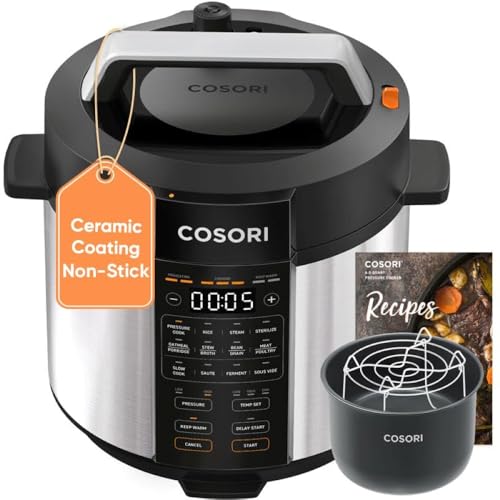
Cosori Pressure Cooker 6QT, 9-in-1
Badge: Best Overall
The Cosori 6QT is a 9-in-1 electric pressure cooker built around a ceramic-coated inner pot, with a dozen listed safety features and a function set that runs from pressure cooking through rice, slow cooking, sous vide and saute. At 1100W in a stainless steel body it sits squarely in the mainstream of the category: big enough for family batches, versatile enough to replace several single-purpose appliances.
For uses, the Cosori’s breadth is its story: pressure-cooked beans and stews on weeknights, rice when the rice cooker is busy, slow cooking on Sundays and sous vide when you want precision without another appliance. The ceramic pot makes the saute-then-pressure routine — brown the aromatics, seal, walk away — particularly easy to clean up after.
Pressure cooking works by trapping steam: the sealed pot raises the boiling point of water, so food cooks at a higher temperature than an open pot allows, and tough ingredients soften in a fraction of their usual time. The skills that matter are liquid discipline — enough water to build steam, never so much that the pot overfills — and release discipline, letting pressure fall naturally for meats and grains or releasing it quickly for vegetables you do not want to overcook. Master those two habits and the appliance becomes predictable; ignore them and every recipe feels like a gamble.
Strengths
- Ceramic-coated pot is easy to release food from and simple to wash
- Twelve listed safety features cover the pressure-cooking basics thoroughly
- Sous vide and slow cook modes stretch it well beyond pressure duty
Trade-offs
- Ceramic coatings need non-metal utensils to stay in good condition
- 6 quart size is bulky on a small counter
- The 9-in-1 menu takes a few uses to learn by heart
| Specification | Detail |
|---|---|
| Capacity | 6 quart |
| Type | Electric pressure cooker (9-in-1) |
| Key features (from listing) | Ceramic coating pot; 12 safety features; rice cooker, slow cook, sous vide and saute functions; stainless steel; 1100W |
| Construction | Stainless steel body, ceramic-coated inner pot |
Best for: Families who want one cooker for pressure, rice and slow cooking / Not suited for: Solo cooks who only ever make two portions
Check on Amazon to check the latest price on Amazon and confirm the current configuration before you buy.

Instant Pot Duo 7-in-1 Mini, 3 Quart
Badge: Best for Small Households
The Instant Pot Duo Mini shrinks the classic Duo formula to 3 quarts: the same 7-in-1 spread of pressure cooking, slow cooking, rice, steaming, saute, yogurt making and sterilizing, sized for one or two people. It is the pressure cooker most likely to earn daily use in a small household precisely because it is not oversized — a half batch of soup or a small pot of rice does not look lost inside it.
The Duo Mini’s best uses are small and daily: a two-person pot of lentil soup, a modest batch of rice, eggs steamed for the week, a single chicken breast’s worth of shredded filling. Small volume also means it reaches pressure quickly, so its time savings on small jobs are proportionally the largest in this guide.
Pressure cooking works by trapping steam: the sealed pot raises the boiling point of water, so food cooks at a higher temperature than an open pot allows, and tough ingredients soften in a fraction of their usual time. The skills that matter are liquid discipline — enough water to build steam, never so much that the pot overfills — and release discipline, letting pressure fall naturally for meats and grains or releasing it quickly for vegetables you do not want to overcook. Master those two habits and the appliance becomes predictable; ignore them and every recipe feels like a gamble.
Strengths
- 3 quart size suits singles, couples and dorm kitchens
- Full 7-in-1 function set despite the mini footprint
- Stainless steel build from the category’s best-known brand
Trade-offs
- Too small for batch cooking or large cuts of meat
- Mini size still needs the same lid and counter clearance as larger models
- Fewer functions than the 9 and 10-in-1 models in this guide
| Specification | Detail |
|---|---|
| Capacity | 3 quart |
| Type | Electric pressure cooker (7-in-1 mini) |
| Key features (from listing) | Pressure cook, slow cook, rice, steam, saute, yogurt and sterilize functions; stainless steel; free recipe app access |
| Construction | Stainless steel |
Best for: Small households that pressure cook a few times a week / Not suited for: Meal preppers cooking for a crowd
Check on Amazon to check the latest price on Amazon and confirm the current configuration before you buy.

Instant Pot Pro 6 Qt, 10-in-1
Badge: Best for Power Users
The Instant Pot Pro is the step-up 6 quart model: 10-in-1 functionality that adds sous vide and a dedicated grains capability to the familiar pressure, slow cook, steam, saute and yogurt set. For cooks who use a pressure cooker as a genuine multi-tool — weeknight curries under pressure, weekend sous vide, yogurt on Sunday — the Pro’s wider function list is the reason to choose it over the simpler Duo models.
The Pro is the uses maximizer: its sous vide mode opens a whole category — eggs, steaks, custards held at exact temperatures — that the other Instant Pots here cannot do, and its grains capability handles the rice-and-quinoa rotation. If your list of pressure cooker uses keeps growing, this is the machine that grows with it.
Pressure cooking works by trapping steam: the sealed pot raises the boiling point of water, so food cooks at a higher temperature than an open pot allows, and tough ingredients soften in a fraction of their usual time. The skills that matter are liquid discipline — enough water to build steam, never so much that the pot overfills — and release discipline, letting pressure fall naturally for meats and grains or releasing it quickly for vegetables you do not want to overcook. Master those two habits and the appliance becomes predictable; ignore them and every recipe feels like a gamble.
Strengths
- Widest function set of the Instant Pot picks here, including sous vide
- 6 quart capacity handles family meals and batch cooking
- Dedicated rice and grains capability covers daily staples
Trade-offs
- More functions mean more programs to learn
- 6 quart footprint needs real counter or cupboard space
- Premium-tier positioning within this pool
| Specification | Detail |
|---|---|
| Capacity | 6 quart |
| Type | Electric pressure cooker (10-in-1) |
| Key features (from listing) | Pressure cook, slow cook, rice and grains, steam, saute, sous vide, yogurt, keep warm and sterilize functions; black finish |
| Construction | Black finish body |
Best for: Enthusiastic cooks who will actually use sous vide and grains modes / Not suited for: Anyone who only wants beans and soup under pressure
Check on Amazon to check the latest price on Amazon and confirm the current configuration before you buy.

Instant Pot Duo Plus 6 Qt, 9-in-1
Badge: Best Family All-Rounder
The Duo Plus takes the Duo formula to 6 quarts and 9-in-1: pressure cooking, slow cooking, rice, yogurt, steaming, sauteing, warming and sterilizing in a stainless steel body. It is the middle path of the Instant Pot range in this guide — family capacity and a broad function set without stepping up to the Pro’s sous vide tier — and for most households it is the configuration that gets used hardest.
The Duo Plus covers the classic uses at family scale: big pots of chili, whole chickens, stock from a Sunday roast carcass, jars sterilized for jam making. Its sterilize function is a genuinely underrated use — bottles, jars and utensils — that households with infants or preserving habits lean on heavily.
Pressure cooking works by trapping steam: the sealed pot raises the boiling point of water, so food cooks at a higher temperature than an open pot allows, and tough ingredients soften in a fraction of their usual time. The skills that matter are liquid discipline — enough water to build steam, never so much that the pot overfills — and release discipline, letting pressure fall naturally for meats and grains or releasing it quickly for vegetables you do not want to overcook. Master those two habits and the appliance becomes predictable; ignore them and every recipe feels like a gamble.
Strengths
- Family-size 6 quart pot with a broad 9-in-1 function set
- Stainless steel build suits daily use
- Covers the classic pressure-cooker jobs plus yogurt and sterilizing
Trade-offs
- No sous vide, unlike the Pro above it in the range
- A full 6 quart pot is heavy to move when loaded
- Sterilize and yogurt modes go unused in many kitchens
| Specification | Detail |
|---|---|
| Capacity | 6 quart |
| Type | Electric pressure cooker (9-in-1) |
| Key features (from listing) | Pressure cook, slow cook, rice, yogurt, steam, saute, warm and sterilize functions; stainless steel; recipe app access |
| Construction | Stainless steel |
Best for: Families replacing several appliances with one cooker / Not suited for: Sous vide fans, who should look at the Pro or the Cosori
Check on Amazon to check the latest price on Amazon and confirm the current configuration before you buy.

Instant Pot Rio Mini 4 Qt, 7-in-1
Badge: Best for Couples
The Rio Mini splits the difference between the 3 quart Duo Mini and the full-size models: 4 quarts of 7-in-1 cooking — pressure, slow cook, rice, steam, saute, yogurt and keep warm — in a black finish. Four quarts is a quietly sensible size: enough for a couple with leftovers, small enough to store in a standard cupboard, and the natural pick for two-person households that found 3 quarts tight and 6 quarts excessive.
The Rio Mini’s uses sit between the minis and the family machines: dinner for two with leftovers, small batches of yogurt, a side of grains cooking while the main dish roasts elsewhere. Four quarts also makes it the natural second cooker for households that already own a big one and want a grains-and-sides partner.
Pressure cooking works by trapping steam: the sealed pot raises the boiling point of water, so food cooks at a higher temperature than an open pot allows, and tough ingredients soften in a fraction of their usual time. The skills that matter are liquid discipline — enough water to build steam, never so much that the pot overfills — and release discipline, letting pressure fall naturally for meats and grains or releasing it quickly for vegetables you do not want to overcook. Master those two habits and the appliance becomes predictable; ignore them and every recipe feels like a gamble.
Strengths
- 4 quart capacity is the sweet spot for two-person households
- Full core function set including yogurt and keep warm
- Stores more easily than the 6 quart models
Trade-offs
- Still too small for large batch cooking
- Black finish shows dust and fingerprints readily
- Same learning curve as any multi-function pressure cooker
| Specification | Detail |
|---|---|
| Capacity | 4 quart |
| Type | Electric pressure cooker (7-in-1 mini) |
| Key features (from listing) | Pressure cook, slow cook, rice, steam, saute, yogurt and keep warm functions; black finish |
| Construction | Black finish body |
Best for: Couples who cook dinner plus next-day leftovers / Not suited for: Large families or freezer-batch cooks
Check on Amazon to check the latest price on Amazon and confirm the current configuration before you buy.

CHEF iQ Smart Pressure Cooker, 6 Quart
Badge: Best Smart Pick
The CHEF iQ is the connected entry in this pool: a 6 quart, 10-in-1 smart pressure cooker with WiFi, a built-in scale and a library of guided recipes that walk you through each step. The scale is the genuinely distinctive hardware — ingredients are weighed in the pot itself, and the guided cooking adjusts to what you actually added — which makes it the pick for cooks who like structure and feedback rather than guesswork.
The CHEF iQ’s distinctive uses are guided ones: step-by-step recipes that weigh your ingredients and adjust as you cook, which turns first attempts at unfamiliar dishes — a new grain, a different cut — into supervised successes. For cooks building a pressure-cooking repertoire rather than repeating one, that coaching is a use in itself.
Pressure cooking works by trapping steam: the sealed pot raises the boiling point of water, so food cooks at a higher temperature than an open pot allows, and tough ingredients soften in a fraction of their usual time. The skills that matter are liquid discipline — enough water to build steam, never so much that the pot overfills — and release discipline, letting pressure fall naturally for meats and grains or releasing it quickly for vegetables you do not want to overcook. Master those two habits and the appliance becomes predictable; ignore them and every recipe feels like a gamble.
Strengths
- Built-in scale weighs ingredients right in the pot
- Guided recipes reduce the guesswork for new pressure cooks
- WiFi connectivity supports app-guided cooking
Trade-offs
- App and connectivity features only help if you will use them
- Smart features add complexity a basic cooker avoids
- 6 quart family size needs the usual counter space
| Specification | Detail |
|---|---|
| Capacity | 6 quart |
| Type | Smart electric pressure cooker (10-in-1) |
| Key features (from listing) | WiFi connectivity; built-in scale; guided recipes; rice cooker, slow cooker and 10-in-1 multicooker functions; family size |
| Construction | Smart cooker body with integrated scale |
Best for: Guided-cooking fans and newer pressure cooks who want coaching / Not suited for: Cooks who prefer dials and independence from apps
Check on Amazon to check the latest price on Amazon and confirm the current configuration before you buy.
Comparison Table
| Pick | Capacity | Type | Key features |
|---|---|---|---|
| Cosori Pressure Cooker 6QT, 9-in-1 — Check on Amazon | 6 quart | Electric pressure cooker (9-in-1) | Ceramic coating pot; 12 safety features; rice cooker, slow cook, sous vide and saute functions; stainless steel; 1100W |
| Instant Pot Duo 7-in-1 Mini, 3 Quart — Check on Amazon | 3 quart | Electric pressure cooker (7-in-1 mini) | Pressure cook, slow cook, rice, steam, saute, yogurt and sterilize functions; stainless steel; free recipe app access |
| Instant Pot Pro 6 Qt, 10-in-1 — Check on Amazon | 6 quart | Electric pressure cooker (10-in-1) | Pressure cook, slow cook, rice and grains, steam, saute, sous vide, yogurt, keep warm and sterilize functions; black finish |
| Instant Pot Duo Plus 6 Qt, 9-in-1 — Check on Amazon | 6 quart | Electric pressure cooker (9-in-1) | Pressure cook, slow cook, rice, yogurt, steam, saute, warm and sterilize functions; stainless steel; recipe app access |
| Instant Pot Rio Mini 4 Qt, 7-in-1 — Check on Amazon | 4 quart | Electric pressure cooker (7-in-1 mini) | Pressure cook, slow cook, rice, steam, saute, yogurt and keep warm functions; black finish |
| CHEF iQ Smart Pressure Cooker, 6 Quart — Check on Amazon | 6 quart | Smart electric pressure cooker (10-in-1) | WiFi connectivity; built-in scale; guided recipes; rice cooker, slow cooker and 10-in-1 multicooker functions; family size |
Read the feature column as a uses map: sous vide appears only where the machine truly offers it, sterilize only where listed, and capacity decides which uses are realistic at your household’s scale.
How to Choose a Pressure Cooker by the Uses You Need
Start from your three most frequent jobs. Write down the three things you will actually pressure cook monthly. For most households the list is some rotation of beans and lentils, soups and stews, grains, tough meat cuts and stock. Every pick in this guide does those; the differences appear at the edges — sous vide, sterilizing, yogurt at scale, guided cooking — so choose for your edges, not for a hypothetical repertoire. Shoppers who already know they want the electric format can compare Best Small Pressure Electric Cookers next.
Match capacity to batch reality. Pressure cookers should be filled no more than two-thirds for most foods, and less for foaming foods like beans and grains. That means a 6 quart pot yields roughly a 4 quart working batch, a 3 quart mini about 2 quarts. If your signature use is Sunday batch cooking, the mini will frustrate you; if it is weeknight dinners for two, the family machine will mostly heat air.
Decide whether secondary functions matter. Yogurt makers use their cooker weekly for culturing; sous vide fans need the Pro or the Cosori; households that sterilize jars or bottles need a model that lists it. These functions are listed honestly in the comparison table — buy the machine whose listed set matches your real list. Connected models are compared separately in Best Smart Pressure Cookers.
Consider the pot material. Stainless pots (the Instant Pot pattern) tolerate metal utensils and deglaze beautifully; ceramic-coated pots (Cosori, and the multicooker pattern) release sticky foods easily but ask for gentler tools. Your cooking style — heavy browning versus gentle steaming — should make this call.
How to Use a Pressure Cooker Well: The Core Techniques
Step 1 — Brown first, in the pot. Use the saute function to brown meat and bloom spices in oil before sealing. Pressure cooking cannot brown, so this step is where depth of flavor is built; skipping it is the difference between a stew that tastes simmered and one that tastes steamed.
Step 2 — Mind the liquid floor and ceiling. Every pressure cycle needs enough liquid to generate steam — follow your recipe’s minimum — and the pot must stay below its max fill line, lower still for beans, grains and other foaming foods. Deglaze after browning so nothing scorches on the base.
Step 3 — Seal and set deliberately. Check the sealing ring is seated, the valve is in the sealing position, and the lid is fully locked. Most ‘it never came to pressure’ stories are a valve left venting or a ring left in the dishwasher. Insert-pan cooking is covered in Best Stackable Pans For Pressure Cookers.
Step 4 — Choose the release like it matters, because it does. Natural release for meats, beans and grains lets pressure fall slowly and keeps textures intact; quick release suits vegetables, eggs and anything that overcooks in minutes. Many dishes want a hybrid: ten minutes natural, then release the rest.
Step 5 — Rest, then finish. Grains want a few minutes of rest before fluffing; soups want a final seasoning pass, because pressure mutes salt perception slightly. Finish with acid or fresh herbs and the dish wakes up.
Troubleshooting. Problem: the cooker never reaches pressure → check the sealing ring, the valve position and whether the liquid level is high enough to make steam. Problem: a burn notice appears → deglaze more thoroughly, add liquid, and avoid thick sauces on the bottom layer. Problem: beans are still firm → they were old or the water is hard; add time in short increments rather than restarting a long cycle.
The Ten Uses That Justify Owning One
Survey real kitchens and the same uses recur. Dried beans without soaking top the list — black beans, chickpeas and pintos go from pantry to pot in well under an hour of cooking. Tough cuts — chuck, shank, pork shoulder — become fork-tender on a weeknight schedule. Stock extracts in a fraction of stovetop time and comes out remarkably clear. Grains — brown rice, farro, steel-cut oats — cook evenly without watching a pot. One-pot pasta and rice dishes absorb their cooking liquid as they go, concentrating flavor. Add eggs that peel easily, yogurt cultured overnight, cheesecake and custards steamed gently, sterilizing jars and bottles, and reheating-and-holding duty at gatherings, and the appliance stops being a gadget and becomes infrastructure.
Notice what is absent: anything that needs dry heat, browning at the end, or crispness. Pressure cookers are wet-heat machines. Route roasting, crisping and charring to the oven or air fryer and let the pressure cooker do the moist, patient work it is brilliant at. Steaming accessories are rounded up in Best Steamer Basket For Electric Pressure Cookers.
Pressure Cooking Times: How to Think, Not Memorize
New owners hunt for the definitive timing chart; experienced ones learn the logic instead. Dense foods cook from the outside in, so thickness matters more than weight — a whole chicken and the same weight in pieces are different problems. Liquids transfer heat faster than steam alone, so submerged foods cook quicker than foods steamed above the liquid. And carryover is real: a natural release keeps cooking, sometimes for a significant stretch, which is why recipes pair short pressure times with long natural releases for large cuts. Learn those three principles and any recipe — or any improvisation — becomes predictable: size the pieces evenly, choose the medium, and budget the release as part of the cook.
Layering Flavors in a Sealed Pot
Because a pressure cooker seals, volatile aromatics stay in the dish instead of perfuming the kitchen — a blessing and a trap. Herbs and spices go in early and meld deeply, but fresh, bright flavors mute; the fix is a two-stage seasoning habit: build the base with aromatics, garlic, tomato paste and spices before sealing, then finish after opening with lemon, vinegar, fresh herbs or a swirl of something rich. Dairy also belongs at the end — pressure can split cream and yogurt sauces — so stir those in off the boil. This sequencing, more than any recipe, is what separates flat pressure-cooked food from layered food.
One Cooker or Two: The Second-Pot Question
Households that fall hard for pressure cooking eventually hit the same wall: the main dish is under pressure and the grains have nowhere to cook. That is the honest case for a mini as a second machine — a 3 or 4 quart cooker running rice, quinoa or steamed vegetables in parallel while the 6 quart handles the braise. It sounds indulgent until you price the alternative (a separate rice cooker, a steamer, counter chaos) and realize the mini is the cheapest way to make the whole meal land at the same moment. If your uses list is growing in parallel rather than in size, two mid-size cookers beat one giant one.
Pressure Cooking for Beginners: The First Five Dishes
If you are new to the appliance, sequence your learning. Start with eggs — steamed in the shell, easy to peel, almost impossible to ruin — because they teach you the sound and timing of a cycle without risk. Move to a simple grain, brown rice or quinoa, to learn liquid ratios and the rest-and-fluff habit. Third, a lentil soup: lentils need no soak, forgive timing errors and teach you the saute-then-seal rhythm. Fourth, a whole chicken or a pot of stock, which teaches natural release and shows you the machine’s party trick. Fifth, dried beans from scratch, the dish that converts skeptics. By the fifth dish you will have used every core skill in this guide — browning, liquid discipline, release choice, resting — and the intimidating appliance will have become the most predictable pot in your kitchen. Every pick in this guide can run that sequence; the minis simply run it at learning-friendly scale.
Energy, Time and the Real Savings
Pressure cooking’s savings are usually described in minutes, but the fuller accounting is kinder still. A sealed electric cooker heats a small, insulated volume rather than an oven cavity or a large stovetop pot, so long braises that once meant hours of burner time become short, contained cycles. The savings compound in summer, when a stew no longer heats the whole kitchen, and in busy households, where the true currency is attention: a pressure cooker needs none while it cooks, freeing the cook for everything else dinner requires. None of this requires the most expensive model — the physics is identical in the Duo Mini and the Pro — which is why this guide keeps returning you to uses and size rather than price tiers. The machine that saves you the most is the one sized to the meals you actually cook, running three nights a week instead of impressing guests twice a year.
Accessories That Extend the Uses List
Three accessories genuinely expand what these machines do. A steamer basket turns any of them into a vegetable, egg and dumpling steamer that runs while grains cook below. Stackable insert pans enable pot-in-pot cooking — a curry above, rice below, two dishes in one cycle — and are the accessory experienced owners reach for most. A second inner pot sounds like a luxury until the night the first pot is in the dishwasher and dinner is not; then it is the difference between using the cooker and ordering in. A spare sealing ring, savory cooking’s hardest-working consumable, completes the kit: one ring for curries and beans, one for yogurt and desserts, and no flavor ghosts traveling between them. Buy accessories for your exact model and size — the ecosystem depth discussed throughout this guide is what makes that easy for the big lines and worth checking for the smaller ones.
What Pressure Cooking Cannot Do
Honest guides end with the limits. A pressure cooker cannot brown or crisp anything after the lid closes — the sealed, steamy environment is the opposite of a hot dry pan — so skin will never crisp and crusts will never form inside it. It cannot cook delicate fish fillets or quick vegetables with any finesse unless the timing is very short and very deliberate, because the same force that tenderizes chuck in an hour turns zucchini to soup in minutes. It cannot reduce a sauce, since nothing evaporates; thin liquids stay thin until you simmer them down with the lid off afterward. And it cannot rescue bad seasoning — pressure melds flavors but does not create them, which is why the browning and finishing steps in this guide’s how-to section matter so much. Route crisping to the oven or air fryer, delicate work to the stove, and let the pressure cooker own the moist, patient middle of your cooking, where it has no rival at any price in this pool.
Safety Habits That Become Automatic
Pressure cookers are safe appliances with a short list of non-negotiables, and experienced owners follow them without thinking. Keep the steam release valve and the anti-block shield clean, because a clogged vent is the root of most erratic behavior. Never force a lid that resists opening — resistance means pressure remains, and pressure always wins that argument; wait, or release the valve properly first. Keep your face and hands out of the steam’s path during a quick release, and release away from cabinets whose finishes steam can damage over time. Fill conservatively with anything that foams or expands — beans, grains, pasta — because the headspace is part of the safety system, not wasted room. And replace a hardening or odor-holding sealing ring promptly rather than coaxing it along; the ring is the seal the whole system depends on. None of this is burdensome. It is five habits, learned in the first month, that make the next decade of pressure cooking uneventful — which is precisely what you want from an appliance whose entire job is controlled pressure.
Converting Your Favorite Recipes
Once the core uses click, the natural next step is converting the braises and soups you already love. The conversion logic is consistent. Keep the aromatics, browning and seasoning exactly as written — pressure changes cooking time, not flavor architecture. Reduce the liquid substantially, because a sealed pot loses almost nothing to evaporation; a stovetop braise’s generous stock becomes a concentrated cup or two, and you can always thin the finished dish. Cut the time to roughly a third of the low-and-slow original as a starting estimate, choosing natural release for meats and grains. Add dairy, fresh herbs and quick vegetables after the pressure cycle, in the simmer-with-lid-off finishing phase that every good conversion ends with. Expect the first conversion of any recipe to land close rather than perfect, adjust one variable — liquid or minutes — and write the result on the recipe. Two passes is all most family favorites need to become pressure-cooker regulars.
Cleaning and Storage, Briefly
Daily care is three minutes: wash the inner pot, wipe the lid’s underside, rinse the sealing ring and let it air rather than sealing the machine shut with a damp ring inside — the closed, damp pot is where stale odors are born. Store the lid upside down or ajar for the same reason. Weekly, check the float valve and anti-block shield for starch buildup, especially if you cook grains and beans often. The stainless pots in this guide tolerate enthusiastic scrubbing; the ceramic-coated pots ask for soaking instead of scouring, and reward it with a longer-lived surface. None of the six machines here asks for more than this, and the habit matters beyond hygiene: a clean vent and a supple ring are what consistent pressurizing is made of, so the cookers that get this three minutes are the ones that behave identically in year three as in week one.
Common Buying Mistakes
Buying capacity for the household you wish you had. A family-size cooker for a one-person kitchen means stale leftovers or wasted batches; a mini cooker for a family of five means cooking in relays. Count the portions your home actually eats on a weekday and buy for that number, not for holidays.
Counting functions instead of reading them. A 16-in-1 badge means little if the three functions you need are buried or weak. List the jobs you will run weekly — pressure, rice, steam, slow cook — and check each pick does those specific jobs well.
Ignoring the inner pot. The pot is the part you touch, wash and eventually replace. Ceramic and nonstick coatings are easy-release but wear; stainless is tougher but sticks more. Choose the material that matches how carefully you actually cook and wash.
Skipping the ownership math. Sealing rings, inner pots and lids are consumables on any cooker used weekly. A machine whose parts are easy to find costs less over its life than a slightly cheaper machine whose parts are not — a point the warranty-focused sections of this site return to often. Stovetop alternatives are covered in Best Stainless Steel Pressure Cookers For Gas Stove.
Final Recommendation
For most households the first choice is the Cosori 6QT: its function set covers the widest honest spread of uses — pressure, rice, slow cook, sous vide — in a family size with an easy-clean ceramic pot. Small households should take the Duo Mini or Rio Mini and enjoy a machine sized to their actual cooking. Power users and sous vide fans step up to the Instant Pot Pro; families wanting the classic all-rounder take the Duo Plus; and cooks who want coaching with their cooking choose the CHEF iQ. Buy for the uses you listed, not the longest feature list, and the machine will earn its counter space within a month.
To act on this guide: start with the Cosori Pressure Cooker 6QT, 9-in-1; start with the Instant Pot Duo 7-in-1 Mini, 3 Quart; start with the Instant Pot Pro 6 Qt, 10-in-1 — each link lets you check the latest price on Amazon and confirm the current configuration.
Frequently Asked Questions
What are the best uses for a pressure cooker day to day?
Beans and lentils, soups and stews, stocks, grains like brown rice and farro, tough cuts of meat, eggs, and one-pot rice dishes. Those wet-heat, time-hungry jobs are where sealed pressure cooking saves the most time and delivers the most consistent results.
Can a pressure cooker replace a slow cooker and rice cooker?
For most households, yes: every pick in this guide slow cooks and cooks rice. Dedicated machines can refine texture further — fuzzy-logic rice cookers especially — but a good electric pressure cooker covers both jobs well enough that many kitchens retire the separate appliances.
Is sous vide a realistic use for a pressure cooker?
Only on models that list it — here, the Instant Pot Pro and the Cosori. Sous vide needs precise, stable low temperatures, which is a different control problem from pressure cooking; do not assume a pressure cooker offers it unless the listing says so.
What should never go in a pressure cooker?
Thick, foamy or dairy-heavy mixtures cooked from the start, deep frying of any kind, and canning — electric pressure cookers are not pressure canners and must never be used for home canning. Add dairy at the end, and keep fill levels conservative with beans and grains.
How much liquid does pressure cooking need?
Enough to generate steam for the whole cycle without boiling dry — recipes specify the amount for the dish and pot size. Too little risks a burn notice; too much dilutes flavor and slows the come-up to pressure. Follow the recipe’s figure for your pot size rather than scaling by instinct.
Natural release or quick release — which should I use?
Natural release for meats, beans, grains and anything foamy, because a sudden pressure drop can toughen meat and spray starchy liquid. Quick release for vegetables, eggs and delicate foods that overcook in minutes. Many dishes split the difference: a short natural rest, then release the remainder.


