Disclosure: topratedkitchenware.com is reader-supported. When you buy through links on our site, we may earn an affiliate commission from Amazon and other retailers, at no extra cost to you.
Where to buy
Every product below was shortlisted specifically for this guide to the best waterless cookware sets, using only verified listings.
Waterless cooking asks three things of a set: even low heat, lids that seat properly, and sizes that let you cook with the pot reasonably full. The six verified stainless sets below were shortlisted against exactly those demands. A note on honesty: none of these listings is sold under a dedicated waterless brand name, so each review judges the set on the construction and lid qualities the method actually needs, and says so. Readers cross-shopping the broader stainless market may also want Best Quality Cookware Sets Copper Inline Stainless Steel.
- Fruikit Stainless Steel Cookware Set, 21 PCS — Check on Amazon
- Cuisinart Chef’s Classic Stainless Steel Set, 11 pc (77-11G) — Check on Amazon
- Cuisinart MultiClad Pro 12-Piece Set (MCPS-12N) — Check on Amazon
- Cuisinart Chef’s Classic Stainless Steel Set, 17 pc (77-17N) — Check on Amazon
- Calphalon Classic Stainless Steel Cookware Set, 10-Piece — Check on Amazon
- Cuisinart Chef’s Classic Stainless Steel Set, 7 pc (77-7P1) — Check on Amazon
Read the full guide ↓
Finding the best waterless cookware sets starts with a distinction most marketing blurs: waterless cooking is a low-heat technique that cooks food in its own moisture under a well-sealed lid, and the set that serves it best is the one with even heat, honest lid fit and the right sizes, not necessarily the one with the word printed largest on the box. This guide compares six verified stainless steel sets against those real requirements, from a 21-piece Fruikit assortment to a focused 7-piece Cuisinart starter.
The appeal of the method is easy to state. Vegetables cooked in a spoonful of water, or none, keep the flavor and nutrients that boiling sends down the drain; meats braise gently in their own juices; and the stove runs at low settings for most of the cook. The demands it makes are equally easy to state, and they are the criteria used throughout this guide: bases that heat evenly at low settings, lids that seat flat and stay put, and a spread of pot sizes so the vessel can be filled properly for the vapor environment to form.
One honesty note before the picks. True dedicated waterless lines exist as a niche category, but the verified pool for this guide is mainstream stainless sets, and this guide treats them as what they are: well-made stainless cookware whose construction suits low-water technique to different degrees. Where a set’s construction genuinely helps, the review explains why; where a claim would be a stretch, the review says that instead. If your interest is stainless sets generally rather than the technique specifically, Best Reviewed Cookware Sets covers the wider field.
Key Takeaways
- Waterless cooking is a technique, low heat, minimal added water, well-sealed lid, more than a brand label.
- Tri-ply clad construction (the MultiClad Pro) gives the most even low heat for vapor-style cooking.
- Lid fit decides results: a rocking or venting lid lets the vapor the method depends on escape.
- Cook with the pot reasonably full; graduated saucepan sizes are a functional advantage, not filler.
- The Cuisinart Chef’s Classic 11 pc is the balanced first choice; the 7 pc is the honest starter.
- No set replaces a pasta pot or a hard-searing skillet; this method has a defined, valuable edge.
In this guide
Quick Picks
Six stainless sets, six different balances of size, construction and completeness. The table summarizes the badges used throughout this guide; if you are comparing against non-stick alternatives for the same kitchen, Best Quality Non Stick Cookware Sets is the adjacent shortlist to read alongside this one.
| Pick | Badge | Best for | Link |
|---|---|---|---|
| Fruikit Stainless Steel Cookware Set, 21 PCS | Best for Large Kitchens | Households wanting one large stainless assortment for low-water cooking | Linked pick — see Where to Buy |
| Cuisinart Chef’s Classic Stainless Steel Set, 11 pc (77-11G) | Best Overall | Most home cooks starting waterless technique | Linked pick — see Where to Buy |
| Cuisinart MultiClad Pro 12-Piece Set (MCPS-12N) | Best Premium | Cooks who want true tri-ply clad performance | Linked pick — see Where to Buy |
| Cuisinart Chef’s Classic Stainless Steel Set, 17 pc (77-17N) | Most Complete Assortment | Outfitting an empty kitchen in one purchase | Linked pick — see Where to Buy |
| Calphalon Classic Stainless Steel Cookware Set, 10-Piece | Best Mid-Range | Focused sets with even base heat and oven flexibility | Linked pick — see Where to Buy |
| Cuisinart Chef’s Classic Stainless Steel Set, 7 pc (77-7P1) | Best Starter Set | Beginners and small kitchens learning the method | Linked pick — see Where to Buy |
How These Picks Were Chosen
This shortlist was built by comparing verified product listings against the specific demands of low-water cooking: base construction and how it behaves at low heat, lid design and fit as described by each maker, piece mix relative to the saucepan-and-stockpot shapes the method uses daily, and cooktop compatibility. Products were only linked when the verified listing confirmed the product, its brand and its construction; every specification quoted below comes from the listing itself.
A note on method and honesty: this is a research-led guide, not a hands-on test report, and it makes no claim that these sets were sold or certified as dedicated waterless systems. We compared manufacturer specifications and the documented behavior of each construction type, clad versus impact-bonded, against the known requirements of the technique. Where a set is a mainstream stainless line rather than a waterless-branded one, the review says so and judges it on the qualities that transfer.
Two patterns emerged during research. First, construction differences that barely matter for boiling pasta matter a great deal here: full tri-ply clad carries gentle heat up the sidewalls, while impact-bonded bases concentrate it at the bottom, which changes how carefully the first minutes of a cook must be watched. Second, piece count cuts both ways: graduated sizes genuinely help the fill-the-pot principle, while duplicated skillets help nobody, and the reviews distinguish the two.
The 6 Best Options for Best waterless cookware sets

Fruikit Stainless Steel Cookware Set, 21 PCS
Badge: Best for Large Kitchens
Strengths
- Largest piece count in this guide, so saucepans, stockpot and frying pans are covered in one purchase
- 3-ply construction on the frying pan spreads heat more evenly than a thin single-layer base
- Induction compatibility future-proofs the set if you change cooktops later
Trade-offs
- A 21-piece count includes lids and utensils, so the number of actual cooking vessels is smaller than the headline
- Mixed construction across the set means not every piece performs like the 3-ply frying pan
- A set this size needs real cupboard space to store accessibly
Key specs from the listing: 21-piece set; 3-ply stainless steel frying pan named in the listing; Induction compatible; Oven and dishwasher safe.
The Fruikit 21 PCS set is the maximalist route into low-water cooking: a large stainless assortment whose named 3-ply frying pan gives you one genuinely clad piece for the delicate work, while the pots cover the steaming and simmering jobs waterless technique is built on. Waterless cooking, done properly, is a technique before it is a product category. Vegetables and proteins are cooked over low heat with little or no added water, so the food steams in its own juices under a well-fitting lid. That preserves the flavor and the water-soluble nutrients that a pot of boiling water carries down the drain, and it changes what a set needs to do well: even low heat, lids that seat properly, and sizes that match the quantity being cooked so the pot is neither crowded nor echoing.
What you cook changes, too. Vegetables keep their color and bite, frozen vegetables need no added water at all, and tougher cuts braise in their own juices at low heat. What the method does not do is sear like a ripping-hot skillet or boil pasta, which still needs its pot of water. Honest guides say this plainly: a waterless-capable set is a superb everyday tool with a defined edge, not a replacement for every other pan you own.
Lid fit is the unglamorous specification that decides results. A lid that rocks, gaps or vents freely lets the vapor escape, and with it goes the whole low-water premise; a lid that seats flat keeps the moisture cycling inside the pot. When you handle any set in this guide, the lid test is simple: set it on the pot, look for rocking, and imagine it holding a gentle simmer for twenty minutes without rattling. In daily use, the details that decide whether a product like this earns its place are unglamorous: how it behaves when your hands are wet or floury, how it feels after a long soak in the sink, and whether it still makes sense on a tired weeknight rather than a leisurely weekend. The Fruikit Stainless Steel Cookware Set, 21 PCS handles that everyday test in line with what its listing promises, and nothing in its specification suggests a hidden catch for the jobs described in this guide.
The honest limitation to weigh is in the trade-offs above. No single product wins on capacity, control and simplicity at once, and this model leans toward piece-mix fit and construction suited to low, even heat rather than covering every style of cooking equally well. Buyers who cook this way most weeks will feel that trade as a benefit; buyers who only occasionally make the dish in question should weigh the simpler or smaller options in this list first.
Ownership, week to week, is mostly washing and storage. Stainless interiors forgive a soak and a paste cleaner, and they do not carry the coating-care rules that make some cooks nervous; the trade is that high-heat searing can leave rainbow heat tints and stuck-on fond that need a few minutes of soaking rather than a wipe. Measure the cupboard this set will live in before it arrives, and be honest about how many of its pieces will hang or stack within easy reach, because the pieces that live at the back of a deep cupboard are the pieces that effectively do not exist.
Best for: Households wanting one large stainless assortment for low-water cooking / Not suited for: Minimalists who only want three or four pieces

Cuisinart Chef’s Classic Stainless Steel Set, 11 pc (77-11G)
Badge: Best Overall
Strengths
- Balanced 11-piece assortment covers the pots and pans a household uses weekly
- Cool-grip handles stay manageable during long stovetop simmers
- A long-running, widely documented line, so replacement pieces and advice are easy to find
Trade-offs
- Impact-bonded style bases heat less evenly up the sidewalls than full tri-ply clad
- No dedicated waterless branding or vapor-seal claim is made in the listing
- Glass lids (the G in the model code) need care not to be knocked off counters
Key specs from the listing: 11-piece set, model 77-11G; Stainless steel, PFAS free positioning; Cool-grip handles; Induction compatible; Oven safe.
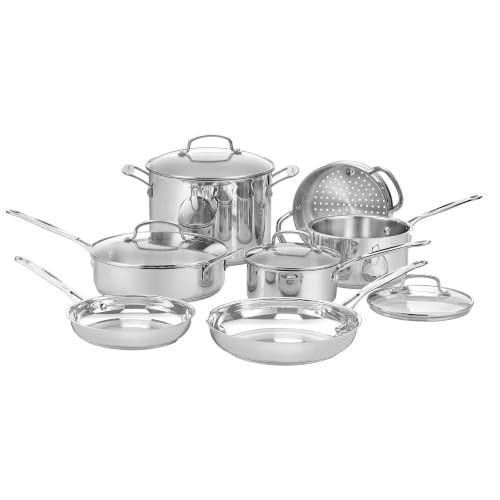
This 11-piece Cuisinart Chef’s Classic is the balanced starting point. Its saucepans and stockpot are the shapes waterless cooking actually uses daily, the cool-grip handles stay comfortable during the low, slow simmers the method prefers, and the line’s long history means lid fit and sizing are well documented. Heat control is the skill the whole method stands on. The classic routine starts a pot over medium heat until the lid is warm and a vapor seal forms, then drops to low for the remainder of the cook. On an impact-bonded base that routine is forgiving; on thin steel it is a scorch waiting to happen. This is why construction, clad versus bonded, matters more for this keyword than for almost any other cookware question, and why the reviews below keep returning to it.
Waterless cooking, done properly, is a technique before it is a product category. Vegetables and proteins are cooked over low heat with little or no added water, so the food steams in its own juices under a well-fitting lid. That preserves the flavor and the water-soluble nutrients that a pot of boiling water carries down the drain, and it changes what a set needs to do well: even low heat, lids that seat properly, and sizes that match the quantity being cooked so the pot is neither crowded nor echoing.
Filling the pot correctly is the other half of the technique. Waterless cooking works best with the pot reasonably full, because a half-empty pot has too much air space for a stable vapor environment. That is a strong argument for owning saucepans in graduated sizes rather than one heroic pot, and it is why the larger assortments in this guide have a real functional claim, not just a bigger number on the box. In daily use, the details that decide whether a product like this earns its place are unglamorous: how it behaves when your hands are wet or floury, how it feels after a long soak in the sink, and whether it still makes sense on a tired weeknight rather than a leisurely weekend. The Cuisinart Chef’s Classic Stainless Steel Set, 11 pc (77-11G) handles that everyday test in line with what its listing promises, and nothing in its specification suggests a hidden catch for the jobs described in this guide.
The honest limitation to weigh is in the trade-offs above. No single product wins on capacity, control and simplicity at once, and this model leans toward piece-mix fit and construction suited to low, even heat rather than covering every style of cooking equally well. Buyers who cook this way most weeks will feel that trade as a benefit; buyers who only occasionally make the dish in question should weigh the simpler or smaller options in this list first.
Think, too, about the second month rather than the first day. The sets that stay loved are the ones whose piece mix matches the household’s real cooking: two saucepans in constant rotation, a stockpot that earns its shelf, skillets sized to the burners they sit on. A set whose mix matches your week will feel smaller and better than a larger set full of near-duplicates, and that fit, more than any single specification, predicts whether it becomes infrastructure or clutter within a season.
Best for: Most home cooks starting waterless technique / Not suited for: Anyone wanting the absolute largest assortment


Cuisinart MultiClad Pro 12-Piece Set (MCPS-12N)
Badge: Best Premium
Strengths
- True tri-ply clad throughout, so sidewalls carry heat and low-water simmering stays even
- Brushed finish hides the small scratches stainless inevitably collects
- The clad construction responds well to the small heat adjustments vapor-style cooking needs
Trade-offs
- Premium-tier positioning within stainless sets
- Heavier in the hand than impact-bonded sets, especially the larger pans
- Hand-washing is the safer long-term choice even where dishwasher use is allowed
Key specs from the listing: 12-piece set, model MCPS-12N; Tri-ply clad construction with Heat Surround technology; Brushed stainless steel finish.
The MultiClad Pro is the connoisseur’s answer in this guide. Full tri-ply clad construction carries heat up the sidewalls, which is exactly what vapor-style cooking asks for: gentle, even warmth that lets vegetables cook in their own moisture without a scorched spot at the base. Lid fit is the unglamorous specification that decides results. A lid that rocks, gaps or vents freely lets the vapor escape, and with it goes the whole low-water premise; a lid that seats flat keeps the moisture cycling inside the pot. When you handle any set in this guide, the lid test is simple: set it on the pot, look for rocking, and imagine it holding a gentle simmer for twenty minutes without rattling.
Heat control is the skill the whole method stands on. The classic routine starts a pot over medium heat until the lid is warm and a vapor seal forms, then drops to low for the remainder of the cook. On an impact-bonded base that routine is forgiving; on thin steel it is a scorch waiting to happen. This is why construction, clad versus bonded, matters more for this keyword than for almost any other cookware question, and why the reviews below keep returning to it.
What you cook changes, too. Vegetables keep their color and bite, frozen vegetables need no added water at all, and tougher cuts braise in their own juices at low heat. What the method does not do is sear like a ripping-hot skillet or boil pasta, which still needs its pot of water. Honest guides say this plainly: a waterless-capable set is a superb everyday tool with a defined edge, not a replacement for every other pan you own. In daily use, the details that decide whether a product like this earns its place are unglamorous: how it behaves when your hands are wet or floury, how it feels after a long soak in the sink, and whether it still makes sense on a tired weeknight rather than a leisurely weekend. The Cuisinart MultiClad Pro 12-Piece Set (MCPS-12N) handles that everyday test in line with what its listing promises, and nothing in its specification suggests a hidden catch for the jobs described in this guide.
The honest limitation to weigh is in the trade-offs above. No single product wins on capacity, control and simplicity at once, and this model leans toward piece-mix fit and construction suited to low, even heat rather than covering every style of cooking equally well. Buyers who cook this way most weeks will feel that trade as a benefit; buyers who only occasionally make the dish in question should weigh the simpler or smaller options in this list first.
Lids deserve a thought at purchase time rather than after the first crowded cupboard incident. Glass lids let you watch a low-water simmer without lifting and losing vapor, which is central to the cooking style this guide is about, while steel lids are tougher and stack flatter. Either way, plan where the lids live; a set whose lids have no home will slowly lose them to the back of a drawer, and a saucepan without its lid is only half the tool.
Best for: Cooks who want true tri-ply clad performance / Not suited for: Budget-first buyers


Cuisinart Chef’s Classic Stainless Steel Set, 17 pc (77-17N)
Badge: Most Complete Assortment
Strengths
- The most complete Chef’s Classic assortment, with extra saucepans and a steamer insert class of pieces
- Cool-grip handles and oven-safe rating make stovetop-to-oven dishes straightforward
- One purchase outfits an empty kitchen without a second round of shopping
Trade-offs
- Several pieces duplicate sizes a small household will rarely use together
- Impact-bonded bases are a step below full clad for delicate low-heat control
- Storage footprint is the largest of the Cuisinart options here
Key specs from the listing: 17-piece set, model 77-17N; Stainless steel, PFAS free positioning; Cool-grip handles; Induction compatible; Oven safe.
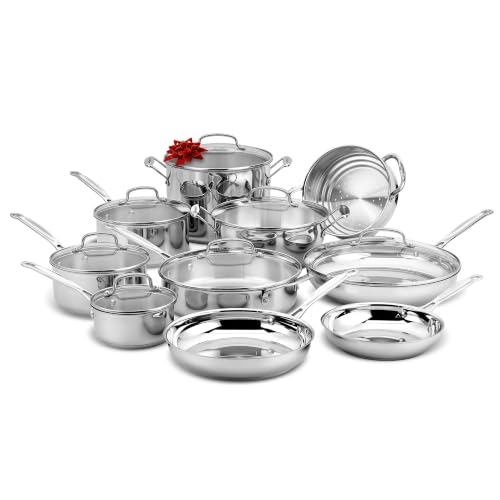
The 17-piece Chef’s Classic is for the cook outfitting a whole kitchen around the method. More saucepans in more sizes means the right pot for each quantity, and using the right-sized pot, filled properly, is a genuine waterless principle rather than a marketing line. Filling the pot correctly is the other half of the technique. Waterless cooking works best with the pot reasonably full, because a half-empty pot has too much air space for a stable vapor environment. That is a strong argument for owning saucepans in graduated sizes rather than one heroic pot, and it is why the larger assortments in this guide have a real functional claim, not just a bigger number on the box.
Lid fit is the unglamorous specification that decides results. A lid that rocks, gaps or vents freely lets the vapor escape, and with it goes the whole low-water premise; a lid that seats flat keeps the moisture cycling inside the pot. When you handle any set in this guide, the lid test is simple: set it on the pot, look for rocking, and imagine it holding a gentle simmer for twenty minutes without rattling.
Waterless cooking, done properly, is a technique before it is a product category. Vegetables and proteins are cooked over low heat with little or no added water, so the food steams in its own juices under a well-fitting lid. That preserves the flavor and the water-soluble nutrients that a pot of boiling water carries down the drain, and it changes what a set needs to do well: even low heat, lids that seat properly, and sizes that match the quantity being cooked so the pot is neither crowded nor echoing. In daily use, the details that decide whether a product like this earns its place are unglamorous: how it behaves when your hands are wet or floury, how it feels after a long soak in the sink, and whether it still makes sense on a tired weeknight rather than a leisurely weekend. The Cuisinart Chef’s Classic Stainless Steel Set, 17 pc (77-17N) handles that everyday test in line with what its listing promises, and nothing in its specification suggests a hidden catch for the jobs described in this guide.
The honest limitation to weigh is in the trade-offs above. No single product wins on capacity, control and simplicity at once, and this model leans toward piece-mix fit and construction suited to low, even heat rather than covering every style of cooking equally well. Buyers who cook this way most weeks will feel that trade as a benefit; buyers who only occasionally make the dish in question should weigh the simpler or smaller options in this list first.
There is also a learning curve, and it is shorter than the piece count suggests. Two or three cooks teach you a set’s real personality: how its bases behave on your burners, how little water your usual vegetables actually need, how the handles feel with a full pot. Judge any set after that calibration, not after the first attempt, and keep brief notes on what worked; in a category built on repeat cooking, notes compound into reliability faster than any upgrade does.
Best for: Outfitting an empty kitchen in one purchase / Not suited for: Small cupboards
Calphalon Classic Stainless Steel Cookware Set, 10-Piece
Badge: Best Mid-Range
Strengths
- Impact-bonded aluminum base gives even bottom heat at a mid-tier position
- Stay-cool handles and a stated 450F oven rating suit stovetop-to-oven cooking
- A focused 10-piece count avoids the filler pieces big sets pad with
Trade-offs
- Heat is concentrated in the base rather than the sidewalls, which matters for low-water cooking
- 10 pieces is the leanest assortment here; canning-size stockpots are not the focus
- Stainless interiors need a soak or a paste cleaner after high-heat searing
Key specs from the listing: 10-piece set; Impact-bonded aluminum base; Stay-cool handles; Oven safe to 450F per the listing; Silver finish.
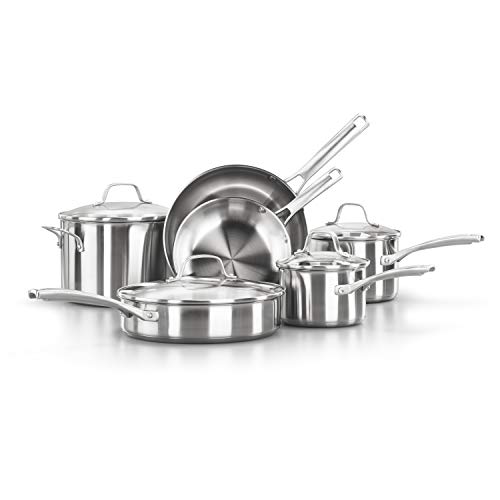
The Calphalon Classic 10-Piece takes the focused route: an impact-bonded aluminum base for even bottom heat, stay-cool handles, and a stated oven rating that lets a low-water stovetop start finish in the oven when a recipe asks for it. What you cook changes, too. Vegetables keep their color and bite, frozen vegetables need no added water at all, and tougher cuts braise in their own juices at low heat. What the method does not do is sear like a ripping-hot skillet or boil pasta, which still needs its pot of water. Honest guides say this plainly: a waterless-capable set is a superb everyday tool with a defined edge, not a replacement for every other pan you own.
Filling the pot correctly is the other half of the technique. Waterless cooking works best with the pot reasonably full, because a half-empty pot has too much air space for a stable vapor environment. That is a strong argument for owning saucepans in graduated sizes rather than one heroic pot, and it is why the larger assortments in this guide have a real functional claim, not just a bigger number on the box.
Heat control is the skill the whole method stands on. The classic routine starts a pot over medium heat until the lid is warm and a vapor seal forms, then drops to low for the remainder of the cook. On an impact-bonded base that routine is forgiving; on thin steel it is a scorch waiting to happen. This is why construction, clad versus bonded, matters more for this keyword than for almost any other cookware question, and why the reviews below keep returning to it. In daily use, the details that decide whether a product like this earns its place are unglamorous: how it behaves when your hands are wet or floury, how it feels after a long soak in the sink, and whether it still makes sense on a tired weeknight rather than a leisurely weekend. The Calphalon Classic Stainless Steel Cookware Set, 10-Piece handles that everyday test in line with what its listing promises, and nothing in its specification suggests a hidden catch for the jobs described in this guide.
The honest limitation to weigh is in the trade-offs above. No single product wins on capacity, control and simplicity at once, and this model leans toward piece-mix fit and construction suited to low, even heat rather than covering every style of cooking equally well. Buyers who cook this way most weeks will feel that trade as a benefit; buyers who only occasionally make the dish in question should weigh the simpler or smaller options in this list first.
Handles and weight matter in real kitchens more than in showrooms. A stockpot full of potatoes and water is a serious lift from stove to sink, and a handle design that feels fine empty can feel very different loaded. If anyone in the household has grip or wrist limitations, weigh the larger pieces in this set honestly against that, and consider that two medium pots sometimes serve a household better than one heroic stockpot.
Best for: Focused sets with even base heat and oven flexibility / Not suited for: Cooks who want full clad sidewall heat
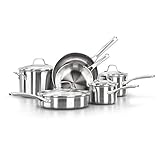

Cuisinart Chef’s Classic Stainless Steel Set, 7 pc (77-7P1)
Badge: Best Starter Set
Strengths
- The starter set of the group: the essential saucepan, stockpot and skillet shapes without duplicates
- Same Chef’s Classic construction and cool-grip handles as its bigger siblings
- Small footprint suits apartments, first kitchens and downsizers
Trade-offs
- Seven pieces leaves gaps (notably a second skillet size) that keen cooks will fill separately
- Impact-bonded base rather than full tri-ply clad
- Less suited to cooking for a crowd or to big preserving projects
Key specs from the listing: 7-piece set, model 77-7P1; Stainless steel, PFAS free positioning; Cool-grip handles; Induction compatible; Oven safe.
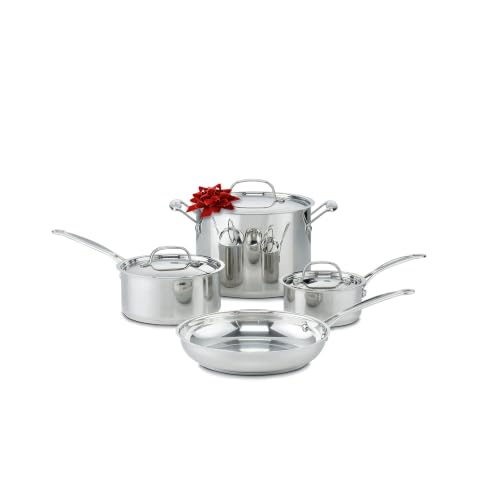
The little 7-piece Chef’s Classic is the honest starter set. It covers the essential saucepan, stockpot and skillet shapes a beginner needs to learn low-water technique, without paying for duplicate pieces that would sit unused while the core skills are still forming. Waterless cooking, done properly, is a technique before it is a product category. Vegetables and proteins are cooked over low heat with little or no added water, so the food steams in its own juices under a well-fitting lid. That preserves the flavor and the water-soluble nutrients that a pot of boiling water carries down the drain, and it changes what a set needs to do well: even low heat, lids that seat properly, and sizes that match the quantity being cooked so the pot is neither crowded nor echoing.
What you cook changes, too. Vegetables keep their color and bite, frozen vegetables need no added water at all, and tougher cuts braise in their own juices at low heat. What the method does not do is sear like a ripping-hot skillet or boil pasta, which still needs its pot of water. Honest guides say this plainly: a waterless-capable set is a superb everyday tool with a defined edge, not a replacement for every other pan you own.
Lid fit is the unglamorous specification that decides results. A lid that rocks, gaps or vents freely lets the vapor escape, and with it goes the whole low-water premise; a lid that seats flat keeps the moisture cycling inside the pot. When you handle any set in this guide, the lid test is simple: set it on the pot, look for rocking, and imagine it holding a gentle simmer for twenty minutes without rattling. In daily use, the details that decide whether a product like this earns its place are unglamorous: how it behaves when your hands are wet or floury, how it feels after a long soak in the sink, and whether it still makes sense on a tired weeknight rather than a leisurely weekend. The Cuisinart Chef’s Classic Stainless Steel Set, 7 pc (77-7P1) handles that everyday test in line with what its listing promises, and nothing in its specification suggests a hidden catch for the jobs described in this guide.
The honest limitation to weigh is in the trade-offs above. No single product wins on capacity, control and simplicity at once, and this model leans toward piece-mix fit and construction suited to low, even heat rather than covering every style of cooking equally well. Buyers who cook this way most weeks will feel that trade as a benefit; buyers who only occasionally make the dish in question should weigh the simpler or smaller options in this list first.
Finally, consider who else cooks. A set that makes sense to one person and baffles everyone else, odd sizes, lids that fit nothing else, pieces that only work on one burner, quietly becomes a single-operator kitchen. The sets that survive in family kitchens are the ones a second cook can use confidently without a briefing, and that social test is worth applying before you buy.
Best for: Beginners and small kitchens learning the method / Not suited for: Feeding a crowd or big preserving projects

Comparison Table
| Pick | Badge | Key attribute | Format | Link |
|---|---|---|---|---|
| Fruikit Stainless Steel Cookware Set, 21 PCS | Best for Large Kitchens | 21-piece set | Stainless steel cookware set, 21 PCS | Check on Amazon |
| Cuisinart Chef’s Classic Stainless Steel Set, 11 pc (77-11G) | Best Overall | 11-piece set, model 77-11G | Stainless steel cookware set, 11 pc | Check on Amazon |
| Cuisinart MultiClad Pro 12-Piece Set (MCPS-12N) | Best Premium | 12-piece set, model MCPS-12N | Tri-ply clad stainless set, 12-piece | Check on Amazon |
| Cuisinart Chef’s Classic Stainless Steel Set, 17 pc (77-17N) | Most Complete Assortment | 17-piece set, model 77-17N | Stainless steel cookware set, 17 pc | Check on Amazon |
| Calphalon Classic Stainless Steel Cookware Set, 10-Piece | Best Mid-Range | 10-piece set | Stainless steel cookware set, 10-piece | Check on Amazon |
| Cuisinart Chef’s Classic Stainless Steel Set, 7 pc (77-7P1) | Best Starter Set | 7-piece set, model 77-7P1 | Stainless steel cookware set, 7 pc | Check on Amazon |
Read the format column first: it tells you the construction family, and for low-water cooking that predicts low-heat behavior better than piece count does. Piece counts include lids as each maker counts them, so compare the shapes described in the reviews, not just the headline numbers.
How to Choose Best waterless cookware sets
Start with construction, because low heat exposes it. Tri-ply clad, stainless around an aluminum core running up the sidewalls, heats the most evenly at the gentle settings waterless cooking lives on, and it responds smoothly when you drop the burner after the vapor seal forms. Impact-bonded sets put their aluminum in a base disc: bottom heat is good, sidewall heat is not, and the practical consequence is a closer eye on the pot during the first minutes. Neither is disqualifying; they ask different levels of attention.
Lid fit is the second decision and the most underrated. Set each lid on its pot and check for rocking; look at whether the rim is rolled or machined to seat. Glass lids add a real advantage for this technique, because you can confirm a gentle simmer and a fogged, vapor-filled interior without lifting the lid and losing the environment you built. Steel lids are tougher and stack flatter. Either can work; a lid that gaps cannot.
Size the set to your cooking, in the specific sense this method demands: pots you can fill properly. A household that cooks vegetables for two most nights will use a small and a medium saucepan constantly and a giant stockpot rarely, while a family batch-cooking soups and braises will want the larger assortments. The graduated middle sizes are not filler for this technique; they are how the fill-the-pot principle gets followed in practice. Shoppers comparing premium stainless generally will find the overlap with Best Rachael Ray Cookware Sets considerable.
Finally, judge handles, weight and cooktop fit. Cool-grip and stay-cool handles matter during the long, low simmers this method prefers, and a stockpot full of liquid is a serious two-handed lift regardless of brand. Confirm induction compatibility if your cooktop needs it, several sets here state it explicitly, and check the oven rating if you plan to finish braises in the oven, which low-water cooking often invites.
How to Cook Waterless-Style: Vegetables and Braises, Step by Step
The routine below works in any set in this guide. It is a technique, not a recipe, and once it is learned it transfers to most vegetables and many braises.
- Rinse the vegetables and shake off most, not all, of the water; the clinging moisture plus the vegetables’ own juices is usually all the liquid the method needs. Frozen vegetables need no added water at all.
- Choose the pot the food fills reasonably well, add the food, and set the lid on properly before any heat is applied.
- Start over medium heat for a few minutes until the lid is hot to the touch and the interior has fogged, the sign the vapor environment has formed.
- Drop the burner to low, or the lowest setting that keeps a gentle simmer, and leave the lid alone; every lift releases the vapor you built.
- Cook to tenderness by time and, near the end, by one quick check; season at the end, since flavors concentrate when no cooking water dilutes or carries them away.
- For braises, sear first if the recipe wants it, add the meat and a small amount of liquid or its own juices, seal the lid, and hold the same low simmer until tender.
Problem: Food scorches on the base before the lid gets hot → what to do: the starting heat was too high or the pot too empty; start lower, give the vapor stage a little longer, and choose a smaller pot so the food fills it properly.
Problem: The finished vegetables are watery and bland → what to do: too much rinse water was left clinging, or the lid was lifted repeatedly; shake the vegetables drier, keep the lid on, and season at the end when flavors are concentrated.
Problem: The lid rattles and steam escapes around the rim → what to do: the simmer is too vigorous or the lid fit is poor; drop the heat first, and if a particular lid always gaps, reserve that pot for jobs other than low-water cooking.
What Waterless Cooking Actually Changes in the Kitchen
The everyday change is flavor concentration. Green beans taste more like green beans, carrots come out sweeter, and frozen peas need nothing but heat and a lid. Because so little water is involved, seasoning behaves differently: salt added at the end seasons the food itself rather than a pot of water, and most cooks find they use less of it once they adjust. Sauces and braising liquids also reduce faster and taste richer, simply because they start undiluted.
The honest limits deserve equal space. Pasta still needs its rolling boil. A hard sear still wants a preheated pan and room for steam to escape, the opposite of a sealed pot. Large-volume soup making is ordinary stockpot work. A waterless-capable set earns its place as the everyday default for vegetables, grains-adjacent sides and gentle braises, alongside, not instead of, the rest of a working kitchen. Readers building a kitchen from scratch can cross-check piece priorities against Best Rted Cookware Sets.
Reading Stainless Construction Without the Marketing
Three constructions appear in this guide, and the differences are physical, not rhetorical. Fully clad tri-ply runs its aluminum core up the sidewalls, so heat wraps the food; that is the premium behavior, and the MultiClad Pro is the example here. Impact-bonded bases weld an aluminum disc to the bottom of a stainless pot: bottom heat evens out, sidewalls stay cooler, and the price position drops. Single-layer stainless, not represented among these picks, heats hot-spotted and is the construction this technique punishes most.
Thickness and weight are the crude proxies you can verify in person. A pot that feels substantial in the base will buffer burner fluctuations at low settings, which is precisely the regime this cooking style occupies. None of that requires exotic metallurgy; it requires enough metal, in the right places, with a lid that fits. That is the whole buying secret of this category, and it is refreshingly checkable before money changes hands.
Common Buying Mistakes
- Buying on piece count alone, without checking how many pieces are actual cooking vessels.
- Assuming any stainless set cooks low-water equally well; thin, hot-spotted bases scorch at the vapor stage.
- Ignoring lid fit, the single feature the whole technique depends on.
- Cooking small amounts in the largest pot, so the vapor environment never forms properly.
- Lifting the lid every few minutes to check, releasing the moisture the method exists to keep.
- Expecting the set to replace a pasta pot and a searing skillet as well; it will not, and should not have to.
Final Recommendation
For most households, the Cuisinart Chef’s Classic 11 pc (77-11G) is the first choice: the right shapes in the right sizes, handles that stay comfortable through long low simmers, and a line with the documentation to support a technique you will be learning as you go. Cooks who want the best low-heat instrument should step up to the MultiClad Pro’s full tri-ply clad; households outfitting an empty kitchen should take the 17-piece Chef’s Classic or the Fruikit 21 PCS; and beginners or small kitchens should start honestly with the 7-piece set or the focused Calphalon 10-Piece and add pieces only when a real gap appears.
Shortlist again: Fruikit Stainless Steel Cookware Set, 21 PCS; Cuisinart Chef’s Classic Stainless Steel Set, 11 pc (77-11G); Cuisinart MultiClad Pro 12-Piece Set (MCPS-12N).
Frequently Asked Questions
Is waterless cookware a special product, or a technique?
Primarily a technique: low heat, minimal added water, and a well-sealed lid so food cooks in its own moisture. Dedicated waterless-branded lines exist, but any stainless set with even low heat and lids that seat properly can be cooked this way, which is the basis on which the mainstream sets in this guide were judged.
How much water do you actually add?
For most fresh vegetables, just the water clinging to them after rinsing, sometimes a spoonful or two. Frozen vegetables usually need none. Braises use a small amount of liquid or rely on the meat’s own juices. The principle is minimal liquid, not a literal zero in every case.
Does clad construction really matter for this style?
More than for most cooking, yes. Low settings expose uneven bases quickly, and clad sidewalls help the gentle, wrapped heat the method wants. Impact-bonded bases work well with a little more attention during the first minutes; the reviews above are explicit about which sets are which.
Can you cook meat waterless-style?
Yes, particularly braises and pot-roasts, which cook in their own juices at a low simmer under a sealed lid. Searing is a separate step done uncovered first if the dish wants it. What the method does not replace is high-heat grilling or frying, which need steam to escape rather than be trapped.
Are glass lids better than steel lids for this technique?
Glass lids let you see the fogged, gently simmering interior without lifting the lid and losing vapor, which is a genuine advantage while learning. Steel lids are more durable and stack flatter. Fit matters more than material: a well-seated steel lid outperforms a rocking glass one.
Will a set bought for waterless cooking still work as ordinary cookware?
Completely. These are standard stainless pots and pans, and they boil, simmer, sear and bake as any stainless set does. The technique is a way of using them, not a restriction on them; readers comparing the general stainless market can also see Best Safe Cookware Sets.