A wine dispenser is a way to pour wine without wrestling a bottle, from an electric aerating pourer to a glass jar with a tap. They are helpful at parties, on bar carts and anywhere you want a clean, quick pour for guests.
The six dispensers below mix tabletop tap jars, an electric aerating dispenser and a bottle-based dispensing tool. We have not used these products ourselves, so confirm the capacity, power source and fit on the current listing before buying. Pay attention to what size of bottle each one accepts.
As an Amazon Associate we earn from qualifying purchases. Links below are affiliate links, and they do not change the product information we give.
How do I stop a tap jar from dripping after each pour?
Most drips come from liquid left in the spout and from a tap that is not fully closed. Give the tap a firm, complete turn, hold the glass under the spout for a second after closing, and keep a tray underneath as insurance. If dripping persists, take the tap apart, check the washer or seal for grit or damage, and clean the mating surfaces, because residue on a seal is a common hidden cause.
Can I run water through an electric pourer to clean it?
Follow the maker’s guidance for your model, but the usual pattern is to pump clean warm water through the tube after wine, then let every part dry fully before storing. Never submerge parts the instructions say to keep dry, and never store the device still damp, since a closed, wet tube is where stale smells begin.
How far ahead can I fill a glass dispenser before a party?
Fill it as close to serving as you reasonably can, and chill the wine beforehand rather than relying on the jar to cool it. A batch that sits for many hours in a wide jar loses freshness and picks up fridge or room odours. If timing forces you to prepare early, keep the filled jar refrigerated, covered, and treat the contents as same-day wine.
Do bottle-top dispensers fit every bottle?
No. Standard still-wine necks suit most of them, but sparkling bottles, very wide lips, screw caps and unusual shapes can defeat the seal. Check the listing’s fit notes before buying, test the fit with water pressure in mind rather than wine, and keep a simple pourer as a fallback for bottles the device refuses.
Can a dispenser improve a modest wine?
Aerating pourers can soften a young, firm wine and make its fruit easier to notice, and serving any wine at the right temperature in a clean glass flatters it. But no dispenser adds quality that is not in the bottle, and none repairs a wine that is faulty or long past its best. Spend first on sound wine and decent glasses, then let the dispenser handle convenience, which is the job it can genuinely do well.
How many dispensers does a household actually need?
Most households need one, chosen for their most common occasion, plus a simple pourer for everything else. A second, different style earns its place only when a second occasion recurs: the couple who host large summer parties and also drink slowly through good bottles in winter may genuinely use both a tap jar and a preservation pourer. Buy the second tool after the pattern repeats, not in anticipation of it, and let the first tool’s shortcomings, observed over real gatherings, tell you exactly what the second one must do better.
Is it rude to serve wine from a jar or a box at a dinner party?
What guests notice is whether the wine tastes fresh, whether pours are easy, and whether the host is relaxed. A clean jar of sangria at a garden lunch or a box on a stand at a casual supper reads as practical, not cheap, when the glasses are decent and the wine is sound. For a formal table or a special bottle, pour from the bottle itself. Matching the service style to the occasion matters more than hiding the equipment, and a host who is not wrestling a corkscrew at the table is a host who is actually present at the meal.
What should I do with a dispenser I only use at holidays?
Clean and dry it thoroughly before storing, charge or remove batteries as the maker advises, keep small parts together in a labelled bag, and run water through it a day before its next outing so any storage staleness is discovered while there is still time to wash it again. Gear that is stored clean is gear that actually gets used.
What to Look For
| Feature | Why it matters |
|---|---|
| Type | Tap jars hold a batch; pourers work on single bottles |
| Power | Electric models need batteries or a charger |
| Capacity | Match the size to your usual guest list |
| Cleaning | Taps and tubes must be easy to rinse |
In this guide
Specs at a Glance
| Dispenser | Type | Size | Notes |
|---|---|---|---|
| Aervana Wine Dispenser | Electric aerator | Bottle-top size | Rechargeable or battery |
| Coravin Pivot | Preservation tool | Bottle-top device | Uses gas capsules |
| Estilo Glass Dispenser | Glass jar with tap | Large, about a gallon class | Stand or lid |
| Libbey Glass Dispenser | Glass jar with tap | Mid to large | Metal tap |
| Bag in Box Stand | Stand for bagged wine | Holds a box | Metal or wood |
| Final Touch Wine Pourer | Hand pump or pourer | Fits standard bottles | Stopper style |
The 6 Best Wine Dispensers
Top pickBest for quick pours at the table
1. Aervana Electric Wine Aerator Dispenser
An electric aerator that fits on the bottle and pours with a push of a button. It adds air as the wine flows, so you can serve a glass right away. It is useful for young reds and for guests who want a glass without waiting for a decanter to work.
Suits: quick pours at the table. Strengths: one-touch pouring and aeration. Weaknesses: needs power and careful rinsing. Skip it if you want a batch tap.
View Aervana Wine Dispenser on Amazon

Best for slow drinkers
2. Coravin Pivot Wine Preservation System
A by-the-glass tool that pours without removing the cork and keeps the remaining wine fresh using inert gas. It is used for a bottle you drink slowly. The system is more of a tool for collectors than a party item, and the capsules are bought separately.
Suits: slow drinkers. Strengths: pours without pulling the cork. Weaknesses: gas capsules are a running need. Skip it if you serve a crowd.
Best for party batches
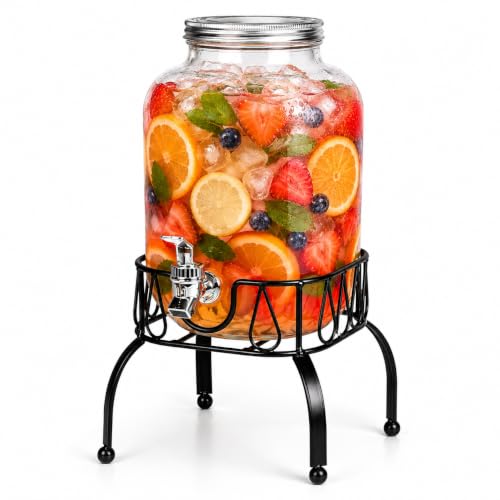
3. Estilo Glass Beverage Dispenser with Spigot
A large glass jar with a metal tap, handy for sangria, spritzers or a batch of wine for a gathering. Pick a model with a lid to keep out dust. Chill the batch in the refrigerator first and add ice to the jar, rather than pouring warm wine straight in.
Suits: party batches. Strengths: large capacity. Weaknesses: heavy when filled. Skip it if you want a single pour.
Best for buffets
4. Libbey Glass Drink Dispenser with Spigot
A glass dispenser from a well-known glassware maker. It fits countertop service and looks clean on a buffet. Set it on a tray so any drips from the tap land on something easy to wipe.
Suits: buffets. Strengths: clean glass look. Weaknesses: taps need careful cleaning. Skip it if you plan to move it often.
View Libbey Glass Dispenser on Amazon
Best for casual hosting
5. Wine Bag in Box Dispenser Stand
A stand that holds a boxed wine with the tap at an easy pouring height. Handy for a casual home bar. It keeps the box off the counter, and the tap stays at a comfortable height for filling glasses.
Suits: casual hosting. Strengths: easy pours. Weaknesses: only for box wines. Skip it if you drink bottled wine only.
View Bag in Box Stand on Amazon
Best for everyday tables
6. Final Touch Wine Preserver and Pourer
A simple pourer or stopper designed to help serve wine and keep it fresh. It is a low-tech option for everyday use. Check what the listing says about the bottle neck fit and the seal before you rely on it overnight.
Suits: everyday tables. Strengths: simple use. Weaknesses: does not dispense by itself. Skip it if you want an electric model.
View Final Touch Wine Pourer on Amazon
Care and Setup
- Rinse taps and tubes with warm water after each use.
- Charge electric models as the maker advises.
- Do not store wine in a jar for days.
- Dry all parts before packing away.
Mistakes to Avoid
- Leaving wine in a tap jar in sunlight.
- Forgetting to check the bottle neck fit.
- Overfilling a large glass jar.
- Skipping a tap clean after sugary mixes.
Choosing Between Dispenser Styles
Wine dispensers solve different problems, so the first decision is what you actually want to fix. Some people want a faster, tidier pour. Others want to keep an open bottle drinkable for longer. A third group wants to serve a crowd without constantly opening bottles. These goals lead to different tools.
Electric pourers and aerating dispensers sit on a bottle and deliver a measured flow, often with a bit of air added. They suit people who pour a glass at a time and like convenience. Gas-based preservation tools work by protecting the wine left in the bottle, which makes them a better fit for slow drinkers and anyone with bottles they want to enjoy over weeks.
Glass jars with taps are made for batches, such as sangria, spritzers or a pre-poured table wine for a party. A stand for boxed wine suits casual hosting, because boxed wine has a built-in tap and bag that limits air contact. Simple stoppers and hand pumps are low-cost tools for everyday use.
- Quick single pours: electric or bottle-top dispensers.
- Keeping an open bottle fresh: gas-based or vacuum-style tools.
- Serving a crowd: a tap jar or a boxed wine stand.
Be honest about how often you will use it. A specialised tool that only comes out twice a year is harder to justify than a simple one you use every week.
Power, Capacity and Counter Space
Before you buy, check the practical numbers on the listing. For electric models, find out whether they run on batteries or a rechargeable cell, and how you charge them. Dispensers that depend on a cable are less convenient at a table, while ones with batteries need spares on hand. Read the manual or listing for how long a charge is expected to last, rather than relying on guesses.
Capacity is the next question. Glass jars range from small beverage servers to large vessels that hold several bottles of liquid. A big jar is great for a party but heavy once it is filled, and it needs a stable surface. A smaller jar is easier to move and clean, and suits a small gathering. Think about how many glasses you usually pour and how long the batch will sit out.
Measure the space where it will live. Tap jars need room to open the spigot and a spot for a glass underneath, and a tray helps with drips. A stand for boxed wine needs a sturdy countertop or table. Bottle-top devices need clearance on a shelf or in a fridge door if you plan to store the bottle with the tool attached.
Check bottle compatibility too. Some bottle-top tools fit standard necks, while sparkling, oversized or unusual bottles may not seal properly. The listing should state what neck sizes and closures are supported.
Wine Freshness and Oxidation
Air is the main reason opened wine changes. Oxygen reacts with the wine and, over a few days, flavours can flatten and turn sharp. A dispenser can either slow this down or do nothing about it, depending on the design, so it helps to understand what each type offers.
Gas-based tools replace some of the air in the bottle with an inert gas, which is meant to reduce contact between the wine and oxygen. Vacuum pumps remove some of the air from the bottle neck. Stoppers simply close the opening. None of these is a guarantee, and results depend on the wine, the seal and how long the bottle stays open. Treat any freshness claim as a goal rather than a promise.
Aerating dispensers do the opposite on purpose. They add air as the wine flows, which can soften young, tannic reds and open up aromas. That is useful at the moment of serving but not for storage. If you want both, use a preservation tool for the bottle and an aerator at the glass.
Tap jars and boxed wine stands are for service, not ageing. Wine in a jar sits in a wide container with lots of air, so plan to finish it within a short time. Keep it out of direct sunlight and warm spots, and chill it when serving white or rose. Boxed wine is designed to limit air contact in the bag, but follow the box’s own guidance on how long to keep it.
Cleaning, Hygiene and Tap Care
Dispensers fail quietly when they are not cleaned well. Wine residue, sugar and sediment collect around taps, tubes and seals, and they can leave smells or off flavours in the next serving. A short routine after each use makes a big difference.
For tap jars, drain the jar, rinse with warm water and wash with mild soap. Take the spigot apart if the design allows it, and use a small brush to clear the inside of the tap, where residue hides. Let every piece dry fully before putting the lid or tap back, since trapped moisture encourages odours. After sugary mixes like sangria, clean more thoroughly, because sticky residue attracts dust and insects.
For electric and bottle-top dispensers, follow the maker’s instructions carefully. Many have parts that should not be fully submerged, and some include electronics. Running clean water through, if the manual allows it, helps clear the pour path. Do not use harsh cleaners that could damage seals or leave a taste.
Check seals and gaskets from time to time. Cracked, stretched or sticky rubber rings let air in and cause drips. Replacement parts may or may not be available for your model, which is worth checking before you buy. Store dispensers clean and dry with lids ajar so they do not trap stale air.
Serving Tips and Hosting Use
A dispenser can make hosting simpler, but small habits keep the experience smooth. Chill white, rose and sparkling-style batches ahead of time instead of relying on ice in the jar, which can water down the wine. For red wine, serve at a comfortable cool room temperature rather than warm, and keep the jar away from heaters and windows.
Label what is in the jar when several drinks are out, particularly if one is a punch or sangria. Place the dispenser on a stable table with a tray beneath and set glasses within easy reach so guests do not tilt the jar. Do not overfill, since a full jar is heavy and the lid can slip when guests lean over it.
If you pour a bottle into a jar, remember that wine in a jar is not a long-term storage method. Plan quantities so the batch is finished in one gathering. Keep the leftover bottle sealed and in the fridge if you are holding some back.
- Pre-chill rather than adding too much ice.
- Keep fruit additions fresh and remove them at the end of the event.
- Place a small cloth or tray nearby for drips.
- Keep alcohol away from children and serve responsibly.
A tidy set-up and a clean tap do more for guests than any feature on a spec sheet.
Wine Dispenser FAQ
Does a dispenser keep wine fresh?
Not all do. Gas-based tools preserve; tap jars are for serving.
Is an electric aerator worth it?
It suits people who pour often and want quick service.
Can I use a glass jar for red wine?
Yes, but serve the batch within a short time.
How do I clean a spigot?
Use warm water and a small brush, then let it air dry.
How long can wine sit in a glass dispenser?
Treat a tap jar as a serving vessel, not storage. Plan to finish the wine within the event or a short time afterwards, and keep it cool and out of sunlight.
Can I put sparkling wine in a dispenser?
Usually not a good idea. Bubbles go flat quickly in a wide jar, and many dispensers are not made for pressure, so check the maker's guidance.
Do electric wine dispensers fit all bottles?
Not always. Bottle-top tools are built for standard neck sizes, so check the listing for supported bottle types before buying.
Is boxed wine better for a dispenser stand?
It is a good match, since the box has its own tap and a bag that limits air contact. Follow the box's own guidance on how long it keeps once opened.
How often should I clean a spigot?
Rinse after each use and do a fuller wash with a small brush when you finish with a batch. Sugary drinks need cleaning right away.
Are gas-based preservation tools worth it?
They suit people who drink a glass at a time and want to protect a bottle over days or weeks. They need replacement gas capsules, so factor that ongoing need into the choice.
Will a dispenser change the taste of wine?
An aerating model can soften and open young wines at the glass. Other types should not change the taste if kept clean, but old residue can leave off flavours.
Serving Temperature and What a Dispenser Does to It
Temperature changes how wine tastes more than most people expect, and a dispenser can help or hurt depending on where it sits. As a general rule, sparkling and light white wines are served cold, fuller whites and rosés a little less cold, and reds just below typical room temperature. A glass jar left on a warm buffet will drift toward the temperature of the room within a couple of hours, which is fine for a red that started cool but disappointing for a white.
The practical fix is to chill the wine before it goes in. Pour a white or rosé into the jar straight from the refrigerator, and keep a second chilled bottle ready to top it up. Some hosts place a clean ice pack under a serving tray, or set the jar in a shallow tray of ice so the base stays cool without the ice ever touching the wine. Avoid dropping ice cubes into the jar itself if you can, because they dilute the wine as they melt and can block the tap opening.
Bottle-top electric pourers and gas preservation tools work with the bottle you already have, so temperature is simply whatever the bottle is. If you keep reds in a cool cellar or closet, a short rest at room temperature before serving usually beats pouring them cold. If you keep whites in the refrigerator door, take them out a few minutes before a dinner so the aromas have a chance to open up.
- Light whites, rosés and sparkling wine: cold, straight from the refrigerator.
- Fuller whites: cool, with a few minutes out of the refrigerator.
- Light reds: slightly cool, which suits a tap jar in a shaded spot.
- Full reds: cool room temperature, best served from a bottle-top pourer.
Planning Pours for a Party
The question guests never ask but hosts always face is how much wine to put out. A standard 750 ml bottle holds roughly five glasses at a typical restaurant-style pour of about five ounces. A gallon-class glass jar holds about 128 ounces, which works out to around 25 pours at that size. Those are general measures, so check the stated capacity on any listing before you plan around it, because jars described as large can vary quite a bit.
For a gathering, a common planning habit is to count on about one drink per guest for each hour of the first part of the evening, then fewer after that, and to add a margin for people who prefer water or something else. A single jar of a crowd-pleasing white or a light red often works better than several jars, because a batch that runs out is easier to refill than a half-dozen half-empty jars are to keep tidy.
Think about the order of service too. Put out the lighter, cooler wine first and save heavier reds for dinner. If you are mixing sangria or a spritzer batch in a jar, make it close to serving time, since fruit left sitting in wine softens and the flavors get muddy. Keep a small card by each dispenser saying what is in it, which saves guests from guessing and saves you from answering the same question all night.
Materials, Taps and Food Safety
Most countertop dispensers are glass jars with a metal or plastic spigot. Glass does not hold flavors or odors and is easy to inspect for residue, which is why it suits wine. The weak points are the lid and the tap. A lid that fits loosely lets dust and insects in, and a tap with a thin plastic body can crack if it is overtightened or knocked.
When you read a listing, look for words about the tap material and whether the parts are described as food safe or lead free. Beverage hardware sold for drinking is expected to meet food contact rules, but the listing is the only place you can confirm what the seller claims. Be cautious about decorative or antique jars and taps of unknown origin, since older glazes and metal fittings are not made for storing acidic drinks like wine over time.
It also helps to understand how the tap seals. Most use a rubber or silicone gasket against the glass. That gasket is the part that wears first and the part that leaks first, so a dispenser with replaceable gaskets is easier to keep going than one that is glued or fixed. Hand-tighten the tap, check it with water before you fill the jar with wine, and never lift a full jar by the spigot.
Weight matters as well. A full gallon of liquid is heavy, and glass jars on a thin shelf or a wobbly cart can tip. Set the jar on a firm, level surface, keep the stand or base steady, and place it where guests will not need to reach across other items to use it.
Choosing a Spot: Bar Cart, Buffet or Patio
Where the dispenser lives shapes which type you should buy. On a bar cart, space is tight and surfaces move, so a bottle-top pourer or a small jar is more practical than a large one. On a buffet table there is room for a tap jar and a tray, and the tray catches drips from the spigot. A kitchen counter suits a bagged wine stand, where the tap sits at glass height and the box stays hidden.
Outdoor service is the toughest setting. Direct sun warms wine quickly, wind carries leaves and insects into an open lid, and uneven ground raises the chance of a tipped jar. If you serve on a patio, choose a model with a closing lid, keep it in shade, and carry out only as much as the party needs. Bring the empty jar inside to rinse right after the event so sugar and wine do not dry in the tap.
Whatever the spot, keep a few small supplies nearby: cloth napkins for drips, a small brush for the tap, and a tray or coaster underneath. These cost little and make any dispenser easier to live with.
Planning a Pouring Station Around the Dispenser You Choose
A dispenser only feels convenient when the small things around it are arranged well. Glasses within reach, a tray under the tap, a towel that lives at the station rather than being fetched mid-pour, and a clear rule about who refills what: these details decide whether a dispenser speeds up a gathering or becomes a bottleneck everyone queues behind. The six designs in this guide create very different stations. The Aervana and the Final Touch live on the bottle, so the station is wherever the bottle stands. The Coravin Pivot turns the station into something closer to a tasting bar, where one person pours measured glasses from bottles that stay corked. The Estilo and Libbey jars anchor a buffet, and the bag-in-box stand suits a fixed corner of a kitchen or bar cart. Plan the station for the design you pick, not for a generic idea of dispensing.
Setting up the Aervana and other bottle-top pourers
Bottle-top electric pourers reward a short rehearsal. Fit the device, check the seal on the neck, and pour the first glass over the sink or a tray so any sputter from a fresh charge or a loose fit does not land on a tablecloth. Keep the charging cable or spare batteries in the same drawer as the pourer; a dispenser that is flat on the night of a dinner party is just an unusually heavy stopper. Rinse the tube and spout immediately after the last pour, because wine drying inside a narrow tube is the main cause of stale flavours and reluctant flow at the next use. If you rotate between red and white in one evening, rinse between bottles as well. Owners who treat the rinse as part of pouring, rather than as tomorrow’s chore, are the ones whose electric pourers still work smoothly a year later.
Running a tap jar without turning it into a freshness trap
The Estilo and Libbey jars are service vessels, and the most common mistake is treating them as storage. Fill them close to the time guests arrive, fill them only with what the gathering will plausibly drink, and keep them shaded and cool. A jar of white or rosé benefits from being chilled before filling and from standing on a tray of ice at a long event; a jar of red wants a cool room rather than a sunny counter. Position the jar near the edge of the counter so glasses fit under the tap without tilting, and put the tray underneath before the first pour, not after the first drip. Assign refills to one person if the crowd is large, because three helpful guests topping up a jar at different times is how a fresh batch gets mixed into an old one. At the end of the event, whatever remains in the jar should be finished, cooked with, or discarded honestly rather than poured back into a bottle and forgotten.
The Pivot corner: pouring by the glass over days
A preservation pourer such as the Coravin Pivot changes the social shape of wine at home. Instead of finishing a bottle because it is open, you can pour one glass from a good bottle on a weeknight and return to it later, which suits households where two people want different wines with the same meal. To make that work, keep the capsules with the device, keep the replacement stoppers where you can find them, and develop the habit of returning the bottle to a cool, dark place after pouring rather than leaving it dressed with the device on a warm counter. Label opened bottles with the date if you run several at once; memory is unreliable about which bottle was first poured from nine days ago. The Pivot approach pairs naturally with a simple pourer like the Final Touch for everyday bottles, reserving the gas system for wines you genuinely intend to stretch.
Bag-in-box, done neatly
The stand for boxed wine looks simple, and mostly it is, but a few habits keep it pleasant. Seat the bag so the tap hangs freely and is not pinched by the box edge, check that the stand is stable before the first pour rather than after a nudge, and keep a small drip tray or mat beneath the tap because box taps weep occasionally. Boxed wine’s own packaging already limits air contact, so the stand’s job is height and tidiness, not preservation heroics. When the bag runs low, tilting the whole stand slightly can help the last glasses pour cleanly, but do it on a stable surface and pour slowly. A stand also makes a sensible permanent station for a household that drinks modest amounts regularly, since the wine stays in its bag and the counter stays uncluttered.
Serving Different Drinks Through One Dispenser Wardrobe
Most households end up using these tools for more than straight wine, and a little forethought keeps flavours where they belong.
Sangria, spritzers and mixed batches
Tap jars shine with sangria and spritzers, but fruit pieces and pulp are tap enemies. Strain the batch as you fill the jar, or keep fruit in the glasses rather than in the vessel, so the spigot keeps flowing. Sugary mixes also demand a same-night clean: dismantle the tap if the design allows, soak the parts, and dry them fully, because a sticky tap left for a week can seize or grow unpleasant flavours. If you serve both a red sangria and a pale spritzer in the same jar across a weekend, wash between them rather than trusting a rinse; colour and sweetness carry over more than people expect.
Red in summer, white in winter, and other temperature realities
Dispensers do not control temperature, so the wine must arrive at the station already where you want it. Reds served slightly cool taste fresher and pour more cleanly through aerating devices; whites warmed in a jar on a hot patio lose their edge within the hour. For long events, smaller refills beat one large fill: keep the reserve bottle chilled and top up the jar in stages. With bottle-top pourers, remember that a bottle standing on a warm counter through a long dinner is warming the whole time, so returning it to a cool spot between courses is a small act with a real payoff. None of this needs special equipment, just the decision to treat temperature as part of dispensing rather than as someone else’s problem.
When a dispenser is the wrong tool
Honesty about limits keeps these purchases satisfying. A fragile, mature bottle deserves a careful hand pour, not a trip through an aerating device. A two-person dinner rarely needs a gallon jar. A preservation system is wasted on a bottle your household finishes in an evening, and a simple pourer will not rescue a wine that has already been open too long. The Final Touch end of this guide exists precisely because many evenings need nothing more than a clean pour and a decent seal. Choosing the simplest tool that solves tonight’s actual problem is not settling; it is how a small collection of wine gear stays useful instead of becoming a drawer of good intentions.
A Host’s Timeline: The Day of the Gathering
The morning: decide, chill and test
Choose the dispenser based on the guest list you actually have, not the one you imagined when you bought the jar. Chill every bottle that will be served cool, because no dispenser in this guide will rescue a warm white. Then test the equipment while the kitchen is still calm: run water through taps and tubes, fit bottle-top devices to the actual bottles you plan to open, and check charges and capsules. A two-minute test in the morning prevents the specific embarrassment of discovering a seized tap or a flat battery in front of six thirsty people. Set glasses near the station, put the drip tray in place, and decide where the reserve bottles will wait so refills do not require a treasure hunt.
During service: small habits that keep pours clean
Pour the first glass from any device yourself, whatever the design, because the first pour is the one that reveals a loose seal, a sputtering aerator or a tap that needs a firmer close. After that, let guests help themselves if the station is a jar or a box stand, but keep an eye on levels; a jar allowed to run nearly dry starts pulling air and sediment, and a box bag near the end pours unevenly. Wipe the tap area and the counter at natural pauses rather than waiting for a sticky puddle to announce itself. If you switch wines in a bottle-top device, rinse between bottles, and if a jar changes from red to white, wash it properly rather than performing the optimistic rinse that leaves the first glasses blushing. When a bottle fitted with a preservation pourer goes back into storage, note the date somewhere you will see it, because the system only helps if you return while the wine is still worth returning to.
Troubleshooting the four failures everyone meets eventually
A tap that flows slowly is usually blocked by pulp, sediment or dried residue rather than broken; dismantle, soak and brush it before concluding anything worse. An electric pourer that sputters is often drawing air past a poor neck seal or running low on power, so reseat it and check the charge before blaming the wine. A preservation pourer that seems to leak gas points to a stopper or seal that is not seated, or a capsule that was not pierced cleanly; remove, inspect and refit rather than forcing it. A box tap that weeps usually has residue on its mating surfaces or a bag that has shifted in the stand. In every case the pattern is the same: stop, empty the device if you must, clean and reseat the parts, and test with water. Forcing a dispenser that is asking for cleaning is how small problems become broken seals and stained counters.
After guests leave: the ten-minute reset
The reset is short if it happens the same night. Empty jars rather than refrigerating leftovers inside them, return unfinished bottled wine to a cool place with its stopper or preservation device fitted, and rinse every tube and tap while residue is still soft. Dry parts openly overnight instead of sealing them damp into a cupboard. Note what ran out, what barely moved and what guests asked about; that note is the most honest buying guide for your next gathering, and it will tell you whether your household is really a tap-jar household, a by-the-glass household, or a simple-pourer household with ambitions. Equipment bought to match real behaviour gets used. Equipment bought to match an imagined lifestyle gets stored.
Related guides
Frequently Asked Questions
How many glasses of wine does a gallon dispenser hold?
At a typical five ounce pour, a gallon holds roughly 25 glasses. Smaller pours stretch that further and larger ones reduce it. Listings called gallon-class can differ in real capacity, so check the stated volume and leave a little room at the top so the jar is not overfilled.
Should I chill wine before putting it in a dispenser?
Yes for whites, rosés and light reds. A glass jar will not cool wine on its own, and a warm room will warm it quickly. Start with a chilled bottle, keep the jar in shade, and avoid dropping ice directly into the wine because it dilutes the batch.
Can I put sangria with fruit in a glass dispenser?
You can, but fruit pieces can clog a narrow tap. Keep the fruit in a mesh basket or strain the batch before filling, and serve it soon after mixing. Rinse the spigot right away afterward, because sugar from the mix dries sticky and is hard to clean later.
Why does my dispenser tap drip?
Most drips come from a worn or misaligned gasket, a loose tap nut, or residue around the seal. Take the tap apart, clean it, check the rubber for cracks and reseat it by hand. If the gasket is damaged, look for a replacement part from the maker.
The Short Version
For quick electric pours, the Aervana. For preserving, the Coravin Pivot. For party batches, the Estilo. For buffets, the Libbey. For boxed wine, the stand. For everyday use, the Final Touch.

