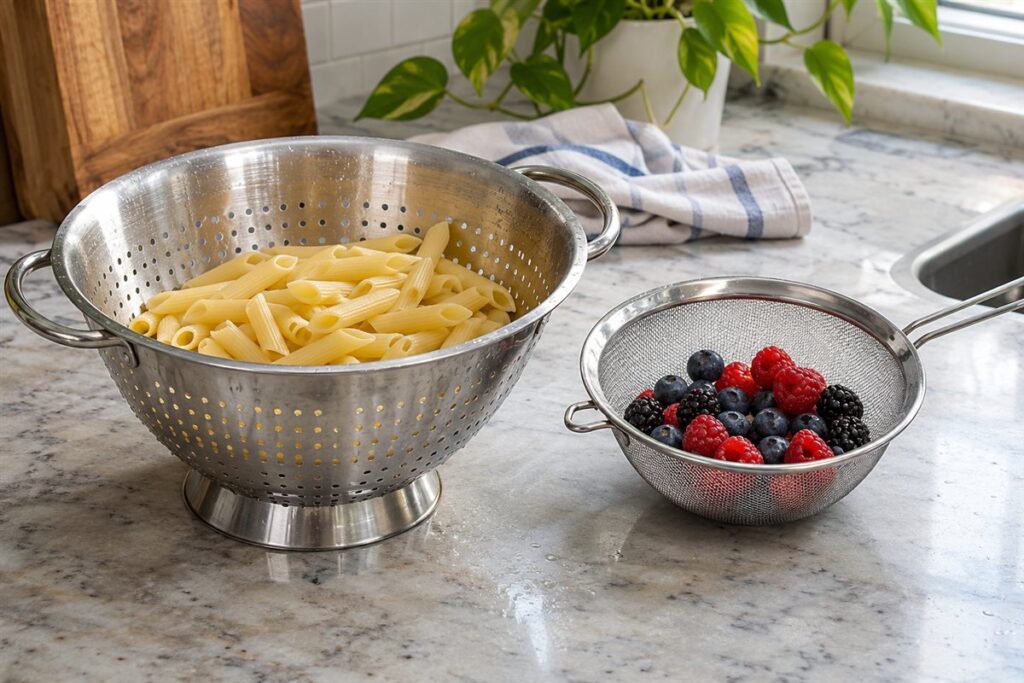
A colander has larger holes and is built for draining bulky foods such as pasta and vegetables. A strainer has fine mesh and is made for catching small particles, such as rice, quinoa, tea leaves or lumps in a sauce. Both drain liquid, but they suit different jobs. This guide adds a draining walkthrough, common situations, mistakes to avoid and a troubleshooting table.
What Each One Is
A colander is a bowl with holes, often with feet or handles so it can stand in the sink. Because the holes are wide, water runs out quickly, but small items can slip through.
A strainer is a bowl of fine wire mesh, usually with a long handle or hooks that rest on a pot. It holds back small pieces and can also be used to sift flour or dust sugar.
Key Differences
| Feature | Colander | Strainer |
|---|---|---|
| Openings | Large holes or slots | Fine mesh |
| Best for | Pasta, boiled potatoes, washed greens | Rice, grains, berries, stock, sauces |
| Drain speed | Very fast | Slower, especially when clogged |
| Size | Usually large and deep | Often smaller, with a handle |
| Storage | Takes space, though some fold | Hangs or nests easily |
Using Them Safely and Well
Hot water and steam need care. Place the colander in the sink first, then pour away from your body and keep your face back from the steam. Use oven mitts if the handles heat up, and follow the maker’s guide.
- Set the colander or strainer in a clear, stable spot.
- Tilt the pot lid slightly to guide the first pour.
- Pour in a steady stream so the food does not splash.
- Shake gently to drain the last of the water.
- Rinse right away if the food is sticky, so residue does not dry on.
Which to Choose
- Choose a colander for bulk draining, washing produce and cooking pasta regularly.
- Choose a fine-mesh strainer for grains, sauces, tea, and rinsing small seeds.
- Choose both if you cook varied meals; they take little space and do different jobs.
- Choose a stainless steel model for easy cleaning and a plastic one if you want a lighter option, checking the heat limit in the maker’s guide.
Care Tips
Rinse either tool right after use so food does not dry in the holes. A soft brush clears stuck bits from mesh, and a soak in warm soapy water helps with stubborn residue. Dry fully before storing, especially if the tool has a metal frame that could rust. Hang the strainer from a hook to keep the mesh from getting bent.
Walkthrough: Draining a Pot of Pasta Without a Mess
A big pot of boiling water is the most common reason a drainer matters. This sequence keeps the job calm.
- Clear the sink. Move dishes aside and set the colander in the basin where it cannot tip. If the sink is shallow, use a stable, low-footed model.
- Reserve some cooking water. Scoop a mugful from the pot before draining if your recipe uses it for the sauce. Use a heatproof mug or ladle.
- Protect your hands and face. Wear oven mitts and angle the pot so steam rises away from you.
- Pour toward the far side. Tip the pot slowly so the pasta slides into the colander rather than splashing out.
- Give it a gentle shake. Water trapped in tubes and shapes needs a moment to run out.
- Return or sauce quickly. Tip the pasta back into the warm pot or into the sauce right away. Follow your recipe about rinsing, since some dishes call for cold water and others do not.
- Clean at once. Rinse the colander before sticky residue dries in the holes.
Common Scenarios
Rinsing rice or quinoa
Use a fine-mesh strainer, since the grains slip through colander holes. Rinse under cool running water, shaking the strainer until the water runs clearer.
Washing berries
A colander with small holes works for most berries, while a fine strainer suits tiny fruit. Rinse just before eating, because moisture speeds spoilage in the fridge.
Straining stock or sauce
Set a fine strainer over a clean bowl or pot and pour slowly. Press gently with a ladle for smooth results. Cool and store the strained liquid following food-safety guidance.
Draining canned beans
A small colander or strainer lets you rinse the beans under the tap. Shake well so the beans do not stay wet.
Sifting flour or powdered sugar
A strainer works as a makeshift sifter. Tap the rim gently and let the fine powder fall through.
Mistakes to Avoid
- Using a colander for small grains. They slip through the holes, so use mesh.
- Pouring into a tilted or unstable colander. It can tip and spill hot water, so make sure it rests firmly in the sink.
- Using plastic over its heat limit. Boiling water can deform some plastics, so check the maker’s guide.
- Letting food dry on the mesh. It is much harder to clean afterwards.
- Pressing hard on fine mesh. It can bend the frame and distort the weave.
- Standing too close to steam. Move your face back and pour away from yourself.
Quick Troubleshooting
| Symptom | Likely cause | What to try |
|---|---|---|
| Food slips through | Holes too large | Switch to a fine-mesh strainer |
| Draining is very slow | Clogged mesh or too much food at once | Rinse the mesh and drain in batches |
| Residue stuck in holes | Left to dry | Soak in warm soapy water and use a soft brush |
| Rust spots on frame | Stored damp | Clean, dry fully and store in a ventilated place |
| Colander tips | Narrow feet or crowded sink | Clear the sink or set it across the rim if designed for it |
Terms Worth Knowing
- Colander: a bowl with holes for draining large foods.
- Strainer: a bowl of fine mesh that holds back small particles.
- Chinois: a cone-shaped fine strainer used for smooth sauces.
- Mesh: the woven wire that forms a strainer’s surface.
- Sift: to pass dry ingredients through mesh to break up lumps.
FAQ
Can a strainer replace a colander?
For small batches, yes. For a big pot of pasta, a strainer is awkward and slow.
How do I clean mesh?
Rinse straight away and use a brush. A soak loosens stuck bits.
Is a colander the same as a sieve?
Not quite. A sieve usually means a fine-mesh tool like a strainer, while a colander has larger holes. Some people use the words loosely, so check the product description.
What size colander do I need?
Choose one big enough for the largest pot of pasta or vegetables you cook, with room for steam. Check the sink space too.
Can I put them in the dishwasher?
Many stainless models can go, but check the maker’s guide. Rinse off residue first, and hand wash fine mesh to protect the weave.
The Short Version
A colander drains big, bulky food fast, while a strainer catches small items with fine mesh. They do different jobs, so choose by what you cook most. Rinse them straight after use and handle steam with care.