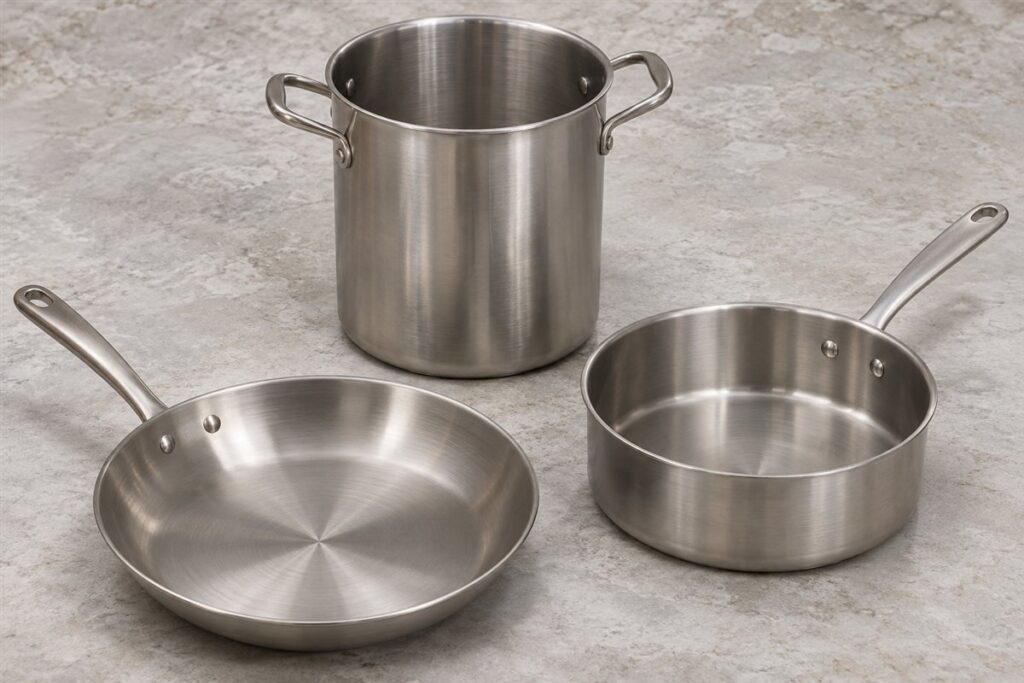
Pan shape controls how fast liquid evaporates, how easily you can stir or flip, and how much food touches the hot surface. Wide pans suit browning and reducing, while tall, narrow pans suit simmering and boiling.
Width and Surface Area
A wide base gives food more contact with the hot surface and lets steam escape quickly. That is why wide pans are good for browning and for thickening sauces. A narrow base keeps liquid in a smaller area, so less evaporates, which suits soups and stocks.
- Wide: More evaporation and browning.
- Narrow: Less evaporation and deeper liquid.
Sides: Sloped or Straight
Sloped sides let a spatula slide underneath and make it easier to toss or flip food. Straight sides hold more food and liquid and reduce splashing.
- Sloped sides (skillet): Good for frying, eggs and quick sauteing.
- Straight sides (saute pan): Good for cooking in some liquid and for deeper food.
- Tall sides (stockpot): Good for large volumes of liquid.
- Rounded base (wok style): Good for fast tossing over strong heat, if your stove suits it.
Height and Lids
Taller sides reduce splatter and give room to stir without spilling. A well-fitting lid traps moisture, which helps when you want food to cook gently in its own steam. Shallow pans lose moisture faster, which helps when you want to reduce a sauce.
Consider storage too. Deep or wide pans take cupboard space, so measure before you buy.
Shape in Real Recipes
Take a tomato sauce. In a wide pan it thickens in a short time because the liquid has more surface to escape from. In a tall, narrow pot the same sauce stays loose for longer and may need extra time uncovered. The recipe may not say which pan it assumed, so watch the texture and adjust.
Rice and other grains show the opposite effect. A pan that is too wide lets steam leave and can dry the grains, while a pan with a snug lid keeps moisture in. If a recipe gives a pan size, try to match it, and use the doneness cues it gives.
Shape also affects safety and mess. A pan that is nearly full to the brim is more likely to splash or boil over, so leave some room at the top, and stay close while liquid heats.
Shape and Task
| Task | Helpful shape |
|---|---|
| Frying eggs, searing | Wide with sloped sides |
| Reducing a sauce | Wide base for evaporation |
| Simmering soup | Taller sides, narrower base |
| Cooking grains | Medium depth with a lid |
| Boiling pasta | Tall pot with room for water |
FAQ
Can one pan do everything?
A medium skillet and a medium saucepan cover many tasks, but a single shape will always compromise somewhere.
Does shape affect how long food takes?
It can. Wider pans lose liquid faster, so timing and liquid amounts in a recipe may need small changes.
The Short Version
Wide and shallow favours browning and reducing; tall and narrow favours simmering and boiling. Choose the shape for the job, and follow your recipe’s timing cues.