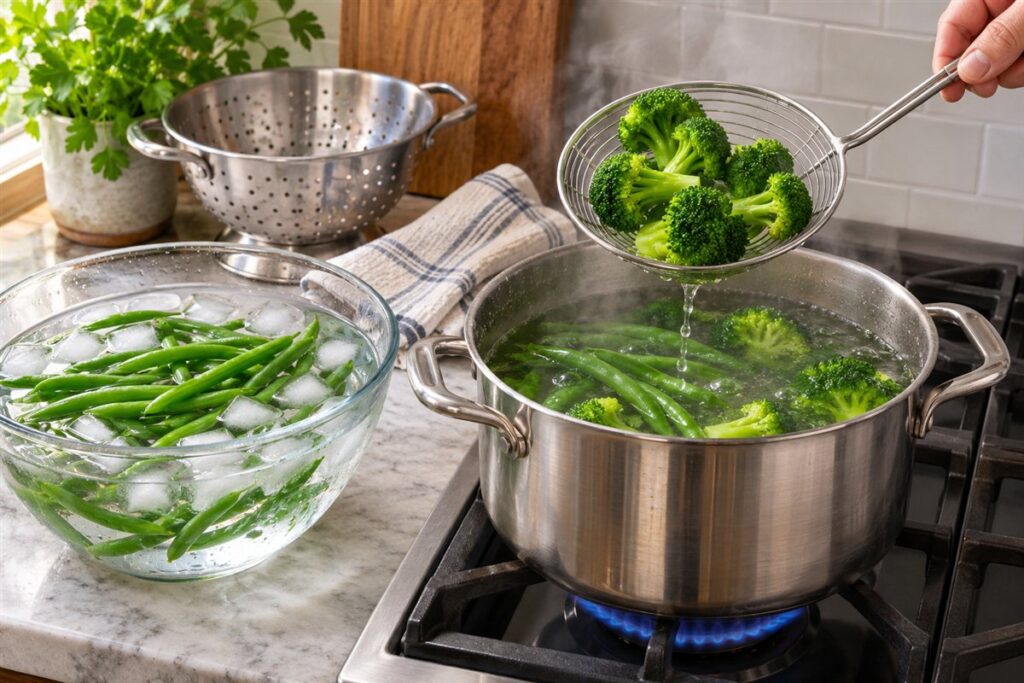
Blanching means dropping vegetables into boiling water for a short time, then moving them straight into ice water to stop the cooking. It sets bright colour, softens the raw edge and prepares vegetables for freezing or salads. All you need is a large pot, a bowl of ice water and something to lift the food out. The method is simple, but small details such as pot size, batch size and drying decide whether the result is crisp and vivid or limp and dull. This guide covers the basic routine, a full walkthrough, realistic situations and the mistakes that cause most disappointments.
What You Need
- A large pot with plenty of water, so the temperature does not drop much when food goes in.
- A big bowl filled with ice and cold water.
- A slotted spoon, spider or colander for lifting.
- Clean towels or a salad spinner for drying.
A timer is also worth having within sight. Blanching moves fast, and a minute of distraction is the difference between a crisp bite and a soft one. A cutting board and a sharp knife for even pieces complete the setup, along with a tray or plate for the finished vegetables.
The Blanching Steps
- Wash the vegetables and cut them into even pieces so they cook at the same speed.
- Bring the pot of water to a full rolling boil and add a good pinch of salt.
- Add the vegetables in small batches so the water keeps boiling.
- Cook briefly, usually in the range of one to three minutes depending on size. Taste a piece to check the bite.
- Lift the vegetables out and plunge them into the ice water right away.
- Leave them in the cold water for about as long as they cooked, then drain well.
- Pat dry before using, storing or freezing.
Timing Guide by Vegetable Type
| Type | Examples | Rough time |
|---|---|---|
| Tender greens | Spinach, young kale | Under a minute |
| Green vegetables | Green beans, peas, asparagus | 1 to 3 minutes |
| Florets | Broccoli, cauliflower | 2 to 3 minutes |
| Roots | Carrot sticks | 2 to 4 minutes |
These ranges are only a general guide. Size and freshness change the time, so rely on tasting.
A Worked Example: Green Beans for a Salad
Green beans show every step clearly, so they make a good practice run. Here is the whole sequence from counter to bowl.
- Set the ice bath first. Fill a large bowl about two thirds with cold water, then add a generous amount of ice. Place it next to the stove, along with a tray lined with a clean towel.
- Trim the stem ends from the beans. Leave the beans whole if they are similar in length, or cut them to one size if they vary.
- Fill the pot well past halfway and bring it to a hard boil with the lid on to save time. Remove the lid and add salt once it boils.
- Add a handful of beans at a time. The bubbling should pause briefly and then return within a few seconds. If it does not return, the batch was too large.
- Begin tasting at the one minute mark. Lift out one bean with the spoon, run it under cold water for a second and bite it. You want the raw squeaky edge gone but a clear snap left.
- Scoop the beans straight into the ice bath. Stir them once so the middle of the pile cools as quickly as the edges.
- After a minute or two, lift them out and spread them on the towel. Pat them dry, since wet beans dilute a dressing and go soggy in a salad.
The beans will keep cooking slightly as you work with them, which is why tasting early and cooling at once matter more than any exact number on a clock.
Common Scenarios
Preparing a vegetable platter
Blanch broccoli, carrots and green beans in turn, using the same water. Cook the mildest vegetables first, then the stronger ones. Chill them, dry them thoroughly and serve them with dip. The brief cooking takes the raw edge off while keeping a pleasant crunch.
Getting ready to freeze a garden harvest
Work through one vegetable at a time, keep batches small, and refresh the ice as it melts. Dry and tray-freeze each batch before bagging. Label bags with the contents and the date, and follow local food-safety guidance for how long frozen vegetables keep.
Peeling tomatoes or peaches
Score a small cross in the base, dip in boiling water for 20 to 30 seconds, then chill. The skin loosens and slips away. Here the goal is the skin, not the flesh, so keep the dip short.
Freezing After Blanching
Dry vegetables thoroughly, spread them on a tray so they do not clump, and freeze until firm. Then move them to a freezer bag or container and press out extra air. For storage times and handling, follow food-safety guidance from your local food authority.
Using Blanched Vegetables
Once drained and dried, blanched vegetables are ready to use in many ways. Toss green beans into salads, add broccoli to pasta at the last minute, or finish carrots in a hot pan with butter. Blanching also loosens the skins of tomatoes and peaches: score a small cross, dip for 20 to 30 seconds, chill and slip the skin off. Because the vegetables are only partly cooked, they finish quickly in later cooking, so avoid long extra heating if you want them to stay crisp. Keep them chilled if you will not use them soon, and follow your local food-safety guidance on storage.
Mistakes to Avoid
- Using a small pot. Less water means the temperature falls sharply when food goes in, and the vegetables sit in warm water rather than boiling water. That slows the process and dulls the colour.
- Adding too much at once. A crowded pot stops boiling, so the vegetables near the middle cook unevenly. Work in batches.
- Skipping the taste test. Size, age and variety change the time. Tasting is the only reliable check.
- Leaving vegetables to cool on a tray. Hot vegetables hold heat and keep cooking. Move them into ice water right away.
- Letting the ice bath warm up. After a few batches the water is no longer cold. Add more ice so the cooling stays quick.
- Freezing wet vegetables. Surface water turns into ice crystals and makes pieces cling together in a block. Dry first.
- Handling the pot carelessly. Boiling water causes burns, so use dry mitts, keep handles turned inward and lift food out with long tools rather than your fingers.
Quick Troubleshooting
| Symptom | Likely cause | What to try |
|---|---|---|
| Dull olive colour | Cooked too long or cooled too slowly | Shorten the time and use more ice |
| Raw taste remains | Pieces too large or time too short | Cut smaller or add a few seconds |
| Mushy texture | Water not boiling hard or overcooked | Use a bigger pot and smaller batches |
| Salad turns watery | Vegetables not dried | Pat dry or use a salad spinner |
| Frozen pieces stick together | Added to the bag while wet or warm | Dry them and tray-freeze first |
| Water slow to boil again | Too much food added | Add less at a time |
Glossary
- Blanching: Brief cooking in boiling water, followed by rapid cooling.
- Shocking: Moving hot food into ice water to halt cooking.
- Rolling boil: A boil with large, constant bubbles that keeps going when food is added.
- Spider: A wide, shallow wire strainer on a long handle for lifting food from hot liquid.
- Tray freezing: Freezing pieces in a single layer before bagging so they stay loose.
- Carryover cooking: Cooking that continues from retained heat after food leaves the pot.
FAQ
Can I skip the ice bath?
You can rinse under cold running water, but ice water cools faster and keeps colour and crunch better. Without cooling, vegetables keep cooking from their own heat. If you are short on ice, a bowl of very cold water refreshed a few times does a decent job.
How much water should I use?
Use enough that vegetables can move freely, roughly four or five times their volume. Too little water stops boiling the moment food goes in. A large stockpot is the best tool for this job.
Do I have to salt the water?
Salt seasons the vegetables lightly as they cook, which makes them taste better than plain boiled ones. You can leave it out if you prefer, and the method still works.
Can I reuse the blanching water?
Yes, for several batches of vegetables in a row. Move from mild vegetables to strong ones, and top up with fresh boiling water if the level drops. Discard it once it looks cloudy or carries a strong flavour.
Why did my vegetables lose their bright colour?
Usually they stayed in the heat too long or cooled too slowly. Shorten the boil, taste early and make sure the ice bath is truly cold. Acidic dressings also dull green vegetables if left on for a long time, so add them just before serving.
Should I blanch every vegetable before freezing?
Many vegetables freeze better after blanching, but guidance differs by type. Check your local food authority or a trusted preserving guide for the vegetable you plan to freeze.
The Short Version
Boil in salted water for a short time, cool in ice water, then dry well. Work in small batches and judge doneness by taste. Careful handling of hot water keeps the process simple and tidy. Keep the ice bath cold and follow local food-safety guidance for storage.