A nonstick pan lasts longest when you cook at low to medium heat, use soft utensils, wash it gently by hand and store it so the surface does not rub against other cookware. These habits protect a coating that cannot be repaired once it wears away.
Heat Habits
High heat is the most common cause of early wear. Many makers advise against heating an empty nonstick pan and against using high settings for long periods, so check the guide for your pan.
- Add oil or food soon after the pan begins to warm.
- Use medium heat for most tasks. Nonstick usually does not need the highest setting.
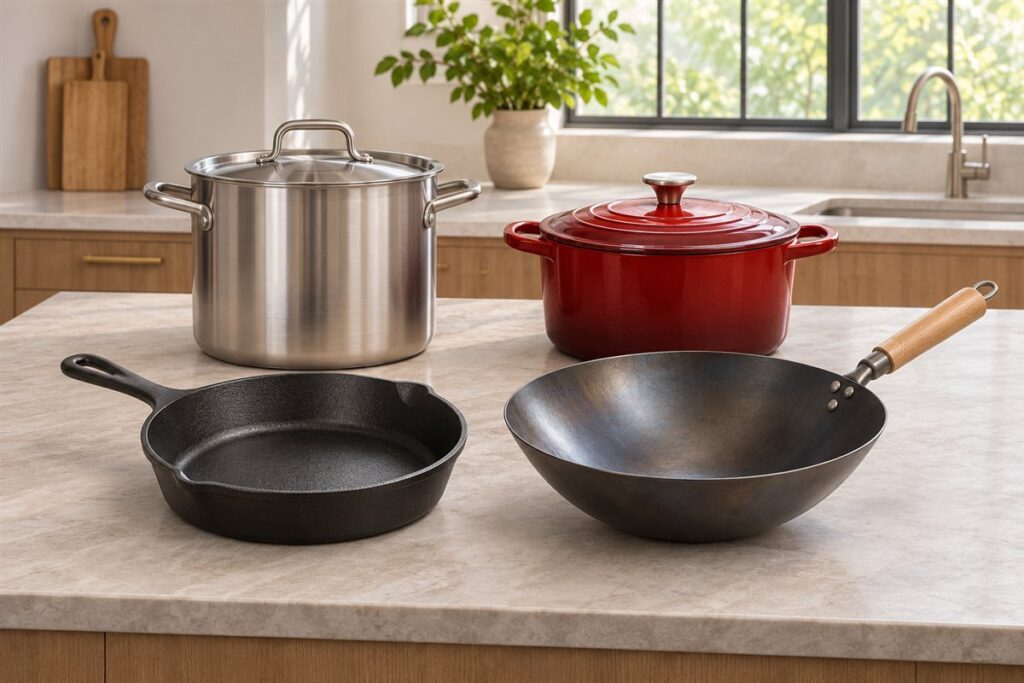
- Use a different pan for hard searing, such as stainless steel or cast iron.
- Match the burner size to the pan so the flame does not creep up the sides.
Tools and Cooking Habits
- Choose wood, silicone or nylon utensils.
- Do not cut food in the pan with a knife or serve with a metal spoon.
- Skip aerosol cooking sprays when possible, since residue can build up and form a sticky layer. A small amount of oil or butter is kinder.
- Avoid cooking very acidic foods for long periods unless the maker says it is fine.
Washing and Storing
Let the pan cool before washing, because a rapid change from hot to cold may stress the coating and the base. Use warm water, mild soap and a soft sponge. Even if a pan is called dishwasher friendly, hand washing is often gentler on it.
When storing, place a paper towel, cloth or felt pad inside the pan, or hang it. Stacked pans can scratch each other.
Warning Signs
| Sign | What It Suggests | Action |
|---|---|---|
| Food begins to stick | Coating wearing thin | Lower heat, clean thoroughly, watch closely |
| Sticky brown residue | Oil buildup | Wash with a soft sponge and baking soda paste |
| Deep scratches or flakes | Damaged coating | Stop using and replace the pan |
| Warped base | Heat or shock damage | Replace for even cooking |
Think about the right pan for the right job. Use nonstick for eggs, pancakes, fish and other delicate foods, and keep another pan for tasks that need high heat or metal tools. Rotating pans spreads the wear. Avoid leaving food stored in a coated pan in the refrigerator for long periods, and do not leave the pan on a hot burner after you finish cooking. These small choices reduce stress on the coating.
Choosing a Pan Built to Last
Longevity starts at purchase. Pans differ in base thickness, body material, coating type and construction, and these affect how well they handle daily use. A heavier, flatter base tends to spread heat more evenly and resists warping, which protects the coating from hot spots. Thin pans heat fast but are more prone to overheating and distortion. Read the product description for details on the base and the care guidance.
Think about fit with your cooktop and habits. Check compatibility with your hob, especially if you use induction, and make sure the pan is oven safe if you plan to finish dishes in the oven. A handle that stays secure and comfortable matters, since a loose handle can lead to drops and dents. Consider size too: using a pan that is too large for the burner or too small for the food can cause uneven heating.
Questions to ask before buying:
- What does the maker say about utensils and heat limits?
- Is it dishwasher safe, or hand wash only?
- Is there a warranty, and what does it cover?
- Does the pan suit the dishes I cook most?
It is better to have fewer, well-chosen pans than many that you use on the wrong tasks. Keep a pan dedicated to gentle jobs like eggs and fish, and use other cookware for high-heat searing. Matching the pan to its job is among the most effective ways to extend its life.
Fat, Sprays and Residue Buildup
What you cook with can affect the surface over time. Cooking fats and oils are fine, but some products, particularly aerosol cooking sprays, can leave a sticky residue that builds up on the coating, especially in areas that do not get thorough cleaning. Buildup can make food stick, and some people mistake it for coating failure. If you use sprays, check the pan maker’s advice, and wash the pan carefully afterwards.
Using a small amount of oil or butter, applied directly, is often easier on the surface. Choose a fat suited to the heat you cook at, since oils that smoke at low temperatures can burn and leave stubborn film. Wipe the pan out with a paper towel after cooking if it has residue, then wash.
Signs of residue buildup include:
- A tacky or sticky feel on the surface.
- Brown or yellow film around the edges of the cooking area.
- Food sticking more than before, despite no visible scratches.
- Patches that look dull compared with the rest.
Regular washing with warm water, mild soap and a soft sponge usually prevents buildup. If a film has formed, a longer soak and gentle scrubbing may remove it, following the maker’s guidance. Avoid harsh abrasives. A clean surface releases food more reliably and lasts longer.
Preheating and Heat Control
Heat management is one of the biggest influences on how long a coating lasts. Many makers advise using low to medium heat for nonstick pans, as very high heat can degrade the coating. Check the heat limit in the instructions, and avoid going beyond it. Preheat gently, with a little fat in the pan if the maker recommends, and never leave an empty pan heating on a burner.
Match the burner to the pan. A burner larger than the base can send flames up the sides, overheating the walls and handles. On electric and induction hobs, choose a ring that matches the base size. Let the pan heat gradually so it warms evenly, then add food. If food is not sizzling gently, wait a little rather than turning the heat to maximum.
Other helpful habits:
- Avoid sudden temperature changes, such as running a hot pan under cold water.
- Do not use the pan for tasks that need very high heat, such as heavy searing, unless the maker approves.
- Reduce the heat when liquids reach a simmer.
- Check oven temperature limits before using the pan in the oven.
If you see smoke, remove the pan from the heat and ventilate the kitchen. Learning how your cooktop behaves takes practice, but moderate heat protects the surface and generally gives you better control of the food.
Stacking and Storage Methods
Many scratches happen in the cupboard rather than at the stove. Stacking pans directly on top of each other lets the base of one rub on the cooking surface of another. Over time this wears the coating. Protect the surface with a soft liner such as a pan protector, a paper towel, a cloth or a felt pad between pans. These are inexpensive and effective.
Hanging pans from a rack or hooks avoids contact altogether, provided the handles are suitable and the rack can bear the weight. Make sure pans do not knock against each other. A drawer with dividers or a vertical rack for pans can also keep them apart. Whichever method you choose, ensure the pan is completely dry before storing, to prevent moisture from damaging handles or causing rust on exposed metal.
Think about lids as well. Lids can scratch the rim or coating if they slide against it. Store them separately or with a soft layer between the lid and pan.
Storage checks:
- Keep pans away from sharp utensils in the same drawer.
- Avoid squeezing pans into spaces that force them to bend.
- Do not store food in the pan unless the maker says it is fine.
- Keep the pan clean and dry.
A little care in how you store pans protects the cooking surface where it matters most.
Matching the Pan to the Task
A nonstick pan is excellent for some jobs and a poor choice for others. It suits eggs, pancakes, delicate fish and sticky foods cooked at moderate heat. It is less suited to tasks that call for high heat, deglazing with metal tools or scraping to build a fond, which is better done in uncoated pans. Using each pan for what it does best spreads wear across your cookware and extends the life of all of it.
Consider a small collection with different roles: a nonstick pan for gentle cooking, a stainless steel or cast iron pan for searing and browning, and a larger pot for liquids. Using the right tool prevents you from pushing a nonstick pan beyond its limits.
Think about how often you use the pan. A pan used daily will wear faster than one used occasionally. If you notice a favorite pan is getting heavy use, consider rotating with a second one to share the load. Replacing one when it shows wear is part of ordinary kitchen life.
Habits that help:
- Cook acidic or high-heat dishes in other pans when practical.
- Use the right size pan for the amount of food.
- Do not cut or serve directly in the pan unless the maker approves.
- Follow the maker’s guidance on oven use and utensils.
With thoughtful use, a nonstick pan can serve you well for as long as it can.
FAQ
Can I restore a worn coating?
No reliable home method brings back a worn coating. Cleaning off residue can help if the problem is buildup rather than wear.
Should I replace pans on a schedule?
Judge by condition rather than a date. Follow the maker’s guide.
Is hand washing really better than the dishwasher?
Many makers recommend hand washing because dishwasher detergents and heat can wear the coating over time. Some pans are labeled dishwasher safe, so check yours. Hand washing is gentler either way.
Can I use cooking spray on a nonstick pan?
Some makers advise against aerosol sprays because they can leave a sticky residue. Check your pan's instructions. A small amount of oil or butter is a common alternative.
Why does my pan warp?
Sudden temperature changes, high heat and thin construction are common causes. Let the pan cool before washing. Use a burner matched to the base size.
Should I use a nonstick pan in the oven?
Only if the maker says it is oven safe, and stay within the stated temperature limit. Check the handle and lid too. Some parts have lower limits than the pan.
How can I protect pans when stacking?
Place a soft liner, such as a pan protector, paper towel or cloth, between them. Hanging them on a rack is another option. Make sure each is dry before storing.
Do I need to season a nonstick pan?
Some makers suggest a light wipe of oil before first use, while others do not. Follow the instructions that came with your pan. Do not apply treatments the maker does not recommend.
The Short Version
Keep heat moderate, use soft tools, wash by hand and protect the surface in storage. These small habits add up to a longer working life for the pan.