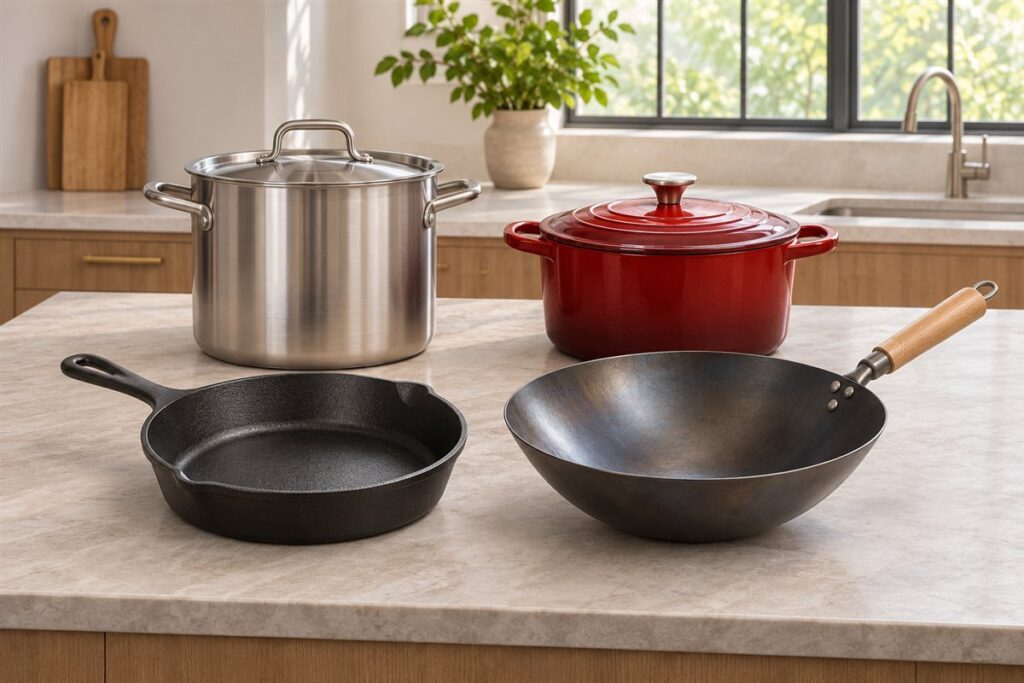
A cast iron pan can stay hot after the burner changes. Plan ingredient preparation and handling around that behavior. The same mass that holds heat so well for searing also means the pan stays dangerous for a long time after cooking ends.
What to do
Prepare the food and a suitable resting place before heating. Follow the maker’s burner guidance and use appropriate protection for handles and surrounding surfaces.
Because cast iron warms slowly and evenly, start earlier than you would with a thin pan, and avoid cranking the heat to speed it up.
Use the stored heat
Heat retention is an advantage when you plan for it:
- Searing: the pan loses less heat when cold food goes in, so meat browns well.
- Finishing off the burner: thicker items such as chops or thick vegetables can cook gently in the remaining heat.
- Keeping food warm: a dish served in the pan holds its heat for longer at the table.
- Lowering the burner earlier: turn the heat down a little before the food is done, and let the pan carry it through.
The flip side is that changes are slow. If the pan is too hot, it will not cool quickly just because you reduced the setting.
A mistake to avoid
Do not assume the handle cools when the burner is switched off. Keep hot cookware away from unprotected counters and passing hands.
It is easy to grab a handle you used a few minutes ago. A habit that helps is draping a mitt or cloth over the handle as a reminder that it is hot, as long as that cloth is clear of the flame.
A detail worth checking
Account for the cookware’s weight and your grip protection together. A thick mitt can change how securely a handle is held, so plan the movement before the pot is full and hot.
Use a mitt that fits well and is dry, since damp fabric can conduct heat quickly. Support heavy pans with two hands where the handle design allows it.
Try this practical check
Walk through the cooking sequence before starting: ingredients ready, tool ready and approved landing place clear. Make the hot-pan movement deliberate.
Practice lifting the empty, cool pan wearing your mitt and moving it to the landing spot. If it feels awkward cold, it will feel worse with hot food in it.
Common questions
How long does cast iron stay hot?
For quite a while, and longer than a thin pan. Treat it as hot until you can safely tell otherwise, and allow plenty of cooling time before washing or storing.
Can I put a hot cast iron pan in cold water?
Avoid it. Sudden temperature changes can stress the metal, and the steam can burn. Let the pan cool somewhat first and follow the maker’s cleaning guidance.
Is cast iron good for every burner?
It works on many, but check the maker’s guidance, especially for glass-top and induction hobs, where weight and rough bases may matter.
Choosing Dishes That Suit a Heavy Pan
A meal plan that works with cast iron picks dishes that benefit from steady, stored heat. Think about foods that like a hot surface, such as steaks, chops, burgers, sausages, fish with skin, thick slices of vegetables, flatbreads and cornbread. These do well because the pan does not cool much when cold food lands in it, which supports good browning.
Foods that need delicate, fast temperature changes can be harder. Thin sauces that must be taken off the heat the moment they are ready, or egg dishes that overcook easily, may need more attention. That does not mean you cannot make them, only that you should adjust: use a lower heat, take the pan off the burner sooner and serve straight away.
Consider the acidity of what you cook. Long simmers of acidic foods, such as tomato sauces, can react with the surface of some cast iron, depending on its seasoning or enamel. Check the maker’s care guidance for the specific pan, as bare, seasoned and enameled pieces differ.
Think about the whole meal. A pan can sear the main, then roast the vegetables in the oven with the same piece. Plan the menu so that you use one pan for several steps, which saves washing up and makes use of the stored heat. Check that the handle and any lid are safe at the oven temperature you need.
Finally, think about portion size and timing. A heavy pan with a small portion can overheat the food. A pan filled to capacity can drop in temperature. Match the pan size to the amount you cook.
Sequencing the Cooking Steps
With cast iron, the order of steps matters more than with a light pan. Because the pan is slow to heat and slow to cool, plan to start it earlier. Give it several minutes on a low to medium setting before raising the heat, to let the warmth spread across the base and up the sides. Check the maker’s guidance on preheating, and avoid heating an empty pan on high for long periods.
Prepare everything before the pan is hot. Dry meats and vegetables with a towel so they brown rather than steam. Have oil, seasonings, a spatula and a serving plate within reach. Once the pan is hot, there is little time to hunt for ingredients.
Cook foods that need the hottest surface first, then those that need less. For example, sear meat early, then lower the heat and add vegetables or a sauce. Work in batches if the pan is crowded, because too much food at once drops the temperature and causes steaming.
Use the downtime. While the pan rests off the burner, rest the meat too, and prepare sides. If you plan to finish a dish in the oven, preheat the oven while the pan warms so both are ready together.
Plan the serving. A dish brought to the table in the pan stays hot, but the pan is hot, so put down a trivet or heat-proof mat first. Warn others at the table that the pan and handle are hot.
Managing Heat on Different Cooktops
How cast iron behaves depends on your cooker. On gas, the flame heats the center of the pan, and the edges lag. Use a burner that matches the pan size and rotate the pan occasionally if the browning is uneven. On electric coils, the pan holds heat after the element is off, so move it or turn the element down earlier.
On a glass or ceramic top, take extra care. Cast iron is heavy and can scratch the surface if dragged or dropped. Lift the pan rather than sliding it, and check the cooker manual for any guidance on cast iron. A pan with a rough base may mark the glass, and a hot pan on a cool glass surface can expose it to stress.
Induction cookers work well with cast iron because it is magnetic, but check the manual for weight and base requirements. The pan can heat quickly on induction, so start on a lower setting than you would on other cookers and increase gradually. A very hot pan left on an element may lead to overheating, so stay nearby.
Oven use is where cast iron shines. It heats evenly and holds heat, which suits baking and roasting. Use mitts when removing it, and remember that the handle will be as hot as the pan.
Wherever you cook, keep the heat steady, avoid high settings unless needed for searing and stay attentive.
Planning Around the Cool-Down and Cleanup
A cast iron pan stays hot long after the meal, so plan for what happens next. Leave a heat-proof spot ready, and decide where the pan will rest while it cools. Keep it away from the edge of the counter and out of reach of children and pets. A visible reminder, such as a mitt draped over the handle, signals that the pan is still hot.
Allow time before washing. Let the pan cool until it is comfortable to touch before cleaning, and avoid cold water on a hot pan. Follow the maker’s cleaning guidance for your type of cast iron. Seasoned pans usually need gentle cleaning and thorough drying, while enameled pans may allow different methods.
Dry the pan right away after washing. Moisture can cause rust on bare cast iron. Many people dry on a low burner for a moment, then let it cool before wiping with a thin film of oil, as the maker advises. Do not store the pan while it is still warm or damp.
If you plan to serve leftovers, move food out of the pan once it has cooled enough to handle safely. Storing food in cast iron for long periods can affect flavour and the seasoning, and acidic foods are especially a concern. Use a separate container and follow food-safety guidance.
Build the cool-down into your timing. Eat, clear the table, then return to the pan when it is ready.
Safety Habits for Lifting and Storing a Heavy Pan
Cast iron is heavy, and weight combined with heat creates risk. Before you cook, check that you can lift the pan comfortably when it holds food. Use two hands where the design allows, and consider a pan with a helper handle on the opposite side. Keep your back straight, and move slowly.
Check handles and surroundings. Make sure the handle is secure and free of cracks. Clear the path to the table, the oven or the counter. Avoid carrying a hot pan while others are around, and warn them as you pass.
Store the pan in a place that can bear the weight. Low shelves and sturdy drawers are better than high shelves. If you hang the pan, check that the hooks and wall can carry its weight, following the fixing instructions. Keep it dry and away from damp spots.
Protect other cookware and surfaces. Place a cloth or pad between a cast iron pan and other pans to prevent scratches. Protect glass cooktops from the rough base by lifting rather than sliding.
Finally, listen to your body. If the pan is too heavy for comfortable use, a lighter pan or a smaller cast iron piece may serve better. Safe handling matters more than any cooking advantage.
Common Questions
Does cast iron cook more evenly than other pans?
It holds heat well, which can help with steady cooking, but it may heat unevenly at first. Preheat slowly and use a burner that matches the pan size.
Can I use cast iron for delicate foods like fish or eggs?
Yes, with a well-seasoned or suitable surface and gentle heat. Check the maker's guidance, and watch the heat, since the pan keeps cooking after you reduce the setting.
Is it safe to leave food in a cast iron pan after cooking?
It is best to move food to another container once it has cooled enough to handle. Long storage in the pan can affect flavour and the finish.
How do I know the pan is hot enough?
Hold your hand a short distance above the surface, or watch for light shimmer in oil. Avoid touching the pan. Your recipe will guide the heat level.
Should I use lower heat than usual?
Often yes. Because the pan holds heat, medium settings can be enough for many jobs. Increase gradually and follow the recipe.
Can I take cast iron straight from the oven to the table?
You can, with care. Place a heat-proof trivet down first, use a mitt on the handle and warn others that the pan is hot.
Does enameled cast iron behave the same way?
It retains heat in a similar way, but the coating has its own care and heat limits. Follow the maker's guide for enameled pieces.
Related reading
6 Best Cast Iron Skillets: Seasoned, Smooth and Enameled (2026)