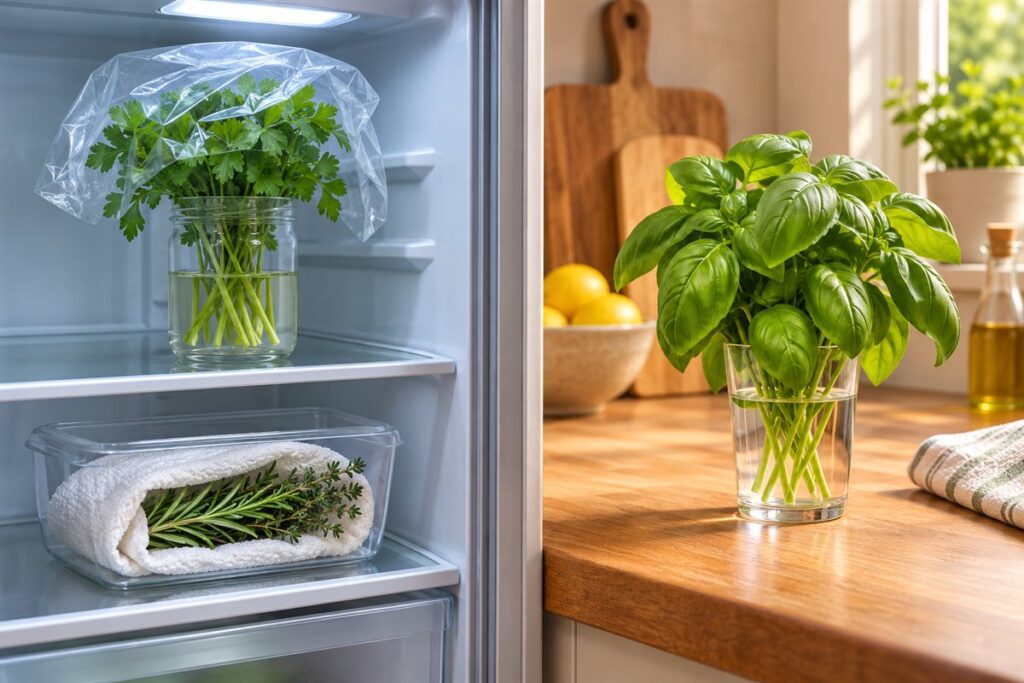
Fresh herbs last longest when you match the storage to the herb type. Soft herbs such as parsley and cilantro do well in a jar of water, while hardy herbs such as rosemary and thyme prefer a damp towel in a container. Freezing and drying handle the extras.
Soft Herbs and Hardy Herbs
Soft herbs have tender stems and leaves that wilt fast. Hardy herbs have woody stems and keep better with less moisture. Basil is a special case, since cold can darken the leaves.
| Type | Examples | Best storage |
|---|---|---|
| Soft herbs | Parsley, cilantro, dill, mint | Stems in water, loosely covered, in the fridge |
| Hardy herbs | Rosemary, thyme, sage, oregano | Damp towel in a container in the fridge |
| Basil | Sweet basil | Stems in water at room temperature |
| Chives | Chives | Damp towel or snipped and frozen |
The Jar Method for Soft Herbs
- Trim the ends of the stems.
- Remove any wilted or yellow leaves.
- Stand the bunch in a jar with an inch or two of fresh water.
- Cover the top loosely with a bag or lid.
- Store in the fridge and change the water every day or two.
The Towel Method for Hardy Herbs
- Rinse gently only if needed, then dry well.
- Lay the sprigs on a slightly damp paper or cloth towel.
- Roll the towel loosely around them.
- Place the roll in a container or bag with a bit of air.
- Check every few days and replace the towel if it feels slimy.
Freezing and Drying
For longer storage, chop herbs and press them into ice cube trays with a little oil or water, then freeze. Move the cubes to a covered container once solid. Hardy herbs can also be hung in small bundles in a dry, airy place until crisp, then stored in a jar away from heat and light. Frozen herbs suit cooked dishes more than raw garnishes.
- Label containers with the date.
- Follow food-safety guidance for herbs stored in oil, since moisture and low-acid conditions need care.
- Discard any herbs that look slimy or smell off.
Plan your use as well. Cook with the most fragile herbs, such as dill and cilantro, early in the week, and save rosemary and thyme for later. Add tender herbs to hot dishes at the end of cooking so they keep their color and aroma.
Buying Herbs That Last Longer
Storage begins at the store. Choose herbs that look bright, perky and fresh, with no yellowing, black spots, slime or wilting. The stems should be firm, and the leaves should smell fragrant when gently rubbed. Herbs sold in sealed plastic clamshells are often convenient, but check the inside for moisture and condensation, since trapped water speeds decay. Bunches sold loose can be inspected more closely.
Consider the form. Cut herbs are the most common and last for a limited time. Potted living herbs, sold in many stores, can stay fresh longer if you keep them watered and in a sunny spot, and you can snip leaves as needed. This is a good option for basil, mint, chives and thyme if you cook with them often. Dried herbs are a pantry alternative with a different flavor and strength, and they last longer if stored correctly.
- Pick up herbs last in your shopping trip and get them into the fridge quickly.
- Buy only what you can use in a few days unless you plan to preserve them.
- Check the date on pre-packaged herbs.
Matching your purchase to your plans is the most effective way to cut waste. If a recipe needs a tablespoon of a delicate herb, consider whether a small packet or a potted plant makes more sense than a large bunch.
Containers, Wraps and Gadgets for Herb Storage
You can store herbs with items from your kitchen, and a few products are made for the purpose. A glass jar or tall container holds soft herbs upright in water. A lidded container with a paper towel works for hardy herbs. A reusable cloth or beeswax-style wrap offers breathability, though check the care instructions for each product. Plastic produce bags with small vents can help regulate moisture, and a bag with a bit of air is better than a tightly sealed one.
Specialized herb keepers are tall containers with a water reservoir and a lid. They keep stems standing and can hold several bunches. They take fridge space, but they make herb storage tidy. Check the product listing for dimensions and for dishwasher safety. Consider whether the lid seals tightly or allows airflow.
- Choose containers that fit the fridge door or a shelf.
- Use clear containers so you can see what is inside.
- Replace paper towels when they get wet or slimy.
Whatever you use, keep herbs away from the coldest part of the fridge, where leaves can suffer cold damage and turn dark. Cleaning your containers between uses prevents mold and odors. A tidy herb drawer or shelf also makes you more likely to use what you bought.
Preserving Herbs: Oil, Salt, Paste and Butter
When you have more herbs than you can use, preservation turns the extra into pantry or freezer staples. Freezing in oil or water in ice cube trays is common. Another option is blending herbs into pastes or sauces, such as pesto-style mixtures, and freezing in small portions. Compound butter, made by mixing chopped herbs into softened butter, can be shaped into a log, wrapped and frozen in slices.
Salt-preserved herbs are another traditional method, in which herbs are layered with salt in a jar. The salted herbs add flavor and can be used in place of some of the salt in a recipe. Follow tested recipes, and pay close attention to food-safety guidance, especially for anything stored in oil, which needs careful handling because of the risk of bacterial growth in low-acid, low-oxygen conditions. Many guides advise freezing or refrigerating oil-based preparations rather than storing them at room temperature.
- Label each batch with the herb and the date.
- Freeze flat in bags for easy breaking off.
- Use frozen herbs directly in cooked dishes.
Preserved herbs generally suit cooking more than garnishing, since their texture changes. Test small batches first to find which methods you like best. Keep notes on how long each batch lasted so you can plan future batches.
Using Herbs at Their Best: Timing and Pairing
How you use herbs affects how much value you get from them. Hardy herbs such as rosemary, thyme, sage and oregano have robust flavors that stand up to long cooking, and they are usually added early to stews, roasts and braises. Tender herbs like parsley, cilantro, basil, dill and chives lose flavor with heat, so add them at the end or use them raw. Mint can go either way depending on the dish.
Use the whole herb when you can. Parsley and cilantro stems have plenty of flavor and can be chopped finely into sauces, soups and salsas. Tough rosemary or thyme stems are usually stripped and discarded, or tied into a bundle and removed before serving. Herb stems can also infuse stocks and broths.
- Chop herbs with a sharp knife to avoid bruising.
- Tear basil and mint instead of chopping if you want to limit darkening.
- Combine herbs thoughtfully, since strong ones can overpower delicate ones.
If you have a lot of one herb, build meals around it. Dill suits fish and potatoes, basil suits tomatoes, cilantro suits beans and rice, and sage suits roasted vegetables and poultry. Planning meals ahead lets you use the most fragile herbs first and prevents them from spoiling.
Spotting Spoilage and Refreshing Tired Herbs
Know the signs that herbs are past their best. Sliminess on stems or leaves, a sour or musty smell, dark mushy patches and visible mold all mean the herbs should be discarded. Slight wilting is different, since herbs that are limp but otherwise fine can often be revived. Trim the stems and place them in cold water for a short time, which can restore some crispness to soft herbs.
Some browning on the edges is cosmetic and affects texture more than safety, but use your judgment. If an herb has darkened and tastes bitter, it may not be worth using. Basil is particularly prone to blackening when chilled. Wash and dry herbs before use, and if the herbs look questionable, err on the side of throwing them away. Follow food-safety guidance for fresh produce.
- Check herbs every couple of days and remove any spoiled stems, which can spread decay.
- Do not store damp herbs in sealed containers.
- Pat herbs dry thoroughly after washing.
If herbs are wilting but still smell good, cook them into soups, sauces, or herb butter rather than using them as a garnish. Over time you will learn how long different herbs last in your fridge, and you will buy and use them more efficiently.
FAQ
Should I wash herbs before storing them?
It is usually better to wash just before use, since extra moisture speeds spoilage. If you wash first, dry them very well.
How long do fresh herbs last?
It varies by herb, freshness at purchase and fridge conditions. Check them often and use the most delicate ones first.
Can I grow herbs instead of buying them?
Yes. Potted herbs on a sunny windowsill give you fresh leaves as needed. Basil, mint, chives and thyme are common choices, though each has its own care needs.
Why does basil turn black in the fridge?
Basil is sensitive to cold, and chilling can darken the leaves. Store it at room temperature with stems in water, away from direct sun.
Can I freeze herbs without oil?
Yes. Many cooks freeze chopped herbs in water in ice cube trays or spread them on a tray and move them to a container once frozen.
Are dried herbs as good as fresh?
They taste different and are usually stronger by volume. Many recipes give conversions, and dried herbs suit long cooking better than garnishes.
How long do dried herbs keep?
They gradually lose flavor. Store them in airtight containers away from heat and light, and replace them if they smell weak.
Should I wash herbs before freezing them?
Wash and dry them very well first, since extra moisture creates ice crystals and can cause clumping.
Is it okay to use herbs with brown spots?
Minor browning on a few leaves can be trimmed away, but discard herbs that are slimy, moldy or smell off.
The Short Version
Keep soft herbs in water, wrap hardy herbs in a damp towel and treat basil gently. Freeze or dry extras for later, and follow food-safety guidance for anything stored in oil.