Disclosure: As an Amazon Associate, topratedkitchenware.com earns from qualifying purchases. Links on this page are affiliate links; they cost you nothing extra. Prices and availability change often, so check the current Amazon listing before you buy.
So, is an electric heating blanket worth it for your household? The short answer: worth it if you feel the cold in bed, will preheat rather than blast it all night, and will honestly follow the safety routine — flat while on, inspected regularly, switched off when unused, never for an infant or anyone who cannot adjust it. Not worth it if the routine will quietly lapse, if your partner sleeps hot and resents the extra layer, or if what you actually want is a warmer room rather than a warmer bed. The sections below price in the real costs, in effort and habits rather than figures.
Key Takeaways
- Worth it for: cold sleepers, couples with dual controls, and anyone whose heating warms empty rooms all night.
- Not worth it for: households that will fold it, forget it on, or skip inspections.
- The value is nightly and immediate; the costs are procedural and permanent.
- Comfort only: a heated blanket is not a medical device and this article claims nothing of the sort.
In this guide
Electric Heating Blanket: What You Actually Get
The most popular way to use a heated blanket is also the safest: preheat the bed. Spread the blanket flat, switch it on while you brush your teeth and change, then turn it down low or off as you get in. The sheets lose their winter shock, and you are not sleeping for hours on a high setting. People who run a blanket all night generally use the lowest settings and rely on the auto shut-off their model provides, following the maker’s guidance for overnight use.
A heated throw on the sofa is a different job from a heated blanket on the bed, and sizing honesty helps. A throw warms one person in a chair; it will not preheat a double bed, and a full-size bed blanket draped over a sofa arm will bunch, which is exactly what the no-folding rule forbids while it is on. If you want both jobs done, the honest answer is usually a bed blanket used flat in bed and a separate throw used flat across your lap.
Placement changes the feel. Over your ordinary bedding, a heated blanket warms you directly and is easy to push aside if you overheat. Under a duvet, the same blanket feels gentler and more even, because the duvet holds the warmth in, but it is also easier to overheat and harder to adjust in the night. Lying directly on top of a heated blanket concentrates pressure on the wires, and many makers warn against it; check your manual before making that your routine.
Comfort framing matters here, because a heated blanket is a warmth and comfort product, nothing more. It makes a cold bed feel welcoming, takes the edge off a chilly room, and helps many people relax into sleep in winter. It does not treat, cure or prevent any medical condition, and this article makes no such claim for it. If you have a health condition, reduced sensation, or any doubt about whether heated bedding is appropriate for you, the right move is to ask a clinician and read the maker’s warnings, not a buying guide.
The Real Costs Beyond Money
The running cost of a heated blanket is widely considered modest next to heating a whole room, which is the core of its value case: you warm the person, not the empty corners of the house. Exact figures depend on your tariff, your model and how long you run it, so treat any precise number you see with suspicion. The pattern that saves most is preheating the bed and turning down, rather than running high settings from dusk to dawn.
The non-money costs are real and worth counting. A heated blanket needs inspecting, careful washing, flat storage space in summer, and the small nightly discipline of switching off and keeping it unfolded. It adds a cord and controller to a bed that may already host chargers and lamps, and it asks something of a partner who sleeps hot. None of these costs is large, but together they explain why some people try one winter and quietly go back to an extra ordinary blanket.
Storage between seasons is simple and often done badly. Once the blanket is clean, fully dry and inspected, store it loosely rolled or loosely folded in large, soft folds, in a dry place, with nothing heavy stacked on top. Tight creases and weight can stress the wiring over months. Keep the controller and cord with the blanket, loosely coiled rather than knotted, and keep the manual with them, because next winter’s first job is re-reading the safety section before the first use.
Washing is where heated blankets go to die, usually through kindness. Follow the maker’s label exactly: detach the controller first, use the gentle cycle and mild detergent if machine washing is allowed, and never wring, twist or iron the blanket, because all three can damage the internal wiring. Some models are hand-wash only and some should not be dry cleaned, because solvents can affect the wire insulation. If the label and an internet tip disagree, the label wins.
The Safety Commitment, Priced In
Safety is not a footnote with an electric heating blanket; it is the product. The blanket contains live heating wires, a controller and a cord, and it is used in bed, often by someone who is half asleep. Every habit in this article returns to a few manufacturer rules: never fold, bunch or tuck the blanket in while it is switched on, never use it on an infant or on anyone who cannot adjust or remove it themselves, and switch it off when it is not in use.
Auto shut-off is a backstop, not permission to be careless. Many models switch themselves off after a manufacturer-set period, which is genuinely useful if you fall asleep, but the feature varies by model and it is not a substitute for switching the blanket off yourself when you get up. Never run two heating appliances from one crowded outlet or extension lead, never use a heated blanket together with another heating device in the same bed unless the maker allows it, and keep cords clear of bed frames and moving parts.
Folding is the rule new owners break most often, usually without thinking. A folded or bunched heated blanket traps heat in a small area, and the wires inside can be stressed at the crease. Spread the blanket flat over the bed, keep heavy objects and sharp folds off it, and never run it tucked tightly under a mattress or pinned beneath a sleeping person in a way the maker warns against. If the manual for your model says do not lie directly on the wired area while sleeping, follow the manual, not habit.
Who should not use one is just as important as how to use one. Heated blankets are not for infants, for children too young to operate the controls safely, or for anyone who cannot sense heat reliably or remove the blanket themselves. Pets that chew cords or knead with claws can damage wiring, so a heated blanket and an unsupervised pet are a poor mix. Guests should be told the rules too, especially the no-folding and switch-off rules, before their first night.
Age and condition matter as much as behaviour. Before each season, and ideally before each use, run your hands slowly over the blanket feeling for stiff, kinked or exposed wiring, look for scorch marks, frayed fabric or a damaged cord and plug, and check the controller for cracks or heat discolouration. A blanket that is old, damaged, or of unknown history should be retired, not tested in bed. When in doubt, the manufacturer’s guidance and a replacement blanket are both cheaper than a fire.
Who It Pays Off For
The Cold Sleeper in a Cold House
Comfort framing matters here, because a heated blanket is a warmth and comfort product, nothing more. It makes a cold bed feel welcoming, takes the edge off a chilly room, and helps many people relax into sleep in winter. It does not treat, cure or prevent any medical condition, and this article makes no such claim for it. If you have a health condition, reduced sensation, or any doubt about whether heated bedding is appropriate for you, the right move is to ask a clinician and read the maker’s warnings, not a buying guide.
The Couple With Two Thermostats
Dual controls are the single feature couples argue about most, and on queen and king sizes they are worth it. Each side of the blanket heats independently, so a cold sleeper can run warm while a hot sleeper leaves their side off entirely. Dual controls also mean two cords and two controllers to route safely, keep untangled and inspect, so the convenience comes with a little extra housekeeping. On single sizes, one simple controller is usually the better design.
Heat settings are a range, not a score. More settings give finer adjustment, which matters most at the low end: the difference between the lowest setting and the next one up is the difference between taking the chill off the sheets and feeling actively hot at three in the morning. A preheat function, where fitted, warms the bed before you get in, after which most people turn the blanket down or off. Treat the highest setting as a short preheat tool, not a sleeping setting, unless the maker says otherwise.
The Preheat-and-Off Sleeper
A heated throw on the sofa is a different job from a heated blanket on the bed, and sizing honesty helps. A throw warms one person in a chair; it will not preheat a double bed, and a full-size bed blanket draped over a sofa arm will bunch, which is exactly what the no-folding rule forbids while it is on. If you want both jobs done, the honest answer is usually a bed blanket used flat in bed and a separate throw used flat across your lap.
Who Should Skip It
Folding is the rule new owners break most often, usually without thinking. A folded or bunched heated blanket traps heat in a small area, and the wires inside can be stressed at the crease. Spread the blanket flat over the bed, keep heavy objects and sharp folds off it, and never run it tucked tightly under a mattress or pinned beneath a sleeping person in a way the maker warns against. If the manual for your model says do not lie directly on the wired area while sleeping, follow the manual, not habit.
Who should not use one is just as important as how to use one. Heated blankets are not for infants, for children too young to operate the controls safely, or for anyone who cannot sense heat reliably or remove the blanket themselves. Pets that chew cords or knead with claws can damage wiring, so a heated blanket and an unsupervised pet are a poor mix. Guests should be told the rules too, especially the no-folding and switch-off rules, before their first night.
Certification and the maker’s name are worth more than a long feature list. Heated bedding is a safety product, so buy from established makers with clear manuals, stated auto shut-off behaviour, warranty terms you can actually read, and a controller that detaches for washing. A suspiciously cheap no-name blanket with vague instructions is the wrong place to save money. Keep the receipt and register the product if the maker offers it, so any safety notice reaches you.
Strengths and Trade-Offs of Owning One
Strengths
- A warm bed on demand, in minutes, aimed at the person who is cold.
- Adjustable in small steps, and with dual controls, adjustable per sleeper.
- Simple technology with a routine most people master in a week.
Trade-Offs
- The safety routine is forever, not a first-week novelty.
- Care, storage and eventual replacement are all fussier than for a plain blanket.
- It warms the bed, not the room; getting up still means cold air.
Alternatives to Consider
An extra ordinary blanket or a heavier duvet costs nothing to run and asks nothing of you, but only traps the heat your body makes. A heated throw warms you on the sofa and in a chair, but is the wrong size for preheating a bed and must still be used flat. Turning the household heating up warms every room including the empty ones. Each alternative is a prose-level comparison here; the right question is which pattern matches your evenings, not which product wins a contest.
If the verdict lands on buying, these families are the sensible comparison set, as prose-only picks in this draft spanning entry, mid and premium tiers. Judge them by the decision checklist below, not by feature counts.
Sunbeam Heated Blanket
The Sunbeam Heated Blanket is a long-established name in heated bedding, typically positioned in the entry-to-mid tier, with straightforward dial or push-button controllers and a wide spread of sizes and colours. Treat it as a prose-only pick in this draft: compare its fabric, size range and controller style against the checklist in this article, read the current listing’s stated auto shut-off and washing instructions carefully, and confirm the exact model’s manual before buying. Positioned by tier rather than by any fixed figure, it suits buyers whose priorities match the description above.
Best for: buyers who want a familiar name and simple controls for a first heated blanket. Not suited for: anyone who cannot follow the safety rules in this article — keep the blanket flat and unfolded while it is on, never use it for an infant or anyone who cannot adjust it themselves, inspect the cord before use, and switch it off when it is not in use.
Biddeford Heated Blanket
The Biddeford Heated Blanket is a specialist heated-bedding maker positioned in the mid tier, known for digital controllers and dual-control options on larger sizes. Treat it as a prose-only pick in this draft: compare its fabric, size range and controller style against the checklist in this article, read the current listing’s stated auto shut-off and washing instructions carefully, and confirm the exact model’s manual before buying. Positioned by tier rather than by any fixed figure, it suits buyers whose priorities match the description above.
Best for: buyers who want a specialist maker’s controller and dual-control options on bigger beds. Not suited for: anyone who cannot follow the safety rules in this article — keep the blanket flat and unfolded while it is on, never use it for an infant or anyone who cannot adjust it themselves, inspect the cord before use, and switch it off when it is not in use.

Bedsure Heated Blanket
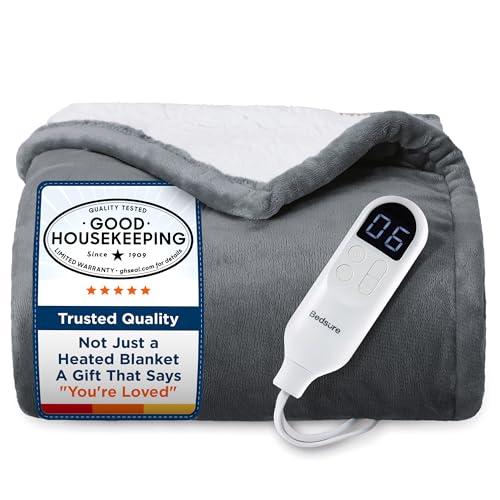
The Bedsure Heated Blanket is a bedding-focused brand positioned in the entry-to-mid tier, usually emphasising soft fleece and flannel fabrics and simple, readable controls. Treat it as a prose-only pick in this draft: compare its fabric, size range and controller style against the checklist in this article, read the current listing’s stated auto shut-off and washing instructions carefully, and confirm the exact model’s manual before buying. Positioned by tier rather than by any fixed figure, it suits buyers whose priorities match the description above.
Best for: buyers who want a soft, bedding-first feel at an accessible tier. Not suited for: anyone who cannot follow the safety rules in this article — keep the blanket flat and unfolded while it is on, never use it for an infant or anyone who cannot adjust it themselves, inspect the cord before use, and switch it off when it is not in use.
Serta Heated Blanket
The Serta Heated Blanket is a mattress and bedding name positioned in the mid-to-premium tier, typically pairing plush fabrics with programmable controller features. Treat it as a prose-only pick in this draft: compare its fabric, size range and controller style against the checklist in this article, read the current listing’s stated auto shut-off and washing instructions carefully, and confirm the exact model’s manual before buying. Positioned by tier rather than by any fixed figure, it suits buyers whose priorities match the description above.
Best for: buyers who want a plush, premium-leaning finish from a bedding brand. Not suited for: anyone who cannot follow the safety rules in this article — keep the blanket flat and unfolded while it is on, never use it for an infant or anyone who cannot adjust it themselves, inspect the cord before use, and switch it off when it is not in use.

Degrees of Comfort Heated Blanket
The Degrees of Comfort Heated Blanket is a heated-bedding specialist positioned in the mid tier, typically offering dual controls and a range of fabric finishes. Treat it as a prose-only pick in this draft: compare its fabric, size range and controller style against the checklist in this article, read the current listing’s stated auto shut-off and washing instructions carefully, and confirm the exact model’s manual before buying. Positioned by tier rather than by any fixed figure, it suits buyers whose priorities match the description above.
Best for: buyers who want a heated-bedding specialist with dual-control flexibility. Not suited for: anyone who cannot follow the safety rules in this article — keep the blanket flat and unfolded while it is on, never use it for an infant or anyone who cannot adjust it themselves, inspect the cord before use, and switch it off when it is not in use.

Woolrich Heated Blanket
The Woolrich Heated Blanket is an outdoor-heritage brand positioned in the mid-to-premium tier, typically using wool-blend and cabin-style fabrics with a heavier, rustic feel. Treat it as a prose-only pick in this draft: compare its fabric, size range and controller style against the checklist in this article, read the current listing’s stated auto shut-off and washing instructions carefully, and confirm the exact model’s manual before buying. Positioned by tier rather than by any fixed figure, it suits buyers whose priorities match the description above.
Best for: buyers who want a heavier, heritage-style fabric and a substantial feel. Not suited for: anyone who cannot follow the safety rules in this article — keep the blanket flat and unfolded while it is on, never use it for an infant or anyone who cannot adjust it themselves, inspect the cord before use, and switch it off when it is not in use.
How to Get the Most Value If You Buy
Uneven heating is the most common complaint, and the first check is embarrassingly simple: is the blanket actually flat? A bunched corner, a fold under a pillow or a section trapped under the mattress will heat differently from the rest. Spread it flat, let it run while you are awake, and feel across the surface. If one zone stays cold on a flat, correctly connected blanket, stop using it and contact the maker; a dead zone can mean damaged wiring, and damaged wiring is a retirement decision, not a repair project.
A controller that will not light, flashes, or shows an error usually wants the boring fixes first: unplug everything, check the blanket-to-controller connection is fully seated, check the outlet with a lamp, then reconnect exactly as the manual describes. Never open a controller, never bypass a fault by swapping controllers between different blankets, and never keep resetting a blanket that keeps faulting. Repeated faults are information: the blanket is telling you it has reached the end of its safe life.
Dual controls are the single feature couples argue about most, and on queen and king sizes they are worth it. Each side of the blanket heats independently, so a cold sleeper can run warm while a hot sleeper leaves their side off entirely. Dual controls also mean two cords and two controllers to route safely, keep untangled and inspect, so the convenience comes with a little extra housekeeping. On single sizes, one simple controller is usually the better design.
The Decision Checklist
- Do you feel the cold in bed at least several nights a week in winter?
- Will you keep the blanket flat and unfolded whenever it is on?
- Will you inspect it regularly and retire it when it shows damage?
- Will you switch it off when it is not in use, every time?
- Does everyone who will use it understand the rules, including guests?
- Is there anyone in the bed — an infant, a young child, someone who cannot adjust it — for whom it must not be used?
Mostly yes answers, with a clear no-risk answer to the last question, mean the blanket is likely worth it for you. Hesitation on the routine questions is the answer too: the value of this product lives entirely inside the habits that come with it.
Deeper Detail: Living With a Heated Blanket
Practical points owners learn in the first season. The points below are the ones that rarely make it into listings, yet they decide how safe, comfortable and long-lived a heated blanket turns out to be in a real household.
Finally, keep perspective on what this product is. It is one of the simplest comfort appliances in the home: a fabric, a wire, a controller, a set of habits. It does not need an app, a subscription or a learning curve, and its entire risk profile is managed by behaviour you control. Households that respect the short rule list get years of unremarkable, reliable warmth from it — and unremarkable is exactly what you want from anything that plugs in beside your bed.
A heated blanket and a memory-foam mattress, a waterproof protector or a thick topper can interact in ways the blanket’s manual may address directly, because layers under the blanket change how heat builds and how the wires are pressed. This is another case where the manual outranks general advice: check what your blanket’s maker says about what may go under or over it, and check the bedding maker’s guidance too. When two manuals disagree, follow the stricter one.
Layering is the quiet skill of heated-blanket ownership. The blanket itself provides the heat; what goes over it decides how that heat feels. A light duvet over the top holds warmth in and lets you run a lower setting, while a heavy throw stacked on top adds pressure and can trap more heat than you intended. Keep layers light, keep them loose, and never pile heavy objects, books or laundry on a blanket that is switched on.
Guests deserve a thirty-second briefing, delivered kindly and clearly. Show them the controller, tell them the blanket must stay flat and unfolded while it is on, ask them to switch it off in the morning, and make sure they know it is not to be used for a baby in the bed or by anyone who cannot work the controls. Most guests are relieved to be told; the rules are simple, and nobody wants to be the person who folded a live heated blanket.
Everyday Use Details
One blanket, one bed, one routine is the pattern that works. Problems creep in when a blanket migrates — sofa one week, spare room the next, folded in a drawer between uses, lent to a neighbour for a cold snap. Every move is handling, every new setting is a new cord route and a new set of habits, and the borrower never gets the briefing. If two rooms need heated bedding, the safer and ultimately cheaper answer is a blanket that lives in each room.
Keeping the manual is a feature you give yourself. Store it with the blanket, note the purchase date on it, and keep the receipt or order confirmation with it as well. If a fault appears, if the maker issues a safety notice, or if you simply forget whether your model may be tumble dried, the answer is in those pages. Households that keep the paperwork get more safe years from the same blanket than households that improvise from memory.
Warmth perception changes across the night, which is why the setting you choose at bedtime is rarely the setting you would choose at three in the morning. Bodies cool, rooms cool, and a blanket that felt gentle at eleven can feel strong at two. This is the practical case for preheating and turning down, and for timers or auto shut-off where the maker provides them: the blanket’s job is to start the night well, not to hold one temperature against your changing body until dawn.
Electric blankets are sometimes blamed for a dry, overheated feeling that is really a settings problem. Running a high setting under a heavy duvet in a heated room will feel stuffy with any brand. The fix is boring and effective: lower the setting, lighten the layer above, or preheat and switch off. Judge any blanket over a week of adjusted nights before concluding it runs too hot or too cool; the first night is a calibration exercise, not a verdict.
Feet deserve a mention because they start most heated-blanket purchases. Cold feet are the commonest reason a sleeper feels the whole bed is cold, and a blanket that covers the full length of the bed solves it in a way a small heated pad at one spot does not. When you size a blanket, check that its heated area actually reaches the foot of your bed with your pillows in place; coverage maps in the manual are worth thirty seconds before ordering.
The first evening with a new blanket should be a supervised test, not a leap of faith. Spread it flat in daylight, connect everything exactly as the manual shows, and run it while you are awake and in the room. Feel across the whole surface for cold patches or spots that run noticeably hotter than their neighbours, listen and look at the controller, and read the safety section of the manual while the bed warms. Anything odd is a returns conversation now, not a discovery at midnight.
Fabric care and fabric feel are the same decision seen from two ends. The plushest face in the shop is the one you will touch every night, and it is also the one that must survive gentle washing and patient drying without matting or hiding wire damage. Slightly plainer fabrics often inspect more easily, because marks and wear show up honestly. There is no wrong answer, but choose knowing that you are buying both the nightly feel and the maintenance routine in a single fabric.
Noise and light are the two small complaints that decide whether a controller is liked. Some controllers click when they cycle; some have indicator lights bright enough to notice in a dark room. Neither matters in a showroom and both matter at midnight. If you are a light sleeper, favour simple controllers you can operate by touch, position the controller where its light does not face the pillows, and never cover a controller with bedding to hide it, because it needs air and access.
Buying for someone else — a parent, a student leaving home, a friend in a cold flat — carries an extra duty: hand over the rules with the gift. A heated blanket given without its safety briefing is only half a present. Include the manual, mention flat use, inspection and switching off, and make sure the recipient can adjust and remove the blanket themselves and understands it is not for infants in the bed. The kindest version of this gift is the one that arrives with instructions attached.
Everyday Use Details
Travel and caravans tempt people to pack the home blanket, and the honest advice is caution. A heated blanket belongs on the bed and the outlet it was set up for, used flat, with its own controller. Improvised settings — bunched on a camp bed, run from an overloaded socket in a van, folded under a sleeping bag — break exactly the rules that make the product safe at home. If you travel in winter, pack warmer ordinary layers and leave the heated blanket doing its one job properly.
The smell test, the hand test and the eye test together take under two minutes and form a complete inspection habit. Smell for anything hot, sharp or scorching when the blanket runs. Run your palms slowly over the whole surface feeling for kinks, stiffness, lumps or exposed-feeling wire. Look for scorch marks, thinning, fraying and damage to the cord, plug and controller. Two minutes, three senses, every time the blanket goes back on the bed after washing or storage.
Reading a listing like an inspector saves money and worry. Look for the size in plain language, whether the controller detaches, what the maker states about auto shut-off, and whether the washing instructions are described clearly before you buy rather than discovered afterwards. Vague listings that boast about heat and say nothing about care are telling you how the maker thinks. Established makers publish manuals; being able to read yours before the blanket arrives is a genuine buying advantage.
Season changes are the natural audit points for heated bedding. When the blanket comes out in autumn, inspect it fully, test it while awake, and re-read the manual’s warnings before the first real night. When it goes away in spring, wash it if the maker allows, dry it completely, inspect it again, and store it loose and dry. Two honest inspections a year catch most of the wear that matters, long before that wear becomes a hazard.
Expect a heated blanket to have a service life, not an eternal one, even with perfect care. Wiring flexes a little with every use, fabrics thin, controllers age, and makers’ guidance on age and replacement exists for a reason. Build the replacement into your thinking from the first winter: this is an appliance with a lifespan, inspected like one and retired like one. A household that expects to replace it calmly will never be tempted to stretch a tired blanket one season too far.
If your household includes someone who gets up in the night, plan the cord and controller for that reality. A controller placed on the far side, a cord crossing the exit path, or a blanket edge hanging where feet land are small hazards that design can remove in advance. Route everything on the side away from the night-time exit, keep the floor path clear, and make switching off reachable without fully waking. Comfort products should survive contact with real, sleepy human behaviour.
Cord routing is a small job that prevents several problems at once. The cord should run clear of the bed frame’s moving parts, never trapped between mattress and base, never pinched in a recliner mechanism or a drawer, and never stretched tight across a walkway where feet will find it in the dark. The controller belongs somewhere it can be reached without a search, cannot be sat on or buried, and will not fall and hang by its cord.
Children change the calculation by age, not by good intentions. A heated blanket is never for an infant, and never for a child too young to understand and follow the rules and work the controller reliably. For older children, the maker’s own age guidance and warnings govern, and the adult’s judgement governs after that. If there is any doubt in your household, the doubt is the answer: keep heated bedding in the adults’ room and give children warmer ordinary bedding instead.
Disposal is part of ownership. A heated blanket that is damaged, faulting, scorched, very old or simply no longer trusted should be retired promptly rather than demoted to the dog’s bed, the garage or a donation pile, where someone else will use it without its manual or its history. Cut the cord if your local guidance recommends rendering it unusable, and follow local electrical-waste rules for disposal. Retiring a blanket early is a success of the safety routine, not a failure of the purchase.
Everyday Use Details
Bed-making changes with a heated blanket in the stack. In the morning, switch the blanket off, let it lie flat while the bed airs, and resist the urge to fold it back tightly with the rest of the bedding or tuck it hard under the mattress. A blanket that spends its days loosely flat and its nights loosely flat keeps its wiring in the shape the maker intended, and it is far easier to inspect when nothing about its routine involves creases.
Never buy a second-hand heated blanket, and never accept a hand-me-down one whose history you do not know. You cannot tell by looking whether the wiring inside has been folded hard, washed wrongly, sat on for years or damaged and repaired invisibly. Heated bedding is one of the few household categories where new-from-a-known-maker is a safety decision rather than a preference, and where a bargain of unknown origin is not a bargain at all.
A Few Last Practical Notes
Keep expectations proportionate and the product will meet them. A heated blanket will not fix a draughty room, a worn-out mattress or a duvet that has lost its loft, and it should not be asked to. What it does — reliably, cheaply in effort, and night after night — is remove the cold-bed moment and hold a gentle, adjustable warmth around the person who wants it. Bought for that job, sized for that bed and handled by the rules, it is rarely a purchase anyone regrets.
When you compare two otherwise similar blankets, let the controller break the tie. You will touch the controller twice a day for years; you will read the feature list once. Prefer the one you can operate by feel in the dark, with markings you can read without glasses and a connection that seats with a definite click. Small daily frictions are what turn a good appliance into an abandoned one, and they are entirely visible before you buy if you look for them.
Warranty paperwork deserves one calm read before the first wash, not a panicked read after a fault. Note how long the cover runs, what it excludes, and whether washing contrary to the label voids it, because with heated bedding the care instructions and the warranty are effectively the same document. Photograph the label and the controller’s markings while they are new and legible; labels fade, and the information on them is the information you will need in year three.
If two people will use the blanket and only one of you reads manuals, the reader’s job is teaching, not policing. Walk the other person through the controller once, agree together where it lives and how the cord runs, and agree the morning switch-off as a shared habit rather than one person’s chore. Heated bedding stays safe in households where the routine belongs to everyone who sleeps in the bed, including the person who swears they never touch the settings.
A spare ordinary blanket kept in the same room is a surprisingly useful companion purchase. It covers the nights when the heated blanket is being washed and dried properly instead of hurried back onto the bed damp, the nights a fault means the blanket stays off while you contact the maker, and the shoulder-season nights when a little extra layer is enough. Owning a fallback removes the pressure to misuse the heated blanket, and pressure is where most misuse begins.
Judge the first week, not the first night. Night one is calibration: finding the setting that preheats well, learning how far to turn it down, noticing whether you can feel the wires and whether the controller’s light or click bothers you. By night seven the routine should feel automatic — inspect, flatten, preheat, settle, switch off — and the blanket should have disappeared into the background of the evening. If it has not, that is useful information while returns are still simple.
The Usage Tally: Let a Month of Evidence Decide
Borrow, rent, or simulate before you commit if you possibly can, and run the electric heating blanket through your real week rather than an imagined improved version of it. Keep a plain tally of uses for a month, on paper on the fridge if necessary, because the honest count of actual uses is the number every value judgement secretly depends on. Note what each use replaced: a purchase, a chore done by hand, another appliance’s time, or nothing at all because the job would simply not have happened. Record the minutes the electric heating blanket saves or costs across a whole session, including setup and cleaning, since value lives in the full cycle and not in the headline moment.
Write down the uses that felt like genuine pleasure rather than mere efficiency, because enjoyment is a legitimate return and pretending otherwise distorts the arithmetic. Ask who else in the household benefits and who merely tolerates the storage, the noise, or the counter space, and count those votes without weighting your own twice. Where a shortlist names specific examples, such as Sunbeam Heated Blanket, run these same checks against that listing line by line rather than assuming the general verdict transfers unchanged. Apply the identical test to Biddeford Heated Blanket as well, on the same day and under the same conditions, because a fair comparison needs one ruler rather than two moods.
- Tally real uses for one full month
- Log what each use actually replaced
- Count full-cycle minutes including cleaning
- Give the space a vote in the decision
- Imagine a breakdown in year two
- Set a decision deadline with a default
If Bedsure Heated Blanket is also in contention, give it the same worksheet and let the three sets of answers sit side by side before anyone reaches for a checkout button. Consider the space as a cost with a rent of its own: a electric heating blanket that earns its footprint weekly is a different proposition from one that squats on it monthly. Think about the season ticket question: whether your interest is a durable habit or a project-shaped enthusiasm that will fade when the project ends. Compare against the honest alternative, which is usually doing the job with what you already own, slowly and imperfectly, rather than against doing it not at all.
Imagine the electric heating blanket breaking in year two and ask whether you would replace it immediately, eventually, or never, since that imagined answer is the cleanest verdict available before buying. Factor in the learning period without resenting it, but do not let a promise of future ease excuse a present that your tally says is not working. Notice whether you keep finding new jobs for it or keep finding excuses to use it, because the difference between those two patterns is the difference between value and clutter. Give the decision a deadline and a default: if the tally has not persuaded you by that date, the answer is no for now, and no is a complete decision rather than a failure.
Revisit the question if your household, space, or routine changes materially, because worth is a property of a match between product and life, not of the product alone. Write the sentence that would make it worth it, in advance and in numbers you can check, so the verdict comes from evidence you gathered rather than from mood at the checkout. Count the accessories you would genuinely buy alongside it as part of the commitment, since a product that only works with extras is really the bundle, sized as such. Ask whether the same money and space spent on your current setup, on better ingredients, storage, or a repair, would beat the improvement the electric heating blanket promises.
Frequently Asked Questions
Can you sleep with an electric heating blanket on all night?
Many models are designed to be run at low settings overnight and include an auto shut-off after a manufacturer-set period, but the honest answer is to follow your own model’s manual rather than general advice. The pattern most makers describe is preheating the bed, then turning the blanket down low or off. Never sleep on a folded or bunched blanket, never use one for an infant or anyone who cannot adjust it, and if your manual warns against lying directly on the wired area, obey it.
Is it safe to fold an electric heating blanket?
Not while it is switched on. Folding, bunching or tucking a live heated blanket traps heat and stresses the internal wires, which is why every maker’s manual forbids it. Spread the blanket flat whenever it is on. For storage, wait until it is off, cool, clean and dry, then roll it loosely or use large, soft folds with nothing heavy on top, so the wiring is not creased or crushed over the summer months.
How do you wash an electric heating blanket?
Detach the controller and cord first, then follow the label on your exact model, because permissions differ. Where machine washing is allowed, that usually means a gentle cycle with mild detergent; never wring, twist or iron the blanket, and follow the maker’s drying instructions exactly. Never switch it on to dry it, never use it while damp, and inspect the full surface for wire damage after washing before you reconnect the controller and use it again.
Who should not use an electric heating blanket?
Heated blankets are not for infants, for young children who cannot operate the controls safely, or for anyone who cannot sense heat reliably or remove the blanket themselves. Pets that chew or knead can damage wiring, so unsupervised pets and heated blankets do not mix. Anyone with a health condition or reduced sensation should ask a clinician and read the maker’s warnings first. This is a comfort product; it is not a medical device and makes no treatment claims.
What does auto shut-off actually do?
Auto shut-off switches the blanket off after a period set by the manufacturer, which varies by model. It is a useful backstop if you fall asleep with the blanket on, and worth confirming on any listing before you buy. It is not a substitute for your own habits: switch the blanket off when you get up, keep it flat and unfolded while it runs, and never treat the timer as permission to leave a heated blanket running unattended for hours.
Related Reading
Keep exploring with these guides from the same site: pros and cons, the reviews, how to use one, best electric blankets, best heated blankets, best electric throw blankets.