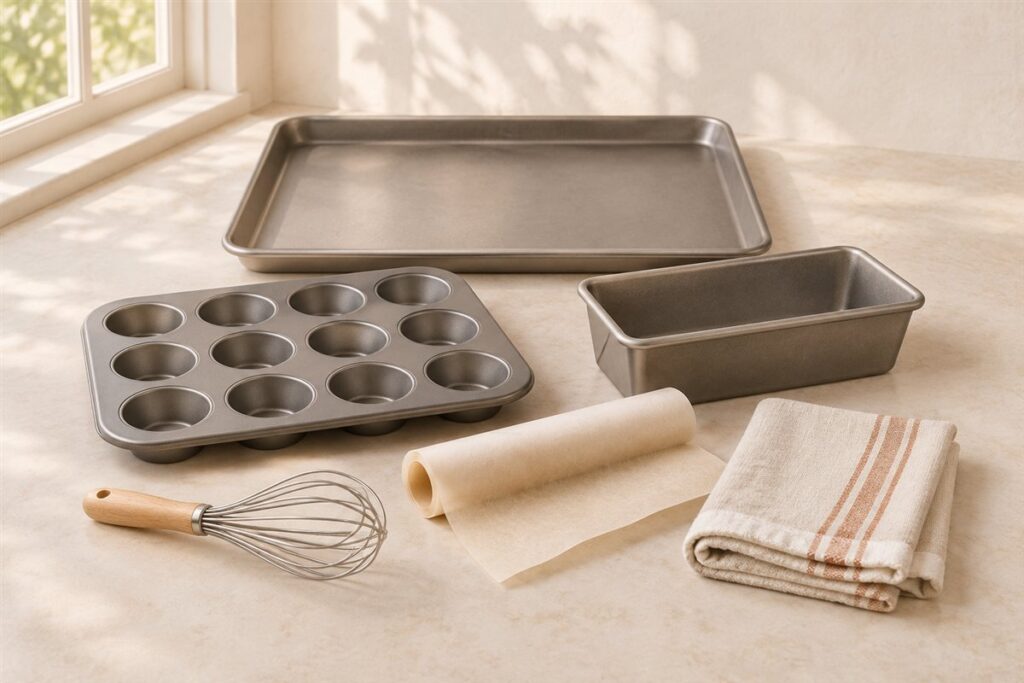
A twelve-cup pan is not a complete size description. Cup diameter, depth and total footprint can differ. Two pans with the same number of cavities can produce muffins of noticeably different sizes.
What to do
Compare the recipe’s intended muffin size, cup dimensions and liner fit. Check the pan maker’s preparation and cooling instructions before using a different coating or material.
Look for the cup’s top diameter, base diameter and depth in the listing. If the details are missing, ask the seller.
What defines cup size
- Top diameter: sets the size of the muffin top and the liner that fits.
- Depth: decides how tall the muffin can rise and how much batter each cup takes.
- Base diameter and taper: sloped cups shape the muffin differently from straight ones.
- Spacing: tight spacing can make tops touch, and also changes how the pan fits the oven.
Larger cups give bakery-style muffins, while smaller ones suit mini versions and shorter bake times.
A mistake to avoid
Do not assume every standard liner fits every pan equally. A poor fit can change filling and removal.
A liner that is too large can fold over and distort the muffin, and a snug one can be difficult to peel away.
A detail worth checking
Check the recipe quantity against the intended cup fill. A different cup volume can change how many portions the recipe produces without changing the number of cavities in the pan.
A common approach is to fill cups about two-thirds to three-quarters full, unless the recipe says otherwise. Smaller cups may produce more portions than the pan has cavities.
Try this practical check
Measure one cup in your existing pan and note the liner used successfully. Compare those details when buying another pan for the same recipes.
You can also fill a cup with water from a measuring spoon or small jug to find its volume, and write it on a note to keep with the pan.
Common questions
Can I use a muffin pan for other recipes?
Yes, for items such as individual cakes, egg bites and small portions. Adjust times for the cup size and prepare the pan as directed.
Should I grease the cups even with liners?
Follow the recipe and the pan maker’s guidance. Liners usually remove the need, but some recipes still suggest it.
How do I stop muffins sticking?
Prepare the pan as the maker advises and let the muffins rest briefly before removing them, to help them release.
Reading a Pan Listing Carefully
Product listings often lead with the number of cups and the overall pan size, and leave cup details further down or out entirely. Scan the whole page, including the specifications and any questions and answers. Look for the cup top diameter, depth and, ideally, the cup volume.
Be aware that makers measure differently. One may list the diameter across the top lip of the cup, another the diameter of the cup floor. If a listing gives just one number, ask which it is before you buy. If the listing uses words such as “standard”, “large” or “jumbo” without numbers, treat those as rough labels rather than precise sizes.
Compare the listing with a pan you already know. If your current cups hold your favorite batter well, copying their dimensions is the surest way to get the same result.
Standard, Mini and Jumbo Cups Compared
The labels on pans point to general size classes, and each suits a different purpose.
- Standard cups: a flexible middle size that suits most muffin and cupcake recipes.
- Mini cups: small bite-size portions that bake quickly and suit party trays, snacks and lunchboxes.
- Jumbo cups: large bakery-style muffins that need a longer, gentler bake so the center sets before the outside darkens.
Recipes are often written with one class in mind. A batter meant for standard cups will make fewer jumbo muffins and a lot more minis. Rather than expecting the recipe yield to match, fill by eye and adjust the baking time. Smaller muffins finish sooner, and larger ones need extra time, so start testing earlier or later than the recipe suggests.
Matching Liners to Cups
Liners come in sizes that correspond to cup classes, but fit varies. Before buying a large pack, test a few in your pan. A good liner sits snugly against the walls without being forced in and reaches near the rim.
If liners slump or pleat inward, the muffin can bake with creased sides. If they are too tight, they may tear when you lift them out. Foil liners hold their shape better and can stand on their own, which suits thin batters. Paper liners are lighter and common for everyday use. Some batters, such as low-fat ones, can cling to paper, so a light spray of oil on the liner may help. Follow your recipe and the liner maker’s guidance.
How Cup Size Changes Time and Temperature
Cup size affects how heat reaches the center of the batter. Wider and deeper cups take longer to bake through, and small cups can overbake quickly. A good habit is to set a timer for a bit before the shortest time in the recipe, then check with a skewer in the middle of a muffin.
If you switch from a standard pan to a different size, do not change the oven temperature unless the recipe suggests it. Instead, watch the color and the doneness. Larger muffins may need a loose foil tent if the tops brown early. Rotate the pan halfway if your oven has hot spots.
Keep a short log of what you tried. A line such as “jumbo cups, filled to the same height, baked longer” is enough to help you repeat a good result next time.
Deciding Whether to Replace or Add a Pan
Add a second pan, rather than replace the first, if you need both sizes or often bake two batches at once. Replace a pan if it is warped, if the coating is flaking, or if rust appears on bare metal spots.
- Check that a new pan fits your oven rack with room for air to flow around it.
- Choose a pan with a wide rim or handles so you can grip it with mitts.
- Think about whether you need a specific material, such as one that is dishwasher-safe or suitable for freezer use. The maker’s guide will say.
Questions to Ask a Seller Before Buying
When a listing leaves out details, a short message to the seller can save a return. Keep your questions specific so the answer is easy to give and easy to verify against the product.
- What are the top diameter and depth of each cup?
- Do you state the cup volume, and how was it measured?
- Which liner size fits the cups without folding over?
- Is the pan rated for the oven temperature my recipes use?
- Are the cups all the same size, or do any differ?
- What are the care and cleaning instructions for the coating or material?
Save the answers with your order details. If the pan arrives and the cups do not match what you were told, you have a clear basis for asking for a return or exchange under the seller’s policy. It also helps to measure the pan as soon as it arrives, before you use it, so you can compare it to the listing while the return window is open.
Common Questions
How many muffins will a recipe make in a different size pan?
It depends on the cup volume. Fill each cup about two-thirds to three-quarters full and count how many you get, and expect more portions from smaller cups and fewer from larger ones.
Can I mix standard and mini cups in one bake?
It is better to bake them separately, since they finish at different times. If you must bake together, remove the minis first and keep a close eye on both.
Do I need to adjust baking time for dark pans?
Dark pans often brown faster, so check a little early. Cover the tops loosely with foil if they darken before the center is done.
What if my cups are not all the same size?
Poorly made or slightly warped pans can have uneven cups. Fill by eye, check the smaller cups sooner, and consider replacing the pan if the difference is large.
Should I fill empty cups when baking fewer muffins?
Many makers suggest putting a little water in empty cups to help the pan heat evenly and avoid warping. Check your pan's guide for its advice.
Is a muffin pan the same as a cupcake pan?
In most cases yes. The same pan works for both, though some cupcake recipes are made for slightly shallower fills. Follow the recipe's guidance.
Related reading
5 Best Muffin Pans: Aluminum, Nonstick and Ceramic (2026)