Disclosure: As an Amazon Associate, topratedkitchenware.com earns from qualifying purchases. Links on this page are affiliate links; they cost you nothing extra. Prices and availability change often, so check the current Amazon listing before you buy.
This panini press review takes the category seriously as a cooking tool rather than a novelty: what a press is, how its design choices show up on the plate, how it performs across the foods households actually cook in it, and where its honest limits lie. The premium end of the category — represented here by the Breville Panini Press, presented in prose while verification is pending — serves as the reference point, with convertible and entry designs brought in for comparison where they illuminate a strength or a weakness. If you want the short version: a well-built press is one of the most satisfying small appliances in the kitchen for the households it suits, and this review’s job is to show you exactly which households those are.
Panini Press Review: Key Takeaways and Verdict
- Best for: households making hot sandwiches, melts, or quesadillas at least weekly; cooks who value even browning and hands-off timing.
- Not suited for: occasional sandwich eaters, kitchens without an honest storage home, anyone expecting it to sear thick meats like a grill.
- The floating hinge and plate quality decide real-world performance far more than controls or extra modes.
- Strengths are consistency, speed, and fused, café-style results; trade-offs are cleaning after cheese, storage, and a firm capacity ceiling.
- Safety is a routine, not a worry: open away from the face against steam, mitts on, drip tray emptied only when cool, unplug and cool fully before cleaning.
The verdict in one paragraph: the panini press, as a class, does its single job with a completeness few appliances match. It will not transform a kitchen that does not eat sandwiches, and it will quietly become indispensable in one that does. Build quality separates the excellent examples from the disappointing ones more sharply than in most categories, which is why this review spends so much of its length on hinges, plates, and lids rather than on features.
A note on method before the detail: this review judges the category by the standards of the households that actually live with it — frequency of use, quality of the hundredth sandwich rather than the first, cleaning burden across a year, and behaviour in the small dramas of real kitchens, from the overfilled sandwich to the forgotten drip tray. Specifications are treated as evidence, not verdicts, and every model named is presented in prose while verification is pending, with tiers given in words rather than prices. Where this review disagrees with the category’s marketing, it says so and shows its working.
In this guide
What a Panini Press Is and Where It Fits
A panini press is a hinged pair of heated plates that close over a sandwich, cooking it from both sides while applying gentle pressure. That definition sounds plain, but each element earns its place. The two-sided heat is the core idea: bread crisps on both faces simultaneously, and the filling — warmed from above and below — melts through evenly instead of in patches. The pressure is the second idea: it compacts the sandwich into a fused, portable whole, encourages contact between layers so flavours marry, and produces the ridged marks that are the category’s visual signature. The hinge is the third idea, and the one that separates thoughtful designs from crude ones, because the hinge decides whether the pressure arrives evenly or as a wedge.
Where does it fit in a kitchen’s ecology? It sits between the skillet and the toaster oven, borrowing virtues from both. From the skillet it takes direct, fierce contact heat and the ability to brown; from the toaster oven it takes enclosure and hands-off operation. It replaces neither — the skillet still fries eggs and the oven still roasts — but for the specific territory of sandwiches, quesadillas, wraps, and reheated slices, it outperforms both on their home ground. Its natural neighbours on the counter are the appliances it is most often compared with when space is allocated, which is why our guides to the best waffle makers and the best toaster ovens make useful companion reading for anyone planning a countertop from scratch.
The category divides into dedicated presses, convertible grill-griddles, and sloped contact grills, and this review concentrates on the dedicated press as the purest expression of the idea, using the premium Breville design as its reference. That focus is deliberate: the dedicated press is what most buyers mean by the term, and its virtues and limits are the category’s in concentrated form. Readers who already suspect they want the convertible route will find it treated fully in our panini press buying guide; readers still asking whether the category belongs in their home at all should start with is a panini press worth it.
Design, Build and Setup

Breville Panini Press — the Reference Design in This Review
The Breville Panini Press, presented in prose while verification is pending, represents the premium dedicated design: a heavy, settled body, a lid whose height can be adjusted to press, rest, or hover, and plates built for daily service. In this review it functions as the benchmark — the design against which the class’s possibilities and compromises are measured. Its tier is premium, and the sections below examine whether the things that tier buys are the things that matter. Spoiler, in the review tradition of burying nothing: mostly, they are — for the households that use a press often enough to notice them.
Start with the hinge and lid, because they dominate daily experience. A floating hinge lets the top plate rise and settle level on a sandwich of any height, so pressure spreads across the whole surface. An adjustable lid goes further, locking at heights that let the top plate hover above an open melt — browning it with radiant heat without touching it — or rest with feather weight on a croissant. In use, this transforms the appliance’s repertoire: the same press that flattens a ciabatta into café form can finish an open-faced melt without crushing it, and can warm a pastry without reducing it to a wafer. On lesser designs the lid has one attitude — down — and the repertoire narrows accordingly.
Plates are the second design pillar. Ridged plates give the classic marks and lift food out of its juices; the better castings hold heat steadily so the fourth sandwich browns like the first. Whether plates remove for washing is the great practical divide in the category, addressed in the care section below; in design terms, removable plates add mechanisms — latches, handles, alignment — that must be engineered well or they become the appliance’s weak points. Handles and controls, by contrast, are simple on every good design: a handle that stays cool enough for a mitt-free touch on the best models (though this review recommends mitts regardless), a clear ready indicator, and on some a temperature dial whose usefulness this review examines in the performance sections.
Setup, on any model in this class, takes minutes and repays care. Wipe the plates to remove manufacturing residue, run the press empty and closed briefly to burn off the new-appliance smell, and choose its position deliberately: a stable surface, clearance above for the tall-opening lid and its steam, and a cord routed away from the counter edge where nothing — child, pet, hip, or shopping bag — can catch it. That placement decision, made once and made well, quietly determines whether the press becomes a fixture or a chore, a theme this site’s panini press pros and cons documents in rueful detail.
Performance in Real Use
The Classic Sandwich Test
The defining task first: a cheese sandwich on sturdy bread, the household standard. A good press preheats quickly with the lid closed, takes the sandwich without fuss, and — under a level floating lid — produces in a few minutes what the skillet produces in twice the time with twice the attention: both faces deep golden and crisp, cheese molten to the edges, layers fused so the sandwich cuts with a clean crackle and holds together to the last bite. Across repeated rounds, the better presses hold their temperature and their standard; the fourth sandwich matches the first. This consistency under batch conditions is where premium plate mass earns its money, and where thin-plated budget models visibly fade, each round paler than the last.
Thick sandwiches are the sterner examination, and the hinge sits it. A stacked ciabatta with roasted vegetables and cheese will defeat a wedge-action lid: the front crushes, the filling migrates, cheese escapes at the sides and bakes onto the plates. Under a floating hinge the same sandwich compresses evenly, heats through, and emerges intact. Very tall builds still have limits — there is a height beyond which any lid rides at an angle and cooks unevenly — but the usable range of a good hinge covers every sandwich a sane household builds.
One performance trait deserves isolation because owners mention it constantly and listings never do: forgiveness of timing. A press’s enclosed, two-sided heat has a wide plateau of “done” — a sandwich left an extra minute while you answer the door emerges darker but rarely ruined, because the heat is moderate and surrounded rather than fierce and one-sided. Skillet cooking has no such plateau; its window between golden and burnt is measured in distracted seconds. For real households — where the cook is also the host, the parent, and the person who hears the doorbell — that plateau is not a footnote. It is, on many days, the whole reason the sandwich succeeds.
Quesadillas, Wraps, and Tortillas
If the press has a second home discipline, this is it. A quesadilla under two plates crisps across its whole surface at once, seals at the edges where cheese reaches them, and emerges flat, firm, and cuttable into clean wedges — a texture a skillet approximates only with pressing and flipping. Wraps benefit similarly: the seam seals shut under heat and pressure, and the outside takes a light crispness that transforms a soft wrap into something with structure. The watch-outs are filling discipline — wet salsas and loose fillings migrate toward the edges — and raw vegetables that soften less than they would in a pan, so peppers and onions destined for a quesadilla reward a brief pre-press on their own to take the rawness off.
Vegetables, Pizza, and the Reheat Test
Thick slices of zucchini, eggplant, peppers, mushrooms, and onions cook on the plates with proper marks and a sweetness that comes from direct contact heat, all without preheating an oven for a side dish’s worth of food. For small households this is a genuine weeknight upgrade: vegetables for two, cooked while pasta boils. Leftover pizza is the other cult use, and it deserves its reputation — the base recrispens under the bottom plate while the top plate revives the cheese, producing a slice closer to fresh than any microwave and less bother than a skillet for most cooks. Tall toppings can kiss the top plate; a hovering lid, where fitted, solves it, and a sheet of baking parchment solves it everywhere else.
Breakfast and Sweet Items
The press moonlights at breakfast better than its sandwich branding suggests. Thick French toast presses to a custardy interior with crisp, marked faces, and because both sides cook at once it emerges evenly — no soggy quadrant, no flipped-away custard. Filled croissants are the diva test: under a basic lid they flatten sadly, but under an adjustable hovering lid they warm through, crisp at the edges, and keep their architecture, which is as neat a demonstration as exists of why lid control tops the premium feature list. Sweet fillings — fruit, spreads, chocolate — brown fast and scorch faster than savoury ones, so sweet work teaches timing discipline quickly; the first slightly-too-dark banana melt is a rite of passage in press-owning households, and it is almost never repeated.
Waffles deserve a footnote of their own: a press is not a waffle iron and will not make waffles from batter, but it reheats leftover waffles and pressed potato cakes admirably, and some households press tortilla-based breakfast wraps into a standing weekend institution. The pattern across all of this is the same — the press rewards foods that are flat, filled, and benefit from contact heat on both sides, and it politely declines everything else. Cooks who internalise that pattern stop experiencing failures, because they stop asking the tool to leave its territory.
Where Performance Honestly Ends
A review owes its readers the boundary lines. The press does not sear thick meat like a hot skillet or grill; thin cuts and burgers cook adequately, especially on sloped designs that drain fat, but a thick chicken breast under a lid cooks unevenly and steams as much as it grills. It does not toast plain bread as evenly or as quickly as a toaster. It does not handle very wet, saucy constructions without leakage and a cleaning session. And its capacity is fixed by its plates: a press is a two-sandwich tool, and no technique makes it a six-sandwich one. None of this diminishes the category — every tool has a territory — but buyers who purchase expecting a general grill will be disappointed, and they will blame the press for their own brief. Buy it for bread, cheese, tortillas, and vegetables, and its performance will delight you for years.
The performance sections above can be compressed into the balance sheet below, and it is worth pausing on how the two columns relate: every strength is a property of the cooking, and every trade-off is a property of the ownership surrounding the cooking. That is the signature of a mature appliance category — the tool itself is essentially solved, and what remains is fit. It is also why this review refuses a single score: a press that deserves top marks in a weekly sandwich household deserves a shrug in a monthly one, and any number that pretended otherwise would be lying to one of those households.
Strengths and Trade-Offs
Strengths
- Even, two-sided browning and through-melting that no one-sided method matches for effort.
- Batch consistency: the fourth sandwich matches the first on a well-built model.
- Hands-off speed that turns hot lunch into a routine rather than a project.
Trade-offs
- Cleaning after cheese escapes is a real, recurring few minutes — least with removable plates, most without.
- Storage and counter space are a permanent cost in kitchens that have neither to spare.
- Steam, hot plates, and hot drip-tray grease demand a small, non-negotiable safety routine.
Testing Notes: Breads, Fillings, and What They Reveal
Bread is the press’s primary material, and testing across loaves reveals more about a press than any specification. Sourdough, with its sturdy crust and open crumb, is the ideal subject: it crisps without collapsing, carries marks beautifully, and forgives a wide timing window. Ciabatta presses into the café archetype — crackling shell, molten interior — provided the hinge sits level on its height. Sliced sandwich bread is the everyday case and the easiest: it browns quickly, needs a gentler touch, and shows over-pressing immediately as thin, hard wafers, which makes it the loaf that teaches new owners restraint. Brioche and other enriched breads brown fastest of all and scorch at the sugars’ whim; they reward a hovering lid or a shorter cook and punish inattention within a minute.
Fillings test different systems. Hard cheeses melt slowly and benefit from being grated or sliced thin and brought toward room temperature while the press heats; soft cheeses melt eagerly and escape enthusiastically, policing your border discipline. Raw vegetables release water as they heat, and that water becomes the steam that softens crusts — a quick pre-press of peppers, onions, or mushrooms drives off moisture and concentrates flavour before they join the sandwich. Cooked meats reheat beautifully in thin slices. Sauces and dressed leaves are the press’s natural antagonists: they migrate under pressure and wet the bread from inside, so the experienced builder puts them in the middle of the filling stack, insulated by cheese on both sides — a small architecture that the press rewards every time.
What these tests collectively reveal is that a press is an honest amplifier. It takes the sandwich you built — its bread quality, its balance, its moisture management — and returns it intensified, for better or worse. This is why two households can own the same model and report different appliances: one builds considered sandwiches and meets a café machine; the other builds carelessly and meets a flattening iron that leaks. The reviewer’s obligation is to say plainly that the tool’s ceiling is high and its floor is set by the cook — and that a fortnight of deliberate practice moves any household most of the way from the floor toward the ceiling.
The Specification Sheet, Translated
Listings describe presses in a vocabulary that conceals as much as it reveals, so here is the translation this review applies. “Floating hinge” means the lid can sit level on thick food — the single most valuable phrase in the category. “Adjustable lid” or “height control” means it can also hover, which matters for melts and pastries. “Removable plates” means cleaning will be a sink job rather than a wiping ritual, and the follow-up question — dishwasher-safe or hand-wash — is always worth one more line of reading. “Non-stick” is universal and therefore meaningless as a distinction; the real question is coating care, and the answer is kind utensils forever. Wattage figures describe how hungrily the plates heat, not how well they cook; plate mass and element design decide the cooking, and neither is printed — heft and owner reports about batch cooking are your evidence. Footprint figures, by contrast, deserve full belief and a tape measure: compare them against your actual shelf before anything else in the listing charms you.
Read the comparison that follows as a map of temperaments rather than a league table. Each design in it is the best press in this review for somebody, and the somebody is specified in each row — because the costliest error in this category is not choosing the second-best press, but choosing the best press for a household that is not yours.
How It Compares
| Design | Character | Choose it if |
|---|---|---|
| Breville Panini Press (premium dedicated) | Adjustable hovering lid, heavy build, even pressure | You press often and cook delicate or open items as well as stacks |
| Cuisinart Griddler (convertible) | Press, contact grill, and flat griddle in one; removable plates | You want one appliance across breakfast and sandwich duty |
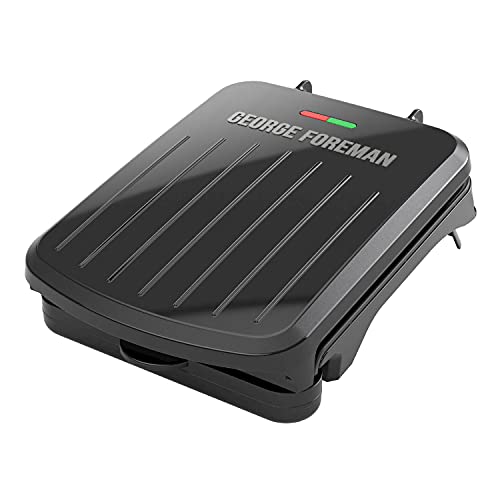
| George Foreman Grill and Panini Press (sloped) | Angled plates drain fat to a tray; compact scale | Your cooking splits between melts and simple grilling for one or two |
| Hamilton Beach Panini Press (entry dedicated) | Simple floating lid, upright storage, minimal controls | You want the dedicated-press experience at the simplest tier |

Cuisinart Griddler
The Cuisinart Griddler, in prose pending verification, is the comparison that tests whether versatility beats specialisation. Opened flat, it out-cooks any dedicated press across a breakfast spread; closed, it presses a sandwich very well, though the dedicated premium design’s lid control gives it the edge on delicate work. Its removable plates make it the easiest of this group to clean after a messy session. Households that will use the flat mode weekly should choose it without hesitation; households that will not are paying in storage for a party trick.
George Foreman Grill and Panini Press
The George Foreman Grill and Panini Press, in prose pending verification, brings the sloped idea to the comparison: fat management as a design philosophy. For bacon melts and burgers it is genuinely effective, and its compact scale suits small households. As a pure sandwich instrument it is outclassed by the dedicated designs on lid behaviour and plate removal, and its slope asks for tidy construction. It is the right answer to a different question — one appliance for light grilling and pressing — and a perfectly honourable one.

Hamilton Beach Panini Press
The Hamilton Beach Panini Press, in prose pending verification, is the entry-tier control in this experiment: how much of the experience survives simplification? Most of it, is the honest finding — a floating lid and honest plates deliver the core result, and what falls away is refinement: lid adjustment, plate removal, and the planted feel of heavier metal. For a first press or a moderate repertoire it is not a compromise but a calibration. Our best indoor grills roundup covers the wider contact-grill field for readers whose needs lean that way.
Three buyer portraits sharpen the comparison. The first presses daily and cooks the full repertoire — stacks, melts, croissants, vegetables: for this buyer the premium reference design is not indulgence but fit, and its lid control will be used weekly. The second presses twice a week, sandwiches only, for a family: the convertible’s removable plates and capacity serve them best, and the premium lid would be an ornament. The third presses for one, in a small kitchen, splitting the work with simple grilling: the sloped compact is their honest match. Notice that budget never leads any of these portraits — tier follows repertoire, and households that reverse that order are the ones writing disappointed reviews of perfectly good appliances.
Who Should Buy It, Who Should Skip It
Buy a press of this class if hot sandwiches are a standing feature of your household’s week; if you feed two or more people who share the habit; if your skillet results frustrate you with their unevenness; and if you have a counter corner or cupboard shelf to give it permanently. Buy toward the premium end if you will use it several times a week, cook delicate items, or simply know that build quality is what you notice daily. Buy at the entry end if you are graduating from the skillet for the first time and want the concept proven in your own kitchen before investing further.
Skip it if sandwiches are occasional, if your storage is genuinely full, or if your household’s sandwich tastes run cold and crisp rather than hot and pressed. Skip it, too, if what you actually want is a grill for steaks and chicken — buy the grill, and press your occasional sandwich in the skillet with a weight, a method whose honest merits this site sets out in its pros and cons analysis. And before buying at any tier, run the pre-purchase checklist: measure the storage, count the weekly sandwiches, decide your plate preference, and confirm the household vote. Four small acts of honesty that predict satisfaction better than any review — including this one.
Sound, Smell, and the Social Life of a Press
A review that only describes cooking misses how an appliance behaves as a member of the household. The press is a quiet citizen: a click as it reaches temperature, a sizzle as the sandwich lands, a soft sigh of steam at the opening — nothing that competes with conversation or a podcast. Its smells are its cooking’s smells, amplified by enclosure: onions and peppers announce themselves through a small flat, cheese declares itself unmistakably, and in a studio apartment the press is effectively a broadcasting station for whatever lunch is becoming. Most owners count this a pleasure — few things make a home feel cooked-in like the smell of a pressing sandwich — but midnight cooks in shared housing learn discretion about fillings.
Socially, the press punches above its size. It is the appliance of the informal gathering: sandwiches in rounds while conversation continues, each guest’s build cooked identically, the cook participating rather than exiled to a stove. It is the appliance teenagers colonise first, because its routine is learnable in one supervised session and its results make them feel competent at feeding themselves and their friends. And it is, in many houses, the appliance that turns “there’s nothing to eat” — the eternal complaint before a full fridge — into a hot lunch in six minutes. Reviews measure plates and hinges; households remember these things. Both belong in a complete account, and this one has tried to keep them in proportion: the metal decides whether the press can serve, and the social life decides whether it will be asked to.
Setup, Care and Maintenance Essentials
Daily care is the price of the performance described above, and it is a fair price when paid in the right order. After cooking: unplug the press, open the lid, and let it stand. If plates are removable, they go to the sink or dishwasher once cool enough to handle; if fixed, they get a patient wipe with a damp cloth once the heat has fallen to warm — never a cold wet cloth on hot plates, never abrasives, never metal tools. Crumbs and cheese in the grooves yield to a soft brush. The drip tray is emptied last and only when its contents are fully cool: hot grease carried across a kitchen is the category’s most common injury, and the wait costs nothing but a few minutes of standing time.
The safety routine woven through this review bears collecting in one place. Open the lid away from your face, every time, because steam from a moist sandwich rises exactly where a cook leans in. Use mitts when handling the press during and after cooking, and treat every surface as hot until the appliance has stood unplugged and open for a good while. Keep the cord away from the counter edge. Never immerse the body, never clean while plugged in, and never store the press until it is fully cool and dry. These are seconds-long habits; observed without exception, they make the press one of the calmest appliances in the kitchen. Deeper cleaning — a weekly pass over the hinge area and exterior with a soft brush and a barely damp cloth — keeps the appliance pleasant to live beside, which matters more to long-term use than any specification.
What the First Week Teaches
Every press has a temperament, and the first week is when you learn yours. Day one’s sandwich is usually built too tall and cooked by hope; it teaches the hinge’s true range and the filling border in a single delicious lesson. By day three, the timing instinct forms — you begin to hear doneness in the sizzle’s change of pitch and see it in the cheese’s first appearance at the sandwich’s edge. By day five, the wipe-down has shortened from a project to a gesture, and the press has acquired its permanent position, which is the week’s most consequential event even though nobody notices it happening. By day seven, the household has a standing build — the sandwich — and the appliance has stopped being reviewed and started being used.
This review mentions the first week because most returns and most disappointments are decided inside it, usually for reasons that have nothing to do with the press’s quality: a storage home that was never assigned, a repertoire that was never realistic, a first sandwich built like a skyscraper. Buyers who give the appliance its week — three or four cooks, one honest look at where it lives, one adjustment of expectations toward its true territory — almost always emerge as the owners whose long-term reports this site collects. The press rewards a fair trial more reliably than any appliance in its price neighbourhood, and a fair trial is all this review has ever asked on its behalf.
Anatomy of a Press: What Each Part Does for You
It is worth walking the appliance slowly, part by part, because buyers comparing models in a listing are really comparing these parts whether they know it or not. The plates first: their casting weight is their heat battery, their coating is their release and their vulnerability, and their geometry — ridged, flat, or reversible — is their accent. Judge them by heft in the hand and by whether they remove. The hinge next: its travel decides the tallest sandwich you can press levelly, and its solidity decides whether that remains true in year three. The lid mechanism — fixed, floating, or adjustable — is the press’s temperament made metal.
The handle and controls are the interface you touch daily. A handle should be operable in a mitt, positioned so your hand never crosses the steam’s path when the lid lifts, and attached so the lid opens with a settled motion rather than a flop. Controls should be legible at a glance: a ready light you can see across the kitchen is worth more than a dial you cannot read without bending. The drip tray, where fitted, should slide in its channel with a positive seat and come out without tilting — you will one day carry it full of cooled grease and bless or curse its designer in that moment. The cord should be long enough to route sensibly and short enough not to pool on the counter, and its exit point should not strain when the press is stored upright. Feet matter more than they should: a press that stays planted when you open and close it feels twice as expensive as one that skates.
None of these judgements requires expertise — they require only that you handle the appliance as you will handle it at home, opening, closing, lifting, and imagining the tray run to the sink. Reviews can rank features, but this tactile audit is something no reviewer can do for you, and it explains why two presses with identical feature lists can feel like different species on the counter. When you cannot handle a model before buying, weight owner commentary about wobble, skating, and tray design accordingly; those words are the fingerprints of the parts described above.
Long-Term Notes: Living With the Reference Design
Extended use sorts a press’s qualities into those that fade and those that compound. Novelty fades — the grill marks stop being photographed by week two. What compounds is the routine: the press’s position beside the bread, the mitt that lives on its handle, the household’s two standing builds that can be assembled half-asleep. A well-built press disappears into that routine, which is the highest praise a kitchen tool can earn, and it disappears precisely because its hinge still settles level, its plates still release, and its lid still opens with the same settled weight it had when new. Lesser builds announce themselves increasingly — a wobble here, a pale round there, a latch that needs nursing — and each announcement taxes the routine a little, until the tax exceeds the pleasure and the appliance begins its migration toward the back of the cupboard.
The maintenance that protects the long term is unglamorous and brief: kind utensils, a cool-and-dry store, a weekly brush of the grooves and hinge area, and grease handled with patience. Owners who keep those habits report the category’s characteristic longevity — presses handed down, lent out, and still pressing evenly years on. This review’s final performance note is therefore about time rather than temperature: the best press is not the one that wins its first sandwich, but the one whose tenthousandth sandwich is indistinguishable from its tenth. Judge by build, keep the habits, and the class will repay you in the only currency it deals in — thousands of small, hot, crisp lunches that asked almost nothing of you.
One more care distinction deserves emphasis because it decides how owners feel about their press in year two: the hinge area. Crumbs and escaped cheese migrate there quietly, bake gently, and — ignored — become the faint old-grease smell that owners blame on the appliance’s character. A monthly minute with a soft brush, once the press is cool and unplugged, prevents it entirely. Likewise the exterior: a wipe while the body is barely warm keeps the finish from accumulating the film that makes any appliance look tired before its time. These are not chores so much as the small rent a high-performing tool charges, and they are cheaper than the rent charged by almost any other appliance that cooks this well.
Final Verdict
The panini press is a specialist that earns its specialism. In its territory — sandwiches, quesadillas, wraps, vegetables, reheated pizza — a well-built example delivers a standard of result that generalist tools reach only with effort and attention, and it delivers that standard on the fourth sandwich of a family round as reliably as on the first. Its costs are the honest ones catalogued throughout this review: storage, a few minutes of cleaning, and a small safety routine. For the weekly sandwich household, that exchange is one of the best bargains in the small-appliance world. For everyone else, the skillet waits patiently, and this review parts from you as a friend. Compare owner experience across models in the collected panini press reviews before you buy.
To close the verdict with the precision the category deserves: the press earns a strong recommendation for its intended households, a qualified one for borderline households willing to run the two-week skillet test first, and an honest “spend it on bread instead” for everyone else. That three-way verdict is not fence-sitting — it is the shape the truth takes for an appliance whose value lives entirely in the match between tool and habit.
Buy it for the sandwiches. Keep it for everything else it quietly does. That is the whole review, and the five thousand words around it are merely the evidence.
Panini Press: What Long-Term Use Reveals That a First Test Misses
Start with how a {p} holds up once the novelty wears off and routines settle in. Most coverage of a panini press concentrates on the first week of ownership, yet the decisions that matter most tend to surface later, once the panini press has to earn its place in an ordinary weekday routine rather than a carefully staged first attempt. Write down the three jobs you expect it to do most often, in the order you actually do them, and judge every claim you read against that short personal list instead of against a generic ideal.
Use a short decision checklist to finish. One, does it fit the space and the storage you really have. Two, does it handle your three most common jobs without a workaround. Three, do the edge cases you listed stay manageable. Four, can every wear part be cleaned or replaced without drama. Five, would you still choose it if a friend described the same drawbacks in their own kitchen. A panini press that passes all five is a sound buy; one that fails two or more is a compromise you are choosing with open eyes, which is a very different thing from being surprised later.
Work through a realistic scenario, not a best case. Picture the busiest version of the job: more people to serve, less time than planned, ingredients or materials that are slightly out of the ordinary, and a clean-up waiting at the end. Ask how the panini press behaves at that upper edge, because a model that only shines on a small, simple load will disappoint precisely when you need it most. If the honest answer is that you would split the job into batches or fall back on an older method, factor that into the decision now rather than discovering it later.
Finally, plan the first fortnight deliberately. Use the panini press for one familiar job first, so you have a baseline you trust, then introduce the harder cases one at a time and note what changes. Small adjustments to arrangement, timing, quantity or preparation usually close most of the gap between disappointing first results and the performance the design is capable of. That short learning period is also the fairest test of long-term ownership: if the routine has not settled by the end of it, the mismatch is real, and it is better to know while returning or exchanging is still straightforward.
Maintenance decides how long the good results last. Set a simple rhythm: a quick wipe or rinse after each use, a deeper clean on a fixed day, and a periodic check of the parts that move, seal or bear weight. A panini press that needs fiddly disassembly for basic care will be cleaned less often, and performance drifts long before anything actually breaks. Prefer designs where the parts that get dirtiest are the parts that are easiest to reach, and be honest with yourself about which cleaning steps you will genuinely keep up.
Edge cases deserve a deliberate pass. Think about the odd shapes, the thicker or thinner than usual loads, the leftovers, the second helping and the guest with different preferences. A well-chosen panini press handles the exceptions gracefully, or at least predictably, while a poor match turns every exception into a workaround. List your two or three most common exceptions in advance and check, from the manual or the listing details, that nothing about them is ruled out by size, shape, material or care requirements.
When you check listings such as Breville Panini Press, Cuisinart Griddler and George Foreman Grill and Panini Press, use them as worked examples: run through the same checks below on each one in turn, so the comparison stays honest and like for like rather than based on whichever listing happens to shout loudest.
Measure before you commit. Note the footprint, the clearance above and behind the spot where the panini press will live, and the route you will carry it by when it is hot, full or awkward. A panini press that technically fits but blocks a cupboard door, crowds a neighbouring appliance or has to be dragged across a worktop every time will quietly fall out of use, whatever its merits on paper. In the Kitchen Appliances category especially, a few centimetres of clearance and a sensible storage plan separate a daily tool from a bulky regret.
Troubleshooting is easier when you expect the usual failure points. With any panini press, the recurring problems tend to cluster in the same places: uneven results from overloading or poor arrangement, wear showing first on the parts handled most often, and small annoyances with lids, seals, handles, controls or fittings that only appear after repeated use. Before buying, look for whether those wear parts can be cleaned properly, replaced or worked around, and whether the instructions address them directly rather than pretending they never happen.
Frequently Asked Questions
What should I look for first when choosing a panini press?
The hinge. A floating hinge that lets the lid settle level on any sandwich thickness produces even pressure and keeps fillings in place, and it affects every cook you will ever do with the appliance. After the hinge, judge plate quality and whether the plates remove for washing, then size the press to your household and your measured storage. Controls and extra modes come a distant last.
How long does a panini press take to cook a sandwich?
A few minutes for a standard sandwich once the plates are hot — roughly the time a skillet needs for its first side, except the press finishes both sides at once and asks for no flipping or watching. Thick, dense sandwiches take a little longer; delicate wraps a little less. After a few uses you will judge doneness by the bread’s colour and the cheese at the edges, without thinking about the clock.
Can a panini press cook raw meat safely and well?
Thin cuts and burgers, yes, cooked through with care; thick cuts, not well — a closing lid cannot accommodate them evenly and they steam as much as they sear. Treat meat as an occasional convenience on a press, especially the sloped designs that drain fat, and keep your skillet or grill for serious meat cookery. Always let the drip tray cool fully before emptying it after fatty cooking.
How do I stop cheese escaping from my sandwiches?
Build with a small unfilled border of bread around the filling, keep cheese slices inside that border, and resist stacking beyond what the lid can settle onto levelly. Warm, shredded fillings distribute more evenly than a single thick slice. If a little escapes anyway — it will, sometimes — let it crisp on the plate and lift it off once cool; it is the easiest cleaning the press ever asks for.
Is a panini press hard to clean?
No, but it is a routine rather than a rinse. Removable plates make it a sink job; fixed plates need a damp-cloth wipe once cool, with a soft brush for the grooves. The non-negotiables are unplugging first, letting everything cool, keeping water out of the hinge and electrics, and emptying the drip tray only when its grease has cooled. Observed in that order, cleaning takes a few minutes and the press stays pleasant for years.
What is the difference between a panini press and a contact grill?
Largely emphasis. A panini press is designed around the sandwich — floating hinge, ridged plates, pressure tuned for bread and fillings. A contact grill is designed around meats and general grilling, and presses sandwiches as a secondary talent, often on a slope that drains fat. Convertibles try to be both. Choose by which food leads in your kitchen, and the appliance will feel designed for you.
If this review has a single sentence to be remembered by, it is this: judge a panini press by its hinge, its plates, and its home in your kitchen, in that order — and it will judge you kindly in return, one even, golden, unhurried sandwich at a time.
Related Guides
Shop with the panini press buying guide, weigh the panini press pros and cons, settle the prior question with is a panini press worth it, and compare countertop alternatives in the best electric griddles guide.