Disclosure: As an Amazon Associate, topratedkitchenware.com earns from qualifying purchases. Links on this page are affiliate links; they cost you nothing extra. Prices and availability change often, so check the current Amazon listing before you buy.
Saucepan Reviews: Key Takeaways and Verdict
These saucepan reviews compare the leading styles and shortlisted options side by side, judged on the jobs home cooks actually repeat: simmering sauces, cooking grains, reheating leftovers, pouring, cleaning and storing. The headline finding is consistent across the options: hob fit, lid behaviour and full, hot handling separate good saucepans from frustrating ones far more reliably than brand reputation. Cooks who simmer often will feel the differences weekly; cooks who rarely cook in liquid will not, and should spend elsewhere.
A saucepan earns its place when a liquid needs steady, gentle heat rather than a fierce blast. Sauces, soups in small batches, custards and reheated leftovers all punish hot spots and reward even heating. When the base spreads heat calmly, a simmer stays a simmer instead of breaking into a rolling boil at one edge while the centre lags behind. That steadiness is why cooks reach for this shape so often, and it is also why judging a saucepan only by how quickly it boils water misses most of what it actually does during a normal week of cooking.
Match the base to your burners. A base much smaller than the burner wastes heat up the sides and can overheat handles, while a base much larger than the burner heats unevenly on some hobs. On induction, the base must be magnetic and make good flat contact; on gas, a stable, flat base keeps the pan centred over the flame; on ceramic glass, a smooth, flat base avoids rocking and scratching. Your hob type is not a footnote to the decision. For many buyers it is the first filter, and it should rule out unsuitable pans before looks or brand ever enter the conversation.
In this guide
What a Saucepan Is and Where It Fits
The defining shape is tall sides with a relatively narrow base, and that geometry matters more than it first appears. Tall sides slow evaporation, keep splashes inside the pan and give a spoon room to move without sloshing liquid over the rim. The narrower base concentrates the pan on one burner and leaves neighbouring burners free, which is a real advantage on a crowded hob. At the same time, tall sides make whisking into corners and scraping the base a deliberate act, so the junction between wall and base, and the reach of your spoon, deserve attention.
Material shapes almost everything about how a saucepan behaves. Stainless steel is durable, non-reactive with acidic sauces and forgiving of metal utensils, though it asks for reasonable heat management to limit sticking. Clad construction, where different metals are bonded together, aims to combine a hard-wearing cooking surface with a core that spreads heat more evenly. Nonstick surfaces release delicate sauces and porridge easily but need gentler utensils and heat. None of these is automatically best; the honest question is which set of habits you already have and which trade-offs you will actually live with happily.
Reheating is unglamorous and constant. Soups, curries, leftover pasta sauce and yesterday’s vegetables all come back to the hob in a saucepan, usually in modest quantities and usually when you are in a hurry. A pan that heats evenly reheats without a scorched ring at the base and a cold centre, and a pan with a comfortable handle and a pouring-friendly rim makes the small job feel effortless. Because reheating happens so often, small daily frictions matter more than occasional peak performance, and a pan you enjoy using on a tired Tuesday is worth a great deal.
Design, Build and Setup Across the Options
A lid is not an accessory on a saucepan; it is half the tool. A well-fitting lid holds in steam for grains, keeps a sauce at a gentle simmer without constant topping up, and reduces splatter across the hob. A glass lid lets you check progress without lifting it and releasing heat, while a metal lid is lighter and more forgiving of knocks. Whichever style you prefer, check how the lid sits, whether it rattles, and how its handle feels in an oven glove, because you will lift it far more often than you expect.
Pouring sounds minor until you pour from a pan daily. A rolled or shaped rim can mean the difference between a clean stream into a bowl and a dribble down the side onto the counter. This matters for sauces you strain, water you drain and leftovers you transfer to storage containers. If you can, mimic the pouring motion when you handle a pan, and think about pouring with your non-dominant hand while holding a spoon or a container in the other. Small ergonomic details like this are invisible in a product photo and obvious within a week of ownership.
Storage is the constraint nobody mentions in a showroom. A saucepan lives in a cupboard or drawer, often nested or stacked, with a lid that needs a home too. Before choosing, picture where the pan will actually sit, whether the handle length clears the cupboard door, and whether the lid will rattle around loose or rest neatly. A slightly smaller pan that stores easily will be used more than a larger pan that has to be excavated. Measure your space if it is tight, and remember that handles, not bodies, are usually what make cookware awkward to store.
Weight is a balance, not a contest. A heavier pan often feels steadier and can spread and hold heat in a way that suits long simmering, but it must still be lifted, tilted, carried and washed by real hands, sometimes one-handed, sometimes when full and hot. A lighter pan is kinder day to day but may feel less settled on the burner. The right answer depends on your strength, your wrists and your cooking style, and the only reliable test is imagining the pan at its heaviest realistic moment, not admiring it empty.
Performance in Real Use
Sauces, Custards and Delicate Simmers
A saucepan earns its place when a liquid needs steady, gentle heat rather than a fierce blast. Sauces, soups in small batches, custards and reheated leftovers all punish hot spots and reward even heating. When the base spreads heat calmly, a simmer stays a simmer instead of breaking into a rolling boil at one edge while the centre lags behind. That steadiness is why cooks reach for this shape so often, and it is also why judging a saucepan only by how quickly it boils water misses most of what it actually does during a normal week of cooking.
Acidic cooking is a useful test. Tomato sauces, wine-based pan sauces, citrus glazes and vinegar reductions sit in a saucepan for a long time, in close contact with the surface. A non-reactive surface handles that contact without picking up off flavours or discolouring, which is one reason stainless interiors are so widely chosen for sauce work. If you cook a lot of bright, acidic food, put surface reactivity near the top of your list, ahead of small differences in weight or handle shape that you will adapt to within a week.
Grains, Vegetables and Boiling
Grains reveal a different side of the pan. Rice, quinoa, oats and other grains need a lid that seals well, sides tall enough to contain starchy bubbling, and heat low and even enough to avoid a scorched layer underneath a still-crunchy top. A saucepan that simmers unevenly will show it here before anywhere else. If grains are a daily habit in your kitchen, weight the lid fit and the low-heat behaviour heavily in your decision, and be honest about the batch size you cook most often rather than the largest batch you might cook twice a year.
Safety note: steam is the quiet hazard of saucepan cooking. When you open a lid, tilt it away from your face and hands and lift the far edge first, so the burst of steam escapes away from you rather than into your wrist and face. This matters most after simmering sauces, boiling vegetables or cooking grains, when a dense cloud has built up under the lid. Go slowly, keep your face back, and never lean over a pan to smell what is cooking while it is still steaming hard.
Reheating and Weeknight Use
Reheating is unglamorous and constant. Soups, curries, leftover pasta sauce and yesterday’s vegetables all come back to the hob in a saucepan, usually in modest quantities and usually when you are in a hurry. A pan that heats evenly reheats without a scorched ring at the base and a cold centre, and a pan with a comfortable handle and a pouring-friendly rim makes the small job feel effortless. Because reheating happens so often, small daily frictions matter more than occasional peak performance, and a pan you enjoy using on a tired Tuesday is worth a great deal.
Cleaning decides whether a pan stays in rotation. Sauces reduce and catch, milk scorches, grains glue themselves to the base, and a pan that is miserable to clean will quietly be avoided. Look for an interior without awkward crevices, a base junction that a sponge can actually reach, and honest guidance about soaking. Most stuck-on residue gives up after a soak in warm water and a patient scrub; aggressive scouring is rarely needed and can be the wrong choice for some finishes. Judge cleaning by your real habits, not by how you clean on your best day.
Carrying, Pouring and Safety
Safety note: handles can grow hot during long cooking, even on handles designed to stay cooler, because heat travels and because oven use changes everything. Treat every handle as hot until you have checked it carefully, keep a dry oven glove or thick cloth within reach, and turn handles inward so they do not overhang the edge of the hob where a sleeve or a passing child could catch them. A habit of assuming a handle is hot costs nothing; the opposite assumption eventually costs a burn.
Safety note: a saucepan full of sauce, water or grains is far heavier than the empty pan you lifted in a shop, and it is at its most awkward exactly when it is hottest. If a larger pan has a helper handle opposite the main handle, use it, with a glove on both hands, and carry the pan close to your body on a clear, dry route to the sink or counter. If a pan has no helper handle, consider whether its full weight is genuinely manageable for you before you commit to that size.
Pouring sounds minor until you pour from a pan daily. A rolled or shaped rim can mean the difference between a clean stream into a bowl and a dribble down the side onto the counter. This matters for sauces you strain, water you drain and leftovers you transfer to storage containers. If you can, mimic the pouring motion when you handle a pan, and think about pouring with your non-dominant hand while holding a spoon or a container in the other. Small ergonomic details like this are invisible in a product photo and obvious within a week of ownership.
Strengths and Trade-Offs Across the Range
Strengths:
- Every shortlisted style handles core wet-cooking jobs competently.
- Buyers can prioritise even heating, easy cleaning or light weight by tier.
- The category pairs cleanly with stock pots and skillets already owned.
Trade-offs:
- Premium tiers ask more money for refinement, not a different job done.
- Entry options demand more careful heat management and checking of details.
- Exact lids, compatibility and guidance must be verified per listing.
Storage is the constraint nobody mentions in a showroom. A saucepan lives in a cupboard or drawer, often nested or stacked, with a lid that needs a home too. Before choosing, picture where the pan will actually sit, whether the handle length clears the cupboard door, and whether the lid will rattle around loose or rest neatly. A slightly smaller pan that stores easily will be used more than a larger pan that has to be excavated. Measure your space if it is tight, and remember that handles, not bodies, are usually what make cookware awkward to store.
Match the base to your burners. A base much smaller than the burner wastes heat up the sides and can overheat handles, while a base much larger than the burner heats unevenly on some hobs. On induction, the base must be magnetic and make good flat contact; on gas, a stable, flat base keeps the pan centred over the flame; on ceramic glass, a smooth, flat base avoids rocking and scratching. Your hob type is not a footnote to the decision. For many buyers it is the first filter, and it should rule out unsuitable pans before looks or brand ever enter the conversation.
Pouring sounds minor until you pour from a pan daily. A rolled or shaped rim can mean the difference between a clean stream into a bowl and a dribble down the side onto the counter. This matters for sauces you strain, water you drain and leftovers you transfer to storage containers. If you can, mimic the pouring motion when you handle a pan, and think about pouring with your non-dominant hand while holding a spoon or a container in the other. Small ergonomic details like this are invisible in a product photo and obvious within a week of ownership.
How They Compare: Saucepan Reviews Shortlist
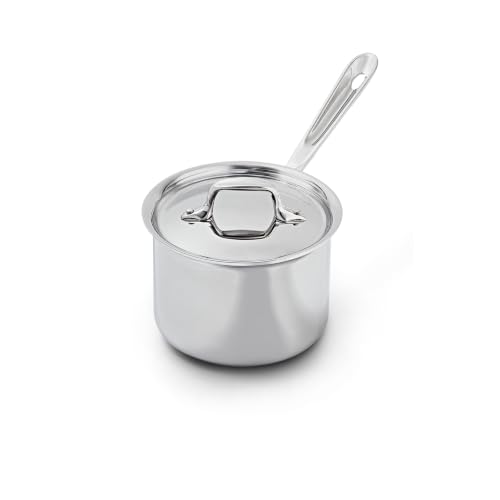
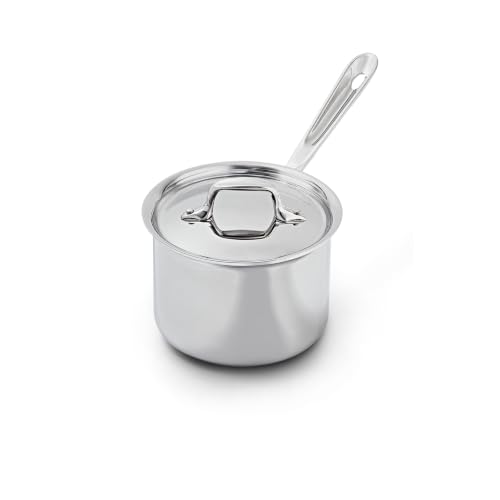
All-Clad D3 Stainless Saucepan
Best for: cooks who want a premium saucepan option to shortlist for everyday sauce, grain and reheating work, and who will confirm the exact current configuration, included lid and hob compatibility on the listing before buying. Not suited for: buyers who need a very large batch pan, a specialised shape, or a finish they have not checked against their own utensils and cleaning habits.
Consider this option in the context of the jobs described in this guide rather than on reputation alone. Think about how its handle will feel when the pan is full, how the lid will behave during a long simmer, and whether its size matches the batches you cook most weeks. As a premium choice it should be judged on even heating, comfortable handling, straightforward cleaning and a surface that suits the sauces and grains you actually make. Check price on Amazon for the current listing, and treat any detail that matters to you, from induction compatibility to oven guidance, as something to verify there rather than assume.
Strengths:
- A recognisable, widely available option that is easy to research and compare.
- Suits the core saucepan jobs of simmering, reheating and small-batch cooking.
- Fits naturally alongside a stock pot for large batches and a skillet for frying.
Trade-offs:
- Exact configuration and included pieces must be confirmed on the current listing.
- No single saucepan is ideal for both tiny sauces and very large batches.
- Handle comfort and full weight are personal and should be judged honestly.

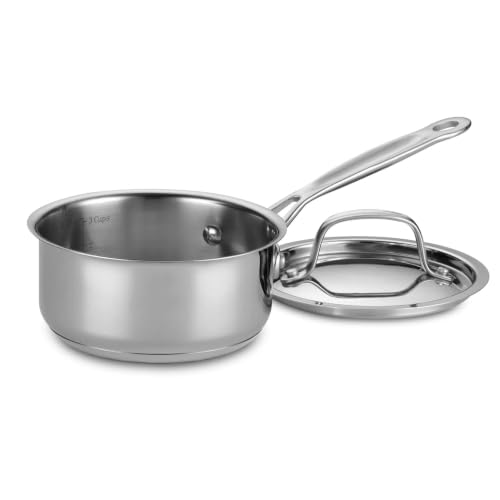
Cuisinart Chef’s Classic Stainless Saucepan
Best for: cooks who want a mid-range saucepan option to shortlist for everyday sauce, grain and reheating work, and who will confirm the exact current configuration, included lid and hob compatibility on the listing before buying. Not suited for: buyers who need a very large batch pan, a specialised shape, or a finish they have not checked against their own utensils and cleaning habits.
Consider this option in the context of the jobs described in this guide rather than on reputation alone. Think about how its handle will feel when the pan is full, how the lid will behave during a long simmer, and whether its size matches the batches you cook most weeks. As a mid-range choice it should be judged on even heating, comfortable handling, straightforward cleaning and a surface that suits the sauces and grains you actually make. Check price on Amazon for the current listing, and treat any detail that matters to you, from induction compatibility to oven guidance, as something to verify there rather than assume.
Strengths:
- A recognisable, widely available option that is easy to research and compare.
- Suits the core saucepan jobs of simmering, reheating and small-batch cooking.
- Fits naturally alongside a stock pot for large batches and a skillet for frying.
Trade-offs:
- Exact configuration and included pieces must be confirmed on the current listing.
- No single saucepan is ideal for both tiny sauces and very large batches.
- Handle comfort and full weight are personal and should be judged honestly.

Tramontina Tri-Ply Clad Saucepan
Best for: cooks who want a mid-range saucepan option to shortlist for everyday sauce, grain and reheating work, and who will confirm the exact current configuration, included lid and hob compatibility on the listing before buying. Not suited for: buyers who need a very large batch pan, a specialised shape, or a finish they have not checked against their own utensils and cleaning habits.
Consider this option in the context of the jobs described in this guide rather than on reputation alone. Think about how its handle will feel when the pan is full, how the lid will behave during a long simmer, and whether its size matches the batches you cook most weeks. As a mid-range choice it should be judged on even heating, comfortable handling, straightforward cleaning and a surface that suits the sauces and grains you actually make. Check price on Amazon for the current listing, and treat any detail that matters to you, from induction compatibility to oven guidance, as something to verify there rather than assume.
Strengths:
- A recognisable, widely available option that is easy to research and compare.
- Suits the core saucepan jobs of simmering, reheating and small-batch cooking.
- Fits naturally alongside a stock pot for large batches and a skillet for frying.
Trade-offs:
- Exact configuration and included pieces must be confirmed on the current listing.
- No single saucepan is ideal for both tiny sauces and very large batches.
- Handle comfort and full weight are personal and should be judged honestly.

Made In Stainless Clad Saucepan
Best for: cooks who want a premium saucepan option to shortlist for everyday sauce, grain and reheating work, and who will confirm the exact current configuration, included lid and hob compatibility on the listing before buying. Not suited for: buyers who need a very large batch pan, a specialised shape, or a finish they have not checked against their own utensils and cleaning habits.
Consider this option in the context of the jobs described in this guide rather than on reputation alone. Think about how its handle will feel when the pan is full, how the lid will behave during a long simmer, and whether its size matches the batches you cook most weeks. As a premium choice it should be judged on even heating, comfortable handling, straightforward cleaning and a surface that suits the sauces and grains you actually make. Check price on Amazon for the current listing, and treat any detail that matters to you, from induction compatibility to oven guidance, as something to verify there rather than assume.
Strengths:
- A recognisable, widely available option that is easy to research and compare.
- Suits the core saucepan jobs of simmering, reheating and small-batch cooking.
- Fits naturally alongside a stock pot for large batches and a skillet for frying.
Trade-offs:
- Exact configuration and included pieces must be confirmed on the current listing.
- No single saucepan is ideal for both tiny sauces and very large batches.
- Handle comfort and full weight are personal and should be judged honestly.

Calphalon Classic Stainless Steel Saucepan
Best for: cooks who want a mid-range saucepan option to shortlist for everyday sauce, grain and reheating work, and who will confirm the exact current configuration, included lid and hob compatibility on the listing before buying. Not suited for: buyers who need a very large batch pan, a specialised shape, or a finish they have not checked against their own utensils and cleaning habits.
Consider this option in the context of the jobs described in this guide rather than on reputation alone. Think about how its handle will feel when the pan is full, how the lid will behave during a long simmer, and whether its size matches the batches you cook most weeks. As a mid-range choice it should be judged on even heating, comfortable handling, straightforward cleaning and a surface that suits the sauces and grains you actually make. Check price on Amazon for the current listing, and treat any detail that matters to you, from induction compatibility to oven guidance, as something to verify there rather than assume.
Strengths:
- A recognisable, widely available option that is easy to research and compare.
- Suits the core saucepan jobs of simmering, reheating and small-batch cooking.
- Fits naturally alongside a stock pot for large batches and a skillet for frying.
Trade-offs:
- Exact configuration and included pieces must be confirmed on the current listing.
- No single saucepan is ideal for both tiny sauces and very large batches.
- Handle comfort and full weight are personal and should be judged honestly.

Farberware Classic Stainless Steel Saucepan
Best for: cooks who want a entry-level saucepan option to shortlist for everyday sauce, grain and reheating work, and who will confirm the exact current configuration, included lid and hob compatibility on the listing before buying. Not suited for: buyers who need a very large batch pan, a specialised shape, or a finish they have not checked against their own utensils and cleaning habits.
Consider this option in the context of the jobs described in this guide rather than on reputation alone. Think about how its handle will feel when the pan is full, how the lid will behave during a long simmer, and whether its size matches the batches you cook most weeks. As a entry-level choice it should be judged on even heating, comfortable handling, straightforward cleaning and a surface that suits the sauces and grains you actually make. Check price on Amazon for the current listing, and treat any detail that matters to you, from induction compatibility to oven guidance, as something to verify there rather than assume.
Strengths:
- A recognisable, widely available option that is easy to research and compare.
- Suits the core saucepan jobs of simmering, reheating and small-batch cooking.
- Fits naturally alongside a stock pot for large batches and a skillet for frying.
Trade-offs:
- Exact configuration and included pieces must be confirmed on the current listing.
- No single saucepan is ideal for both tiny sauces and very large batches.
- Handle comfort and full weight are personal and should be judged honestly.
Who Should Buy Which Style, and Who Should Skip
Frequent sauce cooks should weight even heating and a non-reactive interior. Daily grain cooks should weight lid fit above almost everything. Small kitchens should weight storage and versatility. Family cooks should weight full-weight handling and helper handles on larger pans. Anyone who rarely cooks in liquid should skip the category entirely and improve the pans they actually use.
The defining shape is tall sides with a relatively narrow base, and that geometry matters more than it first appears. Tall sides slow evaporation, keep splashes inside the pan and give a spoon room to move without sloshing liquid over the rim. The narrower base concentrates the pan on one burner and leaves neighbouring burners free, which is a real advantage on a crowded hob. At the same time, tall sides make whisking into corners and scraping the base a deliberate act, so the junction between wall and base, and the reach of your spoon, deserve attention.
A lid is not an accessory on a saucepan; it is half the tool. A well-fitting lid holds in steam for grains, keeps a sauce at a gentle simmer without constant topping up, and reduces splatter across the hob. A glass lid lets you check progress without lifting it and releasing heat, while a metal lid is lighter and more forgiving of knocks. Whichever style you prefer, check how the lid sits, whether it rattles, and how its handle feels in an oven glove, because you will lift it far more often than you expect.
Safety note: handles can grow hot during long cooking, even on handles designed to stay cooler, because heat travels and because oven use changes everything. Treat every handle as hot until you have checked it carefully, keep a dry oven glove or thick cloth within reach, and turn handles inward so they do not overhang the edge of the hob where a sleeve or a passing child could catch them. A habit of assuming a handle is hot costs nothing; the opposite assumption eventually costs a burn.
Safety note: steam is the quiet hazard of saucepan cooking. When you open a lid, tilt it away from your face and hands and lift the far edge first, so the burst of steam escapes away from you rather than into your wrist and face. This matters most after simmering sauces, boiling vegetables or cooking grains, when a dense cloud has built up under the lid. Go slowly, keep your face back, and never lean over a pan to smell what is cooking while it is still steaming hard.
Setup, Care and Maintenance Essentials
Cleaning decides whether a pan stays in rotation. Sauces reduce and catch, milk scorches, grains glue themselves to the base, and a pan that is miserable to clean will quietly be avoided. Look for an interior without awkward crevices, a base junction that a sponge can actually reach, and honest guidance about soaking. Most stuck-on residue gives up after a soak in warm water and a patient scrub; aggressive scouring is rarely needed and can be the wrong choice for some finishes. Judge cleaning by your real habits, not by how you clean on your best day.
The most common saucepan mistakes are ordinary: heat too high because the pan feels slow, a lid lifted constantly so a simmer never settles, a pan crowded beyond what its base can heat evenly, and metal utensils or harsh scouring used without checking what the surface allows. Each is fixable with patience rather than money. Bring liquids up gradually, let the lid do its work, leave room in the pan, and match utensils and cleaning to the material. Good saucepan cooking is mostly calm heat and timing, and a decent pan rewards that approach immediately.
Final Verdict From These Saucepan Reviews
There is no single winner for every kitchen, and that is the honest conclusion of comparing these options. There is a right saucepan for your hob, your batches and your hands, and the criteria in this guide will identify it quickly. Shortlist two or three, verify the details that matter on the current listings, and choose the one whose trade-offs you will happily live with daily.
Pouring sounds minor until you pour from a pan daily. A rolled or shaped rim can mean the difference between a clean stream into a bowl and a dribble down the side onto the counter. This matters for sauces you strain, water you drain and leftovers you transfer to storage containers. If you can, mimic the pouring motion when you handle a pan, and think about pouring with your non-dominant hand while holding a spoon or a container in the other. Small ergonomic details like this are invisible in a product photo and obvious within a week of ownership.
Weight is a balance, not a contest. A heavier pan often feels steadier and can spread and hold heat in a way that suits long simmering, but it must still be lifted, tilted, carried and washed by real hands, sometimes one-handed, sometimes when full and hot. A lighter pan is kinder day to day but may feel less settled on the burner. The right answer depends on your strength, your wrists and your cooking style, and the only reliable test is imagining the pan at its heaviest realistic moment, not admiring it empty.
Many kitchens are better served by two well-chosen saucepans than by one compromise. A smaller pan handles sauces, melting, reheating single portions and side tasks without waste, while a larger one covers grains for the family, soups and batch sauces. Two pans also solve the common collision where one pan is simmering and another task appears. If budget or storage forces a single pan, choose for the task you do most often and accept that the extremes will be a little awkward; a pan chosen for a rare largest case is oversized for almost everything else it will ever do.
Value in a saucepan is measured in years of unremarkable, reliable service. A pan that heats evenly, cleans without drama, stores where you need it and survives daily handling will repay its cost in avoided frustration, while a pan with one annoying flaw will tax you every single time you cook. Think in cost per year of comfortable use rather than in the number on a tag, and be wary of paying extra for features you will not use or saving a little by accepting a flaw you will meet every day. Durability, fit for your hob and fit for your habits are where the value actually lives.
More Practical Notes for Everyday Saucepan Cooking
A saucepan earns its place when a liquid needs steady, gentle heat rather than a fierce blast. Sauces, soups in small batches, custards and reheated leftovers all punish hot spots and reward even heating. When the base spreads heat calmly, a simmer stays a simmer instead of breaking into a rolling boil at one edge while the centre lags behind. That steadiness is why cooks reach for this shape so often, and it is also why judging a saucepan only by how quickly it boils water misses most of what it actually does during a normal week of cooking.
The defining shape is tall sides with a relatively narrow base, and that geometry matters more than it first appears. Tall sides slow evaporation, keep splashes inside the pan and give a spoon room to move without sloshing liquid over the rim. The narrower base concentrates the pan on one burner and leaves neighbouring burners free, which is a real advantage on a crowded hob. At the same time, tall sides make whisking into corners and scraping the base a deliberate act, so the junction between wall and base, and the reach of your spoon, deserve attention.
A lid is not an accessory on a saucepan; it is half the tool. A well-fitting lid holds in steam for grains, keeps a sauce at a gentle simmer without constant topping up, and reduces splatter across the hob. A glass lid lets you check progress without lifting it and releasing heat, while a metal lid is lighter and more forgiving of knocks. Whichever style you prefer, check how the lid sits, whether it rattles, and how its handle feels in an oven glove, because you will lift it far more often than you expect.
Safety note: a saucepan full of sauce, water or grains is far heavier than the empty pan you lifted in a shop, and it is at its most awkward exactly when it is hottest. If a larger pan has a helper handle opposite the main handle, use it, with a glove on both hands, and carry the pan close to your body on a clear, dry route to the sink or counter. If a pan has no helper handle, consider whether its full weight is genuinely manageable for you before you commit to that size.
Material shapes almost everything about how a saucepan behaves. Stainless steel is durable, non-reactive with acidic sauces and forgiving of metal utensils, though it asks for reasonable heat management to limit sticking. Clad construction, where different metals are bonded together, aims to combine a hard-wearing cooking surface with a core that spreads heat more evenly. Nonstick surfaces release delicate sauces and porridge easily but need gentler utensils and heat. None of these is automatically best; the honest question is which set of habits you already have and which trade-offs you will actually live with happily.
Acidic cooking is a useful test. Tomato sauces, wine-based pan sauces, citrus glazes and vinegar reductions sit in a saucepan for a long time, in close contact with the surface. A non-reactive surface handles that contact without picking up off flavours or discolouring, which is one reason stainless interiors are so widely chosen for sauce work. If you cook a lot of bright, acidic food, put surface reactivity near the top of your list, ahead of small differences in weight or handle shape that you will adapt to within a week.
Grains reveal a different side of the pan. Rice, quinoa, oats and other grains need a lid that seals well, sides tall enough to contain starchy bubbling, and heat low and even enough to avoid a scorched layer underneath a still-crunchy top. A saucepan that simmers unevenly will show it here before anywhere else. If grains are a daily habit in your kitchen, weight the lid fit and the low-heat behaviour heavily in your decision, and be honest about the batch size you cook most often rather than the largest batch you might cook twice a year.
Reheating is unglamorous and constant. Soups, curries, leftover pasta sauce and yesterday’s vegetables all come back to the hob in a saucepan, usually in modest quantities and usually when you are in a hurry. A pan that heats evenly reheats without a scorched ring at the base and a cold centre, and a pan with a comfortable handle and a pouring-friendly rim makes the small job feel effortless. Because reheating happens so often, small daily frictions matter more than occasional peak performance, and a pan you enjoy using on a tired Tuesday is worth a great deal.
Cleaning decides whether a pan stays in rotation. Sauces reduce and catch, milk scorches, grains glue themselves to the base, and a pan that is miserable to clean will quietly be avoided. Look for an interior without awkward crevices, a base junction that a sponge can actually reach, and honest guidance about soaking. Most stuck-on residue gives up after a soak in warm water and a patient scrub; aggressive scouring is rarely needed and can be the wrong choice for some finishes. Judge cleaning by your real habits, not by how you clean on your best day.
The First-Week Scorecard: Testing This Saucepan at Home
Apply the identical test to Cuisinart Chef’s Classic Stainless Saucepan as well, on the same day and under the same conditions, because a fair comparison needs one ruler rather than two moods. If Tramontina Tri-Ply Clad Saucepan is also in contention, give it the same worksheet and let the three sets of answers sit side by side before anyone reaches for a checkout button. Score the storage reality: whether the saucepan and its parts return to their spot without a rearrangement ritual, and whether anything migrates to a counter because it has no home. Score the noise, heat, steam, or vibration against the room it lives in, at the hour you most often use it, and note whether anyone in the household comments unprompted.
Score the small parts: lids, seals, trays, attachments, and fasteners, because in long ownership the small parts are where satisfaction quietly leaks away. Score the documentation by looking up one real question mid-task and timing how long the answer takes to find, in the booklet or on the maker’s support pages. Score the fit against the measurements you took before ordering, and note any surprise, generous or otherwise, while the details are still fresh enough to help another buyer. Score the second user experience by watching someone else in the household use the saucepan without coaching, and noting exactly where they hesitate or guess.
- Time the box-to-ready setup
- Repeat the core job on two separate days
- Time the full clean including drying
- Watch a second user try without coaching
- Deliberately make the common mistake once
- File the scorecard with the receipt
Score the worst job, not the best: the largest load, the trickiest ingredient, or the latest tired evening, because that score predicts your feelings in month six. Score the recovery: deliberately make the common mistake, such as overfilling, mis-seating a part, or choosing the wrong setting, and judge how obvious and forgiving the fix is. Add the scores without weighting them, then read the lowest two again, because those are the entries that decide whether this example stays in your house. If a low score surprises you, repeat that single test once before concluding anything, since first attempts often measure the operator rather than the product.
Keep the finished scorecard with the receipt and warranty details, so a future claim, resale, or replacement decision starts from evidence rather than from a fading impression. Revisit the card after a month and change only the scores that genuinely moved, because the difference between week one and month one is the learning curve made visible. Note which score you would check first if you were buying a second saucepan as a gift, since that priority usually reveals what the product is really about. Finish by writing one sentence describing who should not buy this example, because a clear exclusion is the most useful line in any honest assessment.
Whatever the category, photograph your intended spot with the neighbouring items in place, because a picture exposes crowding that measurements alone politely ignore. Keep every measurement, tally, and note from these checks in one place, ideally with the receipt, so the next decision in this category starts from your evidence rather than from scratch. Involve the household early where the product is shared, since a decision everyone helped measure is a decision nobody relitigates at the first inconvenience. Prefer the option that fits your existing routine with the fewest new habits, because each new habit is a small tax collected every single day.
Be wary of solving a storage problem by creating a carrying problem, since distance between storage and use is where good equipment goes to be forgotten. Check the return conditions before the trial period begins, and calendar the last safe decision day, so the deadline works for you instead of surprising you. Judge the packaging and unboxing only once, briefly, and then ignore them, because they are the one part of ownership guaranteed never to repeat. Let the second week arbitrate disputes from the first, since novelty inflates both delight and irritation beyond their durable values.
Frequently Asked Questions
What is a saucepan mainly used for?
A saucepan is mainly used for cooking in liquid: simmering sauces, heating soups, cooking grains, boiling vegetables and reheating leftovers. Its tall sides contain splashes and slow evaporation, while its single long handle makes it easy to move, tilt and pour. It is not a frying pan and not a bulk stock pot; it sits between them as the everyday pan for wet cooking in small to moderate batches, which is why most kitchens use one far more often than they expect.
How do I stop sauces catching on the base?
Use calmer heat, stir into the corners, and give the pan time to heat evenly instead of forcing it with a high flame or a maximum setting. Thick sauces, milk and grains catch most readily, so lower the heat as they thicken and keep a spoon moving across the base. If something does catch, soak the pan in warm water before scrubbing. Patience, both in cooking and in cleaning, prevents most scorched bases without any special equipment or harsh scouring.
Can I put a saucepan in the oven?
Some saucepans are designed for oven use and others are not, and the lid and handle materials matter as much as the body. Never assume. Check the current listing and the maker guidance for the exact pan you own or are considering, including any guidance about lids, before using it in an oven. If oven finishing is central to how you cook, make that a first filter when shortlisting rather than a detail you hope will work out after buying.
How do I avoid steam burns when opening a pan?
Tilt the lid away from you and lift the far edge first, so steam escapes away from your face and hands, and keep your face back rather than leaning over the pan. Use a dry glove or cloth, go slowly after grains, vegetables or sauces have been simmering under a lid, and remember that the steam burst is strongest in the first moment. This small habit is one of the most valuable safety routines in everyday saucepan cooking.
Should I buy one saucepan or two different sizes?
For many kitchens, two sizes are more useful than one compromise: a smaller pan for sauces, melting and reheating, and a larger one for grains, soups and family batches. Two pans also help when one is already simmering and another task appears. If storage or budget allows only one, choose for the job you do most often and accept some awkwardness at the extremes, rather than buying for a rare largest batch and living with an oversized pan every day.
How should I clean a saucepan after cooking grains or milk?
Fill it with warm water and let it soak before you scrub; grains, milk and reduced sauces soften considerably with time. Use the cleaning tools the surface allows, work patiently around the base junction, and avoid harsh scouring unless the maker guidance permits it. Drying the pan before storing it keeps it ready for the next use. Most cleaning frustration comes from attacking residue immediately and aggressively, when a soak and a gentler approach would have done the job more easily.
Related Guides and Next Steps
Keep exploring with these related guides from the same kitchen: