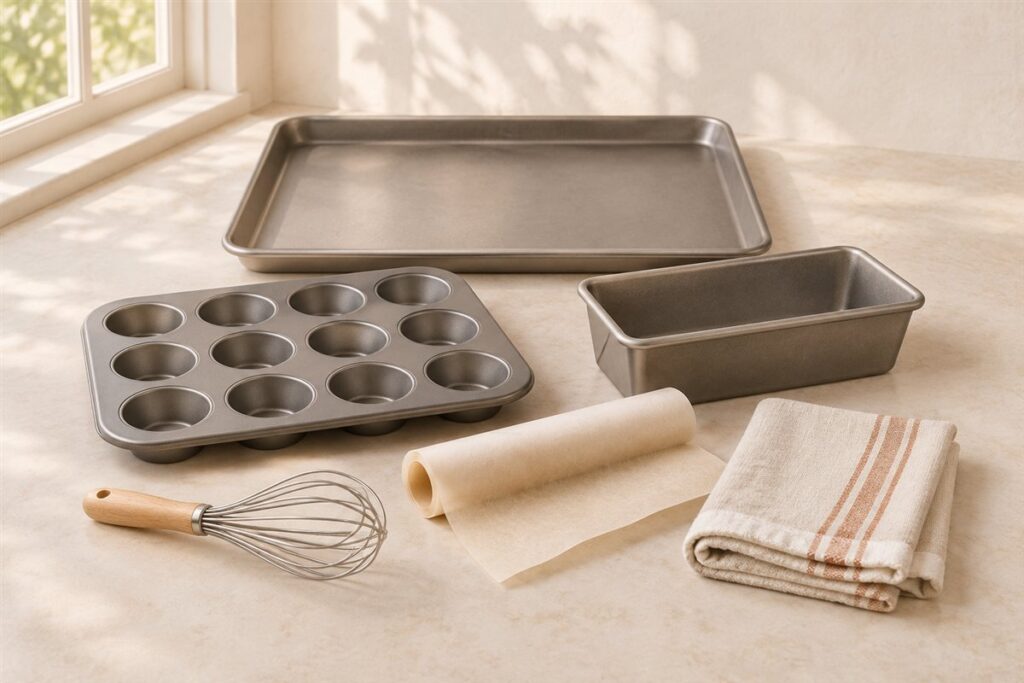
Metal bakeware browns and crisps well and holds its shape, while silicone is flexible, easy to release and simple to store. Neither is better for every job. Metal is the usual choice for crusts and golden edges, and silicone shines for soft, delicate bakes and frozen treats.
What Each Material Does
Metal pans, usually aluminum or steel, conduct heat efficiently. This helps cakes rise evenly and gives cookies and breads a defined crust.
Silicone is a rubber-like material that tolerates oven heat within the limits the maker states. It does not conduct heat as quickly as metal, so baked goods often turn out paler and softer on the sides and bottom.
Comparing the Two
| Factor | Metal | Silicone |
|---|---|---|
| Browning | Strong, crisp edges | Light, softer sides |
| Release | Needs grease or liner | Flexes to pop out food |
| Stiffness | Rigid, easy to carry | Floppy; needs a tray for support |
| Storage | Takes shelf space | Folds or squashes flat |
| Cutting inside | Avoid on coated pans | Avoid, since blades can cut it |
| Cleaning | Scrub or soak | Can hold onto grease and odors |
Where Each One Fits
- Choose metal for bread, cookies, roasted vegetables and cakes where a golden crust matters.
- Choose silicone for muffins, egg bites, gelatin desserts, frozen treats and chocolates.
- Choose metal when you need a pan that can go under a broiler, if the maker approves.
- Choose silicone when you want to unmold shapes with intricate details.
Using Silicone Well
- Place a silicone mold on a flat metal sheet before filling, so it does not flop when moved.
- Fill gently and level the batter.
- Bake within the maker’s temperature limit, and add a few minutes if the bake looks pale.
- Let items cool before removing them so they hold their shape.
- Wash in hot soapy water, or use a dishwasher if the maker says so.
Silicone can hold onto oil and flavors, so rinse well and dry fully. Metal pans, on the other hand, stay rigid and can often take rougher handling, though coated ones need soft tools.
Safety and Handling
Hot bakeware of any kind can cause burns, so use oven mitts and place pans on a heat-safe surface. Silicone can feel cooler than metal for a short time, but it holds heat, so treat it with the same care. Keep it away from direct flame, heating elements and broilers unless the maker says otherwise.
Metal Finishes and Colors
Metal bakeware is not one thing. The material and surface finish change how heat reaches the batter, and that changes browning, crust and release. Reading these details on a product listing helps you pick pans that suit your recipes.
- Aluminum: Light and responsive, and a common choice for cakes and cookies. Bare aluminum can react with acidic ingredients, so check the maker’s guidance or use a liner.
- Aluminized steel: Steel with a coating that adds corrosion resistance. It is sturdy and resists warping, though it can feel heavier.
- Steel: Strong and durable. Some steel pans are plain and need care to avoid rust, while others are coated.
- Nonstick coated metal: Easier release, but the coating needs gentle tools and may have a temperature limit. Avoid cutting inside the pan.
Color matters. Dark pans absorb more heat and tend to brown the bottom and edges faster, so recipes may bake slightly sooner or at a lower setting in them. Light, shiny pans reflect heat and give paler, more even browning. If a recipe was written for a particular finish and your pan is different, watch the bake closely and be ready to adjust the time or temperature.
Look at rim design, corners and thickness. Rolled rims add strength, and thicker metal resists warping. Thin pans can buckle under heat, which affects how batter spreads. Check whether the pan is dishwasher safe and what the maker says about cleaning, since some finishes suffer in a dishwasher.
Silicone Quality and What to Check
Silicone bakeware varies in quality, and the differences are not always obvious from a photo. Since you cannot test it before buying, read the listing and look for details on construction and care.
- Material description: Look for information on whether the product is food-grade silicone and whether it contains fillers. Makers sometimes disclose this, and if it is not stated, you can ask the seller.
- Thickness and rigidity: Thicker silicone holds its shape better when filled. Very thin pieces can be floppy and hard to move.
- Reinforcement: Some molds have a metal or rigid frame around the edge to make handling easier.
- Temperature range: Check the stated minimum and maximum, including the freezer if you plan to use it for frozen desserts.
- Odor and residue: Cheaper products can hold smells or leave an oily feel. Reviews may mention this, but treat individual comments as anecdotes.
One simple home check is to pinch and twist a flat area. Some people say that white streaks suggest fillers, but this is a rough guide and not a proven test, so rely on the maker’s information rather than this alone.
Think about the shape too. Deep, detailed molds are harder to clean than simple shapes. Mold cavities with intricate patterns can trap batter and grease, so choose a design you will be willing to wash by hand. If you plan to bake for guests, consider how the finished item will look when unmolded.
Adjusting Recipes Between Materials
When you switch from one pan type to another, the same recipe can behave differently. A few simple adjustments help you avoid pale, dense or overbaked results, and your oven and recipe will still guide the final timing.
- Moving to silicone from metal: Expect paler sides and bottoms. Place the mold on a sturdy metal tray, and consider baking a little longer. Check for doneness with a skewer or the cue the recipe gives.
- Moving to a dark metal pan: Browning is faster. Some bakers lower the temperature or shorten the time slightly. Watch the edges and bottom.
- Different pan size: A larger pan spreads batter thinner, so it bakes faster. A smaller pan means a deeper bake that needs more time.
- Muffins and cupcakes: In silicone, cups sometimes need a bit more time to set, while metal tins usually need liners or grease.
Rack position can help. Placing the pan lower in the oven gives more bottom heat, which helps crisp metal pans and add color to silicone bakes. Rotating halfway through can even out hot spots.
Keep notes when you adapt a recipe. Writing down the pan type, time and result lets you repeat success and avoid repeating errors, and your own oven is the best judge of what works.
Cleaning and Care Differences
Both materials last longer with consistent care, but the routine differs. Reading the maker’s instructions comes first, since coatings and finishes vary.
Metal bakeware:
- Soak stuck-on food in warm, soapy water before scrubbing, and use non-scratch tools on coated pans.
- Dry well to prevent rust, particularly on uncoated steel.
- Avoid stacking pans in a way that scratches finishes. A paper towel between pieces helps.
- Be aware that baked-on residue can darken pans over time. This is normal and may even help browning, but follow the maker’s cleaning advice.
Silicone bakeware:
- Wash with hot, soapy water. A greasy film is a common problem, so rinse thoroughly.
- If the maker allows, a dishwasher can help remove oils. Otherwise, hand washing with a soft brush is usual.
- Dry fully before storage, since trapped moisture can create odors.
- Keep away from sharp tools, which can cut the surface.
For both types, check the pan before each use. Look for rust, flaking coatings, cracks, tears or warping. A pan that is damaged may not release food well and may not bake evenly.
Signs it is time to replace include peeling coatings on metal, deep rust that does not clean off, persistent sticky residue or odor on silicone, tearing or stretched shapes, and warped pans that rock on a flat surface.
Deciding What to Buy First
If you are building a bakeware collection, it helps to start with what you bake most. A small selection of well-chosen pieces beats a large pile of items you rarely use.
For many home bakers, a reasonable starting set might include:
- A rimmed metal baking sheet for cookies, vegetables and general baking.
- A metal loaf or round cake pan if you bake bread or cakes.
- A muffin tin, either metal or silicone, depending on whether you prefer a crisp or soft result.
- A silicone mold or two for specialty items such as frozen desserts or egg bites, if you like those.
Questions to ask before you buy:
- What do I bake most, and does it need a crisp crust or a soft, delicate texture?
- Will the pan fit my oven, including the rack position and door clearance?
- How will I store it, and does it stack or nest?
- What are the maker’s stated temperature limits and care rules?
- Does the product come with a return option if it does not suit me?
Budget tiers generally differ in thickness, finish and construction. Lower-cost pans can be perfectly fine for casual baking, though they may warp or wear sooner. Higher tiers often use heavier materials and better finishes. Compare the details in the listing rather than depending on price alone, and start small before expanding.
FAQ
Do I need to grease silicone?
Many makers say it is not required, but a light coat can help with sticky batters. Follow the product instructions.
Why are my bakes pale in silicone?
Silicone heats more slowly than metal. Raising the rack position or extending the time slightly can help.
Can I use silicone bakeware on a direct oven rack?
Most makers suggest placing it on a baking sheet for support, since it is flexible. Check your product's instructions, and avoid direct contact with heating elements.
Do dark metal pans bake differently?
Yes, dark pans absorb more heat and often brown faster. You may need to watch the bake more closely or reduce the time or temperature a little.
How do I get the greasy feel off silicone?
Wash with hot, soapy water and rinse well. Some makers allow the dishwasher, which can help, so check your instructions first.
Is nonstick metal bakeware worth it?
It can make release easier, especially for sticky batters. The coating needs gentle tools and care, so weigh the convenience against the extra attention.
Why did my silicone mold stretch or tear?
It may have been overfilled, cut with a sharp tool, or exposed to heat beyond its limit. Check the maker's guide and replace a mold that is damaged.
Can I freeze batter or desserts in either material?
Silicone is popular for frozen treats because it flexes to release, if the listing says it handles freezer temperatures. Metal pans can be used too, but release may be harder.
The Short Version
Choose metal for crisp, browned results and silicone for soft bakes, easy release and compact storage. Many bakers keep a little of each. Follow the maker’s guide on heat limits.