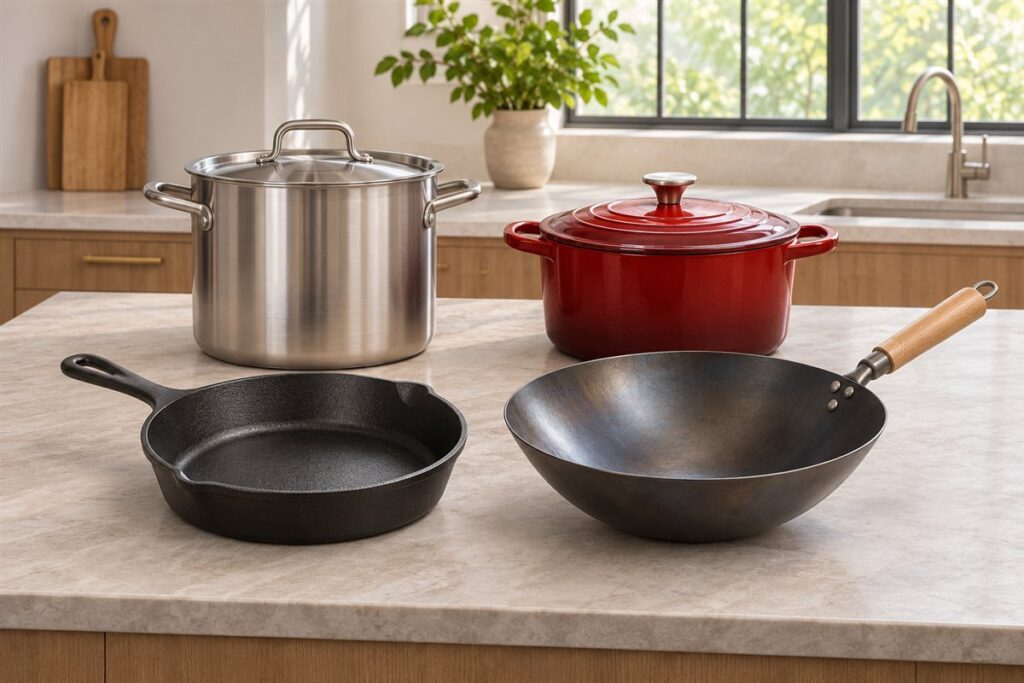
For most home cooks, an 8 quart stockpot handles pasta, soup and a batch of stock, while a 12 quart pot suits large families and meal prep. A 4 to 6 quart pot is enough for one or two people. Choose the size by the largest meal you cook regularly, not the most unusual one.
Quart Chart by Use
| Capacity | Works For |
|---|---|
| 4 to 6 quarts | Soup for two to four, a pound of pasta, small stocks |
| 8 quarts | Family soup, chili, pasta for a crowd, medium stock batches |
| 12 quarts | Large stock, big pots of chili, party-size cooking |
| 16 quarts and up | Batch cooking for many, boiling large items; often awkward at home |
Quarts are measured to the brim. Plan to fill a pot about two thirds to three quarters full so liquids can bubble without spilling over.
Match the Pot to the Task
- Pasta: More water gives noodles room to move. A tall 8 quart pot covers most weeknight needs.
- Stock: Bones and vegetables take up space, so choose a pot that holds them plus water with room at the top.
- Chili and stews: A wide, heavy-bottomed pot browns meat better than a tall narrow one.
- Corn and seafood boils: A larger pot with a basket insert helps.
Shape, Base and Fit
Tall, narrow pots reduce evaporation, which suits stock. Wider pots speed reduction and browning. A thick or layered base spreads heat and helps prevent scorching at the bottom.
Check that the pot fits on your burner. A very wide pot on a small burner heats unevenly. Induction users should confirm the base is magnetic, so read the maker’s guide.
Weight and Storage
A full large pot can be very heavy and hot. Fill it on the stove rather than carrying it from the sink when you can, and use two hands and mitts when moving it. Follow the maker’s manual and safety instructions. Think about your cabinets as well: a 12 quart pot takes serious space.
Material matters too. Stainless steel with an aluminum core is a common choice, because it heats evenly and does not react with acidic foods like tomatoes. Thin aluminum pots heat quickly but may scorch thick foods. Enameled steel pots are light and often used for large boils. Look for sturdy handles that you can grip with mitts, and a lid that sits snugly. Before you commit to a big pot, check that it fits in your sink for filling and cleaning.
Lids, Handles and Extra Features
Once you know the size, the details around the pot decide how pleasant it is to use. A big pot is awkward at the best of times, so small design features make a real difference when it is full and hot.
- Handles: Look for two sturdy side handles that are large enough to grip with oven mitts. Riveted handles are common on heavy pots, while welded ones can also be strong. Check that they are set far enough from the rim to stay clear of the heat.
- Lids: A tight-fitting lid helps liquid come to a boil and reduces evaporation. A glass lid lets you see inside without lifting it, while a metal one is often more durable. Check that the lid fits securely and that the knob is heat resistant.
- Pouring rims: Some pots have a flared edge that helps pour without drips. Others are straight-sided, which is simpler but can dribble.
- Internal markings: Etched quart or liter marks inside the pot help you measure water without extra tools. They are a convenience, not a precision measure.
- Strainer lids and inserts: A pot with a lid that has drain holes, or a pasta or steamer insert, can make draining easier. Check the insert fits the pot you plan to buy and how it is lifted out.
Not every feature is needed. If you mostly make soup, a plain pot with a good lid may be all you want. If you cook pasta often, a pot with a drain basket may save time. Weigh the extra cost and storage space against how often you would use the feature, and read the listing for what is included.
Handling Large Volumes Safely
A large pot of hot liquid is one of the heaviest and most hazardous things in a home kitchen. Planning for safe handling matters as much as picking the right capacity.
- Clear the path: Before moving a full pot, clear the counter, check that the floor is dry and make sure nobody is in the way.
- Use both hands and mitts: Hold both handles firmly, keep the pot close to your body and move slowly.
- Do not overfill: Leave headroom so the liquid does not boil over or slosh. This is also why the fill level should be less than the full rated capacity.
- Turn handles safely: Keep pot handles from sticking out where they can be knocked, and keep them away from other burners.
- Cool before moving when possible: For stock, let the pot cool somewhat before transfer or storage. If you need to drain hot water, use a method that keeps you clear of steam.
Pouring from a heavy pot is hard to control. Where practical, ladle liquid out in portions instead of lifting the whole pot. When draining pasta, use a sturdy colander in a sink with space around it, and tip the pot away from your body so steam rises away from your face.
Keep children and pets out of the area while a large pot is on the stove. Follow the maker’s manual and safety instructions for your pot and cooktop, and never leave a pot unattended on high heat.
Stockpot or Something Else
A stockpot is not the only large cooking vessel, and sometimes another pot fits the job better. Understanding the differences helps you avoid buying more than you need.
- Dutch oven: A heavy, lidded pot suited to braises, stews and baking. It retains heat well and works from stove to oven, but it is heavy and usually smaller in capacity than a stockpot.
- Saucepot or soup pot: A mid-size pot with a wider, shorter shape. It is easier to stir and suits soups and sauces for a few people.
- Sauté pan with tall sides: Handy for one-pot meals, but not for large volumes of liquid.
- Multi-cooker or pressure cooker inner pot: These can cook soups and stocks, but the capacity is often smaller than the rated size suggests, because of fill limits stated by the maker.
- Canning or boiling pots: Specialized large pots with racks. If you plan to can food, follow trusted canning guidance and use equipment designed for that purpose.
If you already own a large Dutch oven and cook soups for a small household, you may not need a stockpot. If you often cook pasta for a group, make large batches of stock or boil seafood, a dedicated stockpot is more practical.
Think about how you store and use equipment. A pot that is rarely used but takes a lot of space may not justify its place in the kitchen. A mid-size stockpot with a good lid can cover most needs for many households.
Cleaning and Caring for Big Pots
Large pots can be hard to clean, simply because they are big. A few habits make this easier and help the pot last.
- Soak first: Fill the pot with warm, soapy water and let it sit if food has stuck. This loosens residue without hard scrubbing.
- Use the right tools: A soft sponge or brush suits most finishes. Check the maker’s guide before using abrasive pads, particularly on polished or coated interiors.
- Check the sink: If your sink is small, you may need to wash the pot at an angle or on a drying mat. This is worth considering before you buy a very large model.
- Dry thoroughly: Water spots and rust can form on some materials if left wet. Wipe the rim and handles, and dry the lid separately.
- Look after the dishwasher decision: Many large pots do not fit in a dishwasher, and some finishes should not go in one. Check the maker’s instructions.
Burnt food on the bottom is a common issue. Soaking with warm water and a little detergent often helps. Follow the maker’s guidance for any stronger cleaners, and avoid harsh scraping that could scratch the base.
Inspect the pot from time to time. Look for loose handles, warped bases, dents that stop it sitting flat, and wear on the interior finish. A pot that rocks on the burner heats unevenly and can be unsafe, so consider repair or replacement if the base is bent. Store the pot with the lid placed beside it or inverted so air can circulate.
Budget Tiers and When to Replace
Stockpots range from simple, lightweight designs to thick, layered builds. What you need depends on how often you cook, what you cook and how long you want the pot to last.
In general terms:
- Simpler pots: Thin walls and a basic base. They heat quickly and are light, which suits boiling water, pasta and seafood. They can scorch thick foods and are more likely to dent or warp.
- Mid-range pots: Often have a thicker or layered base for more even heating, with sturdier handles and lids. They suit soups, stocks and sauces as well as boiling.
- Heavier, premium pots: Thick, multi-layer builds that hold heat steadily and resist warping. They can be heavy and are best if you cook often and want a long-lasting tool.
Choose the tier that matches your cooking habits rather than the largest budget. A pot used a few times a year may not need heavy construction, while a pot used weekly for stock or chili may benefit from a better base.
Questions to ask before buying include whether the pot is compatible with your cooktop, including induction, whether the lid is included, what temperature limits apply, and what the return terms are.
Signs it is time to replace a stockpot include a warped or bulging base that no longer sits flat, loose or cracked handles, deep pitting or damage to the interior, persistent scorching that does not clean off, and a lid that no longer fits. Check the warranty or care guide if you suspect a defect.
FAQ
Can I use a stockpot for everything?
You can, but a smaller pot is better for small portions because it heats faster and wastes less space.
Do I need a lid?
A lid saves time bringing liquid to a boil and keeps moisture in during simmering.
Is a taller or wider stockpot better for stock?
A taller, narrower pot reduces evaporation, which suits long simmering. A wider pot speeds reduction. Choose based on whether you want to keep volume or concentrate flavors.
Can I use a stockpot on an induction cooktop?
Only if the base is magnetic. Check the maker's listing for induction compatibility, and use the magnet test if it is not stated.
How full should I fill the pot for boiling?
Leave plenty of headroom, usually filling it about two thirds to three quarters, as noted above. Foamy or starchy foods may need even more space.
Do I need a pasta insert?
Not necessarily. A pasta insert makes draining easier, but a sturdy colander in the sink does the same job. Consider an insert if you cook large batches often.
Are glass lids safe?
Glass lids are made for cookware, but they can crack with sudden temperature changes or knocks. Follow the maker's instructions, and replace a lid that is chipped or cracked.
Where should I store a large stockpot?
Use a low shelf or deep cabinet so you do not lift it overhead. Nesting smaller pots inside it can save space if the maker allows.
The Short Version
Choose 4 to 6 quarts for small households, 8 quarts for most families, and 12 quarts only if you routinely cook large batches and can handle the weight.