Disclosure: As an Amazon Associate, topratedkitchenware.com earns from qualifying purchases. Links to Amazon on this page are affiliate links; they cost you nothing extra. Listing details such as price and availability change often, so check the current Amazon listing before you buy.
The filter inside a bottleless water cooler does its quiet work out of sight, which makes it easy to forget until the flow slows or the maker’s reminder light comes on. Buying the correct cartridge is not as simple as it sounds, because coolers use part numbers that look alike and fit only particular models. This page helps you find the best water filter for water coolers by explaining how cartridges are organized, then walking through six real replacement parts from Brio and Avalon.
It is written for owners of point of use dispensers, the kind that connect to a water line instead of taking a jug. If your cooler is bottled, a filter may not be part of the system at all, and you should read the manual before buying anything. Below you will find a comparison table, six cartridge listings, advice on matching a part to your model, a look at filtration stages in general terms, and answers to common questions. Always check the compatibility list on the listing against the model label on your cooler.
In this guide
Quick Picks
- Brio BICR1057 Stage 1 Sediment Replacement Filter
- Brio BICR1062 Stage 3 Ultrafiltration Replacement Filter
- Brio BICR1068 Stage 3 Reverse Osmosis Membrane Filter
- Avalon A5FILTER Sediment Replacement Filter
- Avalon A4FILTER Carbon Block Replacement Filter
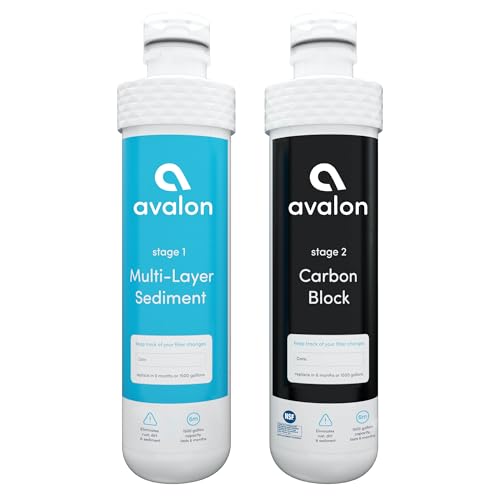
- Avalon AVALONFILTER Replacement Water Filter Kit
- Water Filtration for Water Coolers in Plain Terms
Quick Comparison
| Product | Best for | Main point | Link |
|---|---|---|---|
| Brio BICR1057 | First stage replacement | Stage 1 sediment filter | Brio Stage 1 Sediment Replacement Water Cooler Filter BICR1057 |
| Brio BICR1062 | Final stage on UV models | Stage 3 ultrafiltration filter | Brio Stage 3 Ultrafiltration Replacement Water Cooler Filter BICR1062 |
| Brio BICR1068 | Reverse osmosis coolers | Stage 3 membrane filter | Brio Stage 3 Reverse Osmosis Membrane Replacement Water Cooler Filter BICR1068 |
| Avalon A5FILTER | Avalon first stage | Sediment cartridge | Avalon A5FILTER Sediment Replacement Filter for Bottleless Water Cooler |
| Avalon A4FILTER | Avalon second stage | Carbon block cartridge | Avalon A4FILTER Carbon Block Replacement Filter for Bottleless Water Cooler |
| Avalon AVALONFILTER | Buyers who want a pack of two | Replacement kit, two filters | Check on Amazon |
How These Filters Were Chosen
We have not installed any of these cartridges. Our shortlist is drawn from manufacturer pages and retailer listings, and it favors parts from the cooler makers themselves whose compatibility lists name specific cooler models. Third party filters that claim to fit many brands were left out because their fit is harder to confirm.
We also avoid describing what a filter does to your water. Performance claims belong to the maker and depend on your local supply, so we quote only the stage names and fit notes that appear on listings. Please read each product page for its own statements.
6 Best Replacement Water Filters for Water Coolers
Brio BICR1057 Stage 1 Sediment Replacement Filter
The BICR1057 is a stage one sediment cartridge made of melt blown polypropylene, according to Brio’s product pages. The compatibility note on a retailer listing names the CLPOUROSC420RO cooler, and the part is described as one that protects the stages that come after it.
Brio’s page mentions that this stage can last up to twelve months, depending on the condition of the incoming water and how much you use. That is a long interval compared with some other stages, so mark the date you fit it.
It is a sensible buy for owners who keep spare cartridges on a shelf. It is the wrong choice if your cooler is not on the compatibility list, since fit is tied to the model.
Brio Stage 1 Sediment Replacement Water Cooler Filter BICR1057
Brio BICR1062 Stage 3 Ultrafiltration Replacement Filter
This cartridge is described as the stage three ultrafiltration element for several Brio coolers, including bottleless models with codes such as CLPOU320UVF4 and CLPOU520UVF4 in the listing text. In a multi-stage system, the last cartridge is the final step before water reaches the taps.
That position makes it one of the parts you will want to replace on schedule, following Brio’s own interval. Brio publishes guidance on changing its filters about every six months for its coolers in general, but the number for your model may differ, so check the manual.
Choose it for the UV and ultrafiltration models listed. Avoid it if your cooler uses the reverse osmosis arrangement, which has its own membrane part.
Brio Stage 3 Ultrafiltration Replacement Water Cooler Filter BICR1062
Brio BICR1068 Stage 3 Reverse Osmosis Membrane Filter
The BICR1068 is the membrane for Brio’s reverse osmosis coolers. Listings name the CLPOURO420SCV2 and the older CLPOUROSC420RO as the units it fits. A membrane is a different type of part from a sediment or carbon cartridge, and it usually sits late in the sequence.
Reverse osmosis systems also use a drain line and sometimes a storage tank, so a membrane change is more of a service task. Follow Brio’s steps to the letter, and consider a plumber if you have never changed one.
This is the part for owners of the named models. It is a poor purchase for any cooler that uses an ultrafiltration cartridge, and the part number will not interchange with BICR1062.
Brio Stage 3 Reverse Osmosis Membrane Replacement Water Cooler Filter BICR1068
Avalon A5FILTER Sediment Replacement Filter
Avalon coolers such as the A7 are listed as using two cartridges, and the A5FILTER is the sediment one. Sediment cartridges come first in the path, so they take the physical load of whatever the supply carries before it reaches the next stage.
Keeping a spare of this part is convenient, since it is the cartridge most likely to be used first. Its name can confuse buyers because the A5 is also a cooler model, so confirm that you are ordering the filter, not the dispenser.
It suits owners of Avalon bottleless coolers whose manual calls for this cartridge. Skip it if you own a different brand, as the fit is built around Avalon housings.
Avalon A5FILTER Sediment Replacement Filter for Bottleless Water Cooler
Avalon A4FILTER Carbon Block Replacement Filter
The A4FILTER is the carbon block half of Avalon’s two cartridge set. Listings place it after the sediment stage. Carbon block elements are a common type of cartridge in point of use systems, and their change interval is set by the maker.
The same warning applies as with the A5FILTER: the A4 is also used in some roundups as a name for a cooler, so check that you are viewing a cartridge listing. Match it to the cooler model named in the description.
Buy it if you are replacing only the second stage, or want a spare. If both stages are due at once, the kit below may save you a step.
Avalon A4FILTER Carbon Block Replacement Filter for Bottleless Water Cooler
Avalon AVALONFILTER Replacement Water Filter Kit
Staples and other retailers list an Avalon kit with two filters in a pack under the code AVALONFILTER. A kit is convenient because both cartridges come together and are meant to change at the same time.
It is the easier route for a first time buyer, because you avoid mixing up the A4 and A5 codes. Check the listing for which cooler models the kit supports, and compare the contents with the manual.
The kit will not suit anyone who needs only one stage, and it does not cover Brio coolers. Confirm the pack contents on the page before you order.
Water Filtration for Water Coolers in Plain Terms
People use the words filter and filtration loosely, so it helps to know what a typical system includes. A sediment stage catches particles. A carbon stage is a common second step. An ultrafiltration or membrane stage comes last in some designs. Each stage has its own part number and its own interval.
We make no claim about what these stages do for your water, and nobody should rely on a cooler filter for a safety purpose unless the maker states one. If you have worries about your supply, contact your water utility or a qualified testing service.
Best for Brio UV Coolers
The BICR1062 fits the models named in its listing and is the cartridge to keep ready when the final stage is due.
Best for Reverse Osmosis Owners
The BICR1068 is the specific membrane for the named reverse osmosis units. Treat the change as a service task.
Best for Avalon Owners
Use the A5FILTER and A4FILTER individually, or pick the AVALONFILTER kit if you want both at once.
How to Choose the Right Cooler Filter
Begin with the model label on the back or underside of your cooler. Write down the full code, including suffix letters. Then compare that code with the compatibility text on each filter listing. Fit is rarely universal, and the same brand can use several incompatible cartridges.
Next, identify the stage. Check your manual for how many stages the system has and which one you are replacing. A cooler with a sediment stage and a carbon stage needs two different parts, and they do not swap places.
Decide between buying parts individually and buying a kit. Kits suit people who prefer to change everything at once. Single parts suit those who like to follow different intervals for different stages.
Watch for look-alike listings. Some sellers use cooler names and filter names that are nearly identical, and a few offer unbranded copies. Choose the listing that names the cooler model clearly and that matches the maker’s part code.
Think about storage too. Cartridges should stay in their sealed packaging until the day you fit them, in a cool, dry cupboard and away from chemicals and strong smells. A spare set on the shelf also protects you from a long wait if a part is out of stock when your reminder arrives, which tends to happen on the very week you need it.
Finally, keep a record. Note the date of each change in a phone reminder or on a label inside the cabinet door, so you are not guessing months later.
Installation, Safety and Legal Notes
Follow the maker’s instructions for turning off the water supply, relieving pressure and fitting each cartridge. Unplug the cooler before opening any cabinet panel. If a fitting leaks or a connection looks damaged, stop and ask a licensed plumber. Any electrical fault, such as a damaged cord, belongs with a qualified technician. Local plumbing codes can apply to supply connections, and we cannot tell you your area’s rules, so check them with your authority.
Care and Troubleshooting
| Sign | What to check |
|---|---|
| Slow flow | Cartridge age, supply valve, kinked tube |
| Leak at the filter housing | Seating of the cartridge, O ring, tightening |
| Cooler will not dispense after a change | Air in lines, valve position, reset button |
| Reminder light stays on | Reset steps in the manual |
Flush new cartridges as the maker directs before drinking from the tap.
Why Filter Stages Come in a Particular Order
Many bottleless coolers pass water through more than one cartridge, and the sequence is not random. The first stage usually deals with larger particles such as sand, rust flakes and silt. If those particles reached the finer stages, they would clog them quickly. A later stage, such as carbon block, is typically described as addressing taste and odor, and a membrane or ultrafiltration stage handles the finest filtering the system offers.
That is why a cooler maker labels cartridges as Stage 1, Stage 2 or Stage 3, and why you should install them in the order the manual shows. Swapping positions can reduce flow and shorten the life of the finer cartridges. Performance claims for each stage come from the maker, so read the listing and the cooler manual for what each one is intended to do.
A general picture of the stages
| Stage | Typical role | What to remember |
|---|---|---|
| Sediment | Catches visible particles | Often replaced on its own schedule |
| Carbon block | Targets taste and odor | Capacity depends on your local water |
| Ultrafiltration or membrane | Fine final stage | Check the maker’s flow and pressure notes |
Reading Model Numbers and Confirming a Match
Cooler filters look similar but are not interchangeable, so matching the model number is the safest route. The code is usually printed on the cartridge itself, on the cooler’s data label, or in the manual. Compare it character by character with the listing, since one letter or digit can mean a different fitting.
- Locate the cooler’s model number, typically on a label at the back or inside a panel.
- Find the numbers printed on the cartridges currently installed.
- Open the listing and read the compatibility notes, not just the title.
- Check the connector type and cartridge size against your current filter.
- If anything is unclear, ask the seller or the cooler maker before ordering.
Take a photo of the data label and the old cartridges and keep it on your phone. When it is time to reorder, you will have the numbers ready, even if the label is hard to reach behind the unit.
Building a Simple Replacement Schedule
Makers give recommended change intervals, often expressed in months or in the volume of water treated. Your real needs depend on how much water you use and on the condition of your supply. A busy office will use filters faster than a quiet home, so treat the maker’s figure as a guide and adjust if you notice slower flow or a change in taste.
A written schedule prevents surprises. Stick a label inside a cabinet door or on the side of the cooler with the date of the last change and the date the next one is due. If you manage several coolers, a basic spreadsheet or calendar reminder works well.
- Record the date, model number and which stage was replaced.
- Set a reminder a couple of weeks before the due date so you can order in time.
- Replace on the earlier of the time limit or the volume limit if the maker gives both.
- Replace sooner if flow drops noticeably.
Handling New Cartridges the Clean Way
Good hygiene during a change keeps contamination away from the clean side of the system. Wash your hands with soap before you begin, and clear a clean area to place the parts. Keep the new cartridge sealed in its packaging until you are ready to install it, and avoid touching connector ends or O-rings with dirty fingers.
- Switch off and unplug the cooler, then close the water supply as the manual directs.
- Release pressure in the way the maker describes.
- Remove the old cartridge and set it aside over a towel to catch drips.
- Check the housing for debris and wipe it with a clean cloth.
- Remove the caps from the new cartridge and seat it fully, making sure the O-rings are in place.
- Restore the water supply, check for drips, then flush as instructed.
Work slowly and look for leaks at each joint. If the cooler connects to a fixed water line, follow the maker’s directions closely, and call a licensed plumber for any pipe work that goes beyond swapping cartridges.
Spare Cartridges and Storage
Keeping one spare set on hand is convenient, particularly for filters that are not sold in local stores. Store spares in their sealed packaging in a cool, dry place away from direct sunlight, heat and strong chemicals. Do not open a package until installation day, since exposure to air and dust can affect the cartridge before it is used.
Check the packaging for any date or storage guidance from the maker, because some cartridges have a shelf life. Rotate your stock so that the older set gets used first. If a cartridge has been dropped or the packaging is damaged, contact the seller or maker instead of installing it.
It also helps to keep the original paperwork, which often includes installation steps and the maker’s contact details. A small zipper bag taped inside the cooler’s cabinet can hold manuals and spare O-rings in one place.
Diagnosing Flow and Taste Complaints
When something seems off after a change, a systematic check usually finds the cause.
Water flows slowly
The first suspects are a cartridge that is due for replacement, a kinked line, a partly closed supply valve or air in the system. Re-seat the cartridge and flush as instructed.
Cloudy or sputtering water after installation
Trapped air and fine particles are common after a change. Run water through for the time the manual suggests and see whether it settles.
A taste or odor you did not notice before
Check whether the cartridge is installed in the right position, whether the cooler’s reservoir needs cleaning, and whether your supply has changed. Follow the maker’s cleaning instructions for the reservoir and faucet.
Leaks at the housing
Turn off the supply immediately, then check O-rings and fittings. Do not use the cooler until the leak is fixed.
Keeping Track of Running Costs and Waste
A cooler with filters has ongoing expenses beyond the unit itself. Cartridges, sanitizing supplies and the occasional replacement part all add up over the years. To plan for this, note how many cartridges you need per year and compare the cost per cartridge across the listings you consider, including kit options.
Think about waste as well. Used cartridges are generally thrown away, so ask the maker or your local waste service whether any recycling program exists for them. Reducing the number of changes by following the schedule, instead of replacing out of habit, avoids unneeded waste.
- Check how many stages your cooler uses.
- Look at the size of the kit versus single cartridges.
- Keep receipts for warranty claims.
- Dispose of old cartridges according to local rules.
Short Glossary
- Sediment filter: a cartridge that traps particles.
- Carbon block: a dense carbon cartridge used for taste and odor reduction as described by makers.
- Ultrafiltration: a fine membrane stage with very small pores.
- Reverse osmosis membrane: a tight membrane stage that works under pressure.
- O-ring: a rubber seal that prevents leaks at joints.
- Flush: running water through new cartridges before regular use.
Before You Order: A Checklist
- Cooler model number written down.
- Current cartridge numbers photographed.
- Compatibility notes read on the listing.
- Replacement schedule set.
- Spare storage space ready.
- Maker instructions saved for the change.
Final Recommendation
If your cooler uses a first-stage cartridge to catch particles, the Brio Stage 1 Sediment Replacement Water Cooler Filter BICR1057 is a sensible match to look at, provided the model number fits your unit. For the finer third stage on compatible coolers, the Brio Stage 3 Ultrafiltration Replacement Water Cooler Filter BICR1062 is the natural partner. Always confirm compatibility against your cooler’s label and manual, and follow the maker’s change instructions.
Brio Stage 1 Sediment Replacement Water Cooler Filter BICR1057
Brio Stage 3 Ultrafiltration Replacement Water Cooler Filter BICR1062
Frequently Asked Questions
How do I know which filter fits my cooler?
Match the full model code from your cooler’s label with the compatibility list on the filter page.
How often should I replace the cartridges?
Follow the interval in your manual. Brio mentions about six months for its coolers in general, and some stages run longer.
Do bottled coolers need a filter?
Many do not. Check the manual, because some bottled models accept optional filtering parts.
Can I use one brand’s filter in another brand’s cooler?
Only if the listing and manual say it fits. Housings are usually matched to the brand.
Is a kit better than single cartridges?
A kit is simpler for a first change. Single parts give flexibility if your stages change at different times.
What if my cooler is not on any compatibility list?
Contact the maker with your model code before buying any cartridge.
Why does the first flush matter?
Fresh cartridges can hold air and loose material from manufacturing. The maker usually asks you to run water through for a set time, and following that step helps the cooler settle in properly.
What Each Stage Feels Like as It Ages
The stages in a multi cartridge system do not age in the same way, and learning each one’s character turns filter maintenance from guesswork into observation. The sediment stage, represented in this guide by the Brio BICR1057 and the Avalon A5FILTER, is the system’s gatekeeper, catching the particles that arrive in any real water supply. As it loads up, its complaint is mechanical: flow gradually weakens, because water is being asked to pass through an ever fuller net. A household that notices the cooler filling glasses more slowly than it used to is very often looking at a sediment cartridge asking, politely and in good time, to be replaced.
The carbon stage, represented by the Avalon A4FILTER, ages in the glass rather than in the flow. Carbon’s work is taste and odour, and as its capacity is used, the tap’s own character creeps back so gradually that the household adapts, until a visitor remarks on the water or a new cartridge restores the standard and everyone realises how far it had drifted. This is the strongest argument in this entire guide for changing carbon on a date rather than on taste: taste is a lagging indicator, and by the time it speaks clearly, the cartridge has been tired for weeks.
The membrane and ultrafiltration stages, the Brio BICR1068 and BICR1062 in this line-up, are the thorough workers, and they age the most quietly of all. Their decline is slow, protected by the stages before them, which is precisely why the order of stages matters and why skipping an early cartridge to save effort is a false economy that bills the expensive stage later. When a system with fresh early stages still disappoints, the membrane or ultrafiltration stage moves up the list of suspects, but in a well kept rotation it is the stage you think about least, changed on its longer rhythm and otherwise left to its silent work. The kit in this guide, the Avalon AVALONFILTER set, exists because these different rhythms are easier to honour when the stages arrive together, matched to the machine and to each other.
Two Households, Two Filter Diaries
Consider two households with similar bottleless coolers and opposite relationships with their cartridges. The first household changes filters when the water seems different. Their diary, if they kept one, would show long, irregular gaps: a sediment cartridge that served far beyond its welcome because the flow faded too slowly to notice, a carbon stage discovered exhausted only when a guest winced, a membrane replaced in a hurry after a summer of disappointing water. Their cooler is not badly made and their water is not bad; their system simply has no clock, and every stage is discovered by its failure rather than replaced before it.
The second household runs on dates. When a set goes in, the change is written on a card kept inside the filter compartment door, with the next due dates beside it, and a reminder sits in the household calendar for the week each stage falls due. Their changes take minutes and happen on calm weekends. Their water does not drift, because no stage is ever asked to serve past its season, and their membrane, protected by punctual early stages, lives the long life the maker intended. The difference between the two households is not money, skill or equipment. It is one card and one calendar entry, repeated.
This guide’s schedule building section gives you the mechanics; this story gives you the reason. Every other section, from handling cartridges cleanly to keeping spares, exists to make the second household’s system effortless to copy. If you take one idea from this page, take the card inside the door. It is the cheapest filtration upgrade in the world, and it outperforms any cartridge you can buy.
Changing a Cartridge, Walked Through in General Terms
Exact steps belong to your cooler’s manual, and this guide will not pretend otherwise, but the shape of a careful change is the same across the Brio and Avalon systems in this line-up, and knowing the shape makes the manual easier to follow. Begin with preparation: the correct new cartridge, confirmed against the model number as the compatibility section advises, a towel for the drips that always come, and the machine isolated as the manual directs, water off and pressure relieved in the maker’s order. Rushing this stage is how housings get cross threaded and floors get wet.
Remove the old cartridge steadily, expecting it to be heavier and dirtier than the new one feels, which is the visible proof of the work it has done. Note its condition as you would a spark plug or a vacuum bag: a sediment cartridge dark with trapped material has been protecting everything downstream, and its state tells you whether your schedule suits your water or whether your supply asks for a shorter rhythm. Fit the new cartridge exactly as directed, hand firm rather than forced, and check every seal sits where it should before the water returns.
Then comes the part impatience ruins: the flush. New cartridges need their first water drawn off as the maker instructs, to clear the loose material of manufacture and settle the media, and the first glass after a change should be judged only after that flushing is complete. Run the taps, watch for drips at the housing over the next hour and again the next day, and write the date on the card inside the door before the tools go away. A change done in that order takes a little longer than a change done in a hurry, and it is the difference between a system you trust and a system you keep half suspecting.
Off Brand Cartridges and the Compatibility Gamble
Every owner of a filtered cooler eventually meets the temptation of a cartridge that looks the same, claims to fit, and costs less than the maker’s own. This guide’s position is the cautious one its compatibility section implies, and it is worth explaining why. A replacement cartridge is not a simple container; it is a set of tolerances, seals and media that must match the housing’s dimensions, the system’s flow and the stage’s job all at once. A cartridge that is nearly right can pass water around its media instead of through it, giving you the appearance of filtration with little of the substance, and it can do so silently, which is the worst kind of failure in a system whose whole purpose is trust in a glass of water.
The gamble is not only about performance. A poor seal can weep inside a cabinet for weeks before the damp announces itself, and a cartridge that stresses a housing can turn a routine change into a repair. Against those risks, the saving on a single cartridge is small, and it shrinks further when the maker’s kit, like the Avalon set in this guide, bundles the stages a machine needs into one matched purchase. There are reputable independent makers in many filter categories, and if you consider one, the burden of proof sits with the cartridge: exact model compatibility stated for your cooler, dimensions that match, and a return route if the fit is not perfect. If any of those is vague, the maker’s own cartridge is the rational buy.
What you should never do is improvise across stages or brands inside one system because a cartridge happens to screw in. The Brio stages in this guide are numbered for a Brio system and the Avalon cartridges for an Avalon one, and the stage numbers describe positions in a designed sequence, not interchangeable ranks. Keep each system whole, matched and dated, and it will repay you with the one thing filtration exists to provide: water you do not have to think about.
The Filter Drawer: Spares Kept Like a System, Not a Pile
The storage advice earlier in this guide covers how cartridges should be kept; this section covers how a household organises them, because the two are different problems. The organised household keeps its spares as a small system: one full change’s worth for its machine, no more and no less, stored together in a dry cupboard near the cooler, each cartridge still sealed, with the machine’s model and the stage’s position visible at a glance. When a change is made, the replacement for the shelf is ordered or noted the same day, so the drawer is never empty at the moment a date arrives.
The disorganised version is familiar to anyone who has cleared a utility cupboard: three cartridges of uncertain age and mixed stages, one opened, none labelled, bought in optimistic batches for machines long replaced. That pile fails in both directions, money spent on cartridges that will never be used and no cartridge available on the day one is due. The discipline that prevents it is rotation with labels: write the purchase date on each sealed cartridge when it enters the house, use the oldest first, and let the card inside the filter door, described above, be the single record of what is fitted and what is owed.
Households with two filtered appliances, a cooler and perhaps a jug or a second system, should keep the families visibly separate, since cartridges that look alike and fit nothing are the purest waste in this category. A labelled box per machine takes a minute to set up and ends the confusion permanently. Small systems like this are the unglamorous machinery of good water, and they are entirely within any household’s reach.
Change the Filter, or Call the Maker?
Most filter questions resolve at the cartridge, but not all, and knowing the boundary saves both money and worry. Change and check first when the story is gradual: flow fading over weeks, taste drifting, a stage past its date. Those are the consumables speaking, and the schedule answers them. Work through the diagnosing section above, in its order, before concluding anything more serious is wrong.
Call the maker, or a service route the maker approves, when the story is sudden or mechanical: a leak that persists with a correctly fitted new cartridge, a housing that will not seal or that has cracked, flow that stops abruptly in a system whose cartridges are current, or any sign of damage to the cooler itself around the filter area. Describe what you have changed and when, with the dates from your card, and the conversation will start halfway to its answer. Owners who keep records are every support line’s favourite callers, because records turn a vague complaint into a short diagnosis.
What not to do is keep changing cartridges at a mechanical problem, hoping the next one will seal a housing that cannot, or ignore a gradual problem until it becomes a sudden one. Filters are the cooler’s consumable heart, and like most consumables they reward rhythm and punish both neglect and panic in roughly equal measure.
More Questions Cartridge Buyers Ask
Can I change just one stage at a time?
Yes, and in a well run system you usually will, because the stages run on different rhythms, the early sediment stage typically needing attention more often than the protected later stages. Change what is due, record what you changed, and leave the stages that are mid life to finish their service. The exception is a system whose history is unknown, a new home, a second hand cooler, where changing the full set together gives you the clean, dated starting point this guide recommends elsewhere.
What should I do with used cartridges?
Let them drain, then dispose of them with household waste unless the maker or your local authority directs otherwise for your area. Do not attempt to wash and reuse a spent cartridge; the media inside is designed to be exhausted and replaced, and a rinsed cartridge returns the appearance of a filter without its capacity. If waste concerns you, the honest reductions are the ones in the running costs section above: change on schedule rather than early, and keep each stage in service for its full intended life.
Does a new home need a different schedule?
It can. Water character varies between supplies, and a sediment stage that lasted its full rhythm in one town may load faster in another, especially during the first months in a property whose pipes have their own history. Watch the first set of cartridges in a new home more closely, note what their condition says when they come out, and let that evidence tune the schedule you then keep. The card inside the door makes that tuning a matter of record rather than of memory.
Is it worth stocking the full kit if my machine uses separate stages?
If your machine’s maker offers a matched kit, as Avalon does in this guide, it simplifies ordering and guarantees the stages belong together, and many households find the rhythm easier to keep when everything arrives at once. If your system runs happily on separate cartridges, as the Brio stages here are sold, the kit question is about your own organisation rather than about the water. Either arrangement works when the dates are kept; neither works when they are not, which is the closest thing this category has to a universal law.
The Six Cartridges, Sorted by the Job in Front of You
It may help to sort this guide’s six products by the situation that brings you to the page, rather than by brand. If your Brio system’s flow has faded and the water still tastes right, you are almost certainly shopping for the sediment stage, the BICR1057, and the sensible purchase is that cartridge plus a note of the date the others were last changed, since a fading first stage is a good moment to audit the whole set. If the flow is fine and the taste has drifted on an Avalon machine, the carbon stage, the A4FILTER, is the usual answer, and the same audit applies in mirror image.
If you are setting up or rescuing a system whose history is unclear, think in sets rather than singles. The Avalon kit exists for exactly that moment, and a Brio owner in the same position should assemble the equivalent from the stages listed here, sediment, ultrafiltration or membrane as their system specifies, rather than guessing which single stage might revive it. A full, dated set converts an unknown machine into a known one, and every later change becomes a simple rotation again.
If you are buying ahead, which this guide encourages once a system is settled, buy the stage that falls due next and the one after it, labelled and stored as the filter drawer section describes. What unites all three situations is that none of them is really a shopping problem. They are record problems wearing shopping clothes, and the reader who keeps the card, the dates and the drawer will find that the right cartridge is obvious every time, which is the true destination of a guide like this one: not a single correct purchase, but a household that never has to wonder.
A Seasonal Habit: The Twice Yearly Filter Review
Beyond the individual change dates, give the whole filtration system a short review twice a year, in the same spirit as the seasonal checks recommended for the coolers themselves elsewhere on this site. Open the compartment, read the card, and compare what it says with what you find: cartridges fitted that match the record, dates that make sense, no damp, no dust choking the area, seals and housings sound. Check the drawer against the record too, so the next due stage is actually in the house.
Use the review to catch the slow changes a single change never reveals. Is the sediment cartridge coming out heavier each time, suggesting the supply or the schedule deserves a second look? Is the household drinking more than it did, with a new member, a new home working pattern, a summer of guests, in which case the honest answer may be a slightly shorter rhythm all round? Twice yearly is often enough to catch these drifts while they are still small talk, rather than discovering them as problems.
Close the review by updating the card and the calendar together, since the two records protect each other. It takes ten minutes, it happens while the kettle boils for something else, and it is the last piece of the system this guide has been building towards: correct cartridges, changed cleanly, on a schedule, from a stocked drawer, reviewed twice a year. Nothing in that sentence is difficult, and a household that does it will get from its cooler and its filters exactly what both were designed to give.
Hold that system lightly and it will hold your water faithfully. The cartridges in this guide are good ones, matched to their machines and clear about their stages, but their goodness is only ever realised inside a routine. Give them the routine, and every glass becomes the quiet proof that the routine works.
And when the next change comes round, as it will, you will find the card, the spare and the ten calm minutes waiting for you, which is as much as any household system can promise, and enough.
Clean water, kept clean by small promises kept on time: that is the whole art of the replacement cartridge, and it is well within your kitchen’s reach.
Start the card with the very next change, and the system begins working from that day forward.
It is a small beginning for a machine that serves the house every single day of the year.
Faithful machines deserve faithful routines, and few routines repay their keeper as directly, or as refreshingly, as this one does.
Keep the dates, trust the stages, and drink without a second thought.
That confidence, glass after glass, is the product you actually bought.
Guard it well.
Start today, calmly, properly.
Bottom Line
The best water filter for water coolers is the one that matches your model and stage, so identify the code before the brand. Brio owners should look at the BICR1057, BICR1062 and BICR1068 according to their system, and Avalon owners at the A5FILTER, A4FILTER or the AVALONFILTER kit. Verify fit, follow the manual, and mark the next change date.