A mortar and pestle crushes and grinds spices, herbs, seeds and pastes by hand. Rough stone grips whole spices and holds ingredients for guacamole or pesto, while a smooth glazed bowl is easier to wipe clean. Bowl size and weight decide how much you can make at once and how steady the set stays.
The six sets below include granite, marble and stoneware, from a 3.75 inch bowl to a 2 cup granite bowl. Materials, sizes and finishes come from each product’s listing page. We have not used these sets ourselves. Material statements are the makers’ own, and where figures differ inside one listing we say so.
As an Amazon Associate we earn from qualifying purchases. Links below are affiliate links, and they do not change the product information we give.
What to Look For
| Feature | Why it matters |
|---|---|
| Material | Granite and marble are heavy stone; stoneware has a glazed surface |
| Bowl size | Small bowls suit spices; 2 cup bowls suit guacamole and pesto |
| Interior finish | A rough or unpolished interior grips food when grinding |
| Weight and base | A heavy bowl stays put while you grind |
| Extras | Lids and pads change how it stores and sits |
In this guide
Specs at a Glance
| Set | Material | Size | Notes |
|---|---|---|---|
| ChefSofi Gray 2-Cups | Granite, unfinished | 470 ml; 6 inch listed | Unpolished heavy natural granite |
| HIC Kitchen | Carrara marble, polished | 3.8 in bowl; 4 in pestle | Overview lists 5 x 4 x 2.5 in |
| Priority Chef | Granite, unfinished | 6.3 in bowl, 2.48 in deep; 6.5 in pestle | 2 cup; about 7 lb; two anti-slip pads |
| IMUSA | Granite, polished | 3.75 in bowl | Rough interior; 4.02 x 4.02 x 5 in |
| Le Creuset | Stoneware, enameled | 10 fl oz | Glazed interior; dishwasher safe |
| Joseph Joseph Dash | Granite, unfinished | 15 cubic centimeters listed | Bamboo lid; pestle stores on lid |
The 6 Best Mortar and Pestle Sets

Top pickBest for spices and guacamole in one bowl
1. ChefSofi Mortar and Pestle Set (Gray, 2-Cups)
An unpolished natural granite set listed at 470 ml, with a highlight line reading “6 inch”. The maker describes it for crushing and grinding herbs and dry spices and for guacamole. The listing does not give a bowl depth.
Suits: spices and guacamole in one bowl. Strengths: a roomy bowl and an unpolished interior. Weaknesses: no depth figure on the listing. Skip it if you want a glazed surface.

View ChefSofi Mortar and Pestle Set (Gray, 2-Cups) on Amazon

Best for small batches of paste
2. HIC Kitchen Mortar and Pestle Set, Carrara Marble
A polished solid Carrara marble set with a 3.8 by 3.8 inch mortar and a 4 by 2.5 inch pestle. The listing describes a textured interior and a rounded pestle head, and suggests curry pastes, pesto, guacamole, nut butters and flavored salts. The overview gives the set as 5 by 4 by 2.5 inches.
Suits: small batches of paste. Strengths: a marble finish and a textured interior. Weaknesses: a small bowl. Skip it if you grind for a crowd.

Best for guacamole and pesto
3. Priority Chef Heavy Duty Large 2 Cup Mortar and Pestle
A natural granite set with a 6.3 inch bowl, 2.48 inches deep, and a 6.5 inch pestle, weighing about 7 pounds. It comes with two anti-slip pads and the listing suggests one to two servings of guacamole or pesto, or whole spices in a single batch.
Suits: guacamole and pesto. Strengths: a big, heavy bowl and anti-slip pads. Weaknesses: the weight to lift and store. Skip it if you only crush a few spices.
Best for small spice jobs
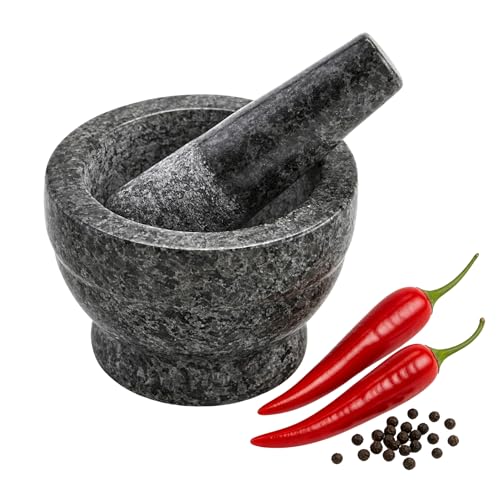
4. IMUSA Small Polished Mortar and Pestle, Granite
A compact granite set with a 3.75 inch grinding bowl, a polished exterior and a rough interior for grinding in a molcajete style. It measures 4.02 by 4.02 by 5 inches and the listing recommends it for spices and herbs in small kitchens.
Suits: small spice jobs. Strengths: a small footprint. Weaknesses: too small for sauces. Skip it if you want a 2 cup bowl.
View IMUSA USA Small Polished Mortar and Pestle, 3.75”, Granite on Amazon

Best for a wipe-clean bowl
5. Le Creuset Stoneware Mortar and Pestle Set
A white enameled stoneware set with a 10 fluid ounce capacity. The listing describes dense stoneware, an enamel exterior that resists scratches from metal utensils, a glazed interior with a nearly-nonstick release and dishwasher-safe care. The listing states no warranty.
Suits: a wipe-clean bowl. Strengths: a glazed interior and dishwasher care. Weaknesses: a smooth surface grips whole spices less than rough stone. Skip it if you prefer an unpolished stone bowl.

View Le Creuset Stoneware Mortar and Pestle Set, 10 oz., White on Amazon

Best for a tidy small set
6. Joseph Joseph Dash Pestle and Mortar Granite Set
A natural granite set with a bamboo lid that keeps the bowl covered in storage, with the pestle resting on top. The lid can also hold ingredients or serve as a small chopping surface. The listing gives the capacity as 15 cubic centimeters and suggests spice rubs, pastes, dressings and marinades.
Suits: a tidy small set. Strengths: a lid and a compact storage stack. Weaknesses: a very small stated capacity. Skip it if you want a big bowl.

View Joseph Joseph Dash™ Pestle and Mortar Granite Set with Bamboo Lid, Heavy Duty – Grey on Amazon
Care and Setup
- Rinse unpolished stone with water and dry it well; check the listing for soap guidance.
- Grind dry spices first, then wet ingredients, if you use one bowl for both.
- Place a cloth or pad under the bowl if the counter is slick.
- Store stone sets low, because they are heavy.
Mistakes to Avoid
- Choosing a small bowl for sauces.
- Expecting a smooth glazed bowl to grip whole spices like rough stone.
- Skipping a dry-off before storage.
- Overlooking the weight when you pick a shelf.
Stone and Stoneware Bowls Compared
The bowl material decides how a mortar and pestle grinds, cleans and wears. Granite is a dense, hard stone, and when its interior is left unpolished, it has a slightly rough surface that grips spices and breaks them down by friction. It is heavy, which keeps the bowl steady, and it does not absorb flavors as readily as softer materials. Granite is the usual material for guacamole, pesto and curry pastes.
Marble is smoother and softer than granite. A polished interior is easy to clean but grips less, so whole spices tend to skid, while a textured interior performs better. Marble can also be marked or etched by acids such as lemon juice or vinegar, so rinse promptly after grinding acidic ingredients. Many users like marble for its appearance and for small batches.
Stoneware is fired clay with a glaze. A glazed interior is smooth and easy to wipe, and it resists staining, but whole spices slip, so it suits soft ingredients, pastes and crushing tasks rather than hard seeds. The glaze can chip if struck, so handle it gently.
The pestle matters as much as the bowl. A pestle with a rounded, slightly rough head grinds best, and its shaft should be comfortable to hold. Pestles that are too light make the job slow. Check that the pestle fits the bowl curve, so the head reaches the bottom and sides.
- Unpolished granite: strong grip for spices and pastes.
- Textured marble: good for smaller jobs, but watch for acids.
- Glazed stoneware: easy to clean, less grip.
- Match pestle shape and weight to the bowl.
Matching Bowl Size to Your Cooking
Bowl size is the biggest practical choice. A small bowl, around 3 to 4 inches across, is enough for a pinch of spices, a few cloves of garlic, a tablespoon of salt or a pill crusher. It stores easily and cleans quickly, but anything bigger than a small paste overflows. These sizes are for dry spices and small tasks.
A medium or large bowl, around 6 inches or a capacity near two cups, suits guacamole, salsa, pesto, curry paste and marinades. The extra room lets you add ingredients in stages without them flying out. A bowl with depth contains splashes, while a shallow one spreads the food and makes it harder to grind. Check the listing for the bowl’s depth as well as its diameter.
Capacity figures can be confusing. Some are stated in fluid ounces, milliliters or cups, and some listings give conflicting numbers. Remember that you cannot fill a mortar to the brim. Plan to use about half to two-thirds of the listed capacity when grinding.
Weight is a size issue too. A heavy stone bowl stays still, but it can be tiring to lift, store and clean. A lighter bowl is easier to move but may slide, so use a pad or damp cloth under it. If you have limited storage or strength, a smaller set may be a more practical choice.
Technique for Better Grinding
A mortar and pestle works through pounding and grinding, and the right technique saves effort. For hard spices, start with a few at a time, and use a pounding motion first to crack them, then grind in a circular motion against the bowl walls. Too many at once will bounce around. Hold the bowl steady with one hand, and keep your grip on the pestle relaxed.
For pastes, start with coarse, dry ingredients such as salt, peppercorns or seeds, then add garlic, chilies and herbs, and finish with oils or liquids. Salt is useful as an abrasive for garlic and herbs. Add soft ingredients gradually, grinding each into the mix before adding more.
For guacamole or pesto, grind the firmer ingredients first, such as garlic and salt, then add herbs or nuts, and finally softer items such as avocado. Stir and mash rather than pound hard.
Think about the direction of force. The pestle should work in a circular motion with a downward press, and not in a hammering action that could chip the bowl. Work in small batches. If you want a fine powder, sift and regrind coarse bits. Toasting whole spices lightly before grinding brings out aroma, and cooling them first helps them grind more easily.
Keep a cloth or pad under the bowl on slick surfaces, and avoid grinding on the edge of a counter. Take care not to strike the bowl hard with the pestle, and never use a stone set as a hammer.
Seasoning, Cleaning and Flavor Transfer
New unpolished stone often has fine grit or dust from manufacturing. A common practice is to rinse it, dry it, and grind a handful of dry white rice until the powder comes out clean, repeating with fresh rice until it is no longer gray. Then rinse again. This removes loose stone dust and gives the surface a first working. Follow any directions that come with your set.
After use, rinse with warm water and scrub with a brush, then dry well. Unpolished stone is porous, and some makers advise against detergent, because soap can soak into the surface and flavor later batches. Check the listing or the instructions. Glazed stoneware is typically easier to wash, and the listing may state whether it is dishwasher safe. Do not soak stone for long, and let it dry completely before storing.
Strong ingredients such as garlic, chilies and curry spices can leave aroma behind. Grinding a little dry rice or coarse salt after cleaning can lift stubborn residue. Some cooks keep separate sets for sweet and savory use, or for pill crushing, to avoid transfer. Marble should be rinsed promptly after acidic foods to avoid etching.
Store the bowl and pestle where they will not be knocked over, and low on a shelf because they are heavy. A lid or cover, where provided, keeps dust out. Avoid sudden temperature changes, which can crack stone or glaze.
What Else to Weigh Before Buying
Think about how often you will really use the set. If you grind spices weekly, a durable stone set is a good investment, and a dedicated space on the counter makes it easy to reach. If you use it occasionally for guacamole, a mid-size bowl is enough. For a pinch of seeds, a small bowl is fine.
Compare it with other tools. An electric grinder is faster for large amounts of coffee or dry spices, but it will not make the same textured pastes. A mortar and pestle gives control over coarse and fine grinds and releases oils from herbs and spices in a way many cooks like. Decide whether you want hands-on grinding or speed.
Look at the base. A flat, stable base prevents wobble, and anti-slip pads help. Check for chips or cracks on arrival, and for a rough area that may snag. Stone is natural, so color and veining differ from the photo. Check the return conditions if appearance matters.
Finally, consider accessibility. Heavy sets can be hard to lift for people with weak wrists. A lighter pestle with a comfortable grip makes the job easier. Think about whether anyone else in the home will use it, and whether the bowl size and weight suit them.
Signs it is time to replace a set include deep cracks in the bowl, a pestle with a chipped head, a glaze that has flaked off, or a surface worn so smooth that it no longer grips. Minor chips on the exterior are usually cosmetic, but check that no fragments can enter your food.
Stone, Stoneware and Wood: What Each Does Well
The material changes how the tool feels and which jobs it handles most easily. A heavy bowl stays put under pressure, while a lighter one may slide on the counter.
| Material | Good for | Keep in mind |
|---|---|---|
| Granite or other stone | Pastes, spices, guacamole | Heavy and often needs seasoning before first use |
| Glazed stoneware | Everyday grinding and easy cleanup | Can chip if knocked on hard surfaces |
| Wood | Light herbs and gentle crushing | Absorbs odors and should not soak |
| Marble | Fine spices | May stain with strong pigments |
Pick based on your most frequent job rather than the occasional one.
Technique Notes for Smoother Grinding
A good set still needs good habits. Add ingredients in small amounts, use a firm circular motion rather than pounding hard, and tuck stray bits back toward the center.
- Dry whole spices first, then add moist items.
- Add a pinch of coarse salt to help break down garlic or herbs.
- Work in a rolling motion, pressing the pestle against the wall of the bowl.
- Scrape the bowl often so everything meets the pestle.
Cleaning and Seasoning
Rinse with warm water and a soft brush, and skip strong soap on porous stone, since it can leave a taste. Let the set air dry fully before storing it. For seasoning rice, follow the maker’s directions, as methods differ between products.
Choosing a Size for Your Cooking Style
Capacity is easy to overlook, yet it shapes how useful the set feels. A small bowl is perfect for a few cloves of garlic or a spoonful of peppercorns, but it frustrates anyone who wants to make a batch of paste or a fresh sauce. A larger bowl handles bigger jobs but takes more counter and cabinet space. Think about the group you usually cook for. A couple may be well served by a modest bowl, while a family that makes curry pastes weekly will appreciate extra volume. Check the listing for the bowl capacity and the interior depth, as a deep bowl keeps ingredients from jumping out while you grind.
Common Mistakes With a New Set
- Pounding hard instead of grinding, which can chip lighter materials.
- Overfilling the bowl so that ingredients spill and escape the pestle.
- Using the set on a slick counter without a damp towel underneath.
- Leaving wet residue in the bowl for hours.
- Skipping the first-use preparation that the maker recommends.
Avoiding these keeps your set working well for many years.
If you cook for a household with different tastes, consider owning two bowls, one for strongly flavored items such as garlic and chili and another for sweeter or milder work. That way, lingering aromas do not drift into delicate dishes. Even a single well-chosen set will repay the counter space if you make fresh pastes and spice blends regularly, because freshly crushed seeds smell noticeably brighter than a jar that has been sitting on a shelf for months.
Comparing the Six Picks by Cooking Style
The six sets in this guide reward different kinds of cooks. The ChefSofi set, in gray with a two-cup capacity, is the generalist: big enough for a batch of guacamole or a curry paste, rough enough inside to grip spices, and the set most home cooks can buy once and stop thinking about. The HIC Kitchen set in Carrara marble suits the cook who grinds smaller quantities and cares how the tool looks on the counter; marble’s smooth finish is gentle on delicate work and wipes clean easily, in exchange for less grip on hard whole spices.
The Priority Chef Heavy Duty set is the workhorse choice for cooks who grind often and in quantity: weight is a feature here, because a mortar that stays planted while you work hard at a paste saves your other hand for guiding the pestle. The IMUSA small polished granite set is the specialist for small, frequent jobs: a spoonful of spices for one dish, a few cloves of garlic, a quick handful of nuts, without washing a large bowl afterwards. The Le Creuset stoneware set suits cooks who make emulsions, dressings and gentler pastes and who value a glazed interior that resists staining and flavor transfer. The Joseph Joseph Dash, in granite with a design-led shape, fits the cook who wants a proper grinding surface in a set that stores neatly and looks deliberate on the worktop.
If you cook one cuisine most, let it decide. Frequent Thai or Indian pastes call for capacity and grip. Mostly dry spice blends for rubs and seasoning call for a grippy interior and moderate size. Occasional pesto, dressings and garlic work can be served by almost any set here, so choose by the counter space you honestly have.
Beyond Spices: What Else a Mortar Does Well
Many owners buy a mortar for one job and discover it quietly replaces several tools. Pesto is the classic example: crushing basil, garlic, nuts and cheese by hand gives a sauce with a varied texture that many cooks prefer to the uniform purée of a processor, and the mortar lets you stop at exactly the point you like. Guacamole works the same way: grind the onion, chilli and salt to a paste first, then fold the avocado through in chunks, and the result tastes seasoned all the way through rather than salted on the surface.
Curry pastes and spice pastes of all kinds are the mortar’s home ground, because the pounding and grinding action breaks down fibrous ingredients such as lemongrass, galangal and dried chillies in a way that builds flavor gradually and lets you adjust as you go. Smaller jobs matter too: crushing pills for a pet under a vet’s guidance, breaking biscuits into crumbs for a cheesecake base, grinding a few coffee beans when the grinder is unavailable, making a flavored salt for finishing a dish, or mashing soft fruit for a drink. A mortar also excels at garlic: a pinch of salt, a few cloves and a minute of work give a smooth paste that melts into dressings and marinades without the harsh raw chunks a press can leave.
The common thread is control. A mortar works in small quantities, in the open, where you can see and smell the result at every stage. Any task where that control matters more than raw speed is a task the mortar may quietly win.
Grinding in Stages: A Worked Approach
Good grinding is sequenced, and the order you add ingredients decides whether a paste comes together smoothly or fights you for ten minutes. Start with the driest, hardest items: whole spices first, ground on their own until they reach the texture the dish needs. Next come the fibrous and firm aromatics, with a pinch of salt, whose abrasion helps break fibres down and whose grip stops pieces skating around the bowl. Garlic, chillies and other moist aromatics follow, and only then should any liquid appear, added a spoonful at a time.
Liquid is where beginners go wrong. Added early, it turns dry spices into a slurry that slides away from the pestle instead of being crushed, and it makes fibrous ingredients buoyant and elusive. Added late and gradually, it simply loosens a paste that has already formed. Work in a combination of motions: pounding to break things down, then a pressing, circular grind to smooth them out, scraping the sides of the bowl down into the center every so often so nothing escapes the process.
Restraint is the final skill. A paste does not need to be perfectly smooth unless the dish asks for it, and overworking herbs such as basil can darken them. Taste as you go where the dish allows, and stop when the texture serves the recipe. The mortar rewards patience: steady, moderate pressure for longer beats frantic force, which mostly sends ingredients up the sides of the bowl and onto the counter.
Working Comfortably and Storing the Set Well
A mortar is heavy by design, and where you put it decides how your arms and back feel after a batch of paste. Work at a height where you can lean a little body weight into the pestle rather than pushing with your shoulders alone; for most people that means a standard counter is fine, but a lower table can be kinder for long sessions. Sit the bowl on a folded cloth or a non-slip mat: it protects the counter, quietens the work, and stops the bowl creeping away from you mid-grind. Hold the bowl steady with your free hand on its side, fingers well away from the rim where the pestle travels.
Take breaks on big batches. Pounding is repetitive work, and tired hands lose control of a heavy pestle. Two shorter sessions with a rest between them produce a better paste than one exhausting effort, and the ingredients suffer nothing for waiting a few minutes in the bowl.
For storage, keep the set dry and, where space allows, keep the pestle resting in the bowl so the pair stays together. In a cupboard, place the mortar where it cannot roll or be knocked from a height: a falling stone mortar can crack a tile, damage a foot and chip itself in one accident. If counter space is your storage, choose a spot away from the edge and away from the sink’s splash zone, and the set will double as the kind of kitchen object that simply looks right being there.
More Questions Owners Ask
Can I grind wet and dry ingredients in the same session?
Yes, if you sequence them: dry spices first, then aromatics, then liquids last. Grinding something dry immediately after something wet rarely works well, because moisture makes powders clump and slide.
How do I crush ingredients without them jumping out of the bowl?
Start gently, cover the top of the bowl loosely with your free hand for the first few strikes, and work with smaller quantities. Big, forceful blows on a full bowl are what launch peppercorns across the kitchen.
Is a mortar better than a spice grinder?
They do different jobs well. An electric grinder is faster for large amounts of dry spice. A mortar gives control, handles wet pastes, and lets you stop at any texture. Many keen cooks end up using both.
Can I use my mortar for crushing ice or very hard items?
It is not the right tool for ice or anything that needs a hammer’s force. Excessive impact can chip stone and stoneware. Keep the mortar for ingredients that yield to steady pressure and pounding.
Why does my paste taste of the last thing I ground?
Porous stone holds onto strong flavors, especially garlic and spices. A thorough clean, and grinding a small amount of plain rice or salt and discarding it, usually clears lingering flavors before a delicate job.
The Mortar Across Different Cuisines
Almost every food culture arrived at the mortar independently, and seeing how each uses it teaches you what your own set can do. In Thai cooking, the mortar is the engine of curry pastes and pounded salads, where chillies, garlic, shallots and fermented seasonings are worked together in sequence and the cook adjusts balance by taste at every stage. In Mexican cooking, the molcajete grinds salsas and guacamole with a deliberately coarse texture, and the volcanic roughness of the bowl is part of the result. Italian pesto from Genoa is traditionally a mortar dish, the basil crushed rather than cut, which its makers insist gives a sauce that coats pasta differently from a processed one.
Indian cooking uses the mortar for the small, constant work of spices: cracking cardamom, crushing ginger and garlic, grinding a fresh garam masala for one dish rather than a jar for a season. Japanese suribachi, with their ridged interiors, turn sesame seeds into a fragrant paste and show how much difference the bowl’s inner texture makes to grip. Middle Eastern cooks pound herbs, spices and garlic into pastes and work tahini-based sauces by hand. The lesson for a home cook with one set is encouraging: technique and sequence travel between cuisines far better than equipment does, and a single good mortar serves all of these traditions respectably.
Let that breadth shape how you learn. Pick the cuisine you cook most, master its two or three core mortar preparations until the motions feel natural, and then borrow freely. The hands learn once; the recipes multiply on their own.
Teaching a Beginner to Grind
A mortar is one of the kindest tools for teaching someone to cook, because it is slow, visible and forgiving. Start a beginner, child or adult, with something fragrant and satisfying: whole spices for a rub, or garlic and salt for a paste, where success is obvious within minutes. Show the two motions separately, the downward pound to break things down and the pressing circle to smooth them, and explain why the free hand steadies the bowl on its side rather than hovering over the top where the pestle travels.
Quantities matter for confidence. A small amount in a large bowl skates around and frustrates; a sensible amount that the pestle can actually trap teaches control quickly. Expect the first attempts to be slow and a little messy, with the occasional peppercorn escaping across the counter. That is the learning, not a failure of it. Scraping down the sides, tasting, adjusting: narrate these as you would want them narrated to you, and the beginner absorbs the real skill, which is judging texture and seasoning rather than merely crushing things.
Safety is simple and worth stating once: fingers stay out of the bowl while the pestle is moving, the bowl sits on a cloth so it cannot skate, and heavy stone sets are lifted with two hands or left where they live. A child who learns those habits at a mortar carries them to every other kitchen tool.
Common Problems and What Causes Them
Most mortar frustrations have mechanical causes with simple fixes. Ingredients that keep jumping out of the bowl mean the blows are too hard, the bowl is too full, or the pieces are too large and round to be trapped; start gently, work in smaller amounts, and crack large spices with a few controlled taps before grinding properly. A paste that will not come together usually has its liquid added too early or its fibrous ingredients added whole; chop fibrous items roughly first, add liquid late and in spoonfuls, and give salt its chance to help as an abrasive.
Whole spices that skate around uncrushed point to a bowl that is too smooth for the job, too large for the quantity, or a pestle being used with a stirring motion when it needs downward pressure. Press and twist directly on the spice against the bowl’s base rather than chasing it around the walls. A finished paste that tastes harsh or raw often simply needs more work or a pinch of salt and a rest: freshly pounded garlic and chilli soften noticeably after a few minutes as the flavors marry.
If the bowl itself develops an odor that washing does not shift, grind a small handful of plain rice or coarse salt to a powder, discard it, and repeat if needed. Persistent problems with a stone set can also mean it needs re-seasoning as described earlier in this guide. A mortar rarely fails outright; it usually asks, fairly clearly, for a change in technique.
One Mortar or Two: An Honest Answer
Cooks who use a mortar weekly often wonder about a second set, and sometimes it is genuinely justified. The strongest case is a size split: a small set for the daily spoonful of spice or garlic, kept by the stove, and a large set for pastes, guacamole and entertaining quantities, kept where big jobs happen. The small set gets used more because it is quicker to wash; the large set stops being dragged out reluctantly for jobs it alone can do. The second case is flavor separation: a set reserved for sweet or delicate work, such as grinding sugar with spices for baking or making small amounts of herb oil, kept apart from the garlic and chilli workhorse.
The weak cases are worth naming too. A second set bought because the first is the wrong material for everything is better solved by replacing the first. A decorative set that cannot be ground in is shelf dressing, which is fine if bought as such and not as a tool. And two large sets in a small kitchen is storage pain without a cooking benefit.
If you do buy a second, let it differ from the first in the dimension you actually feel: size first, material second. Keep both dry, keep each pestle with its own bowl, and note honestly after a few months which one your hand reaches for. That instinct, more than any review, tells you what your next, and possibly final, mortar should be.
Grinding Small Amounts Well
The hardest quantity in a mortar is the smallest one. A spoonful of cumin or a few cardamom pods in a large bowl skates away from the pestle, and cooks conclude wrongly that the tool is at fault. The technique for small amounts is concentration: gather the spice into the center of the bowl’s base, work with the tip of the pestle in short, direct presses rather than wide circles, and tilt your effort onto the small pile rather than chasing individual seeds around the walls. A pinch of a coarser companion, a few grains of salt with spice, or the dish’s own coarse salt ground alongside, gives the pestle something to grip and dramatically speeds the work.
Small amounts are also where freshness pays most. Spices ground to order for a single dish, in the quantity the dish needs, taste noticeably brighter than the same spice from a jar ground months earlier, and the mortar makes that habit practical because the washing up is a rinse. If small jobs are most of your grinding, be honest about it when choosing a set: a modest bowl used daily beats a grand one that makes every spoonful feel like a production, which is why several sets in this guide earn their place on size alone.
Serving in the Bowl
A mortar makes a handsome serving vessel for the things it grinds, and serving in the bowl is traditional in several cuisines for good reasons. Guacamole, salsas and pounded salads served in the mortar stay where they were seasoned, look generous and rustic, and save a transfer that loses a spoonful of the good part to a second bowl. The heavy bowl also keeps its contents steadier on the table than a light dish when people are serving themselves.
A few courtesies apply. Put a plate, board or folded cloth under the bowl, because stone and stoneware mark wooden tables and ring loudly on glass ones. Warn guests that the bowl is heavy before someone lifts it one-handed to pass it, and serve with a spoon rather than letting chips or bread be ground against the bowl’s interior by enthusiastic guests. If the bowl held raw chilli or garlic in quantity, taste before serving directly from it in case the residue seasons the dish further. Afterwards, the serving bowl goes back to being a tool: washed, dried and stored as usual, with no harm done by its evening at the table and, usually, a few compliments earned.
Storing What You Have Ground
Grinding in small amounts is the mortar’s philosophy, but every cook occasionally grinds more than the dish needs, and storing the surplus well keeps the effort from being wasted. Dry spice blends keep best in a small, airtight container, away from light and the heat of the stove, labelled with what they are and when they were ground; an unlabelled jar of brown powder is a mystery within a fortnight. Ground spices fade faster than whole ones, so treat home-ground blends as a short-term pleasure: make what a few weeks of cooking will use, and let the mortar’s speed make the next batch when you need it.
Wet pastes ask for different handling. A curry paste, a garlic paste or a pounded herb mixture keeps in the refrigerator in a clean, sealed container for a short period, and a thin layer of oil over the surface of some pastes helps protect them from the air, as cooks in several traditions have long practised. Freezing works well for many pastes in small portions, in an ice cube tray for example, giving you a measured amount ready to drop into a pan. What does not work is leaving paste in the mortar itself: the bowl is a tool, not a storage jar, and porous stone holding a wet, fragrant paste for days will taste of it for weeks. Transfer, seal, label, and wash the mortar while the transfer is fresh in your mind.
The Mortar as a Gift, and Inheriting One
A mortar and pestle is one of the oldest kitchen gifts in the world, and it suits cooks at almost every level: a first serious tool for a young cook setting up a kitchen, an upgrade for the cook still struggling with a set that is too small or too smooth, a beautiful object for the cook who has everything else. Choose weight and size for the recipient’s reality rather than for drama: a very heavy set given to someone with a small kitchen and high cupboards will be admired and rarely used, while a well-judged set in daily service will be thought of kindly for decades. Include a small bag of whole spices and one recipe you love that uses the mortar, because a tool that arrives with its first job already chosen gets used the same week.
Inherited mortars deserve a paragraph of their own. A set that comes from a parent’s or grandparent’s kitchen carries seasoning, scratches and memory in equal measure, and it should be cleaned thoroughly, checked for cracks, and re-seasoned if it is stone, then put straight to work rather than displayed. These are tools that improve with use and suffer from retirement. If you inherit one alongside your own, the two-set arrangement described earlier may simply have happened to you; let each find its role, and pass the spare on, in time, to the next cook in the family, with its stories attached.
Mortar and Pestle FAQ
Granite, marble or stoneware?
Granite and marble are heavy stone; the Le Creuset is glazed stoneware. The listings describe the unpolished granite sets as good for grinding.
What size do I need?
Bowls around 3.75 to 3.8 inches suit spices. The Priority Chef at 6.3 inches suits guacamole and pesto.
Do I need to season a new granite mortar?
Many cooks grind a handful of dry white rice until the powder runs clean, then rinse and dry the bowl. Follow any instructions from the maker.
Can I use soap on a stone mortar?
Some makers advise against it because soap can soak into porous stone and affect flavor. Check your set's instructions, and rinse and brush with warm water if unsure.
Why do whole spices slip around in my bowl?
A smooth or glazed interior gives little grip. Use fewer spices at a time, crack them with short pounds first, or choose a rough interior stone bowl.
What size mortar do I need for guacamole?
A bowl of around two cups gives room to mash avocado with other ingredients. Smaller bowls suit spices and garlic.
Will marble react with lemon juice?
Acids can etch marble, so rinse the bowl soon after grinding lemon, lime or vinegar. Granite is usually less affected.
How do I get garlic smell out of the bowl?
Rinse, then grind a little dry rice or coarse salt and rinse again. Dry the bowl fully and let it air.
Is a heavier mortar better?
Weight keeps the bowl steady, but it can be hard to lift and store. Choose a weight you can handle comfortably.
The Short Version
For a roomy unpolished bowl, the ChefSofi. For marble, the HIC. For the largest bowl, the Priority Chef. For a small granite set, the IMUSA. For a glazed bowl, the Le Creuset. For a lid, the Joseph Joseph.