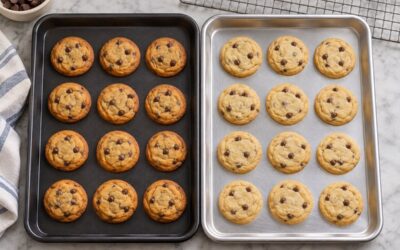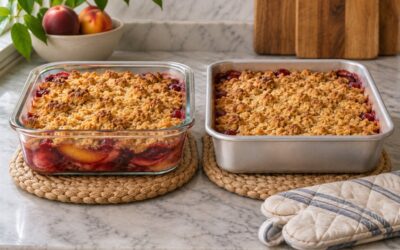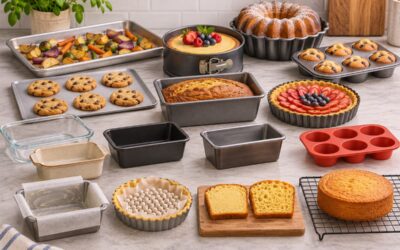
Metal pans heat up and cool down quickly, which tends to give crisper edges and lighter browning. Glass pans heat more slowly but hold that heat longer, so food can keep cooking after it leaves the oven. Each has a place, and the difference matters most for cakes, brownies and casseroles.
How Heat Behaves
Metal, especially aluminum, conducts heat quickly. The edges of a cake or brownie set sooner, and the crust browns in a predictable way.
Glass is an insulator. It takes longer to warm up, then stays hot. Because of this, many bakers lower the oven temperature slightly or check earlier when swapping a metal pan for glass. Follow the recipe notes and the pan maker’s guidance on temperature.
Side-by-Side Look
| Feature | Metal | Glass |
|---|---|---|
| Heat response | Fast | Slow, holds heat |
| Browning | Even, sometimes lighter | Can brown edges more |
| See-through | No | Yes, you can check the bottom |
| Weight | Light | Heavier |
| Cutting in the pan | Avoid on coated pans | Fine for most, but may scratch |
| Serving | Less presentable | Often goes to the table |
Safe Handling of Glass
Glass bakeware can crack or shatter with sudden temperature change. General common-sense steps help:
- Do not move a hot glass dish to a wet counter or cold surface; use a dry towel or rack.
- Avoid adding cold liquid to a hot dish.
- Do not use glass under a broiler or on a stovetop unless the maker allows it.
- Check the dish for chips or cracks before each use and stop using it if you find any.
Always follow the maker’s instructions and use oven mitts.
Which to Choose by Recipe
- For cakes, bars and cookies, choose metal for even rise and defined edges.
- For casseroles, lasagna and baked pasta, choose glass, which holds heat for serving.
- For fruit pies, a glass pie plate lets you check the bottom crust.
- For roasting at high temperatures, choose metal unless the maker approves glass.
Tips When Switching
If a recipe was written for a metal pan and you only own glass, treat the recipe times as a guide, not a rule. Check the bake a little early, look at the edges first, and be ready to cover the top loosely if it browns too fast. Allow the dish to cool on a dry rack, and let it rest before cutting so the filling sets. When in doubt, read the instructions from the pan maker for oven limits and care.
Kinds of Metal Bakeware
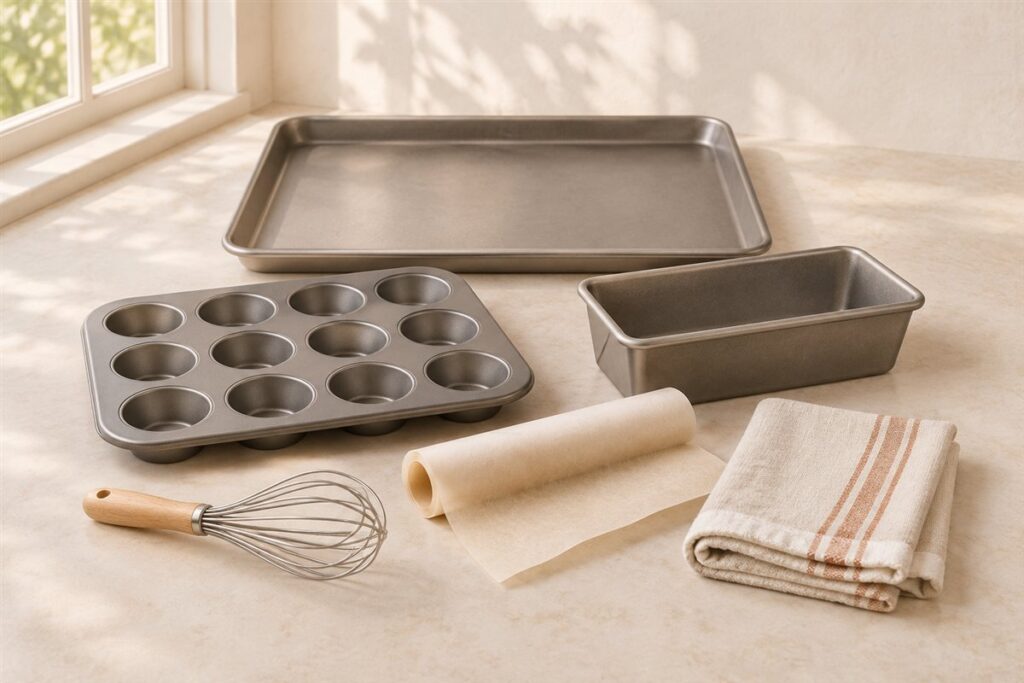
Metal is not one choice. Pans made of bare aluminum are light, conduct heat quickly and tend to brown gently, and they are often a favorite for cakes and bars. Aluminized steel adds a coating of aluminum over steel to give strength and some resistance to rust. Plain steel and carbon steel pans are sturdy and heat well, but they may need drying and light oiling to resist rust, and the maker’s care sheet is the guide.
Finish matters too. A dark or coated surface absorbs more heat, so edges and bottoms brown faster than in a light, shiny pan. That is helpful for crusty bread and pizza and less so for delicate cakes, where pale, even color is desirable. Nonstick coatings help release but have temperature and utensil limits. A matte or satin interior can brown a little more than a mirror-bright one, though the difference depends on the oven.
Weight and rim construction affect how a metal pan behaves. A heavier pan resists warping and spreads heat evenly, while a thin one heats fast and can twist. A rolled rim adds stiffness and gives you something to hold with mitts. If you bake a lot, a couple of sturdy light-colored pans for cakes and bars, plus a dark one for roasting and bread, covers many needs. Look for corners that are rounded enough to clean, and avoid pans with crevices that hold crumbs.
Glass Types and What to Expect
Glass bakeware is not all the same. Different makers use different glass formulations, and these respond to temperature changes in different ways. Rather than assume, read the maker’s description and instructions to learn what the dish is designed for, and what it advises against. Some glass bakeware is recommended for the oven only and not for stovetop or broiler use, while some may be freezer-to-oven rated within limits.
Glass offers practical benefits. It does not react with acidic ingredients like tomatoes or citrus, so it is a good match for lasagna, fruit crisps and marinated dishes. It does not stain easily or absorb odors, and its transparency lets you see browning on the bottom and sides, which is helpful for pies and breads. It also goes from oven to table and into the fridge with a lid, saving dishes.
The drawbacks are weight, a slow response to heat and the risk of breakage. A glass dish that slips or knocks against a hard surface can chip or break. Thicker walls also mean that corners and edges can stay hot long after the oven is off. Handle with dry mitts, set on a rack or dry towel, and let a dish cool before cleaning. If you are sensitive to weight, try holding a dish with food in it before deciding.
Pan Dimensions, Depth and Volume
Recipes assume a pan size, and the material is only part of the picture. A common mistake is to swap a metal pan for a glass one of the same nominal size and then discover that the depth or capacity is different. Measure the inside, edge to edge, and check the depth from rim to floor. Compare capacity if the maker lists it.
Batter depth changes timing more than many cooks expect. A thick layer cooks more slowly in the center and may brown the edges first, especially in glass. A thinner layer bakes faster and may dry out. If your pan is larger than the recipe calls for, the batter will spread thin, so start checking early. If your pan is smaller, the batter will be deeper, so a lower temperature or longer bake may be needed, and you should avoid filling to the top.
Straight sides and sloped sides differ as well. Sloped sides have a smaller floor, which affects brownies and bars that rely on a specific footprint. Check whether the pan has handles that change the outside size, since this affects oven fit. When a recipe gives size in both inches and centimeters, use the one printed on your pan or measure it, and note that pan labels often round numbers.
Cooling, Carryover and Releasing Food
What happens after the pan leaves the oven is part of the choice. Glass holds heat, so food keeps cooking for a while. For brownies, custards, baked pasta and egg dishes, this carryover can finish the center, but it can also overbake if you wait too long. Many bakers remove glass-baked items slightly earlier, using color and firmness as the guide, and let the dish rest on a rack.
Metal cools faster, which can stop the bake sooner and help release cakes cleanly. However, bars left in a hot metal pan too long can stick as sugar sets. Follow the recipe’s resting time, and run a thin spatula or knife around the edge if the recipe says to do so.
Release methods differ with each surface. Bare metal usually needs greasing and flouring or a parchment sling. Coated pans release more easily but may suffer from sprays. Glass tends to hold food more tightly, so greasing well and using a parchment sling is especially useful for bars and cakes. Avoid using metal utensils that can scratch the dish. For serving, glass can go to the table, while metal pans usually do not look as polished. Whichever you choose, give the dish time to rest before slicing so the structure sets cleanly.
Durability, Storage and Overall Value
Think about what you want from a pan over many years. Metal pans can last a long time, though thin or coated ones eventually warp, scratch or lose their finish. Glass can last indefinitely if never dropped or subjected to sudden temperature shifts, but a single mishap can end its life. Examine both types for signs of wear regularly.
Storage is a practical consideration. Metal pans nest and stack, and they are light to carry. Glass takes more cabinet space, adds weight, and needs a safe spot away from falling objects. Lids matter: many glass dishes have matching lids for storage, and these can double as leftovers containers, but check the lid’s temperature limit before using it in the oven or microwave.
When deciding where to spend, consider your menu. If you bake a lot of cakes, cookies and bars, metal will probably get the most use. If you often cook casseroles, gratins and make-ahead dishes, glass has an edge. Many cooks keep two or three metal pans and one or two glass dishes, which suits most recipes. Choose sizes that match your favorite recipes first, check care instructions and avoid buying duplicates you will not use.
FAQ
Can I swap one for the other in a recipe?
Often yes, but watch the time closely. Glass may brown edges sooner and may need a slightly lower temperature, depending on the recipe.
Which is easier to clean?
Glass resists staining and can soak well. Metal may need more scrubbing, though coated pans wipe clean easily.
Why do recipes sometimes specify a glass or a metal pan?
The author tested the recipe in that material, and the timing and browning may depend on it. Using the specified type gives the closest result.
Do I need to grease glass pans?
Usually yes, unless the recipe says otherwise, because food can stick to glass. A parchment sling makes bars and cakes easier to lift out.
Are dark metal pans better than light ones?
Neither is better in every case. Dark pans brown more, which helps crusts and bread, while light pans bake more gently, which suits delicate cakes.
Can I use a glass pan in a convection oven?
Often yes, but check the maker's instructions. Convection can brown faster, so check the bake early.
Why did my metal pan warp?
Thin metal can bend when heated unevenly or when a hot pan meets cold water. Sturdier pans with reinforced rims resist this better.
Is it safe to store food in glass baking dishes?
Many are designed for refrigerator storage with a lid. Check the maker's instructions about lids and temperature changes before moving a dish between fridge and oven.
How many pans do I really need?
Many cooks do well with a couple of metal pans in sizes they use and a glass casserole dish. Add more only when a recipe you make often needs a different shape.
The Short Version
Choose metal for cakes, cookies and crisp edges, and glass for casseroles and dishes that go from oven to table. Handle glass with care, avoid sudden temperature swings and follow the maker’s guide.