This glossary defines common bakeware terms in plain language, so recipes and product listings make sense. It covers pan types, surface words and a few baking methods.
Pan Types
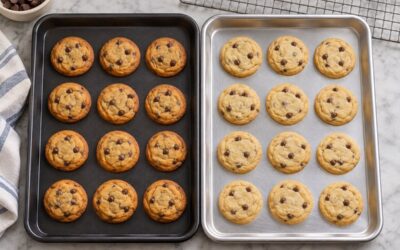
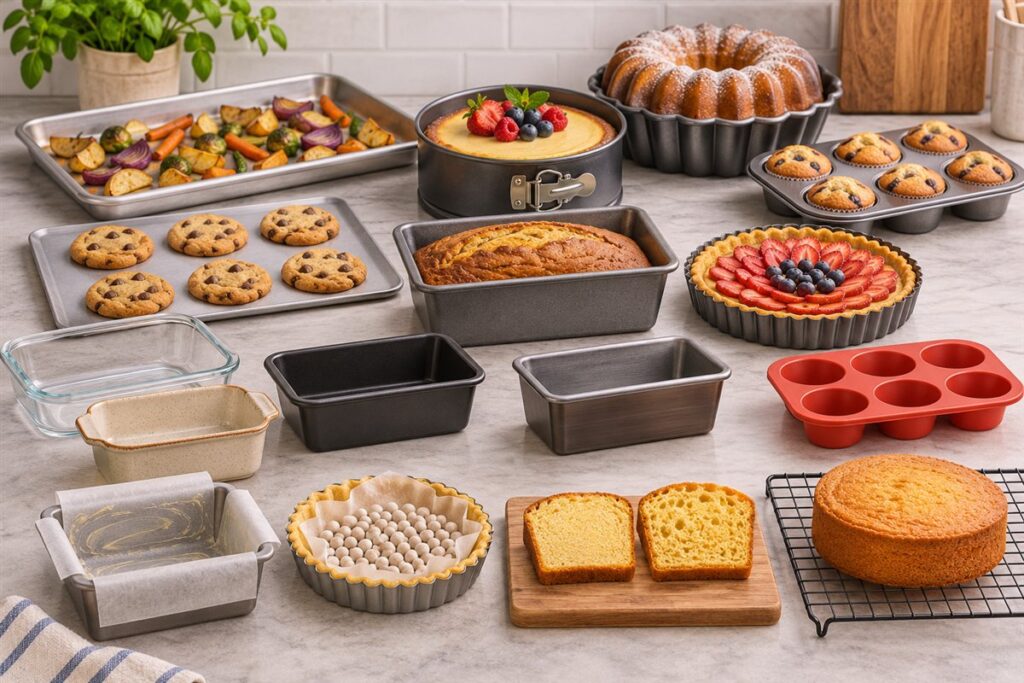
- Sheet pan: A flat metal pan with a low rim, used for cookies, roasting and thin cakes. A half sheet is a common home size, but check the maker’s listing.
- Cookie sheet: A flat pan with little or no rim, good for sliding cookies off.
- Loaf pan: A rectangular, deep pan for bread and loaf cakes.
- Springform pan: A round pan with a removable side released by a latch, used for cheesecake and delicate cakes.
- Bundt pan: A ring-shaped pan with a patterned surface.
- Muffin pan: A pan with a set of cups for muffins and cupcakes.
- Tart pan: A shallow pan with fluted sides, often with a removable base.
Surfaces and Materials
- Nonstick: A coating that helps baked goods release. Use the utensils and cleaning methods the maker recommends.
- Anodized: A treated aluminium surface that is harder and darker than plain metal.
- Silicone: A flexible material used for moulds and mats, with a heat limit stated by the maker.
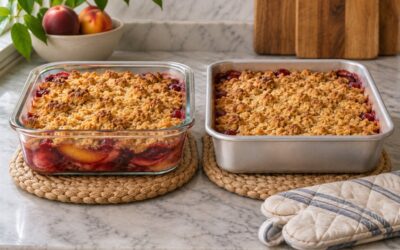
- Stoneware: Fired clay bakeware that holds heat for a long time.
- Glass: Heat-holding bakeware that lets you see browning on the bottom.
Baking Words
These words appear in many recipes.
- Line: To cover a pan with paper or foil so food lifts out cleanly.
- Grease: To coat a pan lightly with fat so food releases.
- Proof: To let yeast dough rest and rise before baking.
- Crumb: The inside texture of a cake or loaf, from tight to open.
- Blind bake: To bake a pastry case before the filling goes in.
- Cool on a rack: To let air circulate so the base does not turn soggy.
Many recipes combine these words in one sentence. For example, “grease and line a loaf pan” means coat the sides lightly, then fit paper so the baked loaf can be lifted out by its overhang. “Cool in the pan for ten minutes” means leave the bake in its tin while it firms, so it does not break when turned out. Times like these vary, so follow the recipe.
Sizes and Measures
| Term | What it describes |
|---|---|
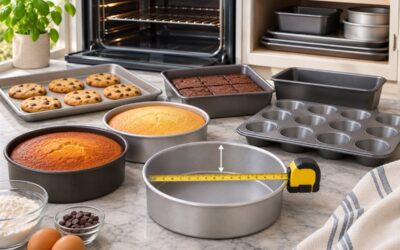
| Capacity | How much batter or dough the pan holds |
| Depth | The height of the sides, which affects bake time |
| Diameter | The width across a round pan, edge to edge |
FAQ
What is the difference between a sheet pan and a cookie sheet?
A sheet pan has a full rim, which holds in juices and batter. A cookie sheet has little or no rim.
Does dark bakeware change timing?
It can, because dark finishes often brown faster. Follow the recipe and watch for the doneness cues it gives.
The Short Version
Learn the pan types, surface words and baking terms, and recipes become easier to follow. Check the maker’s guide for heat limits and care.