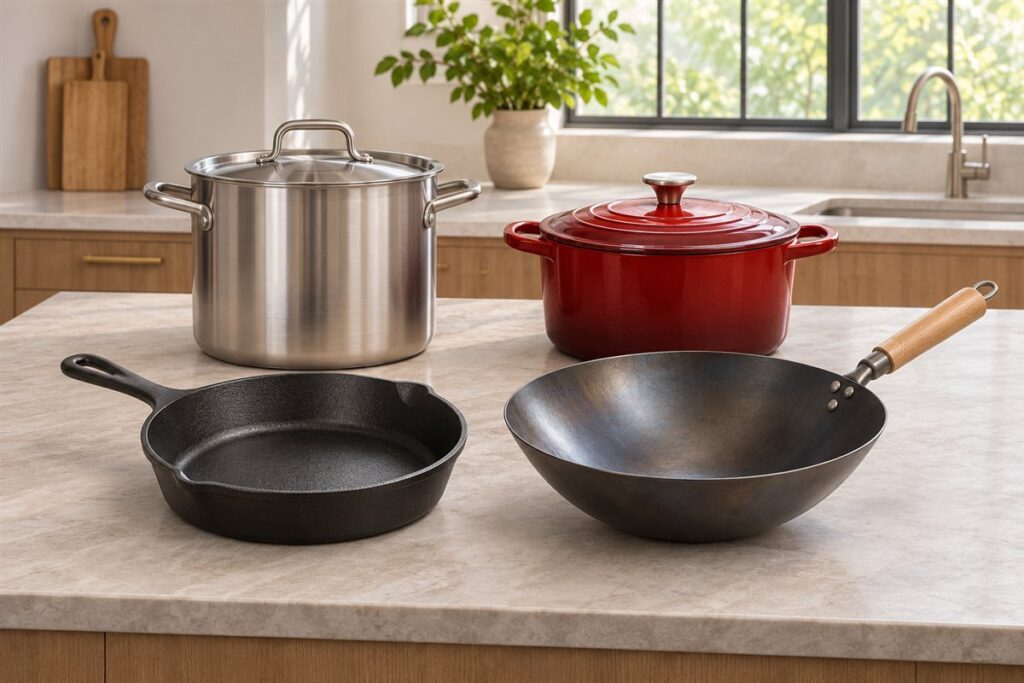
Food sticks to stainless steel mostly because the pan was not preheated, the oil was added too early, or the food was moved before it had browned. Preheat the pan, add oil, let it shimmer, dry your food and then leave it alone until it releases.
Why Sticking Happens
Stainless steel has tiny pores in the surface. When food touches cold metal, proteins grip those pores. As the metal heats and the food browns, the metal expands slightly and the food lets go. That is why meat often tears if you try to flip it too soon, and then turns loose a minute later.
Step by Step Routine
- Pat food dry with paper towels. Surface moisture creates steam and stickiness.
- Heat the empty pan over medium heat for a couple of minutes.
- Check the pan by flicking in a drop of water. If it forms a bead that glides around, the pan is ready.
- Add a thin layer of oil and let it shimmer.
- Lay in the food away from you and do not crowd the pan.
- Leave it undisturbed until it browns and releases easily when nudged.
- Flip with tongs or a thin spatula.
Quick Fixes by Food
| Food | Tip |
|---|---|
| Eggs | Use lower heat, enough butter or oil, and a pan that is warm but not smoking |
| Fish | Dry it well, preheat fully and wait for the crust to form before moving |
| Chicken or steak | Let the meat come out of the fridge a little before cooking and avoid moving it early |
| Vegetables | Use enough oil and do not overload the pan |
Habits That Help
- Do not use too high a heat. Burnt oil can make a sticky layer that grabs food.
- Match the pan size to the amount of food.
- Clean off any oil film from past cooking, since sticky residue builds up.
- Deglaze with a little liquid after cooking to lift the browned bits for a sauce.
Hot oil can spatter and burn, so use caution, keep a lid or splatter screen handy, and follow the maker’s manual and safety instructions.
Fat choice and temperature work together. Oils that tolerate higher heat are better for searing, while butter browns quickly and suits gentler cooking. If oil smokes heavily, the pan is too hot, so lift it off the burner for a moment and wipe it out before continuing. Also let cold food from the fridge sit out briefly, since very cold food lowers the pan temperature and clings more easily. Clean the pan well between uses, because leftover baked-on oil can make the next session worse.
How Pan Construction Affects Sticking
Not all stainless pans heat the same way. Stainless steel on its own is a modest heat conductor, so many pans have an aluminum or copper core, or a thick disc bonded to the base, to spread heat more evenly. Pans with a layered construction run through the sides as well as the base, which keeps the whole surface closer to the same temperature. A thin, single-layer pan may have hot and cool spots, and food in the cooler areas tends to stick.
Check the pan’s base. A warped base will leave gaps between the metal and the burner, causing uneven heating. Place the pan on a flat surface and look for rocking. A pan that has been heated empty repeatedly or cooled suddenly may warp over time. Thickness also matters, since a heavier base holds heat better, so temperature does not drop as sharply when food goes in. This helps food sear without sticking.
Match the pan to the burner. A pan that is much smaller than the burner may overheat at the edges, while one that is too large may have a cool outer ring. Gas flames should not lick far up the sides. For induction, choose a pan with a flat magnetic base. Understanding your pan and stove helps you set the right heat and gives more predictable results.
Temperature Control in Practice
Most sticking comes down to temperature. Too cold, and proteins bond to the metal. Too hot, and oil burns and leaves a sticky film. The goal is a moderate, steady heat. Preheat the pan over medium heat and give it a couple of minutes. The water drop test helps: a drop that skitters and rolls in a ball signals a ready pan, while one that sizzles and evaporates at once suggests the pan is not hot enough.
Add oil after the pan is hot, then wait until it flows easily and shows light ripples. Place the food in gently. If the pan is the right temperature, you will hear a steady sizzle. Lower the heat once the food is in if it browns too fast. For thick items, start with medium-high heat and reduce, so the inside cooks without burning the outside.
- Preheat gradually, not on the highest setting.
- Keep the heat steady while cooking.
- Allow the pan to recover between batches.
- Adjust the burner in small steps.
Every stove is different, so use these cues as a guide and learn what your own settings mean. Pay attention, and avoid leaving a hot pan unattended.
Choosing and Using Cooking Fats
Fat acts as a barrier between food and metal, but different fats behave differently. Oils with a higher smoke point suit searing and high-heat cooking, while butter adds flavor but browns and burns more easily. Olive oil comes in several types, and heat tolerance varies, so check the label for guidance. A mix of butter and oil can offer flavor with some protection against burning.
Quantity matters. Too little oil leaves gaps where food can bond to the metal. Too much can cause spattering and make food greasy. A thin, even layer that coats the surface is usually enough for searing. For delicate foods like eggs, a little more fat helps. Swirl the pan to spread the oil, and wait for it to heat. If the oil smokes heavily, remove the pan from the heat, let it cool slightly and wipe it out before restarting.
Avoid aerosol sprays on stainless steel pans if the maker advises against them, because residues can build up and become sticky. Always use fats suitable for your cooking method. Keep a splatter guard or lid nearby, and be careful when adding food to hot oil. If you notice a sticky film developing on the pan after cooking, clean it thoroughly so it does not affect the next use.
Preparing Food Before It Hits the Pan
How you prepare food affects sticking as much as the pan does. Moisture is a major cause, because water on the surface creates steam and prevents browning. Pat meat, fish and vegetables dry with paper towels. Marinades and sauces should be drained or wiped off before searing. If you season with salt in advance, blot away any moisture that has drawn out.
Temperature matters here too. Very cold food lowers the pan temperature on contact, so let it sit out for a short time. Do not leave perishable food out for long, and follow food safety advice. Cut food into even pieces so everything cooks at the same rate, and avoid crowding the pan. Crowding traps steam and causes sticking.
Coatings and breading can help or hinder. A light dusting of flour can create a barrier for fish, but excess flour can burn. Breaded foods may need extra oil. Be patient when turning. Food often releases by itself once it has formed a crust, and trying to move it early tears it. Use a thin, flexible spatula to ease under the food. If it resists, give it another minute.
Cleaning and Restoring the Surface
A clean surface helps prevent sticking next time. After cooking, let the pan cool a little, then add warm water and soak if food is stuck. Avoid pouring cold water on a very hot pan, since this can cause warping. Use a non-scratch sponge and a mild detergent. For stubborn residue, simmer water with a little baking soda in the pan to loosen it, then scrub gently.
Discoloration is common. Rainbow tints are heat marks and can be removed with a mild acid such as a diluted vinegar solution, followed by a rinse. White spots from hard water can be treated similarly. Stainless steel cleaners made for cookware can restore shine, but follow the instructions and rinse well. Avoid steel wool unless the maker allows it, since it can scratch.
Dry the pan after washing to avoid water marks. Check the surface for build-up, which can feel rough or sticky. If you feel a film, scrub it with a gentle cleaner until smooth. Store pans so they are not scratched by stacking, using pan protectors or cloths between them. If the pan is deeply scratched, pitted or warped, it may need to be replaced, as it will be harder to cook on.
FAQ
Is my pan faulty if food sticks?
Usually not. Technique matters more than the pan itself.
Do I need a lot of oil?
A thin, even layer is enough when the pan is properly preheated.
Do I need to season a stainless steel pan?
Stainless steel does not need seasoning like cast iron, though some cooks use a light oil layer after cleaning. Follow the maker's care guide.
Why does my pan stick even when it is hot?
Wet food, too little oil, a warped base or a sticky residue from earlier cooking can cause it. Dry the food, add oil and clean the pan well.
Can I use nonstick spray on stainless steel?
Some makers advise against aerosol sprays because residue builds up. Check your pan's guidance and consider using oil directly.
Should I stir food in a stainless pan?
Let it sit until it browns and releases, then turn it. Moving it too soon can cause sticking.
How do I cook eggs without sticking?
Use lower heat, enough fat and a pan that is warm but not smoking. Wait until the edges set before moving the eggs.
How do I remove burnt-on food?
Soak in warm water, then simmer water with baking soda in the pan to loosen it. Scrub with a non-scratch sponge.
Does the pan lose its ability to release food over time?
Build-up and scratches can make sticking worse. Clean it thoroughly and replace it if it is badly damaged.
The Short Version
Dry the food, preheat the pan, add oil, and wait for the food to release on its own. Patience and moderate heat solve most sticking problems.