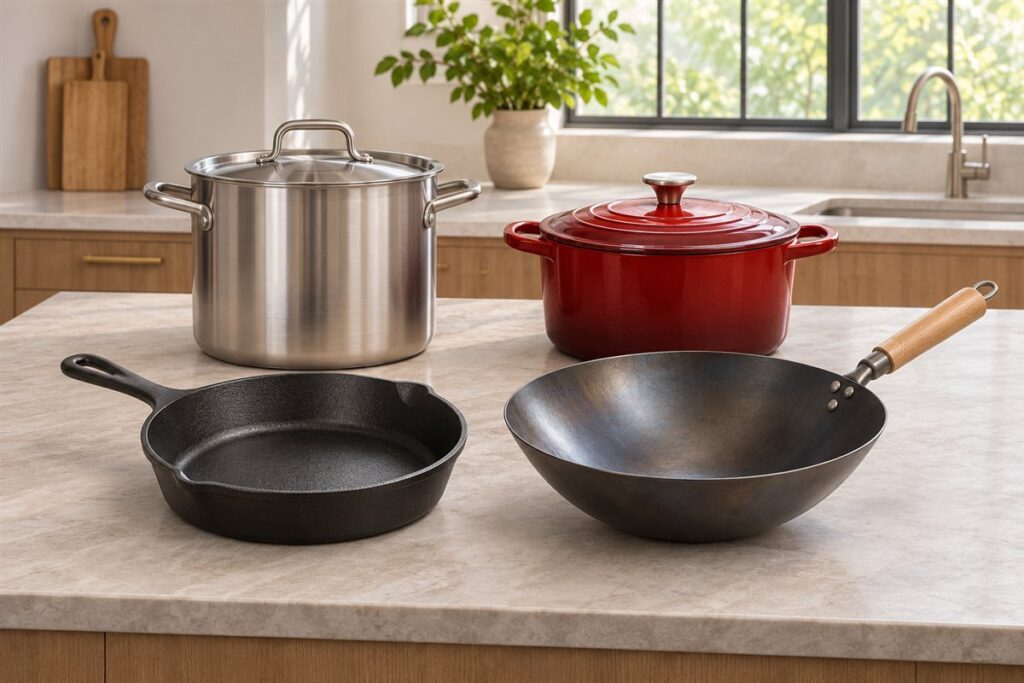
To season a carbon steel pan, remove any factory coating, dry the pan, heat it with a thin film of oil until the surface darkens, and repeat a few times. Over regular use the pan grows a darker, smoother surface that helps food release.
Prepare a New Pan
Many carbon steel pans ship with a protective layer to prevent rust in transit. Check the maker’s guide, because the method for removing it varies. Some say to scrub with hot soapy water, while others suggest heating the pan and then washing it.
Work in a ventilated kitchen, because heating oil or coatings can make smoke.
Seasoning Steps
- Wash the pan with hot water and a sponge, then dry it thoroughly.
- Heat it on the stove over medium heat until it is dry and warm. You may see the metal change color, which is normal.
- Add a teaspoon or so of plain cooking oil and spread it thinly with a paper towel held in tongs.
- Keep the pan on the heat until the oil smokes lightly and the surface darkens.
- Wipe out any excess with a clean paper towel.
- Let the pan cool a little, then repeat with fresh thin coats a few more times.
An oven can also be used. Rub on a very thin coat of oil, bake the pan upside down as the maker suggests, and let it cool in the oven.
Building the Surface Through Cooking
- Cook fatty foods first, such as bacon or sausages, to add oil to the surface.
- Fry potatoes or vegetables in a modest amount of oil.
- Avoid long simmers of tomato or wine sauces until the layer is dark and even.
- Expect uneven color at first. It is normal and does not hurt performance.
Troubleshooting
| Issue | Cause | Response |
|---|---|---|
| Food sticks | Pan was not hot enough or layer is thin | Preheat longer and use enough oil |
| Sticky film | Oil layer too thick | Heat longer to harden or scrub and redo |
| Rust spots | Pan left wet | Scrub, dry, reseason |
Hot pans and hot oil can cause serious burns. Use dry mitts, keep children and pets away from the stove, and follow the maker’s manual and safety instructions.
Expect the pan to look different from a pristine new one. Many cooks like the patina that grows with use, and it is a sign the pan is being used rather than a flaw. Keep a small bottle of oil near the stove for quick touch-ups after washing.
What Seasoning Actually Is and Why It Works
Seasoning is a thin layer of oil that has been heated until it chemically changes and bonds to the metal. It is not a coating that sits on top like paint. When a very thin film of oil is heated past its smoke point, it hardens into a dark, slick, resilient layer that fills the tiny pores in the steel surface. That layer is what helps food release and also gives the pan some protection against rust.
Understanding this explains most beginner problems. A thick layer of oil does not harden evenly, so it turns sticky or gummy. A thin layer hardens into a smooth film. Layers also build gradually, which is why several thin coats beat one heavy one. The surface improves further with cooking, because each time you fry something in a little oil, you add to the polymerized layer.
Seasoning is also not permanent in the sense of being untouchable. It can wear thin in spots, especially after boiling liquids, scrubbing hard or cooking acidic food for a long time. That is normal and fixable with a quick touch-up.
Carbon steel differs from cast iron in that it is thinner and responds faster to heat. The same basic principles apply, but because the pan heats quickly, it is easy to overheat a film of oil. Take your time with the burner setting and stay beside the pan while it heats.
Choosing an Oil and Controlling the Heat
Many cooks use a plain, neutral cooking oil with a fairly high smoke point, since it can reach the temperature needed to harden without burning too quickly. Common household oils such as canola, sunflower, grapeseed or vegetable oil are often chosen for this reason, though opinions vary and the pan maker’s advice should take priority. Avoid very strongly flavored oils for the first coats, and avoid fat that may go rancid if the pan sits unused for long periods.
What matters more than the exact oil is how thin the coat is. After applying oil, wipe the pan with a clean paper towel as if you were trying to remove all of it. What remains is the right amount. If the pan looks wet or shiny with oil, wipe again.
Heat control is the other half. Too low and the oil never hardens, leaving a tacky surface. Too high and the oil can burn into black flakes. Medium heat that produces light smoke is a good guide. Keep a window open or turn on the extractor fan, because seasoning produces smoke and odor.
- Use a handle cover or mitt, as the handle can get hot.
- Do not leave a heating pan unattended.
- Let the pan cool before washing or moving it.
If your smoke alarm is sensitive, consider using a smaller number of short sessions rather than one long one.
Daily Care After Cooking
A seasoned pan needs a short routine to keep it in good shape. While the pan is still warm, rinse it under hot water and use a soft brush or sponge to loosen food. A plastic scraper is useful for stuck-on bits. A drop of mild dish soap is fine for most people, though some prefer to skip it for light cleaning. Avoid harsh scouring pads and long soaks, since standing water is the main cause of rust.
Dry the pan right away. Wiping with a towel is not always enough, so place it back on low heat for a minute or so until all moisture evaporates. Then add a drop of oil and rub it in with a paper towel until the surface looks barely glossy. This quick maintenance coat protects the steel until the next use.
Store the pan in a dry spot. If you stack pans, place a paper towel or cloth between them to prevent scratching and to absorb moisture. Do not store food in the pan, particularly acidic food, because it can strip the seasoning and leave a metallic taste.
The dishwasher is generally not recommended for carbon steel, as heat, water and detergent can strip the layer and cause rust. Always check the maker’s guide for care advice specific to your pan.
Fixing Problems and Reseasoning When Needed
Even careful cooks occasionally face a patchy or sticky pan. Here is how to approach the most common problems.
- Sticky or tacky patches: the oil layer was too thick or not heated enough. Heat the pan a little longer on medium to harden it, or scrub with a non-metal pad and apply a thinner coat.
- Flaking black bits: usually from an overly thick layer that has cracked. Scrub off loose flakes and rebuild with thin layers.
- Rust spots: scrub with a non-scratch abrasive, rinse, dry fully and reseason. Light surface rust does not mean the pan is ruined.
- Food sticking after acidic cooking: the seasoning has thinned. A quick reseason of a couple of coats usually restores it.
For a pan with widespread damage, you can strip it back to bare metal by scrubbing, then start over with the original steps. This is a lot of work, so try spot repair first.
Patience is also a factor. A pan that is still new may stick to delicate foods like eggs for a while. Cook sturdier foods first and increase the difficulty as the surface improves. Preheating properly, using enough fat and not moving food too soon all help.
Choosing and Checking a Carbon Steel Pan Before You Season It
If you are still shopping, a few features help you pick a pan that will be easy to live with. Size is the first consideration. A pan that fits your burner and your usual portions will heat more evenly, while an oversized pan on a small burner leaves cool zones. Check the product listing for diameter and depth.
Weight matters too. Carbon steel is typically lighter than cast iron, but pans vary, and a heavy one can be tiring to lift with one hand. Look at the handle design. A riveted handle is sturdy, but it can create a spot where food collects. A welded or one-piece handle may be easier to clean. Check whether the handle stays cool or needs a cover, and whether the pan is rated for your oven if you plan to use it there.
Consider your stove. Some induction cooktops work well with carbon steel because it is magnetic, but you should confirm in the listing and your cooktop manual. On glass tops, make sure the base is flat and lift rather than slide the pan.
Finally, read the maker’s instructions on the first-use preparation, since the protective coating method differs between brands. Following those steps before you begin seasoning saves time and avoids unpleasant smells or flaking.
FAQ
Do I wash a seasoned carbon steel pan with soap?
Mild soap is usually fine. Rinse, dry on low heat and wipe on a thin coat of oil.
Will the pan turn black?
Yes, and that is a sign that the surface is building. Color varies from brown to deep black.
How many seasoning coats does a new pan need?
There is no fixed number, but several thin coats are commonly recommended before regular cooking. The surface keeps improving as you cook, so you do not need to make it perfect upfront.
Can I season a carbon steel pan in the oven?
Yes, many makers allow it. Apply a very thin coat, bake as the instructions suggest and let the pan cool afterward. Check your pan's maximum temperature and handle materials first.
Why is my seasoning uneven or blotchy?
Blotchy color is common in early use and does not affect performance. It evens out gradually as you cook with fat and add more thin layers.
Can I cook acidic food in a carbon steel pan?
Short cooking times are usually fine once the surface is established. Long simmers with tomato or wine can thin the seasoning, so save them for later or use another pan.
Is it normal for oil to smoke during seasoning?
Yes, light smoke is expected. Ventilate the room, and lower the heat if smoke becomes heavy or the oil starts to burn.
How do I know the seasoning is ready for regular cooking?
When the surface looks darker and smooth, and food releases with a modest amount of oil, it is ready. Start with forgiving foods and build up from there.
The Short Version
Remove the factory coating, add very thin layers of oil, and heat each layer until it hardens. Keep cooking in the pan and the surface will keep improving.