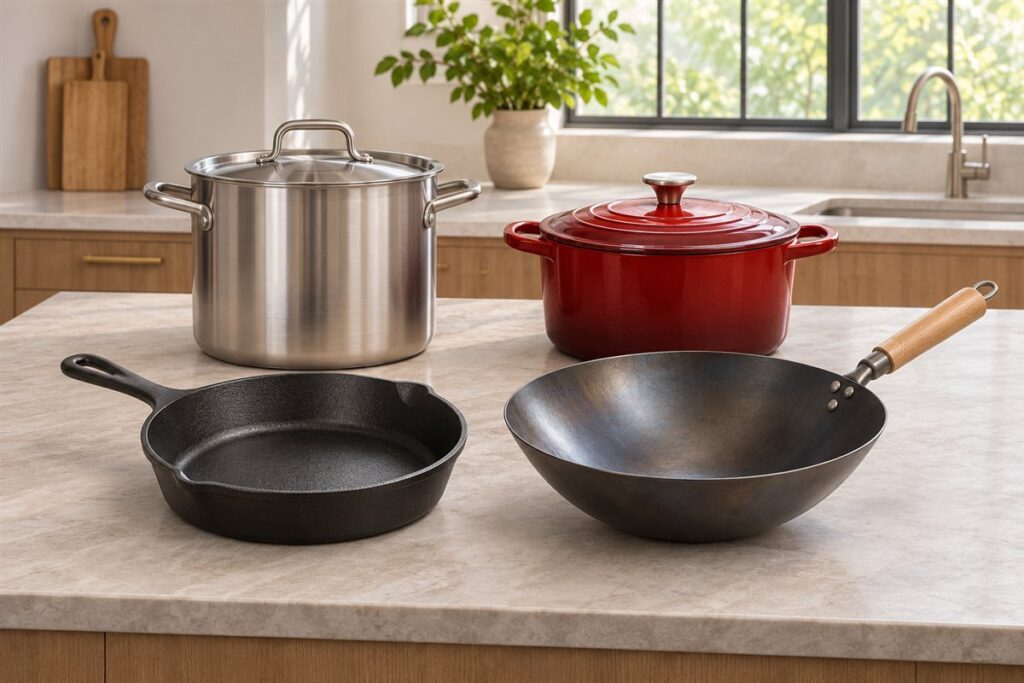
A 10 inch skillet is the most flexible size for many cooks, a 12 inch skillet suits families and large cuts of meat, and an 8 inch skillet is ideal for one or two eggs and small portions. Choosing the size comes down to how many people you feed and what you cook most.
What Each Size Does Well
| Size | Good For | Less Suited To |
|---|---|---|
| 8 inch | One or two eggs, toasting nuts, small sauces | Family meals |
| 10 inch | Everyday cooking for two to three people, chicken thighs, vegetables | Large batches |
| 12 inch | Family dinners, several chicken pieces, one-pan meals | Small burners, tiny kitchens |
How Skillet Sizes Are Measured
Most makers list the diameter across the top rim, not the flat cooking surface. A 12 inch skillet may have a cooking floor closer to 9 or 10 inches. Handle length is not included. Check the maker’s guide, because measuring methods differ.
To measure your own pan, lay a ruler across the widest point of the top edge, from inside rim to inside rim.
Match the Pan to the Job
- Browning: Food browns best when it has space. Crowding leads to steaming, so choose a size that fits the meal without overlap.
- Depth: Deeper sides hold sauces and prevent splatter, while sloped sides make flipping easier.
- Lids: A lid that fits turns a skillet into a covered pan for braising or steaming.
Check Your Stove and Storage
A pan much wider than the burner can develop cool edges and hot centers. A 12 inch skillet on a small burner may not heat evenly. Also think about the oven and cabinet, and the weight of the pan when it is full. A large cast iron skillet can be heavy to lift one-handed, so use a mitt and both hands when needed, and follow the maker’s manual and safety instructions.
Material changes how a size feels. A 12 inch cast iron skillet may weigh several pounds more than a 12 inch aluminum or stainless one, so think about lifting it full of food. Nonstick pans are light but usually need lower heat. If you want to bake or roast in the skillet, check oven limits for the handle. Many cooks like owning two sizes, such as an 8 inch for small jobs and a 12 inch for dinners, with a lid that fits at least one of them.
Matching Skillet Size to Your Household
How many people you feed is the first thing to weigh. A single cook or a pair often does fine with an 8 or 10 inch pan. A family tends to want the extra room of a 12 inch pan so dinner cooks in one go rather than in batches.
Cooking in batches is not a failure, but it adds time and lets the first batch cool. If you cook for guests often, a large pan saves effort. If you mostly cook small portions, a big pan can be awkward, because a small amount of food spreads thin and may burn at the edges. Think about your most common meal and pick the size that holds it without crowding.
- One person: a small pan for eggs and a medium pan for dinners.
- Couple: a medium pan, with a lid if possible.
- Family: a large pan, and a small one for sides and eggs.
Straight Sides, Sloped Sides and Depth
Skillets are not all shaped alike. Some have gently sloped sides, which make flipping and sliding food out easy. Others have taller, straighter sides, often sold as saute pans or chef’s pans, that contain splashes and liquids.
If you fry eggs, make crepes or flip pancakes, a pan with low, flared sides is easier to work. If you cook saucy dishes, braise chicken or stir-fry with a lot of ingredients, extra depth helps. Check the listing for the side height, because the same diameter can mean different volumes. Remember that a deep pan holds more food but has a smaller cooking floor than its rim measurement suggests.
Handles, Helper Grips and Weight
A skillet is used with one hand much of the time, so handle comfort is important. Try to feel the balance, either in a store or by reading what other buyers say about handle design in the listing. A handle that is too short or too thin can be tiring to hold, while one that is too long can poke out over the stove.
Larger skillets often have a small helper handle opposite the main one. That second grip makes lifting a full pan safer, especially when carrying it to the oven or sink. Heavier pans can be steady on the burner and hold heat well, but they are harder to move. Lighter pans are easy to maneuver but may heat unevenly if the base is thin. Choose based on your strength and the tasks you do most.
Which Size Suits Which Cooking Method
Different techniques benefit from different dimensions. Searing needs room so that each piece sits on hot metal without touching its neighbors. Stir-frying benefits from space to toss food. Shallow frying and braising need depth to hold oil or liquid safely. Making a frittata or a skillet cake calls for a pan that is oven capable, so check the handle rating.
- Searing steaks or chops: a pan large enough to fit them without overlap.
- Eggs and omelets: a smaller pan with low sides.
- Sauteing vegetables: a medium or large pan so they brown rather than steam.
- Pan sauces: a pan with a good surface area for reducing.
When in doubt, choose the larger size within your burner and storage limits, because it is easier to cook a small amount in a big pan than a big amount in a small one.
Care, Storage and When to Replace
Skillets last longer with good habits. Preheat gradually, avoid sudden temperature changes and clean according to the maker’s guide. Cast iron generally needs drying and seasoning, while nonstick needs soft utensils and gentle cleaning. Stainless steel tolerates more but can discolor with high heat.
Replace a pan if the base is warped so it spins on the burner, if a coating is peeling or deeply scratched, or if the handle is loose. Loose handles can be dangerous with a heavy pan full of hot food. For storage, hang the pan or stack with a soft liner between pieces to protect surfaces.
Oven Use, Lids and Extras
Many cooks use a skillet for more than the stovetop. Frittatas, cornbread, pan pizza, roasted chicken and fruit crisps all work in an oven-capable pan. The size you choose affects the result, so match the pan to the recipe’s stated dimensions or volume.
Before putting a skillet in the oven, check the maker’s limit for the handle, any grip sleeve and the lid. Many makers list a single maximum, and the lowest applies. Cast iron and some stainless pans have high limits, while coated pans and plastic-handled ones may be lower.
- Use a mitt or towel on the handle, and remember it stays hot long after cooking.
- Choose a lid that sits snugly if you want to braise or steam.
- Check that the pan fits your oven with room for air to circulate.
Accessories such as helper handles, splatter screens and pan scrapers can make a large skillet easier to use.
FAQ
If I could own only one, which size?
A 10 or 12 inch skillet with a lid covers the widest range for most households.
Is a deeper skillet better?
Deeper pans help with sauces and shallow frying, while shallow pans suit eggs and searing.
Should my skillet match my burner size?
Ideally the base should be close to the burner size. A pan far wider than the burner may heat unevenly, and a much smaller pan wastes heat.
Can I use a 12 inch skillet on an induction cooktop?
Only if the pan is made of a compatible material. Check the listing, and note that a large pan may heat unevenly on a small zone.
What is the difference between a skillet and a frying pan?
The terms are largely interchangeable. Some people use skillet for pans with sloped sides and a deeper pan for saute work, but makers vary, so read the description.
Is a lid necessary?
Not required, but a lid helps with braising, steaming and keeping food warm. Make sure the lid fits the pan rim you buy.
How do I stop food from sticking to a stainless skillet?
Preheat the pan, add oil, and let food release naturally before turning it. Do not overcrowd the pan.
Is a heavy skillet better?
Heavier pans hold heat steadily, but they can be tiring to lift. Choose a weight you can manage safely.
Do nonstick skillets last as long as other types?
Coatings wear with use, so they often need replacing sooner than uncoated pans. Gentle care can extend their life.
The Short Version
Choose 8 inch for small tasks, 10 inch for everyday cooking and 12 inch for families. Check the burner size and the way the maker measures the pan before you choose.