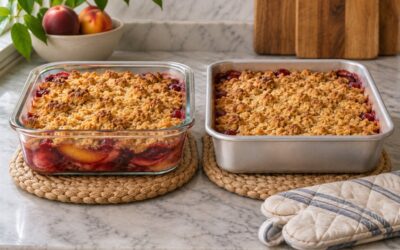
Glass and ceramic dishes both hold heat well and go from oven to table, but they are not the same material. Glass lets you see the browning on the bottom of a bake, while ceramic and stoneware tend to look more polished and are often thicker and heavier.
What Sets Them Apart
Glass bakeware is typically transparent, smooth and nonporous. You can check the sides and base of a casserole or pie without lifting it out, and the surface does not hold onto odors or stains easily.
Ceramic bakeware, including stoneware and porcelain, is fired clay with a glaze. It usually has a thicker wall, comes in more colors and shapes, and keeps food warm on the table for longer. Glaze quality and thickness vary from one line to another.
Quick Comparison
| Factor | Glass | Ceramic |
|---|---|---|
| Visibility | See-through | Opaque |
| Weight | Medium | Often heavier |
| Heat retention | Good | Very good |
| Looks | Plain, clear | Colors and patterns |
| Chipping | Can chip or break if dropped | Edges can chip |
| Sudden temperature change | Follow the maker’s limits | Follow the maker’s limits |
Using Them Well
- Do not move a dish between extremes, such as from the freezer straight into a hot oven, unless the maker says it is designed for that.
- Place hot dishes on a dry trivet or cloth instead of a wet or cold surface.
- Keep liquid in the dish when roasting or braising if the instructions call for it.
- Skip direct burner use and broiler use unless the instructions allow it.
- Expect browning to be gentle; many cooks lower the oven temperature slightly when swapping from metal, but check the recipe and the maker’s guide.
Choosing for Your Kitchen
Glass suits everyday casseroles, brownies and lasagna when you like to monitor browning and want something simple that cleans up easily. Ceramic suits gratins, baked pasta and dishes you plan to serve at the table, where its looks and heat holding shine.
If storage space is tight, glass dishes with lids can double as storage for leftovers. If you carry dishes to gatherings, ceramic with handles is easier to grip but may be heavy.
Cleaning is straightforward for both. Soak baked-on food in warm soapy water instead of scraping hard with metal tools, and use a non-scratch sponge. Many dishes are dishwasher friendly, though stoneware with a matte finish can develop stains if left dirty, so wash it promptly. Store dishes with a cloth or paper towel between stacked pieces to protect rims from chips.
Thermal Shock and Safe Handling in Practice
Both glass and ceramic can crack or even shatter if the temperature changes too fast or unevenly. The usual culprits are a hot dish set on a wet counter, cold liquid poured into a hot dish, or a dish taken straight from the freezer to a hot oven. Different products have different tolerances, so the manual is your guide.
- Let a hot dish rest on a dry towel, wooden board or trivet, never on a cold or damp surface.
- Add liquid to a dish before it goes into the oven rather than pouring it into a hot one.
- Allow frozen food to thaw or sit out per the maker’s guidance before baking.
- Avoid using the dish on a stovetop burner unless it is specifically designed for it.
- Do not put an empty dish in a preheated oven unless the instructions permit.
Inspect dishes before use. A chipped rim, deep scratch or hairline crack weakens the piece, and it should not be heated. Glass that has been through many cycles of heat and impact can become more fragile, so retire any piece you doubt.
Browning, Bake Times and Recipe Adjustments
Glass and ceramic heat more slowly than metal but hold heat longer, which changes results. Cakes and brownies may brown more around the edges and bake longer in the center. Bread or pastry can have paler bottoms. Casseroles usually benefit, because the gentle, steady heat suits slow cooking.
When a recipe was written for a metal pan, adjust cautiously. Many cooks reduce oven temperature slightly or watch the bake time more closely, but the right adjustment depends on the recipe and the dish thickness, so check the recipe notes and the maker’s guidance. Use the visual cue of golden edges and a set center, not just a timer.
Because glass is transparent, you can watch the base browning. With ceramic you rely on the edges and top. For pies, many bakers like glass precisely because they can see whether the bottom crust has colored. For layered dishes like lasagna, ceramic’s heat retention keeps the dish hot at the table.
Choosing Sizes and Shapes for Real Recipes
Dimensions matter. A recipe written for a particular dish size will cook differently in one that is deeper or larger. Check the listing for length, width and depth, or capacity, and compare them to your favorite recipes.
- Rectangular dishes suit lasagna, enchiladas, sheet-style desserts and roasted vegetables.
- Square dishes suit brownies, cornbread and small casseroles.
- Round and pie dishes suit pies, quiche and tarts; fluted edges help hold crust.
- Deep oval baking dishes suit gratins and roasting small cuts.
- Ramekins and small dishes suit individual desserts and baked eggs.
Think about handles. Wide, molded handles are easier to grip with mitts. Also consider lids; fitted lids turn a dish into a storage container, though plastic lids should not go in the oven unless stated. Nesting sets save cabinet space, while a few well-chosen pieces often cover most of what a home cook bakes.
Durability, Chips and Everyday Wear
Day-to-day handling does more damage than heat. Dishes knock against each other in cabinets, slip in soapy sinks and get dropped. Glass tends to break in a sudden way, while ceramic often chips at the edges before failing. Glazed ceramic can craze, developing tiny cracks in the glaze that may hold stains and bacteria if the glaze breaks down.
To extend life, store dishes with a cloth or paper between stacked pieces, avoid stacking heavy items on top, and handle them with two hands when full. Use plastic or silicone servers rather than metal knives, which can scratch the surface and weaken glass over time.
Look at wall thickness and rim shape when buying. Thicker walls resist impact but are heavier; rounded rims chip less than sharp ones. Check whether the glaze is described as suitable for food contact and for the oven, and be cautious with decorative pieces that are not designed for baking.
Matching the Dish to Your Cooking Habits
If you bake casseroles, roast vegetables and reheat leftovers in the same dish, a clear, easy-to-clean glass dish with a lid is a practical workhorse. If you entertain and serve straight from the oven, a ceramic dish in a pleasing color earns its space on the table. If you like to prepare dishes in advance and refrigerate before baking, check that the dish can handle the temperature transition from the refrigerator in the maker’s guide.
Consider the kitchen you have. A small cabinet favors a nesting set of simple shapes. A household that cooks for many people needs a large rectangular dish. A cook who mostly makes single portions may prefer ramekins and small dishes.
Finally, think about washing. Some ceramics are dishwasher safe, but matte finishes can mark more easily and some decorative glazes fade. Glass tends to wash cleanly but may cloud if hard water or strong detergents are used. Reading the care notes before you buy is a quick way to avoid disappointment.
FAQ
Which one browns better?
Neither browns as aggressively as dark metal pans. Both heat gently, so allow a little extra time if the edges look pale.
Can I cut food in the dish?
Many people avoid sharp knives on glazed ceramic and glass because they can scratch the surface. Use a spatula or a plastic server instead.
Can glass bakeware go from the fridge to the oven?
Only if the maker says so. Sudden temperature changes can crack glass, so many instructions advise letting the dish warm slightly or placing it in a cold oven.
Do I need to lower the oven temperature with glass?
Some recipes suggest a small reduction because glass holds heat well. Follow your recipe and the maker's guidance, and check doneness by sight.
Why did my ceramic dish develop tiny cracks in the glaze?
That is called crazing and can come from temperature changes or age. If the glaze is flaking or the dish smells, consider replacing it.
Is stoneware the same as ceramic?
Stoneware is a type of ceramic fired at high temperatures. Its thickness and glaze vary, so check the product listing for oven limits.
Can I use a glass dish under the broiler?
Often not, because intense direct heat can damage glass. Check the manual before using any dish under a broiler.
How do I clean baked-on food without scratching?
Soak the dish in warm soapy water and use a non-scratch sponge. Avoid steel wool and sharp metal tools.
Which is better for gifting or serving?
Ceramic often has more colors and styles, so it suits serving and gifting. Glass is plainer but practical for everyday use.
The Short Version
Choose glass when you want to watch the bake and keep things simple. Choose ceramic when serving looks and long-lasting warmth matter. Whichever you buy, follow the maker’s temperature guidance.