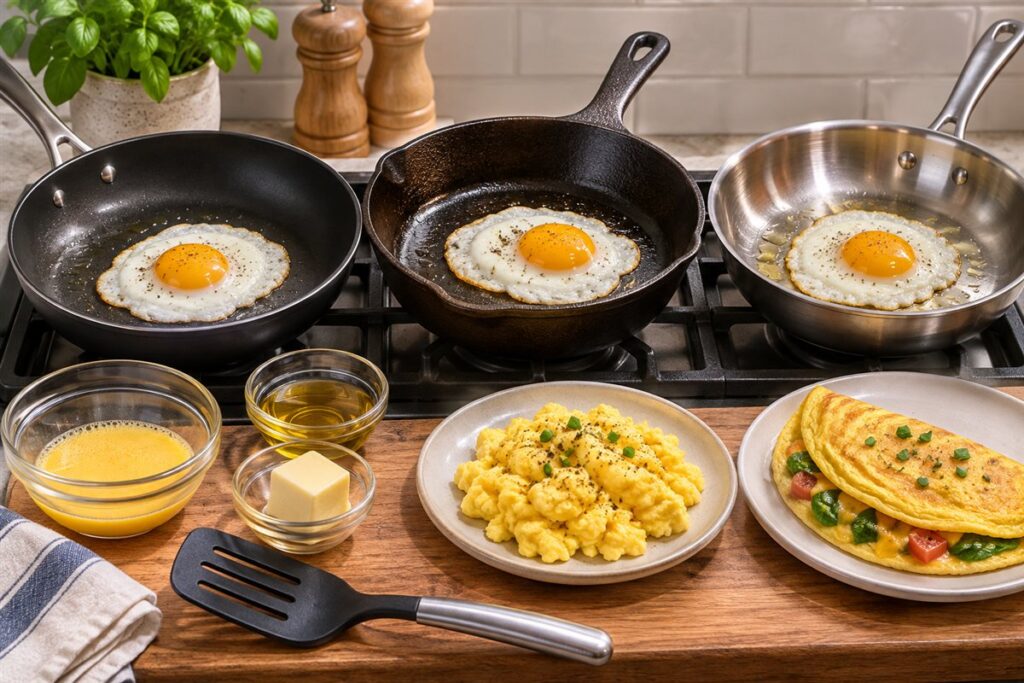
Eggs stick when the pan is too cold, too hot or too dry, or when you move them too soon. The fix is a clean pan, a thin layer of fat and moderate heat. These steps work in a nonstick skillet, a well-seasoned pan or a stainless steel skillet.
Why Eggs Stick
Egg proteins bond to metal as they set. A thin film of fat and a pan that is warm but not smoking separates the egg from the surface. Rough spots, leftover residue and a pan that is cold when the egg goes in also make sticking more likely.
- A cold pan lets egg settle into tiny scratches before it sets.
- Very high heat tightens the egg fast and glues it down.
- Too little fat leaves bare metal in contact with the egg.
Step by Step for Fried Eggs
- Wipe the pan clean and dry. Residue from earlier meals can cause sticking.
- Warm the pan over low to medium heat for a minute or two.
- Add a small amount of butter or oil and swirl it across the base.
- Crack the egg into a small bowl first, then slide it gently into the pan.
- Leave it alone until the edges look set, then slide a thin turner underneath.
- Cook until the white is fully set and the yolk is the way you like it.
For doneness, follow your local food-safety guidance on how thoroughly eggs should be cooked, especially when serving to others.
Scrambled and Softly Cooked Eggs
For scrambled eggs, use lower heat than you might expect. Pour in beaten eggs once the fat is warm, wait a few seconds, then push the eggs gently across the pan with a flexible spatula. Stop while they still look slightly glossy, since the pan keeps cooking them off the heat.
Poaching and boiling avoid the pan sticking issue altogether. Boiled eggs go into simmering or boiling water for a number of minutes that depends on size and how firm you want them. Check a trusted recipe for timing.
Pan Choices Compared
| Pan type | Tip for eggs |
|---|---|
| Nonstick | Use medium or lower heat and a soft utensil |
| Seasoned cast iron or carbon steel | Warm well, use a little more fat |
| Stainless steel | Heat first, add fat, then let the egg release by itself |
Choosing the Right Pan Size and Shape for Eggs
The pan you use has a bigger effect on eggs than most people expect. A pan that is too large spreads a single egg thin, so the white sets before the yolk is ready and the edges can crisp or stick. A pan that is too small crowds the eggs and makes them hard to turn. For one or two eggs, a small skillet with a base of roughly the size of a saucer is a comfortable fit, though exact dimensions vary by maker. For a family breakfast, a larger pan lets you cook several eggs at once, but you may need to manage hot spots.
Wall shape matters. Sloped, flared sides make it easier to slide a spatula under an egg and to flip or slide the egg out onto a plate. Straight, tall sides suit scrambled eggs and omelets less well, because the spatula has to reach into a corner. A flat base ensures contact with the burner, which helps the pan heat evenly. If your pan rocks or has a bowed center, the oil collects to one side and eggs may stick in the dry areas.
- Small skillet: single servings, fried eggs, quick scrambles.
- Medium skillet: omelets and several eggs at once.
- Sloped sides: easier sliding and flipping.
- Heavy base: steadier heat and less scorching.
Weight is a trade-off. A heavy pan holds heat steadily, while a light one responds fast to temperature changes and is easier to flip. Choose what you can handle comfortably with one hand, because a lot of egg cooking involves tilting, swirling and sliding.
Butter, Oil or Spray: Choosing the Fat
The fat you use affects both flavor and how well eggs release. Butter adds taste and browns attractively, but it contains milk solids that can scorch at high heat, so it works best on low to medium settings. Clarified butter, which has had the milk solids removed, tolerates higher heat. Neutral oils, such as those marketed for general cooking, handle more heat and give a cleaner flavor. Olive oil adds its own taste and suits many styles of cooking. A combination, such as a little oil with a bit of butter, gives flavor and a higher tolerance for heat.
The amount counts too. Too little fat leaves dry patches, while too much makes eggs greasy and can cause spattering. A thin film that coats the base is enough for most pans. Swirl it so it reaches the sides, and wait until it flows easily and the butter foam subsides before adding eggs. In nonstick pans, use less, and follow the maker’s advice about aerosol sprays, since some propellants can leave a sticky buildup on coatings over time.
- Use butter for flavor and gentle heat.
- Use oil for higher heat or when cooking several batches.
- Wipe away burnt fat between batches.
- Do not use cooking spray on a hot pan unless the maker allows it.
Whatever you use, fresh fat for each batch gives the best release.
Keeping Your Pan Slick Over Time
Even a good pan can start sticking if it is not cared for. For seasoned cast iron and carbon steel, the surface depends on baked-on layers of oil, called seasoning. Maintain it by drying the pan after washing, rubbing on a very thin layer of oil and avoiding long soaks. If food begins to stick more often, you may need to re-season it by following the maker’s instructions. Acidic ingredients and harsh scouring can wear the seasoning thin.
For stainless steel, residue is often the culprit. A thin film of baked-on oil can build up and make eggs grab. Clean the pan thoroughly, using a non-scratch pad and a cleaner made for stainless if needed, and rinse well. For nonstick pans, avoid abrasive pads, metal tools and high heat, which shorten the life of the coating. Cooking spray residue and invisible grease film can also make food stick, and a gentle wash with warm soapy water and a soft sponge usually clears it.
- Store pans so the cooking surface is not scratched by other cookware.
- Do not put a hot pan under cold water.
- Keep one pan for eggs if you want to protect its surface.
- Replace a nonstick pan that flakes or peels.
If eggs stick no matter what you do, the pan itself may be at the end of its useful life, particularly if the coating is scratched or the metal is warped.
Omelets, Flipping and Gentle Turning
Technique can make a difference once the pan and fat are right. For an omelet, beat the eggs well, pour them into a warm, lightly buttered pan and let the edges set. As they set, use a flexible spatula to push the cooked egg toward the center while tilting the pan so uncooked egg runs underneath. When the top is still slightly glossy, add fillings and fold the omelet, then slide it onto a plate. Keep the heat low to medium to avoid browning and tough texture.
For over-easy or over-medium eggs, wait until the white is set and the edges are lifting before you flip. A thin, flexible turner slides under more easily than a thick one. Turn the egg quickly and with a gentle motion, close to the pan surface, so the yolk does not break. Some cooks tilt the pan and slide the egg to the edge to get the turner underneath. If the egg resists, give it a few more seconds, since it will release on its own as it sets.
- Use a spatula wide enough to support the whole egg.
- Do not poke or press the egg while it cooks.
- Rest the pan briefly off the heat if edges brown too fast.
- Keep a plate close by so you can transfer the egg quickly.
With practice, you will learn to read the signs, such as a shimmer on the fat, a gentle sizzle and the way the egg moves in the pan.
Egg Freshness, Temperature and Cooking for a Crowd
The eggs themselves can change how they behave in the pan. Very fresh eggs have thicker whites that stay close to the yolk, which suits fried and poached eggs. Older eggs have thinner whites that spread out more. Cold eggs straight from the refrigerator can lower the pan temperature and cook less evenly, so some cooks let them sit briefly at room temperature, within the limits of food-safety guidance. Follow your local advice on storing and handling eggs, and discard any with cracks or an unusual smell.
When cooking for a group, think about timing and equipment. Cook in batches, wiping the pan between rounds, or use two pans at once. A large griddle can handle many eggs, but check that the surface is clean and lightly oiled. Keep cooked eggs warm in a low oven on a plate, covered loosely, but do not hold them for too long, as texture suffers. For scrambled eggs in quantity, use a wide pan and gentle stirring, and take them off the heat while still slightly soft.
- Break eggs into a bowl first to check for shell fragments.
- Wash your hands after handling raw eggs.
- Cook eggs until they meet the doneness your local food-safety authority advises, especially for vulnerable guests.
- Clean the pan promptly, since egg residue hardens as it dries.
For cleanup, soak the pan in warm water for a short time, then wipe it with a soft sponge. Avoid harsh scrubbing on nonstick and seasoned pans.
FAQ
Why does the egg stick even with oil?
The pan may be too hot or too cold, or have residue on it. Wipe it, warm it evenly, and wait for the egg to release before you flip.
Do I need butter or oil in a nonstick pan?
Often a small amount improves flavor and release. Follow the maker’s guide for care and heat limits.
Which pan is best for eggs?
A nonstick skillet is the easiest for beginners, while a well-seasoned or properly heated stainless pan also works. The best choice depends on your cooking style and how much care you want to give.
Why do my scrambled eggs stick and brown?
The heat is probably too high, or the pan has residue. Use low to medium heat, enough fat, and stir gently with a flexible spatula.
Can I cook eggs without any fat?
Some nonstick pans allow it, but results vary and the maker may recommend a little fat. In other pans, fat is needed to prevent sticking.
How do I know when the pan is ready?
For butter, wait until the foam settles. For oil, it should flow easily and shimmer slightly. In a stainless pan, a drop of water should dance before evaporating.
Why does the egg white spread so much?
Older eggs and a pan that is too large both make whites thin out. Use fresher eggs or a smaller pan, and crack the egg close to the surface.
Is it okay to use metal utensils on an egg pan?
They are fine on stainless steel and often on seasoned pans, but they can damage a nonstick coating. Check the maker's guide.
How can I clean a pan with dried egg?
Soak it in warm water to soften the egg, then wipe it with a soft sponge. For stuck patches, simmer a little water in the pan before cleaning.
The Short Version
Use a clean pan, moderate heat and a thin layer of fat, then give the egg time to set before you move it. Cook eggs fully according to food-safety guidance. Match your technique to the pan you own.