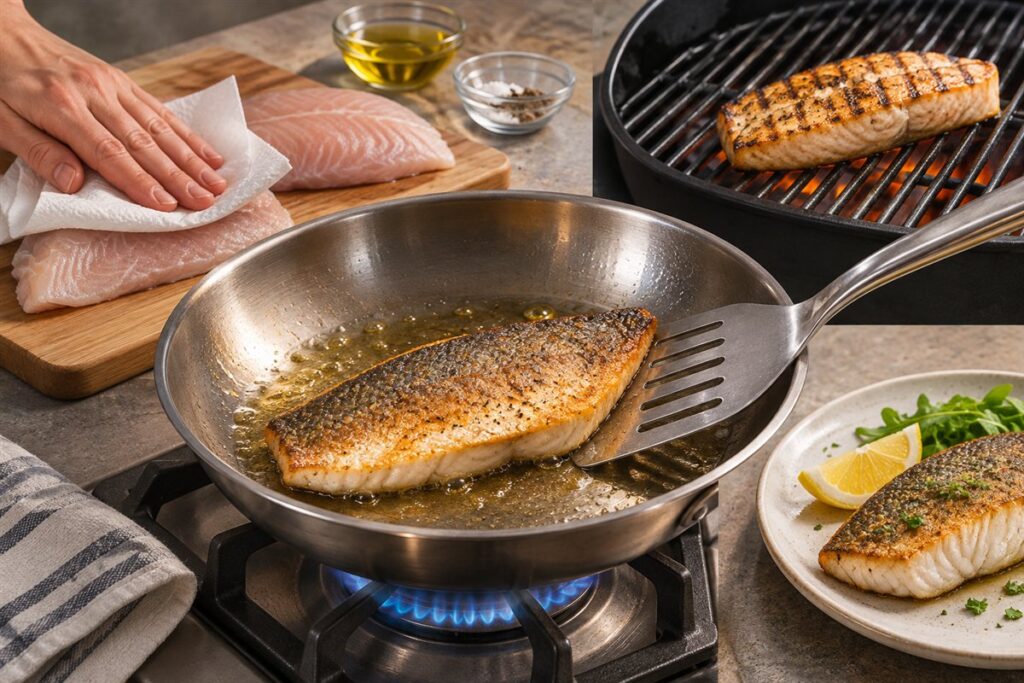
Fish sticks when the surface is wet, the pan is not hot enough, or you try to turn it before it releases. Pat the fillet dry, heat the pan well, add oil and wait. Once the underside is properly set, the fish usually lifts away on its own.
Prepare the Fish First
Moisture is the enemy of a clean release. Take the fish out of the fridge a few minutes before cooking, blot both sides with paper towels, and season just before it goes into the pan. If you leave salt on the surface for a long time, water draws out and the fillet gets wet again.
- Choose fillets of even thickness so they cook at the same pace.
- Skin-on fillets often hold together better than skinless ones.
- Keep the fish cold until you are ready to cook, and follow food-safety guidance on storage.
Pan-Cooking Steps
- Set a skillet over medium to medium-high heat and let it warm fully.
- Add enough oil to coat the pan base in a thin, shimmering layer.
- Lay the fillet in away from you, skin side down if it has skin.
- Press lightly with a turner for a few seconds to keep the fillet flat.
- Leave it undisturbed. When the edges look opaque and the fish moves freely, turn it once.
- Finish the second side briefly, then remove it to a plate.
Times vary with thickness and heat, so use a recipe as a guide. For doneness, follow local food-safety guidance, which often mentions a temperature measured with a thermometer.
Grilling Fish
On a grill, clean the grate well, heat it fully, and brush it or the fish lightly with oil. Use a wide, thin turner and turn the fish only once. Thicker steaks handle grilling better than thin, delicate fillets, which can break apart.
Surface Choices
| Surface | Fish tip |
|---|---|
| Nonstick skillet | Moderate heat; avoid metal tools |
| Stainless steel | Hot pan, enough oil, wait for release |
| Cast iron | Preheat well, dry fish thoroughly |
| Grill grate | Clean, hot and lightly oiled |
Serving and Cleanup
Rest the fish for a minute or two on a warm plate so the juices settle. While the pan is still warm, but not hot, add a little water and loosen any stuck bits with a wooden spoon. Wash with warm soapy water and follow the pan maker’s care guide. Fish smells can linger on tools, so wash turners and boards promptly and keep raw and cooked fish on separate plates.
FAQ
How do I know the fish is ready to turn?
It should release easily when nudged with a thin turner. If it grips the pan, give it another short while.
Should I cover the pan?
Usually not for a crisp skin, since steam softens it. Thick pieces can be finished briefly with a lid or in the oven.
The Short Version
Dry the fish, heat the pan, oil it well and resist the urge to move the fillet. Turn once, and judge doneness with a thermometer and food-safety guidance. Adjust timing for thickness.