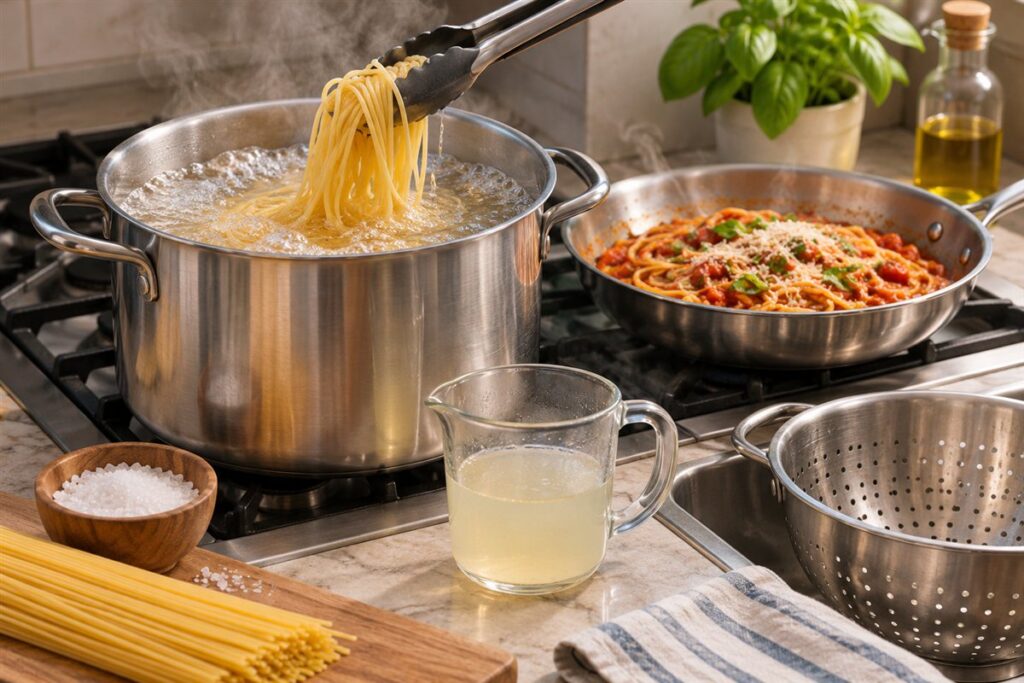
Cook pasta in a large pot with plenty of water, add salt once it boils, stir early, and taste it a minute or two before the package time ends. Then drain, keeping a cup of the cooking water for your sauce. The pot size matters as much as the timer.
Choosing the Pot
A tall stockpot or large saucepan gives pasta room to move, which prevents sticking. Crowded pasta clumps, and a small pot cools quickly when the pasta goes in. Choose a pot that holds the water with space to spare, so it will not boil over easily.
- Use a lid to bring water to a boil faster, then remove it for cooking.
- Keep a long spoon or tongs close by for stirring.
- Set a colander in the sink before the pasta is done.
The Method
- Fill the pot most of the way with water and bring it to a full, rolling boil over high heat.
- Add a generous pinch of salt. Many cooks aim for water that tastes pleasantly salty.
- Add the pasta. Push long shapes under the water as they soften.
- Stir in the first minute or two, when pieces are most likely to stick together.
- Keep the water at a lively boil, and stir now and then.
- Taste a piece a minute or two before the package time. You want it tender with a slight bite in the center.
- Scoop out some cooking water, then drain the pasta.
- Toss with sauce right away, adding a splash of the cooking water if needed.
Troubleshooting
| Problem | Likely cause | Fix |
|---|---|---|
| Sticky noodles | Too little water or no stirring | Bigger pot, stir early |
| Mushy pasta | Cooked too long | Taste sooner |
| Bland pasta | Unsalted water | Salt the boiling water |
| Sauce slides off | Rinsed or too wet | Do not rinse; use pasta water |
Small Details That Help
Do not add oil to the water. It does little for sticking and can keep sauce from clinging. Do not rinse pasta that will be served hot, because the surface coating helps sauce hold on. If you plan to bake the pasta or serve it cold, cook it a little firmer or rinse as the recipe says.
Different shapes cook at different speeds. Thin strands finish quickly, while thick tubes and filled pasta take longer, so rely on the package range and your own taste. Stay near the pot during the final minutes, because pasta can pass from perfect to soft quickly. Lift the pot carefully when draining, using both hands and keeping your face away from the steam.
Pot Materials and Shapes for Boiling Pasta
Almost any large pot can boil pasta, but some designs make the job easier. A tall stockpot holds a lot of water and gives long strands room to submerge. A wide, shallow pot suits short shapes and lets you see the pasta, though it may boil over more easily when filled high. A pot with a heavy base brings water to a boil steadily and recovers quickly when pasta goes in, while a very thin pot can heat faster but cool abruptly when the pasta is added.
Material matters less for boiling than for browning, but it does affect convenience. Stainless steel resists staining and is easy to clean. Aluminum heats quickly and is light, though some uncoated versions may darken with salty water. Enameled steel and enameled iron work, although salty water left standing can mark some finishes, so rinse the pot after cooking. Check the maker’s guide for any advice about salt and cleaning.
- Choose a pot with two sturdy handles so you can lift it when full.
- Look for a lid that fits, to bring water to a boil faster.
- Consider a pot with a built-in strainer lid for easy draining.
- Check that the base sits flat on your stove.
An insert basket can make draining simpler and helps when cooking several batches of pasta in the same water. Be sure the basket fits the pot, and lift it carefully, since steam and hot water can cause burns.
Matching Pasta Shapes to Sauces
Pasta shape affects how sauce clings and how the dish eats, so match shapes to the sauce you plan to make. Long strands, such as spaghetti and linguine, suit smooth, oil-based or light tomato sauces that coat each strand. Wide ribbons, such as fettuccine and pappardelle, carry richer, creamier or meaty sauces. Tubes and shapes with ridges, such as penne and rigatoni, trap chunky sauces in their hollows. Small shapes suit soups and salads, because they fit on a spoon or fork.
Shells and twists hold sauce in their curves, and they work well with ingredients such as peas or small pieces of vegetables. Filled pasta, such as ravioli, usually pairs with lighter sauces that do not overwhelm the filling. Fresh pasta is delicate and cooks faster than dried, and it often goes with simple sauces. Dried pasta is sturdier and keeps well in the pantry.
- Thin sauces: long, thin strands.
- Thick or chunky sauces: tubes, ridged shapes and shells.
- Soups: small shapes that cook quickly.
- Baked dishes: sturdy tubes or shells that hold their shape.
Pasta made with different flours, such as whole wheat or legume-based, may cook differently and absorb more water. Check the package for timing, and taste early. If your pot is on the smaller side, cook shapes that need less room to move, such as short pasta, and avoid long, brittle strands that need to be broken to fit.
Finishing Pasta in the Sauce
One of the best ways to improve a pasta dish is to finish the pasta in the sauce rather than pouring sauce on top. Drain the pasta a little before it is fully done, leaving it slightly firmer than you would eat it. Transfer it to a pan of warm sauce, add a splash of the starchy cooking water and cook it together for a minute or two, stirring or tossing. The pasta absorbs some of the sauce, and the starch in the water helps the sauce become glossy and cling to each piece.
Add the water gradually. Too much dilutes the sauce, while too little leaves it stiff. A ladle or a heatproof cup is enough to scoop some out before draining. If the sauce becomes too thick, add more water, and if too thin, cook it a little longer. Taste and adjust seasoning at this stage, because the cooking water is salty and the sauce will concentrate.
- Have the sauce ready and warm before the pasta finishes.
- Use a pan wide enough to toss pasta without spilling.
- Add cheese or fresh herbs off the heat for best flavor.
- Serve immediately in warmed bowls, since pasta cools quickly.
This technique takes only a minute or two longer than just draining and saucing, but it often makes a noticeable difference to the texture and taste of the finished dish.
Preventing Boil-Overs and Handling Hot Water Safely
Pasta water foams as starch releases, and it can rush over the rim in seconds. To reduce boil-overs, use a larger pot than you think you need, lower the heat slightly after adding the pasta, and keep the lid off or partly ajar once it is boiling. Stir occasionally to break up the foam. A wooden spoon laid across the top of the pot is a trick some cooks use, though results vary and it is not a guarantee.
Hot water is a real hazard. Keep the pot handles turned toward the center of the stove, not sticking out, and keep children and pets away. Make sure the pot is stable on the burner before you add pasta, and use caution when you lift the lid, since steam can burn. When draining, place the colander in the sink first, tilt the pot away from you and pour slowly. For heavy pots, use both hands and dry oven mitts. If the pot is too heavy to lift safely, consider a strainer basket or a scoop to lift the pasta out.
- Do not walk across the kitchen with a full pot of boiling water.
- Pour water away from you and toward the back of the sink.
- Keep a heat-safe surface ready for the hot pot.
- Wipe up spills on the floor right away.
Boil-overs also leave starchy residue on the stove, so wipe it off once the surface has cooled, following the stove maker’s cleaning advice.
Batch Cooking, Storing and Reheating Pasta
Pasta can be cooked ahead for meals later in the week. If you plan to store it, cook it slightly firmer than normal, since it softens when reheated. Drain it and toss with a small amount of oil or sauce to keep it from clumping, then let it cool quickly. Spread it on a tray or divide it into shallow containers and refrigerate promptly, following your local food-safety guidance on how long cooked pasta can be kept.
To reheat, add a splash of water or sauce and warm it gently on the stove, stirring until hot throughout. Microwaving works too, with a loose cover and a little added liquid. Baked pasta dishes can be assembled ahead and cooked when needed. For salads, rinse pasta after cooking and drain well, then dress it once it has cooled.
- Label containers with the date.
- Keep sauce and pasta separate if you want the best texture.
- Freeze portions of cooked pasta in flat bags if your guidance allows it.
- Do not leave cooked pasta at room temperature for long periods.
When cooking for a crowd, you can boil pasta in several batches using the same water, or in two pots at once. Keep finished pasta warm with a splash of sauce or cooking water in a covered dish, and serve soon after.
FAQ
How much water do I need?
Enough for the pasta to move freely. Check the package for a suggested amount, then adjust for your pot.
Can I cook pasta in less water?
Yes, with more stirring and a bit of trial. The result may be a little stickier.
Should I use a lid when cooking pasta?
Use a lid to bring the water to a boil faster, then remove it or leave it ajar while the pasta cooks. A lid on a boiling pot makes boil-overs more likely.
Do I need to break long pasta to fit the pot?
Not necessarily. Place the ends in the water and push the strands under as they soften. If the pot is too small, a taller or wider pot is a better option.
Why does my pasta clump together?
The pot may be too small, the water not boiling when the pasta goes in, or you may not have stirred early. Use more water and stir during the first minutes.
Is fresh pasta cooked the same way as dried?
The method is similar, but fresh pasta cooks much faster. Check the package or recipe and taste early.
How can I tell when pasta is al dente?
Taste a piece. It should be tender but still slightly firm in the center. Cut a piece in half to see whether a pale core remains.
Can I reuse pasta water?
You can use a little to adjust a sauce, and some cooks use cooled pasta water to water plants. It is salty, so use it with care.
Why is my pasta sticky after draining?
Starch on the surface can cause clumping if the pasta sits. Toss it with sauce or a little oil right away, or return it to the pot with a splash of cooking water.
The Short Version
Use a big pot, a rolling boil, salted water and early stirring. Taste before the timer ends, save a cup of cooking water and sauce right away.