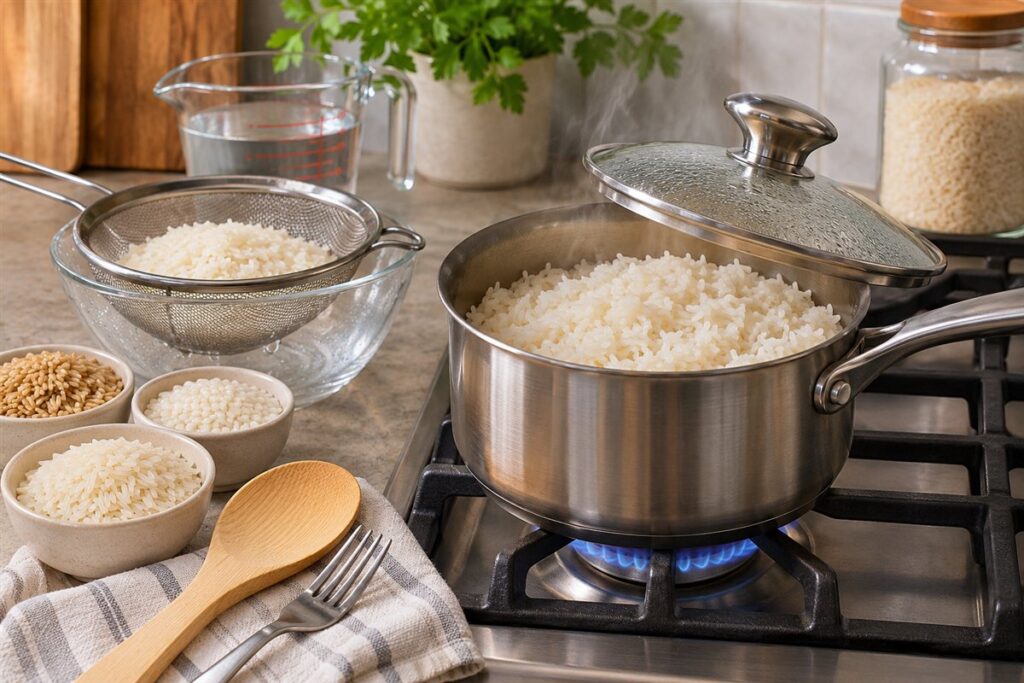
To cook rice on the stove, rinse it, add water, bring it to a boil, then cover and cook gently until the water is absorbed. A short rest with the lid on finishes the job. The ratio and time depend on the kind of rice, so check the package.
What You Need
- A saucepan with a tight-fitting lid and a heavy base.
- A fine mesh strainer for rinsing.
- A fork or rice paddle for fluffing.
- A measuring cup, so your ratio stays the same every time.
A heavy base helps because thin pots can scorch the bottom layer of grains.
Basic Method
- Measure the rice and rinse it in a strainer until the water runs mostly clear. This removes loose surface coating that can make grains clump.
- Combine rice and water in the pot, using the ratio on the package. Many long-grain white rice packages suggest a bit less than two parts water to one part rice, but check the maker’s guide.
- Bring to a boil over medium-high heat without a lid.
- When it boils, turn the heat to low and cover tightly.
- Cook for the time listed on the package. Resist lifting the lid, since steam does the work.
- Remove the pot from heat and let it rest, covered, for about ten minutes.
- Fluff gently with a fork to release steam.
Rice Types and Timing
| Type | General notes |
|---|---|
| Long-grain white | Fairly short cooking time, separate grains |
| Short-grain white | Softer and stickier, good for rolling and bowls |
| Brown rice | Needs more water and a longer cooking time |
| Basmati and jasmine | Light, fragrant, often benefit from a rinse |
Times and water amounts differ by brand, so treat the package as your main guide.
Fixing Common Problems
- Gummy rice: too much water or not enough rinsing. Use less water next time.
- Crunchy centers: not enough water or too short a time. Add a splash, cover and steam a little longer.
- Burnt bottom: heat was too high or the pot was thin. Lower the flame and use a heavier pot.
Flavor Ideas
Plain rice takes on flavor easily. Cook it in stock instead of water, add a pinch of salt, or stir in a spoonful of butter or oil with the water. A bay leaf, a strip of citrus peel or a few whole spices can go in the pot and come out before serving. Finish with chopped herbs or toasted seeds for texture.
Choosing the Right Pot Size and Lid for Rice
Rice triples in volume as it cooks, so the pot needs space. A good rule is to choose a pot that will be no more than about half full once the rice and water are added, although recipes and rice types differ. A pot that is too small risks foaming over and leaves the grains crowded, while a pot that is too large spreads a small amount of rice thinly, which can dry out the top layer or scorch the bottom.
The lid matters as much as the pot. A tight lid holds steam, which cooks the top layer of rice evenly. If the lid is loose, steam escapes and the top grains may be crunchy while the bottom is overdone. A heavier lid stays in place better. Glass lids let you check the progress without lifting, which is helpful because lifting the lid releases steam. If your lid fits poorly, a clean kitchen towel placed under it, with the ends held away from the flame, can help, but take care with heat.
- Choose a heavy base to prevent scorching.
- Pick straight sides for even cooking and easy fluffing.
- Make sure the lid sits flat without rocking.
- Use a pot with a nonstick interior if sticking is a repeated problem.
For small portions, a small saucepan with a tight lid works best. For larger amounts, step up to a wider pot, and avoid piling the rice too deep. If you often cook large amounts, check that the pot fits comfortably on your burner and that you can lift it when it is full.
Soaking, Water Ratios and Adjusting for Your Stove
Package directions are a good start, but your stove and pot influence the result. Rice cooked on a fierce flame loses more water to evaporation than rice cooked on a gentle one, so you may need to adjust. If your rice is regularly too dry, add a little more water next time, or use a tighter lid. If it is mushy, use less water or reduce the cooking time. Changing one variable at a time shows what works.
Soaking can help some types of rice. Soaking basmati and some other long-grain varieties for a short time before cooking can help the grains cook evenly and stay long, and it may shorten the cooking time. After soaking, drain well and follow the recipe, which may call for less water. Brown rice has a tough outer layer, and soaking can soften it, though recipes differ. Short-grain rice usually does not need a long soak.
- Measure with the same cup for rice and water.
- Use a level scoop, not a heaped one.
- Note the ratio that works for you and write it on the container.
- Reduce water slightly if you soaked the rice.
Salt, oil or butter can be added to the water, but they are optional. Taste the finished rice, and adjust next time. Altitude and the age of the rice can also affect cooking, so consult the package if your results are inconsistent.
Stovetop Methods Beyond the Basic Absorption Method
The covered absorption method is the most familiar, but other stovetop methods suit different rice and dishes. In the boil-and-drain method, rice is cooked in plenty of boiling water, like pasta, then drained. It is forgiving and suits long-grain rice where separate grains are wanted. It does lose some of the starch, which can make the rice a little less creamy, and it does not absorb flavors from the cooking liquid.
For a pilaf, the rice is first toasted in a little fat with aromatics, such as onion, then cooked in a measured amount of hot stock. This gives fragrant, separate grains. Risotto uses a short-grain rice and warm liquid added gradually while stirring, which releases starch for a creamy texture. This takes more attention, but the pot and method are simple. Steamed rice for sushi or bowls often involves rinsing, soaking and a careful rest, with a tight lid.
- Absorption: simple, everyday white or brown rice.
- Boil and drain: forgiving, separate grains.
- Pilaf: toasted rice with flavor from aromatics and stock.
- Risotto: creamy, requires stirring and gradual liquid.
Read your recipe carefully, since each method has its own ratio and timing. Choose the one that suits the dish you are making and the amount of attention you want to give.
Rescuing a Scorched or Sticky Pot
A scorched layer of rice on the bottom of the pot is a common problem. The first step is to stop cooking, remove the pot from the heat and avoid scraping the burnt bottom into the good rice. Gently scoop the top, unburned rice into a clean bowl. If the burnt flavor has spread, there is little to do, so be careful with heat next time.
To clean the pot, fill it with warm water and a few drops of dish soap and let it soak for an hour or more. A gentle simmer with water in the pot can loosen stubborn bits. Add a spoonful of baking soda to the water if the maker permits. Scrub with a soft sponge or a non-scratch pad, and avoid steel wool on coated or stainless interiors. For enamel pots, follow the maker’s cleaning advice.
- Use the lowest flame once the water has been absorbed.
- Use a heavy base, or place a heat diffuser under a thin pot if one is made for your stove.
- Check the liquid level if the rice smells like it is toasting.
- Remove the pot from the heat as soon as the rice is done.
Sticky or gummy rice is a different issue. It often comes from too much water, too much stirring or too little rinsing. Next time, rinse until the water runs mostly clear, measure carefully and avoid stirring during the cooking.
Serving Rice and Scaling Quantities
How much rice to cook depends on the meal. As a general guide, many cooks plan a modest portion of uncooked rice per person for a side dish, and more if the rice is the main part of the meal. Package labels often give serving sizes, which you can adjust to your appetite. Because rice expands, a small amount of dry rice becomes a surprisingly large amount cooked.
Scaling a recipe up or down can change the timing and the ratio. Larger amounts may need slightly less water per cup because less evaporates relative to the volume, while very small amounts may need a bit more. Use a pot of a suitable size, keep the lid on tight and give larger batches a bit more rest time. Taste a few grains before serving, and add a splash of hot water and cover again for a few minutes if the rice is not yet tender.
- Fluff with a fork or paddle to let steam escape.
- Keep rice covered with a clean cloth to stay warm for a short time.
- Serve in warmed bowls for the best texture.
- Use leftover rice in fried rice, soups or stuffed vegetables.
If you cook for a crowd, consider cooking rice in two smaller pots instead of one very large pot, which can cook unevenly. Keep an eye on food-safety guidance if the rice will be held warm for a long time.
FAQ
Do I have to rinse rice?
It is not required, but rinsing often gives cleaner, more separate grains. Some packages advise against it, so follow the label.
How do I store leftover rice?
Cool it promptly and refrigerate it in a covered container. Follow food-safety guidance for how long it can be kept and how to reheat it.
Should I stir rice while it cooks?
Generally no. Stirring releases starch and can make rice gummy. Stir once when you add the water if needed, then leave it covered.
Why is the top of my rice crunchy but the bottom soft?
Steam may have escaped through a loose lid, or the heat may have been uneven. Use a tighter lid, lower the heat and let the rice rest covered.
Can I cook rice in broth instead of water?
Yes. Stock adds flavor, but it may be salty, so go easy on added salt. Use the same ratio as you would for water.
What is the best pot material for rice?
A heavy-bottomed pot with a tight lid works best, whether stainless steel, enameled iron or a good nonstick. The base and the lid matter more than the material.
Do I need to let rice rest after cooking?
Resting with the lid on lets steam redistribute and firms the grains. Follow the package advice, often around ten minutes.
Can I add vegetables to the rice pot?
Yes, in small quantities, such as peas or diced carrots, added near the end. Adjust the water slightly, since vegetables release moisture.
Why does my rice foam and boil over?
Starch makes the water foam. Use a larger pot, rinse the rice, reduce the heat when it boils and leave the lid slightly ajar until the foam settles.
The Short Version
Rinse, measure, boil, cover, simmer low and rest. Use the package for ratio and time, and a heavy pot with a tight lid. Handle leftovers carefully by following food-safety guidance.