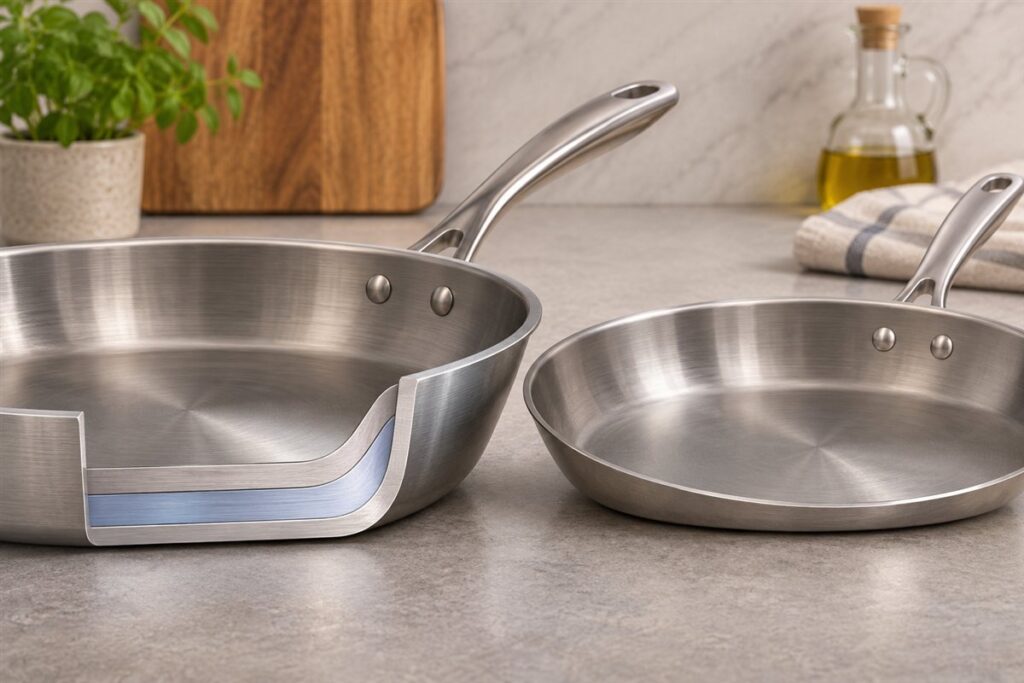
Pan thickness changes how heat spreads, how long a pan holds it and how quickly it reacts when you turn the burner up or down. Thicker pans tend to be steadier, and thinner pans tend to be quicker to respond.
What Thick Pans Do Well
A thick base takes longer to heat but spreads heat more evenly and keeps it when cold food goes in. That helps with browning meat or vegetables, where a pan that cools too much would steam the food instead.
- Steadier temperature during searing.
- Fewer hot spots on the burner.
- Better for slow, long cooking in a covered pot.
The trade-offs are weight and slower response. A thick pan can keep cooking after you turn the heat off, so adjust early.
What Thin Pans Do Well
Thin pans heat quickly and cool quickly. This suits tasks where you want fast changes, such as bringing water to a boil or gently warming sauces that you can pull off the heat at once. They are also lighter and easier to lift and store.
The downside is a greater chance of hot spots, and food can scorch if the heat is too high. They often suit boiling and quick jobs better than careful browning.
Matching Thickness to the Job
- For searing and browning, favour a thicker base.
- For boiling water or pasta, thickness matters less, so lighter is fine.
- For delicate sauces, choose a pan that responds well and avoids scorching, and stir often.
- For long braises, a thick pot holds steady heat.
Thickness figures are not always shown the same way across makers, so check the maker’s guide rather than comparing numbers loosely.
Thickness in Real Recipes
Think about a pan of onions. In a thick pan they soften and colour gradually, and a little extra heat does not scorch them at once. In a thin pan they can brown at the edges while the middle stays pale, so you stir more and lower the heat sooner. Neither result is wrong, but the thin pan asks for more attention.
The same idea applies to fried eggs, pancakes and flatbreads. Thicker bases give steadier colour across the surface. If your pan is thin, give it time to warm and keep the heat moderate. Always stay near a hot pan.
At a Glance
| Feature | Thicker pan | Thinner pan |
|---|---|---|
| Heat-up | Slower | Faster |
| Heat spread | More even | May have hot spots |
| Response | Slow to change | Quick to change |
| Weight | Heavier | Lighter |
FAQ
Is a thicker pan always better?
No. It suits steady, browning tasks but can be heavy and slow to respond. Choose by task.
Does thickness matter on induction?
Thickness still influences how evenly the pan spreads heat. Follow your cooktop’s manual for pan guidance.
The Short Version
Thick pans hold and spread heat steadily; thin pans respond fast. Match thickness to the job and check the maker’s guide.