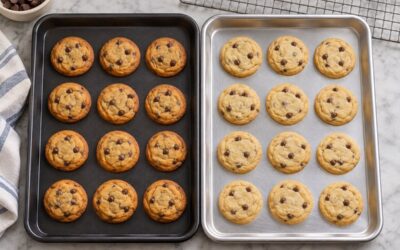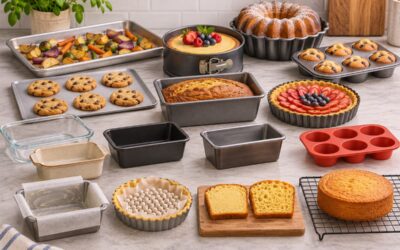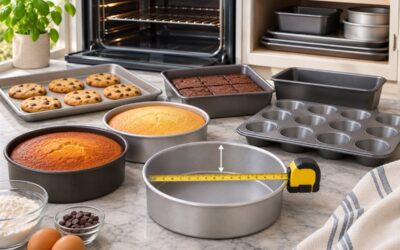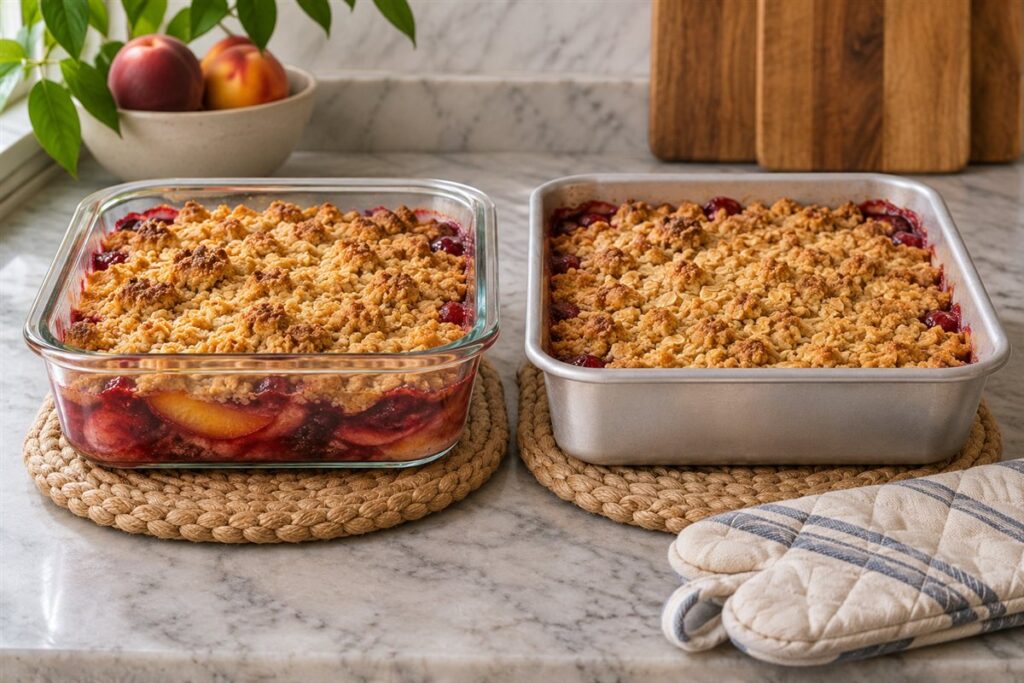
Glass and metal pans heat differently, so a recipe written for one may need small changes in the other. Metal heats up and cools down quickly and tends to brown edges more. Glass heats slowly but holds heat longer, which can overbake the outside while the centre catches up.
What Each Material Does
Metal conducts heat fast, which gives crisp edges and well-browned bottoms. Light-coloured metal gives gentler browning, while dark metal absorbs more heat. Glass conducts heat slowly, then stays hot after leaving the oven, so food keeps cooking for a while on the counter. Glass also lets you see the bottom colour, which helps you judge browning.
Adjusting a Recipe
- Read the recipe to see which pan it assumes, then check the size, since a pan of the wrong size changes timing more than the material does.
- If moving from metal to glass, many bakers lower the oven temperature by about 25 degrees F (roughly 15 degrees C) to avoid dark edges.
- If moving from glass to metal, keep the recipe temperature and watch the edges and bottom a little earlier.
- Begin checking for doneness a few minutes before the stated time, whichever way you switch.
- Take food out when it looks just done, since glass keeps cooking afterwards.
- Let the pan cool on a rack, not on a cold or wet surface.
Glass bakeware can crack with sudden temperature changes, so follow the maker’s care instructions about heat limits, the freezer and the stovetop.
Side by Side
| Feature | Glass | Metal |
|---|---|---|
| Heating speed | Slow | Fast |
| Heat retention | High | Low |
| Browning | Gentler, may over-darken edges late | More even and crisper |
| Best for | Casseroles, lasagne, baked dishes | Cakes, cookies, bread, roasted vegetables |
| Visibility | See the bottom colour | Cannot see through |
Who Should Choose Which
If you often bake cakes, cookies and bread, metal is the more flexible everyday choice. If you make casseroles, desserts that go from oven to table or reheat leftovers in the same dish, glass is convenient. Many home bakers keep both.
Other Materials to Know
Ceramic and stoneware dishes behave a lot like glass: they heat slowly and hold heat for a long time. Silicone moulds are flexible and insulating, so bakes often need a little more time and a sturdy tray underneath for support. Aluminium sheet pans, the most common metal option, spread heat quickly and are a dependable base for most everyday baking. Whatever you use, check the maker’s guide for the highest oven temperature, and for whether the dish can go under a grill or into a freezer.
FAQ
Can I use glass for cookies?
Not usually. Cookies need fast, even heat from a flat metal sheet to spread and brown correctly.
Do I always need to lower the temperature for glass?
Not always. It is a common first step for cakes and sweet bakes, but check the recipe and the pan maker’s guide.
The Short Version
Metal browns quickly; glass heats slowly and holds heat. When moving to glass, lower the temperature a little and check early. Match the pan size and watch the bottom and edges.