A cashmere throw is a soft, light blanket for the sofa arm or the foot of a bed. The label matters here: some throws are woven from pure cashmere, while others blend cashmere with merino or other wool, and the share of cashmere can range from a few percent to all of it.
The six throws below run from a blend that is mostly merino to a cable knit made of pure cashmere. Sizes, weights and care come from each product’s listing page. We have not used these blankets ourselves. Fiber percentages are the makers’ own claims, not something we have measured.
As an Amazon Associate we earn from qualifying purchases. Links below are affiliate links, and they do not change the product information we give.
What to Look For
| Feature | Why it matters |
|---|---|
| Fiber content | Pure cashmere and blends are different products |
| Size and weight | Longer throws reach the feet; heavier weaves drape thicker |
| Construction | Woven, brushed and cable knit look and feel different |
| Care | Dry clean only, hand wash and machine wash all appear |
In this guide
Specs at a Glance
| Blanket | Size and weight | Fiber (maker’s claim) | Care |
|---|---|---|---|
| EP Mode | 50 x 65 in plus 4 in fringe; 1.1 lb | 100% cashmere, waterweave | Dry clean only |
| Velanio | 60 x 54 in; 4 in fringe | 100% cashmere | Hand wash, line dry |
| CUDDLE DREAMS | 50 x 73 in with fringe; 470 g | 75% cashmere, 25% wool | Dry clean only |
| LYHome | 55 x 79 in with 2 in fringe; 245 GSM, about 1.5 lb | 10% cashmere, 90% merino wool | Dry clean or hand wash |
| Cashmere Boutique | 60 x 80 in; 1.75 lb; 4 in tassels | 100% cashmere, 4-ply | Hand wash only |
| Karen Thomas | 50 x 60 in; 480 to 490 g | 100% cashmere, cable knit | Machine wash delicate or hand wash |
The 6 Best Cashmere Blankets
Top pickBest for a textured woven look
1. EP Mode 100% Pure Cashmere Throw Blanket
A 50 by 65 inch throw with 4 inch hand-made fringe at both ends, woven in a subtle waterweave pattern. The listing describes it as 500-gram-weight cashmere that is softly brushed, and gives the weight as 1.1 pounds. It arrives in a gift box.
Suits: a textured woven look. Strengths: pure cashmere claim and a gift box. Weaknesses: dry clean only. Skip it if you want a blanket you can wash at home.
View 100% Pure Cashmere Throw Blanket for Sofa, Whisper White on Amazon
Best for a wide, sofa-sized throw
2. Velanio Luxury 100% Pure Cashmere Throw Blanket
A fringed throw listed at 60 by 54 inches, wider across than many 50 inch throws, with 4 inch hand-tied fringe. The listing says it is single-origin pure cashmere rather than a blend, and it comes in seven colorways including two plaids.
Suits: a wide, sofa-sized throw. Strengths: hand wash and line dry care. Weaknesses: a short length for stretching out. Skip it if you want a long throw.
View Velanio Luxury 100% Pure Cashmere Throw Blanket, Fringed Sofa 60×54 on Amazon

Best for a longer, lighter blend
3. CUDDLE DREAMS Premium Cashmere Throw Blanket With Fringe
A 50 by 73 inch throw, fringe included, that weighs about 470 grams. The listing gives the fiber as 75 percent cashmere and 25 percent merino wool, with a brushed surface, and sells it in several colors.
Suits: a longer, lighter blend. Strengths: 73 inches of length. Weaknesses: a blend, and dry clean only. Skip it if you want pure cashmere.

View CUDDLE DREAMS Premium Cashmere Throw Blanket with Fringe (Navy) on Amazon
Best for a large, mostly merino throw
4. LYHome Cashmere & Merino Wool Blanket
A reversible 55 by 79 inch tartan throw with 2 inch twisted fringe, made from 10 percent cashmere and 90 percent merino wool according to the listing. It runs 245 GSM at about 1.5 pounds, and the listing cites OEKO-TEX certified materials and Ukrainian weaving.
Suits: a large, mostly merino throw. Strengths: size, two finished sides and hand wash care. Weaknesses: only 10 percent cashmere. Skip it if you want a mostly cashmere fiber.
View LYHome Cashmere and Merino Wool Blanket, Soft Throw for Bed and Couch, 55×79 in on Amazon

Best for stretching out on the couch
5. Cashmere Boutique 100% Pure Cashmere Throw Blanket
The largest pure cashmere throw here at 60 by 80 inches, with 4 inch tassels on both ends. The listing calls it 4-ply cashmere weighing about 1.75 pounds, and lists several color options.
Suits: stretching out on the couch. Strengths: length and a pure cashmere claim. Weaknesses: the heaviest here and hand wash only. Skip it if you want a compact throw.

View Cashmere Boutique 100% Pure Cashmere Throw Blanket, Soft and Warm 60×80 in on Amazon
Best for a knit texture instead of a woven one
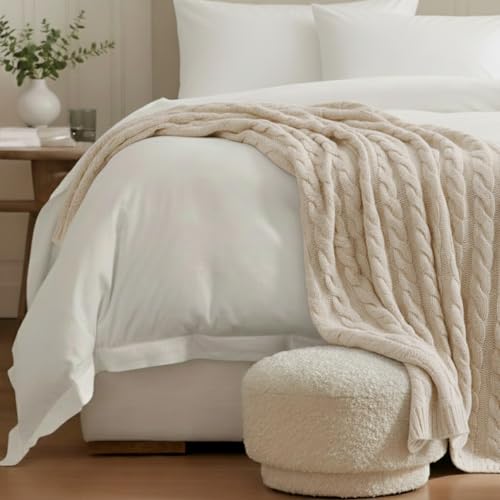
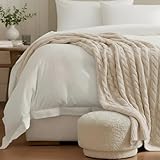
6. Karen Thomas 100% Pure Cashmere Cable Knit Throw
A 50 by 60 inch cable knit throw that the listing puts at 480 to 490 grams, made from what it calls Grade A long staple cashmere. It is offered in beige, cream and charcoal, and the care notes allow a delicate machine cycle in cold water or hand washing.
Suits: a knit texture instead of a woven one. Strengths: machine washable on delicate. Weaknesses: three colors only. Skip it if you want fringe.
Care and Setup
- Follow the care line on the listing: dry clean, hand wash or delicate cycle.
- Lay flat or line dry instead of using high heat.
- Store folded in a breathable bag.
- Brush gently if the surface fuzzes.
Mistakes to Avoid
- Assuming every cashmere throw is pure cashmere.
- Machine washing a dry clean only blanket.
- Ignoring the size when you need a long throw.
- Drying on high heat.
How to Read Fiber Labels and Claims
Cashmere is a fine fiber from goats, and the word on a listing can mean very different things. A label that says pure or 100 percent cashmere is making a claim about the whole fabric. A blend lists percentages of cashmere and another fiber such as merino wool, and the order and numbers matter. A throw that says cashmere in the title but lists a small percentage in the details is mostly something else, which may still be a good blanket, but is a different product.
Read beyond the title. Look at the fiber content line, the care instructions and any notes on the origin or grade. Words such as luxury, premium or Grade A are marketing terms unless the listing explains what they mean. Certifications may be mentioned, but check what they cover, since some relate to harmful substances in textiles and say nothing about fiber quality or the cashmere content.
Price tells you little by itself, so the practical advice is to compare like with like: the same size, a similar weight and a stated fiber content. Be cautious when a listing gives vague wording, no percentage, or mixed statements. If the information is unclear, ask the seller before you buy, and keep the label and packaging so you can verify what arrived against what was promised.
Weight, Weave and Warmth
Two throws with the same fiber can feel quite different. Weight, often given in grams or as a fabric weight, tells you how much material is in the blanket. A heavier throw is generally thicker and warmer and drapes with more body, while a lighter one is airy and better for a warm room or as a layer. The weave sets the look and the feel: a woven throw tends to be smooth and flat, a brushed finish raises a soft surface, and a cable knit has texture and more loft.
Think about how you will use it. Over the arm of a sofa for the odd evening, a lighter, finely woven throw is plenty. For long winter evenings under a blanket, a heavier or knitted one may suit you better. A knit has more stretch and fluff, while a tight weave tends to shed less and may keep its shape better.
Fringe and edges are worth a look. Tied fringe adds length, but the stated length may include it, so check whether the size covers the fringe. Finished edges, such as a blanket stitch, reduce fraying. Color affects maintenance as well: pale colors show stains, while dark colors can show lint and pet hair. Look at the photographs closely and remember that screens can alter colors.
Pilling, Shedding and What Is Normal
Cashmere fibers are fine and short, so they tend to form small balls on the surface where fibers rub together. This is called pilling, and it is common even in good cashmere, especially in the first weeks and in places where the blanket rubs against clothing or furniture. It does not by itself mean the blanket is poor quality. Loose fibers also shed for a while, so a new throw may leave a little fluff on clothes.
You can manage pilling gently. Remove pills by hand or with a cashmere comb or a fabric shaver used lightly, as the care instructions allow. Pulling at pills can damage the surface. Avoid rubbing the blanket against rough fabrics, zippers and jewelry, and keep it away from pets with claws.
Heavier pilling, bald patches or thin areas are signs of weaker fiber or construction. Blends with more wool or synthetic content may behave differently, and some people find merino blends less prone to shedding while others find them rougher. If you are sensitive to wool, check the fiber content and consider testing the blanket against your neck or forearm before committing, since the fibers in a throw vary. Keep the return policy in mind in case it irritates your skin.
- Expect some pilling and shedding with any cashmere.
- Remove pills gently, never by pulling hard.
- Keep the blanket away from rough surfaces and sharp jewelry.
- Check the return policy if you have sensitive skin.
Washing, Drying and Storing Without Damage
Always begin with the label. Some throws are dry clean only, some say hand wash, and some allow a delicate machine cycle. Follow the stated method, because cashmere can shrink and felt when treated roughly. If you hand wash, use cool water and a mild detergent made for delicate fibers, press the water through without rubbing or wringing, rinse thoroughly, and press out the water by rolling the blanket in a clean towel.
Drying matters as much as washing. Lay the blanket flat on a dry towel, reshape it gently, and let it air dry away from direct heat and sunlight. Do not hang a wet cashmere blanket, since its weight can stretch it, and do not use a hot dryer. Between washes, airing the blanket and spot treating small marks is often better than a full wash, and cashmere does not need frequent washing.
For storage, make sure the blanket is clean and fully dry, then fold it loosely and keep it in a breathable cotton bag or box. Avoid sealed plastic, which can trap moisture. Moths are drawn to natural fibers, so use cedar blocks or other deterrents as suggested by the care guidance, and check the blanket from time to time. Keep it out of damp spaces to avoid mildew.
Size, Gifting and Signs to Replace
Pick the size for the job. A smaller throw suits the arm of a chair or a lap, while a longer one covers a whole person lying on the sofa or sits across the foot of a bed. Measure your sofa or bed, and remember that a 50-inch width wraps a seated person but may not cover two people. If the blanket will be used by a taller person, length matters more than width.
Cashmere makes a popular gift, and presentation can matter. A box or bag is nice, but the key points are the fiber content, the care instructions and the size. Include a care note for the recipient, and keep the receipt if they are likely to need an exchange. Consider their tastes in color and texture, and whether they have pets or allergies.
With reasonable care, a good throw can last for many seasons, but it will eventually wear. Signs that it is time to replace it include thinning patches, holes, persistent odors that do not wash out, matted areas that no longer soften and edges that unravel despite repair. Small holes may be mended by a skilled repairer, so consider that before discarding a favorite. When replacing, note what you liked and disliked about the old one, and use that to refine your choice of fiber, weight and weave.
Pure, Blend or Cable Knit: Choosing the Construction
Cashmere blankets come in several constructions, and each behaves differently on the sofa or the bed. A pure cashmere throw is the softest and lightest for its warmth, but it asks for the most careful handling. A blend that mixes cashmere with wool, silk or another fiber can feel a little sturdier and often wears more easily over time. A cable knit adds texture and weight, which gives the blanket a cozy, hand-made look.
Think about where the blanket will live. A throw draped over a reading chair needs to look good and be touched often, so soft pure cashmere makes sense. A blanket that will be used daily by family members, children or pets may be better as a blend with a bit more resilience.
Reading a Fiber Label Closely
| Label wording | What it usually means | What to confirm |
|---|---|---|
| 100 percent cashmere | Entirely cashmere fiber | Care instructions and weight of the throw |
| Cashmere blend | Cashmere mixed with other fibers | The exact percentage of each fiber |
| Cashmere feel | Often a synthetic fabric that mimics softness | Whether any real cashmere is included |
| Merino and cashmere | Two animal fibers together | Which fiber dominates |
Phrases that suggest softness without naming the fiber should be read with caution. The listing or the product label should state the real fiber content, and if it does not, ask the seller before you buy.
Size and Weight Choices
A throw typically drapes across a sofa or the foot of a bed, while a larger blanket covers a whole bed or two people on a couch. Check the stated dimensions rather than relying on a size name, since throw and blanket labels differ between makers. Weight matters as well. A lighter blanket suits spring evenings and travel, while a heavier one is warm in winter.
- Measure the sofa or bed and compare it with the blanket’s listed length and width.
- Look at the fringe or edge finish, which affects how tidy the blanket looks.
- Consider color carefully, since light shades show marks and dark shades show lint.
Caring for Delicate Fibers
Many cashmere blankets call for dry cleaning or very gentle hand washing, and the label should tell you which. Never assume that a machine cycle is safe. If hand washing is allowed, use cool water and a mild detergent made for delicate fibers, press out water without wringing, and dry the blanket flat away from heat and direct sun.
Pilling, those small fuzzy balls, is normal with soft fibers. A fabric comb or a cashmere comb removes them gently. Store the blanket in a breathable bag with a cedar block or another moth deterrent recommended by the maker, and keep it away from damp places.
Using a Cashmere Blanket Day to Day
Because the fiber is delicate, treat the blanket as a cozy luxury rather than a pet bed or picnic cloth. Keep it away from rough zippers, sharp jewelry and velcro that may snag it. Fold or drape it loosely over a chair, and shake it out now and then. If a spill happens, blot gently and follow the label for cleaning. A well-looked-after blanket can stay soft for years.
When a Blend Is the Smarter Pick
If you have children, pets or a very busy household, a blend or a cable knit with firmer yarn can stand up better to daily life. It may feel slightly less airy than the purest options, but the extra durability can be a fair trade. Be honest about how the blanket will be used, and choose accordingly.
Cashmere Blanket FAQ
Are these pure cashmere?
Four listings say 100 percent cashmere. CUDDLE DREAMS and LYHome are blends. These are the makers’ own claims.
Can I machine wash them?
Only the Karen Thomas listing mentions a machine cycle. Check each care line first.
What is the difference between a cashmere blend and pure cashmere?
Pure cashmere is made only of cashmere fiber, while a blend mixes it with another fiber such as merino wool. Check the percentages on the listing, because they change the feel, warmth and care.
Why is my new cashmere blanket shedding?
Loose fibers are common in new cashmere and usually settle down with gentle use. Brush it lightly or shake it outdoors, and contact the seller if shedding stays heavy.
How can I get rid of pills?
Use a cashmere comb or a fabric shaver lightly, following the care label. Do not pull at pills with your fingers, which can damage the fabric.
Is a heavier cashmere throw warmer?
Generally, a heavier or more tightly knitted throw holds more warmth, but weave and fiber content also matter. Compare weights only among similar styles.
How often should I wash a cashmere blanket?
Not often. Air it and spot clean between washes, and launder only when needed, following the care label.
Can I keep a cashmere blanket in a plastic bag?
Avoid sealed plastic, which can trap moisture and cause mildew. A breathable cotton bag or a box is a better choice.
Will a cashmere blanket itch?
Cashmere is usually soft, but sensitivity varies, and blends with wool may feel different. Try it against your skin and check the return policy.
How a Cashmere Throw Earns Its Place in a Room
A cashmere throw is rarely bought to solve a cold house. It is bought for the hour at the end of the day, the reading chair by the window, and the guest who settles onto the sofa after dinner. Judging it by warmth alone misses that job. What matters is how it behaves across an ordinary week: whether it drapes without sliding off the arm of the chair, whether it feels pleasant against a bare forearm, and whether it still looks tidy after being folded, unfolded and borrowed by everyone in the house.
Think about where the throw will actually live before you choose from the list above. A throw that stays on one sofa can be as delicate as you like, because it will be handled gently and washed rarely. A throw that travels between a bedroom, a home office and a child’s reading corner needs a sturdier weave and a care routine you can manage at home. The pure cashmere picks in this guide suit the first kind of life best, while the blends earn their keep in busier rooms.
Colour deserves a slower decision than it usually gets. A pale throw shows every coffee splash and newsprint smudge, and cashmere does not forgive frequent washing, so households with pets, toddlers or dark denim should lean toward mid tones and heathered shades that hide daily marks. A light colour in a quiet adult sitting room, by contrast, can be kept looking fresh for years with nothing more than airing and occasional professional cleaning.
Finally, consider how the throw works with what you already own. A fine waterweave sits comfortably on linen upholstery and smooth leather, while a cable knit adds texture to a plain sofa and pairs naturally with wool cushions. Matching the weight of the throw to the weight of the room keeps it from looking like an afterthought, and it is the reason two throws of the same size can feel completely different once they are in place.
Testing Softness, Drape and Warmth at Home
You cannot judge a throw from a listing photograph, but you can judge it quickly once it arrives if you know what to look for. Start with the drape test: hold one short edge and let the fabric fall. A good throw falls in soft, even folds rather than standing away from your hand in stiff panels. Stiffness at this stage usually means a tight, short-fibre weave, and it rarely relaxes completely, even after months of use.
Next, run the inside of your wrist along both faces. Cashmere should feel smooth in both directions, with no scratchy guard hairs catching the skin. A faint halo of fibre on the surface is normal and even desirable, since that halo is what traps warmth, but long loose strands that pull away in your fingers suggest the yarn was spun loosely and the throw will shed heavily in its first season.
Warmth is best tested in the evening, when the house cools. Sit with the throw over your legs for twenty minutes without other covers. A well-made cashmere throw feels warm within a few minutes and stays comfortable rather than becoming clammy, because the fibre breathes. If you find yourself alternately throwing it off and pulling it back, the weave is probably too dense for your room, and a lighter pick from the list will suit you better.
Check the finishing details last, because they predict how the throw ages. Edges should be straight and evenly worked, fringe should be attached along a firm header rather than knotted through loose loops, and any pattern, such as a cable or waterweave, should line up consistently from one end to the other. Small irregularities are part of a hand-finished textile, but wandering rows and uneven borders point to hurried making.
Pairing a Throw With Beds, Sofas and Chairs
On a bed, a cashmere throw works best folded lengthwise across the foot, where it adds a layer you can pull up on colder nights without remaking the whole bed. Choose one of the longer picks in this guide for that job, because a short throw on a wide bed looks lost and leaves shoulders uncovered when it is used as an extra cover in the small hours.
On a sofa, the throw should be long enough to cover legs and feet when someone is stretched out, with a little left over to tuck beside the cushion. Drape it over the back corner nearest the seat people choose first, rather than centring it like a display piece. Throws that live within reach get used; throws arranged for photographs get admired and ignored.
A single reading chair is where a smaller, lighter throw shines. It needs only to cover a lap and legs, and a fine weave that would feel insubstantial on a bed is perfect over trousers or a dress while you read. This is also the kindest home for the most delicate pure cashmere in the list, because a chair used by one person subjects the fabric to far less friction than a family sofa.
In a guest room, a folded throw at the end of the bed quietly solves the problem of visitors who sleep colder or warmer than the household. It lets a guest adjust without asking for extra bedding, and it signals care more warmly than a spare synthetic blanket from a cupboard. Choose a washable or dry-cleanable option you can refresh between visitors without fuss.
Seasonal Rotation and Long-Term Storage Habits
Cashmere rewards a rest. Fibres that are used every day without a break gradually lose their loft, while a throw rested for a day or two between uses recovers its spring. Households that own two throws and rotate them will find both last noticeably longer than a single throw used without pause, and rotation also spreads the washing burden across the year.
Before storing a throw for the summer, make sure it is clean, because moths are drawn to skin oils and food traces far more than to clean fibre. Wash or clean it according to its label, dry it fully in moving air away from direct heat, and only then put it away. Storing a throw that feels dry on the surface but is still damp in the folds invites mildew, which no amount of airing fully removes.
Store it folded loosely in a breathable cotton bag or a drawer lined with plain paper, never sealed in plastic and never hung, since hanging stretches a knit or woven throw out of shape under its own weight. Cedar and lavender can help a storage drawer smell pleasant, but they are companions to cleanliness, not substitutes for it, and they should not touch the fabric directly.
When the cold weather returns, take the throw out a week before you need it, shake it gently outdoors, and let it air for a day. Minor creases from folding usually fall out on their own once the throw is draped over a chair. Resist the urge to iron a stored throw back to flatness; the loft that returns naturally is part of what makes it warm.
What to Do When Something Goes Wrong
A pulled thread is the most common cashmere accident, and the worst response is to trim it. Cutting a pulled loop shortens one end and leaves the other free to unravel further. Instead, ease the loop back into the fabric by stretching the surrounding area gently in all directions, working the excess back along the row a little at a time until the surface sits flat again.
For a spill, blot rather than rub, and do it promptly with a clean cloth and cool water. Rubbing a wet cashmere surface felts the fibres together and can set a stain permanently into the halo of the fabric. Once you have lifted what you can, let the area dry flat and away from radiators. If a mark remains, professional cleaning is safer than repeated home attempts, which tend to spread the problem wider than the original splash.
Small holes, whether from moths or a caught fingernail, are worth repairing early. A hole that is a few millimetres across can be rewoven almost invisibly, while the same hole after a season of use becomes a laddered patch that no repairer can hide. Keep the throw away from the damaged drawer or shelf until you know the cause is gone, or the repair will simply be repeated.
If a throw has become thin and tired after years of service, it does not have to leave the house. Retire it to lighter duty as a travel wrap, a layer in a pet-free reading nook, or a soft liner for a drawer of delicate clothing. Cashmere that is no longer beautiful can still be useful, and using it gently to the end of its life is the honest return on what it cost.
Questions Worth Asking Before You Order
Ask first what the fibre percentage actually is, and be wary of listings that use the word cashmere in the title while burying a modest percentage deep in the description. The picks in this guide state their claims plainly, and the difference between a mostly merino blend and a pure cashmere throw is not a detail; it changes the feel, the care, the weight and the sensible use for the blanket.
Ask how the throw was finished. Brushing raises the soft surface but can shorten the life of a loosely woven cloth, while a tighter unbrushed weave often looks plainer and lasts longer. Neither is automatically better. The right answer depends on whether the throw is an occasional luxury for one chair or a daily blanket for a whole household.
Ask about returns with the same care you would bring to shoes. A throw’s colour on a screen is an approximation, and its hand feel cannot be photographed at all. A seller who accepts returns on an unused throw lets you make the drape and wrist tests described above without risk, and that safety net matters more with cashmere than with almost any other blanket in this guide series.
Finally, ask yourself who will clean it. The most beautiful dry-clean-only throw is a poor choice for a household that will realistically never take it to a cleaner, just as a hand-wash-only blanket is a burden for someone without the space to dry it flat. Choosing the care routine you will actually follow is the single most reliable predictor of whether a cashmere throw still pleases you in three years.
Cashmere in Different Rooms: A Practical Tour
In the living room, a throw works hardest. It is pulled over legs during films, folded behind a back that aches, and draped over the shoulders of whoever lost the argument about the thermostat. Choose the most robust weave you are considering for this room, and accept that it will be cleaned more often than any other blanket you own.
In the bedroom, the same fabric leads a quieter life. It rests folded for most of the day and is used in the still hours, so a finer, lighter weave is safe here and arguably wasted anywhere else. This is where the most delicate pick in the list belongs, protected from shoes, pets and snack bowls by the simple geography of the house.
A home office chair is an underrated home for a throw. Hours of sitting still leave legs cold even in a warm house, and a lap throw solves that without heating the whole room. Because it is used by one person, in one place, at predictable times, even a dry-clean-only blanket is practical here, since it will rarely need cleaning at all.
For a nursery or a reading corner shared with children, honesty matters more than luxury. Sticky fingers and spilled drinks are certainties, not risks, and a fine cashmere throw will spend its life in the wash or in a cupboard being protected from the family it was bought for. Save the best blanket for the rooms where adults actually sit, and let the busy rooms have fabrics that forgive.
How Weather and Heating Change the Right Choice
A house heated evenly all winter asks little of a throw, which becomes a comfort object more than a source of warmth. A house with cold corners, single glazing or a wood stove that cools overnight asks much more, and there a denser weave or a cable knit earns its weight, holding warmth through the evening rather than merely feeling pleasant for the first ten minutes.
Shoulder seasons are where cashmere’s breathability shows its worth. In spring and autumn a synthetic fleece often feels warm for five minutes and clammy for the rest of the evening, while cashmere adjusts, warming without overheating. If your main use is those in-between months rather than deep winter, a lighter pick from this guide will be used more and complained about less.
Damp climates add a care consideration. Natural fibres absorb moisture from the air and release it again, which is comfortable in use but means a throw in a damp house must be aired regularly and never stored away in a cold, unventilated cupboard. A dry, warm home is the easiest environment cashmere will ever meet; a damp one simply asks for more frequent airing.
Travellers who take a throw between climates should choose the middle of the range: neither the finest gauze-like weave nor the heaviest knit, but a blanket that layers over a coat on a train and still feels at home on a sofa. Versatility, in a travelling blanket, is worth more than perfection for one setting.
Understanding Ply, Gauge and Other Label Words
Ply describes how many strands of yarn were twisted together before knitting or weaving. A single ply gives the lightest, most fluid fabric; multiple plies give a denser, more substantial cloth with a surface that resists wear better. Neither is a quality grade on its own. A well-made single ply from long fibres will outlast a poor multi-ply from short ones, every time.
Gauge, on knitted pieces, refers to how fine the knitting is. A finer gauge produces a smoother, denser surface that shows a cable pattern crisply and pills less readily, while a looser gauge feels airier and softer at first touch but ages faster. When a listing mentions gauge or ply, treat it as a clue about character rather than a score to compare across brands.
Fibre length is the specification you will rarely see printed and the one that matters most. Long staple fibres make yarn that is strong, smooth and slow to pill. Short fibres make yarn that feels soft in the shop and sheds its surface within a season. Since listings seldom state staple length, the practical proxies are the maker’s reputation, the firmness of the weave, and how the fabric behaves in the wrist test described earlier.
Finishing words such as brushed, washed or waterweave describe what happened to the cloth after it was made. Brushing lifts the surface into softness, washing relaxes the fabric before sale so it changes less at home, and a waterweave pattern is woven in rather than printed on. Each is legitimate; each also means the blanket you receive has already been given its character, and your job is to keep it, not to create it.
Living With Pets, Children and Real Sofas
Pet hair clings less to a smooth, tight weave than to a brushed or lofty one, so households with cats and dogs should favour the sleeker picks in this guide and keep a lint roller in the drawer beside the sofa. Choose a colour near the animal’s own and the daily evidence largely disappears between cleanings.
Claws are a greater threat than hair. A cat kneading a lap through a fine throw can pull loops that no amount of easing fully restores, so keep a dedicated, cheaper blanket between pet and cashmere on the seats animals favour. This is not preciousness; it is simply assigning each textile the job it can survive.
Children change the calculation by age. A baby lying on a folded throw for photographs is no threat at all, while a school-age child building a den will drag any blanket across the floor and through the garden given half a chance. Households in the den-building years often keep the good throw in the adults’ room and buy peace of mind along with it.
None of this argues against owning cashmere in a busy house. It argues for placing it deliberately, the way you would place a good rug in the room where it will be appreciated rather than the hallway where it will be destroyed. Placement, more than any care product, decides how long a fine blanket stays fine.
The First Month With a New Throw
Unpack the blanket and let it rest for a day before judging it. Fibres compressed in packaging recover their loft with air and time, and a throw assessed straight from a tight parcel will always feel thinner and flatter than the same throw a week later. Drape it over a chair overnight and handle it again in the morning before forming a verdict.
Expect some surface fibre to come away in the first weeks of use. Loose fibres left from making work themselves free, especially from brushed surfaces, and this early shedding settles. What should not happen is continuous heavy shedding after a month, bare patches, or seams and edges giving way; those are faults, and they are the reason to keep packaging and receipts until the blanket has proved itself.
Rotate the throw end for end and fold it differently each week during the first month. This evens out the early wear across the whole surface instead of concentrating it where legs and feet always land, and it prevents a permanent crease from setting along the first fold line you happened to choose.
By the end of the first month you should know the essentials: whether the size suits the seat it lives on, whether the warmth matches your room, and whether the care routine is one you will keep. If any of those answers is no, that is the moment to exchange rather than to hope, because a throw’s habits, like its fibres, only settle further with time.
A Short Glossary for Cashmere Shoppers
Staple means the length of the individual fibres, and it quietly governs strength, smoothness and pilling. Micron is a measure of fibre fineness; lower numbers feel softer against the skin. You will not find either figure on most listings in this guide, but knowing the words helps you read the descriptions that do appear with a clearer eye.
Loom state describes fabric as it comes off the loom before finishing, while terms like garment washed tell you the piece was washed after making to soften it and settle its size. Fringe and tassels are decorative ends; a fringe is formed from the warp threads of the weave itself, while tassels are added, and the distinction shows in how firmly they are attached.
A throw, a blanket and a coverlet are not synonyms, whatever listings suggest. A throw is the smallest and most decorative, made for sofas and chairs. A blanket is sized for a bed. The products in this guide are throws, and judging them by bed blanket standards, or expecting one to cover two people on a winter night, sets them a test they were never built to pass.
Finally, grade language in listings, words like premium, luxury and finest, carries no standard meaning in this category. The verifiable facts are the fibre percentage, the dimensions, the weight and the care instructions, and those four, all stated for the picks above, will tell you more than any adjective in a title.
The Short Version
For a textured weave, the EP Mode. For a wide throw, the Velanio. For a longer blend, the CUDDLE DREAMS. For a big merino-heavy tartan, the LYHome. For the largest pure throw, the Cashmere Boutique. For a washable knit, the Karen Thomas.