A good picnic blanket gives you a dry, clean place to sit on grass, sand or a park lawn. The main differences are size, what sits on the underside, whether there is padding and how easily it folds into a carry bundle.
The six blankets below run from a compact 59 by 71 inch mat to several 80 by 80 inch family sizes. Sizes, materials and weights come from each product’s listing page. We have not used these blankets ourselves, and all waterproof and sandproof claims are the makers’ own.
As an Amazon Associate we earn from qualifying purchases. Links below are affiliate links, and they do not change the product information we give.
What to Look For
| Feature | Why it matters |
|---|---|
| Size | 80 by 80 inches seats a group; smaller mats suit one or two people |
| Backing | PEVA, Oxford fabric or a film layer keeps ground damp away from the top |
| Padding | Foam or cotton fill adds softness on uneven ground |
| Carry strap | A strap or buckle turns the folded blanket into a bundle |
| Washing | Some are machine washable, others are hand wash only |
In this guide
Specs at a Glance
| Blanket | Size | Material | Notes |
|---|---|---|---|
| ZAZE | 80 x 80 in; 2.2 lb | Polypropylene | Folds to about 15 x 5 in with a velcro closure |
| sapsisel | 80 x 80 in; 2.2 lb | Polyester top, foam middle, PEVA bottom | Rolls to about 16 in long; belt with hand strap |
| TigeJoy | 80 x 80 in | Polyester pongee, Oxford fabric backing | Cotton padding; adjustable carry strap; six sizes offered |
| G GOOD GAIN green | 80 x 80 in; 2.3 lb | Polyester and polypropylene | Three layers; double metal buckles |
| Wind Tour | 59 x 71 in; 1.76 lb | Acrylic fibers with a PE membrane | Strap included; the smallest here |
| scuddles | 60 x 60 in | Acrylic with PEVA backing | Tartan and stripe design; shoulder strap |
The 6 Best Picnic Blankets
Top pickBest for a group on a lawn
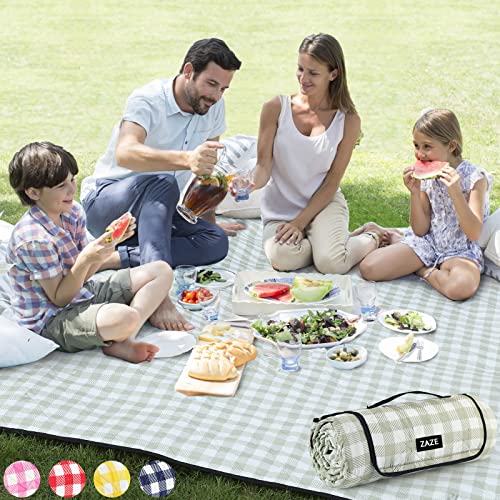
1. ZAZE Extra Large Picnic Outdoor Blanket
An 80 by 80 inch gingham blanket made of polypropylene that weighs 2.2 pounds. The maker describes five layers, a waterproof surface and backing, machine washing and a folded size of about 15 by 5 inches closed with velcro.
Suits: a group on a lawn. Strengths: a large size and a light weight. Weaknesses: the listing is a thin 1.71 millimeters by its own measure. Skip it if you want thick padding.


Best for sitting for a long time on firm ground
2. sapsisel 80 x 80 Picnic Blanket Extra Large
A polyester top over a foam middle with a PEVA bottom, 80 by 80 inches and 2.2 pounds. It rolls to about 16 inches long and comes with a belt that has a hand strap. The listing text mentions both three layers and seven layers, so the construction is not fully clear.
Suits: sitting for a long time on firm ground. Strengths: foam padding and a roll-up belt. Weaknesses: conflicting layer counts in the listing. Skip it if you want the flattest fold.

View 80″ x 80″ Picnic Blanket Extra Large, Waterproof and Foldable Beach Blanket on Amazon

Best for a padded blanket with size options
3. TigeJoy Extra Large Picnic Blanket
An 80 by 80 inch blanket with a polyester pongee top, Oxford fabric backing and cotton padding held by diamond stitching. It folds with a V-shaped velcro strap that can be carried by hand or crossbody, is machine washable and comes in six sizes.
Suits: a padded blanket with size options. Strengths: padding and a crossbody strap. Weaknesses: a bulkier bundle than thin mats. Skip it if you want the lightest pack.

View TigeJoy Extra Large Picnic Blanket Waterproof Beach Blanket 80”x80” on Amazon
Best for a family blanket with a buckle fold
4. G GOOD GAIN Picnic Blanket, 80 x 80 Green
A checked green blanket of polyester and polypropylene, 80 by 80 inches and 2.3 pounds, with a three-layer build, acupuncture cotton padding and double adjustable metal buckles for folding. The listing says it is machine washable.
Suits: a family blanket with a buckle fold. Strengths: padding and metal buckles. Weaknesses: the listing gives few other details. Skip it if you prefer a roll-up belt.
View Picnic Blankets Outdoor Extra Large 80″x80″, Green on Amazon

Best for one to three people
5. Wind Tour Waterproof Foldable Picnic Mat
A 59 by 71 inch blue mat made of acrylic fibers with a PE waterproof membrane. It weighs 1.76 pounds and folds to a tote size with a handy strap.
Suits: one to three people. Strengths: a small, light fold. Weaknesses: it is the smallest here. Skip it if you picnic with a crowd.
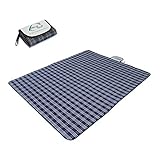
View Wind Tour Waterproof Foldable Picnic Mat for Outdoor 59 x 71 Inches Blue on Amazon

Best for a pair or a small family
6. scuddles Extra Large Picnic Blanket
A 60 by 60 inch acrylic blanket in a tartan and stripe design with a waterproof PEVA backing and a strap to carry it over the shoulder. The listing weight is not readable, so check the page before relying on it.
Suits: a pair or a small family. Strengths: a patterned look and a PEVA backing. Weaknesses: an unclear weight on the listing. Skip it if you need 80 inches of space.

View scuddles Extra Large Picnic Blanket | 60″ x 60″ Waterproof Outdoor Mat on Amazon
Care and Setup
- Shake the blanket out and let it dry before folding.
- Follow each label: some are machine washable, others hand wash only.
- Lay the backing side down on damp ground.
- Fold along the same lines each time so it packs flat.
Mistakes to Avoid
- Packing the blanket while it is still damp.
- Machine washing a blanket labeled hand wash only.
- Choosing a small mat for a group.
- Assuming every layer count in a listing is accurate.
Understanding the Layers of a Picnic Blanket
Most picnic blankets are built in layers, and knowing what each does helps you compare listings. The top layer is the part you sit on, commonly a soft fabric such as fleece, cotton or polyester, or a woven material with a pattern. The middle layer, if there is one, adds padding for comfort. The bottom layer is the barrier against the ground, often a waterproof or water-resistant backing made of a coated fabric or a plastic-type film.
The backing is the key feature for damp grass or sand. A water-resistant backing blocks moisture from soaking up, but it does not turn the blanket into a tarp, and claims about waterproofing and sandproofing are the makers’ own. Seams and stitching can still let moisture in, and a backing can wear with folding and washing. Look at how the layers are joined, since stitched edges may fray and glued layers can separate over time.
Padding changes comfort and bulk. A thin blanket packs small but offers little cushion on hard or rocky ground, while a padded one feels better but takes more room and weighs more. Think about how you picnic. If you sit on soft lawns for a short time, a thin blanket may be enough. If you sit for hours or on rough ground, extra padding helps. Consider both sides: a blanket with a soft top and a slick backing slides less on grass, while sand tends to cling to textured surfaces, so look at the surface texture.
Size by Group Size and Activity
Blanket size should match the group, not just the listed dimensions. A compact mat of around 59 by 71 inches suits one or two people, or a parent with a small child. An 80 by 80 inch blanket suits a small family or a group of four with some space for a basket. For larger groups or if you want to lie down, spread out toys or set up a full meal, look at bigger sizes or bring two blankets. Check the measurements in the listing and remember that real dimensions can differ slightly.
Think about what you’ll do on the blanket. If you eat and sit upright, each person needs roughly the space of a chair plus room for food. If you recline or nap, count the length of each person. Children playing games need more space than adults who are seated. A square blanket gives flexibility in how people sit, and a rectangular one suits lying side by side. Leave space for the food basket, cooler and bags, or place them on a second mat.
- One or two adults: a smaller blanket is easy to carry.
- Families with young children: choose a larger one with a waterproof backing.
- Beach days: consider a lighter blanket with a good sand-shedding finish, and bring a way to anchor the corners.
- Concerts and parks: choose a size that respects posted rules about space.
Check venue rules, since some events limit blanket sizes. A blanket that fits in your trunk and your carrying bag is more likely to be used.
Wind, Sand and Uneven Ground
Outdoor conditions test a blanket. Wind can lift corners and flip the blanket, so look for features that help secure it. Corner pockets that can be weighted with sand or stones, loops for pegs or stakes and rings or ties are common. Check whether stakes are included, since many listings mention them but may not provide them. Without anchors, you can weigh corners with shoes, bottles or the cooler.
Sand brings different problems. Sand sticks to fabric and gets into the folds, and shaking the blanket out can spread it. A smooth, tightly woven surface sheds sand more easily than a plush or fleece one. Makers use the terms sand-proof or sand-free, but the actual performance varies. Shake the blanket out downwind before folding and avoid folding sand inside it. Beaches are also hot, so a dark blanket may feel hot in the sun, while a light one reflects some heat.
On uneven ground, padding evens out lumps, but sharp stones and thorns can puncture a thin backing. Clear the spot of sticks and stones before laying the blanket down. Dry grass is gentler than wet or muddy ground. If the ground is damp, add an extra layer of tarp or ground sheet underneath. Avoid dragging the blanket across rough surfaces. Do not place a blanket where it could be a tripping hazard, and keep it away from open flames, grills and hot cookware.
Folding, Carrying and Packing
A blanket that is a chore to carry may stay home. Look at how the blanket folds and what it comes with. Some fold into a flat rectangle with a handle or strap, some roll up with ties and some come with a carry bag. A built-in handle or shoulder strap makes it easier when your hands are full of food. Check the folded dimensions and the weight, since those determine whether it fits in a backpack, a basket or a trunk.
Think about how it will be packed. A damp or sandy blanket should be dried and shaken before it is put away, to avoid mildew and odors. Store it dry and flat or loosely rolled, in a bag with a little air. Do not keep a damp blanket in a closed car for days. A blanket that is bulky may need a separate bag, and a thin one can slip into the corner of a tote.
Consider the full picnic kit. A cooler, a basket, plates, cups, utensils, a trash bag and wet wipes all add up. The blanket should be easy to pull out and set up quickly. Take a look at how it packs with the rest of your gear, and whether it can double as a stadium blanket, a beach mat or a play mat at home. If you plan to hike to your site, choose a lighter, more compact blanket, while for car-based picnics a bigger one may be fine.
Washing, Drying and Getting Lasting Use
Follow the care label. Some picnic blankets can be machine washed on a gentle cycle, and some should be spot cleaned or hand washed, since heat and spinning can damage waterproof backings. Use mild detergent and avoid bleach or fabric softener, which can affect water resistance. Air drying is often safest, because a hot dryer can crack or peel a coated backing. Check whether the listing says machine washable and what temperature it recommends.
For quick cleaning, wipe spills with a damp cloth, brush off dried dirt and shake out crumbs. Stains from food like berries or sauces are easier to treat early. Let the blanket dry fully, both sides, before folding. Keep it out of prolonged direct sun when not in use, since UV can fade colors and weaken some fabrics.
Inspect the blanket now and then. Peeling or cracking backing, frayed edges, loose stitching and torn carry handles are signs of wear. A backing that no longer resists moisture is a reason to add a ground sheet or replace the blanket. Before buying, check the listing for the materials, the washing instructions, the size and weight, and whether it comes with straps or a bag. Budget tiers often reflect padding and backing quality. A simple, lighter blanket serves occasional picnics, and a sturdier one suits regular use. Pick the size and features you will actually use, and be cautious about marketing claims that sound too good to be true.
What the Layers of a Blanket Actually Do
A good picnic blanket is more than a patch of fabric. Most have a top layer for sitting, perhaps a soft padding in the middle and a bottom layer meant to keep damp from the ground away from you. Looking at each layer in the listing helps you understand what you are getting.
- Top surface: fleece, polyester or cotton, chosen for comfort and ease of wiping.
- Padding: adds cushion over uneven grass and keeps small stones from poking through.
- Bottom layer: a water-resistant backing helps with damp lawns.
- Corners and edges: loops or pockets for pegs keep the blanket flat in the wind.
Read the care label before you buy. Some blankets go in a washing machine, and others should only be wiped clean.
Choosing a Size by Group
Blanket dimensions are listed in feet or inches, but it is hard to picture them. Compare them with a bed or rug in your house so you have a sense of scale.
| Group | Suggested space |
|---|---|
| Two adults with a basket | Medium blanket, roughly the size of a twin bed top |
| Family with young children | Large blanket, with room to play |
| Concert or festival crowd | Extra large or two blankets side by side |
| Solo reader | Compact, easy to carry |
Folding, Carrying and Cleaning
Shake off crumbs and grass before you fold, and roll the blanket with the wet side inward. A built-in strap or handle makes it simple to sling over a shoulder. Wash according to the label, dry thoroughly and store somewhere airy. Keep a spare towel or a small tarp in the car for muddy days, and brush off sand before folding it away.
Sizing Guide: How Big Should a Picnic Blanket Be?
A blanket that is too small leads to crowded elbows, and one that is too big is a chore to carry. Use the table to match the size to your group.
| Group | Size to look for |
|---|---|
| Two adults | A compact blanket that fits in a bag |
| Small family | A mid-size blanket with a padded backing |
| Big group or a party | An extra-large blanket, or two blankets side by side |
| Concerts and festivals | A blanket that folds small and cleans easily |
Carrying and Washing Notes
A picnic blanket gets dirty quickly. Follow the care label for the right washing method and drying temperature.
- Shake off crumbs and grass before folding.
- Spot clean spills right away with a damp cloth.
- Check whether the blanket is machine washable or needs hand washing.
- Air dry completely before you store it to avoid musty smells.
- Fold it neatly and keep it with its carry strap or bag.
Choosing the Right Ground Layer
- A waterproof backing helps on damp grass, but it can feel warm on hot days.
- Corner pockets or stakes help keep the blanket in place on windy days.
- Check the ground for sharp stones and sticks before spreading.
- Shade is good for comfort, so look for a spot under trees, but watch out for falling branches.
A small stash of wet wipes and a bag for trash keeps the area tidy.
Take a few small bags for wet clothes, damp towels, or muddy shoes, so the blanket stays clean and dry on the walk back.
On a long day outdoors, bring a spare layer too, as ground can feel cooler than the air above it.
Planning the Picnic Around the Blanket, Not the Other Way Round
A blanket works best when the rest of the outing is planned with it in mind. Before you leave, think through the order of the day in plain terms: where you will lay the blanket, what will sit on it, who will sit where, and what happens when the food is finished. That short mental rehearsal prevents the familiar scene where the blanket is spread, the bags are dumped in the middle, and everyone ends up eating around a pile of shoes and coolers with no elbow room. Decide in advance that one corner belongs to food, one edge belongs to bags and shoes, and the centre stays clear for people. A blanket that has zones, even informal ones, feels far larger than the same blanket used as a general dumping ground.
Timing matters too. A blanket laid on grass early in the morning may sit on dew even on a fine day, and a spot that is sunny at noon may be in full shade, and noticeably cooler, by mid-afternoon. If you are claiming a spot for a longer gathering, arrive with the sun’s movement in mind: a little shade at the edge is welcome for coolers and for anyone who burns easily, while the main sitting area is usually better in open light that dries the ground. For an evening picnic, remember that ground cools and dampens quickly once the sun drops, so a blanket with a proper backing earns its keep most in the last hour of the day, not the first.
Food planning interacts with the blanket more than people expect. Foods that drip, stain or attract wasps change how a blanket should be used. Serve the messiest items on plates held in hands rather than balanced on the fabric, keep open sweet drinks at the edge where a spill runs onto grass rather than across the sitting area, and put a small bag for rubbish at one corner from the start rather than letting wrappers accumulate. When children are part of the group, a designated eating spot on the blanket, usually the corner nearest the adults, contains most of the crumbs and spills in one washable area.
Ground Conditions: Reading a Spot Before You Unfold
Experienced picnickers spend thirty seconds reading the ground before unfolding anything, and that half minute decides how comfortable the next two hours will be. Look first for slope: even a gentle incline becomes tiring as everyone slowly slides downhill, drinks topple, and plates migrate. A spot that looks flat from standing height may not feel flat when you sit, so crouch down and look across the ground at sitting level. Look second for what is under the grass. Tree roots, sprinkler heads, stones and the hard crowns of buried paths all announce themselves through a thin blanket within minutes. Press your palm firmly into the ground in a few places; if you can feel hard points through your hand, you will feel them through your hip.
Check for signs of water. Darker grass, moss, soft ground that leaves a print when you press it, and low spots where the grass grows lusher than its surroundings all warn that moisture is close to the surface and will work through a weak backing. After rain, the highest and breeziest part of a lawn dries first, while hollows and the shade under dense trees can stay damp all day. Ants are the other ground condition worth thirty seconds: scan for trails and nest entrances near your chosen spot, and move a few metres if you find them, because no blanket solves an ant problem once food is open.
Finally, consider what is above you. A beautiful tree gives shade but may also drop sap, seeds, bird lime or, after rain, a steady drip long after the sky has cleared. Sitting just outside the drip line of the canopy keeps most of the shade benefit with fewer surprises. In parks, note the direction of footpaths and ball games too; a blanket placed on the natural line between a car park and a playground will have people stepping around, and eventually across, it all afternoon.
Comfort Details That Make People Stay Longer
The difference between a picnic people leave after an hour and one that stretches pleasantly into the evening is usually a handful of small comforts rather than the blanket itself. A cushion, a folded spare layer or even a rolled towel under the hips transforms hard ground, especially for older guests whose joints notice every root. Bringing one extra light layer to drape over shoulders when the temperature dips keeps the group together rather than sending people back to the car for jackets. A blanket with a softer top surface invites people to lie down, read and doze; a purely practical surface keeps everyone sitting upright and shortens the day.
Think about footwear and edges. Shoes off keeps the blanket cleaner and more pleasant for bare feet and crawling babies, but it needs a rule that is announced kindly at the start rather than enforced grumpily later. A pair of slip-on shoes at the edge makes trips to the bin or the ice-cream van easy, which in turn makes people more willing to leave shoes off in the first place. For anyone who finds getting down to ground level difficult, pair the blanket with a low chair placed on its edge; the chair user stays inside the conversation circle instead of being parked separately on the grass.
Sun and insects shape comfort as much as padding. A small bottle of sunscreen kept with the blanket rather than buried in a bag gets used more, and food covers or a light cloth over open dishes keep flies off without constant shooing. If the spot is breezy, arrange bags and coolers along the windward edge as a low windbreak and weight the corners before the gusts arrive, not after the first plate has blown away. These are small arrangements, but together they decide whether the blanket is remembered as a base the group loved or as an obligation everyone endured.
Picnics With Babies, Toddlers and Dogs
A blanket becomes a play space when small children are involved, and that changes what good use looks like. For a baby, the blanket is a clean, defined surface for tummy time and crawling practice, so the smoothest, flattest part of the ground matters most, and a position where an adult can sit with their back supported against a bag or tree makes long floor sessions easier. Keep the baby’s area away from the food corner: dropped grapes, nut fragments and bottle tops all migrate, and a separate zone is simpler than constant vigilance. A spare muslin or light cloth over part of the blanket creates shade that can be moved as the sun moves.
Toddlers treat a blanket as a base rather than a boundary, so plan for constant arrivals and departures. A clear path in and out on one side, with shoes and tripping hazards kept to the opposite edge, reduces the number of times a small person crosses the food. Choose activities that live on the blanket, such as books, stacking cups and a ball that is too large to roll far, and accept that some grass, leaves and interesting stones will be brought back as treasures; a quick shake-out halfway through the outing restores order in seconds.
Dogs can share a picnic happily with a little structure. Give the dog its own defined spot at the edge, ideally on a separate mat or the blanket’s corner, with water in a heavy bowl that cannot be tipped by a paw. A dog that has had a proper walk and a chance to settle before food appears is far calmer than one brought straight from the car to the smell of sandwiches. Keep the lead attached to something solid rather than to a bag the dog can drag across the blanket, and put human food genuinely out of reach rather than relying on training in the most tempting environment of the dog’s week.
After the Picnic: The Ten-Minute Reset
How a blanket is treated in the ten minutes after eating decides how pleasant it will be next time. Shake it properly before folding, holding it by two corners with the top surface facing down, and shake away from the group and the food bags. Check the backing at this point, while you can still see it spread out: grass stains, damp patches and early signs of wear are all easier to spot outdoors in daylight than in a hallway at home. If the underside is wet, resist folding it wet-side-in against the clean top; fold it loosely with the wet side out, or drape it over the car or a fence for a few minutes before the drive home.
At home, air the blanket before storing it even if it looks clean, because grass moisture and food smells concentrate in a closed cupboard or car boot. A blanket stored slightly damp develops a musty smell that survives into the next outing and is hard to remove later. Spot-clean marks while they are fresh rather than washing the whole blanket after every use; most picnic soil is loose crumbs and grass that shake off, and overwashing ages the backing faster than use does. Store it folded loosely or rolled, in a dry place out of direct sun, and keep it with the other picnic basics so the next outing starts with grabbing one bundle rather than hunting through cupboards.
Once a season, give the blanket a proper inspection. Spread it flat, look along the seams and edges where stitching takes the strain of folding and carrying, check straps, handles and any fastenings, and test the backing by placing a damp cloth on it for a few minutes to see whether moisture comes through. Small problems, a loose strap or a fraying edge, are cheap to fix when caught early and are usually the reason a blanket fails suddenly later. A blanket that passes its seasonal check, is stored dry and is shaken out after each use will serve for many summers without drama.
More Questions, Answered in Depth
How do I stop food smells lingering in the blanket after a picnic?
Deal with spills before they dry, because dried food is what holds smell. Blot rather than rub, rinse the spot with plain water if you can, and air the blanket fully unfolded outdoors or in a ventilated room once home. If the smell persists after washing and drying, a second airing in fresh moving air usually finishes the job; storing the blanket before it is completely dry is the most common cause of a smell that seems to come back. Keep strongly scented foods in sealed containers during transport so the blanket is not absorbing odours from the journey as well as the meal.
What is the best way to picnic on a slope or at the beach without everything sliding?
On a slope, orient the blanket so people sit across the slope rather than facing downhill, arrange heavy items at the lower edge as anchors, and serve drinks in bottles or cups with lids where possible. On sand, clear the surface first, weight the corners from the moment the blanket is down, and expect to re-shake and re-lay it once during a long stay as sand creeps in. A blanket used on sand benefits from a thorough shake and brush at home, because grit left in the folds works into the backing over time.
Can I use a picnic blanket as a base for outdoor events and concerts?
Yes, and it is one of the best second uses: it marks your group’s space, keeps bags off damp grass and gives children a home base to return to. At crowded events, choose a size that fits the space rules of the venue and arrive early enough to lay it flat rather than negotiating around other groups. Keep valuables in the centre of the blanket rather than at the edges, and agree a simple rule that someone from the group stays with the base while others fetch food, so the blanket and belongings are never left entirely unattended.
How do I repair a small tear or a failing strap?
Small tears in the top fabric can be stitched or patched from the underside before they grow, and catching them early matters because picnic blankets are folded and pulled in ways that widen damage. A strap or handle that is coming loose is usually a stitching problem rather than a fabric problem, and re-stitching it firmly, by hand or at a repair shop, restores it fully. If the waterproof backing itself is cracking or flaking across a wide area, repair stops being worthwhile, because the blanket’s main protection has gone; at that point the blanket can still serve as a dry-day top layer over another groundsheet.
Choosing Food and Drink That Suit Eating on a Blanket
The blanket quietly shapes the menu. Foods that can be eaten with one hand leave the other hand free for drinks, books and children, and they generate fewer spills than anything requiring a knife and fork balanced on a plate on an uneven surface. Sandwiches cut small, wraps, fruit that is washed and ready, cheese in portions and bakes that hold together are the reliable core of blanket eating. Foods in sauce, soups and anything served very hot are not impossible, but they belong in sealed containers, served into bowls held in the hand, and eaten early while everyone is still settled in one place.
Temperature deserves thought. Food packed straight from the fridge into a cool bag will still be cool an hour later if the bag stays closed and in the shade of the blanket’s edge; food left spread out in the sun for grazing warms steadily, and perishable items should not graze indefinitely. A simple rhythm works well: eat the most perishable foods first as a proper meal, then keep out only the sturdy items, fruit, bread, biscuits and sealed snacks, for the rest of the afternoon. Drinks follow the same logic: serve the coldest drinks first, keep bottles and cans in the cool bag between pours, and put a bottle opener or can tab plan in place before the first thirsty moment, because a blanket picnic has no kitchen drawer to raid.
Waste planning is part of menu planning. Choose packaging you can take home easily, bring one bag for rubbish and one for recycling where facilities are unclear, and expect to carry everything out of parks and beaches that provide no bins. A small pack of wipes or a damp cloth in a sealed bag handles hands and faces without a trip to a tap, and a paper towel roll, unglamorous as it is, solves spills, serves as napkins and wraps leftovers. The picnic that ends with a clean blanket and a single tidy bag of rubbish is the one that gets repeated; the one that ends with stained fabric and scattered wrappers quietly discourages everyone.
Blankets for Special Occasions: Dates, Celebrations and Quiet Afternoons
The same blanket serves very different occasions, and small adjustments change its character. For a date, the priorities are a clean, soft surface, room for two without sprawling, and a setting chosen for the hour: late afternoon light and a spot with something to look at beat a prime noon position beside a busy path. Keep the food simple and the blanket uncluttered; a crowded blanket looks generous at a family gathering and chaotic for two. For a celebration with friends, the blanket becomes one island among chairs, coolers and games, and its job is to be the children’s base and the place where bags, jumpers and phones accumulate safely off the grass.
For a solitary picnic, which is an underrated pleasure, the blanket is a reading room and a nap site. A position with a backrest, a tree, a bank or a bag to lean on, matters more than size, and a smaller blanket in a sheltered corner feels private in a way a large one in the middle of a lawn does not. Bring the book, the drink and the snack within reach before you settle, because the whole point is not getting up. Whatever the occasion, the habit that improves all of them is the same: arrive, lay the blanket, arrange the edges and corners properly once, and only then unpack. A blanket laid carelessly at the start is re-laid three times during the day, each time around more food and more people.
A Short Pre-Departure Checklist for Blanket Days
Run through the same short checklist every time and blanket days stop going wrong in avoidable ways. Blanket itself: clean, dry, straps or bag working. Ground kit: something to weight the corners if wind is likely, and a small brush or cloth for clearing the spot. Comfort kit: one cushion or extra layer per person who feels the ground or the cold most, sunscreen, and insect protection if the spot and season call for it. Food kit: cool bag packed with the perishable items at the bottom, drinks sealed, opener remembered, rubbish bag and wipes on top where they can be found in seconds.
Check the weather for the hours you will actually be out, not just the headline for the day, because a fine morning can still deliver a breezy, cool afternoon that changes what you pack. Check the ground conditions you can predict: after a wet week, favour the blanket with the strongest backing and choose a high, open spot; in a dry spell, any blanket in the set will serve and comfort can take priority. Check who is coming: a blanket plan for two adults fails quietly when three children and a dog join, and throwing a second blanket in the car costs nothing if it turns out to be unnecessary. Finally, check the return plan: know roughly when you will leave, because packing up in fading light with tired children is when items get left behind, and a blanket shaken and folded in good light at the end of the afternoon is a blanket ready for its next outing without a rescue wash.
One Last Thought on Choosing Well
If you are torn between two blankets in this list, decide by the outing you actually take most often, not the grandest one you can imagine. A blanket that suits the weekly park lunch, the school sports day and the garden afternoon will be used dozens of times a year, while a blanket bought for one ambitious beach trip may spend its life in a cupboard. Match the size to your usual group, the backing to your usual ground, and the carrying style to how far you honestly walk, and the choice tends to make itself. The best picnic blanket is simply the one that is always ready by the door and always comes home ready to go again.
Picnic Blanket FAQ
What size seats a group?
The 80 by 80 inch blankets here are described by their makers as fitting several adults sitting.
Can they go in the washing machine?
Some can, according to their listings. Check the care line on the page for each one.
Are picnic blankets really waterproof?
Many have a water-resistant backing that blocks moisture from damp ground, but the level of protection varies and the claims are the makers' own. For very wet ground, add a tarp or ground sheet underneath.
How do I keep a blanket from blowing away?
Use corner pockets, stakes or loops if the blanket has them, and weigh the corners with shoes, bottles or the cooler. Place the blanket in a sheltered spot out of the wind.
How do I get sand off a blanket?
Shake it out downwind and brush it off before folding. A smooth, tightly woven surface sheds sand better than a plush one, but no blanket is completely free of sand.
Why is the backing of my blanket peeling?
Coated backings can crack or peel from heat, hard folding, rough washing or age. Avoid hot dryers, store the blanket loosely folded and add a ground sheet underneath if the backing no longer holds out moisture.
Should I put anything under a picnic blanket?
On damp or rocky ground, a tarp or ground sheet adds protection and keeps the blanket cleaner. Clear sticks and stones from the spot first.
How do I store a picnic blanket?
Make sure it is clean and completely dry, then fold or roll it loosely and store it in a dry place. Avoid damp spaces, which can lead to mildew.
Can a picnic blanket be used for other things?
Many serve as beach mats, play mats, stadium blankets or car emergency blankets. Check the materials and any manufacturer notes about use, and keep it away from heat sources and flames.
The Short Version
For a light large blanket, the ZAZE. For foam padding, the sapsisel. For padding with size options, the TigeJoy. For metal buckles, the G GOOD GAIN. For a compact mat, the Wind Tour. For a patterned mid-size blanket, the scuddles.