A moving blanket is a quilted or woven pad that wraps furniture and appliances during a move or in storage. Some are thick, padded quilts with a cotton or recycled fill, and others are lighter textile sheets. The main specs are size, material, weight and how many come in a pack.
The six pads below range from a single 80 by 73.5 inch quilt to a 24-pack of 54 by 72 inch textile sheets and extra-large 144 by 80 inch wraps. Sizes, materials and weights come from each product’s listing page. We have not used these blankets ourselves. Durability and protection claims are the makers’ own.
As an Amazon Associate we earn from qualifying purchases. Links below are affiliate links, and they do not change the product information we give.
What to Look For
| Feature | Why it matters |
|---|---|
| Size | Sofas and large items need bigger sheets |
| Fill and material | Cotton fill, polyester and polypropylene differ |
| Weight | Heavier pads usually mean more padding |
| Pack count | Match the number of pads to your load |
In this guide
Specs at a Glance
| Blanket | Size and pack | Material | Notes |
|---|---|---|---|
| Amazon Basics | 72 x 80 in; 6-pack | Polypropylene | About 2.75 lb each; double-lock stitching; double-sided |
| WEN 272812 | 72 x 80 in; 12-pack | Polyester | Internal padding; double stitched; machine washable |
| Stalwart | 80 x 73.5 in; 1 pad | Polyester and recycled cotton | Cloth-bound edges; double stitching |
| Sure-Max Pro Economy | 80 x 72 in; 1 blanket | Polyester with cotton batting | 35 lb per dozen; about 3 lb each |
| Uboxes Textile Skins | 54 x 72 in; 24-pack | Cotton blend | 1.66 lb each; lightweight |
| Diamond UP | 144 x 80 in; 4-pack | Polyester shell, recycled cotton fill | About 7.05 lb each; not machine washable |
The 6 Best Moving Blankets

Top pickBest for a full move with several pads
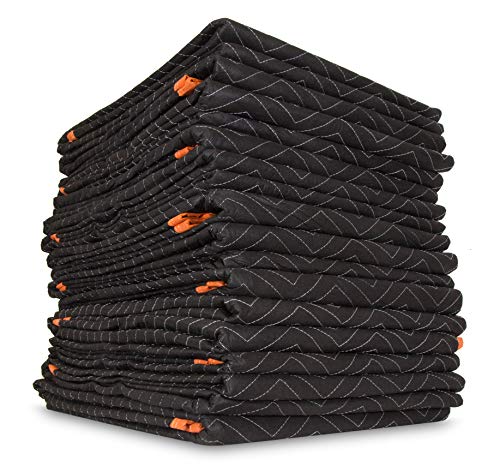
1. Amazon Basics Reinforced Tear-Resistant Moving Blankets
A six-pack of 72 by 80 inch polypropylene blankets, each about 2.75 pounds, with double-lock stitching, polyester binding and a double-sided design that can also be used to slide heavy items across a floor.
Suits: a full move with several pads. Strengths: a six-pack and reinforced stitching. Weaknesses: the listing does not describe a cotton fill. Skip it if you want a thick quilted pad.

View Amazon Basics Reinforced Tear-Resistant Moving Blankets, 72″ x 80″, Black, 6-Pack on Amazon
Best for a large move that needs many pads
2. WEN 272812 Heavy Duty Padded Moving Blankets
A 12-pack of 72 by 80 inch polyester blankets with internal padding, double-stitched edges and a machine-washable fabric, made for furniture, appliances and other large items.
Suits: a large move that needs many pads. Strengths: twelve pieces and a washable fabric. Weaknesses: the listing does not name the padding material. Skip it if you only need one or two pads.

View WEN 272812 72-Inch by 80-Inch Heavy Duty Padded Moving Blankets, 12 Pack on Amazon

Best for one or two pads for a small job
3. Stalwart Heavy Duty Moving Blanket
A single 80 by 73.5 inch quilted pad of woven polyester with recycled cotton padding, double stitching and cloth-bound edges. The maker also lists uses as a drop cloth, furniture cover or sound blanket.
Suits: one or two pads for a small job. Strengths: recycled cotton padding and bound edges. Weaknesses: sold as a single pad. Skip it if you need a bulk pack.

View Stalwart Heavy Duty Moving Blanket, 80×73.5in on Amazon

Best for a single quilted pad
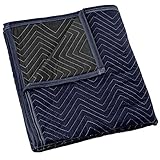
4. Sure-Max Pro Economy Moving and Packing Blanket
An 80 by 72 inch quilted pad listed by the maker at 35 pounds per dozen, with cotton batting, zig-zag stitching to hold the padding in place, polyester binding and a double-sided build. It is sold as one blanket.
Suits: a single quilted pad. Strengths: cotton batting and zig-zag stitching. Weaknesses: only one in the listing. Skip it if you want a multipack.
Best for light wrapping for many items
5. Uboxes Textile Skins Moving Blankets
A pack of 24 gray cotton-blend sheets in 54 by 72 inches, each listed at 1.66 pounds. The listing gives little detail beyond size, weight and material.
Suits: light wrapping for many items. Strengths: 24 pieces and low weight. Weaknesses: a very short listing. Skip it if you want a thick quilted pad.

Best for very large items
6. Diamond UP Moving Blankets, Double Extra Large
Four green blankets sized 144 by 80 inches, each about 7.05 pounds, with a polyester shell over recycled cotton fiber. The maker suggests wrapping large furniture or covering a car cargo area, and notes the colored material may not suit light-colored items. They are not machine washable.
Suits: very large items. Strengths: huge sheets and a heavier build. Weaknesses: not washable and bulky. Skip it if you want standard-size pads.

View Moving Blankets 4 Pack, Double Extra Large 144″x80″ – Green on Amazon
Care and Setup
- Wrap each item fully and hold the blanket on with tape made for moving or elastic bands.
- Keep the pads dry and air them out if they get damp.
- Check each listing before machine washing, since some are not washable.
- Store them folded in a dry place.
Mistakes to Avoid
- Buying too few pads for the load.
- Choosing a lightweight sheet for heavy, sharp-cornered items.
- Putting dark pads against light-colored furniture.
- Leaving them damp in storage.
How Many Blankets a Move Actually Needs
Estimating quantity avoids both shortages on moving day and a pile of unused blankets. Start by listing the large and delicate items: sofa, mattress, dresser, dining table, bookcases, appliances, TV and mirrors. Large pieces may need two or more blankets each, while small pieces may share one. Wrapping each piece fully, with some overlap, matters more than the count.
A rough method is to assign blankets per item type, then add a margin. Sofas and large tables often need several, while chairs and small cabinets need one or two. Extra blankets are also useful for padding the floor and walls of the truck, and for cushioning between stacked items. Consider the length of the trip and how much the load will shift.
- Count fragile and high-value pieces first.
- Add blankets for protecting door frames, banisters and stairwell corners.
- Plan extras in case some get dirty or wet.
- Check whether the pack count in the listing is per pack or per blanket.
If you are hiring movers, ask whether they supply blankets. Many professionals bring their own, in which case you may need fewer, or only specialty pads for pieces they do not usually protect.
Fabric Weight, Fill and Quilting
Moving blankets are generally made from layers of woven or nonwoven fabric with a recycled fiber or cotton-blend fill, stitched together. The fill determines how well the blanket cushions an impact. A thick, dense blanket protects better against knocks, while a thin one is more of a dust and scratch cover.
Listings often give weight per blanket or per dozen. Heavier blankets usually have more material, but the number does not tell you everything about the fill, stitching or durability. Treat it as one clue, and read what the seller says about the construction. Check the stitching pattern as well: dense quilting helps the fill stay in place, and loose stitching can bunch.
Consider the outside fabric. Tight weaves resist snags and dust, and some blankets have a different texture on each side. A smoother side is better against finished wood or painted surfaces, while a rougher side grips. Reinforced edges and binding resist fraying. If you plan to reuse the blankets many times, favor sturdier construction. For a single move, lighter blankets may be enough if you handle items carefully.
Wrapping Techniques That Protect Furniture
How you wrap matters as much as the blanket. Start by clearing and cleaning the furniture, removing loose parts such as drawers, shelves and cushions if you can. Wrap each piece fully, covering corners and edges, which are most likely to be hit. For polished wood and delicate finishes, place the blanket with the softer side facing the furniture.
Secure the blanket with stretch wrap, tape made for moving or straps. Do not apply tape directly to finished surfaces, since it can leave residue or lift finish. Wrap tape around the blanket instead. Use stretch wrap carefully on leather or fabric, as it can trap moisture or leave marks.
- Wrap legs separately on tables and chairs if they stick out.
- Pad mirrors and glass with extra layers, and consider cardboard corners.
- Cover upholstered furniture to protect it from dirt and grease.
- Place blankets between stacked items to prevent rubbing.
In the truck, load heavy pieces first and tie them down with straps. Wrapped furniture should not shift during transit, since movement causes rubbing even through padding. Pack tightly without crushing.
Uses Beyond the Move
Moving blankets are useful long after the boxes are unpacked. They protect floors during renovation and painting, cushion tools and equipment in a truck bed and cover plants in a cold snap. In garages and workshops, they can pad shelves, drape over a workbench or protect a vehicle from scratches while you work around it.
Some people use them as drop cloths, since the thick fabric absorbs spills better than plastic sheeting. Others hang them as temporary sound dampening or insulation on a door or window, though effectiveness varies and they are not a replacement for proper soundproofing. In a pinch, they can serve as a padded cover for an outdoor event or a picnic ground cloth, though they are not designed for that purpose.
If you have pets, you may use them to cover furniture or car seats, but the fibers can shed, so check the construction. Keep them away from open flames and heating elements, as the fill may be flammable unless the seller states otherwise. Because they are reusable, buying a modest, sturdy set can be more economical than renting repeatedly if you move or renovate often. Check the product details to see what the blanket is intended for.
Storage, Cleaning and Reuse
After the move, shake out dust and debris outside. Check for stains and damp spots. If a blanket is wet, hang it to dry fully before storing it, because trapped moisture causes mildew and odor. Spot-clean light stains with mild soap and water.
Many moving blankets can be machine washed, but the fill can bunch and the machine can be overloaded by their bulk, so read any care label and consider a large commercial machine if needed. Use a gentle cycle and cool or warm water, and dry on low heat or air-dry. Some are not meant to be washed at all.
Fold or roll them neatly and store them in a dry space off the floor, in a bin or on a shelf. Keep them away from pests by sealing them in bags or containers. Signs to retire a blanket include torn edges, thinning fill, persistent odors or mold and fabric that no longer holds together. Blankets that are heavily soiled with oil or chemicals should be thrown away rather than reused near furniture.
A Glossary of Moving Blanket Terms
- Skin or pad: two names for a quilted cover that protects furniture during transport.
- Denier: a unit describing fiber thickness. Higher numbers usually indicate a heavier, more durable fabric, though the maker’s own description tells you more.
- Cotton and polyester blend: a common fill and shell mix that balances softness and durability.
- Non-woven: a fabric made by bonding fibers instead of weaving them. It is usually lighter and less costly to produce.
- Stitching pattern: the lines of thread that hold the layers together. Tighter stitching helps the pad keep its shape.
- Reinforced edges: bound or hemmed borders that resist fraying.
- Weight per dozen: a trade figure that describes the combined weight of twelve blankets, often used to compare grades.
Sizing and Quantity Questions
Buying too few blankets makes moving day stressful, and buying too many wastes storage. Plan according to your belongings.
Standard size
Most moving blankets are made in a size close to six feet by seven feet, though listings vary. Check the exact measurement against the largest items you plan to wrap, such as a sofa or a wardrobe.
How many do you need?
A small apartment often needs a handful, while a house with several large pieces may need a dozen or more. Make a list of furniture and note which pieces need a full wrap and which just need padding on the corners.
Rent or buy?
If you will move only once, renting may make sense. If you plan to move often, store items or use blankets for other jobs, owning a set can be handy.
Other uses
Moving blankets also protect floors, cover tools, make a work surface cushion and shield items stored in a garage. Think about extra uses when you decide on quantity.
How to Read a Moving Blanket Listing
Many listings look alike, so focus on the facts that separate them. First, find the exact dimensions, because a blanket described as large may be smaller than you expect. Second, look at the material mix and any mention of fill and shell. A thicker blend generally offers more cushion, while a lighter non-woven option may suit light protection jobs.
Third, look for how the layers are held together. Descriptions that mention reinforced stitching or bound edges suggest the pad should hold up to repeated use. Fourth, read about the packaging. Blankets often arrive in a compressed bundle, so give them a day to relax before you use them.
Finally, check the seller notes on returns and on quantity. Some listings sell by the single blanket, others in packs, and the cost per piece can look different depending on how the quantity is presented. Compare by the number of blankets and their size, not by the headline.
Mistakes to Avoid on Moving Day
Wrapping too loosely. A pad that slides off during transport protects nothing. Secure it with wrap or straps that the item can bear.
Putting tape on finished wood. Adhesive can damage some finishes. Use wrap that sticks to itself, or tape on the blanket only.
Forgetting the floors. Hallways and stair landings take a beating. Lay blankets where you will walk with heavy loads.
Packing wet items. Moisture trapped under a pad can harm wood and fabric. Dry everything first.
Skipping help. Heavy items need more than one person. Ask friends or hire professionals if you are unsure.
Moving Day Checklist
- Clear and measure doorways, hallways and stairs before you lift anything.
- Wrap each piece of furniture so that corners and edges are covered.
- Secure the blankets with stretch wrap, tape made for moving or straps, avoiding tape directly on delicate finishes.
- Protect door frames and banisters with spare blankets.
- Load heavier items first and keep them near the front of the truck.
- Pad the gaps between items so nothing slides.
- Use proper lifting techniques and get help for heavy pieces. If something is too heavy, hire professional movers.
Decision Table by Move Type
| Your move | What to prioritize | Worth checking |
|---|---|---|
| Short move across town | A moderate, durable blanket | Edge reinforcement and stitching |
| Long distance with a truck | Thicker pads that stay in place | Weight and fabric strength |
| Delicate wood furniture | Soft inner fabric and clean pads | Surface feel and lint behavior |
| Storage for months | Breathable fabric | Maker guidance on long-term storage |
| Floor and wall protection | Large, thick blankets | Size and grip on slippery floors |
Care and Reuse Notes
After the move, shake out dust and dirt and let the blankets dry fully before folding them. Follow the care label for washing, since some blankets can go in a large machine and others should only be spot cleaned. Store them in a dry space off the floor, ideally in a bag or bin, to keep out moisture and pests.
Check each blanket before reuse. Tears, thin patches and loose stitching reduce protection, and worn pads are best retired to jobs like covering paint cans or kneeling pads. Keep a few spare ones on hand for the next move or for a messy home project.
Moving Blanket FAQ
What size should I get?
Larger sheets of about 72 by 80 inches wrap most furniture. The 144 by 80 inch wraps suit very large pieces.
Are they washable?
The WEN lists machine washable polyester. The Diamond UP is listed as not machine washable.
How many blankets do I need for a one-bedroom move?
It depends on your furniture. Count the large pieces and plan several for sofas and mattresses, fewer for small items, then add extras. Confirm whether professionals bring their own.
Should I use tape on the blankets?
Use moving tape or stretch wrap on the outside of the blanket, not directly on furniture. Tape on finished wood can leave residue.
Can moving blankets protect a TV?
They offer padding, but a TV needs careful packing, ideally in its original box or a specialized box. Use a blanket as an extra layer.
Can I use them to protect floors?
Yes, they are often used on floors and stair treads during moves. Secure them so they do not slip, since a loose blanket can be a trip hazard.
Do they smell?
Some have a slight odor from manufacturing that fades with airing. If the odor persists or smells like mold, check for dampness.
Are they waterproof?
Most are not. They may absorb moisture, so cover them with plastic if you expect rain. Check the listing for water-resistant claims.
How should I carry a wrapped item?
Use proper lifting technique, get help for heavy pieces and use dollies or straps. Make sure the blanket does not slip and cause a fall.
Planning the Move Around Your Blankets
A move goes better when the blankets are planned as part of the system rather than bought as an afterthought the night before. Start by walking through your home with a notebook and listing every item that can be scratched, dented or used to scratch something else. Dressers, tables, bookcases, appliances, mirrors, artwork and electronics all belong on that list, and each one represents at least one blanket, sometimes two.
Work out where the blankets will be staged on the day. A pile by the front door sounds convenient until it blocks the path for the largest items, so choose a staging spot just inside the room being emptied, and move the pile as the work progresses. Keeping blankets, stretch wrap, tape and straps together in one kit means nobody wastes the busiest hour of the move hunting for supplies.
Decide in advance which items get the thickest protection. Solid wood furniture with polished surfaces, glass-fronted cabinets and anything with sentimental value deserve the heaviest pads in your set, while sturdy laminate pieces and plastic storage furniture can travel under the lighter blankets. Mixing grades deliberately, as several picks in this guide allow, is more sensible than buying the heaviest blanket for everything.
Finally, plan the return journey of the blankets themselves. If they are rented, note the return deadline and keep them together rather than scattered between two addresses. If they are yours, decide where they will live at the new home before the truck is unloaded, because a dozen bulky pads with no home become clutter on the very first day.
Wrapping Different Furniture, Piece by Piece
A dining table travels best with its legs removed where the design allows, each leg wrapped separately and the top padded on both faces. Lay the blanket on the floor, place the top face down on it, fold the edges over and secure them with stretch wrap rather than tape against the wood. Carried on edge, a wrapped table top passes through doorways with far less risk than one carried flat.
Dressers and chests should be emptied, because drawers full of belongings add weight exactly where carriers grip, and loose contents shift and slam in transit. Wrap the carcass with the drawers in place and the doors facing inward toward the padding, then wrap around the whole piece so the drawers cannot slide open on a ramp or a staircase.
For sofas and armchairs, the danger points are the corners of the arms and the feet, which catch on door frames. Pad those first with offcuts or a folded blanket, then cover the whole piece. Carry upholstered furniture tilted so the padded corners lead, and agree with your partner which end goes first before you lift, not halfway through the doorway.
Appliances need a different touch. A refrigerator or washer should be padded on the sides and back, with the front controls protected by a folded layer, and the doors secured shut so they cannot swing open when the appliance is tilted onto a dolly. Keep the power cord coiled and taped to the back of the appliance itself, never trailing where a carrier can trip on it.
Loading the Truck So Padding Can Do Its Job
Blankets protect best in a truck that is loaded in stable layers. Heavy, square items form the base and the walls; mattresses stood on edge make excellent partitions between furniture zones; and every gap that would let a piece travel and gather momentum should be filled with a folded blanket, cushions or a rolled rug. Movement inside the truck causes more damage than the road itself.
Place the most fragile wrapped pieces last and highest, where nothing will be stacked on them and where they can be unloaded first at the other end. Mirrors and glass should ride on edge, wedged between mattresses or against a flat wall of boxes, never flat under weight. A blanket between two hard surfaces is doing real work; a blanket under a pile is mostly decoration.
Use straps to hold zones together once they are built, passing them over padding rather than bare wood wherever the strap crosses a finished surface. Check the load after the first few minutes of driving if you can stop safely, because loads settle, and a strap that was tight at the kerb can be loose a mile later.
Unload in the reverse order of your plan, carrying blankets back to a single pile as each piece is unwrapped. This sounds like housekeeping, but it prevents the classic end-of-move scene: half the pads missing, some left in the truck, some under boxes at the old address, and a rental deadline approaching with an incomplete set.
Protecting Floors, Walls and Doorways
Moving blankets earn a second living as protection for the building itself. Lay them along the hallway route from the largest rooms to the door, especially over thresholds, wooden floors and the corners where trolleys turn. A pad under a dolly’s path silences the run and saves the floor from the scuffs that cost tenants their deposits.
Door frames deserve their own padding. A folded blanket draped over the top of an open door, or taped loosely around a frame at hand height, absorbs the knocks that otherwise chip paint and plaster. Stair rails and newel posts benefit the same way, and on narrow stairs a blanket on the steps improves grip for carriers wearing smooth-soled shoes.
At the new home, protect before you unload, not after the first scratch. Walk the route, lay the floor runners, pad the tight corner, and only then bring in the first heavy piece. Five minutes of preparation at the destination prevents the damage that people most regret, because it happens to a home they have not even moved into yet.
When the move is over, shake outdoor-used blankets thoroughly before they come inside for storage. Grit trapped in the quilting is abrasive, and a gritty blanket folded away will quietly sand whatever it touches next time it is used, including the furniture it was bought to protect.
After the Move: Cleaning, Storing and Second Lives
Inspect each blanket as you fold it after the move. Look for torn binding, thinning patches and any dampness, because a blanket stored damp will smell musty for years and can mark whatever it is stored against. Air suspect blankets outdoors until they are completely dry, even if that takes a full day, before they go into a cupboard or loft.
Wash only as the maker’s instructions allow, and expect these heavy pads to challenge a domestic machine. Many households do better with a vigorous shake, a brush down, and spot cleaning of the marks that matter, reserving full washing for blankets that are genuinely soiled. A commercial laundrette machine, where washing is permitted, handles the bulk and water weight far more comfortably.
Store them folded in a dry place off the floor, ideally on a shelf rather than in a sealed bag in a damp garage. Folded differently each time they are put away, the quilting avoids permanent crease lines in the same place. Keep a note of how many you own tucked with the pile; future you, planning a smaller job, will be glad of the count.
The second lives of moving blankets are famously varied: workshop bench covers, padding under a car during repairs, sound softening in a practice room, a base layer under a tent, protection for a bicycle in storage, or a kneeling pad for gardening. A set bought for one move and kept in reasonable condition will repay its place in the cupboard many times over.
Renting, Borrowing and Buying: Making the Call
Renting suits a single local move with a firm return route, especially when storage space at the new home is tight. The catch is timing: rental blankets must go back clean and complete, and the final day of a move is exactly when energy for counting pads runs out. If you rent, photograph the pile you received and keep the count on your phone.
Borrowing from friends who have moved recently is the cheapest option of all, but agree the terms while everyone is still cheerful. Ask how many they have, when they need them back, and what condition they expect. Return them cleaner than you received them and add a small thank-you; moving blankets circulate through friendship networks for years when they are treated well.
Buying makes sense when another move is likely, when you regularly transport furniture, tools or instruments, or when you want pads for the workshop and garden uses described above. The picks in this guide span light economy pads through to heavy quilted blankets, and a mixed set, a few heavy and several light, often serves a household better than a uniform stack of either.
Whichever route you choose, decide early. Blankets are bulky, deliveries take time, and rental fleets empty out at the end of the month when everyone moves at once. The household that has its padding sorted a week ahead is the household that spends moving day moving, rather than improvising with towels and hope.
Counting Blankets Room by Room
The kitchen is easy to underestimate. Appliances need padding, but so do the wooden chairs stacked inside the truck, the microwave, and any glass-fronted cabinet doors removed for safe carrying. Allow blankets for the dining set as a group rather than piece by piece, because chairs travel nested and wrapped together.
The living room usually holds the largest single items and the most awkward shapes. A sofa may take two blankets to cover fully, a bookcase one, and lamps and shades are better boxed than wrapped. Count the television separately: it deserves either its original box or the most careful wrapping of the day, with the screen face padded and nothing hard resting against it.
Bedrooms consume blankets quietly. Each bed frame breaks down into rails and slats that scratch whatever they lean against, each mattress benefits from a cover or a pad at its edges, and every dresser, wardrobe door and mirror adds to the tally. Walk the room and count surfaces, not objects, and the estimate improves.
Do not forget the spaces people overlook: the hallway pictures, the garage shelves, the garden furniture coming along in the same load. A final walk through the emptying house with the blanket pile in sight settles the count better than any formula, because you can see both the remaining furniture and the remaining pads at once.
Straps, Wrap and Tape: The Supporting Kit
Blankets alone do not hold themselves in place. Stretch wrap is the partner that makes padding practical, binding a blanket to a piece without adhesive touching any finished surface. Buy more than you expect to use; running out of wrap halfway through loading is a small misery that echoes through the whole day.
Moving straps and a good dolly change what two people can safely carry, and they protect furniture indirectly by preventing the drops and drags that cause real damage. A heavy dresser carried on a dolly, padded and strapped, travels calmly. The same dresser carried by two tired people, however well wrapped, is one stumble away from a corner through a wall.
Tape has a narrow role: securing wrap to itself, sealing boxes, and labelling. It should never be applied directly to wood, leather or painted finishes, where it can lift the surface or leave residue that takes longer to remove than the move itself. If a helper reaches for tape near furniture, hand them the wrap instead.
Gloves, a marker, and a basic tool kit for legs and doors complete the kit. Furniture is often one Allen key away from travelling in safer, smaller pieces, and the five minutes spent removing legs and handles is repaid at every doorway. Keep the screws in a labelled bag taped to the underside of the piece they belong to.
Special Cases: Pianos, Artwork and Heirlooms
Upright pianos and similarly concentrated weights are beyond blankets and optimism. They need specialist movers with the right boards and straps, and the cost is justified by the damage an amateur attempt can do to the instrument, the floor and the people involved. Use your blankets for the rest of the room and let professionals take the piano.
Artwork travels best in order of fragility. Glazed pictures should be padded face to face in pairs with a blanket between and around them, carried on edge, and never laid flat under other items. Canvases without glass need protection from pressure rather than impact, since a thumb pressed into the back of a canvas leaves a mark that shows forever.
Heirlooms ask for a decision before moving day: which pieces matter enough to travel in the car with you rather than in the truck at all? Small, irreplaceable items, jewellery boxes, clocks with loose mechanisms, the family photograph album, ride better in a padded box on a car seat than anywhere in a loaded truck, however carefully wrapped.
Musical instruments sit between furniture and heirlooms. A guitar in a hard case needs only a blanket around the case; a cello or a drum kit needs its cases padded and kept away from heavy zones in the load. Brass and woodwind in cases are tougher than they look, but nothing heavy should ever rest on top of them.
Moving in Bad Weather and Other Complications
Rain turns a move into a logistics problem that blankets can partly solve. Keep a dry reserve of pads inside the new home for the final placement of furniture, and accept that the set used on the truck and the wet pavement will come home filthy. A tarpaulin over the loading area and a runner of old blankets from door to truck keeps the worst of the water off both furniture and floors.
Cold weather mainly threatens people rather than furniture, but tired, cold carriers drop things. Shorten carries with a dolly, clear ice from paths before the first load, and rotate helpers indoors to warm up. In hot weather the same logic applies in reverse: shade, water and rest breaks protect the crew, and protected crews protect the furniture.
Long distances change the packing standard. A piece that would ride happily across town with one blanket needs its padding secured for hours of vibration on the motorway, because wrap loosens and blankets creep over a long journey. Check and retighten at fuel stops, and pad the gaps that opening and closing the doors will reveal.
Storage between homes is the hardest case of all. Furniture going into a unit for weeks or months should be wrapped clean and dry, raised off the floor on pallets or battens, and left with air able to circulate. A blanket sealed tight around a slightly damp piece for a season will do more harm than no blanket at all.
Teaching Helpers to Wrap Well
Most moves run on borrowed labour, and the quality of the wrapping depends on a two-minute demonstration at the start. Show one piece wrapped properly, blanket fully covering the corners, wrap binding the padding, nothing taped to a finish, and let that piece stand as the standard for the day. People copy what they can see far better than what they were told an hour earlier.
Assign the wrapping to the people with patience and the carrying to the people with strength, and do not be embarrassed about the division. The friend who wraps carefully is worth more to your furniture than the friend who can lift a wardrobe, and both should hear that said out loud.
Agree the words before the lifting starts. Which end is the top, what ready means, and a single word for stop that everyone honours instantly. Most moving injuries and most furniture damage happen in the confused seconds when two carriers have different pictures of the next step, on stairs above all.
Feed the crew and thank them specifically. It is not softness to say so in a guide like this; a fed, rested crew in the last hour of the day wraps the final pieces as carefully as the first, and the final pieces are usually the ones loaded in the dark by people who have stopped caring. Care, sustained, is the whole subject of moving blankets.
What Worn-Out Blankets Look Like, and When to Replace Them
A moving blanket wears out in recognisable ways. The binding goes first, fraying at the edges where it has been dragged and folded, then the quilting stitches break and the fill begins to migrate, leaving thin patches exactly where padding matters. Hold a suspect blanket up to the light: the thin places announce themselves.
Thin patches matter because protection is about the worst point, not the average. A blanket that is plump over most of its area and bare at one corner will fail at that corner, which is statistically likely to be the corner that meets the door frame. Demote worn blankets to floor protection and workshop duty, where their thinness does no harm.
Smell is the other retirement test. A blanket that has absorbed damp, spills or a season in a musty garage carries that smell into every future load and transfers it to upholstery. Washing may rescue it; if the smell survives washing and a day of outdoor air, the blanket has finished its furniture career.
Keep the set honest by replacing one or two blankets at a time as they fail, rather than waiting for the whole stack to decline together. A household that moves every few years, or lends its pads to friends doing the same, will find a rolling replacement keeps a dependable set permanently on the shelf.
One More Use for the Pile: Home Projects All Year
The household that owns moving blankets discovers uses for them in every season. A pad under a ladder protects a wooden floor during decorating, a folded blanket makes a kneeling station for floor-level repairs, and a draped pad over a banister guards it while furniture for a single room is carried up the stairs for a reshuffle that would never justify hiring help.
Gardeners press them into service as frost protection for tender plants in pots that cannot come indoors, as a clean surface for potting work, and as padding under a wheelbarrow load of tools. None of these jobs demands a pristine blanket, which is why the slightly worn members of the set, demoted from furniture duty, still earn their storage space.
Pet owners find their own uses: a washable pad in the back of the car, a familiar-smelling layer in a crate during a house move, which comforts an animal surrounded by change, and a protective cover for the sofa when a muddy dog has decided the walk is over. A blanket that has served furniture can serve the dog without any loss of dignity.
The point of listing these uses is economic as much as practical. A set of blankets bought for one move and then worked gently for a decade costs very little per year of service, while a set used once and discarded is expensive padding however cheaply it was bought. When you choose among the picks in this guide, you are really choosing a long-term household tool that happens to debut on moving day.
Labelling and Counting on the Day Itself
As each piece is wrapped, a strip of masking tape on the blanket, never on the furniture, can carry the room it belongs to and the room it is going to. At the new home, carriers read the label and walk straight to the right room, which saves the hallway pile-up that makes unloading feel chaotic. The tape comes off the blanket when the piece is unwrapped, so the pads return to the pile clean and ready for their second career around the house.
The Short Version
For a six-pack, the Amazon Basics. For twelve pads, the WEN. For one quilted pad, the Stalwart or the Sure-Max. For light wrapping, the Uboxes. For very large items, the Diamond UP.