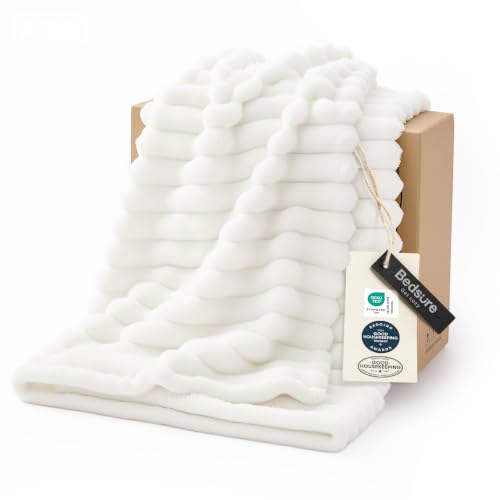
A full-size electric blanket is a bed-sized blanket with built-in heating wires and a plug-in controller. Full sizes run roughly 72 to 84 inches on a side, so check the exact dimensions against your mattress. The controller usually sets the heat level and an auto-off timer, and most listings say the controller is detached before washing.
The six blankets below are all sold as full size and differ in fabric, number of heat settings and timer length. Details come from each product’s listing page. We have not used these blankets ourselves, and certifications and temperature figures are the makers’ own claims.
As an Amazon Associate we earn from qualifying purchases. Links below are affiliate links, and they do not change the product information we give.
What to Look For
| Feature | Why it matters |
|---|---|
| Dimensions | Full-size listings vary, from 72 x 84 to 84 x 77 inches |
| Heat settings | More levels allow finer adjustment |
| Auto-off timer | Maximum length ranges from 10 to 12 hours here |
| Fabric | Sherpa, plush and fleece feel and weigh differently |
| Care | Check whether the controller detaches and how to dry it |
In this guide
Specs at a Glance
| Blanket | Size | Heat and timer | Fabric and notes |
|---|---|---|---|
| Serta | 84 x 77 in | Listing says both 5 and 10 heat settings; 1 to 12 hour timer | Reversible fleece to sherpa; one controller |
| Beautyrest Plush | 84 x 80 in | 20 settings; 1 to 10 hour timer | Microlight plush; 1-hour pre-heat; one controller |
| Degrees of Comfort | 80 x 84 in | 20 settings; 1 to 10 hour timer | Sherpa on one side, mink-style weave on the other |
| Sunbeam Royal Ultra | 84 x 72 in | 12 settings; 1 to 12 hour timer | Polyester fleece; backlit digital controller |
| Soypipo | 72 x 84 in | 9 settings; 10-hour timer | Reversible polyester; the colorway we read is a leopard print |
| Garvee | 72 x 84 in | 10 settings; up to 12 hour timer | Jacquard sherpa plus sherpa fleece; 6.6 lb |
The 6 Best Full-Size Electric Blankets

Top pickBest for a fleece-to-sherpa look with a long timer
1. Serta Heated Blanket, Reversible Fleece to Sherpa
An 84 by 77 inch blanket in fleece that turns to sherpa, with an auto shut-off timer from 1 to 12 hours, a single controller at full size and machine-washable care. The listing text mentions both 5 and 10 heat settings, so confirm the count before you buy.
Suits: a fleece-to-sherpa look with a long timer. Strengths: a timer up to 12 hours and machine washing. Weaknesses: the listing’s heat setting count is inconsistent. Skip it if you want two controllers at full size.


Best for fine control with a plush surface
2. Beautyrest Heated Plush Electric Blanket, Full
An 84 by 80 inch microlight plush blanket with 20 heat settings, a one-hour pre-heat feature and an auto-off timer from 1 to 10 hours. The maker says it works with smart outlets and gives a heat range of 85 to 105 degrees Fahrenheit, depending on room temperature.
Suits: fine control with a plush surface. Strengths: 20 settings and a pre-heat mode. Weaknesses: one controller at full size. Skip it if you want a sherpa side.

Best for a two-texture blanket
3. Degrees of Comfort Fuzzy Sherpa Plush Heated Blanket
An 80 by 84 inch polyester blanket with a thick sherpa finish on one side and a silkier mink-style weave on the other, 20 heat settings and a 1 to 10 hour adjustable timer. The listing says to detach the controller and wash on a cold, slow cycle.
Suits: a two-texture blanket. Strengths: 20 settings and a five-year warranty claim. Weaknesses: the listing describes it as heavyweight. Skip it if you want a light blanket.

Best for a readable controller
4. Sunbeam Royal Ultra Fleece Heated Blanket, Full
An 84 by 72 inch blanket in 100 percent polyester fleece with 12 heat settings, a backlit digital controller that is easy to read in a dark room and a selectable auto-off from 1 to 12 hours. The controller detaches for machine washing.
Suits: a readable controller. Strengths: a backlit display and 12 settings. Weaknesses: it is narrower than other full sizes at 72 inches. Skip it if you want a sherpa surface.

View Sunbeam Royal Ultra Fleece Heated Blanket Indigo Blue Full 84 x 72 in on Amazon
Best for a patterned, reversible look
5. Soypipo Electric Heated Blanket, 72 x 84
A reversible polyester blanket with 9 heat settings reaching up to 108 degrees Fahrenheit, a 10-hour adjustable auto-off timer and a detachable controller for cold, gentle machine washing. The listing says not to tumble dry. The variant we read is a blue and yellow leopard print.
Suits: a patterned, reversible look. Strengths: a stated temperature ceiling and a 10-hour timer. Weaknesses: no tumble drying. Skip it if you need a dryer-safe blanket.
View Soypipo Electric Heated Blanket 72″x84″, 9 Heat Settings 10-Hour Auto-Off on Amazon

Best for a thick, plush sherpa blanket
6. Garvee Electric Heated Full Blanket
A 72 by 84 inch, 6.6 pound blanket with 3D jacquard sherpa on one side and sherpa fleece on the other, 10 heat settings up to 122 degrees Fahrenheit by the maker’s figure, and a preheat program for the first 30 minutes. The listing also mentions a timer up to 12 hours and ETL and FCC certification.
Suits: a thick, plush sherpa blanket. Strengths: a pre-heat program and a 12-hour timer. Weaknesses: at 6.6 pounds it is heavy. Skip it if you want a light blanket.

View Garvee Electric Heated Full Blanket,10 Heating Levels 12 Time Setting,Green on Amazon
Care and Setup
- Unplug the blanket and detach the controller before washing.
- Follow the label for water temperature and drying.
- Keep the controller uncovered while the blanket is in use.
- Lay the blanket flat; do not fold it while it is on.
Mistakes to Avoid
- Assuming every full size has the same dimensions.
- Skipping the manual’s use and washing instructions.
- Tumble drying a blanket whose listing says not to.
- Counting on two controllers at full size; these listings include one.
Safety Features and What Certification Labels Mean
Electric blankets have heating wires or elements woven or sewn into the fabric, so safety features deserve attention. Start with the controller. Look for an automatic shut-off timer, which turns the blanket off after a set number of hours, and overheat protection, which the maker describes as cutting power if temperatures rise too high. These features reduce, but do not remove, the need to use the blanket carefully.
Listings often show marks from testing laboratories, such as ETL or UL, and sometimes mention FCC compliance. Such labels generally mean that a product was tested against a safety or compliance standard, but the wording varies, and what the label covers depends on the lab. Check the listing for the exact name and look for the mark on the product or controller when it arrives. Do not read a label as a promise that the blanket is risk free. The claims in a listing are the maker’s own.
Read the manual before first use. Most makers say not to use the blanket if it is folded, bunched up or tucked under a mattress in a way that traps heat. Many advise against use by infants, anyone who cannot feel heat or cannot turn off the controller themselves, and people with certain medical devices or conditions. If any of these apply, ask a doctor and follow the maker’s warnings.
Inspect the blanket and cord before each season. Look for frayed wires, scorch marks, damaged connectors or lumps in the wiring. Stop using a blanket that shows any of these signs, and do not try to repair it yourself. Replace it, or contact the maker.
Controllers, Heat Levels and Timers in Practice
The controller is how you use the blanket every day, so it deserves thought. Dial controllers are simple, while digital ones show numbers and may offer more settings. Backlit screens help in a dark room, and a long cord lets you reach the controller from bed. Check where the cord connects, since it should not be pulled tight.
More heat levels give finer control, but the difference between levels is not standardized. One maker’s level five is not necessarily another maker’s. Start low and move up as needed. Because heat builds as the blanket warms, many people set a higher level to preheat the bed, then lower it before they get in. Some blankets have a preheat feature that does this automatically, according to their listings.
Auto-off timers vary in length. A shorter timer suits people who fall asleep quickly and don’t want heat all night, while a longer one suits people who like warmth through the night. Check whether the timer can be changed and whether it resets when you press a button. Turn the blanket off, or use a low setting, when you are asleep unless the maker says overnight use is fine.
If you share a bed, think about dual controls. Blankets for two people sometimes have separate zones and controllers so each person sets their own heat. Single-controller blankets heat the whole surface at once. In larger sizes, dual zones are common, so confirm what the listing says for your size.
Sizing and Fit on the Bed
Electric blankets are sold by bed size, but dimensions vary by brand. Measure your mattress width, length and depth, then compare with the listed blanket size. A blanket that is too small leaves one side uncovered, while an oversized one can drape unevenly or bunch. Overhang matters if you want the blanket to hang on both sides, and a deeper mattress needs more fabric.
Think about how you use it. A blanket used over the top of your bedding, as an extra layer, should sit smoothly with no folds. Some people place it directly under a comforter or duvet to hold heat in. Others use it as a throw on a sofa. Check the maker’s instructions for approved use, since some are made to go on top of the sheet, and others can go beneath.
Be aware that a blanket needs space for its cord and controller. Position the cord so it is not caught by the bed frame or stretched across the floor. A controller that is tucked between mattress and headboard can overheat or be damaged, so keep it uncovered and accessible. Check where the plug meets the outlet, and avoid extension cords unless the maker’s manual says they are acceptable.
When a bed is shared by people of different sizes, sizing up can help, though it should still lie flat. Measure twice and double-check the listing. If the dimensions in a listing disagree, ask the seller or compare with the maker’s own specification before ordering.
Fabrics, Weight and Warmth
Fabric changes how a blanket feels and how it handles heat. Fleece and microplush are soft and light, with a smooth surface. Sherpa is a fuzzy, textured fabric that traps heat and feels thick. Mink-style weaves sit between the two. Cotton or cotton-blend options are less common but may suit people who dislike synthetic fabrics. Check the fabric on both sides, since many blankets use two different textures.
Weight affects comfort. A heavier blanket feels cozy and stays in place, but can be warm for hot sleepers and harder to wash. A light one is easier to handle and dry. Listings sometimes give weight, and that is useful to compare. Thicker fabric tends to hold warmth longer after the controller is turned off, according to the makers’ claims.
Think about the season and room. If your bedroom stays cold, a thicker fabric and higher heat range suit it. If you tend to run warm or live in a mild climate, a thinner blanket with lower settings may be enough. Because the blanket adds warmth to your bedding, you might need fewer layers on top.
Look at the stitching and construction. Even quilting or channel stitching keeps the wires in place. Check how the wires are described and whether the listing says anything about flexibility and comfort. Fabric that pills, sheds or feels scratchy can be an annoyance, so look at what the maker says about care.
Washing, Storage and When to Replace
Follow the care label closely. Disconnect the controller and unplug the blanket before washing. Many electric blankets can be machine washed on a gentle cycle in cool or warm water with mild detergent, but some should be hand washed or not washed at all. Do not dry clean unless the label allows it, and do not use bleach or fabric softener unless the maker says so. Drying instructions vary from tumble dry low to line drying, so follow the label.
Make sure the blanket is fully dry before use. Damp wiring is a hazard. Do not iron it, and never wring or twist it hard, since that can damage the wires. Lay it flat or hang it evenly to dry, away from direct heat sources.
For storage, fold it loosely or roll it, and put it in a breathable bag or box in a dry place. Avoid sharp creases, tight folds and heavy objects on top. Keep the controller and cord with it, and check them when you take it out of storage. Test the blanket on a low setting before the cold season, not in the middle of the night.
Replace an electric blanket if it shows signs of damage, such as frayed or exposed wires, scorch marks, hot spots, lumps or kinks in the wiring, a damaged controller or cord, or a controller that does not respond properly. Some makers give a suggested service life in the manual, so check the guidance for your model. Consider budget tiers too: basic blankets offer a few settings, mid-range ones add finer controls and plush fabrics, and higher tiers add dual controls and larger sizes.
A Pre-Season Checklist Before You Plug One In
An electric blanket spends most of the year folded in a closet, so the first cold night is the right moment for a careful look. Taking a few minutes to inspect it and follow the maker’s guidance makes the whole season smoother.
- Unfold the blanket fully on the bed and check the fabric for thin spots, snags or damage.
- Look over the cord and the plug where it meets the blanket for fraying, discoloration or cracks.
- Confirm the controller buttons respond and the display lights up as the manual describes.
- Smooth the blanket flat so the internal wiring is not bunched or twisted.
- Read the manual again for placement instructions, including whether to tuck the edges.
If anything seems off, stop and contact the maker instead of using the blanket. Never use one that looks damaged. Keep the controller where you can reach it without pulling on the cord, and route the cord so it will not catch under a bed leg or get stepped on.
Many people like to switch the blanket on for a short stretch before bed, then follow the maker’s guidance about whether it may stay on overnight. Check your own model’s instructions, since rules on auto shut-off and continuous use differ from one design to the next.
Sherpa, Fleece and Plush: Choosing a Surface by Season
Fabric changes how a heated blanket feels more than most shoppers expect. Sherpa has a woolly, textured surface that feels cozy right away, while fleece is smoother and lighter. Plush sits somewhere in between, soft to the touch with a gentle pile. Reversible designs combine two textures, so you can flip them as moods or temperatures change.
| Surface | Feel | Good for |
|---|---|---|
| Sherpa | Thick and fluffy | Cold bedrooms, throw-over use |
| Fleece | Smooth and light | Layering under a comforter |
| Plush | Soft and even | All-round bedding |
Think about how you will use it. If it lives on top of the bed as the top layer, a thicker surface holds warmth well. If it goes beneath a duvet, a thinner one keeps the bed from feeling bulky. Whatever you choose, follow the washing guidance on the care label, since controllers must be detached first and drying methods vary.
One more practical point is bed size. A full blanket on a queen bed leaves the edges bare, and an oversized one can pool on the floor and pull the cord taut. Measure the mattress and compare it with the stated blanket dimensions, then pick the closest match. If two people share the bed and prefer different warmth, look for a design with controls for each side as described in the listing, and read the manual for how the zones work.
Electric Blanket FAQ
What does full size mean for an electric blanket?
Here it ranges from 72 x 84 to 84 x 77 inches, so compare the measurements, not just the label.
Can I wash them?
All six listings describe machine washing after the controller is detached. Drying instructions differ.
Is it safe to sleep with an electric blanket on all night?
Follow the maker's instructions. Many blankets have auto-off timers, and some makers advise turning the blanket off or to a low setting before you sleep. Check the manual for your model.
Can I use an electric blanket under a comforter?
Some can, but check the maker's guidance. Do not bunch, fold or cover the controller, and avoid trapping heat in a way the manual warns against.
Who should not use an electric blanket?
Makers commonly advise against use by infants and anyone who cannot feel heat or turn the controller off. Ask a doctor if you have a medical condition or device, and follow the manual.
How can I tell if my blanket is damaged?
Look for frayed or exposed wires, scorch marks, lumps in the wiring, a damaged cord or plug, and hot spots. Stop using it and replace it if you see any of these signs.
Can I wash my electric blanket?
Many can be machine washed after the controller is removed, but follow the care label. Make sure the blanket is completely dry before plugging it back in.
Does an electric blanket use a lot of electricity?
Power use depends on the model and how long it is on. The listing may state wattage. Using a timer and lower settings reduces running time.
Should I preheat the bed?
Many people do, then lower the setting or turn the blanket off before getting in. Some models include a preheat feature, so follow the manual.
Can I use an extension cord with an electric blanket?
Many manuals advise against it. Plug the blanket directly into a wall outlet unless the maker says otherwise.
How an Electric Blanket Changes a Winter Bedroom
An electric blanket changes the economics and the feel of a winter bedroom at once. Instead of heating a whole room to comfort for the sake of one cold bed, you warm the bed itself, and the rest of the room can stay at the cooler temperature many sleepers actually prefer for breathing and for deep sleep. The picks in this guide are full-size blankets, made to be that central layer rather than a small throw.
The sensation is distinct from a hot room. Sliding into a preheated bed removes the first ten cold minutes that make winter bedtimes a small ordeal, and once you are warm, a low setting maintains comfort without the stuffiness of an overheated bedroom. Many owners find they use the blanket most heavily for preheating and lightly, or not at all, through the night.
That pattern should guide your choice. If preheating is your main use, the speed and evenness of warm-up matter more than a long list of settings. If you sleep with the blanket on, the timer behaviour, the fineness of the low settings and the controller’s ease of use in the dark become the deciding features, and the entries in this guide flag those differences.
Expect the first week to involve experimentation. Settings that feel right on a mild night will be wrong in a cold snap, and partners sharing a blanket will negotiate. Dual controls, where a pick offers them, exist because that negotiation is universal, and households with two very different sleepers should weight them heavily.
Heat Settings, Timers and Controllers in Real Use
A long list of heat levels is only useful if the steps between them are perceptible and the lowest settings are genuinely gentle. On many blankets the practical range is the bottom half of the dial: a whisper of warmth for most nights, the middle for cold ones, and the top reserved for preheating. Judge a controller by how it behaves at those low settings, not by the number printed on it.
Timers are the safety and convenience feature owners come to value most. A blanket that switches itself off after a set period lets you fall asleep without a decision, and it ends the midnight question of whether you left it on. Set the timer as part of the bedtime routine, the way you set an alarm, so it never depends on remembering in a drowsy state.
The controller itself should be operable by touch. You will adjust it in the dark, half asleep, possibly with cold hands, so a dial or buttons with distinct positions beat a smooth touchscreen-style control every time. A small display or indicator you can check at a glance, without lighting the room, completes a design that respects its actual conditions of use.
Cord length and controller placement deserve a thought before the first night. The controller must reach a surface beside the bed without the cord crossing where feet land in the morning, and the connection at the blanket should sit where it will not be lain on. Five minutes arranging this once saves a winter of small annoyances.
Safety Habits That Become Second Nature
Modern electric blankets carry protective features their ancestors lacked, but the habits of the household remain half the safety system. Unfold the blanket fully when it is on; a bunched or folded electric blanket concentrates heat in the folds. Make the bed with the blanket lying flat and smooth, and treat any morning discovery of it crumpled under a sleeper as a prompt to lower the setting and straighten the routine.
Inspect the blanket at the start of the season and whenever it has been stored, looking along its length for scorch marks, stiffness, exposed wiring or a cord that is frayed or sharply bent near the connectors. A blanket that shows any of these is retired, not repaired at home, because the damage you can see implies the damage you cannot.
Keep the blanket’s life separate from the rest of the laundry pile’s rough handling. Follow its own washing instructions exactly, detach controllers where the design allows, and never switch it on to dry it after washing. It must be completely dry by air and time before it is used again, and impatience on this point is how good blankets are ruined.
Finally, respect the list of who should not use one, which the entries and the FAQ in this guide set out. Infants, anyone who cannot operate the controls or sense heat properly, and anyone whose clinician has advised against it should sleep under ordinary blankets. An electric blanket is a tool for people who can manage it, and saying so is part of describing it honestly.
Fitting a Full-Size Blanket to the Bed Properly
Full size describes the blanket, not your mattress, so measure both before assuming a match. The blanket should cover the sleeping surface generously without trailing on the floor, where its cord and edges meet dust, shoes and vacuum cleaners. A modest overhang at the sides is right; a puddle of heated fabric on the carpet is not.
Decide whether the blanket lives above or below the top sheet, following the maker’s guidance for your model. Placement changes the feel significantly: closer to the sleeper, the warmth is more immediate and the settings needed are lower; under more layers, the heat is gentler and more diffuse. Try the permitted arrangements in the first week and settle on the household’s preference deliberately.
On a shared bed, agree the geography. Each sleeper’s controls, where dual, should sit on their own side, and the blanket should be straightened as part of making the bed, because a blanket that migrates nightly toward one side leaves the other sleeper with a heated corner and a grievance.
If the bed is used by a child old enough for an electric blanket under your household’s judgement, set the arrangement conservatively: low settings, timer on, controls where an adult set them. Many households prefer to preheat a child’s bed and switch the blanket off at lights-out, which captures the comfort and sets the risk aside entirely.
Fabrics and Feel: Sherpa, Fleece and Plush at Night
The fabric face of an electric blanket matters more than it would on an ordinary blanket, because it lies against the sleeper for hours and because its thickness shapes how the heat arrives. Sherpa and plush faces feel luxurious and diffuse warmth softly, suiting sleepers who like a cocooned sensation and rooms that are genuinely cold.
Fleece faces are the middle path: smooth, lighter, and quicker to warm through, which suits preheat-focused users and couples where one partner runs warm. A reversible blanket, fleece on one side and sherpa on the other as several picks here offer, lets the same blanket serve both sleepers and both halves of the winter, which is a practical versatility rather than a gimmick.
Consider the fabric against your existing bedding. A plush blanket under a heavy duvet can overheat a bed that a fleece would have kept comfortable, and layering decisions should be made as a system: blanket setting, duvet weight and room temperature together. When the bed feels too warm, reduce a layer before blaming a setting.
Care follows the fabric. Plush and sherpa faces show compression where bodies lie and benefit from a shake and an airing when the bed is made; fleece forgives more and washes back to shape readily. In all cases the electrical care instructions outrank the fabric’s ordinary laundry habits, and the maker’s word governs.
Running Costs and the Heating Question
Owners often ask whether an electric blanket is cheaper than heating the bedroom, and the honest shape of the answer is that warming one bed for the hours around sleep uses a fraction of the energy of warming a whole room for the same period. The blanket’s advantage grows in larger, older, draughtier rooms, where space heating works hardest and achieves least.
The pattern of use matters more than the appliance’s rating. A blanket used for a short preheat and a low overnight setting is a modest load; the same blanket on its highest setting all night, every night, is a different habit with a different bill. The timer, again, is the feature that keeps the economical pattern effortless.
There is also comfort accounting that never appears on a meter. A sleeper who is warm in bed tolerates a cooler house in the evening, turns the thermostat down earlier, and sleeps better for the cooler air. Households frequently find the blanket’s real saving is indirect, spread across the heating habits of the whole evening.
None of this requires precision to act on. Choose a blanket with a timer and fine low settings, use the preheat pattern, and keep the bedroom at the temperature you sleep best in. The blanket will justify itself in comfort first and in the heating pattern second, which is the right order of priorities for a bedroom purchase.
Storing the Blanket Through Summer
Wash or clean the blanket at the end of the season, following its instructions, and dry it completely before storage; a blanket stored with a season’s use in its fibres and any hint of damp will smell of the cupboard when winter returns. Choose a dry day, allow more time than you think, and test the thickest part of the fabric before folding it away.
Store it loosely folded or rolled, in a cool dry place, without heavy objects resting on it. Sharp folds pressed for months under weight can stress the internal wiring at the crease, which is why makers advise against tight folding and vacuum compression for these blankets in particular. A shelf of its own, or the top of a linen pile, is ideal.
Keep the controller and its cord with the blanket, coiled loosely rather than wound tight around the controller, and note anything that needs attention, a fraying cord, a sticky dial, on a label with the stored blanket. Autumn you will be glad of the warning; winter you, discovering it at bedtime, would not be.
When the cold returns, unroll the blanket a day early, lay it flat on the bed, inspect it as described earlier, and run it on a low setting while you are in the room to confirm it warms evenly. That small recommissioning ritual is the difference between a blanket that is maintained and one that is merely owned.
Troubleshooting Uneven Heat and Other Complaints
A cold patch usually means the blanket is bunched, folded back on itself, or trapped under a heavy layer or a sleeping pet, rather than a failed element. Smooth it flat, remake the bed, and test again before concluding anything. The internal elements follow the fabric; where the fabric doubles, the heat doubles, and where it is stretched thin over a mattress edge, it cools.
A blanket that stops mid-night has usually met its timer, which is the system working, though it startles owners who forgot they set it. Check the controller’s settings in daylight, and if the blanket cuts out with the timer off and the connections firm, that is a fault: stop using it and contact the maker, because intermittent power in a heated textile is not a wait-and-see problem.
Controllers that feel warm to the touch in normal use are common, but a controller or connector that is hot, smells of hot plastic, or shows discolouration is a retirement signal for the whole blanket. Switch it off, unplug it, and replace the blanket rather than the part, unless the maker supplies an exact replacement controller for that model.
Static crackle in dry winter air is a fabric matter, not an electrical one, and it lessens with the room’s humidity and with natural-fibre sheets against the blanket. It is startling the first time and harmless in the ordinary course of things, but any visible spark, smell of burning or mark on the fabric moves the blanket out of service immediately.
Choosing Between the Six for Your Household
For the couple who disagree about temperature, dual controls are the headline feature and should outrank fabric and settings in your decision. A blanket both sleepers can set independently ends a nightly negotiation and justifies itself every single evening of the season.
For the single sleeper in a cold room, coverage and a plush face matter most, because the blanket is the main event rather than one layer among many. Choose the pick whose size genuinely covers your bed and whose low settings are fine enough to sleep under all night.
For the preheat-only household, perhaps warming beds for children before they get in or for a guest room used at weekends, warm-up evenness and a reliable timer are the whole brief, and the simpler controllers are an advantage rather than a lack. The blanket will spend its life doing one job; choose the one that does that job without fuss.
For anyone replacing an old blanket, let the old one’s failures write the specification. If the cord was always short, measure for length this time. If the controller was fiddly in the dark, prioritise touch-friendly controls. The six entries in this guide differ in exactly these practical dimensions, and your own history is the best guide to which differences matter.
Electric Blankets and the Rest of the Bedding System
Introducing an electric blanket changes what the rest of the bed should be. A heavy winter duvet over a heated blanket is usually too much of a good thing; many owners move to a lighter duvet and let the blanket provide the adjustable part of the warmth, which is more responsive to a mild night or a warm sleeper than swapping bedding.
Sheets matter to the feel of the system. A smooth cotton sheet between sleeper and blanket evens the warmth and keeps the blanket cleaner for longer, reducing washes. Flannel sheets plus a plush electric blanket plus a winter duvet is a combination only the coldest sleeper in the coldest house will enjoy, and most will wake at three in the morning to dismantle it.
Mattress protectors and toppers sit beneath the blanket and are unaffected by it in ordinary use, but check that any topper’s care instructions tolerate the gentle warmth from above, and never place another heated product, a pad or a second blanket, in the same bed. One heat source, controlled once, is the rule that keeps the system simple and safe.
Review the whole arrangement each season rather than inheriting last winter’s decisions by default. Sleepers change, rooms change, bedding wears and warms differently as it ages, and ten minutes of deliberate setup in October is what separates a bed that is merely warm from a bed that is right.
Electric Blankets in Rented Homes and Shared Houses
Renters often reach for an electric blanket because it improves a cold bedroom without touching the heating system they do not control. It is a sound instinct: the blanket is portable, reversible at the end of a tenancy, and effective in the draughty rooms that older rental stock specialises in. Check only that the sockets near the bed are sound and that the cord’s route to them is sensible.
In shared houses, agree the obvious things in advance: whose blanket it is, what setting the shared areas of life can expect, and the household rule that a blanket is switched off by its owner rather than adjusted by anyone else. Most friction around heated bedding is really friction about unspoken ownership, and a sentence at the start prevents a season of it.
For a landlord-provided furnished room, a personal electric blanket is often the single most effective comfort purchase a tenant can make, outranking extra lamps and rugs, because cold beds are the complaint that colours every winter evening. Choose a pick with a timer, since unfamiliar rooms and routines are exactly where a blanket gets left on.
What Changes as a Blanket Ages
An electric blanket in its third or fourth season behaves slightly differently from a new one, and knowing the normal changes prevents both complacency and needless replacement. The fabric softens and may thin a little where bodies lie; the warm-up may take a touch longer; the controller’s dial may feel less crisp. All of that is age, not danger, provided the seasonal inspection finds the wiring flexible, the surfaces unmarked and the heat even.
The changes that end a blanket’s life are specific: any stiffness or brittleness in the fabric, a section that heats differently from the rest, damage to the cord or connectors, or a controller fault. Those are not matters of degree to be monitored but reasons to stop, because a heated textile’s margin of safety depends on the integrity of parts you cannot see.
Keep a simple note of when the blanket entered service, on its storage label or in a household file. Age alone does not condemn a blanket that passes inspection, but age plus any fault should end the discussion, and a dated note makes that judgement easy in October rather than debatable in January.
When a blanket retires, dispose of it as electrical waste through the proper channel rather than passing it to a charity shop or a spare room, where its history would be unknown to its next user. A retired heated blanket has finished its career everywhere, not just in your bed.
Preheating Routines for Different Households
The simplest routine suits most couples: blanket on a high setting when the evening begins, turned down or off at bedtime, timer set as the backstop. It takes a week to become automatic, after which the warm bed is simply a fact of winter, like the lamp by the door. Anchor the switching-on to an existing habit, the evening news, the dog’s last walk, so it never depends on remembering.
For a single sleeper who reads in bed, a lower, longer preheat works better: the blanket warms gently while the room is occupied, the book gets its chapter, and the sleeper slides into a bed that is warm rather than hot. The timer then guards the night, and the middle settings of the controller, so often ignored, do the work they were designed for.
Guest rooms run on a different pattern: preheat before the guest retires, explain the controller in one sentence, and set the timer conservatively on their behalf. Guests will not read instructions, and they should not need to; a bed that is warm on arrival and a blanket that switches itself off is hospitality that requires nothing of them.
Shift workers sleeping in the day should preheat as the household wakes, keep the room dark and cool around the warm bed, and treat the timer as essential, because a daytime sleeper’s blanket left on meets the afternoon rather than the night. The routine is the same; only its position on the clock moves.
The Short Version
For a long 12-hour timer in fleece to sherpa, the Serta. For 20 settings in plush, the Beautyrest. For two textures, the Degrees of Comfort. For a backlit controller, the Sunbeam. For a stated temperature cap, the Soypipo. For thick jacquard sherpa, the Garvee.